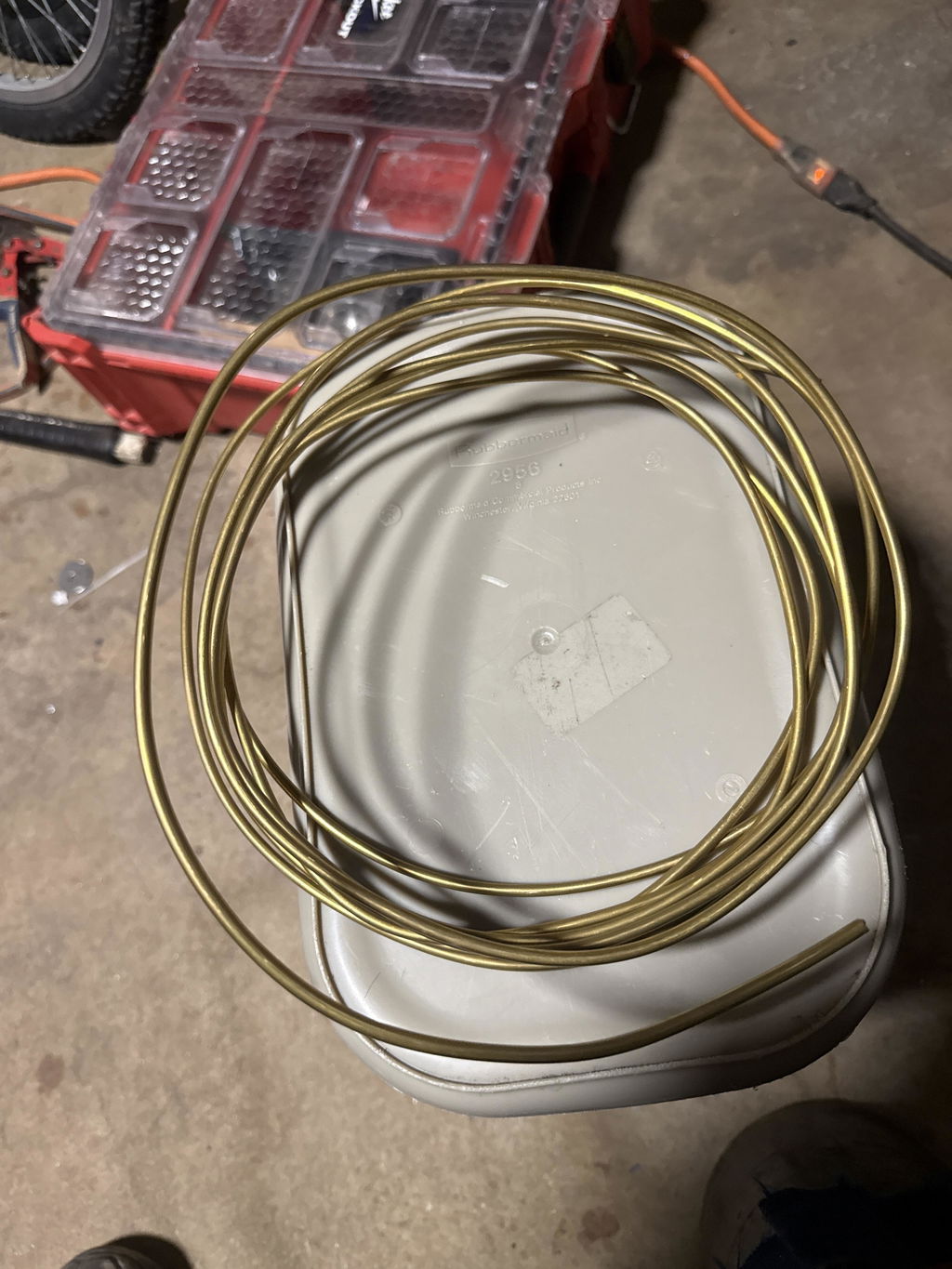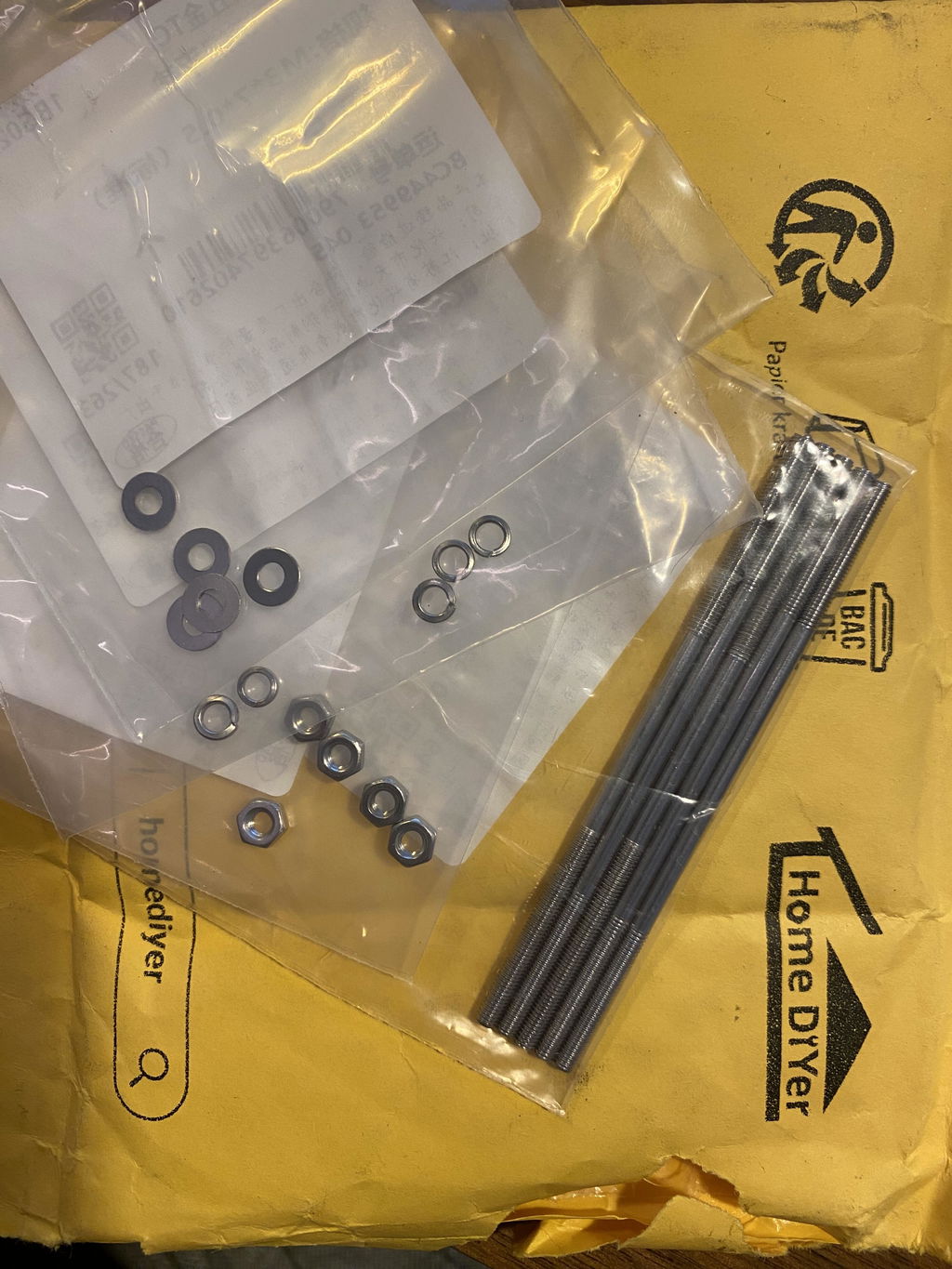

The chain is fine...but I ordered the wrong size. Nine links of the chain I ordered equals six of the size I wanted. My error...
How can I straighten out the springs? I can't use them coil uo as is.
Your payment information is processed securely. We do not store credit card details nor have access to your credit card information.
Get fitment advice & recommendations
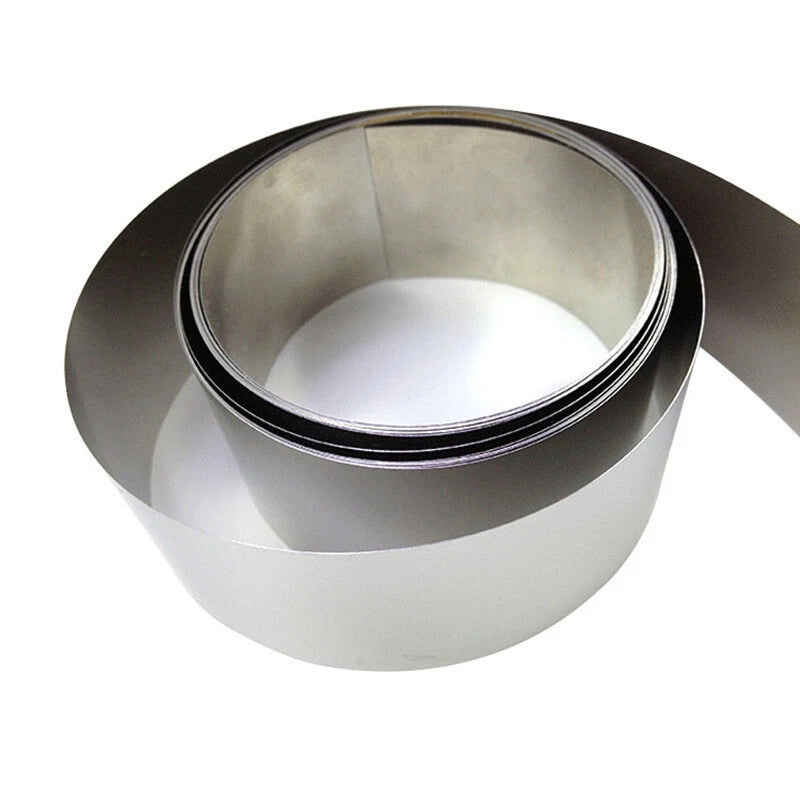
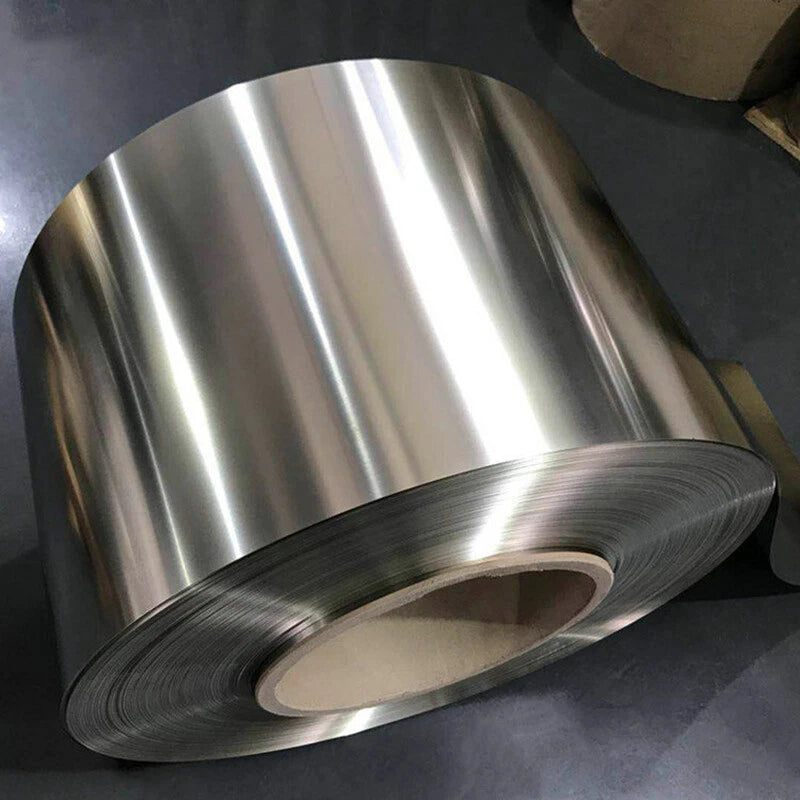
Engineers, makers, and electronics hobbyists who need reliable conductive sheet stock often struggle to find material that combines dimensional accuracy with consistent purity. These pure copper nickel (Ni) metal foil plates are designed for users who require a flat, uniform thin sheet they can cut, solder, or laminate without worrying about surface oxidation or thickness variation.
Each sheet is composed of high-purity copper-nickel alloy, available in flat plate form across three footprint sizes — 100×100 mm (approx. 3.94″×3.94″), 100×200 mm (approx. 3.94″×7.87″), and 200×200 mm (approx. 7.87″×7.87″) — with thickness options ranging from 0.1 mm to 1.0 mm (0.004″–0.039″). Packing quantities vary by size and thickness to match typical project consumption.
Typical use cases include RF and EMI shielding panels in enclosures, battery tab welding and electrode fabrication for lithium cell packs, heat-spreader shims in compact electronics assemblies, and decorative or craft metalwork requiring a corrosion-resistant copper-nickel surface. The combination of workable thickness and consistent alloy composition makes these sheets a practical choice for both prototyping and small-batch production.
Manufactured from high-purity Cu-Ni stock, delivering stable electrical conductivity and consistent surface finish across the full sheet area — critical for electrode and shielding applications.
Three footprint options (100×100 mm, 100×200 mm, 200×200 mm) paired with eight thickness steps (0.1 / 0.2 / 0.3 / 0.4 / 0.5 / 0.6 / 0.8 / 1.0 mm) let you match sheet stock precisely to your cut plan, minimising waste.
The copper-dominant alloy composition maintains low bulk resistivity, making these foils suitable for current-carrying tabs, bus bars, and conductive gaskets where voltage drop must be minimised.
Nickel content improves oxidation resistance compared to pure copper sheet, extending service life in humid or mildly corrosive environments without requiring additional plating.
Thin gauge (0.1–1.0 mm) allows clean cutting with scissors, shears, or laser. Thicker variants (0.8–1.0 mm) support light milling and drilling for custom fitment in mechanical assemblies.
Each variant ships with a packing quantity calibrated to the sheet area and thickness — from 10 pcs for the smallest/thinnest format down to 1 pc for larger or thicker sheets — so you receive a usable batch without over-ordering.
| Material | High-Purity Copper-Nickel (Cu-Ni) Alloy |
|---|---|
| Sheet Dimensions | 100×100 mm / 100×200 mm / 200×200 mm (See variant options) |
| Thickness Range | 0.1 mm – 1.0 mm (See variant options) |
| Thickness Steps Available | 0.1 / 0.2 / 0.3 / 0.4 / 0.5 / 0.6 / 0.8 / 1.0 mm |
| Surface Finish | Mill finish, flat |
| Form Factor | Flat plate / foil sheet |
| Packing Quantity | 1–10 pcs per pack (See variant options) |
| Applicable Processes | Shearing, laser cutting, spot welding, soldering |
| Corrosion Resistance | Improved vs. pure copper; suitable for humid environments |
| Weight per Sheet | See variant options |
For flexible shielding layers or battery tab welding, 0.1–0.3 mm is typically sufficient and easy to cut with scissors or a craft knife. For structural shims, heat spreaders, or applications requiring mechanical rigidity, 0.5–1.0 mm provides better dimensional stability. If you are unsure, start with 0.2–0.3 mm as a versatile mid-range option.
Pure copper offers slightly higher electrical conductivity, but copper-nickel alloy adds meaningful corrosion and oxidation resistance. This makes Cu-Ni foil a better choice for environments with moisture exposure or where long-term surface stability matters, such as outdoor enclosures or battery assemblies that cycle through temperature changes.
Yes. Copper-nickel foil in the 0.1–0.2 mm thickness range is widely used for battery tab welding. Thinner sheets (0.1 mm) weld more easily with entry-level spot welders, while 0.2 mm may require a higher-capacity welder. Always test on a scrap piece first to dial in pulse energy settings.
Sheets are supplied flat. Very thin foils (0.1–0.2 mm) may develop minor curl during transit; placing them under a flat weight for a few hours at room temperature is typically sufficient to restore flatness before use.
Yes. Copper-nickel alloy is solderable with standard rosin-core or no-clean flux and 60/40 or lead-free solder. Light abrasion or flux application before soldering improves wetting, especially on thicker sheets where the surface may have a light oxide layer.
Use the Size (Width×Length×Thickness) dropdown to select your required footprint and thickness combination. The Packing Quantity dropdown shows how many sheets are included per order for that size. If you need a quantity not listed, contact us to discuss bulk options.
Copper-nickel foil provides effective attenuation for both electric field (E-field) and magnetic field (H-field) interference in the frequency ranges relevant to most DIY and prototyping applications. For critical RF shielding, verify that all seams are properly bonded or overlapped to avoid gaps that reduce shielding effectiveness.