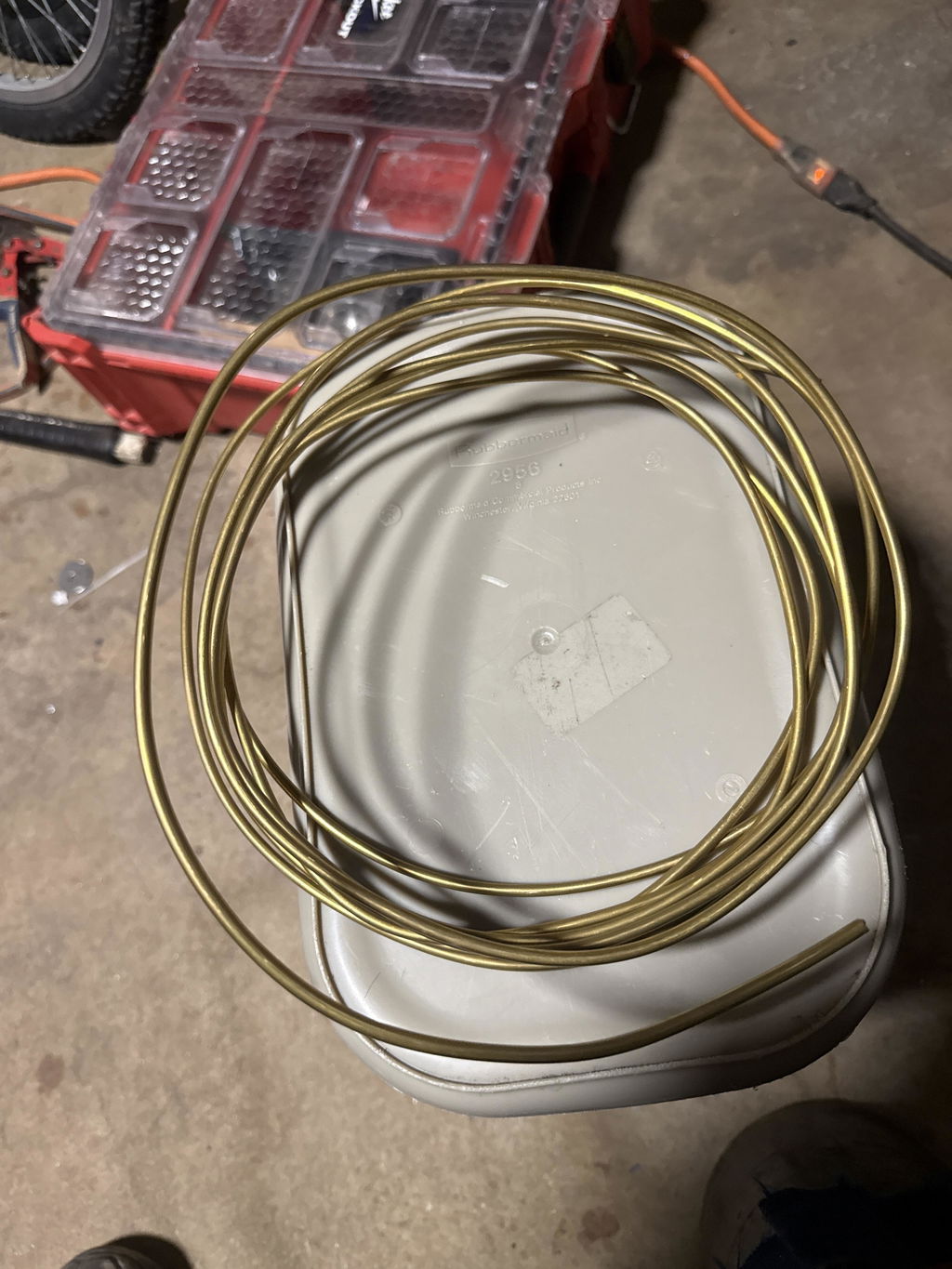
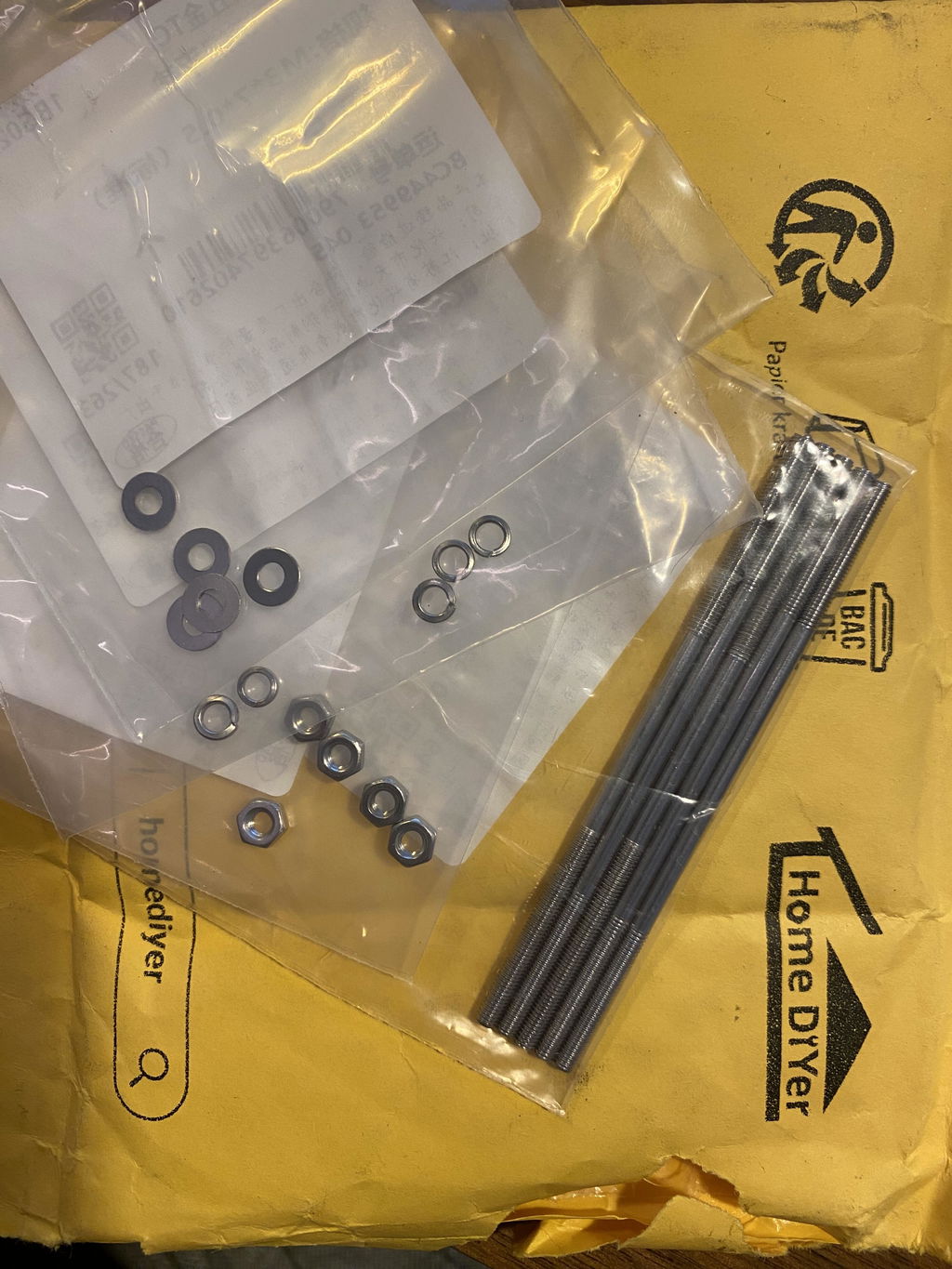
The chain is fine...but I ordered the wrong size. Nine links of the chain I ordered equals six of the size I wanted. My error...
How can I straighten out the springs? I can't use them coil uo as is.
Your payment information is processed securely. We do not store credit card details nor have access to your credit card information.
Get fitment advice & recommendations
When your project demands reliable electrical conductivity, corrosion resistance, and exact dimensions, standard hardware store sheet metal rarely delivers. Whether you're a maker building RF shielding enclosures, an electronics hobbyist lining a Faraday cage, or a craftsperson working with decorative metalwork, sourcing the right copper foil thickness and width in one place is a constant challenge. This pure copper sheet foil is stocked in an extensive range of thicknesses and widths so you can order exactly what your build requires — no trimming a thicker plate down, no compromising on conductivity.
Each piece is made from pure copper (Cu), a soft, ductile, and highly conductive metal with excellent workability. Thickness options span 0.01 mm to 1 mm (approximately 0.0004" to 0.039"), and widths range from 15 mm to 400 mm (approximately 0.6" to 15.7"). Length options are 1 Metre (1000 mm / ~39.4") or 300 mm (~11.8"). The foil arrives flat and ready to cut, bend, solder, or laminate.
Typical use cases include EMI/RF electromagnetic shielding for electronics enclosures, copper tape and foil for stained glass and art projects, thin shim stock for mechanical gap-filling and alignment, and conductive grounding strips in electrical installations. Long-tail applications include copper foil for PCB prototyping, heat spreader shims for CPU/GPU thermal management, and decorative inlay work in woodworking.
| Material | Pure Copper (Cu) |
|---|---|
| Thickness Range | 0.01 mm – 1 mm (approx. 0.0004" – 0.039") |
| Width Range | 15 mm – 400 mm (approx. 0.6" – 15.7") |
| Length Options | 300 mm (~11.8") or 1 Metre (1000 mm / ~39.4") |
| Surface Finish | Smooth, bright copper finish |
| Temper / Hardness | Soft / annealed (typical for foil and thin sheet) |
| Electrical Conductivity | See variant options |
| Thermal Conductivity | ~385 W/(m·K) (typical for pure copper) |
| Density | ~8.96 g/cm³ |
| Melting Point | ~1085 °C (~1985 °F) |
| Form | Flat sheet / foil strip |
| Variant Selection | Thick × Wide + Length (see options above) |
For EMI/RF shielding and Faraday cage lining, thicknesses of 0.05 mm – 0.2 mm are typically sufficient. For structural shim stock or heat spreader applications, 0.1 mm – 0.5 mm is common. For decorative inlay or stained glass foil work, 0.05 mm – 0.1 mm is easiest to manipulate. Thicker gauges (0.5 mm – 1 mm) are better suited to mechanical applications where rigidity matters.
Select a width that matches or slightly exceeds your target coverage area to minimize joins. For wrapping cables or pipes, narrower widths (15 mm – 100 mm) work well. For panel shielding or large flat surfaces, wider options (200 mm – 400 mm) reduce the number of overlapping strips needed.
Thin foil (under 0.1 mm) is best suited to electrical and decorative applications where mechanical load is minimal. For shim stock, gap-filling, or applications requiring some structural rigidity, choose 0.2 mm and above. At 0.5 mm – 1 mm, the sheet has meaningful stiffness and can be used as a bearing shim or heat spreader.
Pure copper naturally oxidizes when exposed to air and moisture, developing a characteristic reddish-brown tarnish and eventually a green patina (verdigris). This patina is a stable oxide layer that actually slows further corrosion. For applications where appearance matters, apply a clear lacquer or keep the surface clean and dry. For electrical contacts, light abrasion before soldering restores conductivity.
Yes. Pure copper solders readily with standard rosin-core or water-soluble flux solder. Clean the surface with isopropyl alcohol or fine abrasive before soldering to remove any oxidation. Use a soldering iron with adequate wattage for the thickness — thicker sheets (0.5 mm+) act as heat sinks and may require a higher-wattage iron or pre-heating.
For foil thicknesses up to 0.1 mm, a sharp craft knife or scissors on a cutting mat works well. From 0.1 mm to 0.5 mm, aviation tin snips or metal shears give clean edges. For 0.5 mm – 1 mm, use metal shears, a guillotine cutter, or a angle grinder with a thin cutting disc. Laser cutters can also be used on thinner gauges. Always deburr cut edges with a fine file or sandpaper.
Yes. Copper is one of the most effective materials for electromagnetic shielding due to its high electrical conductivity. Even thin foil (0.05 mm – 0.1 mm) provides meaningful attenuation of RF signals when properly grounded and without gaps. For Faraday cage construction, ensure all seams overlap and are electrically bonded (soldered or taped with conductive copper tape).
The 1 Metre option provides a 1000 mm long strip, suitable for larger projects, continuous runs, or when you need to cut multiple pieces from a single length. The 300 mm option is a shorter cut piece, ideal for smaller applications or when you only need a specific section. Both options are available across most thickness and width combinations.