The chain is fine...but I ordered the wrong size. Nine links of the chain I ordered equals six of the size I wanted. My error...
How can I straighten out the springs? I can't use them coil uo as is.
Your payment information is processed securely. We do not store credit card details nor have access to your credit card information.
Get fitment advice & recommendations
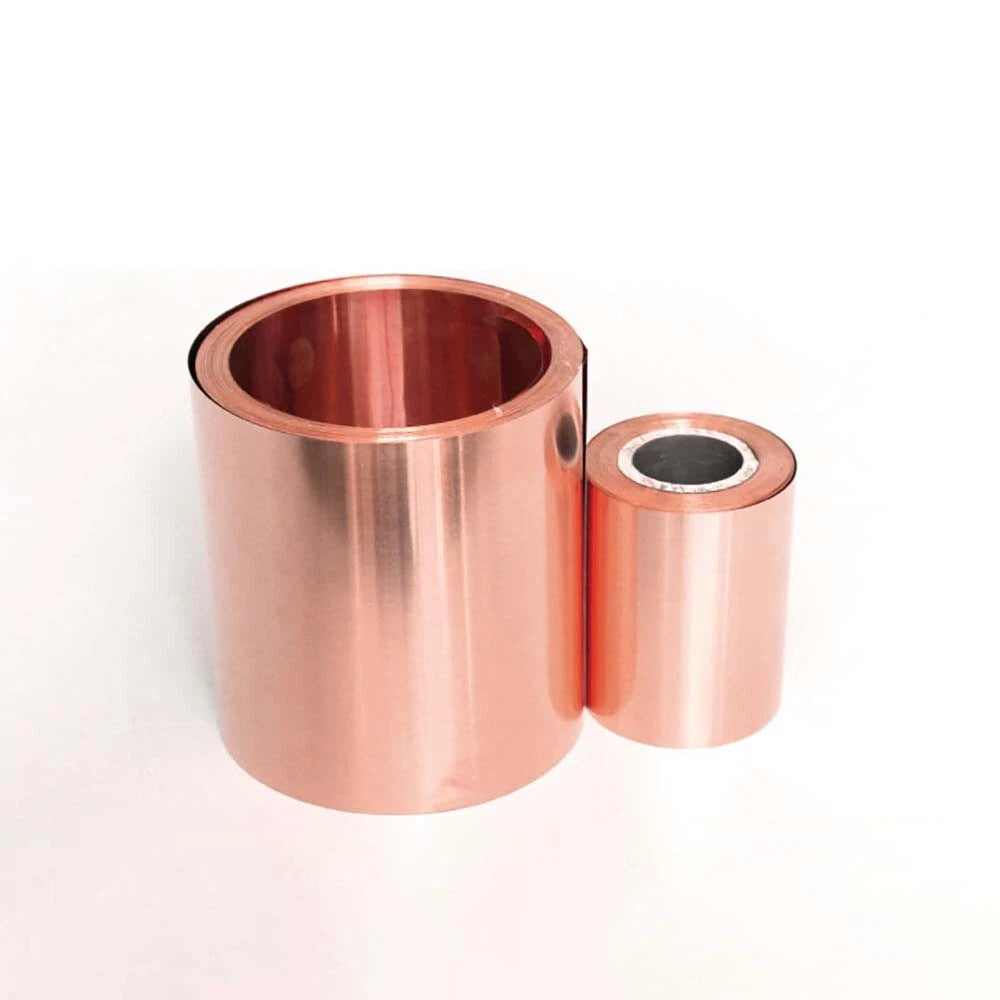
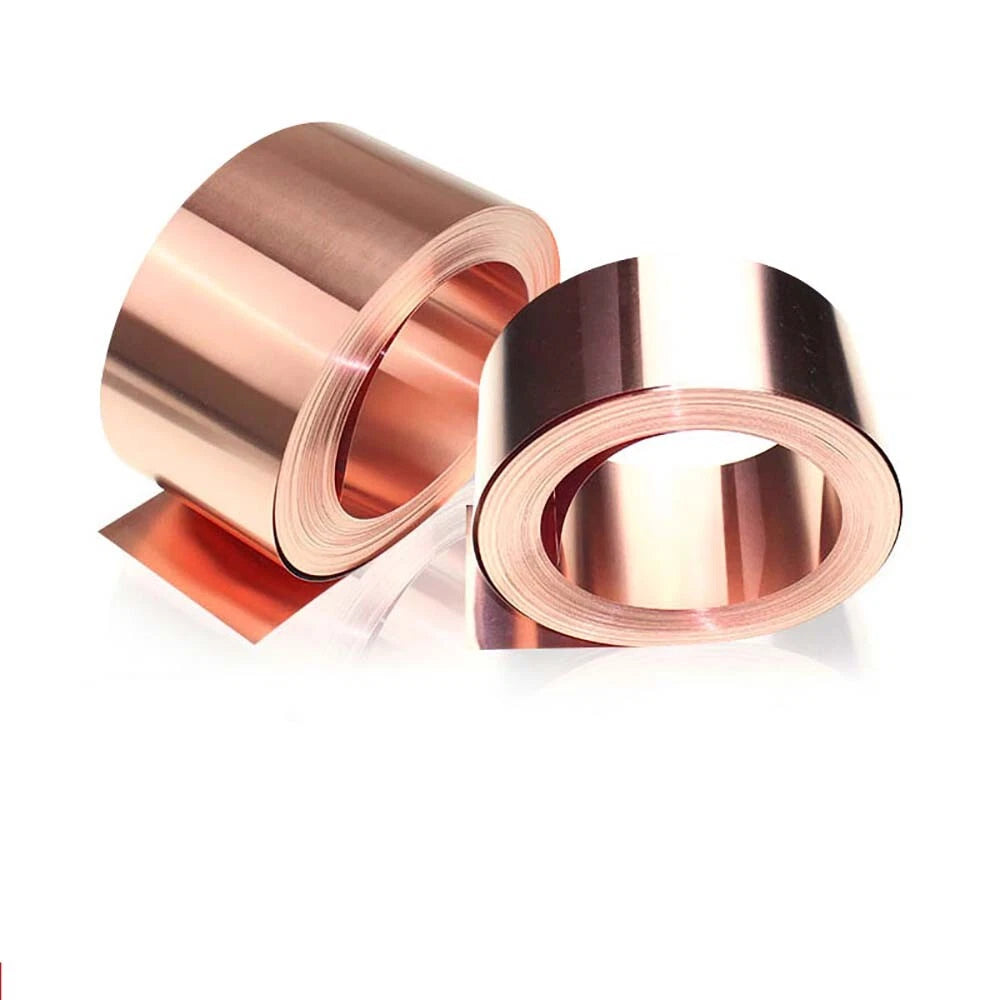
When your project demands a conductor that won't compromise — whether you're shielding sensitive electronics, fabricating custom bus bars, or lining a heat spreader — getting the wrong thickness means starting over. Engineers, hobbyists, and fabricators who work with tight tolerances need a copper strip they can measure once and trust completely.
This T2-grade pure copper band is available in thicknesses from 0.03 mm to 0.5 mm (approximately 0.001" to 0.020") and comes in a single sheet measuring 200 mm × 1000 mm (approx. 7.87" × 39.37"). T2 copper carries a minimum purity of 99.9% Cu, delivering the conductivity and ductility required for precision forming, soldering, and laminating applications.
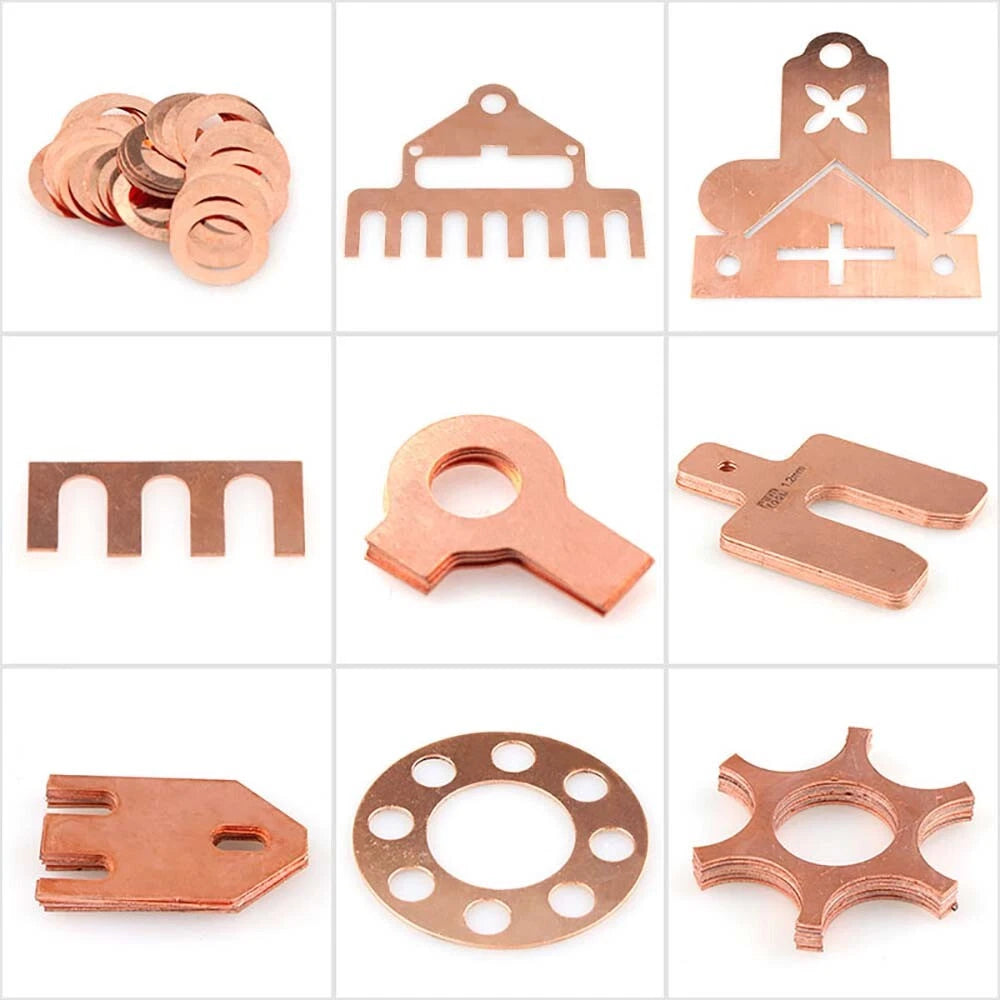
Typical use cases include EMI/RF shielding tape for PCB enclosures, custom copper foil gaskets for vacuum or pressure fittings, thermal interface strips in LED and power electronics assemblies, and decorative inlay work in woodworking or jewelry fabrication. The consistent rolled surface finish makes it well-suited for applications where uniform contact area is critical.
| Material Grade | T2 Pure Copper (≥99.9% Cu, equivalent to C11000) |
|---|---|
| Thickness Range | 0.03 mm – 0.5 mm (approx. 0.001" – 0.020") |
| Sheet Width | 200 mm (approx. 7.87") |
| Sheet Length | 1000 mm (approx. 39.37") |
| Surface Finish | Cold-rolled, smooth |
| Electrical Conductivity | ≥97% IACS |
| Thermal Conductivity | ~390 W/m·K |
| Tensile Strength | Typically 200–280 MPa (varies by thickness) |
| Quantity per Order | 1 Pcs (per variant) |
| Available Thicknesses | 0.03 / 0.05 / 0.1 / 0.15 / 0.2 / 0.25 / 0.3 / 0.4 / 0.5 mm |
| Weight | See variant options |
For EMI/RF shielding, thicknesses of 0.05–0.1 mm are typically sufficient to attenuate most interference below 1 GHz. For structural bus bars or heat spreaders requiring mechanical rigidity, 0.3–0.5 mm is more appropriate. If you need to form tight bends without cracking, stay at 0.1 mm or thinner. When in doubt, order one step thicker — copper can be thinned by rolling but not easily thickened.
T2 copper (equivalent to C11000 / ETP copper) contains a minimum of 99.9% copper with trace oxygen content. It offers excellent electrical conductivity (≥97% IACS) and is the standard grade for electrical and thermal applications. It differs from oxygen-free copper (C10100/C10200) in that it is not suitable for hydrogen-atmosphere brazing, but it is more widely available and cost-effective for most general-purpose uses.
Copper naturally forms a thin oxide layer (patina) when exposed to air and moisture. In sealed or low-humidity indoor environments, this layer is stable and does not significantly affect conductivity. For outdoor or high-humidity applications, consider applying a clear lacquer or tin plating after fabrication. Avoid prolonged contact with ammonia-based cleaners or strong acids, which accelerate corrosion.
Yes. T2 copper solders readily with standard rosin-core or water-soluble flux solders (Sn60/Pb40, SAC305, etc.). For brazing, use a silver-bearing brazing alloy with an appropriate flux in an air or inert atmosphere. Avoid hydrogen-atmosphere brazing with T2 grade, as residual oxygen can cause hydrogen embrittlement. Lightly abrade or clean the surface with isopropyl alcohol before soldering for best adhesion.
Yes. T2 copper etches cleanly with standard ferric chloride (FeCl₃) and ammonium persulfate solutions used in PCB fabrication. The cold-rolled surface provides good adhesion for photoresist films. For very thin gauges (0.03–0.05 mm), handle with care during lamination to avoid wrinkling. The sheet is not pre-laminated with adhesive or dielectric backing — it is bare copper.
For straight cuts, a sharp utility knife with a steel rule works well on thicknesses up to 0.2 mm. For thicker gauges (0.3–0.5 mm), use tin snips or a guillotine shear for clean edges. Avoid using scissors, which can cause edge deformation. For curved shapes, use a punch or laser cutter. If the material work-hardens during forming, anneal it by heating to approximately 400–600°C and allowing it to air-cool before continuing.
Yes, weight scales directly with thickness. Copper has a density of approximately 8.96 g/cm³. For a 200 × 1000 mm sheet: a 0.05 mm sheet weighs approximately 90 g, a 0.1 mm sheet approximately 179 g, and a 0.5 mm sheet approximately 896 g. Exact weights may vary slightly due to manufacturing tolerances. Contact us to confirm if precise weight is critical for your application.