The chain is fine...but I ordered the wrong size. Nine links of the chain I ordered equals six of the size I wanted. My error...
How can I straighten out the springs? I can't use them coil uo as is.
Your payment information is processed securely. We do not store credit card details nor have access to your credit card information.
Get fitment advice & recommendations
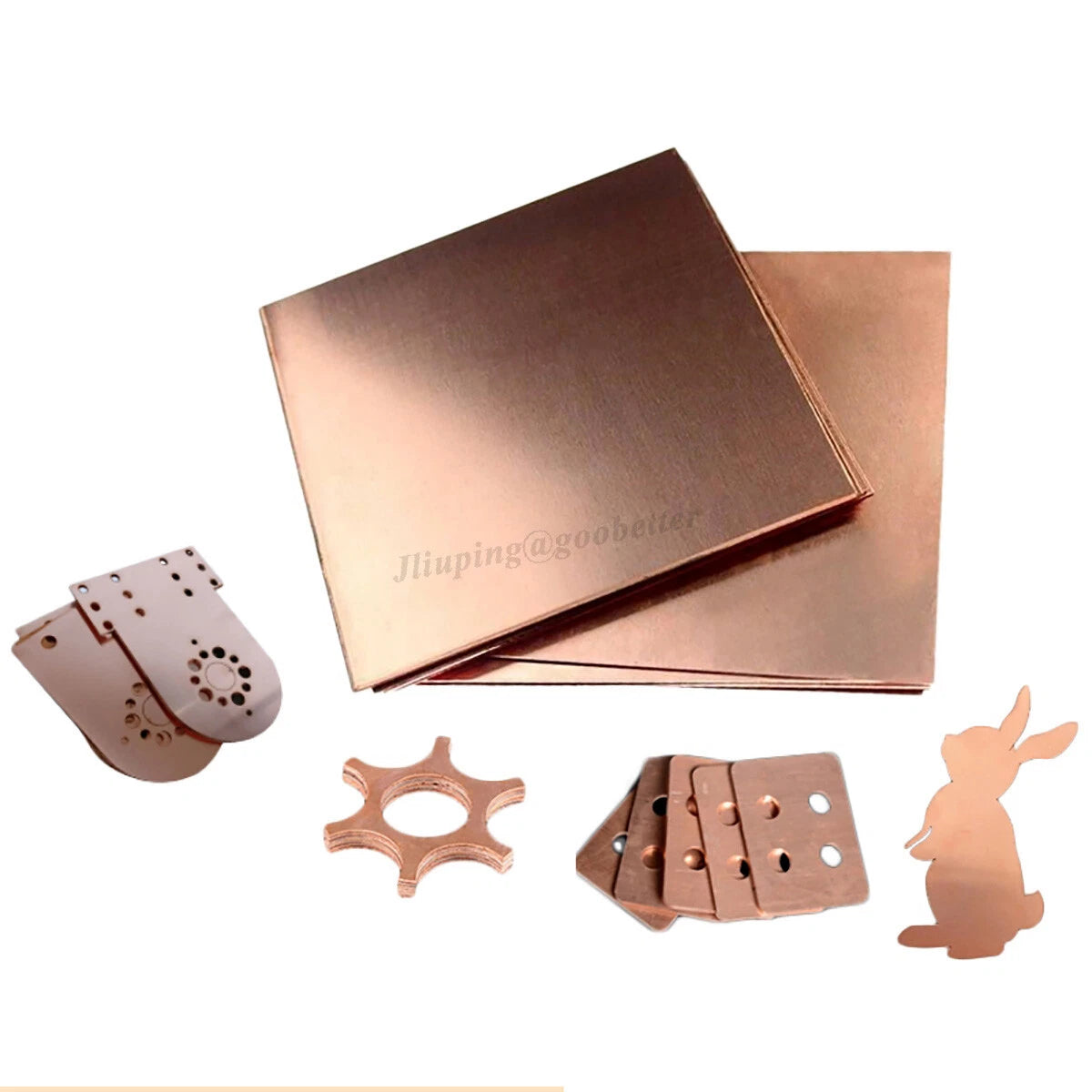
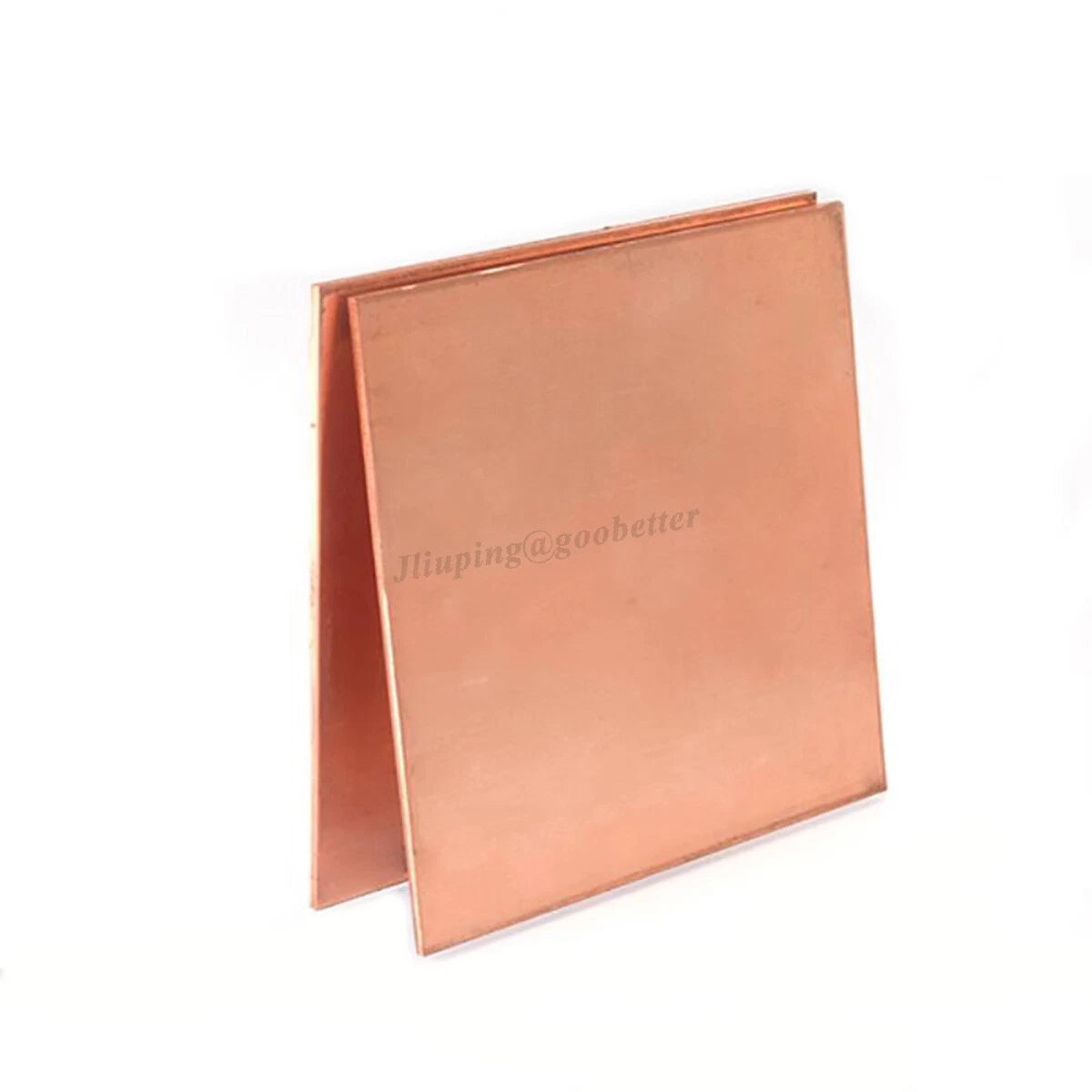
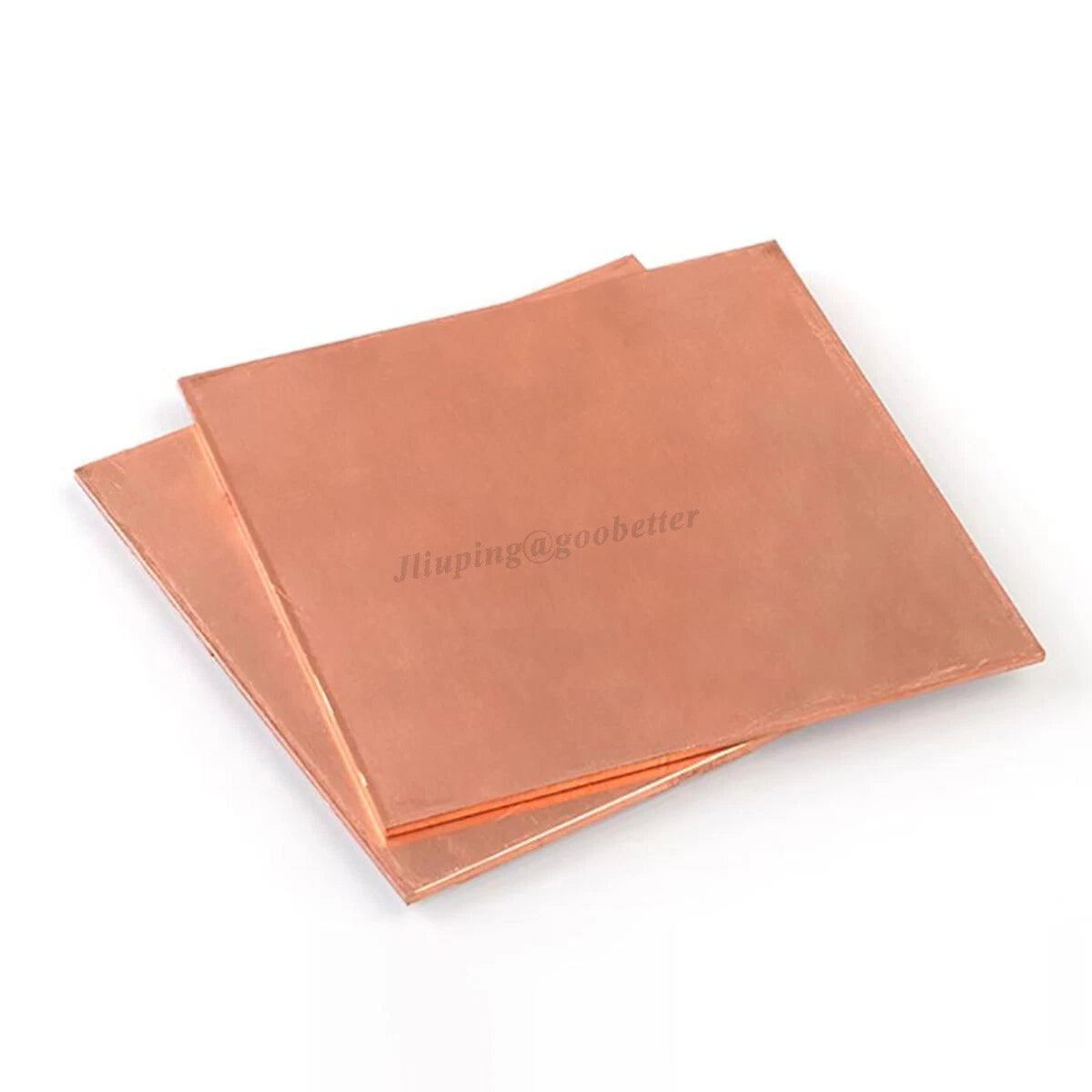
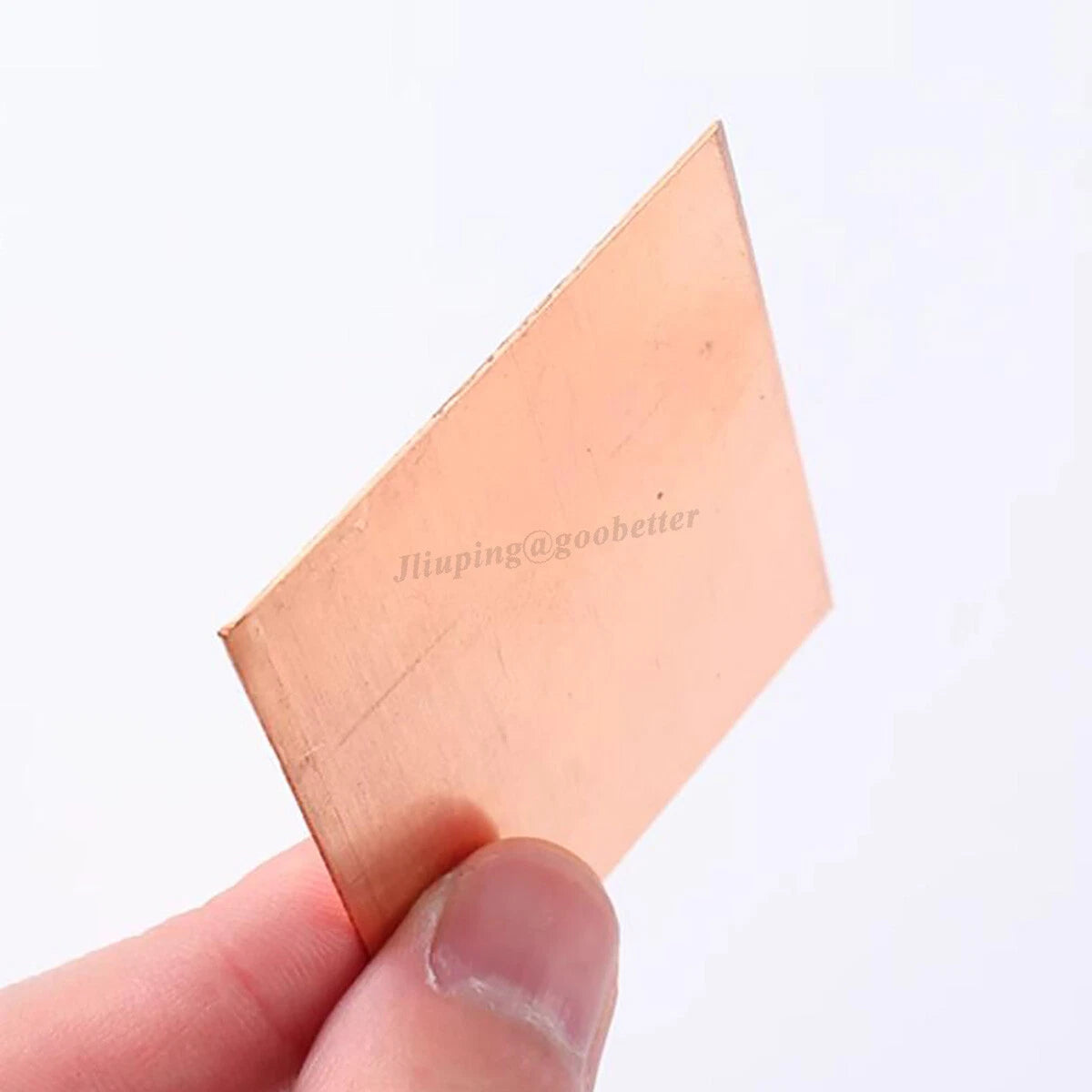
When your project demands reliable electrical conductivity and corrosion resistance in a flat metal form, finding a pure copper sheet plate cut to exact dimensions saves hours of rework. Makers, electricians, hobbyists, and fabricators who need a ready-to-use copper panel without custom cutting orders will find these sheets a direct solution.
Each pure copper sheet plate is machined from solid C11000-grade electrolytic tough pitch (ETP) copper. Panels are available in three planar sizes — 100×100mm (3.94×3.94 in), 100×150mm (3.94×5.91 in), and 100×200mm (3.94×7.87 in) — with thickness options spanning 0.3mm to 6mm (approximately 0.012 in to 0.236 in). Surface finish is mill-bright with tight dimensional tolerances.
Typical applications include bus bar blanks and grounding straps in electrical enclosures, heat spreader shims in electronics cooling assemblies, decorative inlays and engraving stock for craft and jewelry work, and shielding panels in RF or EMI-sensitive enclosures. The combination of flat geometry and selectable thickness makes these copper sheet plates a versatile starting point for precision metalwork.
| Material | Pure Copper (C11000 / ETP Grade) |
|---|---|
| Width × Length Options | 100×100mm / 100×150mm / 100×200mm |
| Thickness Options | 0.3, 0.5, 0.6, 0.8, 1, 1.2, 1.5, 2, 2.5, 3, 4, 5, 6 mm |
| Surface Finish | Mill-bright |
| Conductivity | ≥100% IACS (typical for C11000) |
| Thermal Conductivity | Approximately 385 W/(m·K) |
| Packing Quantity | 1 PCS per order unit |
| Weight | See variant options |
| Hardness | See variant options |
| Dimensional Tolerance | Contact us to confirm |
For most low-current grounding applications (under 20 A), a 1mm or 1.5mm sheet provides adequate cross-section and is easy to drill and bend. For higher-current bus bar use, 3mm or thicker is recommended to reduce resistive heating. Always verify the required cross-sectional area against your circuit's ampacity rating.
Yes. C11000 ETP copper solders readily with standard rosin-core or water-soluble flux and 60/40 or lead-free solder. Clean the surface with isopropyl alcohol or fine abrasive before soldering to remove any oxidation that may have formed during storage.
Copper naturally develops a patina (cuprous oxide) when exposed to air and moisture. This layer is stable and actually slows further corrosion. For applications requiring a bright finish long-term, apply a clear lacquer or store sheets in sealed packaging with desiccant. In outdoor or marine environments, additional protective coating is advisable.
CNC routing and milling work well on all thickness options — use carbide tooling and appropriate feed rates for copper. CO₂ laser cutters are generally not effective on copper due to its high reflectivity; fiber laser cutters can cut thinner gauges (0.3–1mm). Always confirm your machine's copper compatibility before cutting.
Select the panel size closest to your finished part dimensions to minimize waste. The 100×100mm square is ideal for small brackets, shims, and coin-sized components. The 100×150mm panel suits elongated parts like bus bar blanks. The 100×200mm panel works well for larger heat spreaders or decorative panels that need more length.
Thinner gauges (0.3–1.5mm) bend easily by hand or with a sheet metal brake. Thicker sheets (2mm and above) may require annealing — heating to approximately 400–600°C and quenching in water — to restore ductility before tight-radius bending. Always use a bend radius at least equal to the sheet thickness to avoid stress cracking.
Each variant is listed as 1 PCS per order unit. To receive multiple pieces of the same size and thickness, simply increase the quantity in your cart before checkout.