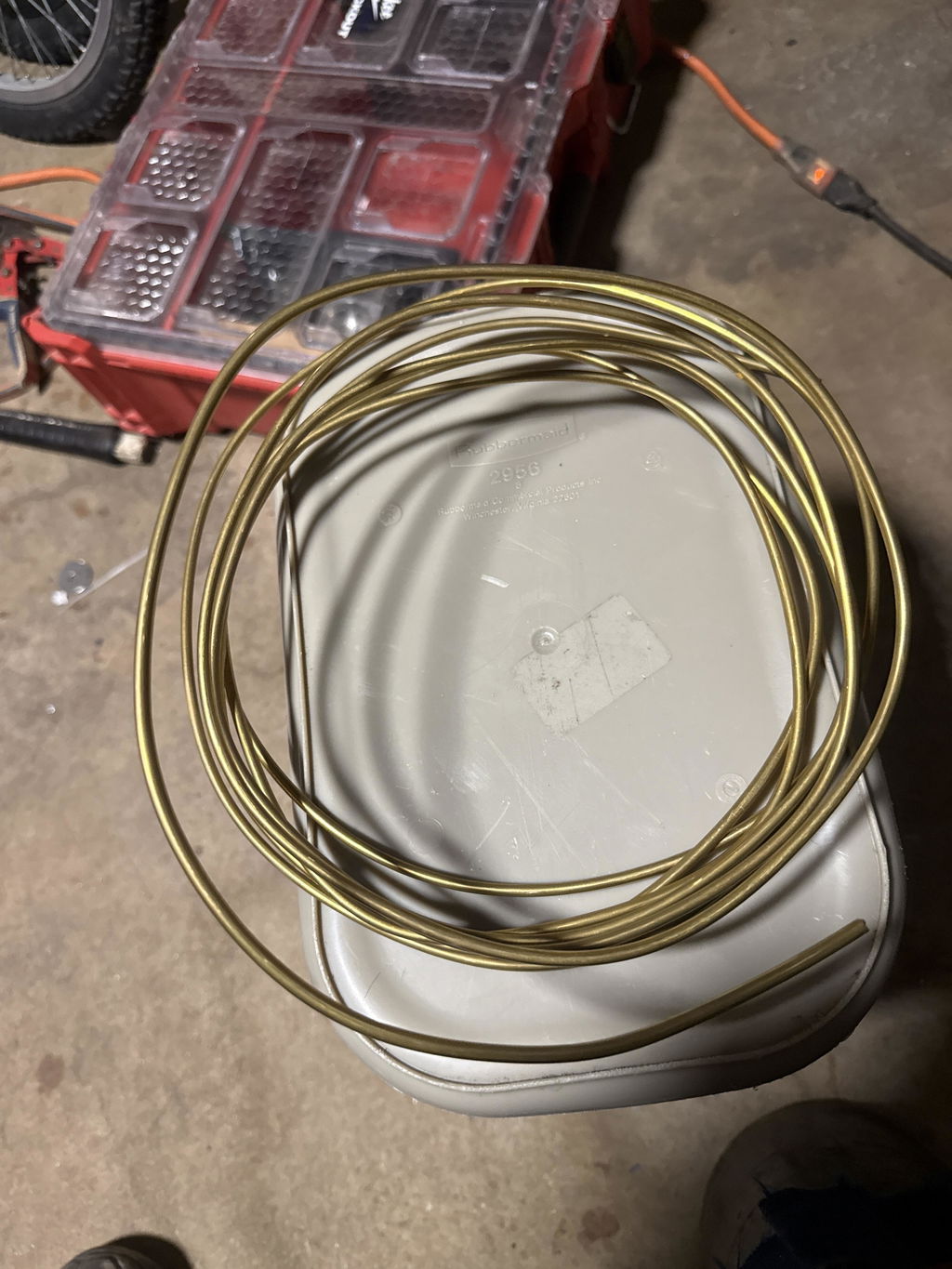
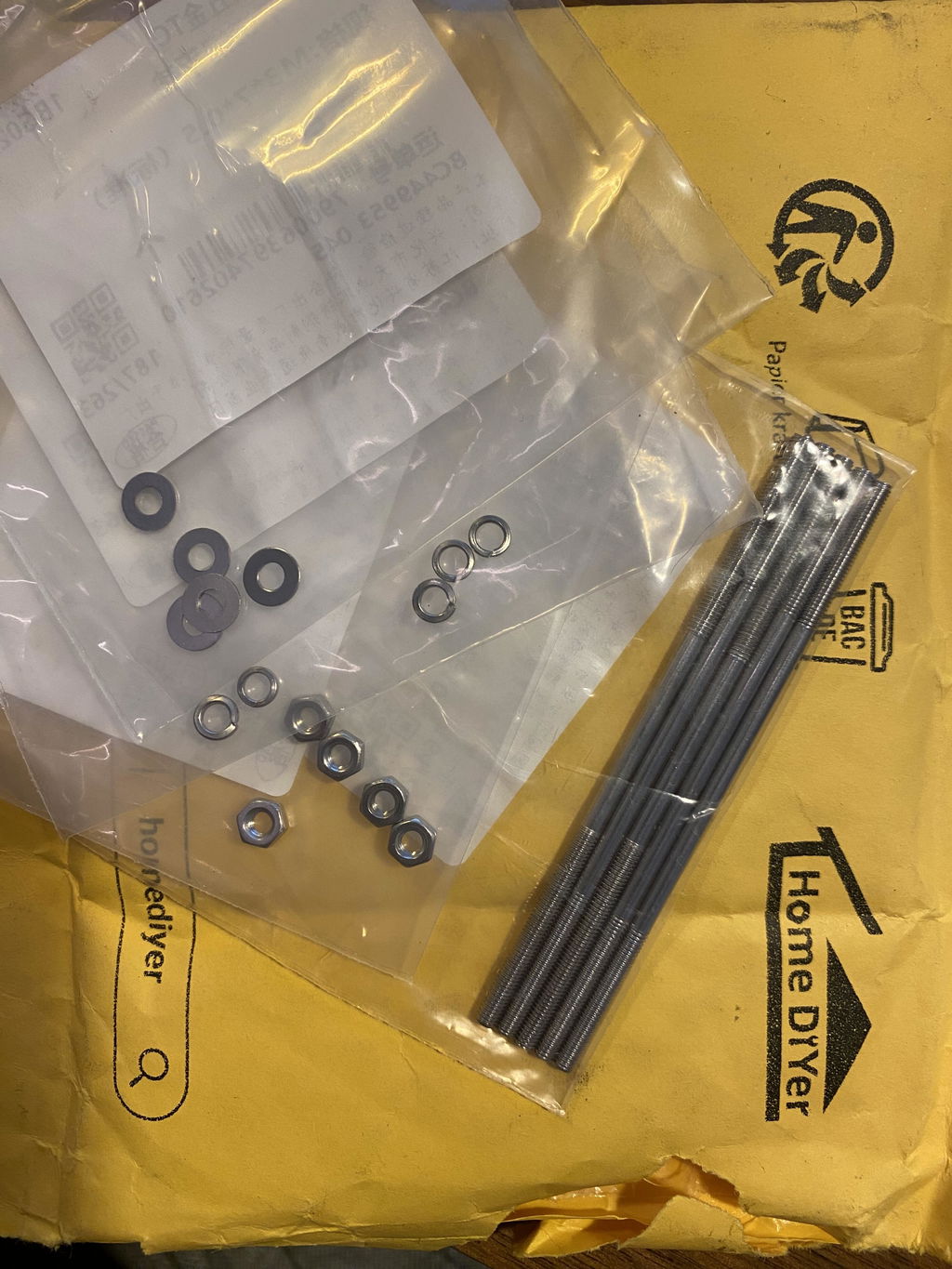
The chain is fine...but I ordered the wrong size. Nine links of the chain I ordered equals six of the size I wanted. My error...
How can I straighten out the springs? I can't use them coil uo as is.
Your payment information is processed securely. We do not store credit card details nor have access to your credit card information.
Get fitment advice & recommendations
When your project demands a material that conducts reliably, bends cleanly, and holds its shape over time, finding the right copper sheet in the exact thickness and width you need can be a real challenge. Whether you are a maker building custom PCB shielding, a craftsperson forming decorative inlays, or a workshop fabricator cutting gaskets and heat spreaders, this pure copper sheet plate and copper foil range is stocked specifically for hands-on builders who cannot afford to compromise on dimensional accuracy.
Each piece is cut from commercially pure copper (typically 99.9% Cu, C11000-equivalent grade) with a smooth, bright-rolled finish. Thickness spans from an ultra-thin 0.01 mm (approximately 0.0004 in) up to a structural 1 mm (approximately 0.039 in), and widths run from a narrow 10 mm (0.39 in) up to a broad 400 mm (15.75 in). Length options are 1 metre (3.28 ft) and 10 metres (32.8 ft), giving you the flexibility to order exactly what a single job requires or stock up for ongoing production.
Typical applications include electromagnetic shielding tape for electronics enclosures, custom gaskets and seals for plumbing or HVAC repairs, decorative inlay strips for woodworking and furniture, heat-spreader shims in thermal management assemblies, and thin-foil electroforming or etching blanks for jewellery and art projects.
| Material | Commercially pure copper (99.9% Cu, C11000-equivalent) |
|---|---|
| Thickness Range | 0.01 mm – 1 mm (0.0004 in – 0.039 in) |
| Width Range | 10 mm – 400 mm (0.39 in – 15.75 in) |
| Length Options | 1 Metre (3.28 ft) / 10 Metres (32.8 ft) |
| Surface Finish | Bright-rolled / smooth |
| Temper | See variant options |
| Electrical Conductivity | Typically ~101% IACS |
| Thermal Conductivity | Typically ~385 W/m·K |
| Density | ~8.96 g/cm³ |
| Melting Point | ~1,085 °C (1,985 °F) |
| Weight per Variant | See variant options |
| Number of Size Options | 150+ |
For electromagnetic shielding tape and foil wrapping, thicknesses of 0.01 mm–0.1 mm are typically sufficient. For gaskets, heat spreaders, and structural shims, 0.2 mm–0.5 mm offers a good balance of flexibility and rigidity. For load-bearing or heavily formed parts, 0.5 mm–1 mm provides the necessary strength. If you are unsure, start with a mid-range thickness such as 0.1 mm or 0.2 mm and test fit before committing to a longer length.
Commercially pure copper is a relatively soft, ductile metal — it is not intended for high-load structural applications. However, it performs well in gaskets, shims, decorative inlays, and formed brackets where moderate mechanical strength is acceptable. For higher-strength requirements, consider a copper alloy such as brass or bronze instead.
Copper does not rust (rust is specific to iron-based metals). Over time, copper oxidises and develops a patina — first darkening to a brown tone, then potentially turning green (verdigris) in humid or outdoor environments. This patina is stable and actually slows further corrosion. For applications requiring a bright finish, store sheets in a dry environment and apply a clear lacquer or wax coating.
Yes. Commercially pure copper solders and brazes readily with standard copper-compatible fluxes and filler materials. For soft soldering (electronics), use a rosin-core or no-clean flux solder. For silver brazing or hard soldering, use an appropriate silver-bearing filler rod and flux. Clean the surface with fine abrasive or flux before joining to ensure a strong bond.
Both options are the same material and thickness — the only difference is the total length supplied. The 1-metre option is ideal for single-use cuts, prototyping, or small repairs. The 10-metre option offers a lower per-metre cost and is suited to ongoing production runs, larger fabrication jobs, or stocking your workshop. The 10-metre length is supplied as a continuous piece or roll depending on the thickness and width selected.
Yes. Thin foils (0.01 mm–0.1 mm) can be cut cleanly with sharp scissors or a craft knife and steel ruler. Mid-range thicknesses (0.1 mm–0.5 mm) are best cut with tin snips, a guillotine shear, or a rotary cutter. Thicker sheets (0.5 mm–1 mm) may require aviation snips, a bench shear, or a jigsaw with a metal-cutting blade. Always deburr cut edges with a file or fine sandpaper before handling.
Yes. The high electrical conductivity (~101% IACS) and thin foil options make this copper sheet well-suited for EMI/RFI shielding enclosures, grounding straps, bus bar fabrication, and custom PCB ground planes. Thicknesses of 0.05 mm–0.2 mm are most commonly used for shielding tape applications, while 0.3 mm–1 mm is preferred for rigid bus bars and connectors.