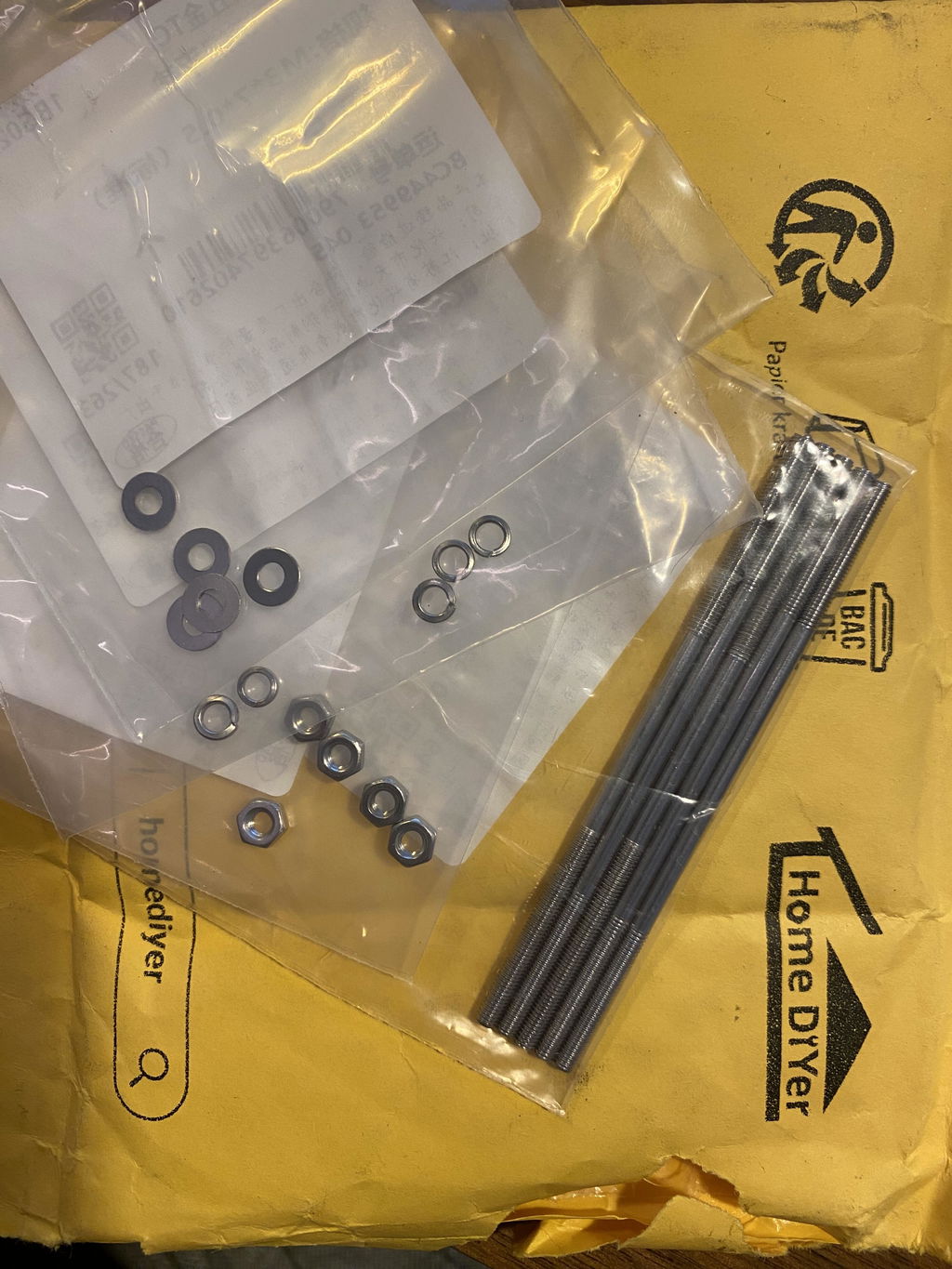
The chain is fine...but I ordered the wrong size. Nine links of the chain I ordered equals six of the size I wanted. My error...
How can I straighten out the springs? I can't use them coil uo as is.
Your payment information is processed securely. We do not store credit card details nor have access to your credit card information.
Get fitment advice & recommendations
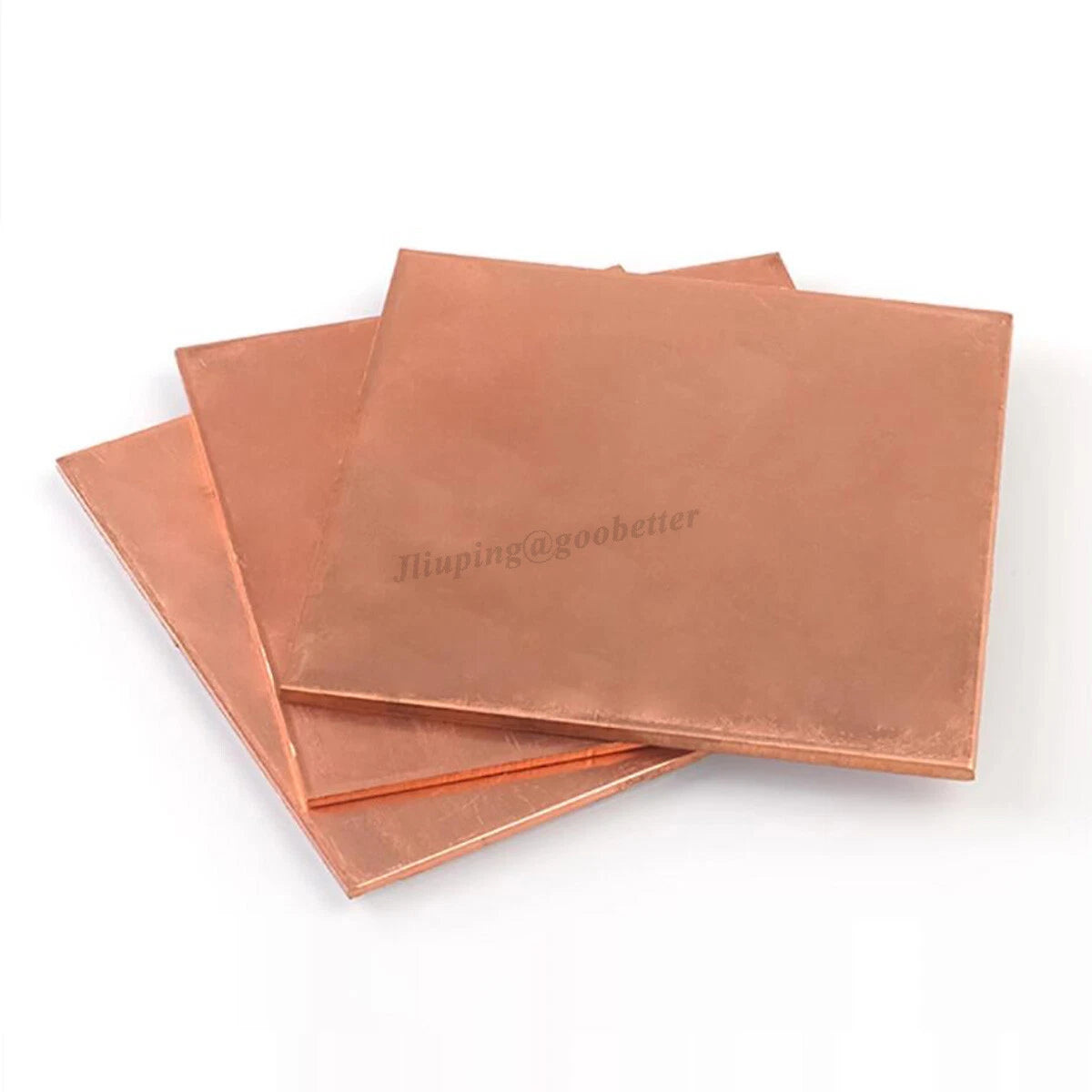
When your project demands a conductor that won't let you down, a loose connection or an undersized piece of metal can set you back hours. Whether you're a hobbyist wiring a custom circuit, a tradesperson patching a grounding system, or a maker crafting decorative metalwork, having the right pure copper sheet plate on hand makes all the difference.
Each panel is cut from solid, unalloyed copper — not plated, not coated — delivering the full conductivity and workability the material is known for. Available in three footprints (50×50mm / ~2"×2", 50×100mm / ~2"×4", and 50×200mm / ~2"×8") and thirteen thickness options ranging from 0.3mm to 6mm (~0.012" to ~0.236"), these sheets cover a wide spectrum of applications from ultra-thin foil-like panels to robust structural plates.
Typical use cases include DIY electrical grounding strips, RF shielding inserts for enclosures, custom heat spreaders in electronics builds, decorative inlays for woodworking and jewelry, and repair patches for plumbing or HVAC copper fittings. The consistent dimensions and clean-cut edges make these copper sheet plates a reliable choice for precision metalwork projects.
| Material | Solid copper (C110 / ETP grade, typically ≥99.9% Cu) |
|---|---|
| Width × Length Options | 50×50mm (~2"×2") / 50×100mm (~2"×4") / 50×200mm (~2"×8") |
| Thickness Options | 0.3 / 0.5 / 0.6 / 0.8 / 1 / 1.2 / 1.5 / 2 / 2.5 / 3 / 4 / 5 / 6 mm |
| Surface Finish | Mill finish (bare copper, no coating) |
| Electrical Conductivity | ~58 MS/m (IACS 100%) |
| Thermal Conductivity | ~385 W/m·K |
| Tensile Strength | Typically 200–250 MPa (annealed to half-hard) |
| Weight per Piece | See variant options |
| Packing Quantity | 1 PCS / 2 PCS / 4 PCS (see variant options) |
| Solderability | Excellent — compatible with rosin-core and silver solder |
| Machinability | Suitable for cutting, drilling, bending, and filing |
For electrical grounding straps and flexible connections, thinner sheets (0.3–0.8mm) offer easy bending and forming. For structural brackets, heat spreaders, or RF shielding panels that need to hold their shape, 1–3mm is a common range. For heavy-duty applications such as bus bars or thick repair patches, 4–6mm provides the rigidity and current-carrying capacity needed. When in doubt, start with a mid-range thickness (1–1.5mm) for general-purpose work.
These sheets are made from solid, unalloyed copper — typically C110 (Electrolytic Tough Pitch, ETP) grade with copper content of ≥99.9%. This is not copper-plated steel, copper-clad aluminum, or a brass/bronze alloy. The high purity ensures maximum electrical and thermal conductivity.
Yes — bare copper naturally oxidizes when exposed to air and moisture, forming a brownish or greenish patina (verdigris). This patina actually slows further corrosion. For applications where oxidation is a concern (e.g., electrical contacts), you can apply a thin coat of flux, lacquer, or anti-tarnish spray after installation. For decorative use, the natural patina is often a desired aesthetic.
Yes. Copper has excellent solderability. Use rosin-core solder for electronics work, or silver solder / brazing alloy for higher-temperature joints. Clean the surface with fine sandpaper or flux before soldering to remove any oxidation layer and ensure a strong bond.
Thin sheets (0.3–1mm) can be cut with heavy-duty scissors, tin snips, or a utility knife and straightedge. Medium sheets (1.2–3mm) work well with aviation snips, a jigsaw with a metal blade, or an angle grinder with a cutting disc. Thicker sheets (4–6mm) are best handled with a hacksaw, band saw, or angle grinder. Always deburr cut edges with a file or sandpaper for safety.
For RF shielding inserts, the 50×100mm or 50×200mm panels are the most versatile starting points, as they can be trimmed to fit most small enclosures. A thickness of 0.5–1mm is typically sufficient for shielding at frequencies above 1 MHz. For lower frequencies or stronger shielding requirements, thicker panels (1.5–2mm) provide better attenuation. Multiple pieces can be overlapped and soldered together to cover larger areas.
For single-use repairs or prototyping, the 1 PCS option lets you test fit and function before committing to more material. The 2 PCS pack is useful when you need a spare or are making mirrored parts. The 4 PCS pack offers the best value per piece for batch projects, classroom use, or when you anticipate multiple cuts from the same sheet size.