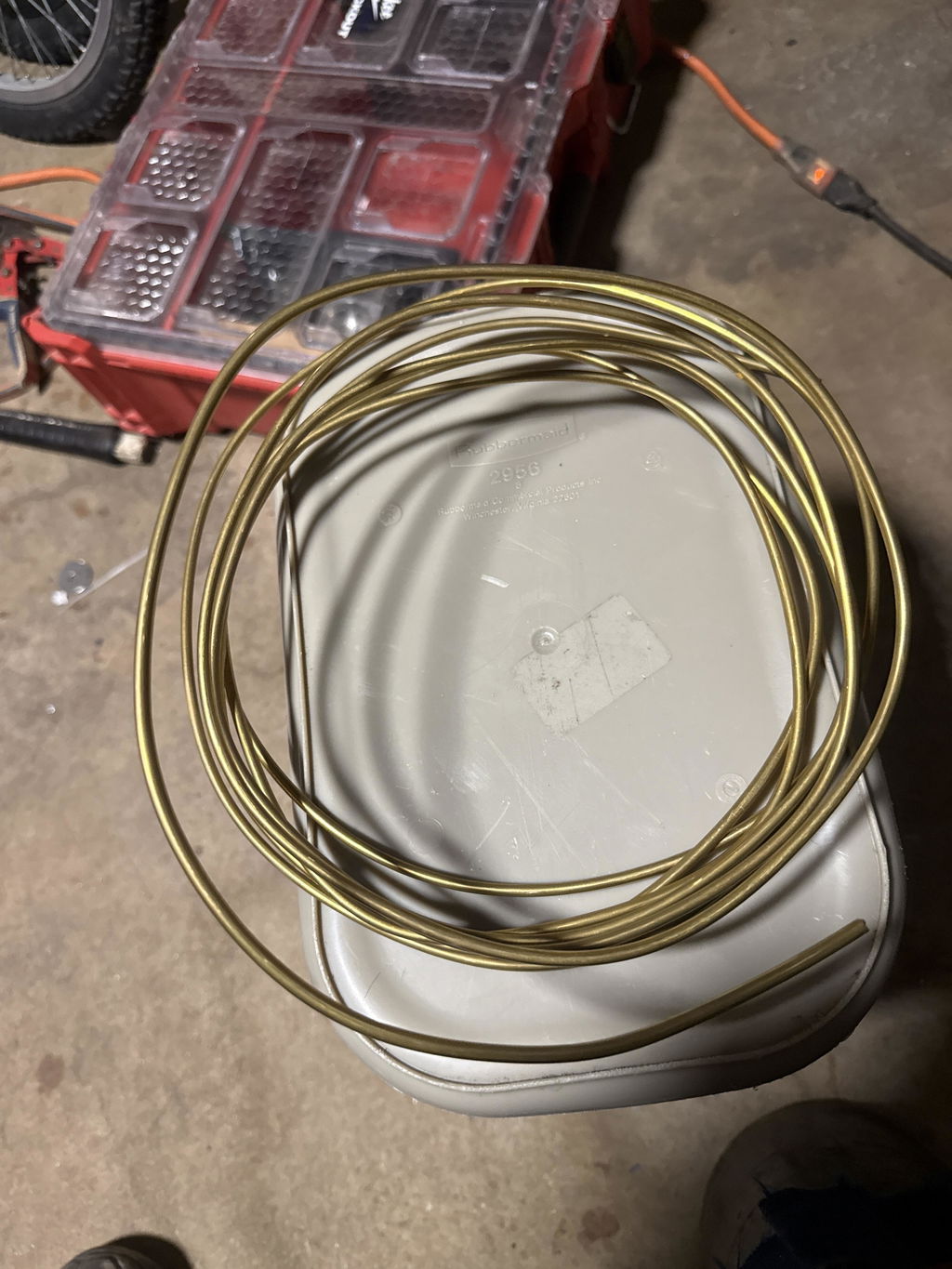
The chain is fine...but I ordered the wrong size. Nine links of the chain I ordered equals six of the size I wanted. My error...
How can I straighten out the springs? I can't use them coil uo as is.
Your payment information is processed securely. We do not store credit card details nor have access to your credit card information.
Get fitment advice & recommendations
When your project demands a conductor that won't let you down, standard hardware-store metal simply falls short. Engineers, electricians, hobbyists, and metal fabricators who need reliable electrical conductivity and thermal transfer turn to T2 pure copper sheet plate — a material trusted across professional and DIY workshops alike.
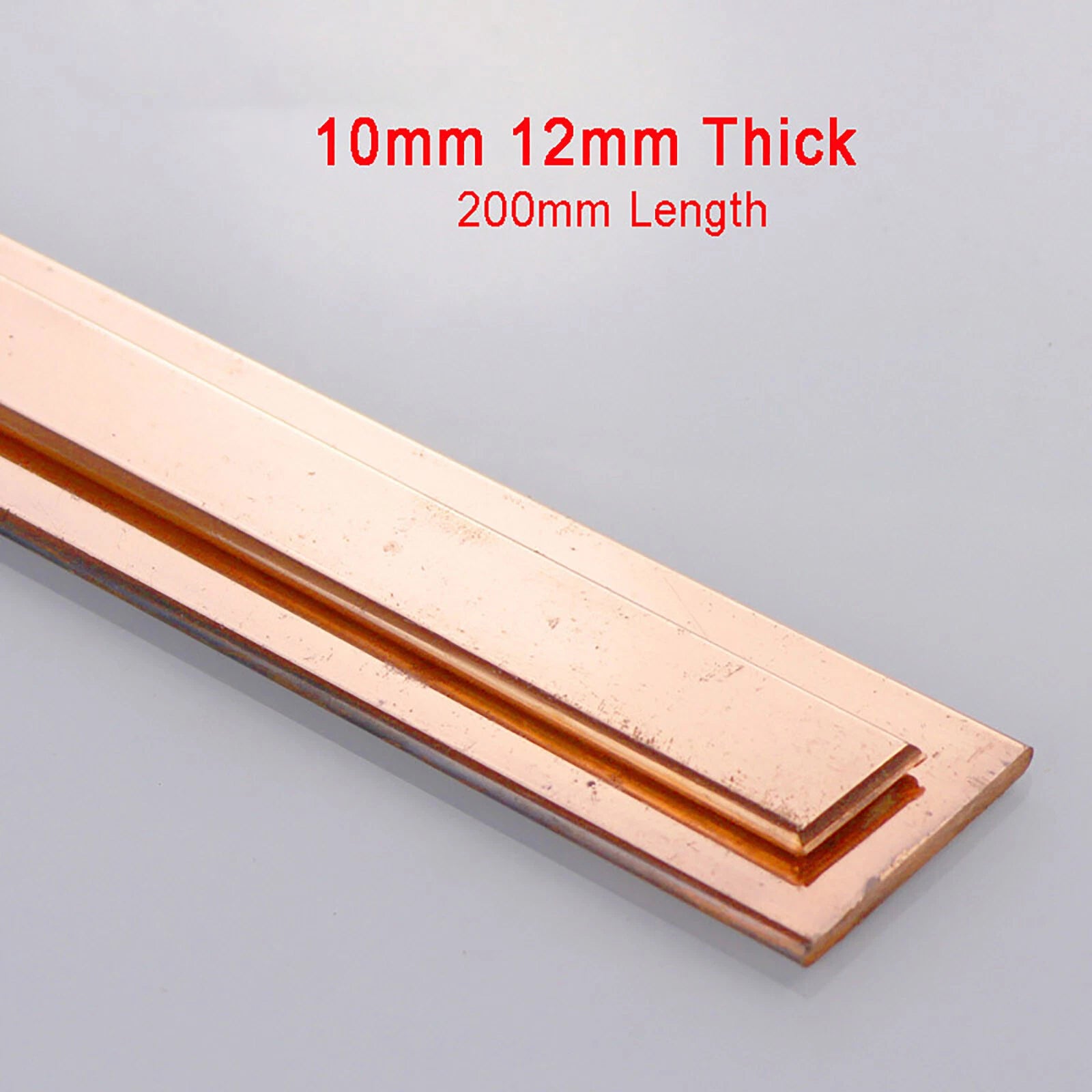
This pure copper sheet plate is made from T2-grade copper (≥99.9% Cu), offering outstanding electrical and thermal conductivity. Each strip measures 10 mm or 12 mm thick (approximately 0.39–0.47 in), with widths ranging from 20 mm to 100 mm (approximately 0.79–3.94 in) and a fixed length of 200 mm (approximately 7.87 in). Nine size combinations are available to match your exact application.
Typical use cases include bus bar fabrication and electrical panel grounding, heat sink and thermal interface applications in electronics, and custom metal fabrication for DIY copper art, jewelry blanks, and plumbing repair patches — all long-tail applications where T2 copper strip outperforms brass or aluminum alternatives.
| Material | T2 Pure Copper (≥99.9% Cu) |
|---|---|
| Thickness | 10 mm or 12 mm (0.39 in / 0.47 in) |
| Width | 20 mm – 100 mm (0.79 in – 3.94 in) — See variant options |
| Length | 200 mm (7.87 in) |
| Available Sizes | 9 combinations (10×20, 10×30, 10×40, 10×50, 10×60, 10×80, 10×100, 12×40, 12×50 — all ×200 mm) |
| Electrical Conductivity | ≥97% IACS (typical for T2 copper) |
| Thermal Conductivity | ~390 W/m·K (typical for T2 copper) |
| Surface Finish | Mill finish (bare copper) |
| Packing Quantity | 1 pc per unit |
| Weight per Piece | See variant options |
Select your thickness (10 mm or 12 mm) based on the current-carrying capacity or structural rigidity you need — thicker strips handle higher amperage and mechanical load. Then choose the width (20–100 mm) to match your bus bar channel or heat sink footprint. All pieces are 200 mm long, which you can cut down as needed.
Yes. T2 copper has a tensile strength of approximately 200–250 MPa in the annealed state, which is sufficient for most bus bar, grounding strap, and electrical panel applications. For high-vibration environments, mechanical fastening with bolts through drilled holes is recommended.
Copper naturally oxidizes to form a greenish patina (verdigris) when exposed to moisture and air, but this patina actually slows further corrosion. For electrical connections where low contact resistance is critical, clean the contact surfaces before assembly and apply an anti-oxidant compound or tin-plate the joint area.
Absolutely. T2 copper's clean surface accepts standard tin-lead and lead-free solders as well as silver brazing alloys. Flux the surface before soldering to remove any oxide layer and ensure a strong, low-resistance joint. This makes these strips ideal for electrical repair, plumbing patches, and custom fabrication.
Copper can be used alongside aluminum or steel, but direct contact between copper and aluminum creates a galvanic corrosion risk. Use bi-metallic transition washers or anti-oxidant joint compound when connecting copper to aluminum bus bars. Copper-to-copper and copper-to-tin-plated connections are fully compatible.
T2 copper can be cut with a hacksaw, angle grinder with a metal-cutting disc, or a cold saw. It drills cleanly with standard HSS drill bits — use cutting oil to extend bit life and prevent work-hardening. For precise cuts, a milling machine or CNC router with carbide tooling delivers the best results.
T2 copper is the Chinese national standard designation (GB/T 5585) roughly equivalent to C11000 (ETP copper) in the ASTM system — both are ≥99.9% pure copper with excellent electrical conductivity. The practical performance for DIY electrical and thermal applications is essentially identical. If your project specifies C110 or ETP, T2 copper is a functionally compatible substitute.