The chain is fine...but I ordered the wrong size. Nine links of the chain I ordered equals six of the size I wanted. My error...
How can I straighten out the springs? I can't use them coil uo as is.
Your payment information is processed securely. We do not store credit card details nor have access to your credit card information.
Get fitment advice & recommendations
When your project demands reliable electrical conductivity and a material that machines cleanly without cracking, finding the right copper sheet in the exact size you need can be a frustrating search. Whether you are a hobbyist building a custom PCB shield, a maker fabricating heat spreaders, or a small workshop cutting shims and gaskets, this pure copper sheet plate gives you a precise starting point without the waste of oversized stock.
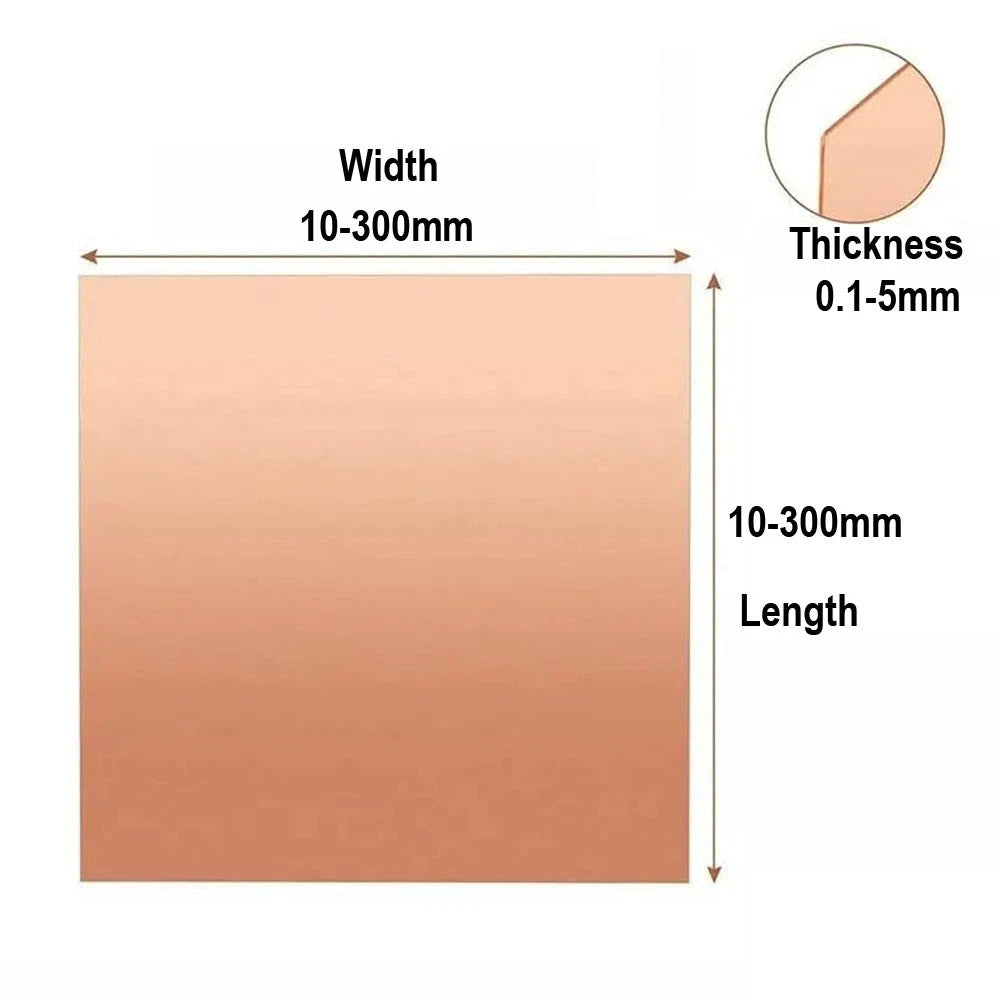
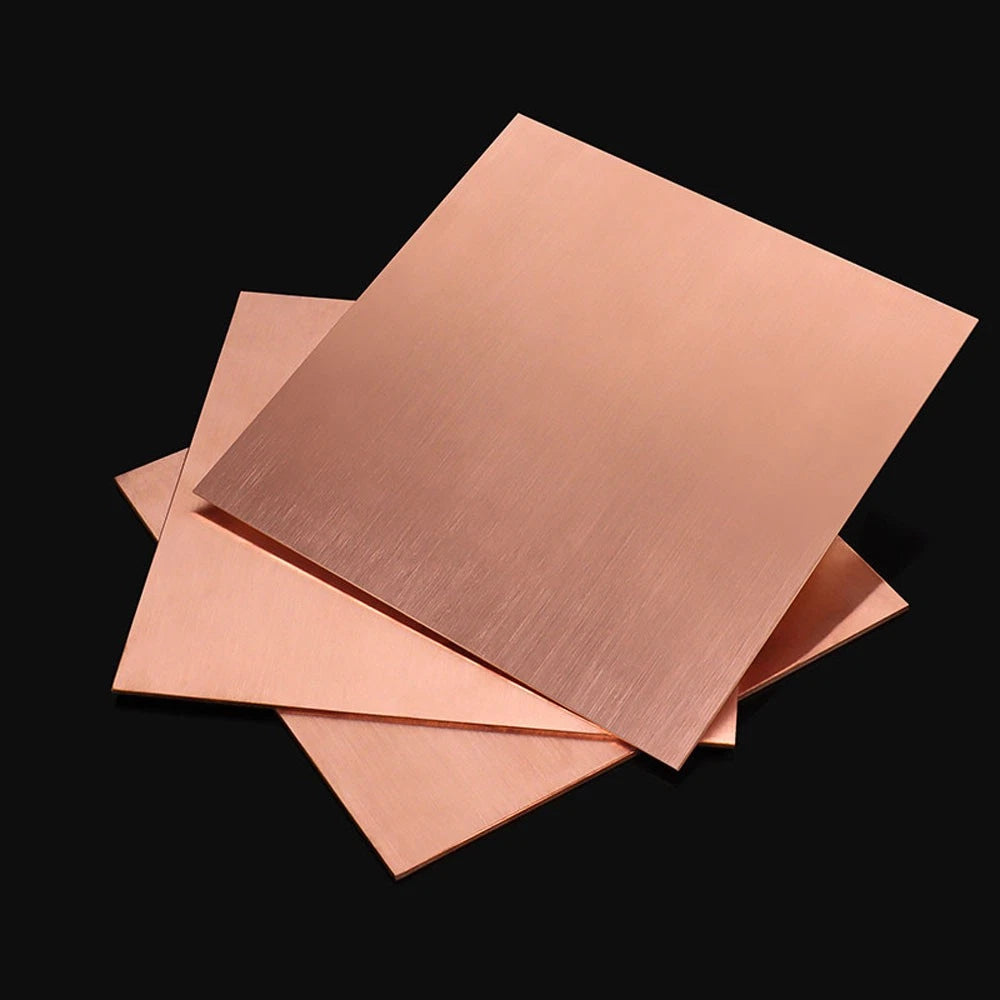
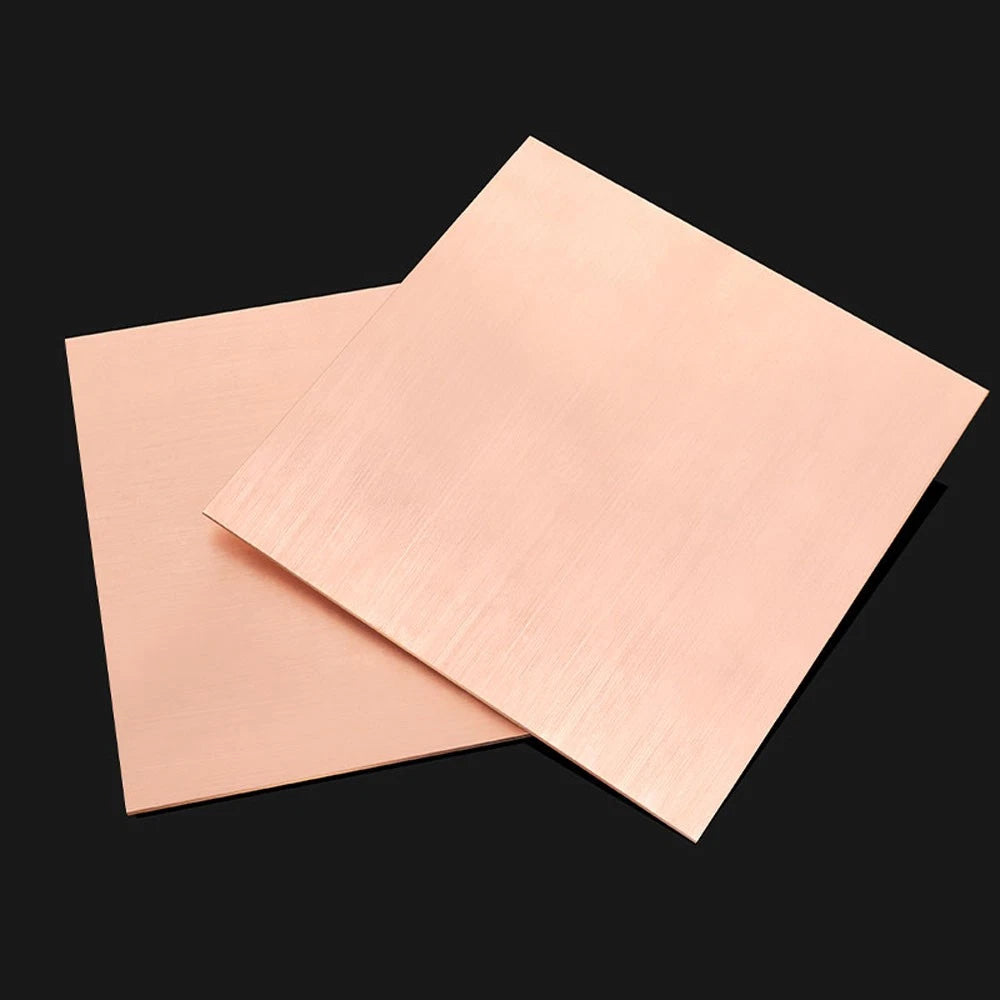
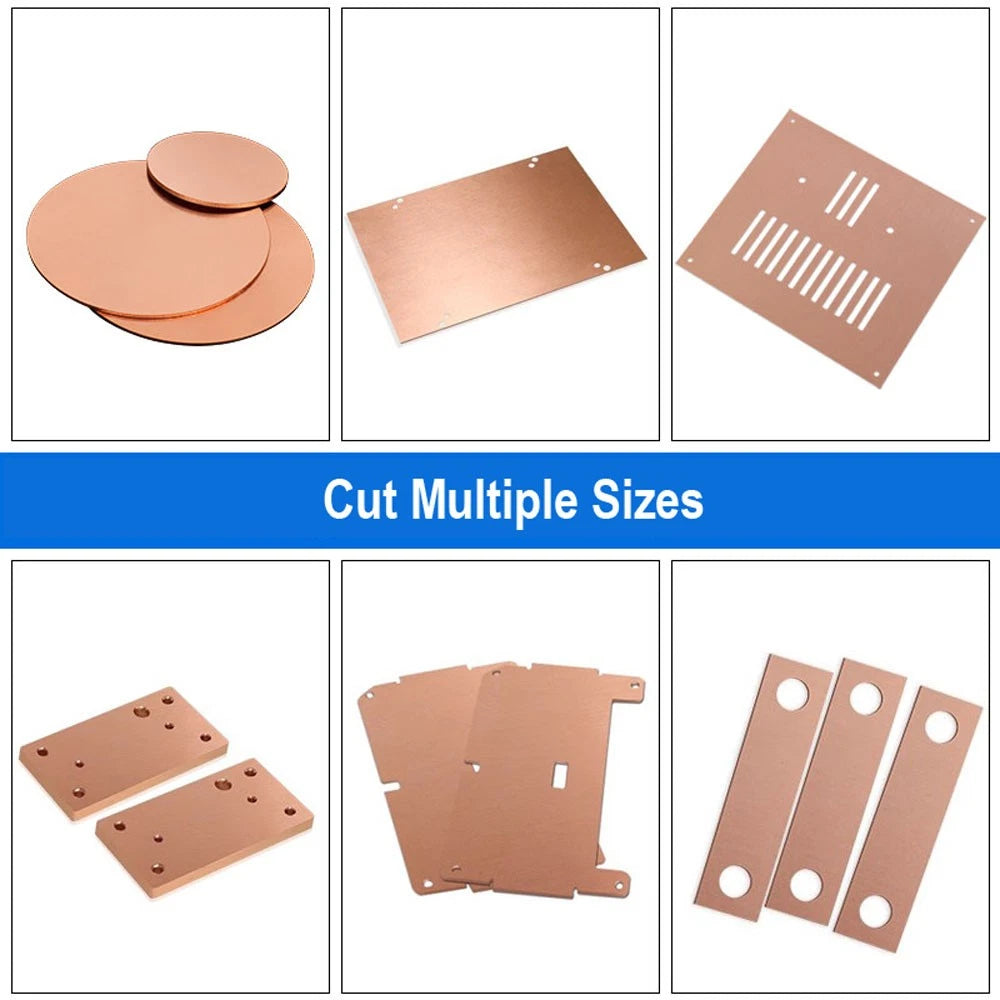
Each piece is cut from natural copper (Cu) with a smooth, flat surface finish. Sizes range from 10 mm × 10 mm up to 300 mm × 300 mm (approximately 0.39 in × 0.39 in to 11.8 in × 11.8 in), and thickness options span 0.1 mm to 5 mm (approximately 0.004 in to 0.197 in). Pieces are available individually or in multi-piece sets of 2, 4, 5, or 10 depending on the variant selected.
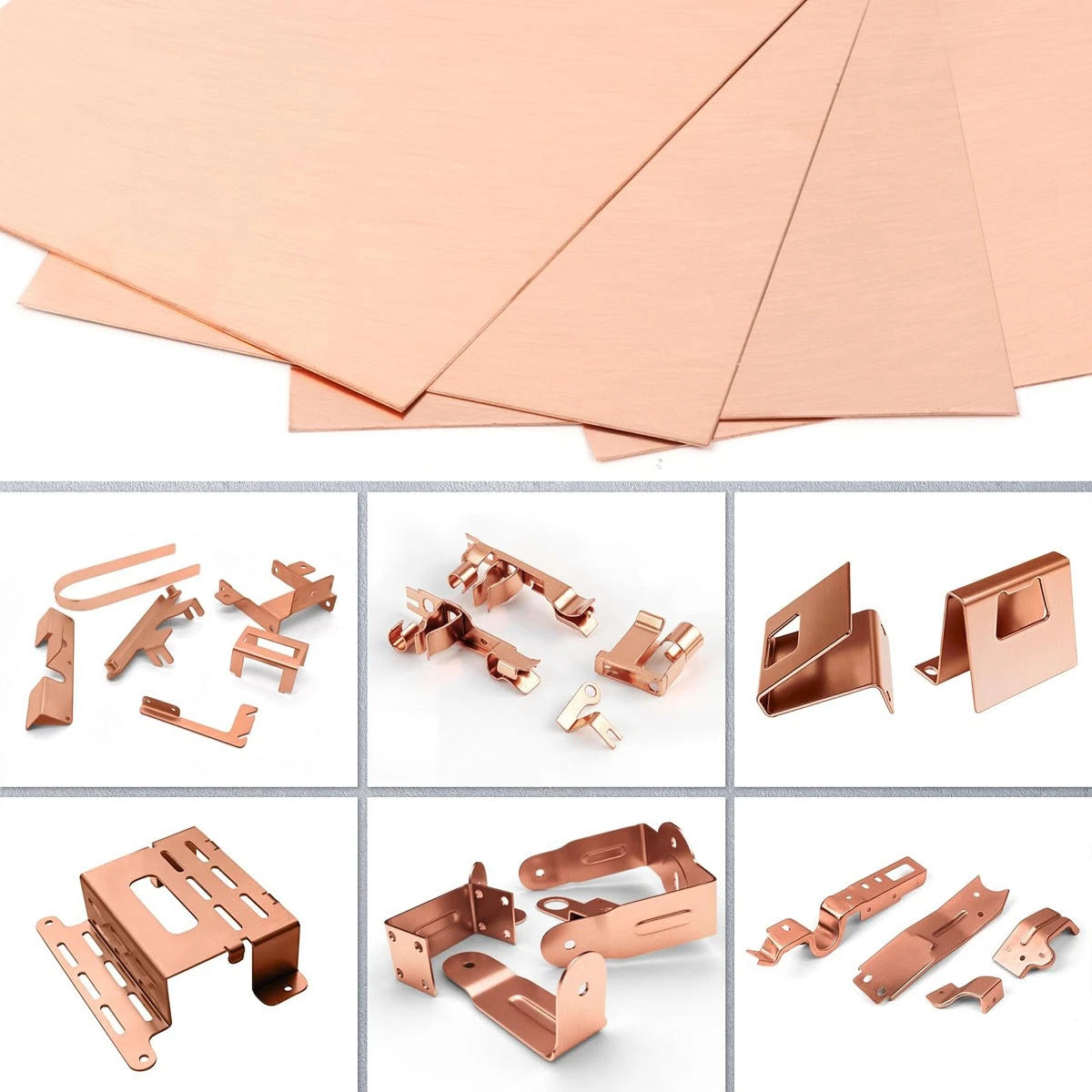
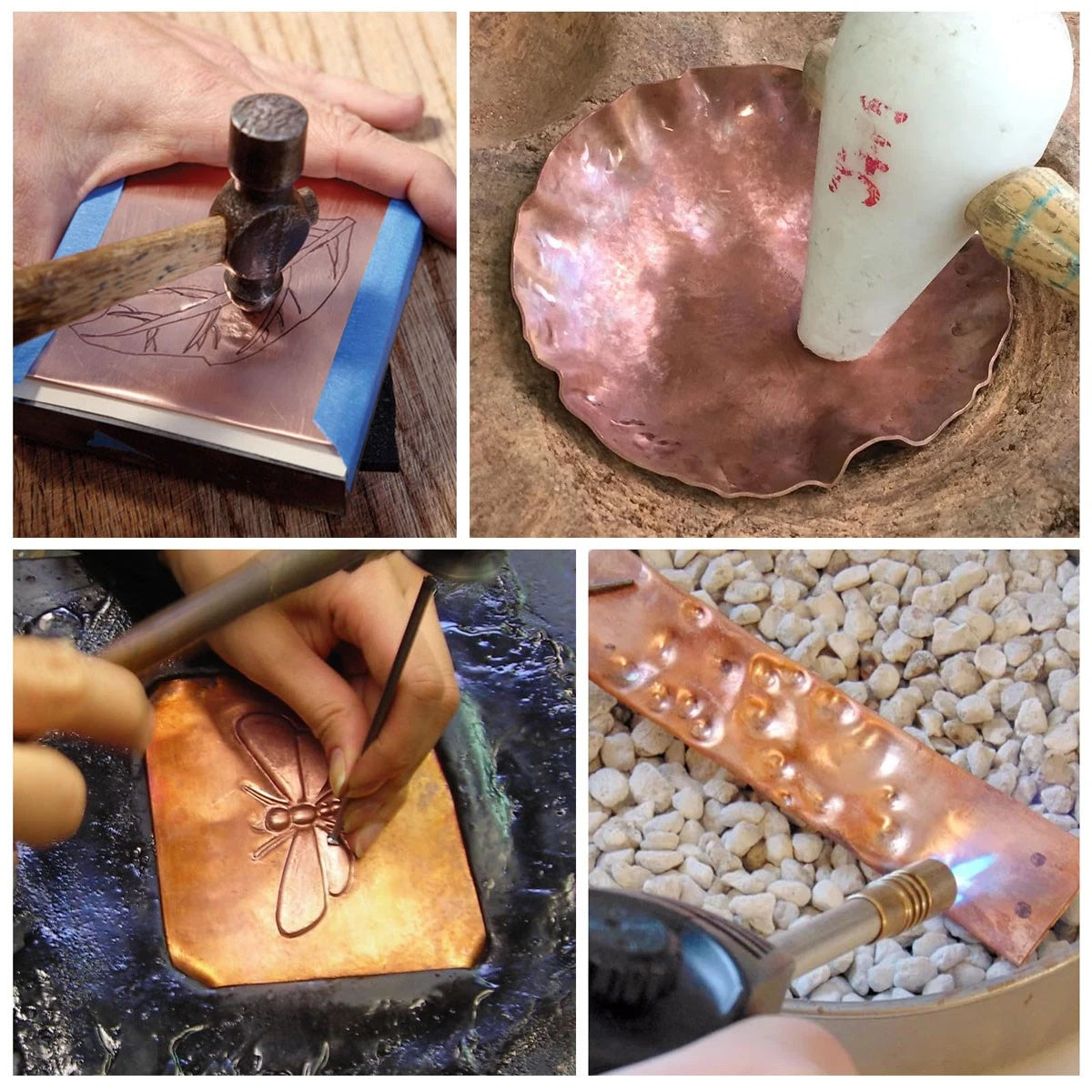
Typical use cases include copper shim stock for thermal management between CPU heatsinks and ICs, conductive grounding straps in electronics enclosures, decorative metalwork and etching blanks for jewellery and craft projects, and custom electrode plates for electroplating or electrolysis setups. The flat, burr-free surface also makes it suitable as a pure copper sheet for RF shielding panels in DIY radio projects.
Made from natural copper (Cu) with no alloy additions, delivering the high electrical and thermal conductivity that copper is known for — ideal for grounding, heat spreading, and conductive applications.
Available from compact 10 mm × 10 mm squares up to large 300 mm × 300 mm panels, with rectangular options such as 50 mm × 200 mm and 200 mm × 300 mm, covering a broad range of project footprints.
Choose from 11 thickness options — 0.1 mm, 0.3 mm, 0.5 mm, 0.6 mm, 0.8 mm, 1 mm, 1.5 mm, 2 mm, 3 mm, 4 mm, and 5 mm — so you can match the exact mechanical and electrical requirements of your design.
Copper's natural ductility means these sheets can be cut with tin snips or a jeweller's saw, drilled, bent, and formed without cracking, making them straightforward to work with in both hand-tool and machine-tool environments.
Pure copper is one of the most conductive metals available, making these sheets a reliable choice for EMI/RF shielding panels, bus bar blanks, electrode plates, and grounding straps in electronic assemblies.
Order as a single piece for prototyping or in sets of 2, 4, 5, or 10 pieces for production runs and batch projects — quantity options vary by size and thickness combination.
| Material | Natural Copper (Cu) |
|---|---|
| Item Type | Metal Sheet / Flat Stock |
| Thickness Range | 0.1 mm – 5 mm (0.004 in – 0.197 in) |
| Size Range (W × L) | 10 mm × 10 mm – 300 mm × 300 mm |
| Surface Finish | Smooth, flat |
| Colour / Finish | Natural copper (reddish-orange) |
| Available Quantities | 1 Pcs, 2 Pcs, 4 Pcs, 5 Pcs, 10 Pcs (varies by variant) |
| Weight | See variant options |
| Conductivity | Electrically and thermally conductive |
| Workability | Cuttable, drillable, solderable, bendable |
Select the size (W × L) that matches or slightly exceeds your required footprint — you can always trim down with tin snips or a saw. For thickness, thinner sheets (0.1–0.5 mm) suit flexible shims and foil applications, mid-range (0.8–1.5 mm) work well for grounding straps and PCB shields, and thicker options (2–5 mm) are suited to structural or high-current bus bar applications.
These sheets are made from natural copper (Cu) without intentional alloying additions. This gives you the conductivity and workability associated with pure copper. If your application requires a specific alloy grade (such as C101 or C110), please contact us to confirm before ordering.
Copper naturally oxidises when exposed to air and moisture, forming a patina that ranges from dull brown to green over time. For electrical contact surfaces, clean the sheet with a mild acid solution (such as diluted citric acid) or fine abrasive before use. For decorative applications, a clear lacquer coat will slow oxidation. The patina does not significantly affect bulk conductivity in most applications.
Yes. Pure copper solders readily with standard rosin-core or water-soluble flux and tin-lead or lead-free solder. Clean the surface with isopropyl alcohol and apply flux before soldering for best adhesion. Avoid excessive heat dwell time to prevent warping on thinner sheets.
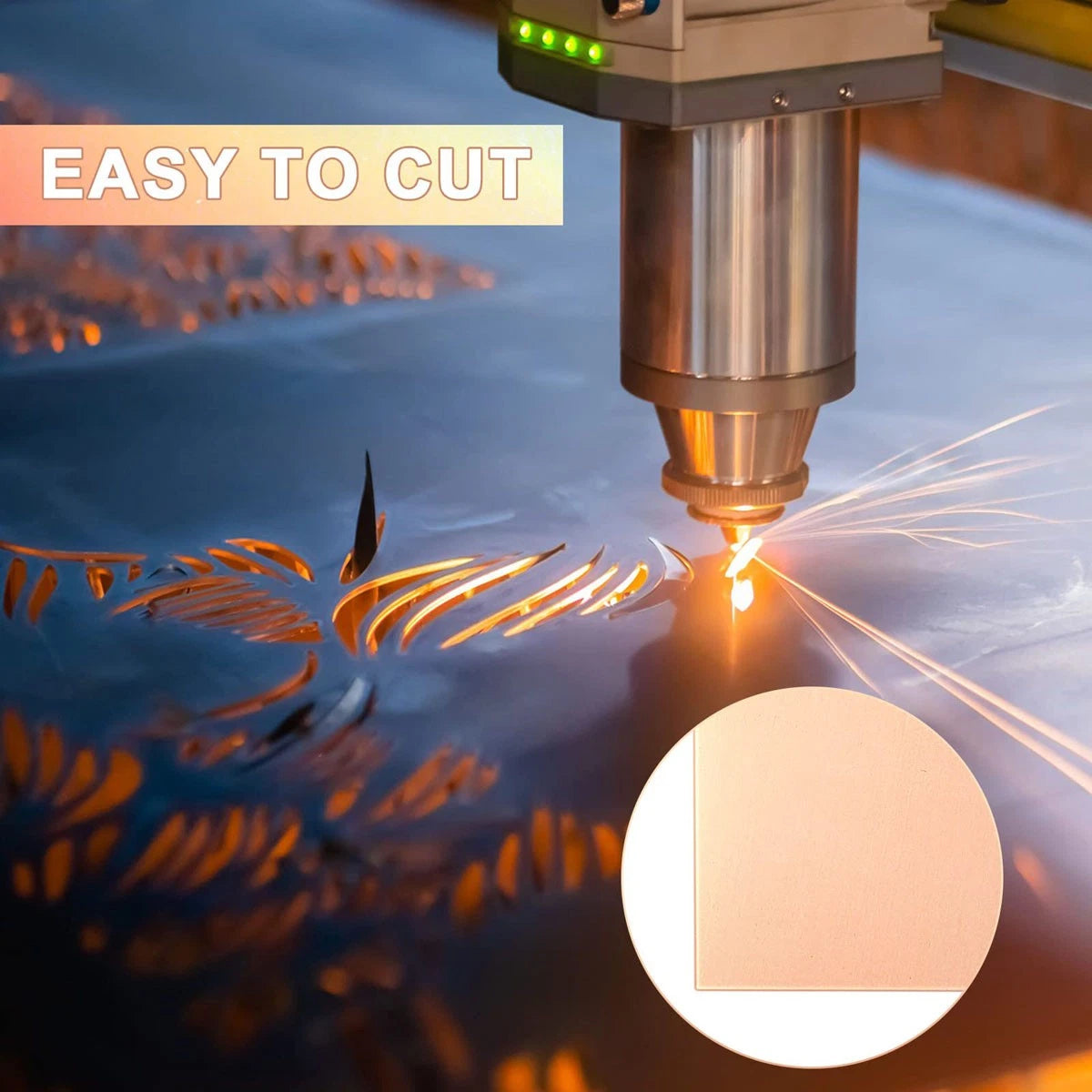
Copper can be cut with a CNC router using carbide end mills at appropriate feeds and speeds. Laser cutting copper is more challenging due to its high reflectivity; fibre lasers with sufficient power can cut thinner sheets (typically up to 1–2 mm), but CO₂ lasers are generally not effective on copper. For thicker sheets, mechanical cutting (tin snips, band saw, or CNC router) is recommended.
Each variant listing specifies the number of identical pieces included at the listed price. Ordering multi-piece sets is useful for batch prototyping, creating matched pairs for electrodes, or stocking spares. The available quantity options vary by size and thickness combination — check the variant selector for what is available for your chosen dimensions.
Yes. Pure copper is an effective material for EMI and RF shielding enclosures and panels. Thicker sheets (1 mm and above) provide better low-frequency magnetic shielding, while thinner foils are effective for higher-frequency electric field shielding. Ensure all seams and joints are soldered or clamped for maximum shielding effectiveness.