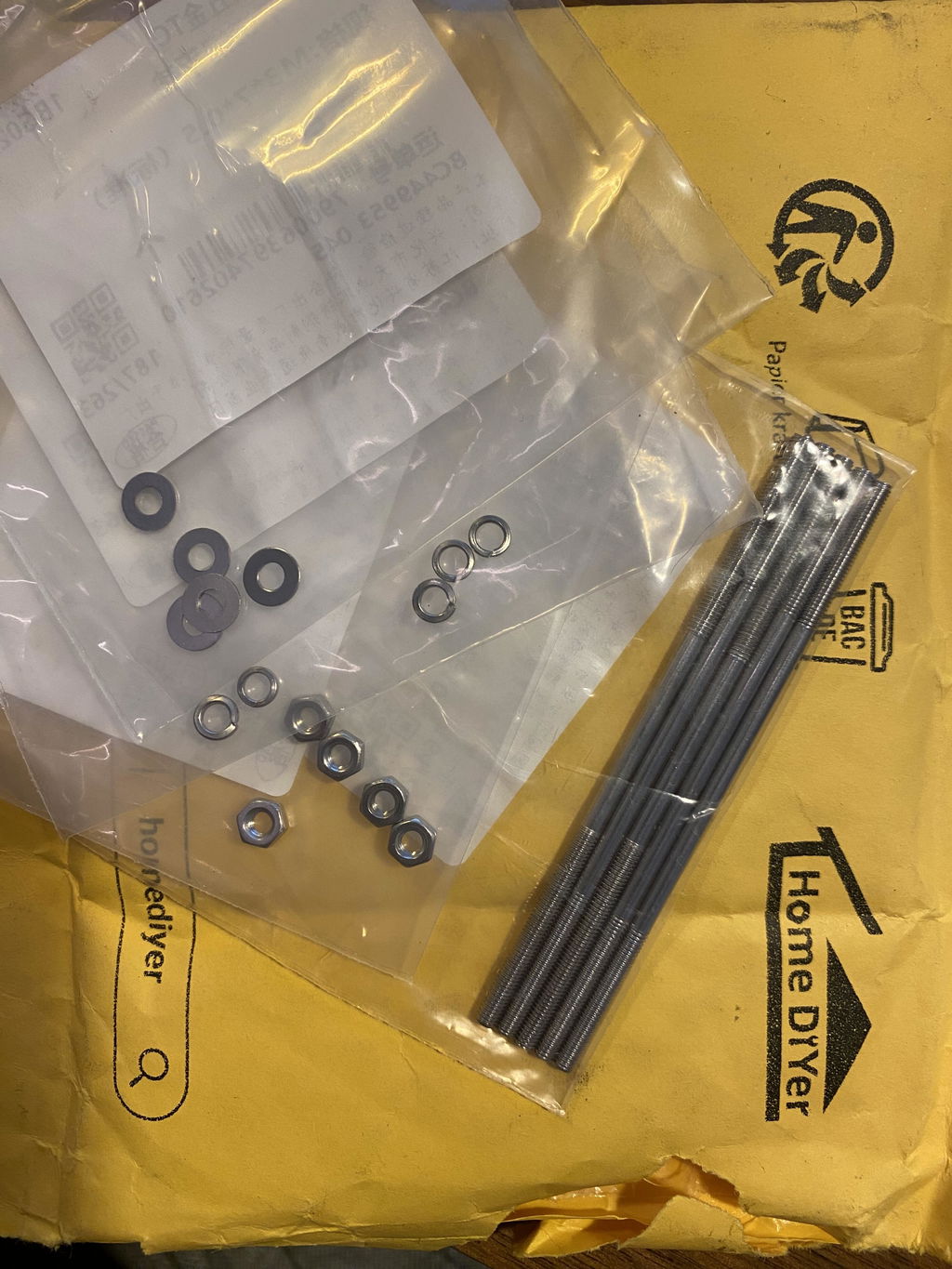
The chain is fine...but I ordered the wrong size. Nine links of the chain I ordered equals six of the size I wanted. My error...
How can I straighten out the springs? I can't use them coil uo as is.
Your payment information is processed securely. We do not store credit card details nor have access to your credit card information.
Get fitment advice & recommendations
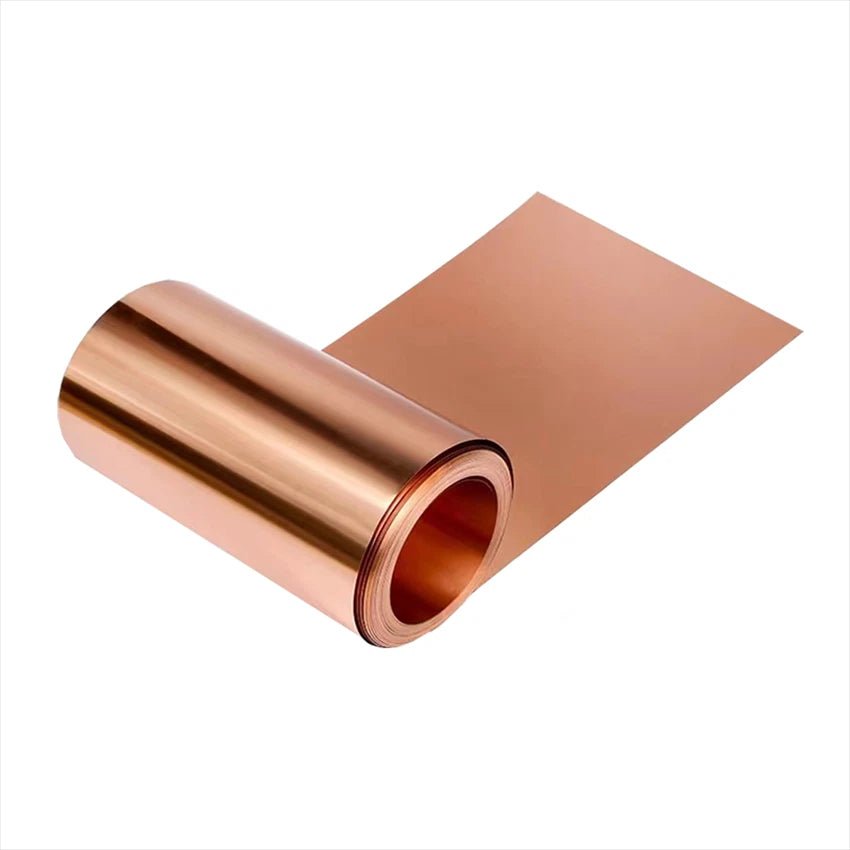
When your project demands a conductor that won't let you down, thin copper sheet stock is often the missing piece. Whether you're a maker building RF shielding enclosures, an electronics hobbyist lining a Faraday cage, or a craftsperson working with metal inlay and decorative banding, finding the right thickness and width in one place is a constant frustration. This pure copper foil strip roll is stocked in an extensive range of dimensions specifically for DIY builders and small workshop operators who need precision material without ordering industrial minimums.
Each roll is made from commercially pure copper (C11000 equivalent grade, ≥99.9% Cu), cold-rolled to a consistent thickness ranging from 0.01 mm to 1 mm (approximately 0.0004 in to 0.039 in). Width options span 100 mm to 400 mm (roughly 3.94 in to 15.75 in), and rolls are available in 1 M or 5 M lengths. The surface is smooth and bright, with tight dimensional tolerances suited to precision cutting and forming.
Typical use cases include EMI/RFI shielding tape and gaskets for electronics enclosures, copper inlay work in woodworking and resin casting, grounding straps and bus bars in low-voltage electrical assemblies, heat spreader shims between components, and decorative metalwork in jewelry and architectural trim. Long-tail searches that match this product: thin copper strip roll for shielding, copper foil sheet for Faraday cage, pure copper flat bar stock DIY, copper shim stock roll.
Available from 0.01 mm foil-weight all the way to 1 mm plate-weight strip, covering shielding foil, shim stock, and light structural applications in a single product line.
Choose from 100 mm, 120 mm, 150 mm, 200 mm, 250 mm, 300 mm, and 400 mm widths so you can minimize waste and avoid costly slitting operations on your end.
Supplied in 1 M or 5 M rolls rather than flat sheets, making it easy to cut exact lengths on-site and reducing packaging waste compared to pre-cut blanks.
C11000-equivalent electrolytic tough pitch copper delivers excellent electrical conductivity (~100% IACS), thermal conductivity, and corrosion resistance in indoor and sheltered outdoor environments.
Soft-annealed temper allows clean cutting with scissors or snips at thinner gauges, and precise bending or rolling at heavier gauges without cracking or delamination.
Copper forms a stable oxide patina that protects the base metal in most indoor environments. For outdoor or high-humidity use, a clear lacquer coat is recommended to maintain the bright finish.
| Material | Commercially pure copper, C11000 equivalent (≥99.9% Cu) |
|---|---|
| Temper | Soft / annealed (O60) |
| Thickness Range | 0.01 mm – 1 mm (0.0004 in – 0.039 in) |
| Width Range | 100 mm – 400 mm (3.94 in – 15.75 in) |
| Length Options | 1 M or 5 M per roll |
| Thickness (Selected) | See variant options |
| Width (Selected) | See variant options |
| Surface Finish | Bright, smooth cold-rolled |
| Electrical Conductivity | ~100% IACS |
| Thermal Conductivity | ~385 W/(m·K) |
| Tensile Strength (approx.) | 220 – 260 MPa (soft temper) |
| Corrosion Resistance | Good in indoor / sheltered environments; patina-forming |
| Solderability | Excellent with rosin or water-soluble flux |
| Weight per Roll | See variant options |
For EMI/RFI shielding tape and Faraday cage lining, 0.05 mm – 0.1 mm is typically sufficient and easy to cut with scissors. For heat spreader shims between PCB components, 0.1 mm – 0.3 mm provides a good balance of thermal conductivity and compressibility. For structural grounding straps or decorative banding that needs to hold its shape, 0.3 mm – 1 mm is recommended. If you are unsure, start with a 1 M roll of a mid-range thickness to test before committing to a 5 M roll.
In soft/annealed temper, tensile strength is approximately 220 – 260 MPa. Thicker gauges (0.5 mm – 1 mm) are suitable for light structural applications such as grounding bus bars, cable management clips, and decorative trim. For load-bearing structural applications, a harder temper or thicker gauge is recommended. This product is not intended for high-stress mechanical fastening.
Pure copper naturally forms a copper oxide patina (darkening to brown, then eventually green verdigris) when exposed to air and moisture. This patina is protective and slows further corrosion. For indoor electronics and shielding applications, the patina does not significantly affect conductivity. If you need to maintain a bright finish, apply a clear lacquer or wax coating after cleaning. For outdoor or marine environments, additional protective coating is strongly recommended.
Yes. Commercially pure copper has excellent solderability. Use rosin-core or water-soluble flux solder for electronics work. For brazing, standard copper-phosphorus or silver-based brazing alloys work well. Lightly abrade or clean the surface with isopropyl alcohol before soldering to remove any oxide layer for the best joint quality.
At 0.01 mm – 0.1 mm thickness, the foil cuts cleanly with sharp scissors, a craft knife, or a rotary cutter on a cutting mat. At 0.1 mm – 0.5 mm, metal shears or aviation snips give cleaner edges. At 0.5 mm – 1 mm, a metal-cutting blade in a jigsaw or angle grinder with a thin cutting disc is recommended. Laser cutting works well across most thicknesses with appropriate power settings. Always deburr cut edges before handling.
The 5 M roll offers a lower per-meter cost and is the better choice if you have an ongoing project or anticipate multiple cuts. The 1 M roll is ideal for one-off prototypes, testing a new thickness, or projects where you need only a short length. Check the price per meter on the variant selector above to compare — the savings on the 5 M roll are typically 15–30% depending on the size selected.
Widths range from 100 mm to 400 mm. Choose a width that matches or slightly exceeds your required coverage to minimize waste. For shielding panels, measure the interior dimension of your enclosure and select the next width up. For decorative inlay or banding, match the width to your channel or groove dimension. If you need a narrower strip, wider rolls can be cut down with metal shears or a slitting tool.