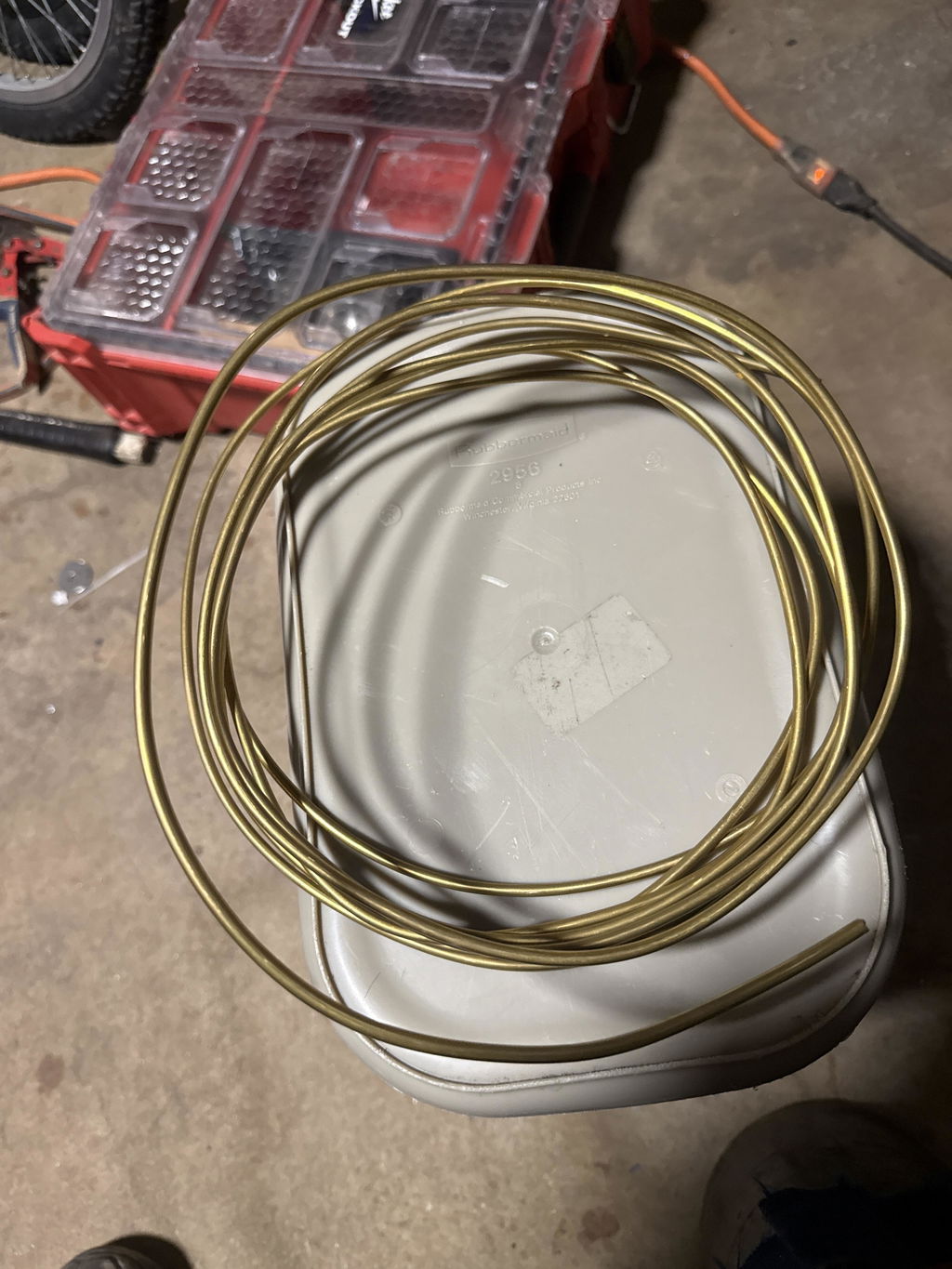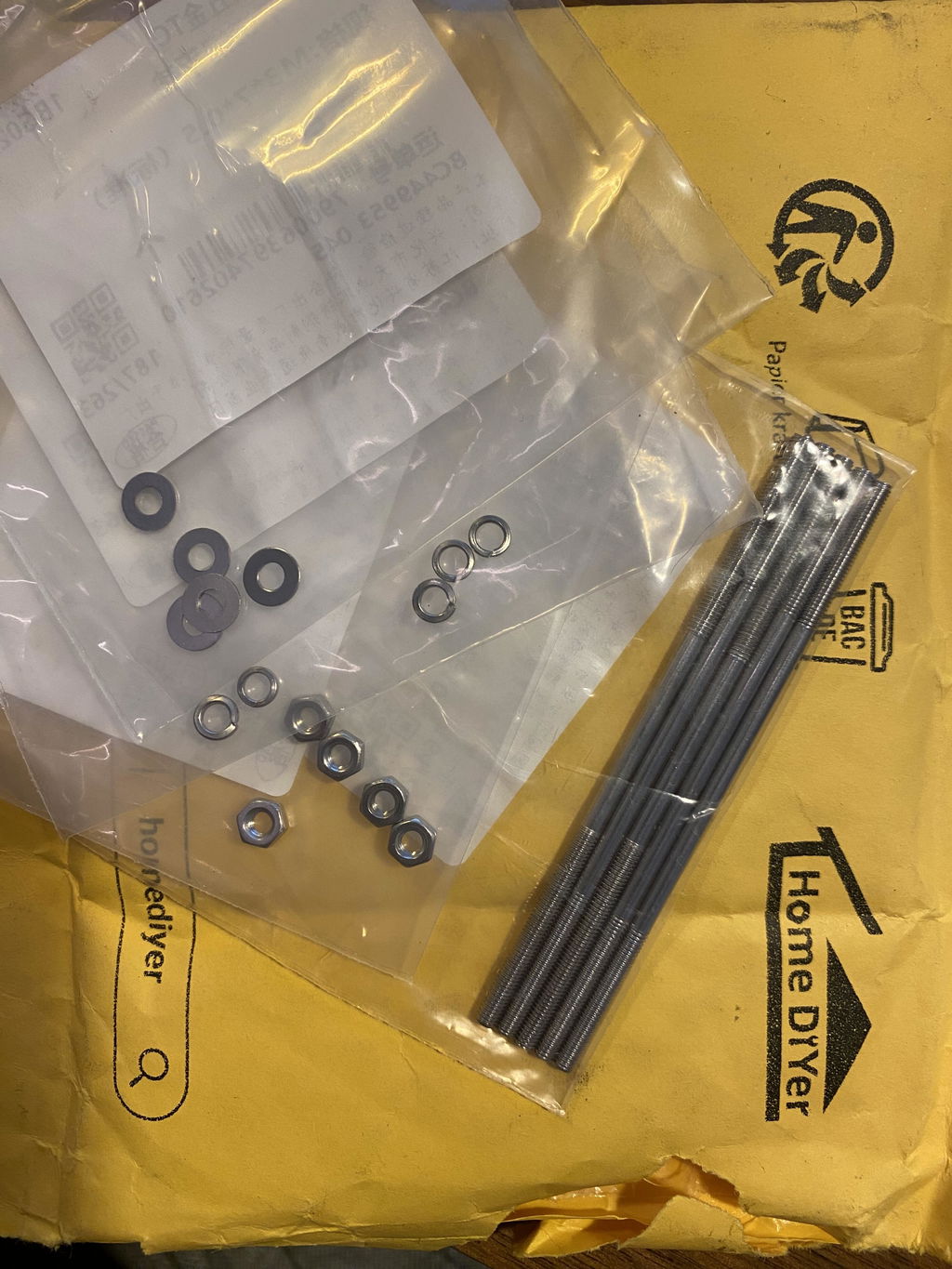
The chain is fine...but I ordered the wrong size. Nine links of the chain I ordered equals six of the size I wanted. My error...
How can I straighten out the springs? I can't use them coil uo as is.
Your payment information is processed securely. We do not store credit card details nor have access to your credit card information.
Get fitment advice & recommendations
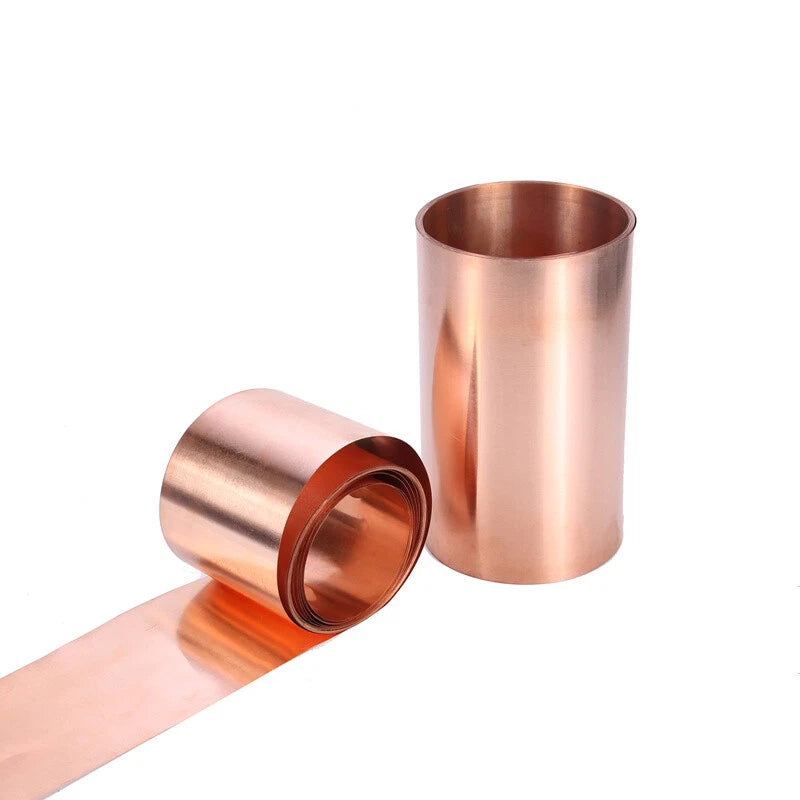
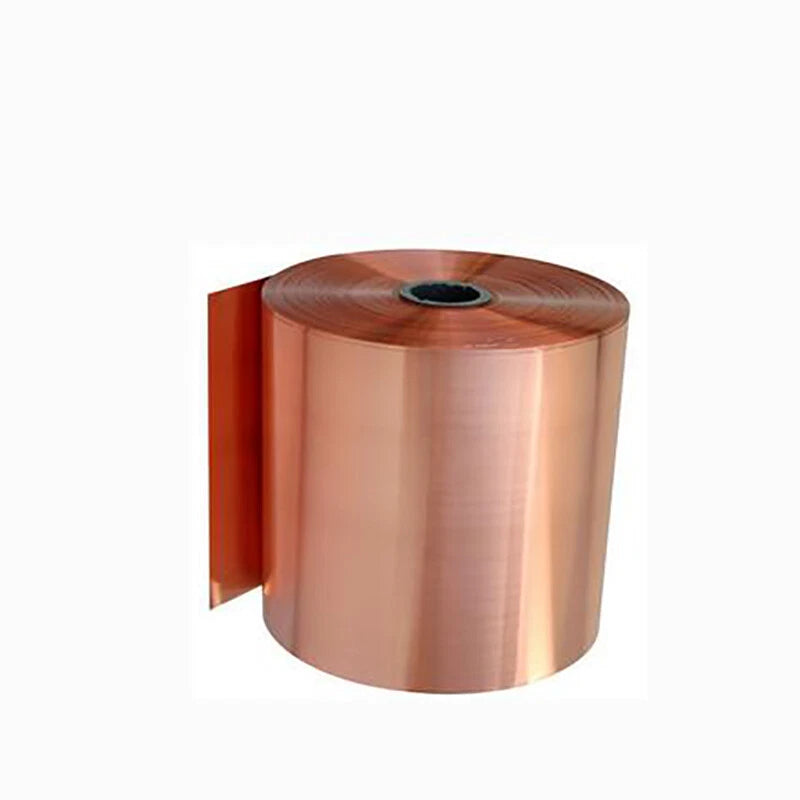
When your project demands a conductor that won't let you down, generic metal strips fall short — poor conductivity, inconsistent thickness, and surfaces that corrode before the job is done. These pure copper sheet strips are engineered for makers, electricians, hobbyists, and fabricators who need reliable, precisely dimensioned flat copper stock they can cut, bend, and solder with confidence.
Each strip is made from T2-grade pure copper (≥99.9% Cu), available in thicknesses ranging from 0.01 mm to 1 mm (approximately 0.0004″ to 0.039″) and widths of 15 mm, 100 mm, 200 mm, or 300 mm (approximately 0.6″ to 11.8″). Length options are 0.5 M or 1 M per piece. The surface is smooth-rolled with a bright copper finish, free of burrs and scale.
Typical applications include DIY electromagnetic shielding tape and RF gaskets, custom bus bars and grounding straps for electrical panels, jewelry-making and metalsmithing blanks, heat-sink shims for electronics repair, and decorative inlay work in woodworking — all use cases where a flexible pure copper sheet strip delivers measurable performance advantages over brass or aluminum alternatives.
Sourced from T2 electrolytic copper for outstanding electrical conductivity (IACS ≥97%) and thermal transfer, outperforming brass and aluminum in low-resistance applications.
Over 30 size combinations let you match the exact cross-section your project requires, from ultra-thin 0.01 mm foil to a robust 1 mm structural plate.
Thinner gauges (≤0.3 mm) bend and conform without cracking, making them ideal for wrapping cables, lining enclosures, or forming custom gaskets by hand.
Copper's inherent oxidation behavior forms a stable patina rather than destructive rust, maintaining structural integrity and conductivity over years of service.
Cold-rolled finish delivers consistent thickness tolerance (typically ±10% on ultra-thin gauges, tighter on thicker stock) and a clean surface that accepts solder, flux, and adhesive without pre-treatment.
Order exactly the length you need to minimize waste. Each piece is cut to length and rolled or flat-packed to prevent kinking during transit.
| Material | T2 Electrolytic Pure Copper (Cu ≥99.9%) |
|---|---|
| Thickness Range | 0.01 mm – 1 mm (0.0004″ – 0.039″) |
| Width Options | 15 mm, 100 mm, 200 mm, 300 mm |
| Length Options | 0.5 M / 1 M per piece |
| Surface Finish | Smooth cold-rolled, bright copper |
| Conductivity | ≥97% IACS (International Annealed Copper Standard) |
| Thickness Tolerance | See variant options |
| Temper / Hardness | See variant options |
| Weight per Piece | See variant options |
| Color | Bright copper / natural |
| Solderable | Yes — compatible with standard rosin and water-soluble fluxes |
| RoHS Compliant | Contact us to confirm |
For electromagnetic shielding and RF gaskets, 0.05–0.1 mm is typically sufficient. For electrical bus bars or grounding straps carrying meaningful current, 0.3–1 mm provides lower resistance and better mechanical strength. For decorative inlay or jewelry work, 0.1–0.3 mm offers a good balance of flexibility and durability. If you're unsure, start with a thinner gauge — it's easier to layer than to thin down.
Choose the width closest to your finished part size to minimize cutting waste. The 100 mm width suits most cable shielding and small panel work. The 200 mm and 300 mm widths are better for larger enclosure liners, heat spreaders, or sheet-metal fabrication tasks. The 15 mm width is a narrow strip ideal for bus bar runs or decorative banding.
Pure T2 copper is softer than brass or bronze and is not intended for structural load-bearing applications. It excels in electrical, thermal, and decorative roles. For thicknesses of 0.5 mm and above, the strip has enough rigidity for light mechanical applications such as shims, spacers, and contact springs, but should not be used where tensile strength is a primary requirement.
Pure copper does not rust. Over time, exposure to air and moisture causes it to develop a patina — first darkening to a brown tone, then potentially forming a green verdigris layer in humid environments. This patina is stable and actually protects the underlying metal. For applications requiring a bright finish, apply a clear lacquer or store in a sealed bag when not in use.
Yes. T2 pure copper solders readily with standard rosin-core or water-soluble flux and 60/40 or lead-free solder. Lightly abrade the surface with fine sandpaper (400-grit) before soldering if the strip has developed any surface oxidation. Avoid acid flux on thin gauges as it can cause pitting.
These are bare copper strips without adhesive backing — they are flat-rolled metal stock, not adhesive tape. They are thicker and more structurally rigid than typical copper foil tape, making them suitable for electrical connections, fabrication, and machining. If you need self-adhesive copper tape, that is a separate product category.
Thin gauges (≤0.1 mm) can be cut cleanly with sharp scissors or a craft knife and steel ruler. For 0.2–0.5 mm, use tin snips or a metal shear for straight cuts. Thicker stock (0.5–1 mm) is best cut with a hacksaw, angle grinder with a thin cutting disc, or a metal-cutting bandsaw. Always deburr cut edges with a fine file or sandpaper before handling.
Yes — the high conductivity (≥97% IACS) makes these strips well-suited for grounding straps, bus bars, and PCB ground planes. Ensure the strip gauge is appropriately sized for the current load in your application. For mains electrical panel work, always consult local electrical codes and a licensed electrician to confirm compliance.