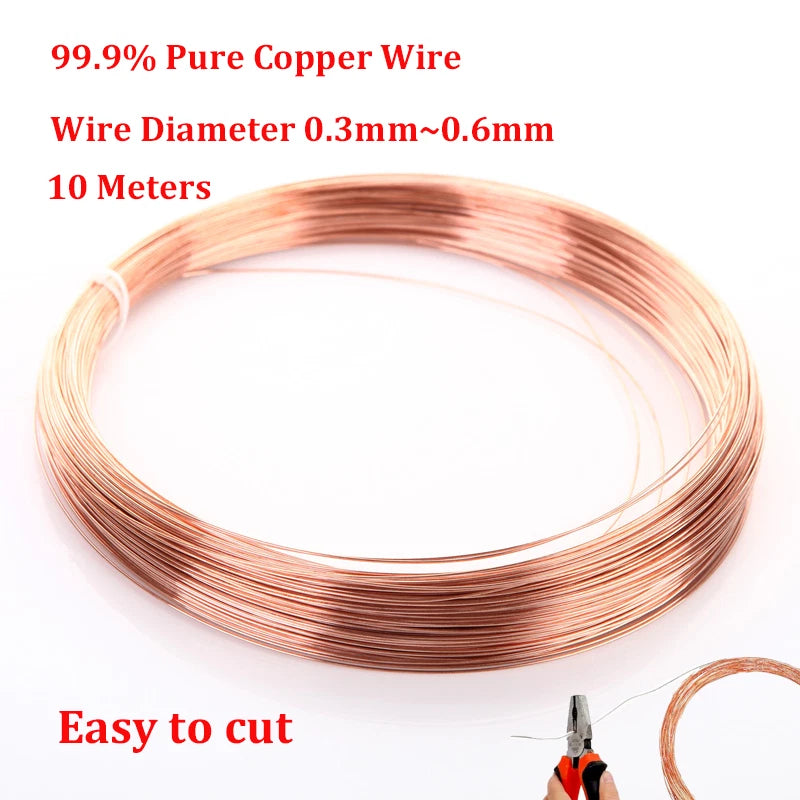
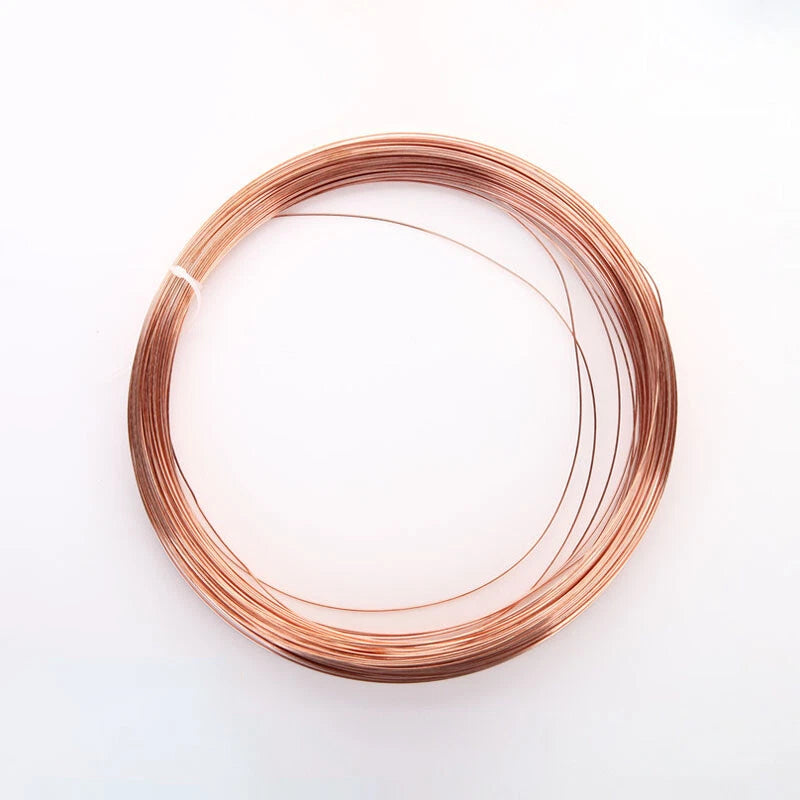
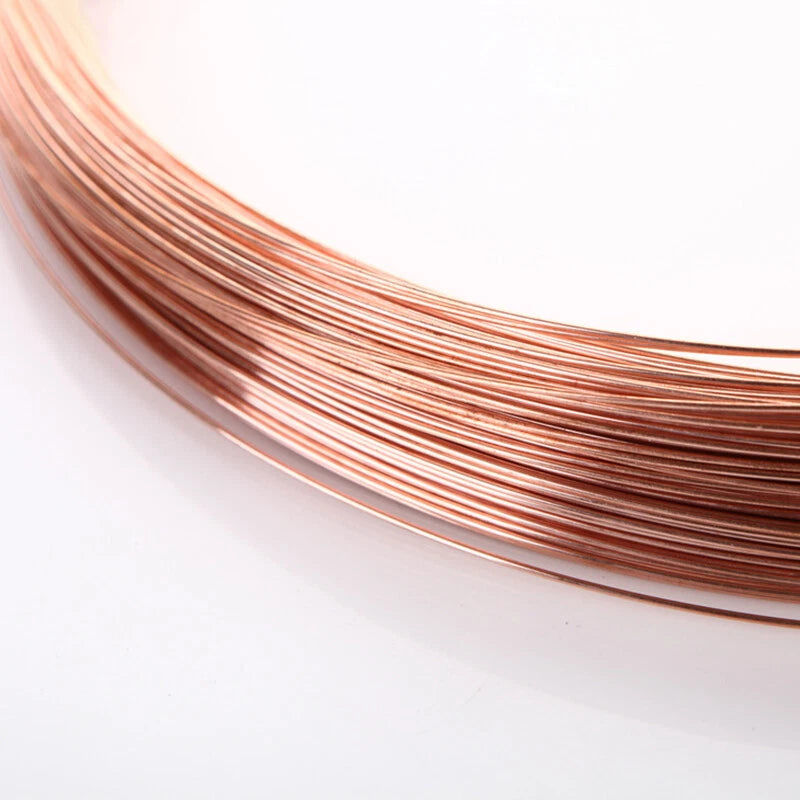
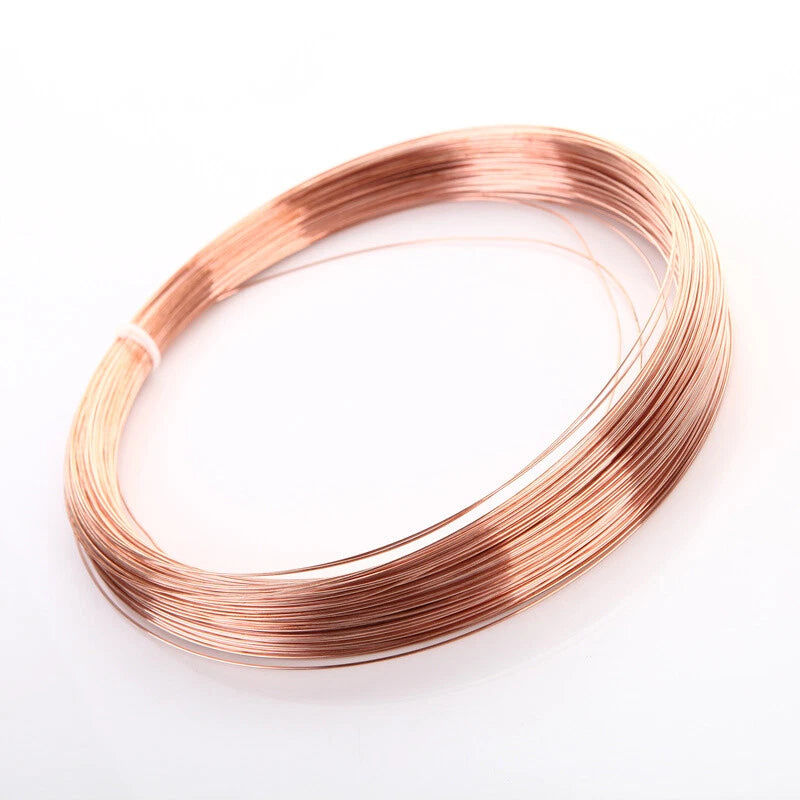
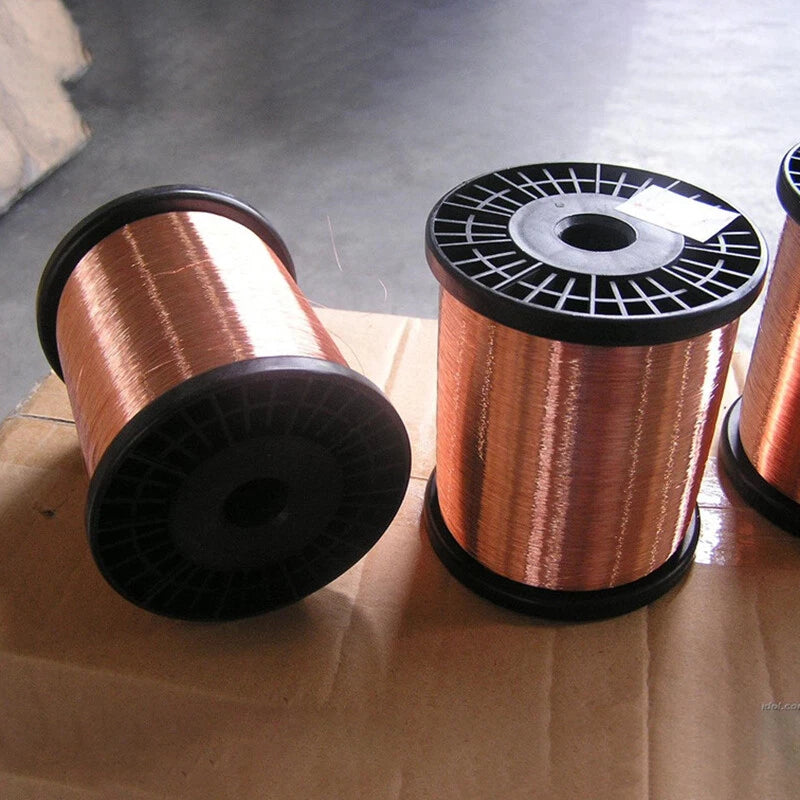
Pure Copper Wire 0.2mm 0.3mm 0.4mm 0.5mm Round Solid Bare Wire Multi-Size DIY

No reviews

Price:
Sale price$55.01 USD
Stock:
In stock (500 units), ready to be shipped

Payment & Security

Ach Direct Debit Amazon American Express Apple Pay Bancontact Diners Club Discover Google Pay iDEAL Wero Mastercard PayPal Shop Pay USDC Visa

Your payment information is processed securely. We do not store credit card details nor have access to your credit card information.

Quantity Discount Promotion
🎯 BULK DISCOUNT: Buy More, Save More!
Buy 2 Items
5% OFF
Buy 4 Items
10% OFF
Buy 6 Items
15% OFF
Expert

DIY Expert Support

Get fitment advice & recommendations

Mon-Fri, 8:30AM-8PM
24-Hour Fast Ship
🚚
Arrives in 3-14 days
🌍
Global Reach
↩️
30-Day Returns
🌱 1 tree planted with every purchase

Description

Pure Copper Wire 0.2–0.5mm — Round Solid Bare Wire for DIY Electronics, Jewelry & Craft Projects

When your project demands consistent conductivity and precise gauge control, generic wire often falls short — inconsistent diameter, brittle bends, or oxidation that interrupts signal flow. Hobbyists, electronics tinkerers, jewelers, and model builders who need reliable bare copper wire in fine gauges will find this spool a dependable workbench staple.

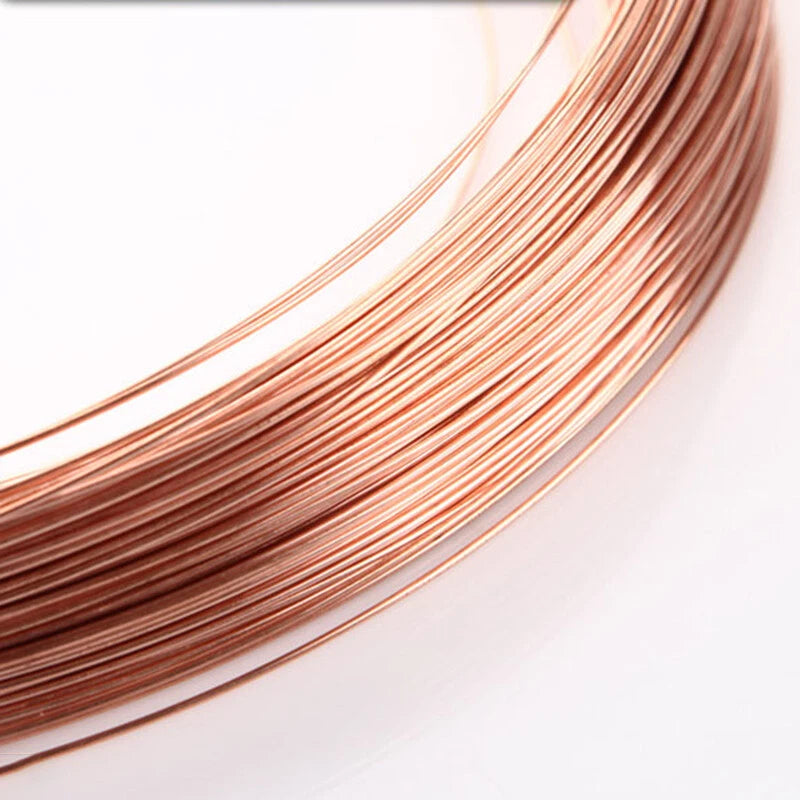
This listing offers round solid bare pure copper wire available in four diameters — 0.2mm (~0.008 in), 0.3mm (~0.012 in), 0.4mm (~0.016 in), and 0.5mm (~0.020 in) — wound on spools ranging from 10 m (~33 ft) to 100 m (~328 ft). The wire is uncoated and uninsulated, exposing the natural copper surface for direct soldering, forming, or wrapping without stripping.

Typical applications include hand-winding transformer coils and inductors, forming jump rings and wire-wrapped jewelry components, building custom grounding leads for electronics repair, and crafting structural armatures for scale models or sculpture. The fine gauge range also suits bonsai wire training, fly-tying, and educational science experiments where a known-conductivity conductor is required.

Compatibility note: This is uninsulated solid copper wire. It is not suitable as a direct replacement for insulated hookup wire in live mains circuits. Confirm gauge and length requirements before ordering — see variant options above.

✅ Key Features of These Pure Copper Wire Spools

🔩 Four Precise Diameters

Choose from 0.2 mm, 0.3 mm, 0.4 mm, or 0.5 mm to match your project's current-carrying or forming requirements without over-sizing.

Solid Round Conductor

Single-strand solid construction maintains a consistent cross-section along the full spool length, giving predictable resistance per meter for coil-winding calculations.

🪙 Bare Uncoated Surface

No enamel or insulation to strip — the exposed copper surface solders cleanly and accepts patinas, oxidation treatments, or lacquer coatings as needed for jewelry and art applications.

📏 Multiple Spool Lengths

Available in 10 m, 20 m, 30 m, 50 m, 80 m, and 100 m options so you can order exactly what a single project needs or stock a longer run for recurring use.

🔄 Workable Temper

The wire bends and holds shape without snapping at tight radii typical of jewelry jump rings or coil forms, while remaining firm enough to hold structural positions in model armatures.

🧰 Broad DIY Compatibility

Suited for electronics prototyping, transformer winding, wire-wrap jewelry, bonsai training, fly-tying, grounding straps, and educational science kits — one material, many uses.

📐 Technical Specifications — Round Solid Bare Copper Wire

Material Pure copper (uncoated, uninsulated)
Wire Form Round solid (single strand)
Available Diameters 0.2 mm / 0.3 mm / 0.4 mm / 0.5 mm
Available Lengths 10 m / 20 m / 30 m / 50 m / 80 m / 100 m
Surface Finish Bare (no enamel, no insulation)
Conductor Type Solid (not stranded)
Temper See variant options
Weight per Spool See variant options
Packaging Wound spool

❓ Frequently Asked Questions

Which diameter should I choose for coil winding or transformer projects?

For low-current signal transformers and inductors, 0.2 mm or 0.3 mm wire allows more turns per layer and suits high-impedance windings. For power inductors carrying higher current, 0.4 mm or 0.5 mm reduces resistive losses. Calculate the required turns and target resistance first, then select the gauge that fits your bobbin dimensions.

Is this wire strong enough for jewelry jump rings and wire wrapping?

Yes. The 0.3 mm–0.5 mm gauges are commonly used for wire-wrapped pendants, jump rings, and coiled bead frames. The 0.2 mm gauge is better suited to fine detail work or accent wrapping rather than structural loops, as it can deform under repeated opening and closing.

Will bare copper wire corrode or tarnish over time?

Bare copper oxidizes when exposed to air and moisture, developing a darkened patina over weeks to months. For electronics applications where oxidation could affect solder joints, work with freshly cut wire ends and flux before soldering. For decorative jewelry, a clear lacquer or wax coating applied after forming will slow tarnishing significantly.

Can I use this wire for grounding or electrical bonding in low-voltage DC circuits?

This wire is suitable for grounding straps, chassis bonding, and low-voltage DC connections in hobby electronics and automotive projects where the wire will not contact live mains voltage. Because it is uninsulated, ensure it is routed away from other conductors or secured with heat-shrink tubing where contact could cause a short.

How do I choose between the 10 m and 100 m spool lengths?

Estimate your project consumption first: a typical wire-wrapped pendant uses roughly 0.5–1 m; a small transformer coil may use 5–20 m depending on turns count. For one-off projects, a 10 m or 20 m spool avoids waste. If you work with copper wire regularly across multiple projects, the 50 m or 100 m spool offers a lower per-meter cost.

Is this wire compatible with bonsai training and plant shaping?

Copper wire is a traditional choice for bonsai training because it holds branch positions firmly and blends with bark tones over time. The 1.0 mm–2.0 mm range is most common for bonsai, but the 0.5 mm gauge in this listing works well for very fine twigs and accent branches on small shohin-scale trees. Remove wire before it bites into bark, typically within one growing season.

Does the wire arrive pre-cut or on a continuous spool?

The wire arrives wound on a continuous spool in the length you select. No pre-cutting is done. You cut to your required length using flush-cut wire cutters or scissors, giving you full control over piece lengths for each application.

🛒 Select your Diameter and Length above, then add to cart.

You may also like

Recently viewed