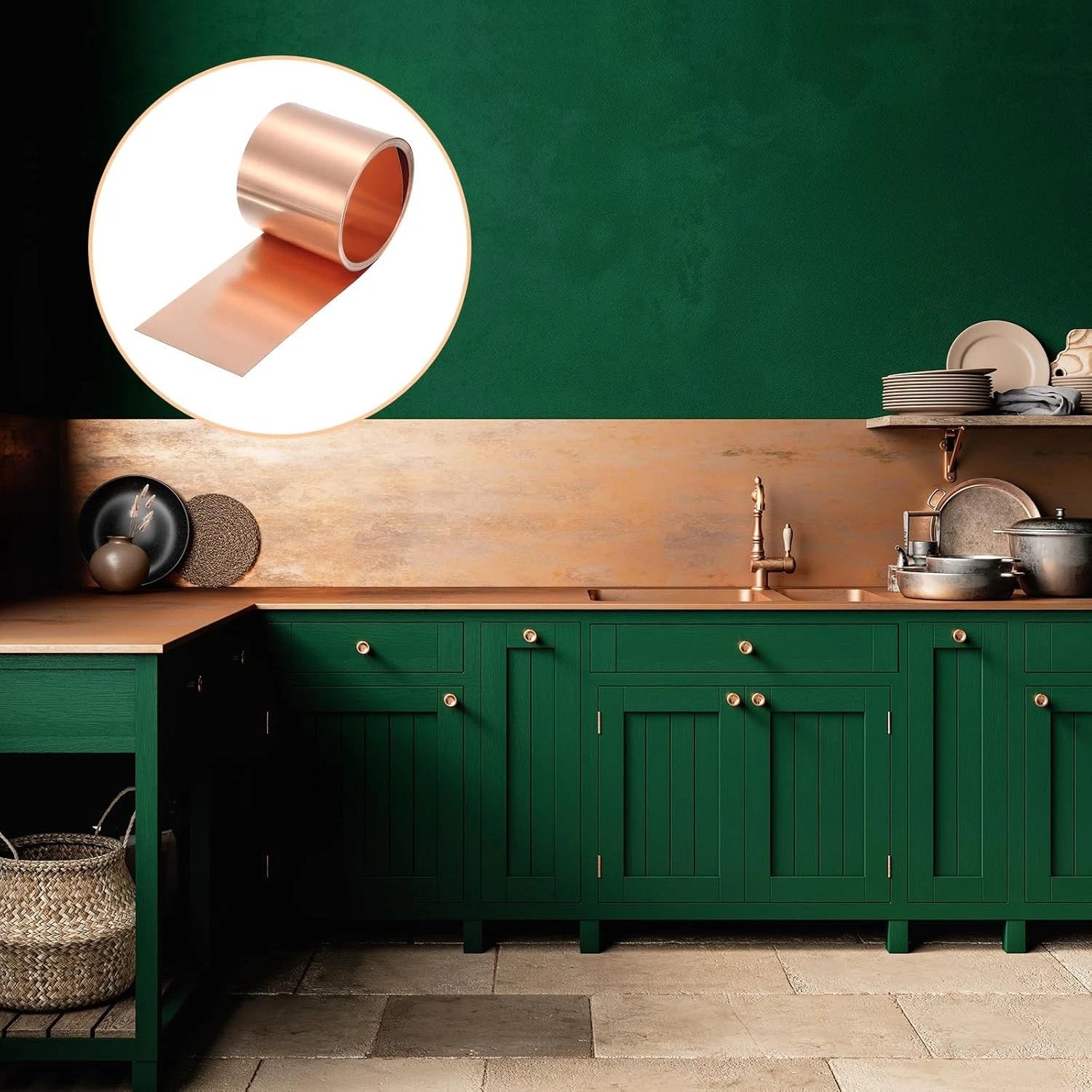
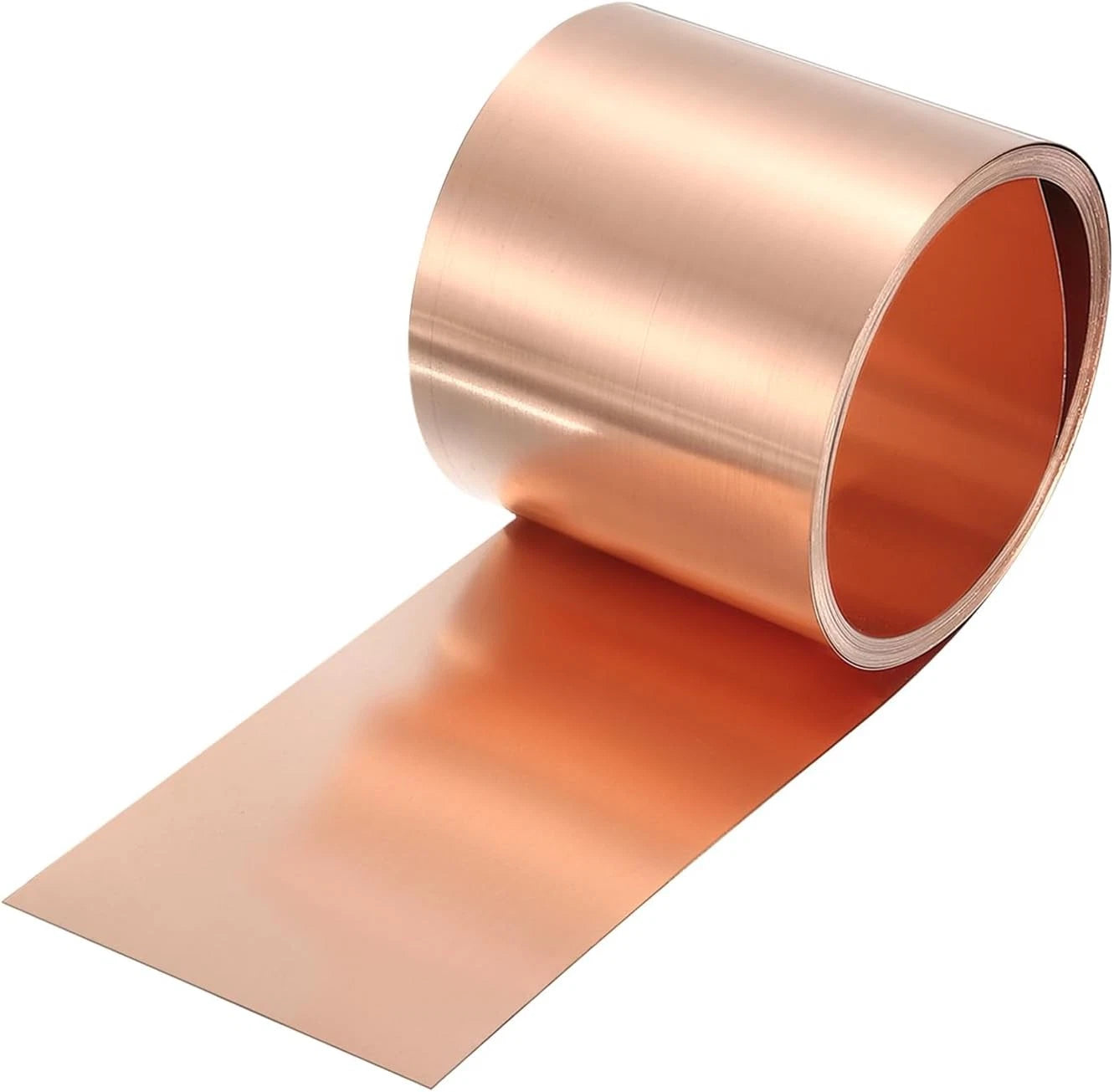
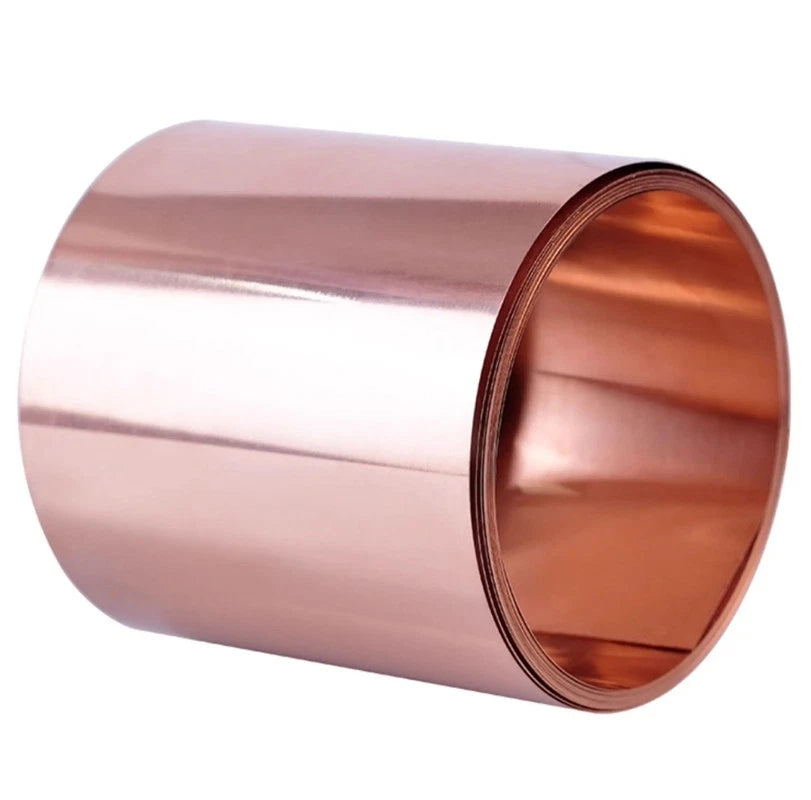
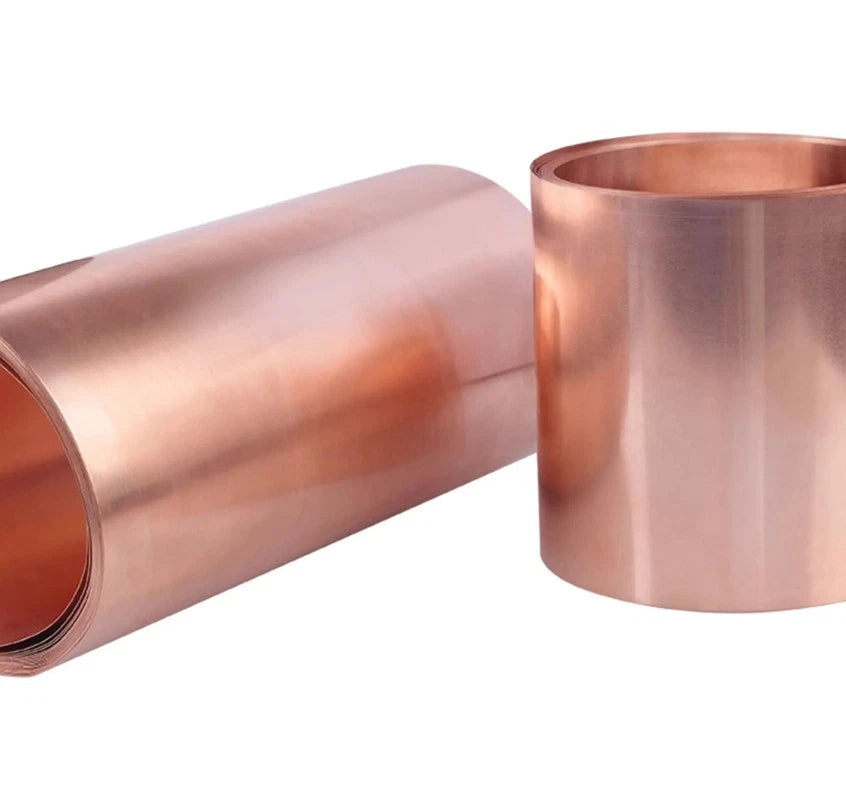
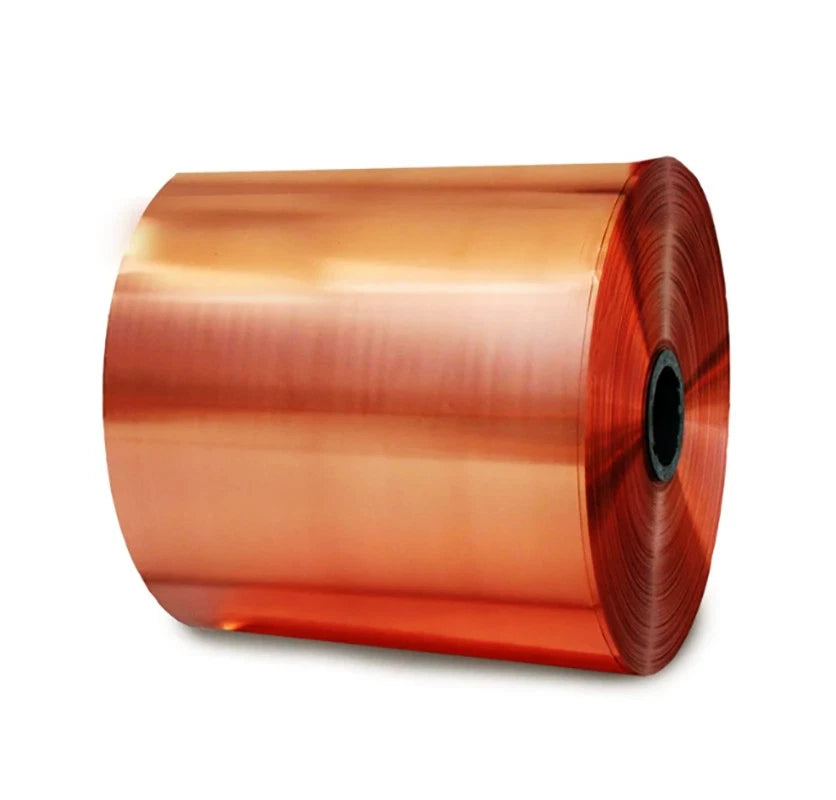
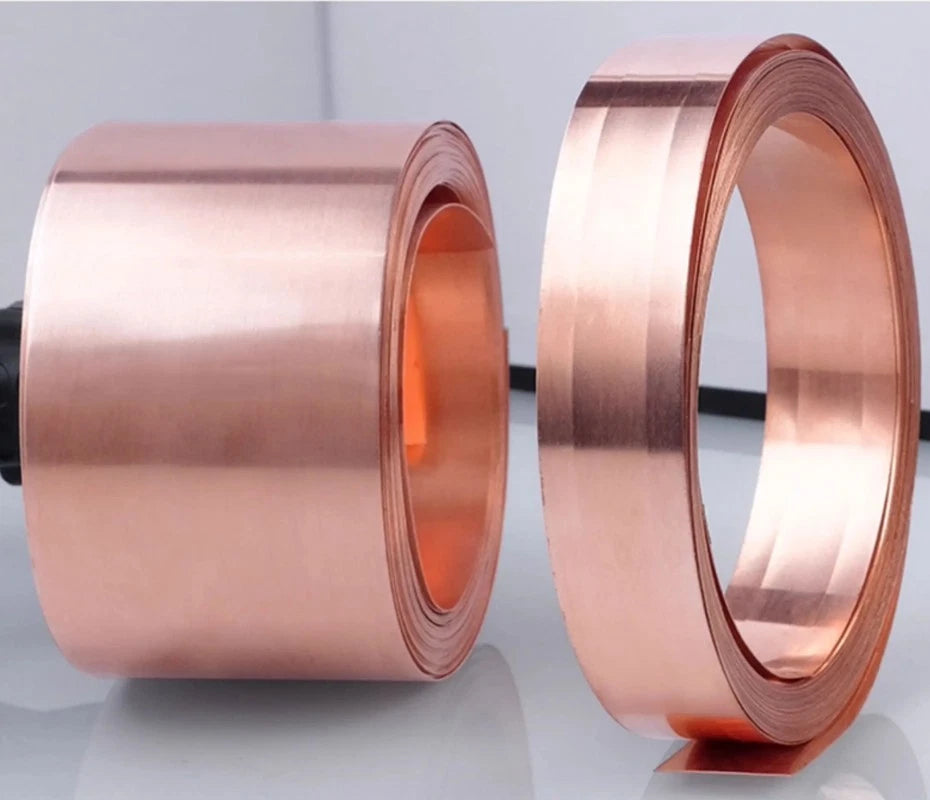
Pure Purple Copper Sheet Roll Strip Metal Foil Thick 01-1mm Width 50-400mm

No reviews

Price:
Sale price$11.14 USD
Stock:
In stock (500 units), ready to be shipped

Payment & Security

Ach Direct Debit Amazon American Express Apple Pay Bancontact BLIK Diners Club Discover EPS Google Pay iDEAL Wero JCB Maestro Mastercard Multibanco MobilePay PayPal Przelewy24 Shop Pay Twint Union Pay USDC Visa

Your payment information is processed securely. We do not store credit card details nor have access to your credit card information.

Limited Offer — Spend More, Save More
Spend $55+
Save $5
Spend $100+
Save $10
Spend $200+
Save $25
HomeDIYer DIY Expert Support

DIY Expert Support

Get fitment advice & recommendations

Mon–Fri  8:30 AM – 8:00 PM
24-Hour Fast Ship
Arrives in 3–14 Days
Worldwide Shipping
30-Day Returns
1 tree planted with every purchase

Description

Pure Copper Sheet Roll Strip — Precision-Cut Metal Foil for DIY, Electrical & Craft Projects

When your project demands a material that conducts reliably, bends cleanly, and holds its shape under repeated use, standard hardware store sheet metal often falls short. Makers, electronics hobbyists, jewelers, and small-workshop fabricators who need exact thickness control will find this pure copper sheet roll strip the dependable raw stock they've been searching for.

Each piece is a solid pure copper (C11000 / T2 grade equivalent) flat strip, available in thicknesses ranging from 0.01 mm to 1 mm (approximately 0.0004 in to 0.039 in) and widths from 50 mm to 400 mm (approximately 2 in to 15.75 in), cut to a 1-meter (39.4 in) length per piece. The surface is smooth-rolled with a bright copper finish, free of visible pits or inclusions at standard inspection.

Typical use cases include RF and EMI shielding liners for enclosures, copper foil tape substrates for stained-glass and mosaic work, thin shim stock for mechanical gap-filling between mating surfaces, and bus-bar blanks for low-voltage DC distribution panels in workshop builds.

Compatibility Note: Suitable for soldering, brazing, and cold-forming. Compatible with standard copper-rated flux and solder. Not recommended for direct contact with ammonia-based cleaners or strong oxidizing acids without protective coating.

✅ Key Features of These Pure Copper Sheet Roll Strips

🔩 Wide Thickness Range

Available from ultra-thin 0.01 mm foil up to robust 1 mm plate strip — choose the exact gauge your project requires without over-engineering.

📏 Multiple Width Options

Widths from 50 mm to 400 mm (approx. 2 in to 15.75 in) cover narrow bus-bar runs and wide shielding panels alike, all in a 1-meter cut length.

High Electrical Conductivity

Pure copper composition delivers excellent electrical and thermal conductivity — ideal for grounding straps, heat spreaders, and conductive traces in DIY electronics.

🛡️ Corrosion-Resistant Alloy

Copper naturally forms a stable patina that resists further oxidation in typical indoor and sheltered outdoor environments, reducing maintenance needs over time.

✂️ Easy to Cut & Form

Soft-annealed copper bends, shears, and stamps without cracking at thinner gauges. Thicker variants (0.5–1 mm) can be scored and snapped or cut with aviation snips.

🔧 Solderable & Brazeable

Accepts standard rosin-core solder and silver-bearing brazing alloys without special surface prep — ready to integrate directly into electrical or plumbing assemblies.

📐 Technical Specifications — Copper Sheet Strip

Material Pure Copper (C11000 / T2 equivalent)
Thickness Range 0.01 mm – 1 mm (0.0004 in – 0.039 in)
Width Range 50 mm – 400 mm (1.97 in – 15.75 in)
Length per Piece 1 Meter (39.4 in)
Surface Finish Smooth-rolled, bright copper
Temper Soft / annealed (thin gauges); half-hard (thicker gauges)
Electrical Conductivity ≥ 99.9% IACS (typical for C11000)
Thermal Conductivity Approx. 385 W/(m·K)
Melting Point Approx. 1,085 °C (1,985 °F)
Pack Quantity 1 Piece per order (multi-piece options: See variant options)
Weight per Piece See variant options (varies by thickness × width)

❓ Frequently Asked Questions

How do I choose the right thickness for my project?

For EMI/RF shielding liners and decorative foil work, 0.01–0.1 mm is typically sufficient. For heat spreaders and flexible bus bars, 0.1–0.3 mm offers a good balance of conductivity and formability. For structural shims, gaskets, or rigid bus bars, 0.5–1 mm provides the mechanical strength needed. If you are unsure, start with 0.1 mm for general-purpose use.

How strong is this copper strip — can it hold its shape after bending?

Thin gauges (under 0.1 mm) are very flexible and will conform to curved surfaces but may not spring back. Mid-range gauges (0.1–0.5 mm) hold a bend well after forming. Thicker strips (0.5–1 mm) are semi-rigid and require more force to bend but retain their shape reliably once formed. All gauges can be work-hardened slightly by repeated bending if a stiffer result is needed.

Will this copper sheet corrode or tarnish over time?

Copper naturally oxidizes to form a brownish or greenish patina (verdigris) when exposed to air and moisture over time. This patina is stable and actually protects the underlying metal from further corrosion. For applications requiring a bright finish, apply a clear lacquer or wax coating after cleaning. For electrical contacts, the patina can be removed with a mild acid solution (e.g., diluted citric acid) before soldering.

Is this compatible with standard soldering irons and solder?

Yes. Pure copper solders readily with standard rosin-core or no-clean solder using a temperature-controlled iron set to 300–370 °C (570–700 °F). Use a copper-rated flux for best results. Thicker strips (above 0.5 mm) act as a heat sink, so a higher-wattage iron (60 W+) or pre-heating the workpiece is recommended to achieve a good joint.

Can I use this for stained glass or mosaic copper foil work?

Absolutely. The 0.01–0.05 mm thickness range is well-suited for stained glass foiling techniques. The soft temper allows the strip to wrap around glass edges cleanly. For mosaic work requiring a wider backing strip, the 50–100 mm wide options in 0.05–0.1 mm thickness are a practical choice. Note that this product is sold in 1-meter lengths rather than adhesive-backed rolls, so you will need to apply your own adhesive if needed.

How do I cut this copper strip to a shorter length?

For thin gauges (under 0.2 mm), sharp scissors or a craft knife and steel ruler work well. For mid-range gauges (0.2–0.5 mm), aviation snips or a guillotine-style sheet metal shear give clean edges. For thicker strips (0.5–1 mm), use aviation snips, a hacksaw, or an angle grinder with a thin cutting disc. Always deburr cut edges with a fine file or sandpaper before handling to avoid cuts.

Which width and thickness combination should I buy for a DIY heat spreader?

For CPU or LED heat spreaders in DIY builds, a thickness of 0.3–0.5 mm provides a good balance of thermal mass and machinability. Width depends on your component footprint — 50–100 mm covers most single-chip applications, while 150–200 mm suits larger modules. The 1-meter length gives you enough material to cut multiple spreader blanks from a single piece.

🛒 Select your Thickness × Width above, then add to cart.

You may also like

Recently viewed