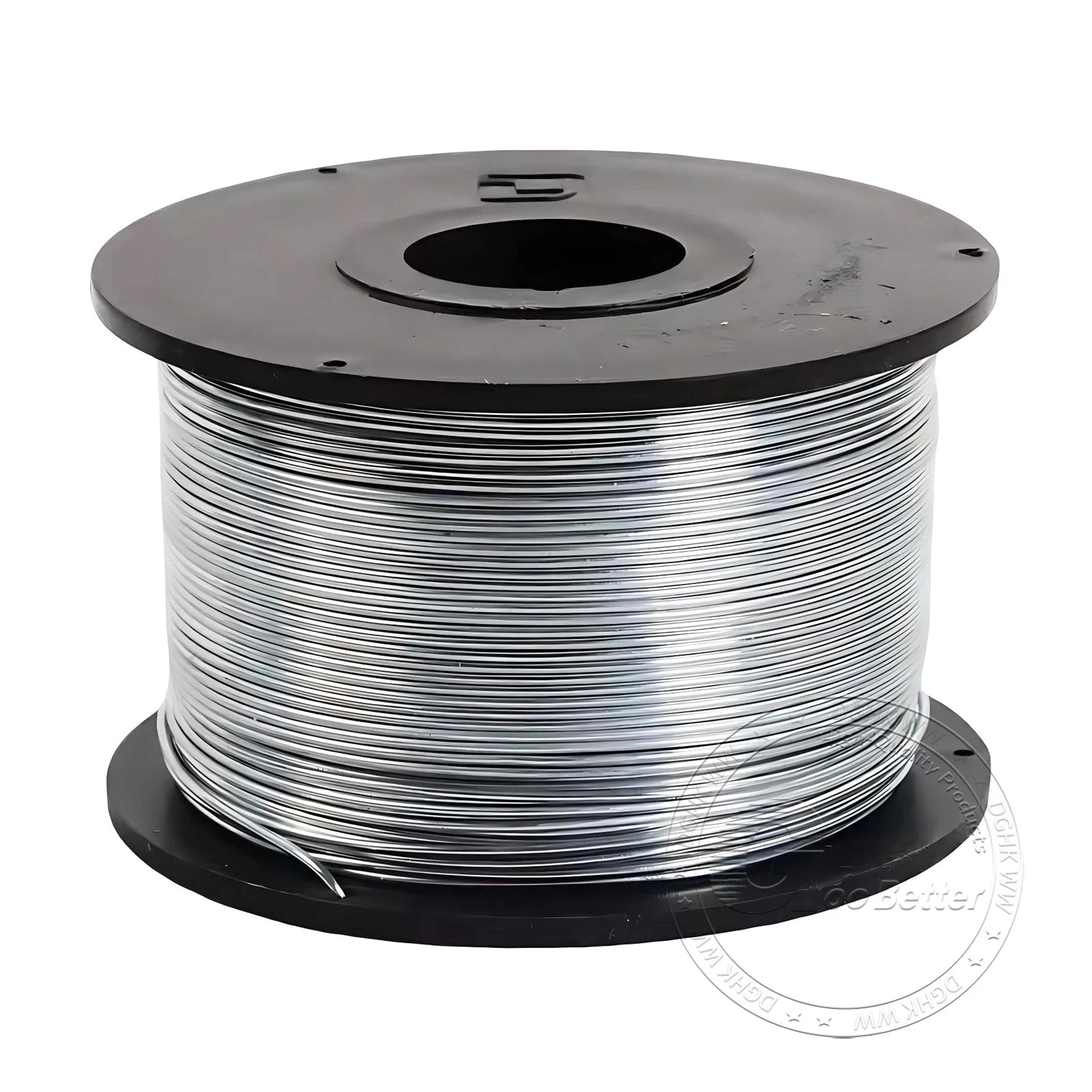
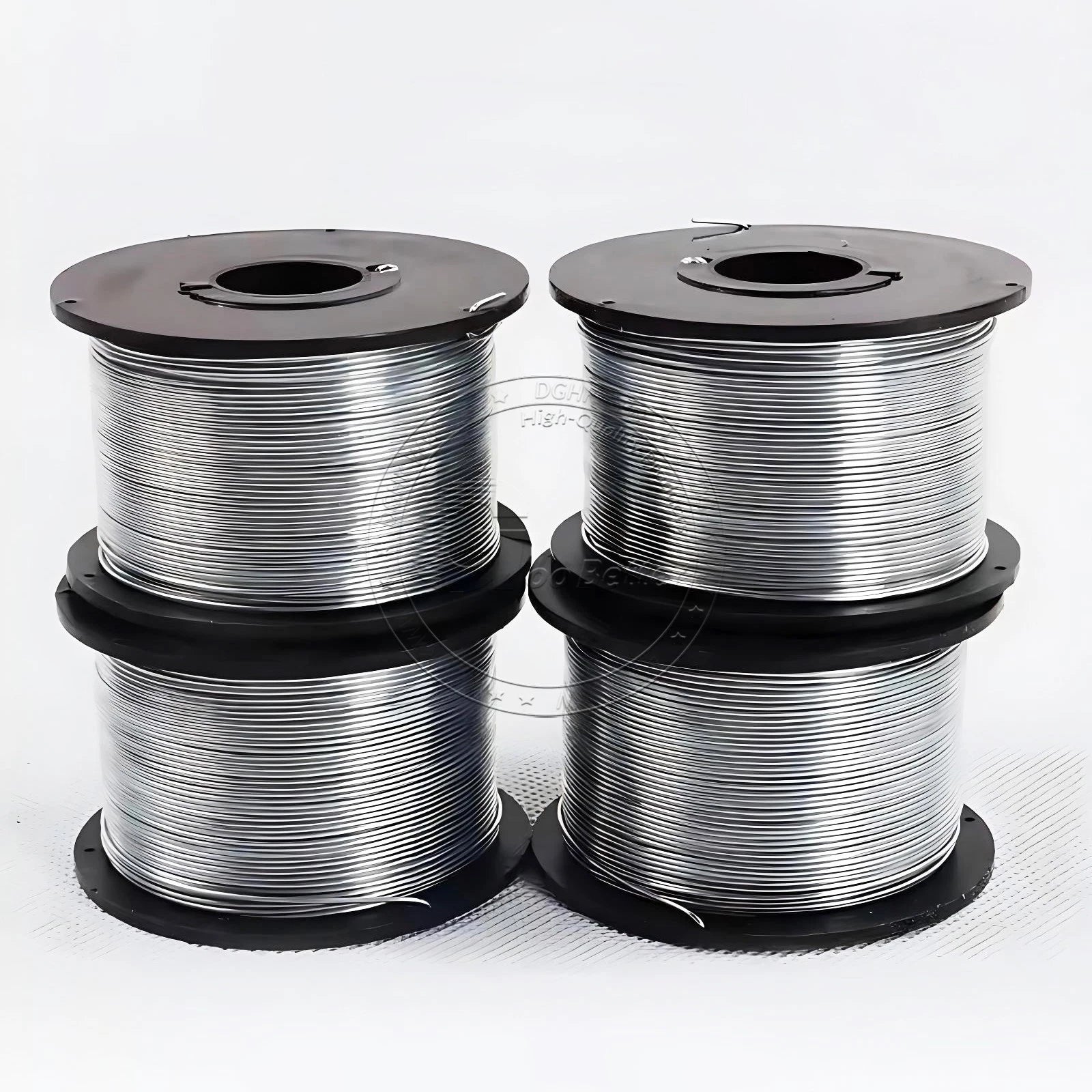
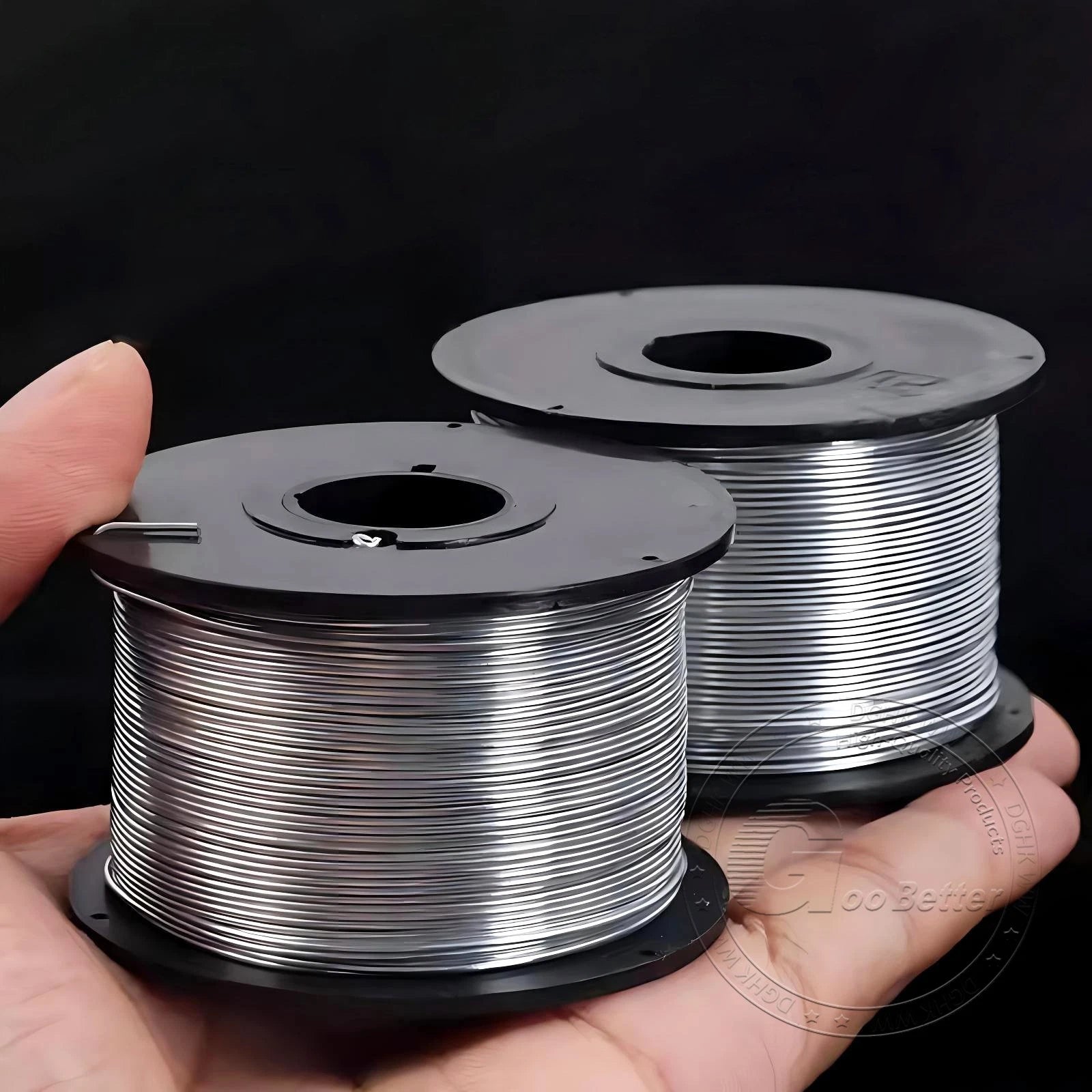
High Purity Metal Zinc Wire Pure 99.9% Wire Diameter 0.3mm 0.5mm 0.8mm - 12mm

No reviews

Price:
Sale price$8.01 USD
Stock:
In stock (500 units), ready to be shipped

Payment & Security

Ach Direct Debit Amazon American Express Apple Pay Bancontact Diners Club Discover Google Pay iDEAL Wero Mastercard PayPal Shop Pay USDC Visa

Your payment information is processed securely. We do not store credit card details nor have access to your credit card information.

Quantity Discount Promotion
🎯 BULK DISCOUNT: Buy More, Save More!
Buy 2 Items
5% OFF
Buy 4 Items
10% OFF
Buy 6 Items
15% OFF
Expert

DIY Expert Support

Get fitment advice & recommendations

Mon-Fri, 8:30AM-8PM
24-Hour Fast Ship
🚚
Arrives in 3-14 days
🌍
Global Reach
↩️
30-Day Returns
🌱 1 tree planted with every purchase

Description

99.9% Pure Zinc Wire — Precision Metalworking & Electroplating Wire in 0.3mm–12mm Diameters

When your project demands a corrosion-resistant, electrically conductive metal wire with a verified purity level, generic alloy wire simply won't do. Hobbyists, electroplating technicians, scientific researchers, and craft makers who need consistent, traceable material turn to high-purity zinc wire to avoid contamination and unpredictable results.

This pure zinc wire is drawn to a 99.9% purity standard and is available in 16 diameters ranging from 0.3 mm (≈ 0.012 in) to 12 mm (≈ 0.472 in), with length options of 1 m, 2 m, or 5 m per order. The wire ships in a continuous, unjointed length and maintains a smooth, bright surface finish consistent with its purity grade.

Typical applications include sacrificial anode fabrication for cathodic protection, electroplating bath electrodes, galvanic corrosion studies, jewelry wire wrapping, and educational chemistry experiments requiring a known-purity zinc source. The fine diameters (0.3–1.5 mm) suit delicate craft and laboratory work, while the heavier gauges (4–12 mm) are suited to structural anode and industrial electrochemical use.

⚠️ Compatibility note: Zinc reacts with strong acids and alkalis. Confirm chemical compatibility before use in plating baths or reactive environments. Not recommended for food-contact applications.

✅ Key Features of These Pure Zinc Wire Spools

  • 🔬 99.9% Verified Purity — Consistent zinc content minimizes trace-metal interference in electroplating, galvanic testing, and laboratory titration setups.
  • 📏 16 Diameter Options (0.3–12 mm) — Fine gauges for craft and lab work; heavier gauges for anode fabrication and industrial electrochemical applications.
  • 📐 Three Length Choices (1 m / 2 m / 5 m) — Order exactly the quantity your project requires without paying for excess material.
  • Smooth Bright Surface Finish — Drawn to a uniform cross-section with a clean surface, reducing oxide inclusions that can disrupt electrical contact or plating adhesion.
  • Good Electrical Conductivity — Zinc's native conductivity (approximately 16.6 MS/m) makes this wire suitable as an anode or electrode material in low-current electrochemical cells.
  • 🛡️ Natural Corrosion Resistance — Zinc forms a stable oxide/carbonate patina in air, providing passive protection and making it a reliable choice for sacrificial anode wire and outdoor craft projects.

📐 Technical Specifications — Pure Zinc Wire

Material Zinc (Zn)
Purity ≥ 99.9%
Diameter Range 0.3 mm – 12 mm (0.012 in – 0.472 in)
Available Diameters 0.3 / 0.5 / 0.8 / 1 / 1.2 / 1.5 / 1.6 / 2 / 2.5 / 3 / 4 / 5 / 6 / 8 / 10 / 12 mm
Available Lengths 1 Meter / 2 Meter / 5 Meter
Surface Finish Bright drawn, smooth
Form Continuous straight or coiled wire (single piece per order)
Electrical Conductivity Approx. 16.6 MS/m
Melting Point 419.5 °C (787.1 °F)
Density 7.13 g/cm³
Weight per Order See variant options
Condition New

❓ Frequently Asked Questions

Which diameter should I choose for electroplating electrode use?

For most small-scale electroplating setups, diameters between 1 mm and 3 mm provide a good balance of surface area and mechanical rigidity. Thinner wire (0.3–0.8 mm) bends easily and suits coiled anode configurations, while 4–12 mm wire is better for rigid bar-style anodes in larger tanks.

Is this wire strong enough to use as a structural support in jewelry or craft projects?

Zinc is a relatively soft metal (Mohs hardness ~2.5), so it is not suited for load-bearing structural roles. For wire wrapping, armature work, or decorative craft applications where the wire is shaped and held in place, diameters of 1.5 mm and above provide adequate stiffness. For fine detail work, 0.3–0.8 mm is easy to manipulate by hand.

Will this zinc wire corrode or tarnish over time?

Zinc naturally develops a thin zinc oxide and zinc carbonate patina when exposed to air and moisture. This patina is self-limiting and actually slows further corrosion — which is the principle behind galvanized steel coatings. In humid or outdoor environments, expect a dull grey surface over time. For applications requiring a bright finish, store unused wire in a sealed bag.

Is 99.9% purity sufficient for scientific or laboratory experiments?

99.9% (3N) purity is suitable for most educational chemistry experiments, electrochemical cell demonstrations, and general laboratory use where trace-metal contamination is not critical. For ultra-high-purity analytical work requiring 99.99% (4N) or better, please contact us to confirm current stock specifications before ordering.

Can I use this wire as a sacrificial anode for cathodic protection?

Yes. Zinc is a standard sacrificial anode material used to protect steel structures in marine and buried environments. The wire form is particularly useful for wrapping around pipes or threading through tight spaces. For larger-scale cathodic protection systems, the 4–12 mm diameter options provide more material mass and longer service life.

How do I choose between the 1 m, 2 m, and 5 m length options?

Choose based on your project's total consumption. The 5 m option offers the best per-meter value for ongoing or repeated use (e.g., a plating bath you run regularly). The 1 m and 2 m options are ideal for one-off experiments, prototyping, or craft projects where you need a specific short length without leftover material.

Is this wire compatible with acid-based plating solutions?

Zinc dissolves readily in dilute acids, which is intentional in zinc electroplating baths (e.g., zinc sulfate or zinc chloride solutions). However, concentrated acids will rapidly attack the wire. Always use appropriate PPE and confirm the concentration and pH of your plating solution before immersing the wire. Zinc is not compatible with strong alkalis either — it will dissolve in sodium hydroxide solutions.

🛒 Select your Diameter and Length above, then add to cart.

You may also like

Recently viewed