The chain is fine...but I ordered the wrong size. Nine links of the chain I ordered equals six of the size I wanted. My error...
How can I straighten out the springs? I can't use them coil uo as is.
Your payment information is processed securely. We do not store credit card details nor have access to your credit card information.
Get fitment advice & recommendations
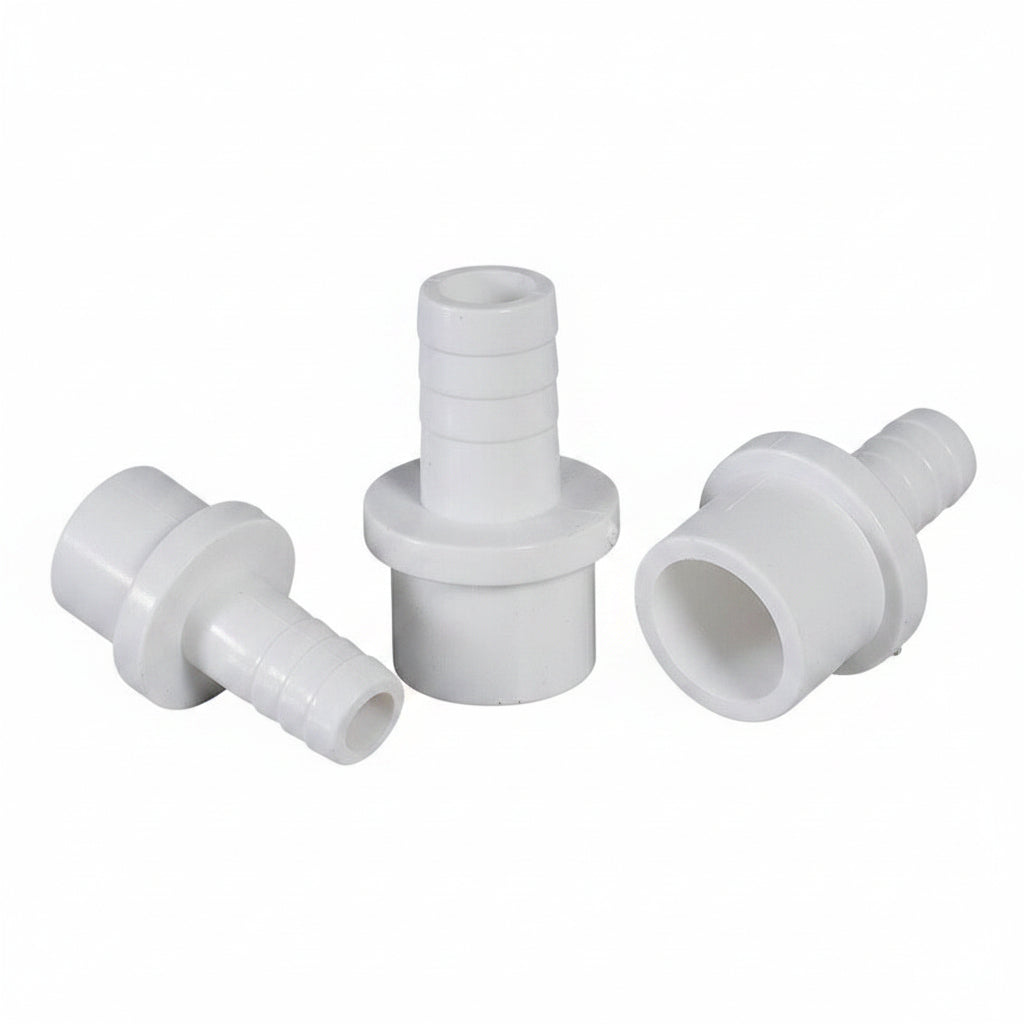
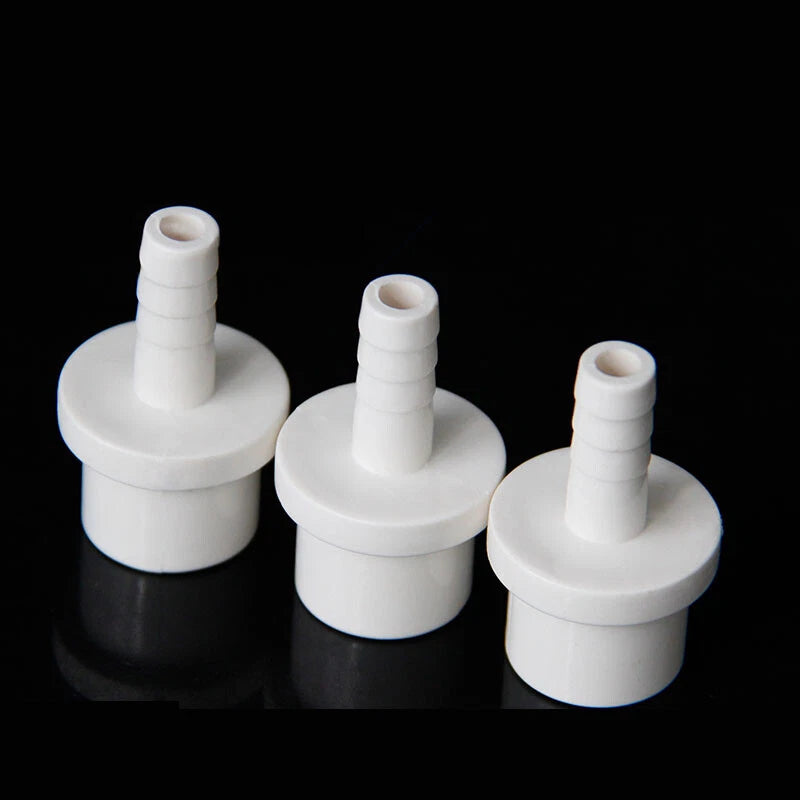
When a leaking joint or mismatched tube size brings your irrigation run, aquarium build, or plumbing repair to a halt, you need a fitting that simply works. These PVC barb hose connectors are designed for makers, gardeners, and tradespeople who need a secure, push-fit sleeve connection without tools or adhesives.
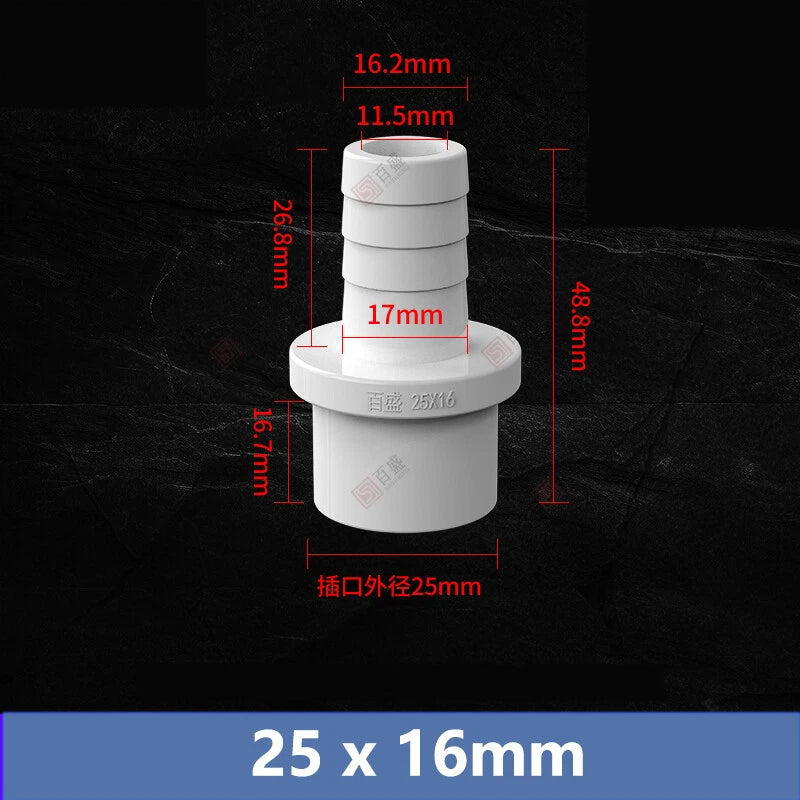
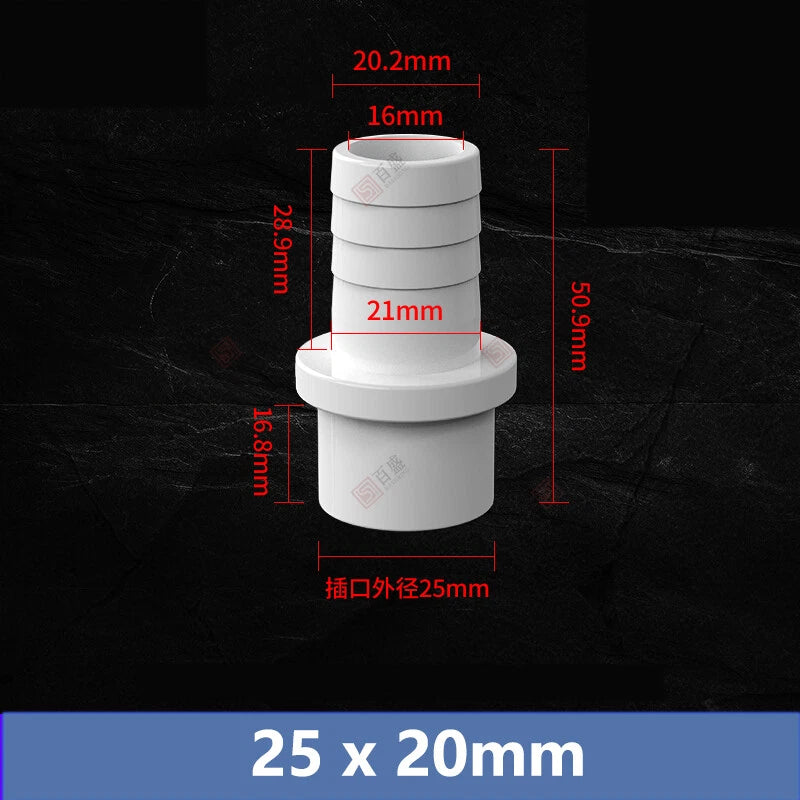
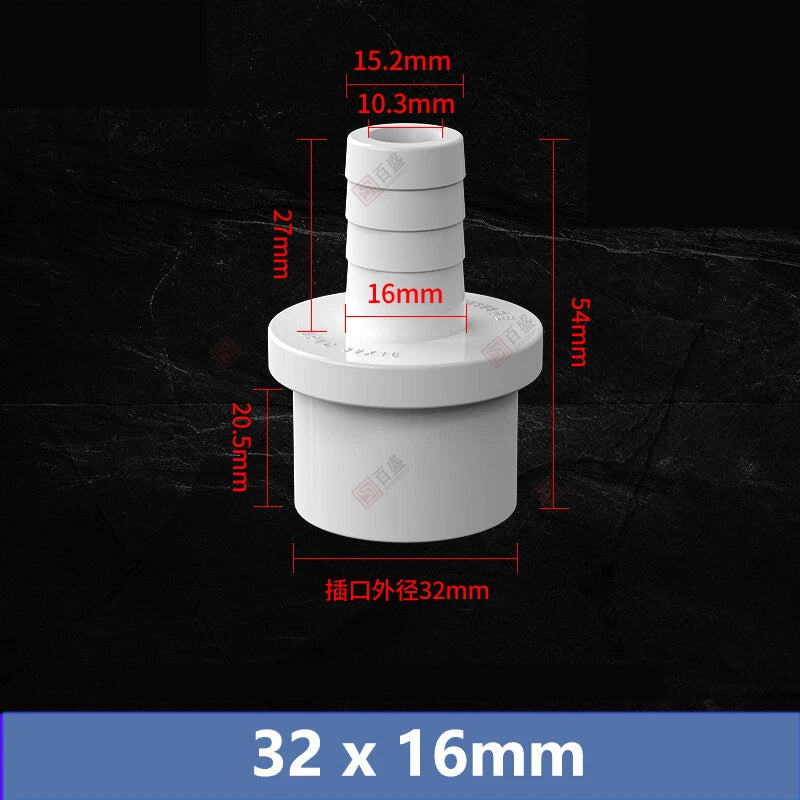
Each connector is molded from Polyvinyl Chloride (PVC) and features a tapered barb profile on both ends. The big-end outer diameter ranges from 20 mm (approx. 0.79 in) to 63 mm (approx. 2.48 in), while the small-end outer diameter spans 5 mm (approx. 0.20 in) to 50 mm (approx. 1.97 in), covering the most common metric hose and tube sizes used in residential and light-commercial applications.
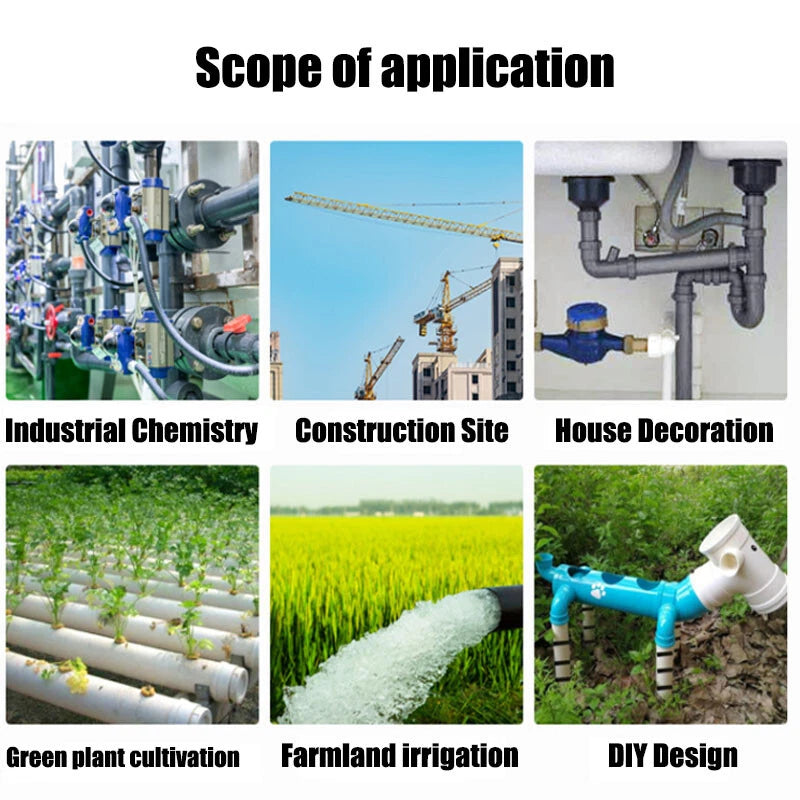
Typical use cases include drip-irrigation line transitions, aquarium and pond filter hose routing, compressed-air soft-line connections, and DIY fluid-transfer assemblies where a barb-style PVC hose sleeve connector is the fastest, most cost-effective solution.
Big-end OD from 20 mm to 63 mm; small-end OD from 5 mm to 50 mm — one listing covers the most common metric hose transitions.
The stepped barb geometry grips the hose wall on insertion, resisting pull-out under typical low-to-medium pressure without clamps.
Smooth internal bore minimises turbulence; the sleeve body distributes hose stress evenly to reduce cracking at the joint.
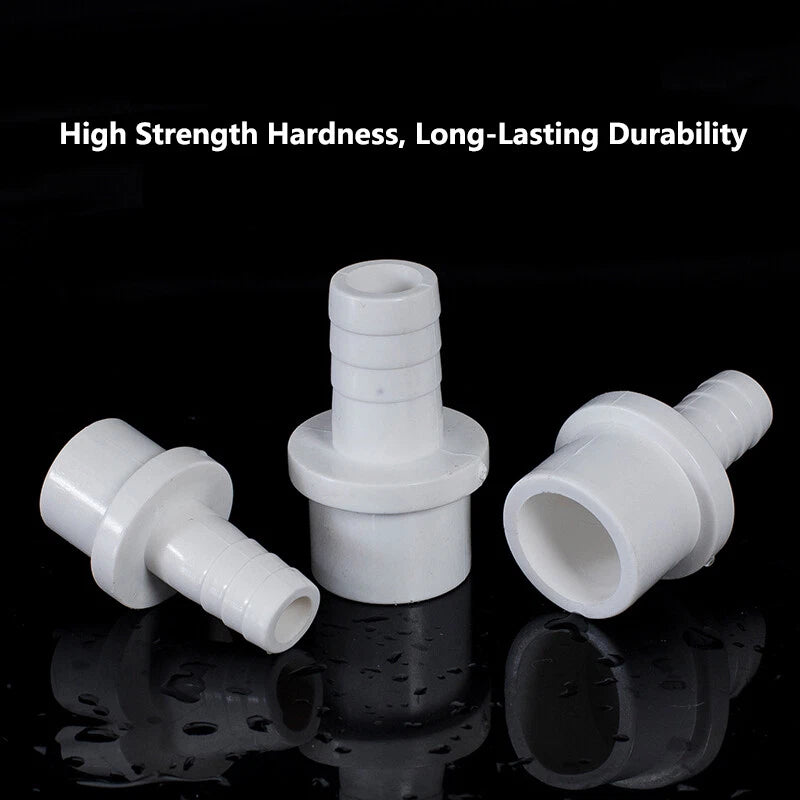
Molded from Polyvinyl Chloride (PVC) for dimensional stability, chemical resistance to common water-treatment additives, and long service life in wet environments.
White color makes the fitting easy to inspect for cracks or discoloration during routine maintenance checks.
Available in 1, 2, 3, 5, 10, 20, or 50-piece packs — order a single piece for a quick repair or stock up in bulk for ongoing projects.
| Material | Polyvinyl Chloride (PVC) |
|---|---|
| Color / Finish | White |
| Big-End OD Range | 20 mm – 63 mm (0.79 in – 2.48 in) |
| Small-End OD Range | 5 mm – 50 mm (0.20 in – 1.97 in) |
| Available Sizes (Big × Small) | 20×5, 20×8, 20×10, 20×12, 20×14, 20×16, 20×18, 25×12, 25×16, 25×20, 32×16, 32×20, 32×25, 50×40, 63×50 mm |
| Fitting Type | Barb / Sleeve (push-fit, no adhesive required) |
| Compatible Tubing | PVC, PE, flexible vinyl hose (matching ID) |
| Recommended Use | Low-to-medium pressure water, irrigation, aquarium, air lines |
| Packing Options | 1 / 2 / 3 / 5 / 10 / 20 / 50 Pcs |
| Weight (per piece) | See variant options |
Measure the inner diameter (ID) of your hose, then select the barb end whose outer diameter (OD) is slightly larger — typically 1–2 mm over the hose ID. This interference fit creates the grip that prevents pull-out. For example, a hose with a 19 mm ID pairs well with the 20 mm barb end.
For low-pressure gravity-fed or drip-irrigation lines, the barb profile alone is usually sufficient. For higher-pressure applications or vibrating environments, adding a stainless-steel worm-drive hose clamp over the barb is recommended to prevent the hose from backing off over time.
PVC offers good resistance to chlorinated tap water, mild fertilizer solutions, and common household chemicals. It is not recommended for use with concentrated solvents, aromatic hydrocarbons, or temperatures consistently above 60 °C (140 °F), which can soften the material.
These barb sleeve connectors work with flexible PVC tubing, polyethylene (PE) irrigation hose, and standard vinyl garden hose, provided the hose inner diameter matches the barb outer diameter. They are not designed for rigid copper or steel pipe.
These fittings are intended for general irrigation, aquarium, and fluid-transfer use. If your application requires NSF/ANSI 61 or food-grade certification, please contact us to confirm suitability before ordering.
Multi-piece packs (5, 10, 20, or 50 Pcs) offer a lower per-unit cost and ensure you have spares on hand for future repairs or system expansions. For ongoing irrigation or aquarium projects, stocking a few extra fittings prevents downtime when a joint needs replacing.
1. Cut the hose end cleanly and squarely. 2. If the hose is stiff, briefly warm the end in hot water (50–60 °C) to soften it. 3. Push the barb end firmly into the hose until the hose reaches the sleeve shoulder. 4. Tug the hose to confirm it is seated. 5. Add a hose clamp if required by your pressure rating.