
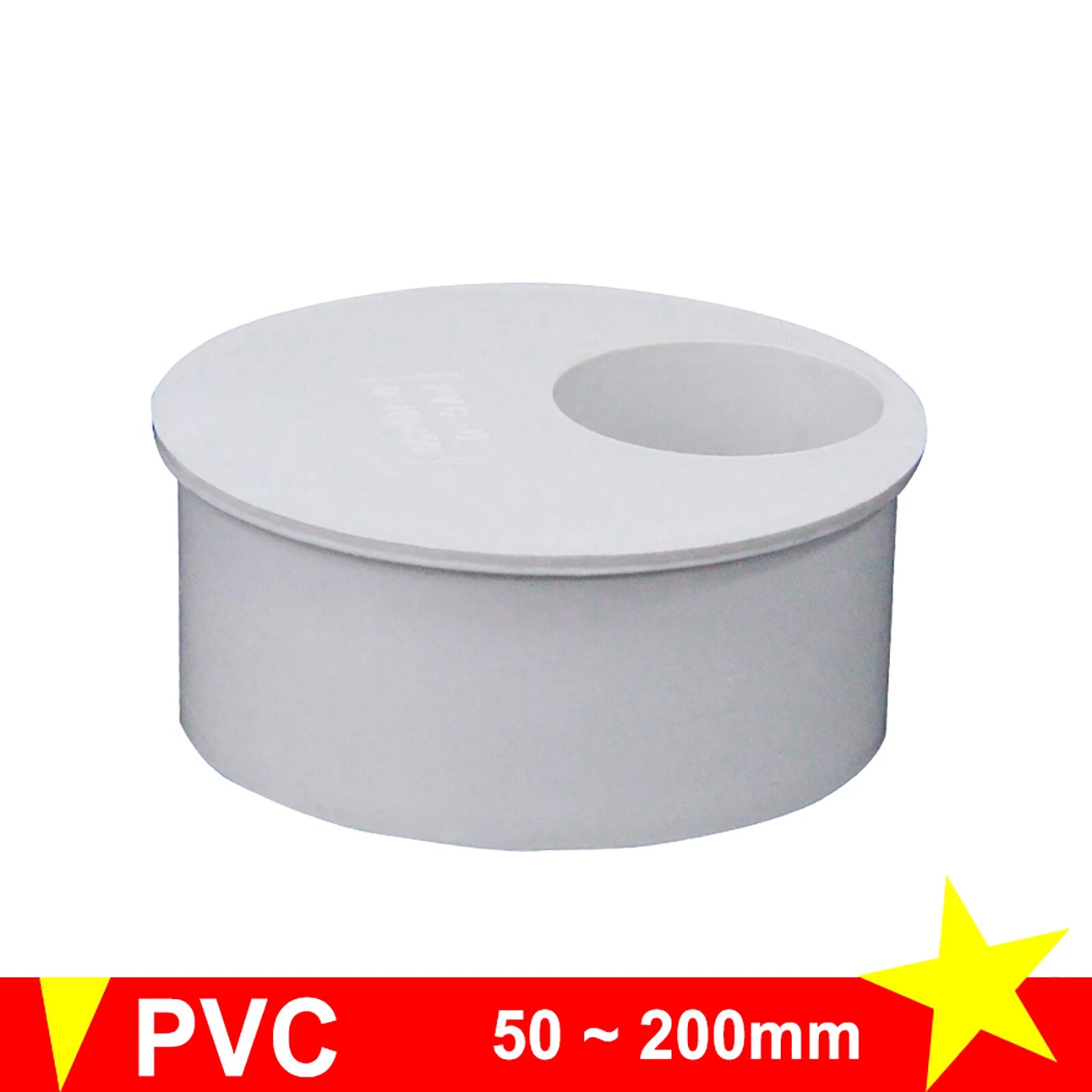
PVC Eccentric Reducer Bush Water Adhesive Fittings 50 75 110mm Drain Waste Vent

No reviews

Price:
Sale price$6.69 USD
Stock:
In stock (500 units), ready to be shipped

Payment & Security

Ach Direct Debit Amazon American Express Apple Pay Bancontact Diners Club Discover Google Pay iDEAL Wero Mastercard PayPal Shop Pay USDC Visa

Your payment information is processed securely. We do not store credit card details nor have access to your credit card information.

Quantity Discount Promotion
🎯 BULK DISCOUNT: Buy More, Save More!
Buy 2 Items
5% OFF
Buy 4 Items
10% OFF
Buy 6 Items
15% OFF
Expert

DIY Expert Support

Get fitment advice & recommendations

Mon-Fri, 8:30AM-8PM
24-Hour Fast Ship
🚚
Arrives in 3-14 days
🌍
Global Reach
↩️
30-Day Returns
🌱 1 tree planted with every purchase

Description

PVC Eccentric Reducer Bush — Reliable Size Transitions for Drain, Waste & Vent Systems

When a plumbing run demands a smooth pipe-size transition without disrupting the invert level, a standard concentric reducer simply won't do. Contractors, maintenance plumbers, and confident DIYers working on drain, waste, and vent (DWV) systems rely on the PVC eccentric reducer bush to keep the pipe bottom flush — preventing pooling and maintaining consistent flow in low-gradient horizontal runs.

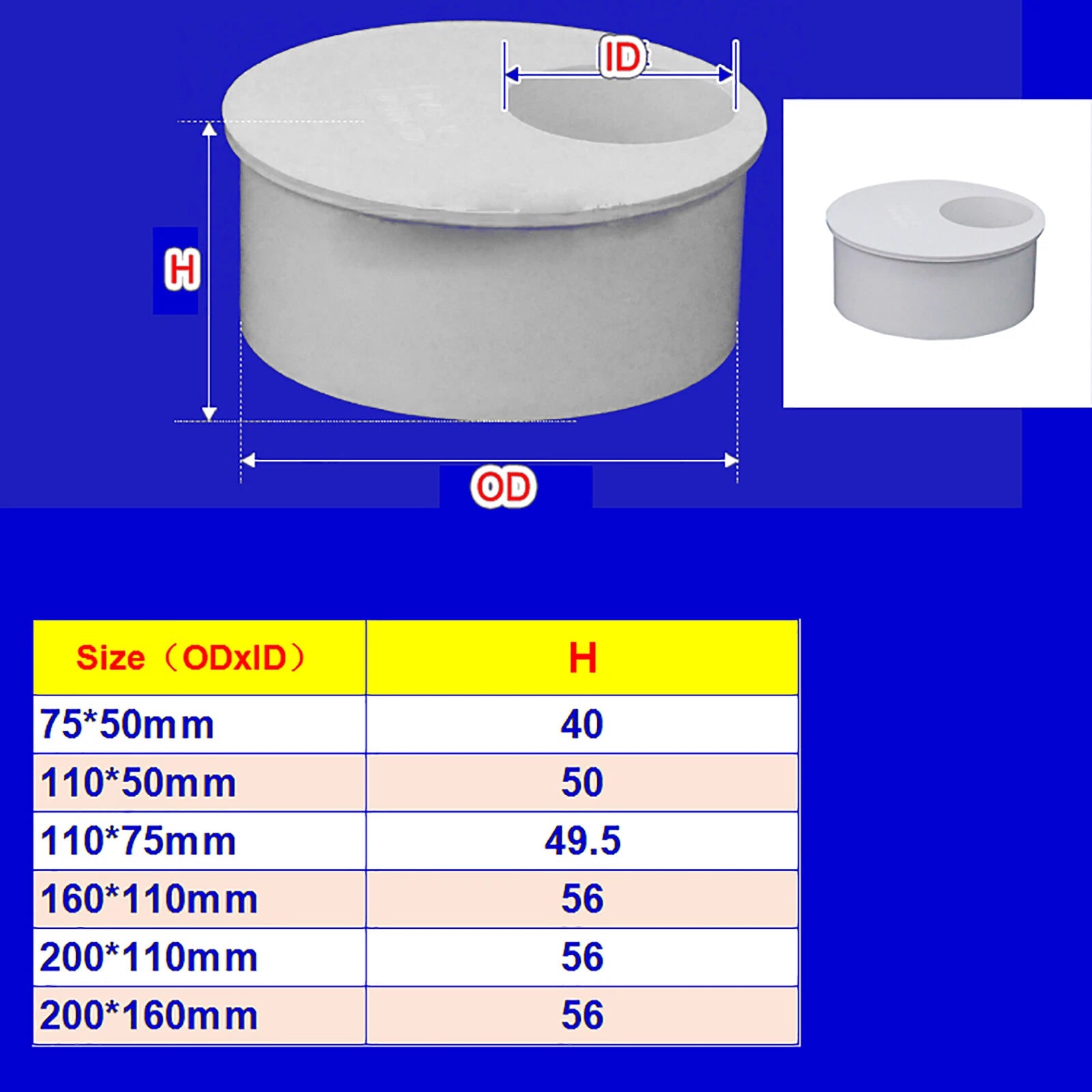
These eccentric reducer bushes are manufactured from uPVC (unplasticised polyvinyl chloride) and are designed for solvent-cement (water adhesive) installation. Available in two sizes — 75 × 50mm (~3" × 2") and 110 × 50mm (~4" × 2") — each bush steps down from a larger socket to a smaller spigot while offsetting the bore to one side, keeping the pipe invert aligned. Wall thickness and socket depth conform to typical DWV fitting standards.

Typical applications include reducing branch connections in bathroom waste stacks, transitioning between soil pipe diameters in residential drain systems, and adapting existing 110mm (~4") underground drainage to 50mm (~2") internal waste lines — all common scenarios where an eccentric reducer bush for DWV plumbing outperforms a standard concentric fitting.

🔗 Compatibility: Designed for uPVC solvent-weld DWV systems. Compatible with standard AS/NZS 1260, BS EN 1329, and equivalent-dimension pipe and fittings. Confirm pipe OD and socket depth before ordering.

✅ Key Features of These PVC Eccentric Reducer Bushes

📐Eccentric Bore Design
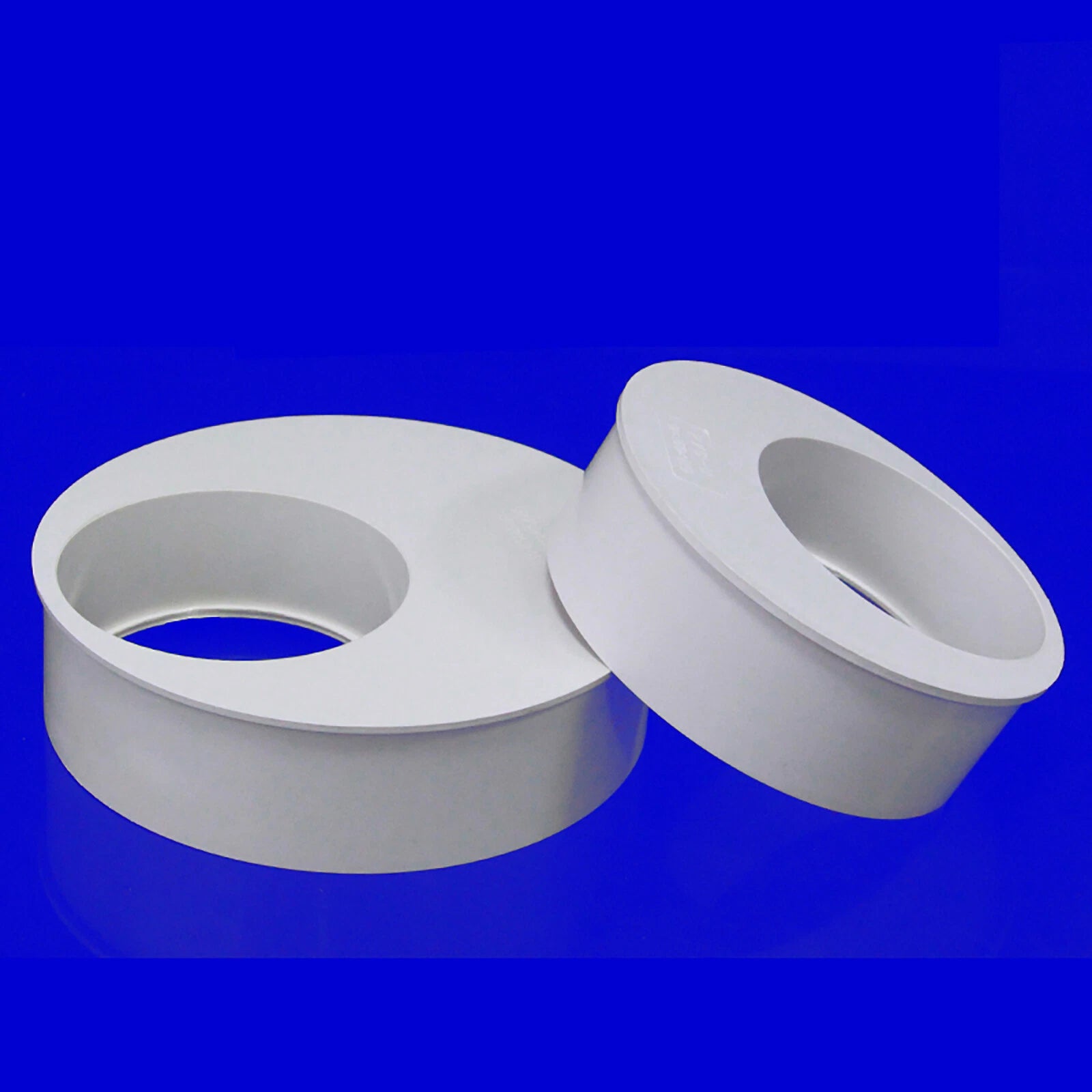
Offset bore keeps the pipe invert (bottom) flush across the size change — essential for maintaining gravity flow in horizontal DWV runs without creating a low-point trap.
🔩Solvent-Cement (Water Adhesive) Joint
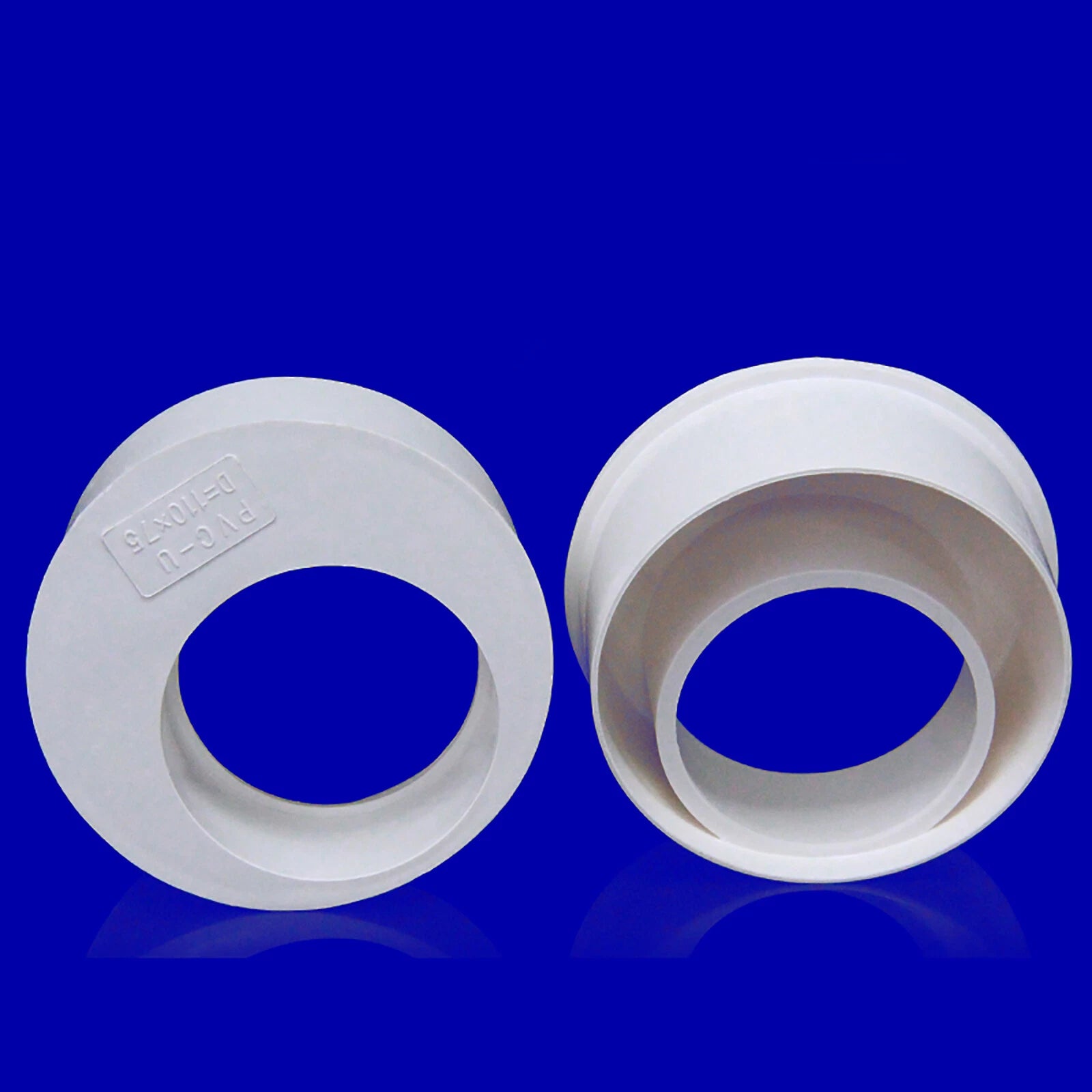
Push-fit socket accepts standard PVC solvent cement for a fast, leak-free, permanent bond. No threading, no gaskets, no special tools required beyond a brush and cleaner.
🛡️uPVC Construction
Unplasticised PVC resists corrosion, scale build-up, and chemical attack from typical household waste streams. Rated for continuous use in above-ground and below-slab DWV applications.
📏Two Size Options
75 × 50mm (~3" × 2") and 110 × 50mm (~4" × 2") cover the most common residential and light-commercial reducer transitions in soil and waste stacks.
⚖️Lightweight & Easy to Handle
Low mass simplifies overhead and confined-space installation. Each bush can be dry-fitted and adjusted before cementing, reducing rework on complex branch layouts.
✔️Consistent Dimensional Tolerances
Socket depth and spigot OD are held to tight tolerances to ensure reliable engagement with standard DWV pipe, minimising the risk of pull-out or misalignment after cementing.

📐 Technical Specifications — PVC Eccentric Reducer Bush

Material uPVC (Unplasticised Polyvinyl Chloride)
Connection Type Solvent cement (water adhesive) socket × spigot
Available Sizes 75 × 50mm / 110 × 50mm
Bore Type Eccentric (offset invert)
Application Drain, Waste & Vent (DWV) — above-ground and below-slab
Colour See variant options
Wall Thickness See variant options
Pressure Rating Non-pressure / gravity DWV service
Compatible Standards AS/NZS 1260, BS EN 1329 (confirm local code)
Quantity per Pack 1 Pcs

❓ Frequently Asked Questions

What is the difference between an eccentric and a concentric reducer bush?

A concentric reducer bush centres the smaller bore inside the larger one, so the pipe centreline shifts but both top and bottom change equally. An eccentric reducer bush offsets the bore so that one side (typically the bottom/invert) stays flat. This is critical in horizontal DWV runs where you need to maintain a consistent invert level to preserve gravity flow and avoid creating a low-point that traps solids or water.

Which size should I choose — 75 × 50mm or 110 × 50mm?

Match the larger socket to your existing pipe OD. If your main soil or waste pipe is 75mm (~3"), choose the 75 × 50mm bush. If it is 110mm (~4") — the most common residential soil pipe size — choose the 110 × 50mm bush. The 50mm spigot end connects to standard 50mm (~2") waste pipe from basins, baths, or showers.

Can I use this fitting underground or below a concrete slab?

uPVC DWV fittings are routinely used in below-slab drainage when properly bedded and backfilled per local plumbing codes. The solvent-cement joint forms a rigid, watertight bond suitable for buried service. Always verify that the fitting meets your local authority's approved product list before installation in concealed or underground locations.

What solvent cement should I use, and do I need a primer?

Use a uPVC-rated solvent cement (often labelled "PVC pipe cement" or "water adhesive") appropriate for DWV applications. In many regions a dedicated PVC primer or cleaner is recommended or required by code to degrease and soften the mating surfaces before cementing. Follow the cement manufacturer's cure time — typically 15–30 minutes before handling and 24 hours before pressure or flow testing.

Is this fitting resistant to household chemicals and cleaning agents?

uPVC has good resistance to dilute acids, alkalis, and the range of household cleaning products, detergents, and drain cleaners typically encountered in residential waste systems. It is not suitable for concentrated solvents, ketones, or aromatic hydrocarbons. For commercial or industrial waste streams containing aggressive chemicals, confirm chemical compatibility before specifying.

How do I ensure a leak-free solvent-cement joint on this bush?

Cut the pipe square and deburr the end. Dry-fit first to confirm depth and alignment. Apply primer/cleaner to both the spigot OD and socket ID, then apply an even coat of solvent cement to both surfaces. Push the spigot firmly into the socket with a slight twist, hold for 30 seconds, and wipe away excess cement. Avoid disturbing the joint for at least 15 minutes. A small bead of cement around the socket mouth confirms full coverage.

Can this reducer bush be used in a venting (vent stack) application?

Yes. uPVC eccentric reducer bushes are suitable for vent stack size transitions as well as waste and soil lines. In a vertical vent application the eccentric offset is less critical than in horizontal runs, but the fitting performs identically. Ensure all vent connections comply with your local plumbing code regarding minimum pipe diameters and vent termination requirements.

🛒 Select your size above, then add to cart.

You may also like

Recently viewed





