The chain is fine...but I ordered the wrong size. Nine links of the chain I ordered equals six of the size I wanted. My error...
How can I straighten out the springs? I can't use them coil uo as is.
Your payment information is processed securely. We do not store credit card details nor have access to your credit card information.
Get fitment advice & recommendations
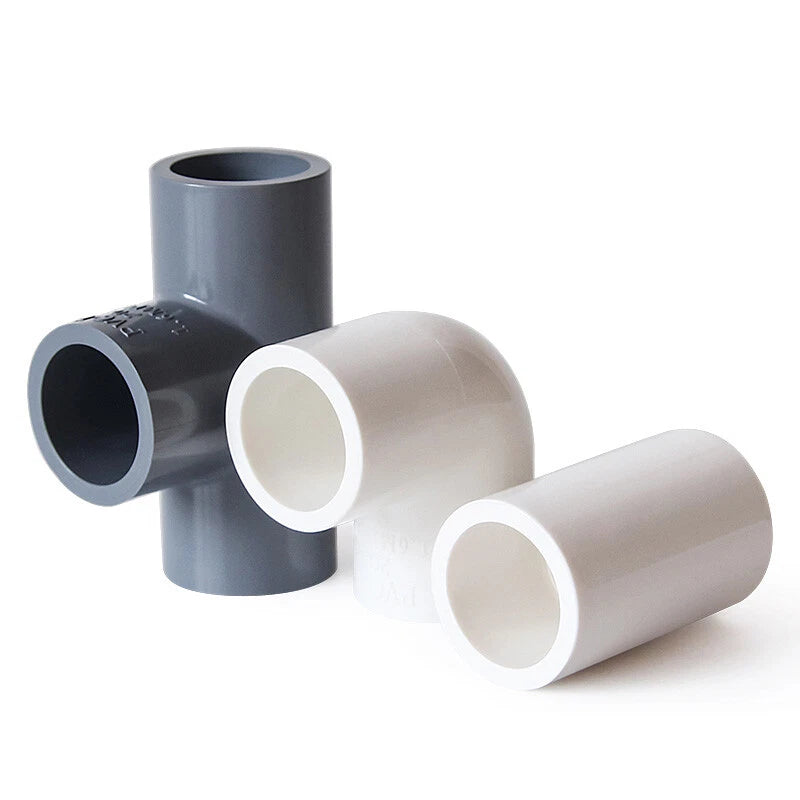
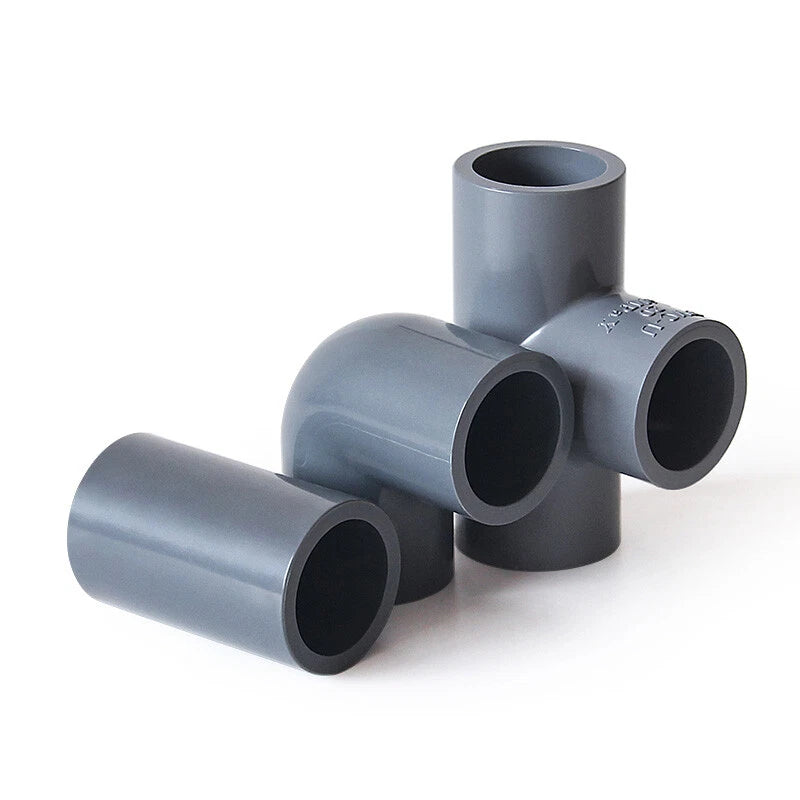
When a leaking joint or a mismatched connector brings your plumbing project to a halt, you need fittings that simply work - first time, every time. These PVC water pipe fittings are designed for DIY homeowners, plumbers, and irrigation builders who demand a secure, watertight connection without the hassle of specialist tools or adhesives.
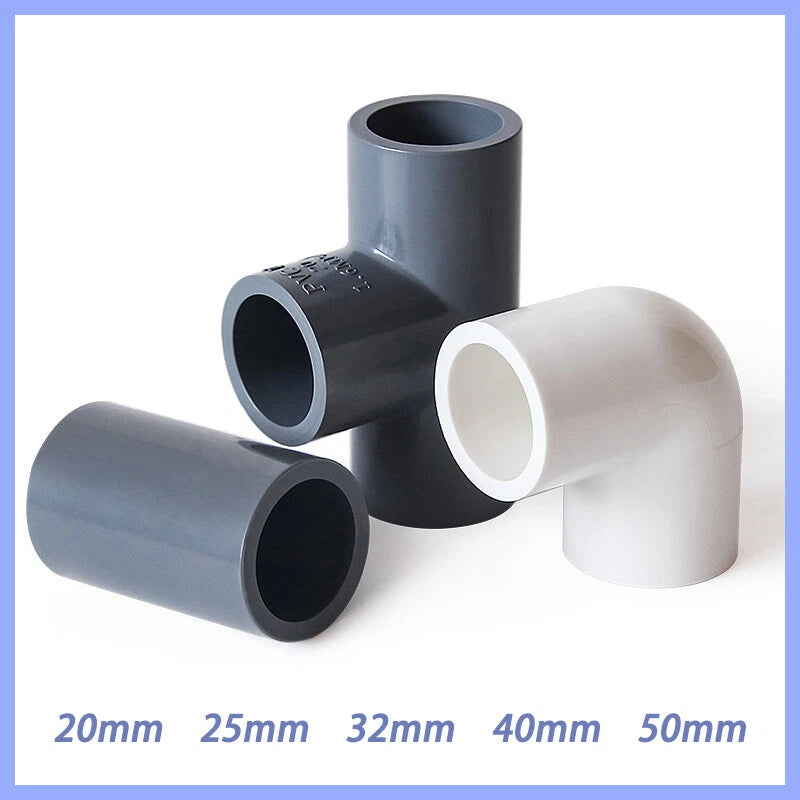
Each fitting is molded from rigid PVC (polyvinyl chloride), offering a smooth bore interior and uniform wall thickness for consistent flow. Available in inner diameters of 20mm (~3/4 in), 25mm (~1 in), 32mm (~1-1/4 in), and 40mm (~1-1/2 in), and in two clean finishes - Grey and White - these connectors suit both concealed and exposed pipework. Three connector types are offered: Tee (T-junction), Straight (inline coupler), and Elbow (90 degree bend).
Typical applications include residential cold-water supply lines, garden drip-irrigation manifolds, workshop compressed-air distribution, and PVC conduit runs - making these fittings a go-to choice for anyone searching for PVC pipe tee connector 25mm, plumbing elbow fitting 40mm, or straight pipe coupler for irrigation.
| Material | Rigid PVC (Polyvinyl Chloride) |
|---|---|
| Connector Types | Tee / Straight / Elbow (90 degree) |
| Inner Diameter Options | 20mm / 25mm / 32mm / 40mm |
| Colour / Finish | Grey / White |
| Wall Thickness | See variant options |
| Outer Diameter | See variant options |
| Working Pressure | See variant options |
| Temperature Rating | Cold water only (typically up to 60 C / 140 F) |
| Connection Method | Solvent-cement slip-fit socket |
| Pack Quantity | 1 / 2 / 5 / 8 / 10 pieces (select above) |
| Application | Cold-water supply, irrigation, conduit, drainage |
Measure the inner bore of your existing pipe with a caliper or ruler. Match that measurement to the fitting inner diameter: 20mm, 25mm, 32mm, or 40mm. If you are unsure, measure the pipe outer diameter and subtract twice the wall thickness to get the inner diameter.
These fittings are rated for cold-water applications only - typically up to 60 C (140 F) at low pressure. They are not suitable for hot-water heating systems, steam lines, or any application where sustained high temperatures are expected. For hot-water use, consider CPVC or brass fittings instead.
Use a standard PVC solvent cement rated for the pipe class you are working with. Apply PVC primer to both the pipe end and the fitting socket, then apply solvent cement and push the pipe firmly into the socket with a slight twist. Allow the joint to cure per the cement manufacturer instructions before pressurizing.
Yes. These PVC fittings are widely used in drip-irrigation manifolds, sprinkler supply lines, and garden water distribution networks. The Tee connector is especially useful for branching a main supply line to multiple zones, while the Straight coupler joins two pipe lengths and the Elbow redirects flow around corners.
Both colours are made from the same rigid PVC material and offer identical performance. Grey is the traditional colour for conduit and utility pipework, making it a natural choice for concealed or industrial installations. White is preferred for visible plumbing in bathrooms, kitchens, and laundry rooms where a cleaner aesthetic is desired.
Count the number of junctions, bends, and inline connections your layout requires, then add 10-15% extra for cutting errors or future repairs. Pack sizes of 1 and 2 suit small repairs; packs of 5, 8, or 10 offer better value for larger irrigation or plumbing runs.
Schedule 40 PVC is commonly used for low-pressure compressed-air distribution in workshops, but always verify the working pressure rating of the specific fitting and pipe before installation. Do not exceed the rated pressure, and avoid using PVC for high-pressure or oil-lubricated air systems. Consult local building codes, as some jurisdictions restrict PVC for compressed-air use.