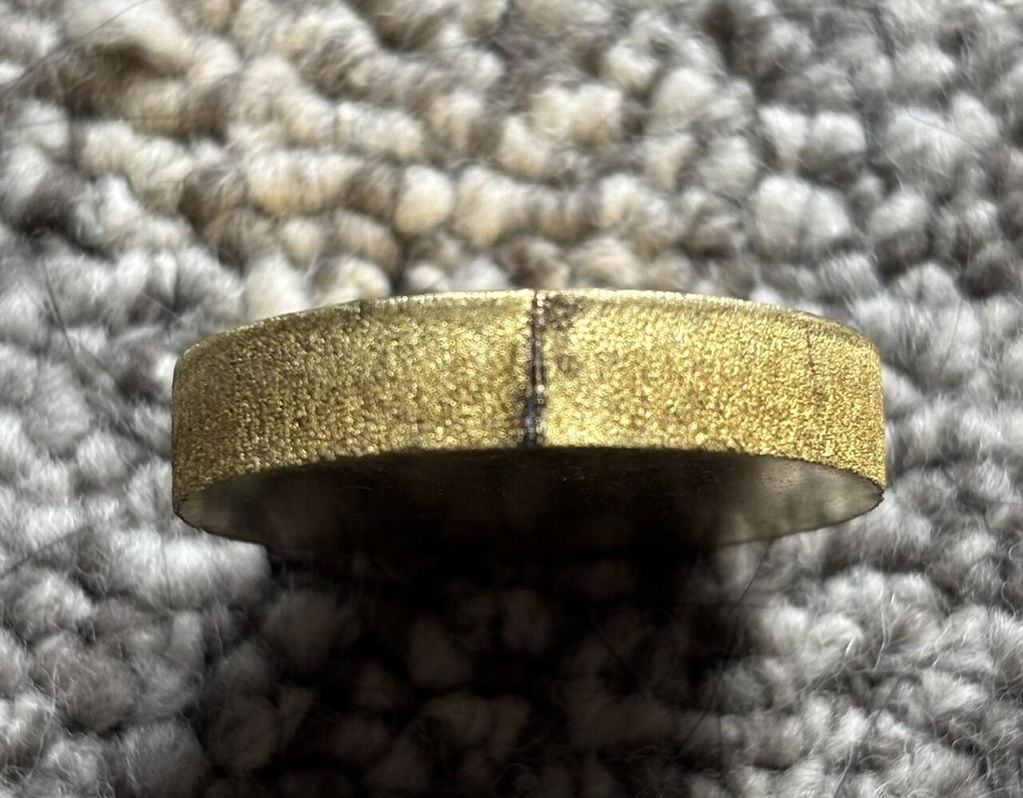
The chain is fine...but I ordered the wrong size. Nine links of the chain I ordered equals six of the size I wanted. My error...
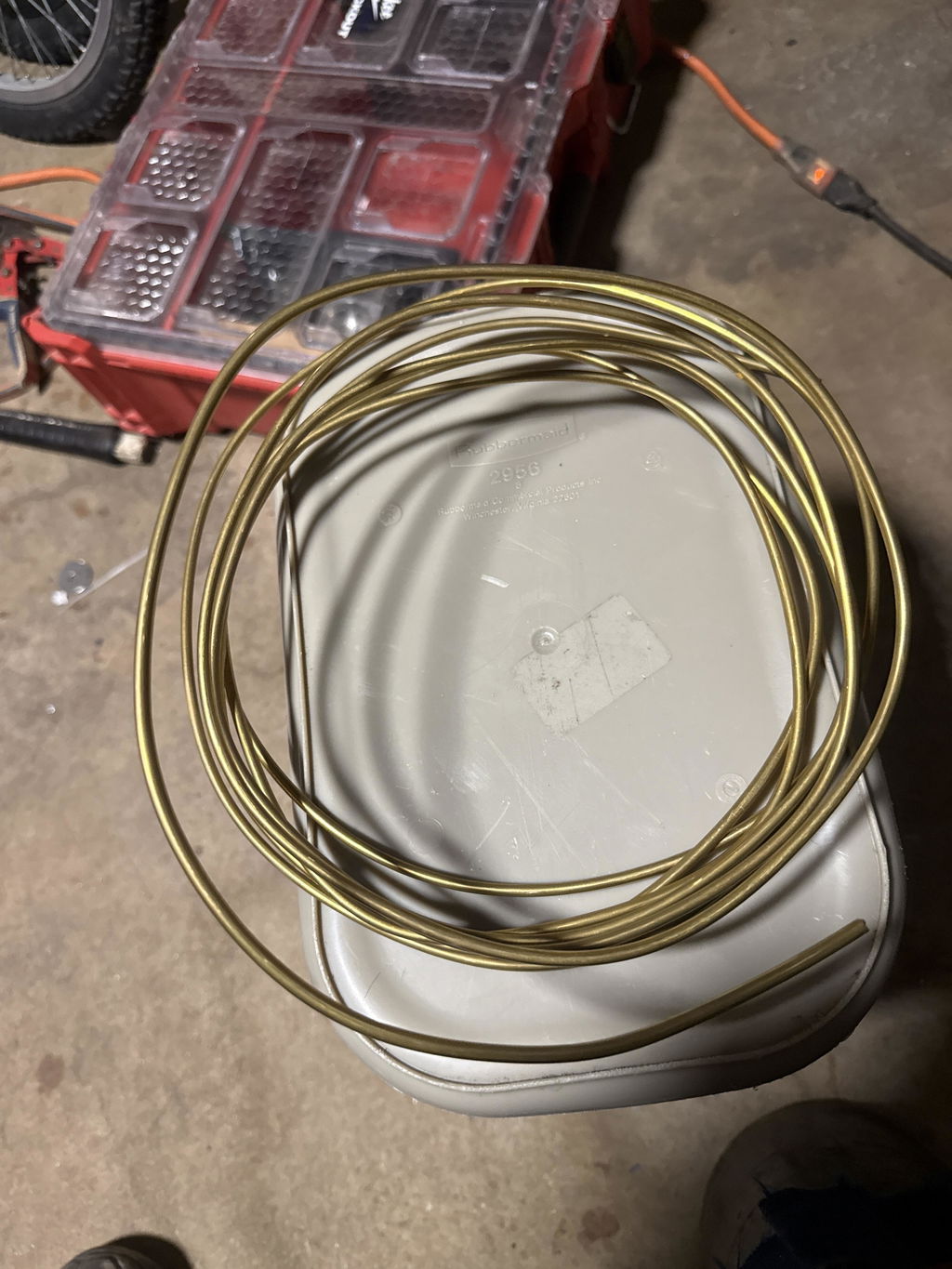
How can I straighten out the springs? I can't use them coil uo as is.
Your payment information is processed securely. We do not store credit card details nor have access to your credit card information.
Get fitment advice & recommendations
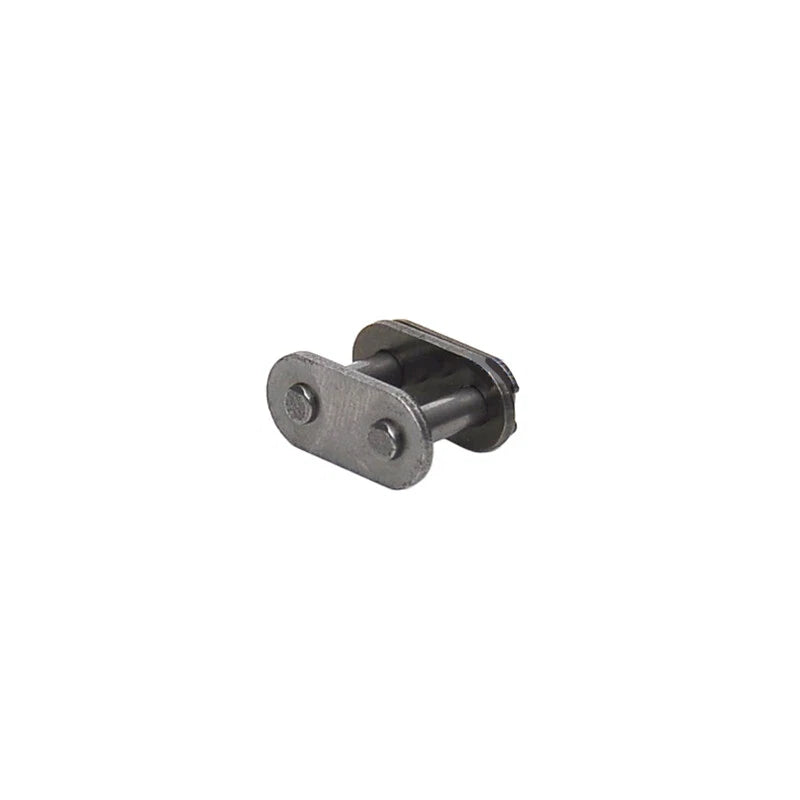
When a roller chain snaps mid-project or needs extending, sourcing the right roller chain connecting link quickly is critical — whether you're maintaining conveyor systems, agricultural equipment, go-karts, or industrial machinery. These split links are engineered for mechanics, fabricators, and DIY builders who need a dependable, drop-in replacement that holds under load without guesswork.
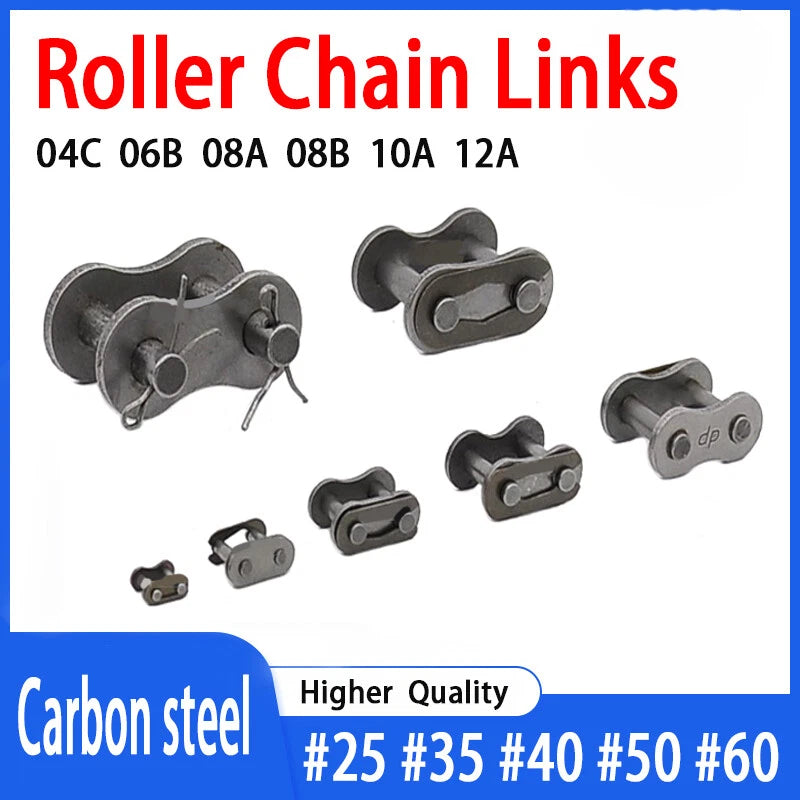
Each connecting link consists of a matched outer plate, inner plate, roller pin, and spring clip, machined from carbon steel for consistent tensile strength. Available chain types span #25 (04C-1, Pitch 6.35mm / 0.25 in) through #60 (12A-1, Pitch 19.05mm / 0.75 in), covering the most common ANSI/ISO roller chain standards. Pack quantities range from 1 to 20 pieces per order.
Typical use cases include replacing broken chain links on bicycle-style drive systems, extending conveyor chain runs in light industrial settings, and repairing go-kart or mini-bike drive chains — all scenarios where a correctly pitched roller chain split link prevents costly downtime.
Covers six chain types from #25 to #60, spanning pitches of 6.35mm to 19.05mm — one listing for the most common ANSI/ISO roller chain sizes.
Machined from carbon steel for consistent tensile strength and dimensional accuracy, ensuring a secure fit within the chain's pitch tolerance.
Each link includes a spring clip (cotter pin style) for tool-free installation and removal, keeping the outer plate locked under dynamic load.
Order 1, 5, 10, 15, or 20 pieces per pack — ideal for single repairs, maintenance kits, or stocking spare parts for ongoing operations.
Each variant is manufactured to the exact pitch of its chain standard, preventing misalignment, accelerated wear, and premature link failure.
The spring clip design allows field installation without a chain press or special tools — simply thread the pins through the chain ends, seat the outer plate, and clip.
| Material | Carbon Steel |
|---|---|
| Chain Standard | ANSI / ISO Roller Chain |
| Available Chain Types | #25 (04C-1), #35 (06B-1), #40 (08A-1), #40 (08B-1), #50 (10A-1), #60 (12A-1) |
| Pitch Range | 6.35mm – 19.05mm (0.25 in – 0.75 in) |
| Retention Type | Spring Clip (Cotter Pin Style) |
| Pack Quantity Options | 1 / 5 / 10 / 15 / 20 PCS |
| Surface Finish | See variant options |
| Tensile Strength | See variant options |
| Weight per Link | See variant options |
Match the chain number stamped on your existing chain or listed in your equipment manual. The chain number (e.g., #40, #50) directly corresponds to the pitch: #40 = 12.7mm pitch, #50 = 15.875mm pitch. If unsure, measure the center-to-center distance between two adjacent pins — that is your pitch.
Both are #40 chain with a 12.7mm pitch, but 08A-1 follows the ANSI standard (common in North America) and 08B-1 follows the ISO/British standard (common in Europe). The inner width and roller diameter differ slightly. Check your chain's origin or equipment spec to confirm which standard applies before ordering.
Carbon steel connecting links are designed to match the tensile strength rating of the corresponding chain standard. For exact load ratings, refer to the ANSI/ISO specification for your chain number. These links are suitable for standard drive and conveyor applications within those rated loads — avoid using them in applications that exceed the chain's published working load limit.
Carbon steel has moderate corrosion resistance. For outdoor or high-moisture environments, regular lubrication with a chain-compatible oil or grease is recommended to extend service life. If your application requires higher corrosion resistance, consider stainless steel chain links instead.
Yes. These connecting links are compatible with standard ANSI/ISO roller chains used in both drive (power transmission) and conveyor applications, provided the chain number and pitch match. Always verify the chain type and working load before installation in conveyor systems with side loads or attachments.
For a single chain repair, 1 PCS is sufficient. For a maintenance kit covering multiple machines or future repairs, 5–10 PCS per chain size is a practical stock level. If you operate multiple pieces of equipment with the same chain standard, the 15 or 20 PCS packs offer better per-unit value.
No special tools are required. Thread the two pins through the chain ends, slide the outer plate over the pins, then press the spring clip into the pin grooves using needle-nose pliers or your fingers. Removal is equally straightforward — pry the spring clip off and slide the outer plate free.