The chain is fine...but I ordered the wrong size. Nine links of the chain I ordered equals six of the size I wanted. My error...
How can I straighten out the springs? I can't use them coil uo as is.
Your payment information is processed securely. We do not store credit card details nor have access to your credit card information.
Get fitment advice & recommendations
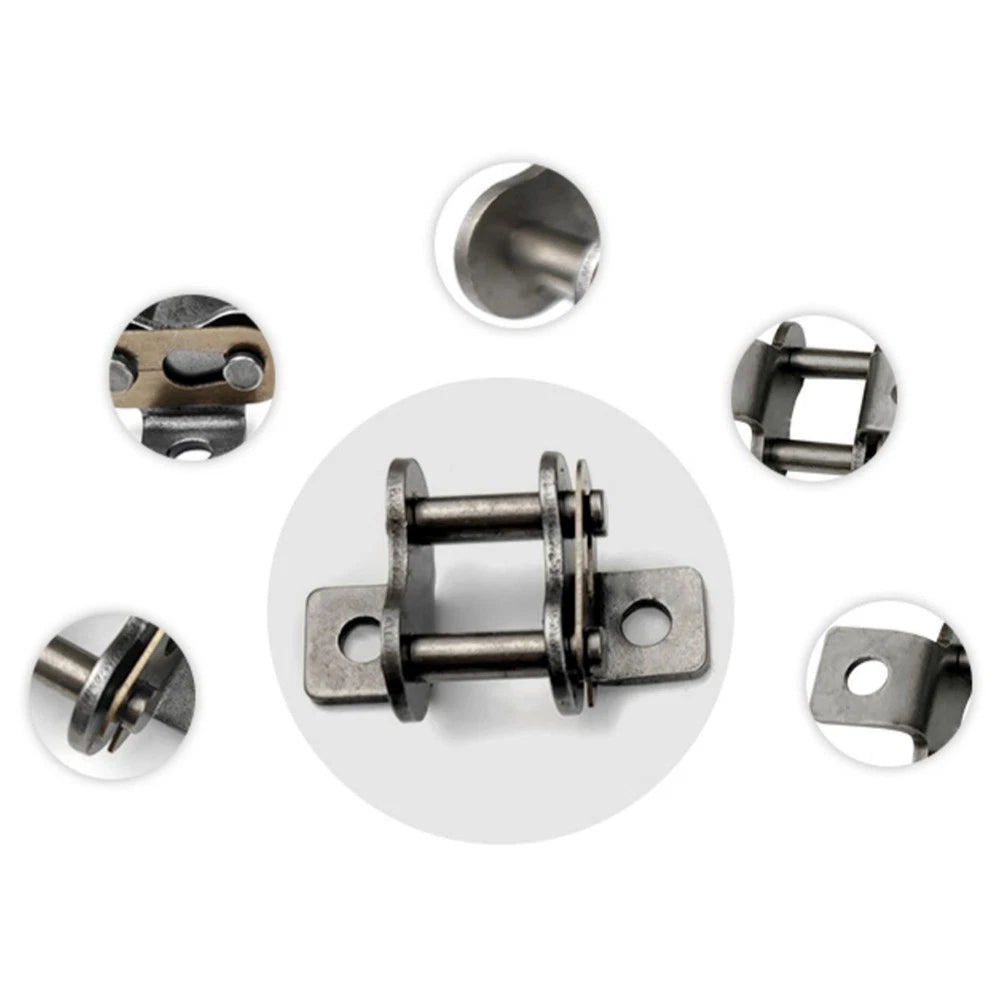
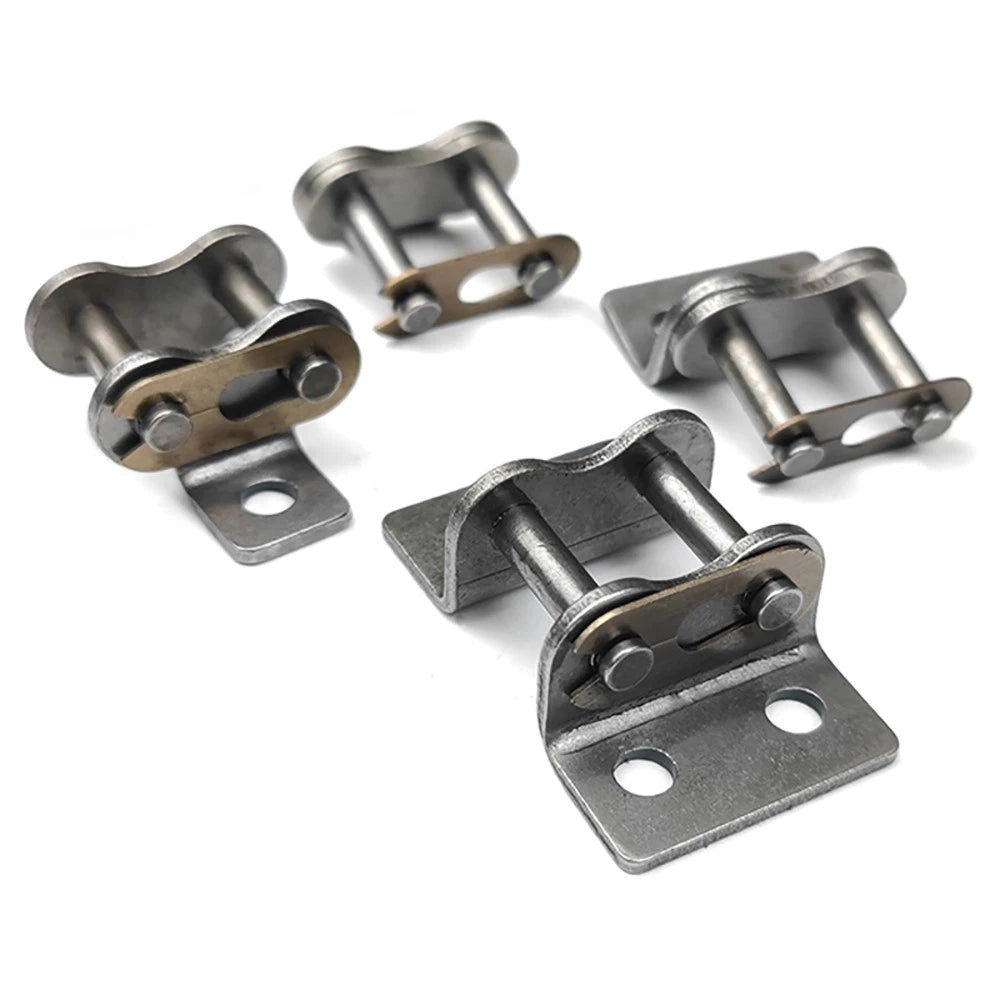
When a worn or broken chain link brings your conveyor, agricultural equipment, or power transmission system to a halt, every minute of downtime costs you. These roller chain connecting links with bent ear are engineered for mechanics, maintenance technicians, and DIY builders who need a reliable, drop-in replacement that installs fast and holds under load.
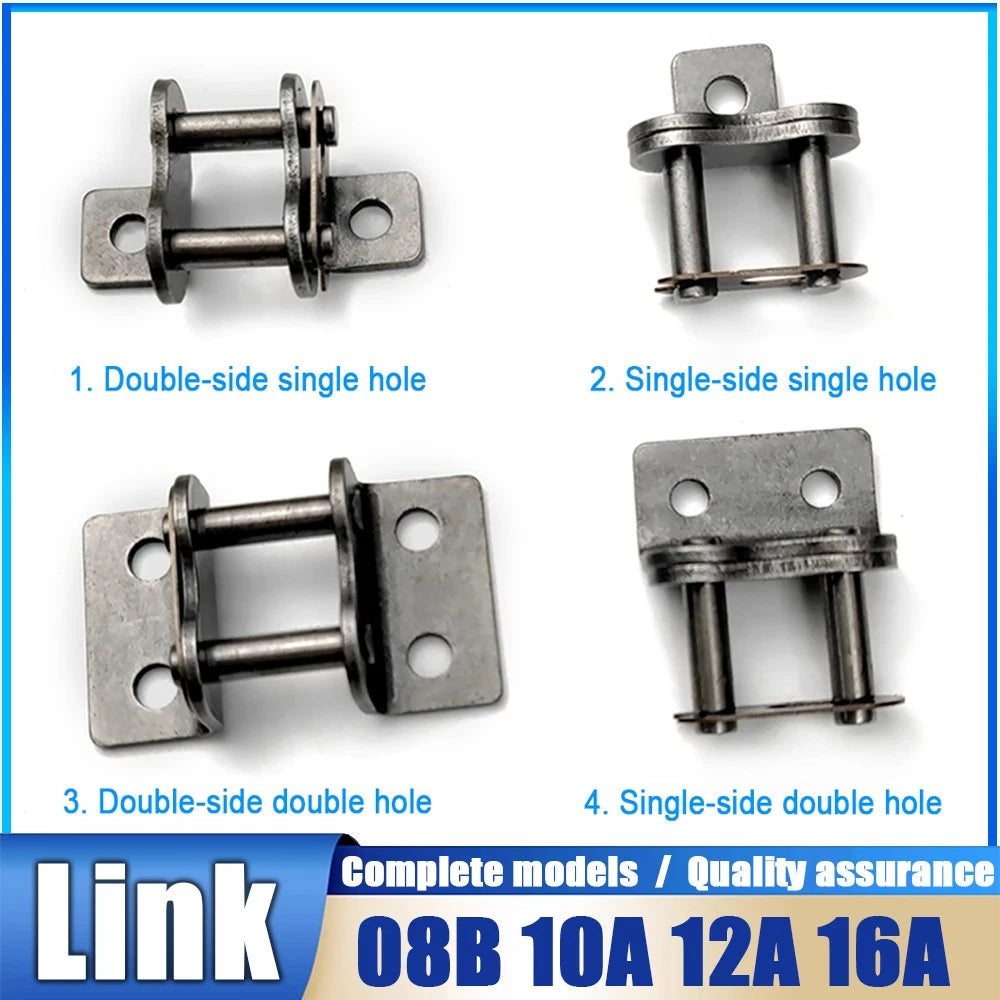
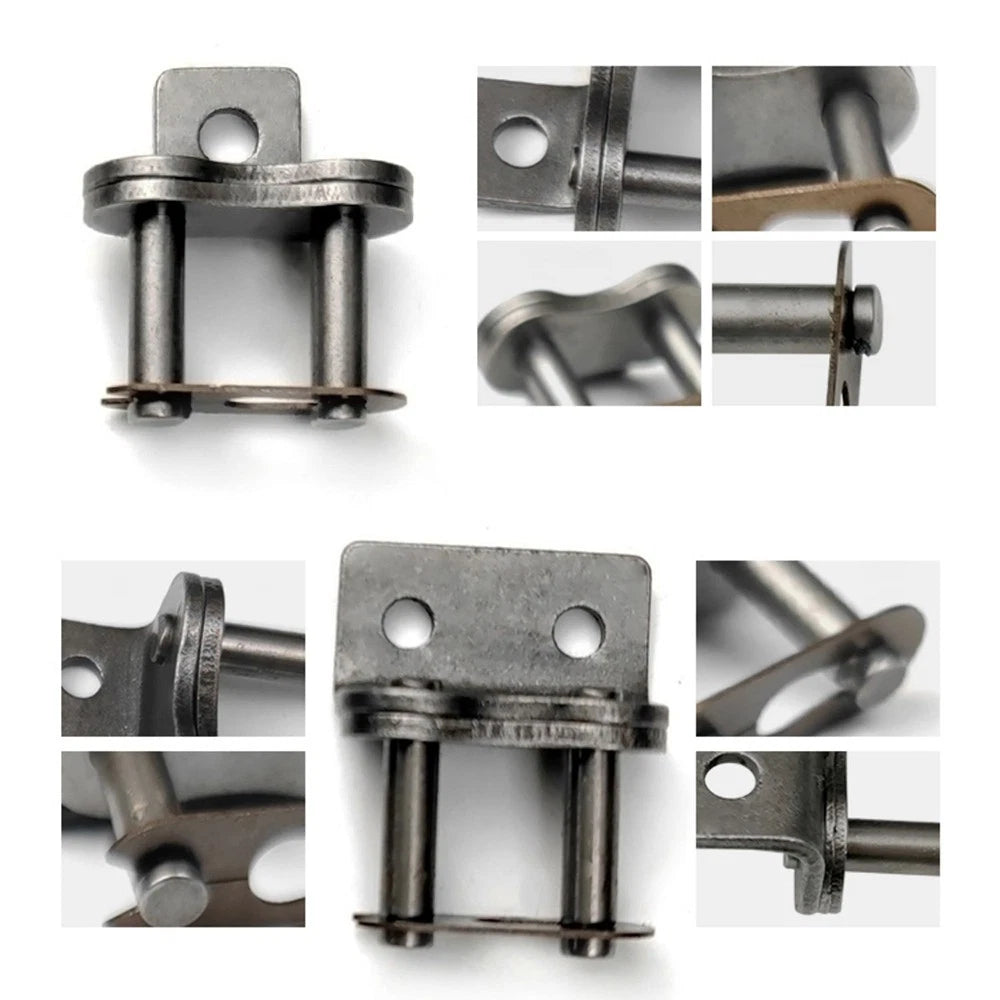
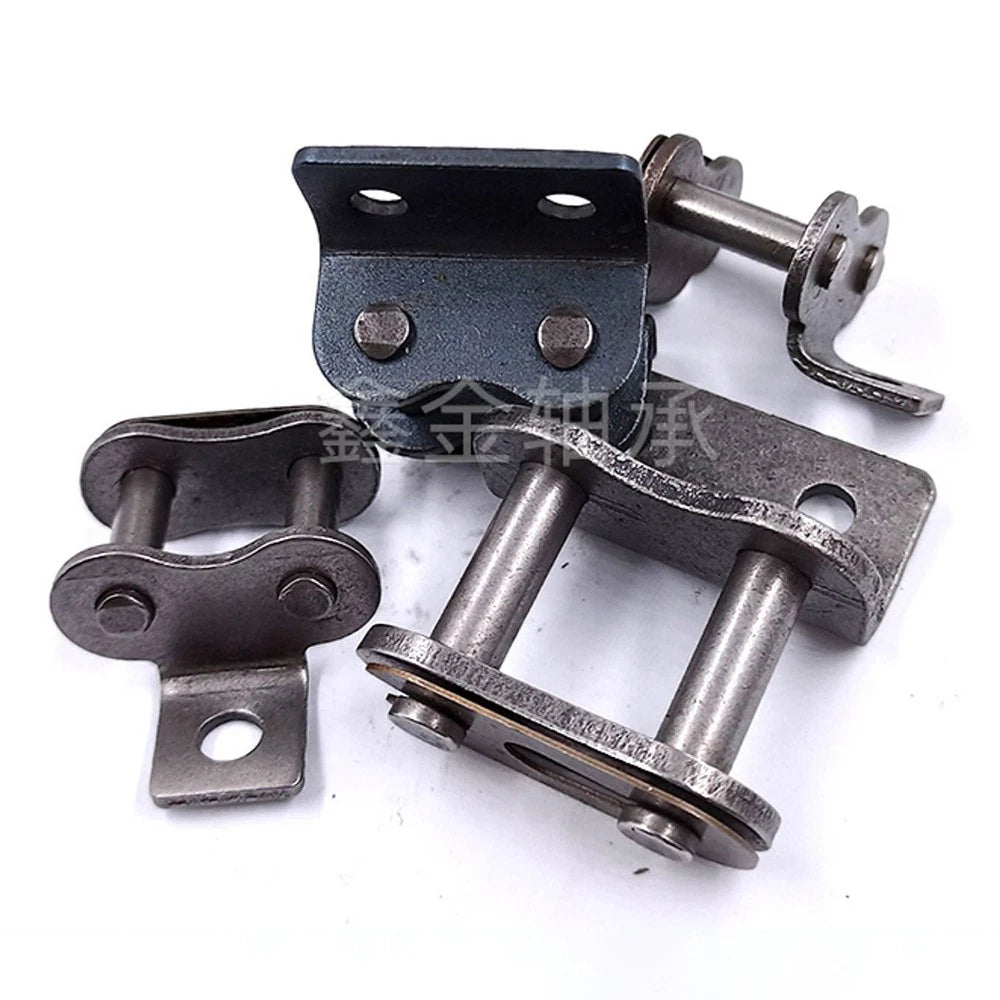
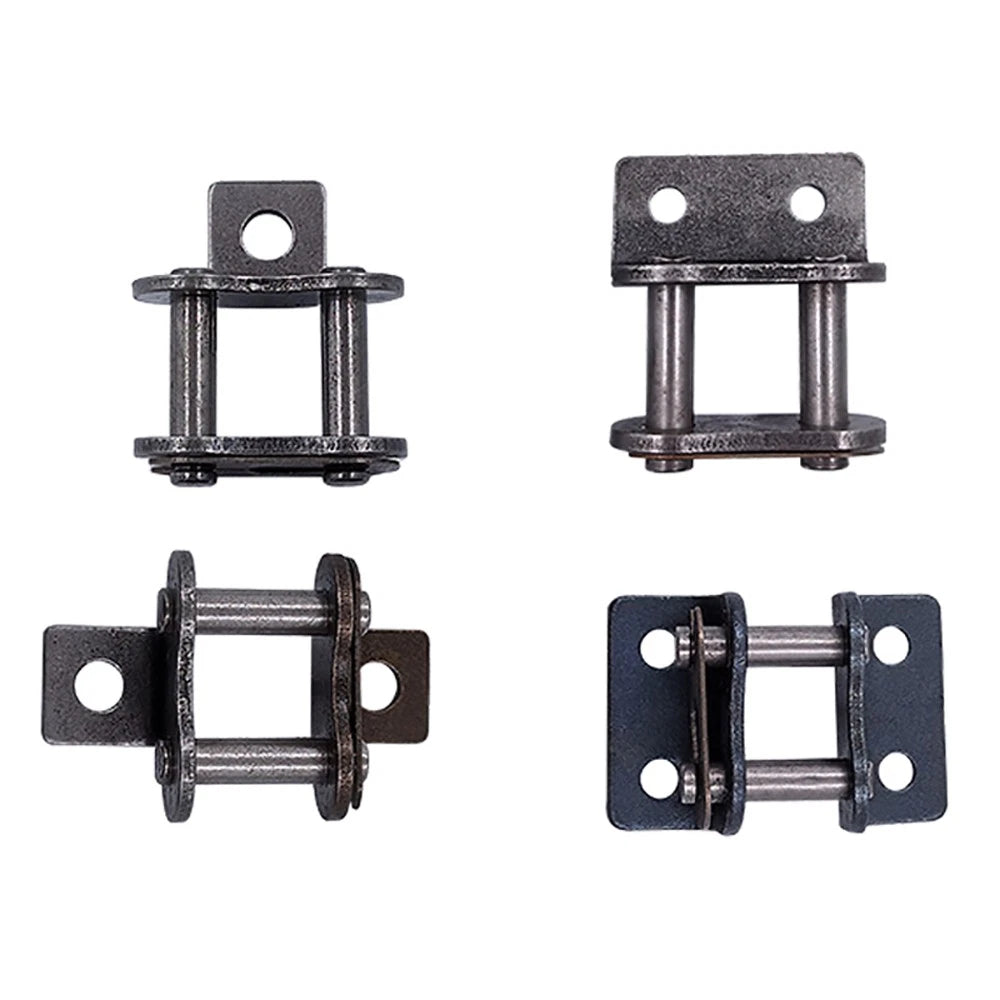
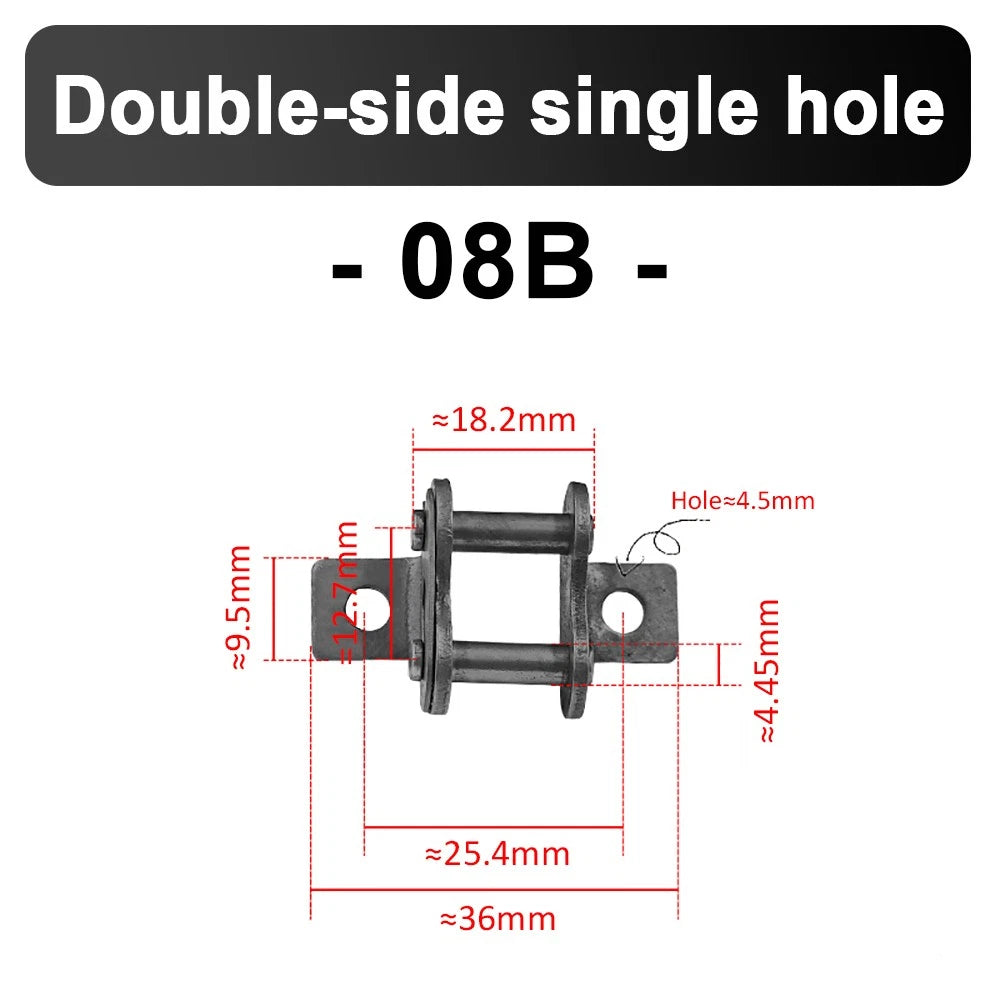
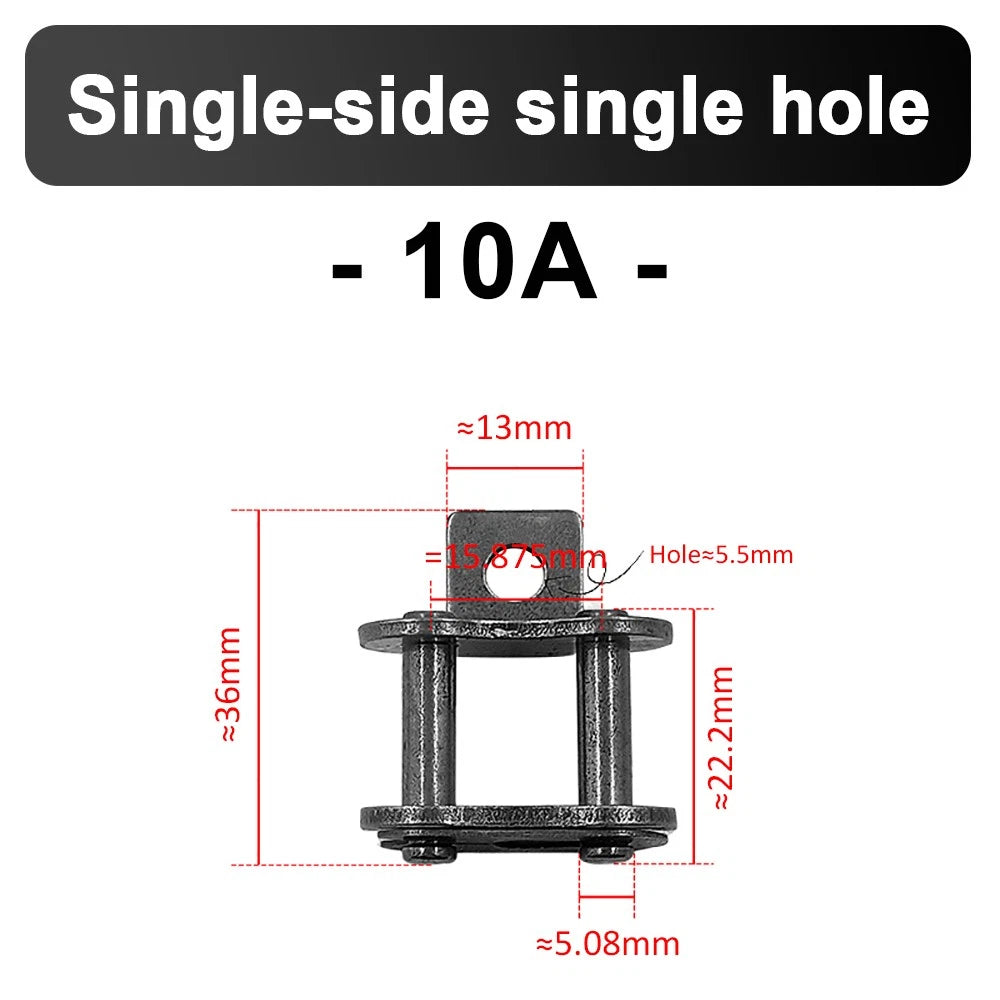
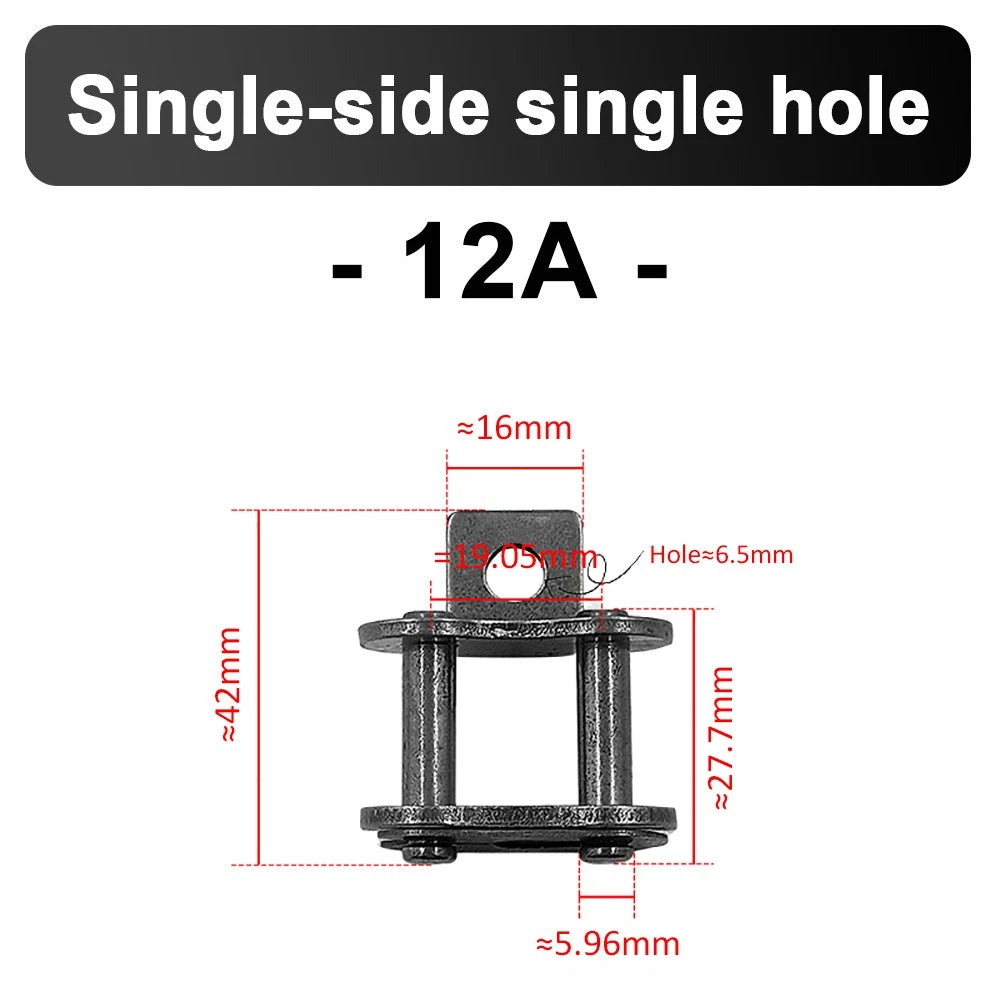
Each link is machined from carbon steel and is available in four standard chain series — 08B, 10A, 12A, and 16A — with four configuration options per series: single-side single hole, single-side double hole, double-side single hole, and double-side double hole. The bent ear (also called a bent plate or locking tab) secures the spring clip in place, preventing accidental disengagement during operation. Link dimensions conform to ISO/ANSI roller chain standards; pitch ranges from approximately 12.7 mm (1/2 in) for 08B up to 25.4 mm (1 in) for 16A.
Typical applications include roller chain repair on conveyor systems, agricultural machinery drive chains, industrial power transmission equipment, and go-kart or small engine drive setups requiring a standard connecting link with positive retention.
| Chain Series | 08B, 10A, 12A, 16A |
|---|---|
| Standard | ISO (B-series) / ANSI (A-series) |
| Pitch — 08B | 12.7 mm (1/2 in) |
| Pitch — 10A (ANSI #50) | 15.875 mm (5/8 in) |
| Pitch — 12A (ANSI #60) | 19.05 mm (3/4 in) |
| Pitch — 16A (ANSI #80) | 25.4 mm (1 in) |
| Material | Carbon Steel |
| Finish | See variant options |
| Link Configuration | Single-side single hole / Single-side double hole / Double-side single hole / Double-side double hole |
| Locking Method | Spring clip with bent ear retention plate |
| Strand Type | Simplex (single strand) |
| Weight per Link | See variant options |
Match the connecting link to your existing chain's series designation. Check the chain for a stamped or printed series number, or measure the pitch (center-to-center distance between pins): 08B = 12.7 mm, 10A = 15.875 mm, 12A = 19.05 mm, 16A = 25.4 mm. Select the variant that matches your chain's series exactly.
Single-hole link plates have one attachment hole on the outer plate, while double-hole plates have two. Double-hole plates are used when you need to attach a bracket, attachment, or accessory to the chain link. If you only need a standard chain repair link, single-hole is the typical choice.
Single-side links have the extended attachment plate on one side of the chain only. Double-side links have extended plates on both sides, providing symmetrical attachment points — useful for conveyor attachments or fixtures that need to connect to both sides of the chain simultaneously.
The bent ear (bent tab or bent plate) is a small tab on the outer link plate that wraps around the spring clip after installation. It prevents the spring clip from vibrating loose or being ejected during operation, providing a more secure connection compared to standard connecting links without this feature.
These links are made from carbon steel, which provides solid mechanical strength but has limited inherent corrosion resistance. For outdoor, wet, or mildly corrosive environments, applying a chain lubricant or corrosion-inhibiting oil after installation is recommended. For highly corrosive environments, consider stainless steel chain links instead.
Thread the connecting link pin plates through the open ends of the chain. Slide the outer plate over the pins, then fit the spring clip into the pin grooves with the closed end facing the direction of chain travel. Finally, use pliers to bend the ear tab over the spring clip to lock it in place. No special tools are required beyond basic hand tools.
The 08B variant follows ISO B-series dimensions. The 10A, 12A, and 16A variants follow ANSI A-series dimensions (equivalent to ANSI #50, #60, and #80 respectively). ISO B-series and ANSI A-series chains of the same pitch are not directly interchangeable, so confirm your chain's standard before selecting a variant.