The chain is fine...but I ordered the wrong size. Nine links of the chain I ordered equals six of the size I wanted. My error...
How can I straighten out the springs? I can't use them coil uo as is.
Your payment information is processed securely. We do not store credit card details nor have access to your credit card information.
Get fitment advice & recommendations
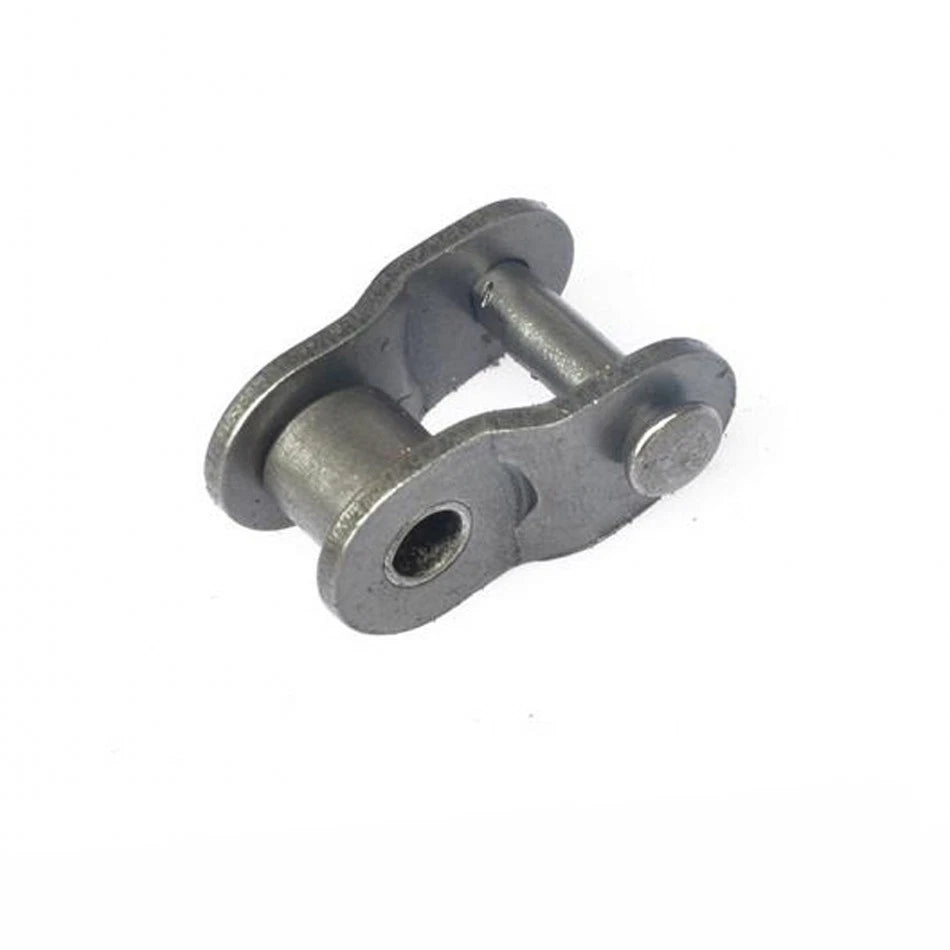
When a drive chain snaps mid-project or a worn link threatens your conveyor, bike, or power transmission system, downtime is costly. These roller chain connecting links and half links are designed for mechanics, fabricators, and DIY builders who need a dependable, drop-in repair solution across the most common ANSI roller chain sizes.
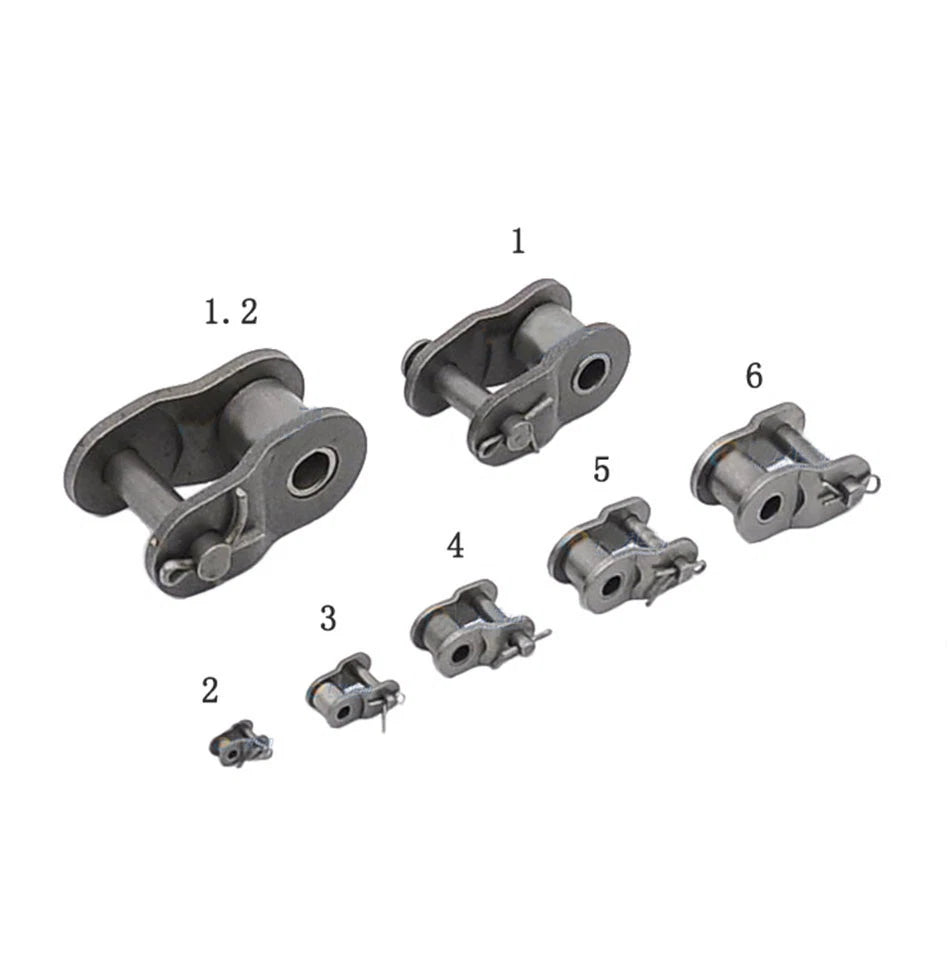
Each pack contains 10 connecting links (also called master links) or half links, constructed from carbon steel with a zinc-plated or natural steel finish depending on variant. Available in sizes #25 (04C / 1/4" pitch), #35 (06B–06C / 3/8" pitch), #40 (08A–08B / 1/2" pitch), #50 (10A / 5/8" pitch), #60 (12A / 3/4" pitch), and #80 (16A / 1" pitch). Each link includes the outer plate, spring clip or cotter pin, and roller pins as applicable to the chain type.
Typical applications include roller chain connecting link replacement on go-kart drive chains, agricultural equipment chain repair, industrial conveyor chain maintenance, and bicycle or motorcycle chain half link adjustment. Whether you need a #40 master link for a mini bike or a #80 connecting link for heavy-duty power transmission, this multi-size range covers the most common repair scenarios.
| Product Type | Roller Chain Connecting Link / Half Link (Master Link) |
|---|---|
| Available Chain Sizes | #25 (1/4"), #35 (3/8"), #40 (1/2"), #50 (5/8"), #60 (3/4"), #80 (1") |
| ANSI / ISO Equivalents | 04C, 06B, 06C, 08A, 08B, 10A, 12A, 16A |
| Material | Carbon Steel |
| Surface Finish | Zinc-Plated / Natural Steel (see variant options) |
| Retention Method | Spring Clip (smaller sizes) / Cotter Pin (larger sizes) |
| Pack Quantity | 10 Pieces per pack |
| Pitch Range | 1/4" (6.35 mm) to 1" (25.4 mm) |
| Breaking Load | See variant options |
| Weight per Pack | See variant options |
Match the chain number on your existing chain or sprocket. Common markings include #25, #35, #40, #50, #60, or #80 (ANSI) or their ISO equivalents (04C, 06B, 08A, etc.). If unsure, measure the pitch — the center-to-center distance between two adjacent pins. Select the variant that matches your pitch: 1/4" = #25, 3/8" = #35, 1/2" = #40, 5/8" = #50, 3/4" = #60, 1" = #80.
A connecting link (master link) joins two ends of a chain and consists of an outer plate, two pins, and a spring clip or cotter pin. A half link adds or removes a half-pitch increment from the chain length, useful when a full link would make the chain too long. Both are included in this listing — select the type you need from the variant options.
Yes. The size designations cover both ANSI (e.g., #40) and ISO (e.g., 08A/08B) standards. ANSI #40 and ISO 08A share the same 1/2" pitch, though there are minor dimensional differences between A-series and B-series within the same pitch. Check your chain's series marking (A or B) and select accordingly — for example, #40(08A) vs. #40(08B) are listed as separate variants.
Tensile strength varies by chain size. As a general reference, #25 links are rated for lighter loads (typically around 780 lbf / 3.5 kN), while #80 links handle significantly higher loads (typically 7,000+ lbf / 31+ kN). For exact load ratings for your application, refer to the ANSI B29.1 standard or contact us to confirm before use in safety-critical systems.
The zinc-plated finish provides a baseline level of corrosion resistance suitable for workshop and light outdoor use. For prolonged outdoor or wet environments, we recommend applying a chain lubricant or grease after installation to extend service life. For heavily corrosive environments (saltwater, chemical exposure), consider stainless steel chain links instead.
#25 connecting links are commonly used on small motorized bikes, go-karts, and mini bikes. Standard bicycle chains typically use a proprietary master link rather than ANSI roller chain links — verify your bike's chain pitch and type before ordering. Motorcycle chains often use 420, 428, 520, or 530 series, which correspond to ANSI #40–#50 pitch families; confirm the exact series match before installation.
Thread the two pins through the chain ends and the inner link, then slide the outer plate over the pins. Fit the spring clip into the pin grooves with the closed end facing the direction of chain travel. Use needle-nose pliers or a clip tool to seat the clip fully. For cotter pin types (larger sizes), insert the cotter pin through the hole in each pin and bend the legs apart to lock.