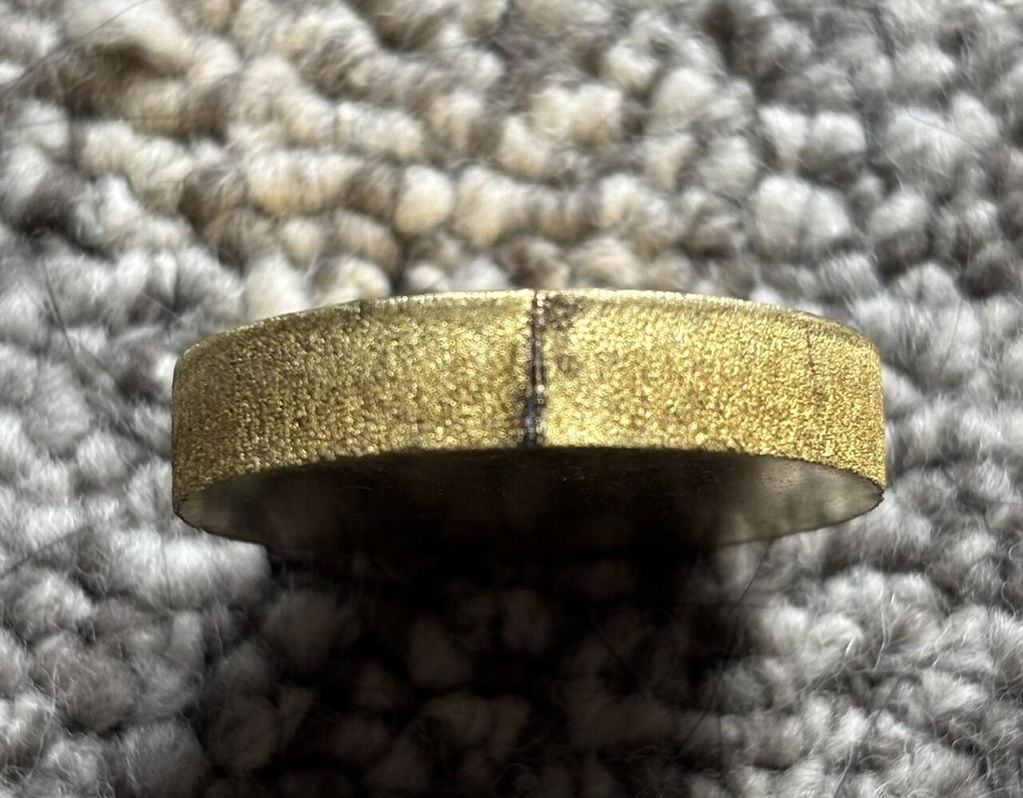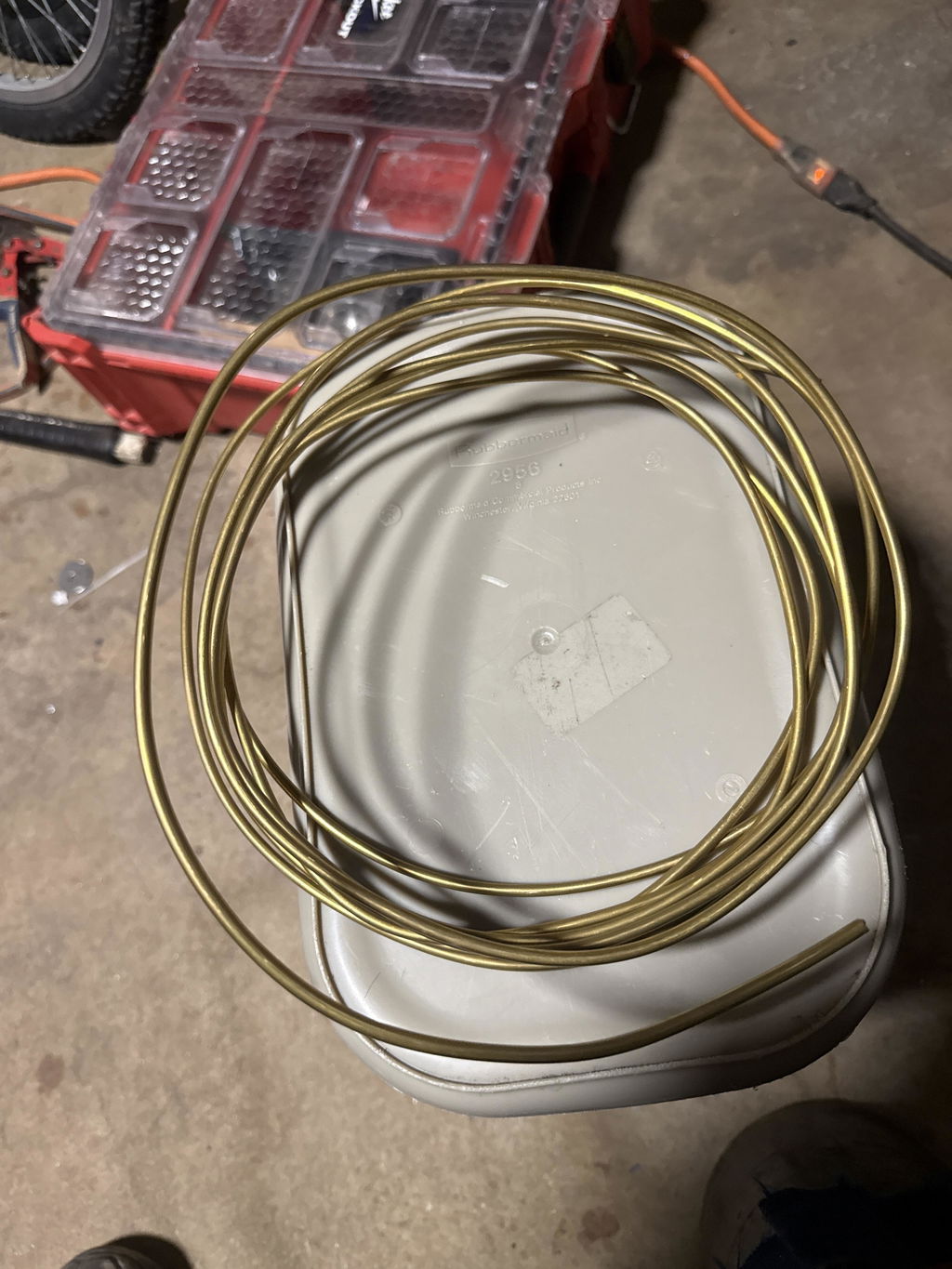
The chain is fine...but I ordered the wrong size. Nine links of the chain I ordered equals six of the size I wanted. My error...
How can I straighten out the springs? I can't use them coil uo as is.
Your payment information is processed securely. We do not store credit card details nor have access to your credit card information.
Get fitment advice & recommendations
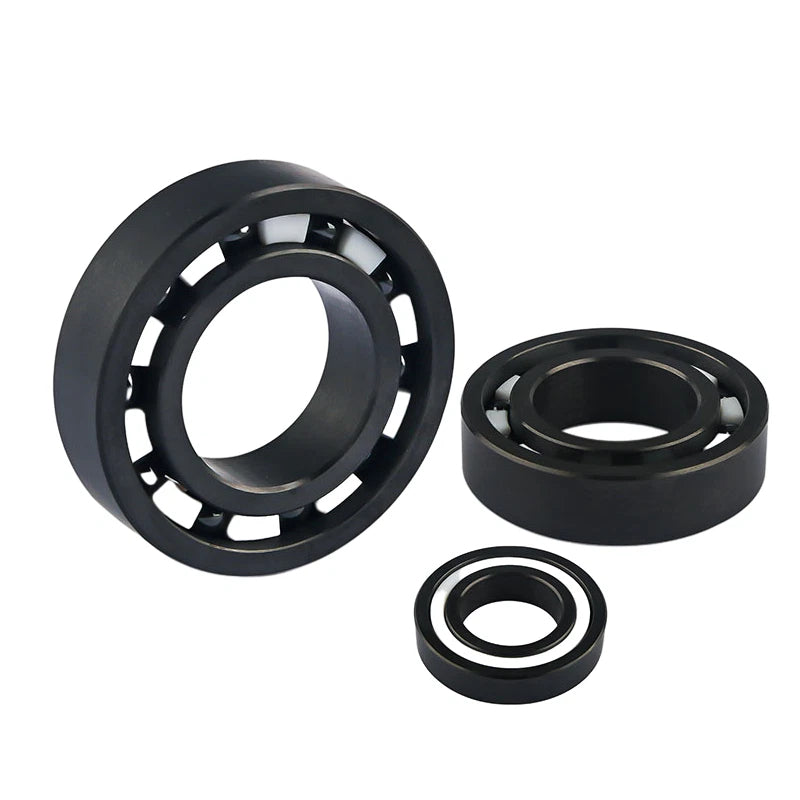
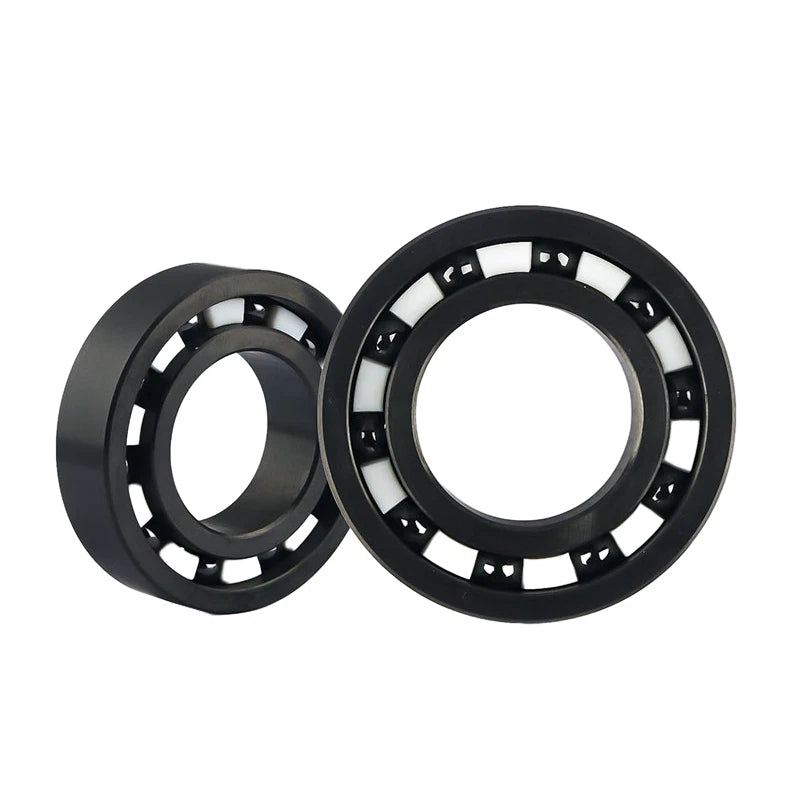
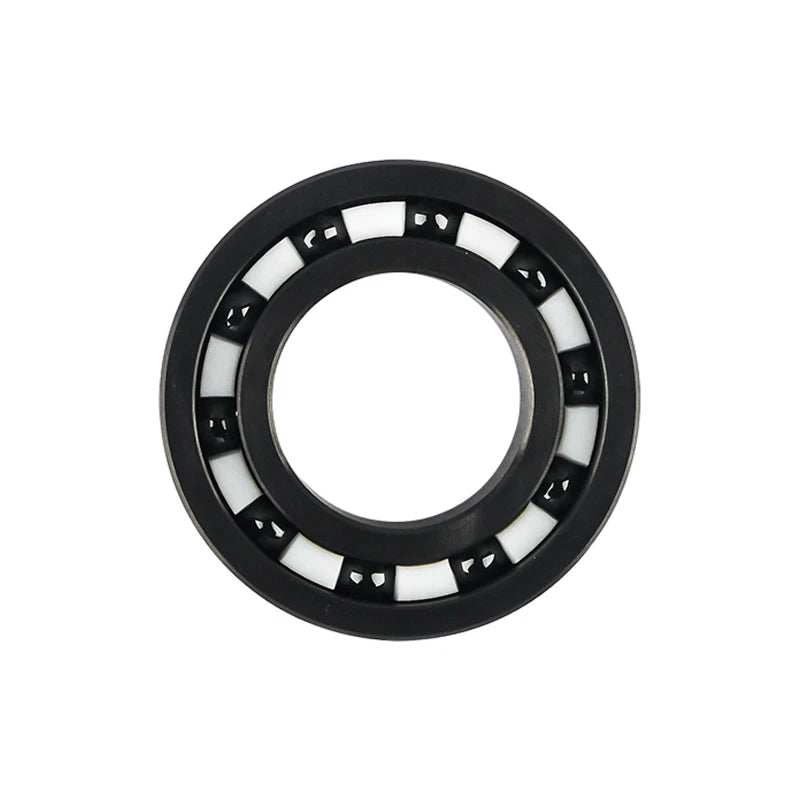
When standard steel bearings fail under heat, corrosion, or electrical interference, engineers and precision equipment builders turn to full ceramic bearings. These Si3N4 silicon nitride ceramic bearings with silicon nitride cage are engineered for applications where metal simply cannot perform — from chemical processing equipment to high-speed spindles and vacuum systems.
Each bearing is constructed entirely from silicon nitride (Si3N4) ceramic — balls, inner race, outer race, and cage — with no metallic components. Available in inner diameter sizes from 3mm (~0.12 in) to 40mm (~1.57 in), with a range of outer diameter and thickness combinations to suit your specific bore and housing requirements. See variant options for the full dimensional matrix.
Typical use cases include high-speed dental and medical handpieces requiring non-magnetic, sterilizable bearings; semiconductor and cleanroom equipment where particle contamination must be minimized; chemical pumps and flow meters exposed to aggressive media; and high-temperature kiln or furnace conveyor systems where lubricant breakdown is a concern.
| Material | Silicon Nitride (Si3N4) — balls, races, and cage |
|---|---|
| Cage Material | Silicon Nitride (Si3N4) — full ceramic cage |
| Inner Diameter (ID) Range | 3mm – 40mm (approx. 0.12 in – 1.57 in) |
| Outer Diameter (OD) Range | See variant options |
| Thickness Range | See variant options |
| Bearing Type | Deep groove ball bearing, open (no seal/shield) |
| Operating Temperature | Up to approximately 1000°C (1832°F) |
| Electrical Conductivity | Non-conductive (full ceramic) |
| Magnetic Properties | Non-magnetic |
| Lubrication | Dry / self-lubricating (no grease required) |
| Corrosion Resistance | Resistant to most acids, alkalis, and solvents |
| Hardness | Approximately HV 1400–1600 (Vickers) |
| Density | Approximately 3.2 g/cm³ |
| Number of Size Variants | 47 (3×8×3mm through 40×68×15mm) |
Match the inner diameter (ID) to your shaft diameter, the outer diameter (OD) to your housing bore, and the thickness to your available axial space. Use the variant selector — each option is listed as ID × OD × Thickness in millimeters. If your shaft is imperial, convert: 1 inch = 25.4mm. When in doubt between two sizes, choose the one where the ID is a snug interference or light press fit on the shaft.
Yes. Silicon nitride ceramic has inherent dry-running capability due to its low friction coefficient and self-lubricating surface properties. These bearings are commonly used in vacuum environments, cleanrooms, and food-processing equipment where grease or oil contamination is unacceptable. For very high-speed applications, a small amount of compatible dry lubricant (e.g., PTFE-based) can further extend service life.
Si3N4 ceramic is chemically inert to most common acids (including hydrochloric and sulfuric acid at moderate concentrations), alkalis, and organic solvents. It is not recommended for use with hydrofluoric acid (HF) or concentrated phosphoric acid at elevated temperatures, which can attack silicon nitride. For specific chemical compatibility, contact us to confirm suitability for your media.
Silicon nitride retains its mechanical properties up to approximately 1000°C (1832°F) in non-oxidizing environments. In air, oxidation of the surface begins above approximately 800°C but typically forms a protective silica layer that limits further degradation. This makes Si3N4 bearings suitable for kiln conveyors, furnace equipment, and high-temperature process machinery where steel bearings would fail due to tempering or lubricant breakdown.
Yes. Because the entire bearing — balls, races, and cage — is made from silicon nitride ceramic with zero ferrous content, these bearings are fully non-magnetic. They are used in MRI-adjacent positioning systems, scientific instruments, and electromagnetic research equipment where even trace magnetic permeability would cause interference or measurement errors.
Hybrid ceramic bearings use Si3N4 balls but retain steel inner and outer races. Full ceramic bearings (like these) use Si3N4 for all components including the cage. Full ceramic bearings offer complete electrical insulation, full corrosion resistance across all surfaces, and non-magnetic properties throughout — whereas hybrid bearings retain the electrical conductivity and corrosion vulnerability of their steel races. Full ceramic is the correct choice when the application demands total isolation from conductivity, magnetism, or chemical attack.
These are deep groove ball bearings, which handle primarily radial loads with moderate axial (thrust) loads in both directions. They are not designed for heavy axial-only or shock loading. Si3N4 ceramic, while extremely hard, is more brittle than steel — avoid impact loads or press-fitting with excessive force. Use a bearing press or appropriate installation tooling and apply force only to the race being fitted.