The chain is fine...but I ordered the wrong size. Nine links of the chain I ordered equals six of the size I wanted. My error...
How can I straighten out the springs? I can't use them coil uo as is.
Your payment information is processed securely. We do not store credit card details nor have access to your credit card information.
Get fitment advice & recommendations
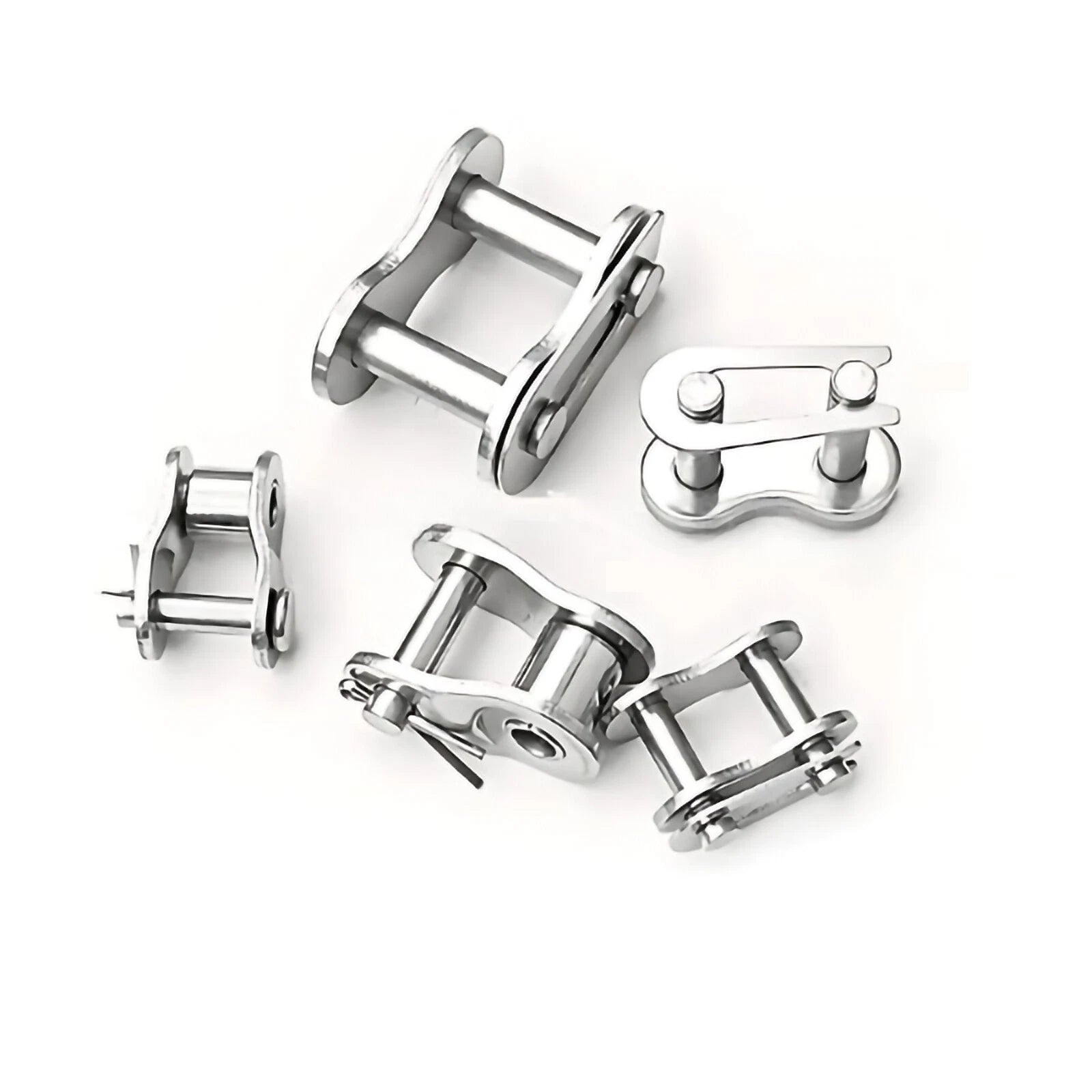
When a worn or broken connecting link brings a conveyor, go-kart drivetrain, or agricultural machine to a standstill, every minute of downtime costs you. These simplex roller chain connecting links are engineered for mechanics, fabricators, and equipment operators who need a dependable, drop-in replacement that restores drive power without guesswork.
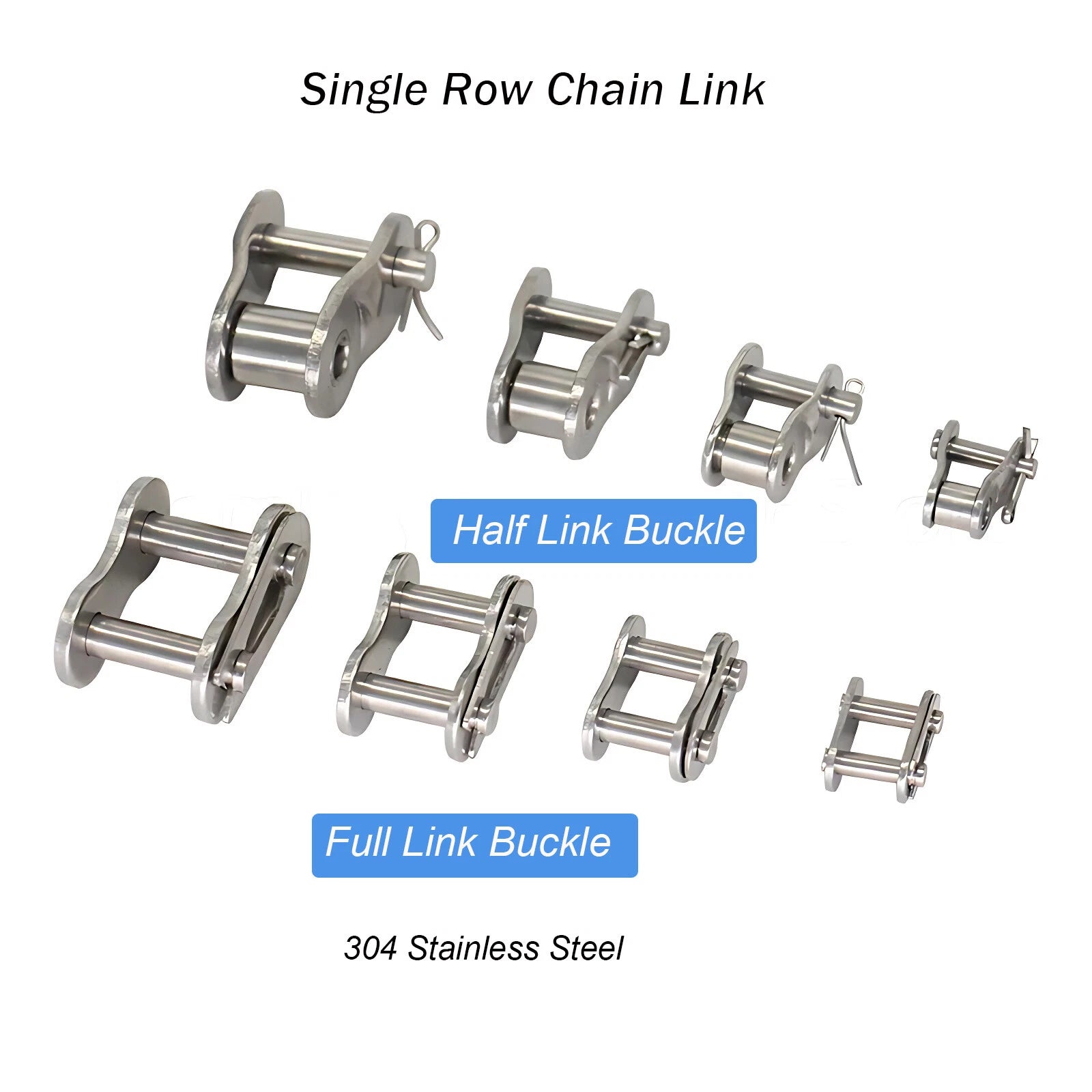
Each link is machined to ANSI/ISO simplex chain standards and is available in full link (solid side plate) and half link (offset plate) configurations. The range spans pitches from 6.35 mm (¼ in) on #25 / 04C chain up to 31.75 mm (1¼ in) on #100 / 20A chain, covering the most common single-strand roller chain sizes used in light-to-heavy industrial and recreational applications. Sold in packs of 1, 2, or 5 pieces to match your stocking needs.
Typical use cases include replacing connecting links on go-kart and mini-bike drive chains (#25–#35), repairing conveyor and feeder chains in light manufacturing (#40–#60), and servicing agricultural equipment drive systems and power-transmission assemblies (#60–#100) — all long-tail applications where exact pitch and chain number matching is critical.
| Chain Standard | ANSI / ISO 606 Simplex (Single-Strand) |
|---|---|
| Available Chain Numbers | #25 (04C), 05B, #35 (06B, 06C), #40 (08A, 08B), #50 (10A, 10B), #60 (12A, 12B), #80 (16A, 16B), #100 (20A) |
| Pitch Range | 6.35 mm – 31.75 mm (¼ in – 1¼ in) |
| Link Types | Full Link (solid outer plate) / Half Link (offset plate) |
| Material | Carbon steel, heat-treated |
| Retainer Type | Spring clip (cotter pin style) |
| Finish | See variant options |
| Tensile Strength | See variant options |
| Pack Quantity | 1 / 2 / 5 pieces (select above) |
| Weight per Piece | See variant options |
A Full Link (solid outer plate) is the standard connecting link used when your chain has an even number of links — this is the most common scenario. A Half Link (offset plate) is used when you need to add or remove a single link to achieve an odd total link count, or when routing the chain in a tight space requires an offset plate. If you are simply replacing a broken connecting link on an existing chain, choose Full Link. If you are shortening or lengthening the chain by one link, choose Half Link.
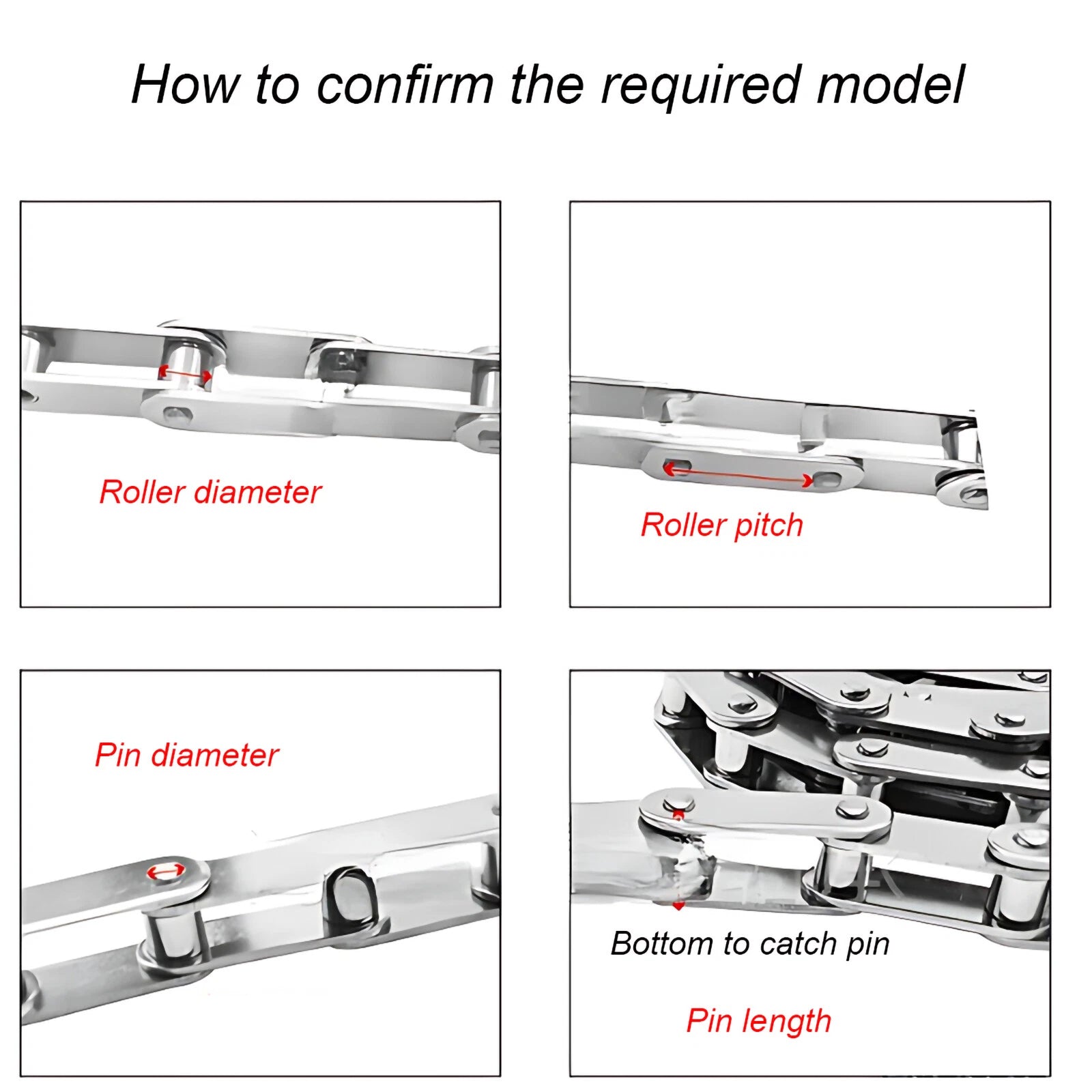
The chain number is stamped on the side plate of your existing chain (e.g., "40", "50", "60"). Cross-reference it with the pitch: #25 = 6.35 mm, #35 = 9.525 mm, #40 = 12.7 mm, #50 = 15.875 mm, #60 = 19.05 mm, #80 = 25.4 mm, #100 = 31.75 mm. The letter suffix (A/B/C) indicates the ISO series variant — match the full designation (e.g., 08A vs 08B) for correct plate width and roller diameter.
Yes. Each link is manufactured from heat-treated carbon steel to match the rated tensile strength of the corresponding chain size. Larger chain numbers (#60, #80, #100) carry significantly higher load ratings than smaller sizes (#25, #35). Always select the chain number that matches your existing drive chain — do not upsize or downsize the connecting link relative to the chain.
Carbon steel connecting links are susceptible to surface oxidation in wet or humid environments. For outdoor or washdown applications, apply a chain lubricant or grease after installation to protect against corrosion. If your application requires stainless steel or nickel-plated links, please contact us to confirm availability for your specific chain size.
Most sizes use a spring clip (cotter pin style) retainer that can be installed and removed with needle-nose pliers — no chain breaker or press tool required. For larger chain sizes (#80 and #100), a chain assembly tool or soft-jaw vise may make alignment easier, but is not strictly required. Always ensure the spring clip is fully seated in the groove before operating the chain.
Yes, as long as both chains share the same ANSI/ISO chain number and pitch. Connecting links are standardized by chain number, so a #40 connecting link will join any two sections of #40 (08A) simplex roller chain regardless of brand. Do not mix chain numbers (e.g., do not use a #40 link on a #41 chain — #41 is a different series with a narrower inner width).
For maintenance kits, we recommend keeping at least 2 connecting links per chain size in active use on your equipment. The 5-pack option offers the best per-unit value and ensures you have spares on hand for unplanned repairs. For workshop or fleet maintenance, the 5-pack is the most practical choice.