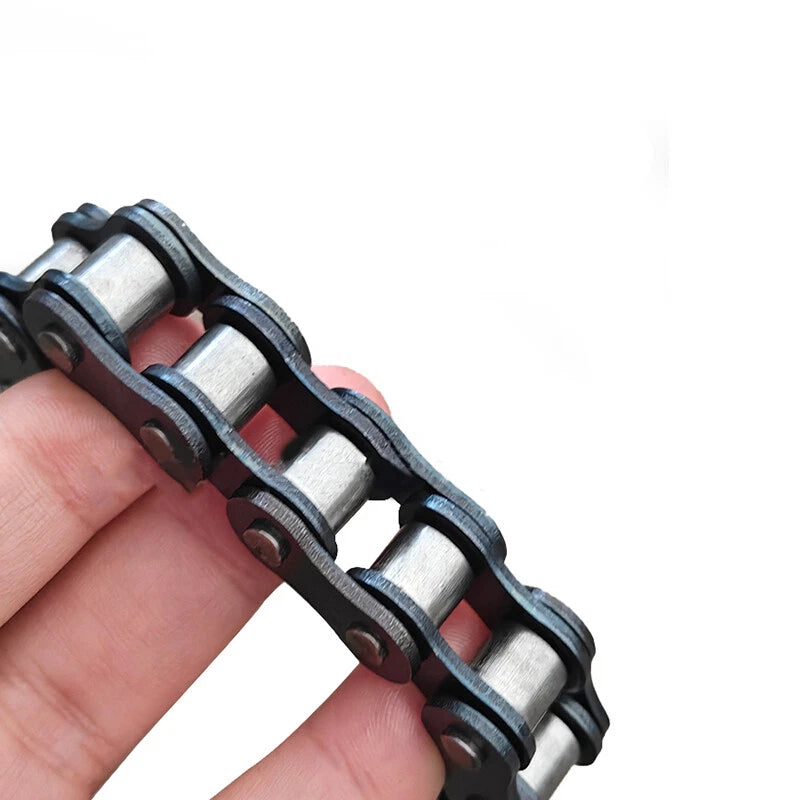
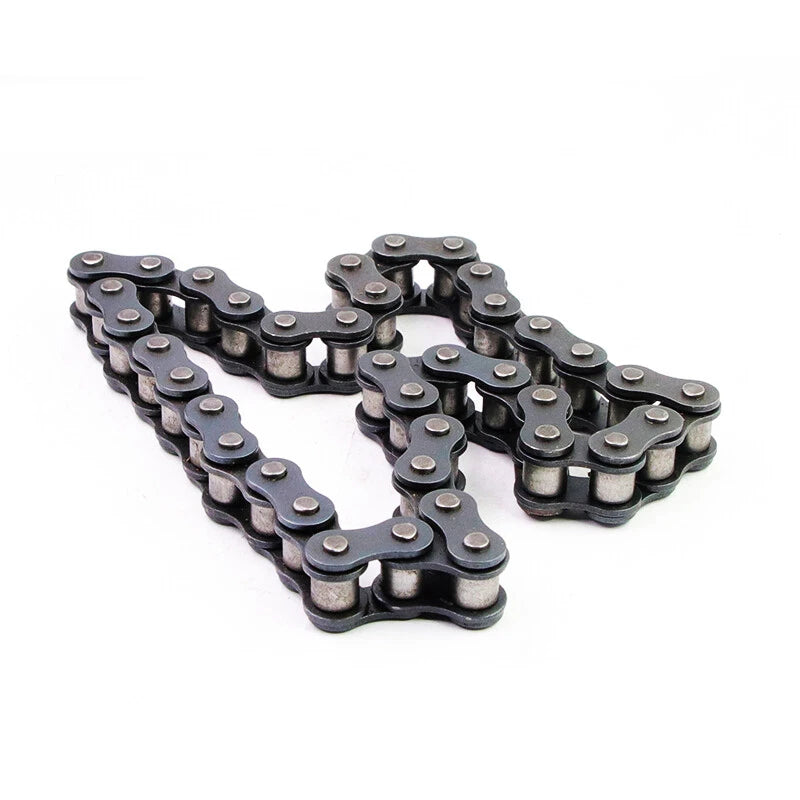
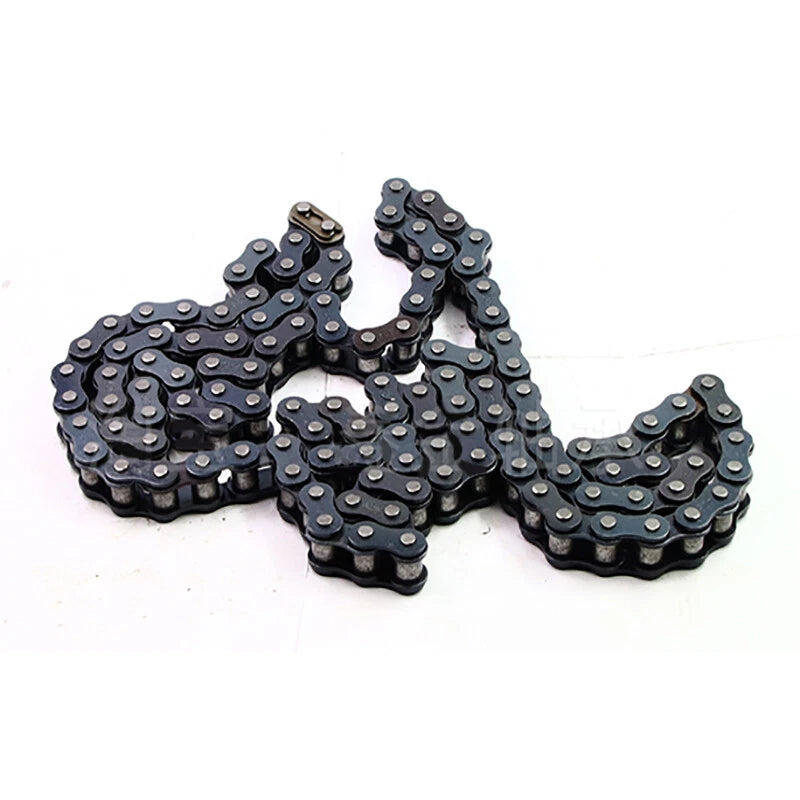
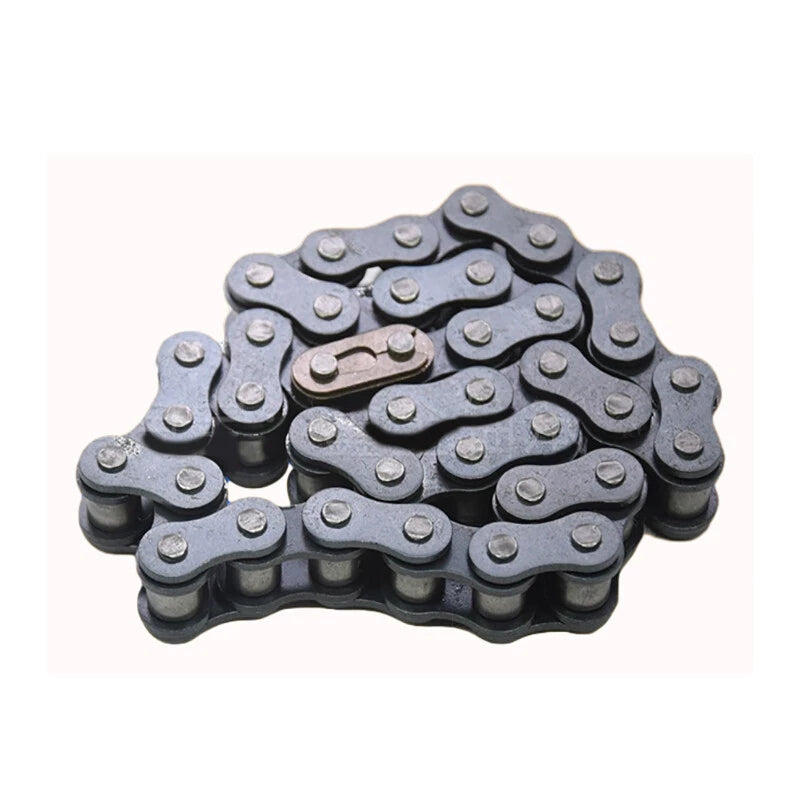
The chain is fine...but I ordered the wrong size. Nine links of the chain I ordered equals six of the size I wanted. My error...
How can I straighten out the springs? I can't use them coil uo as is.
Your payment information is processed securely. We do not store credit card details nor have access to your credit card information.
Get fitment advice & recommendations
When a worn or undersized drive chain causes slippage, noise, or unexpected downtime, finding the right replacement in the correct pitch and length shouldn't be a second job. Whether you're a mechanical engineer specifying a conveyor upgrade, a workshop owner maintaining machinery, or a serious DIYer building a go-kart or bike drive system, these roller transmission chains are stocked in the most common ANSI/ISO sizes so you can order exactly what you need.
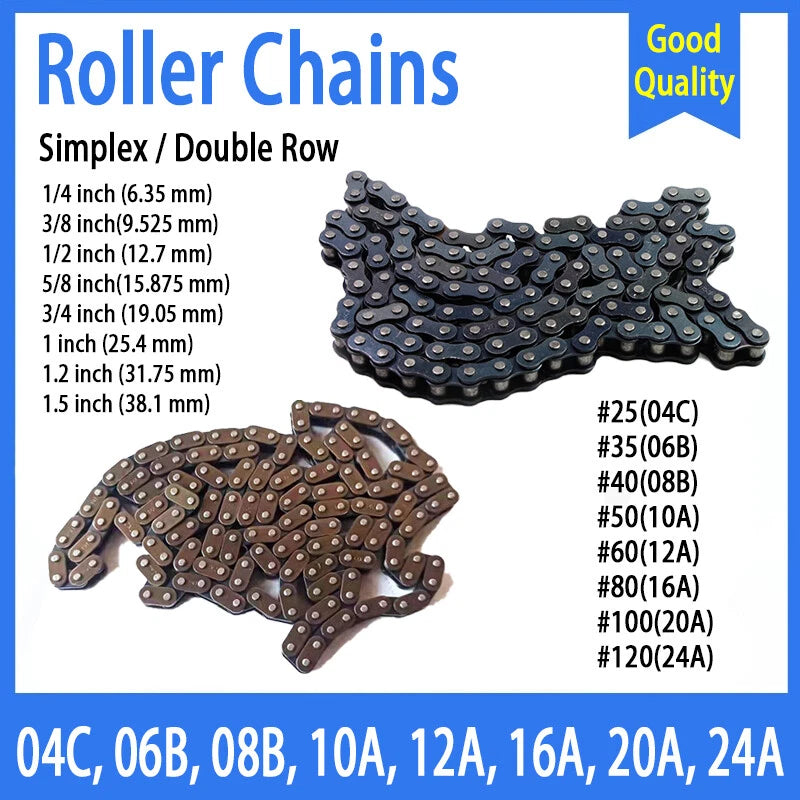
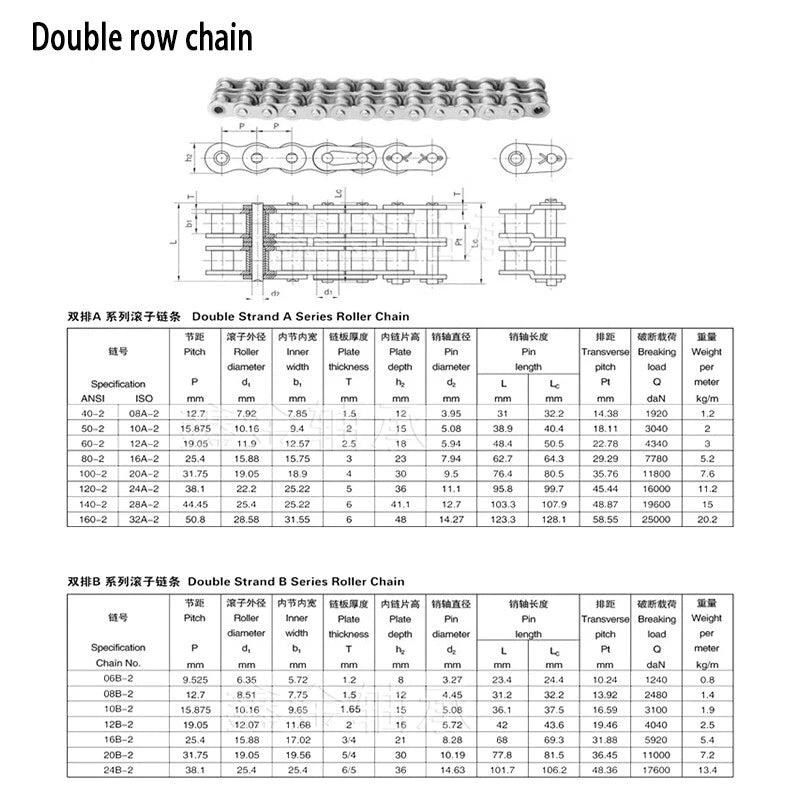
Each chain is manufactured to ANSI/ISO roller chain standards in both simplex (single-strand) and double-row (duplex) configurations. Available models span #25 (04C) through #120 (24A), covering pitches from 1/4 inch (6.35 mm) up to 1.5 inch (38.1 mm). Lengths are offered in 0.5 m, 1 m, 1.5 m, 1.524 m (standard 5-foot loop), and 5 m cuts to minimize waste and reduce on-site cutting.
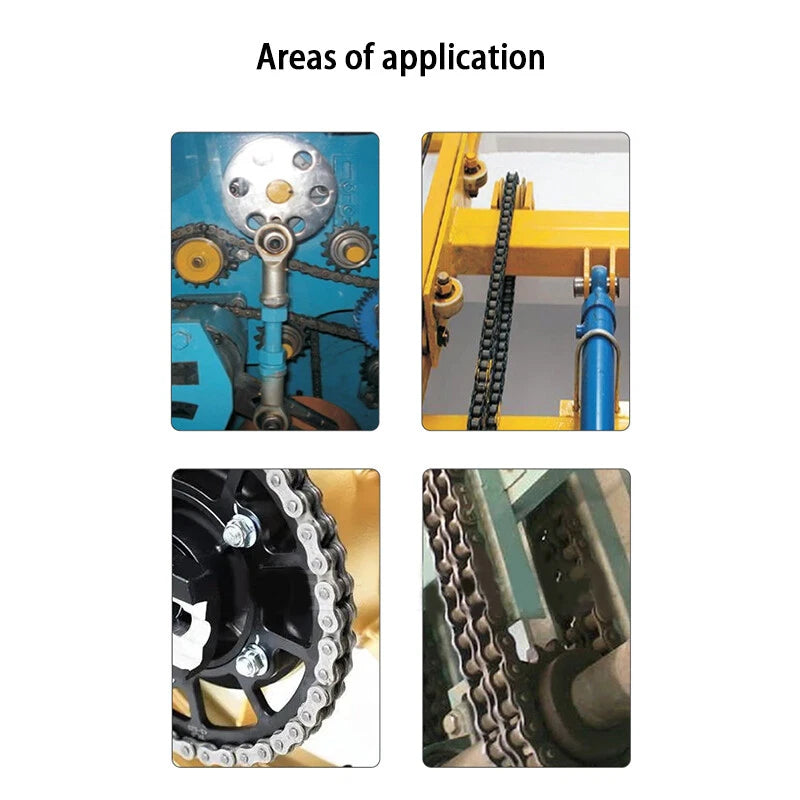
Typical applications include roller chain conveyor systems for light industrial automation, go-kart and mini-bike drive chain replacement, agricultural equipment power transmission, and workshop machinery such as lathes, drill presses, and band saws requiring a reliable #40 or #50 drive chain.
Covers #25 (04C) to #120 (24A) — pitches from 6.35 mm to 38.1 mm — so one source handles light-duty bicycle-style drives through heavy industrial conveyor chains.
Choose single-strand simplex for standard drives or duplex double-row for higher load capacity on the same sprocket center distance, without redesigning the drive layout.
Available in 0.5 m, 1 m, 1.5 m, 1.524 m, and 5 m cuts — reducing scrap and saving time compared to buying full reels and cutting on-site.
Manufactured to ANSI B29.1 / ISO 606 roller chain standards, ensuring interchangeability with sprockets and connecting links from any compliant supplier.
Case-hardened pins and precision-formed rollers reduce wear elongation and extend service intervals, particularly in dusty or lightly lubricated environments.
Each length is supplied with open ends suitable for joining with a standard master link (connecting link) or offset link — no special tooling required for basic installation.
| Chain Standard | ANSI B29.1 / ISO 606 |
|---|---|
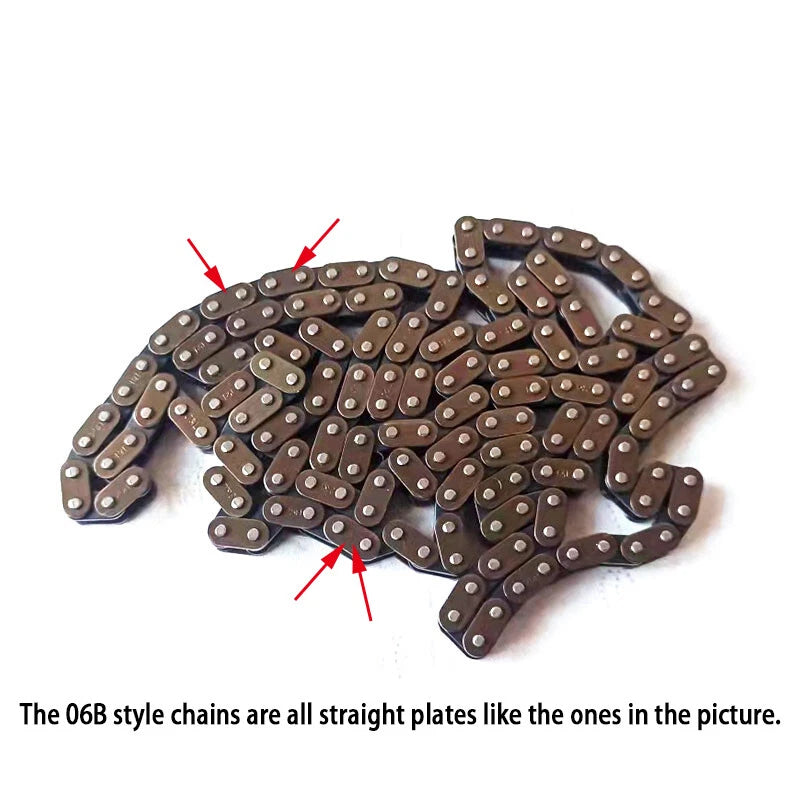
| Available Models | #25 (04C), #35 (06B), #40 (08B), #50 (10A), #60 (12A), #80 (16A), #100 (20A), #120 (24A) |
| Configuration | Simplex (single-strand) or Double Row (duplex) — see variant options |
| Pitch Range | 1/4 in (6.35 mm) — 1.5 in (38.1 mm) — see variant options |
| Available Lengths | 0.5 m / 1 m / 1.5 m / 1.524 m / 5 m — see variant options |
| Pin Material | Case-hardened alloy steel |
| Roller Material | Hardened steel |
| Plate Material | Carbon steel |
| Lubrication | Pre-lubricated (light oil); periodic re-lubrication recommended |
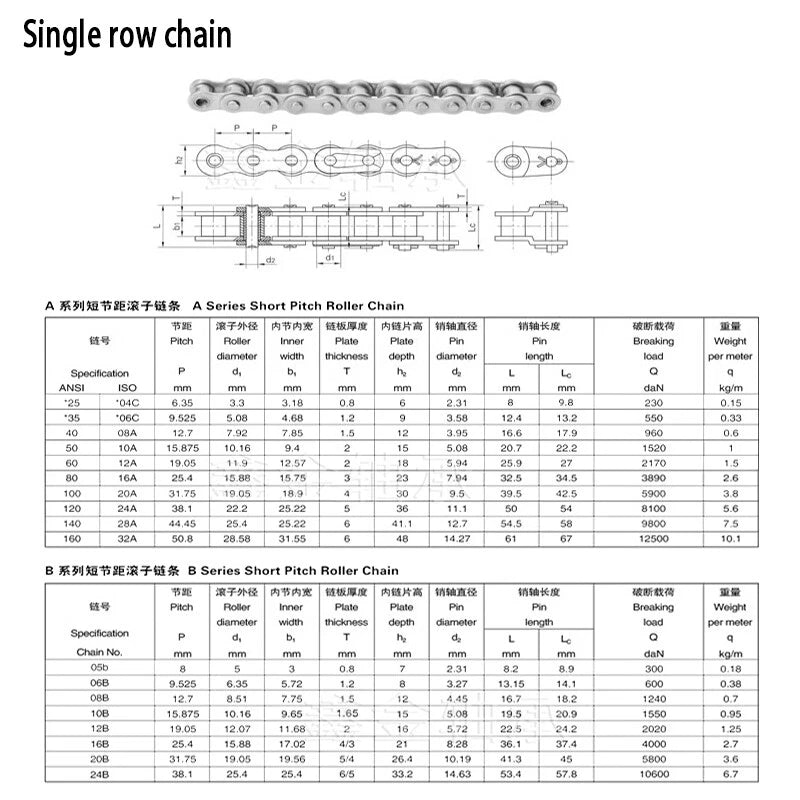
| Breaking Load | See variant options |
| Weight per Meter | See variant options |
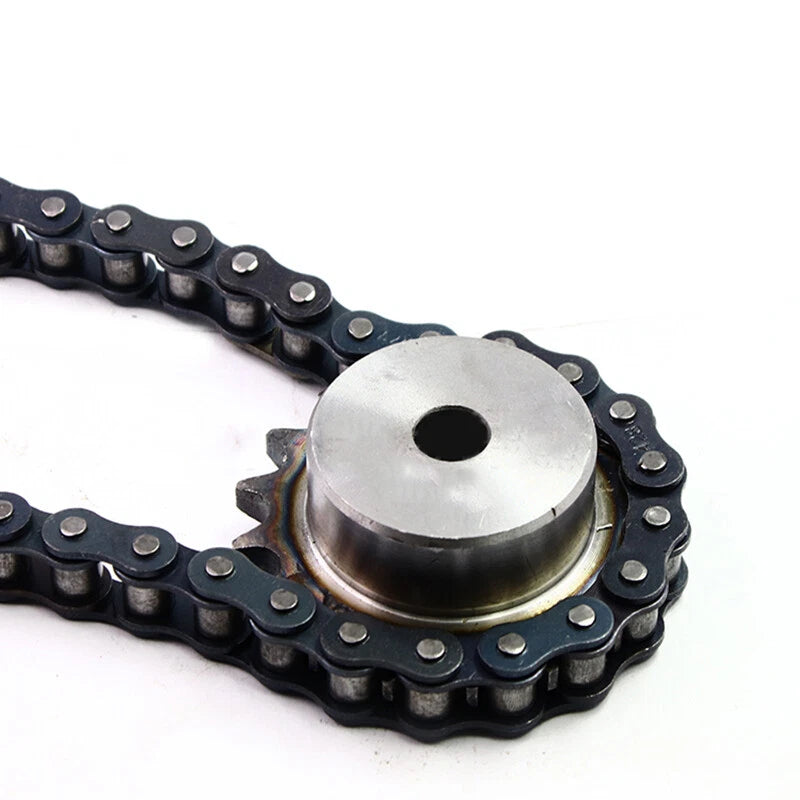
Match the chain model to your existing sprocket markings. The model number (e.g., #40 or 08B) is usually stamped on the sprocket hub or listed in the equipment manual. The pitch — the distance between pin centers — must match exactly. Common pairings: #25 (6.35 mm) for light conveyors and small drives; #35 (9.525 mm) for go-karts and mini-bikes; #40 (12.7 mm) for general machinery; #50–#80 for heavier industrial drives.
A simplex chain has a single strand of rollers and fits a standard single-sprocket. A double-row (duplex) chain has two parallel strands sharing the same pins, roughly doubling the load capacity for the same pitch. Double-row chains require a matching duplex sprocket — they cannot be used on a standard simplex sprocket without modification.
Measure your required chain loop length (center-to-center distance × 2 + sprocket circumferences, or count existing links × pitch). Order the next length up from your calculated requirement. Roller chain can be shortened using a chain breaker tool to remove links, and an offset link or connecting link is used to close the loop. The 1.524 m (5 ft) option is a standard loop length common in many drive applications.
These chains are manufactured from carbon and alloy steel with a light pre-lubrication coating. They are suitable for indoor and sheltered outdoor use. For exposed outdoor environments or wet/washdown conditions, regular re-lubrication with a weather-resistant chain oil is strongly recommended. For highly corrosive environments (salt spray, chemical exposure), consider stainless steel chain variants — contact us to confirm availability.
The chain lengths are supplied as open-end cuts ready for joining. A standard connecting link (master link) matching your chain model is required to close the loop — these are sold separately. For installation and resizing, a roller chain breaker/riveting tool is recommended for clean, reliable pin removal and pressing. Basic installation of a connecting link can be done with pliers and a flat-head screwdriver.
Lubricate the chain regularly with a dedicated chain oil or SAE 30–40 motor oil applied to the inner link plates where the rollers contact the pins. Wipe off excess to prevent dirt accumulation. Check chain tension periodically — excessive sag accelerates wear on both chain and sprockets. Replace the chain when elongation (stretch) exceeds 1–2% of the original pitch length, measured over 12 or more links.
Yes, provided the OEM chain conforms to ANSI B29.1 or ISO 606 standards (which most industrial and agricultural OEM chains do). Verify the chain model number, pitch, and strand count against your equipment manual. ANSI and ISO chain dimensions are interchangeable within the same model number — e.g., an ANSI #40 and an ISO 08B share the same 12.7 mm pitch and are dimensionally compatible.