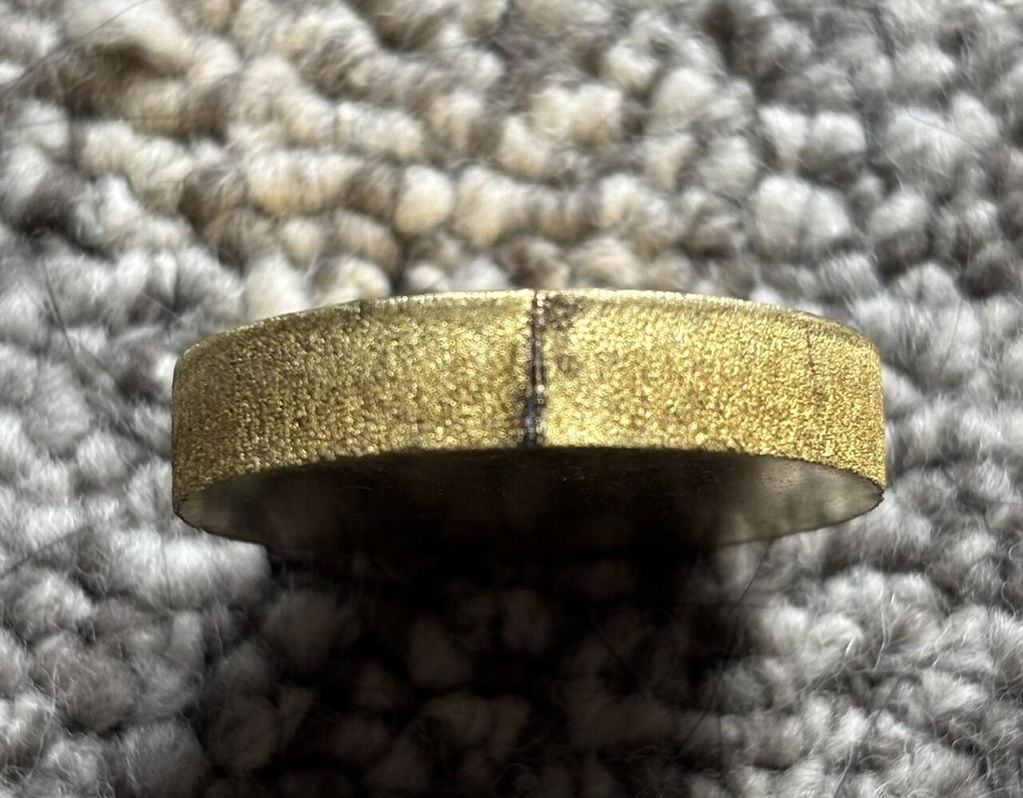
The chain is fine...but I ordered the wrong size. Nine links of the chain I ordered equals six of the size I wanted. My error...
How can I straighten out the springs? I can't use them coil uo as is.
Your payment information is processed securely. We do not store credit card details nor have access to your credit card information.
Get fitment advice & recommendations
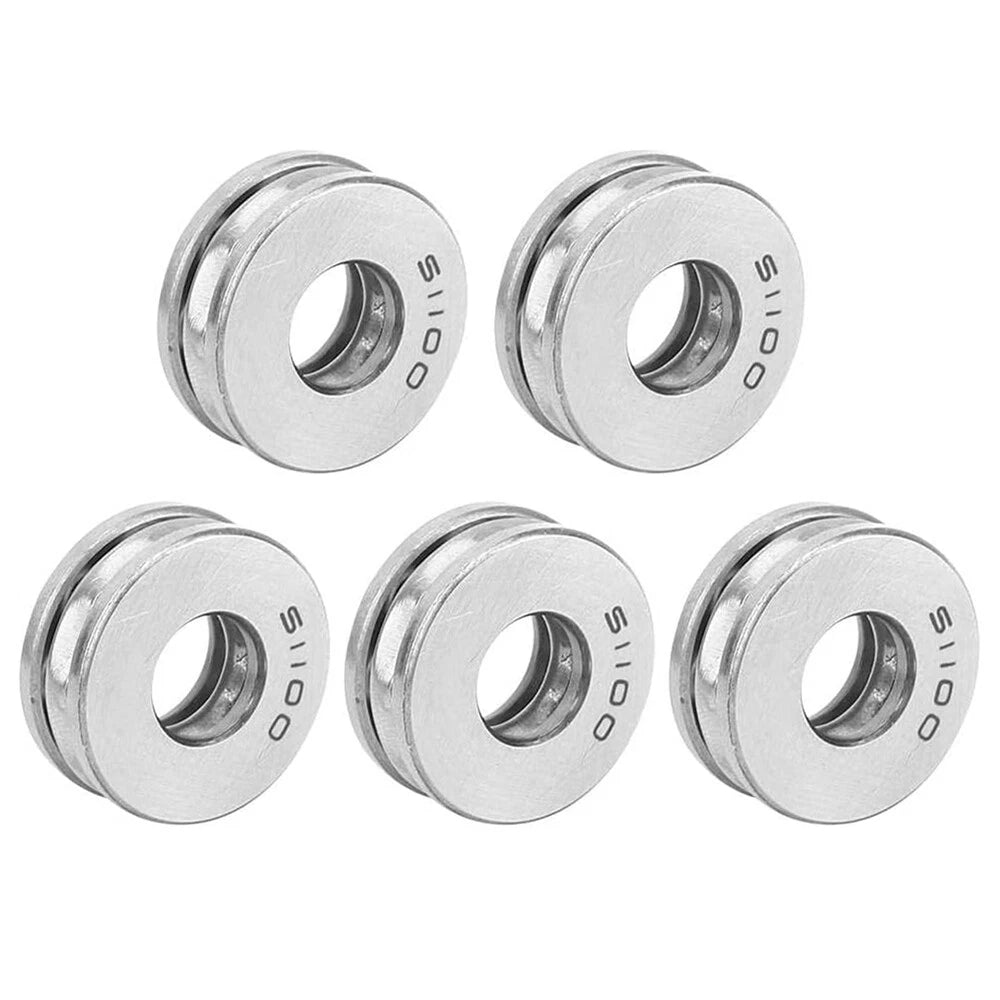
Engineers and maintenance technicians who need to manage pure axial (thrust) loads often struggle to find bearings that cover a wide size range without sacrificing dimensional accuracy. These single direction axial thrust ball bearings span models 51100 through 51311, with bore diameters from 10 mm (0.39 in) to 140 mm (5.51 in), giving you a single reliable source for the majority of thrust bearing applications in one catalog.
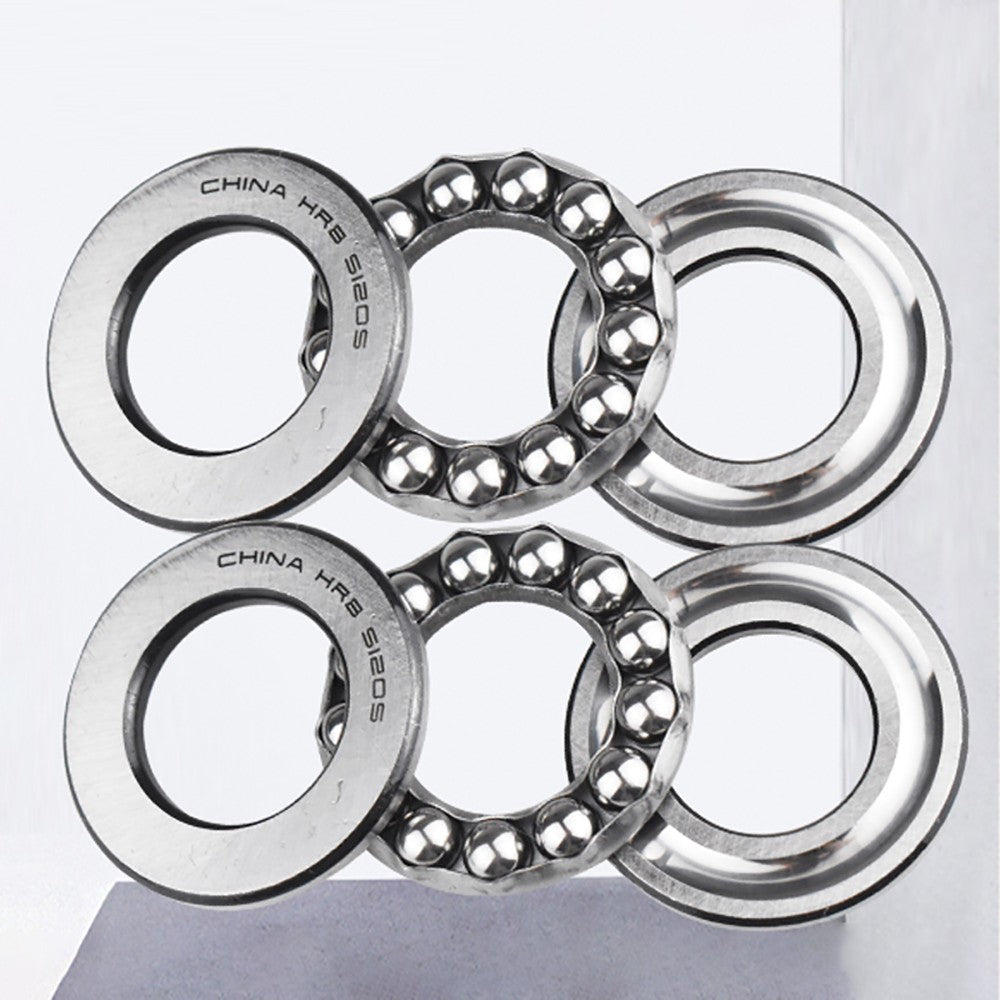
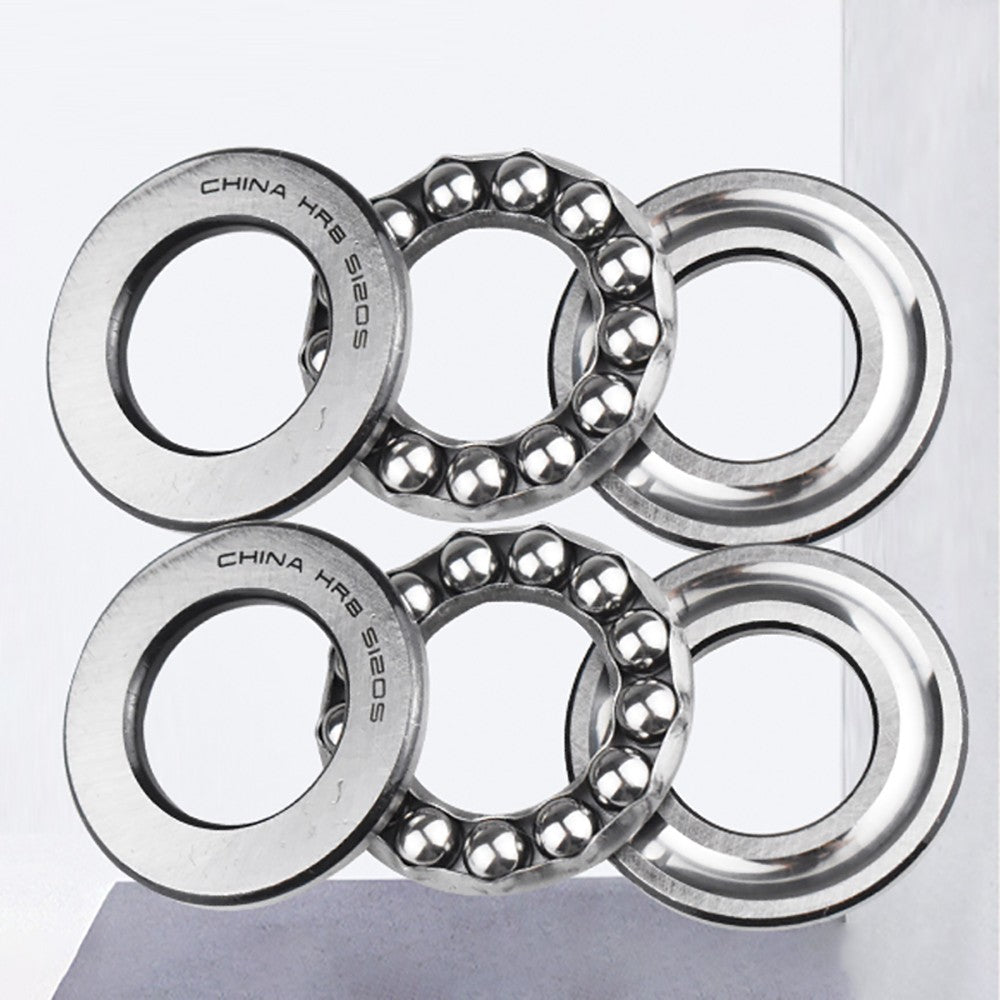
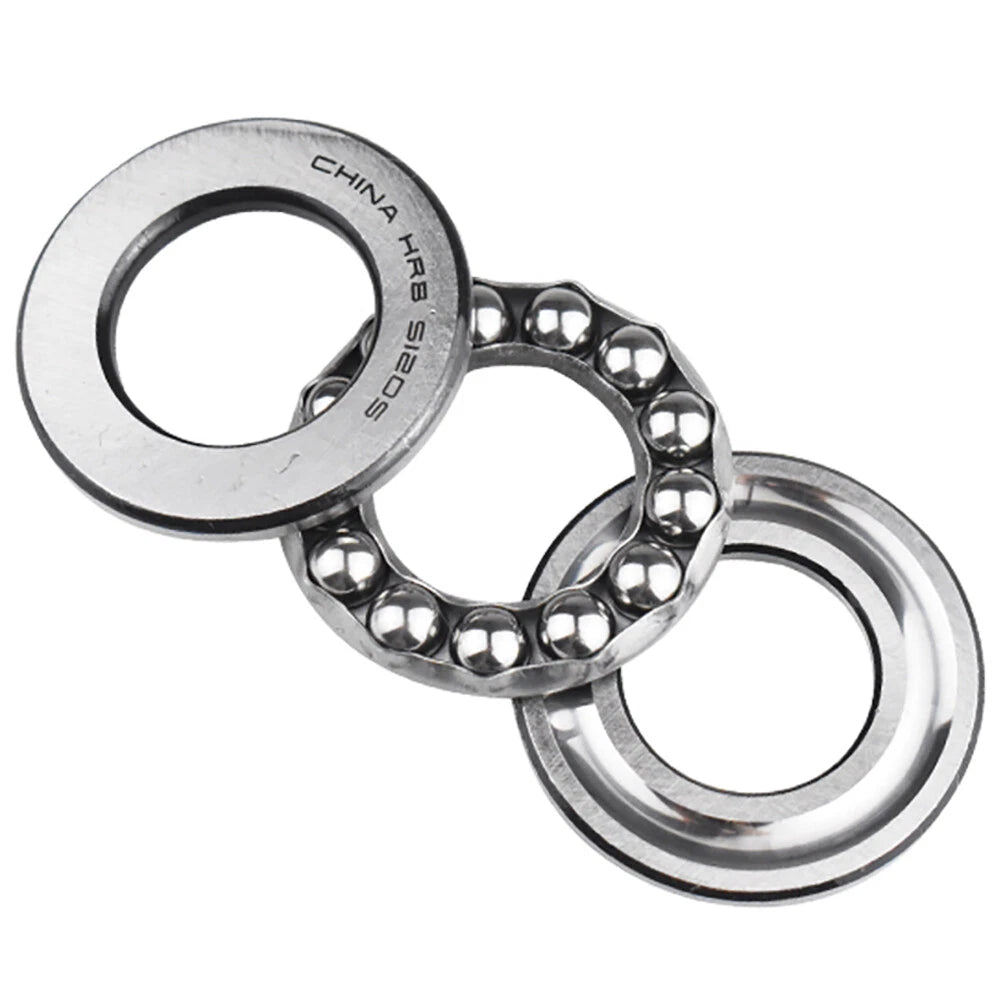
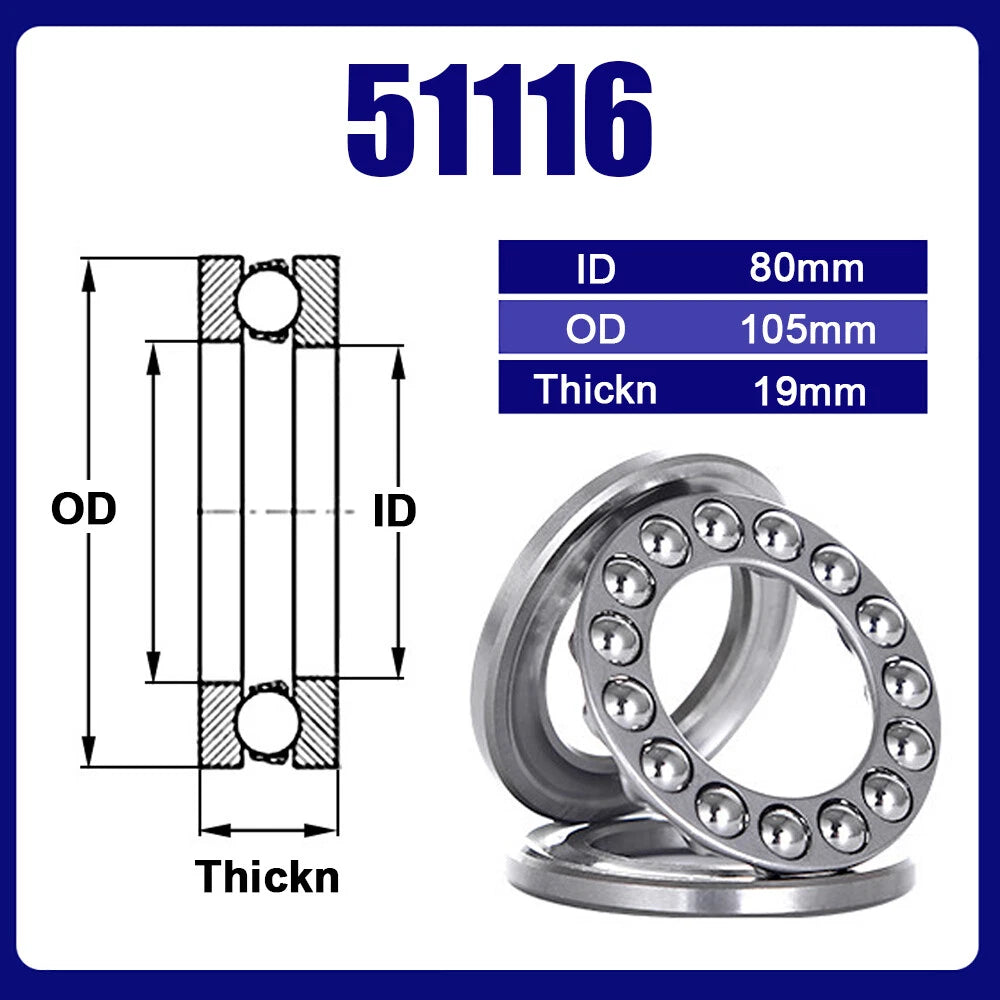
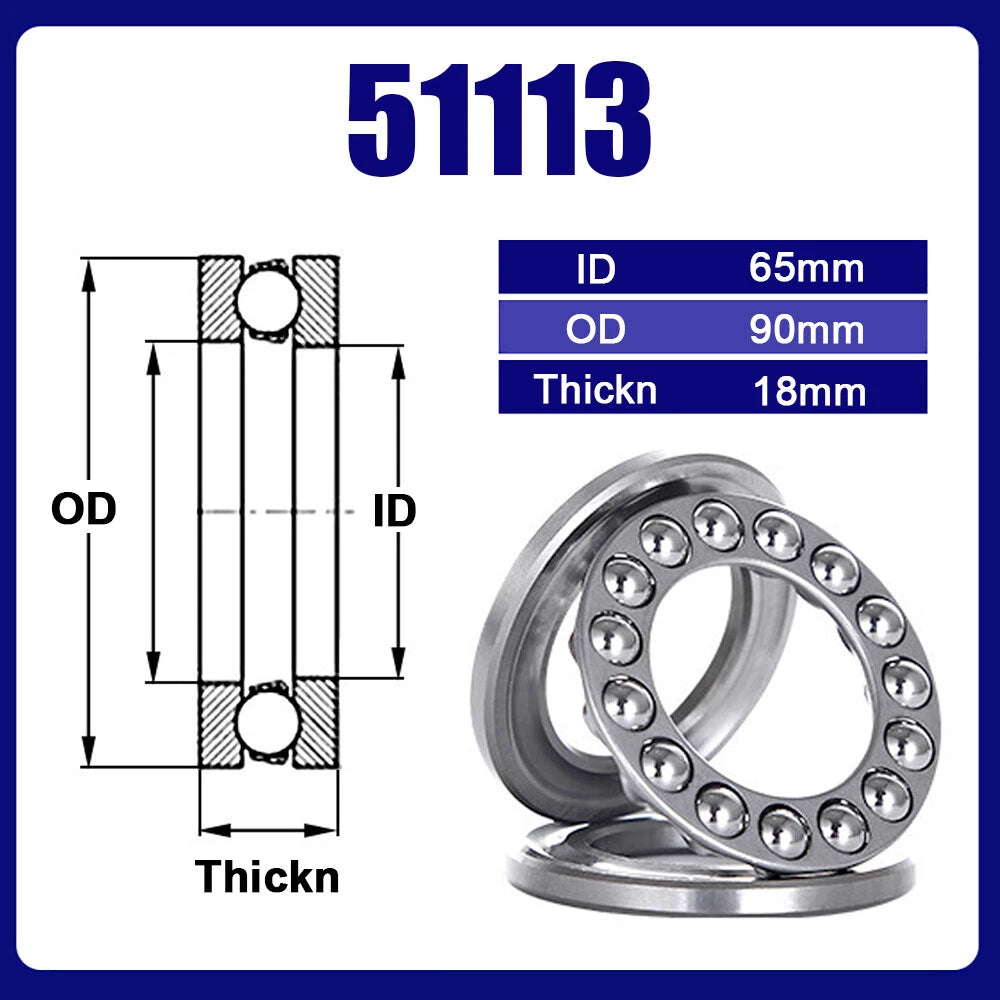
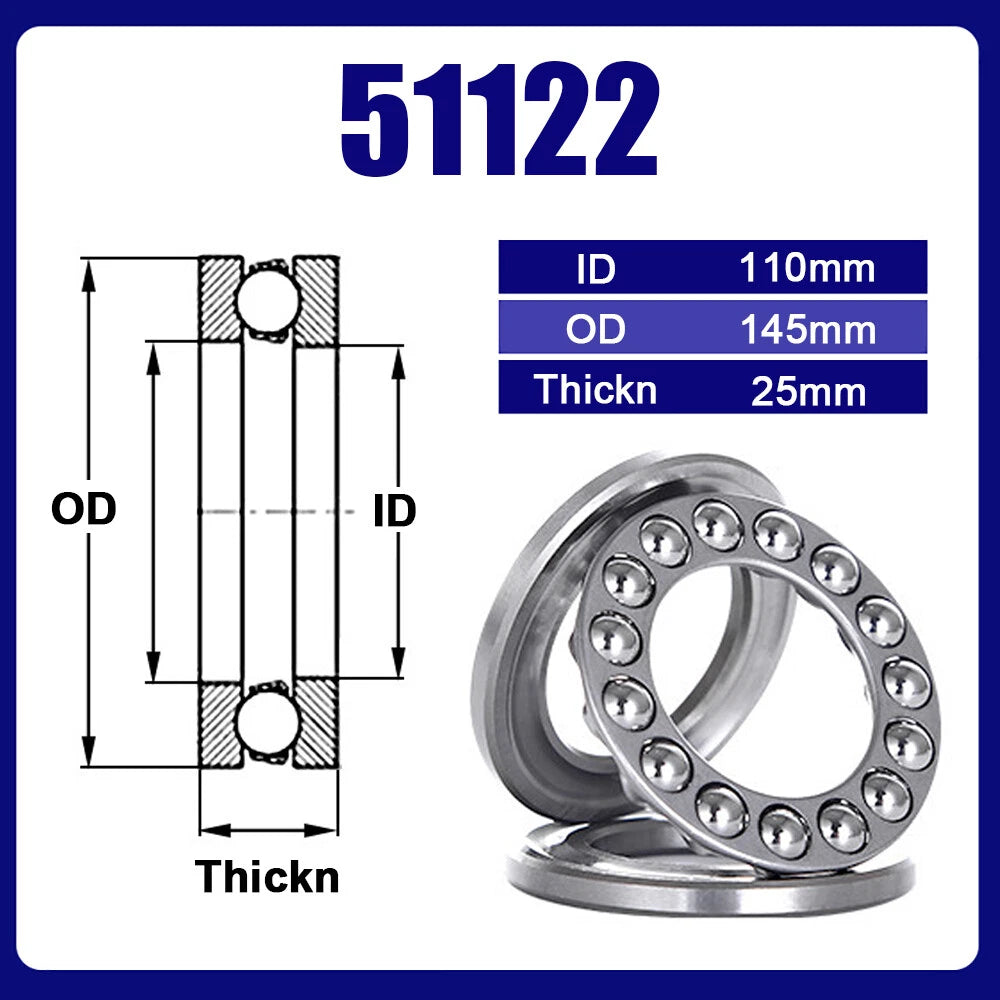
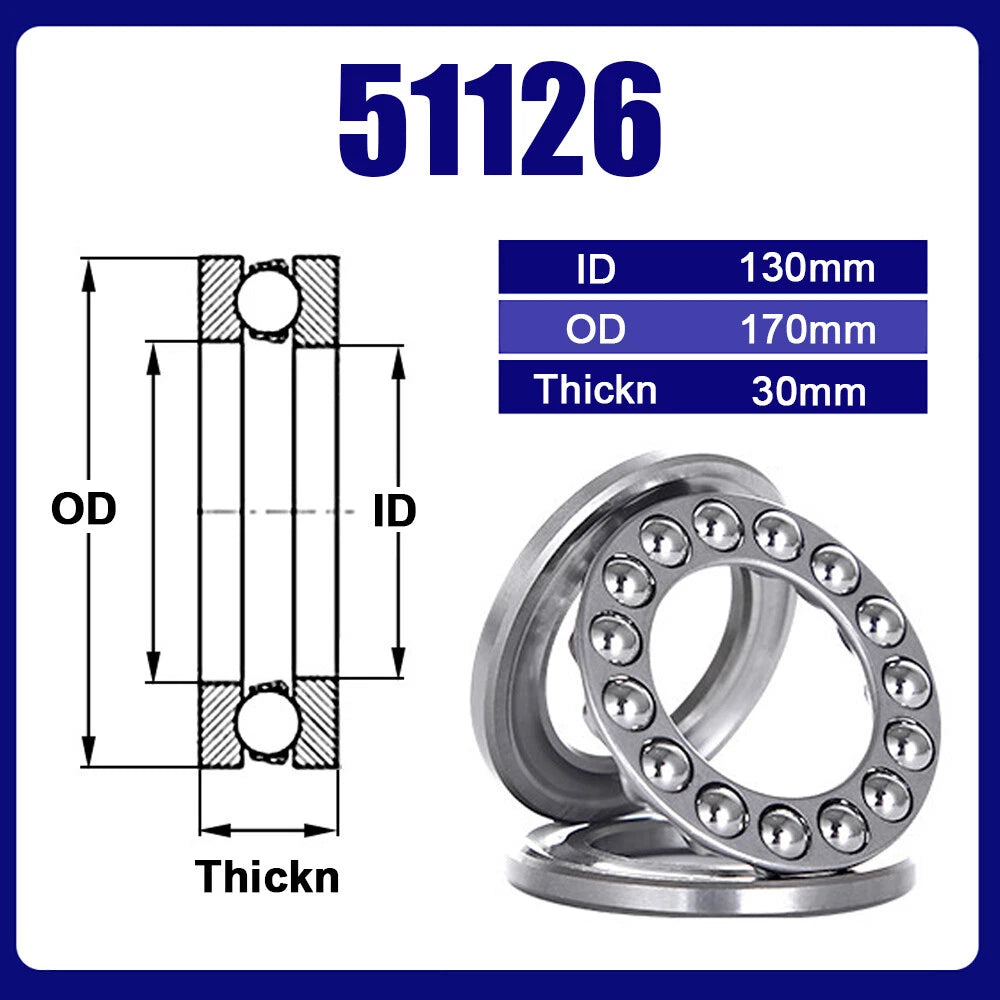
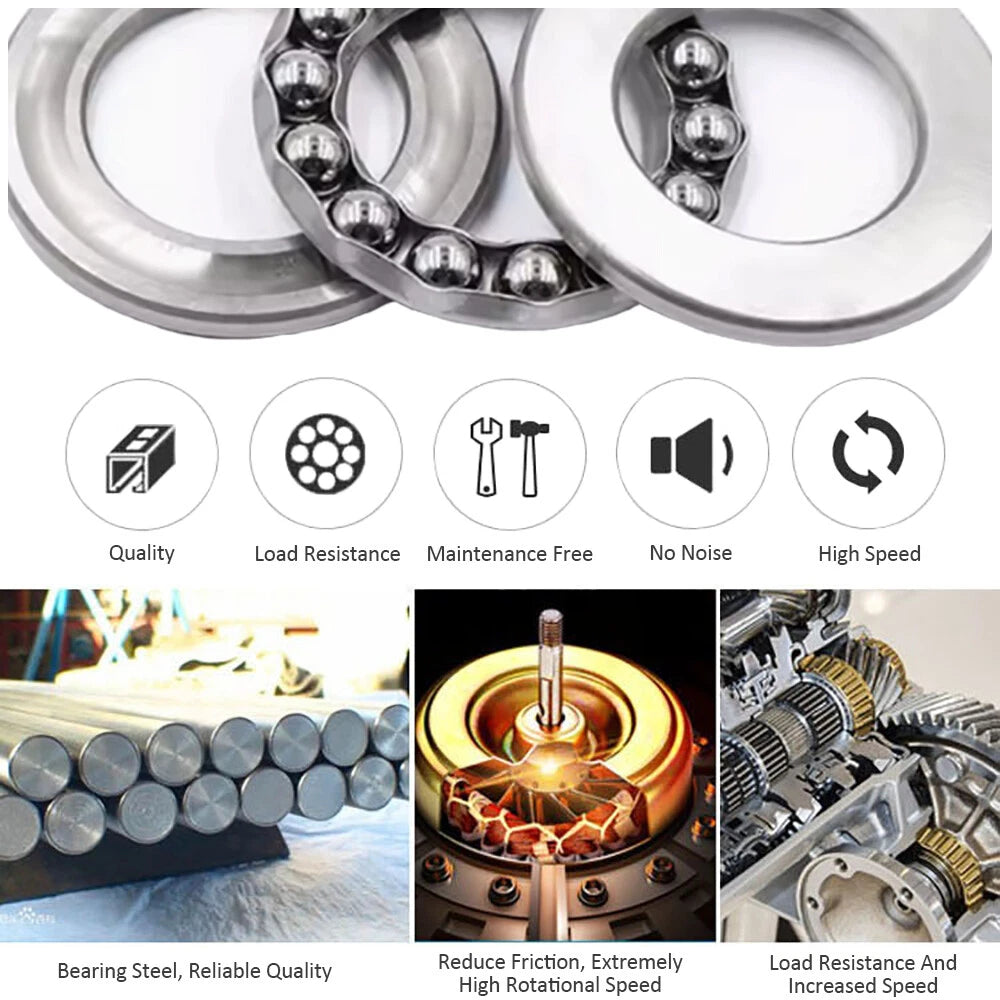
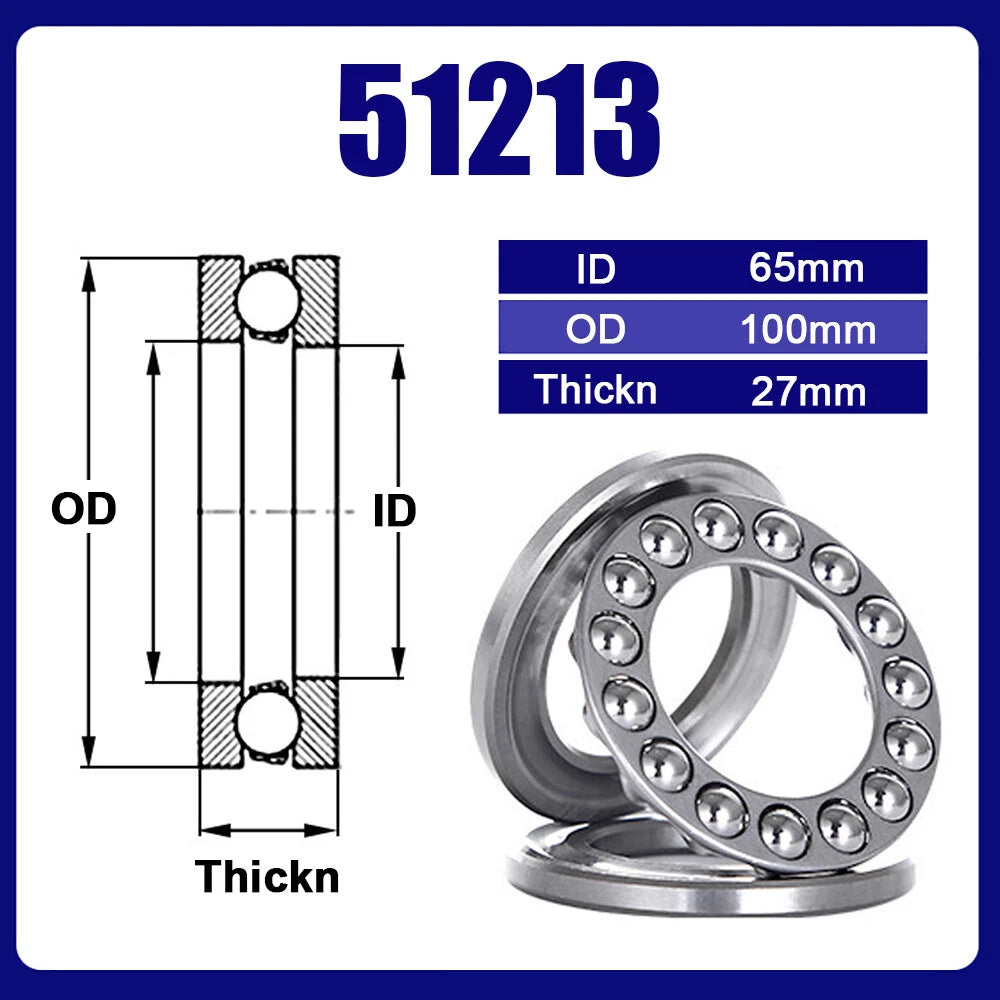
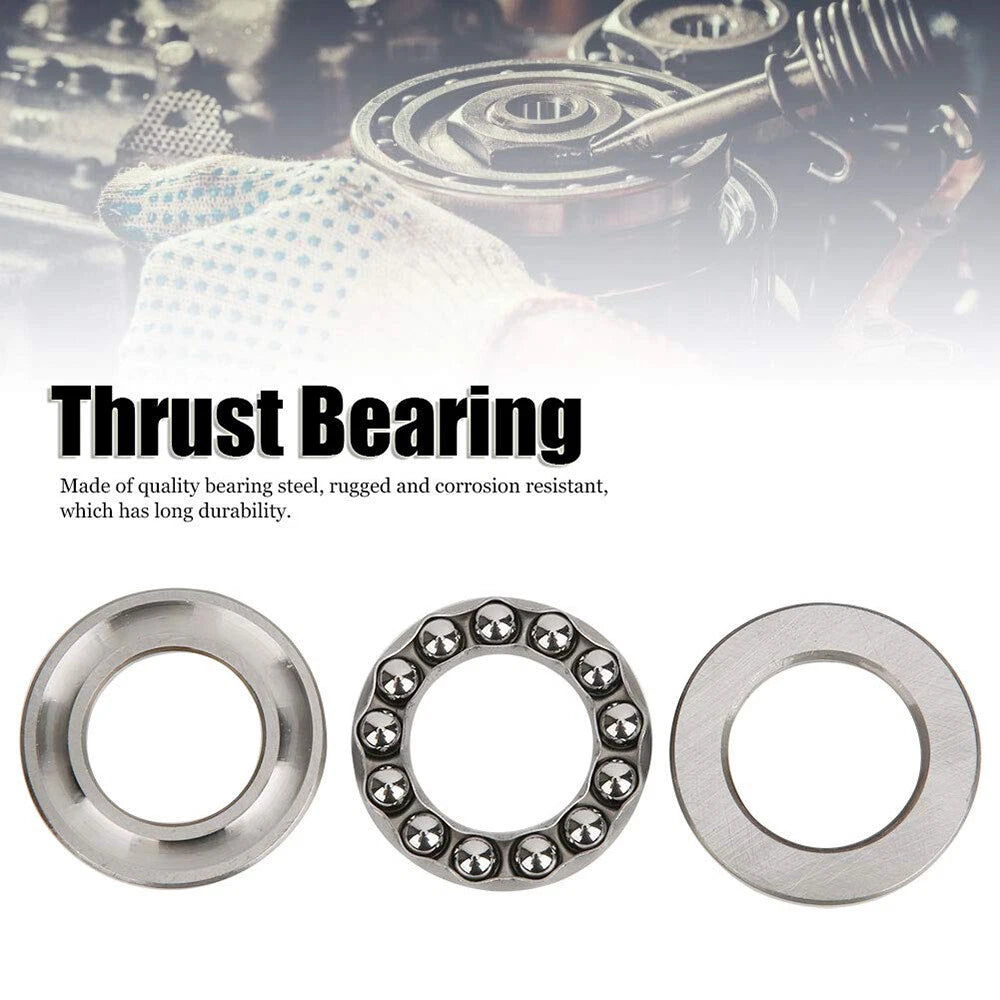
Each bearing consists of a shaft washer, a housing washer, and a ball-and-cage assembly. The raceways are precision-ground steel, and the cage is typically stamped steel. Bore diameters run 10–140 mm, outer diameters 24–180 mm, and heights 9–35 mm depending on the model selected. Three sub-series are stocked: the standard 511xx series, the wider 512xx series, and the heavy-duty 513xx series.
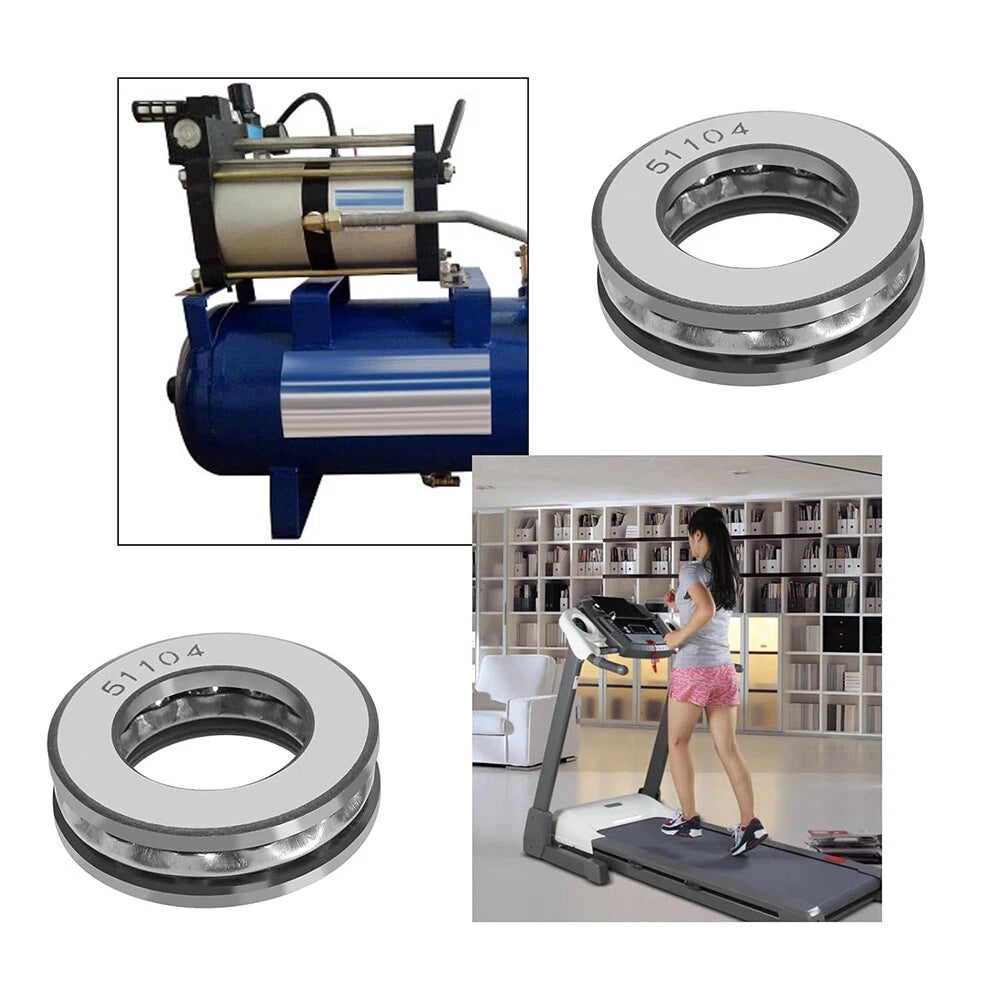
Typical use cases include vertical shaft support in hydraulic jacks and screw jacks, rotary table and turntable thrust management, gearbox and transmission axial load handling, and machine tool spindle pre-load applications where unidirectional thrust must be absorbed cleanly without radial interference.
Models 51100–51311 cover bore diameters from 10 mm to 140 mm (0.39–5.51 in), reducing the need to source from multiple suppliers for different shaft sizes.
511xx standard series, 512xx wide series, and 513xx heavy-duty series are all stocked, letting you match the correct load capacity and envelope to your application.
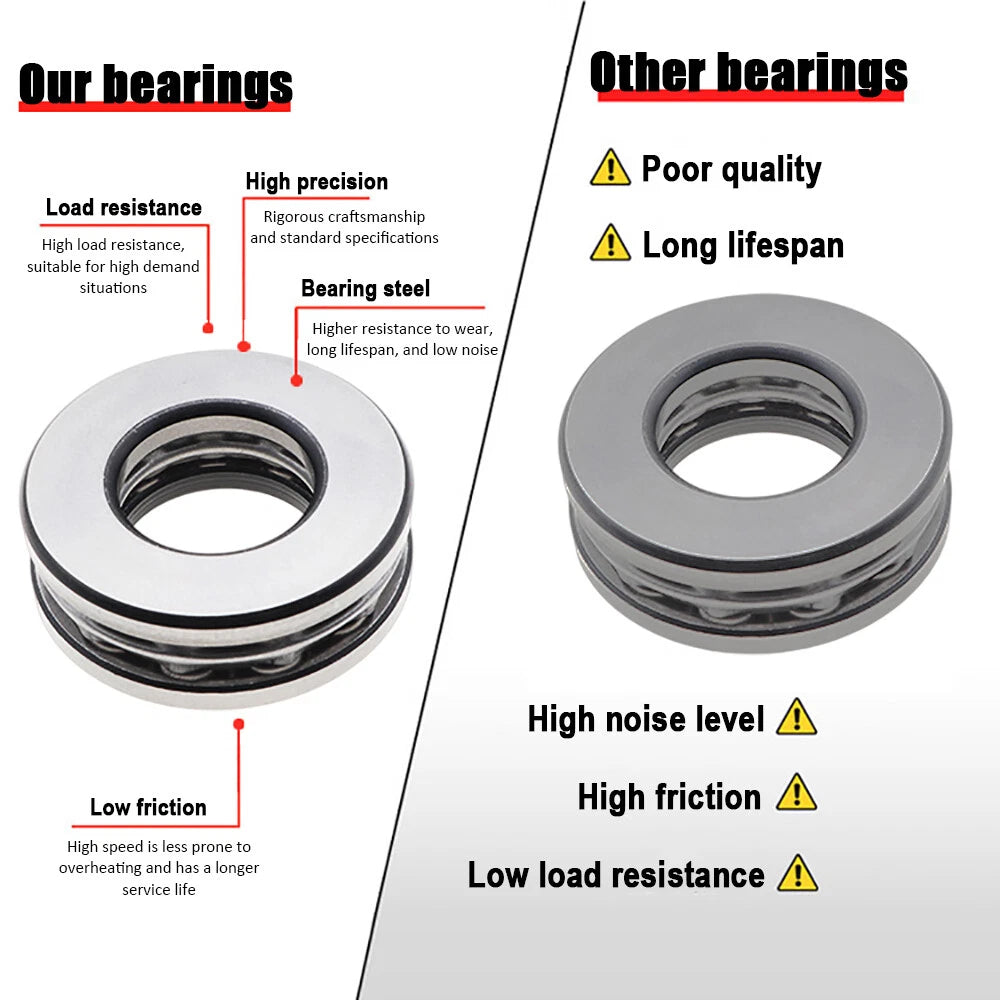
Flat raceway geometry is optimized for unidirectional axial loads, delivering low friction and predictable performance in vertical shaft and thrust-collar arrangements.
Shaft and housing washers feature ground contact surfaces for consistent ball-path geometry, reducing vibration and extending service intervals in demanding duty cycles.
Available in packs of 1, 2, or 5 pieces depending on model size, so you can order exactly what a repair job or production run requires without overstocking.
Bore, OD, and height dimensions conform to ISO 104 / DIN 711 standards, making these bearings dimensionally interchangeable with equivalent models from major bearing manufacturers.
| Bearing Type | Single Direction Axial Thrust Ball Bearing |
|---|---|
| Series | 511xx / 512xx / 513xx (51100–51311) |
| Bore Diameter (ID) | 10–140 mm (0.39–5.51 in) |
| Outer Diameter (OD) | 24–180 mm (0.94–7.09 in) |
| Height / Thickness | 9–35 mm (0.35–1.38 in) |
| Load Direction | Axial (single direction) |
| Raceway Material | Bearing steel (precision ground) |
| Cage Type | Stamped steel cage |
| Dimensional Standard | ISO 104 / DIN 711 |
| Lubrication | See variant options |
| Operating Temperature | See variant options |
| Available Quantities | 1 pc / 2 pcs / 5 pcs (model dependent) |
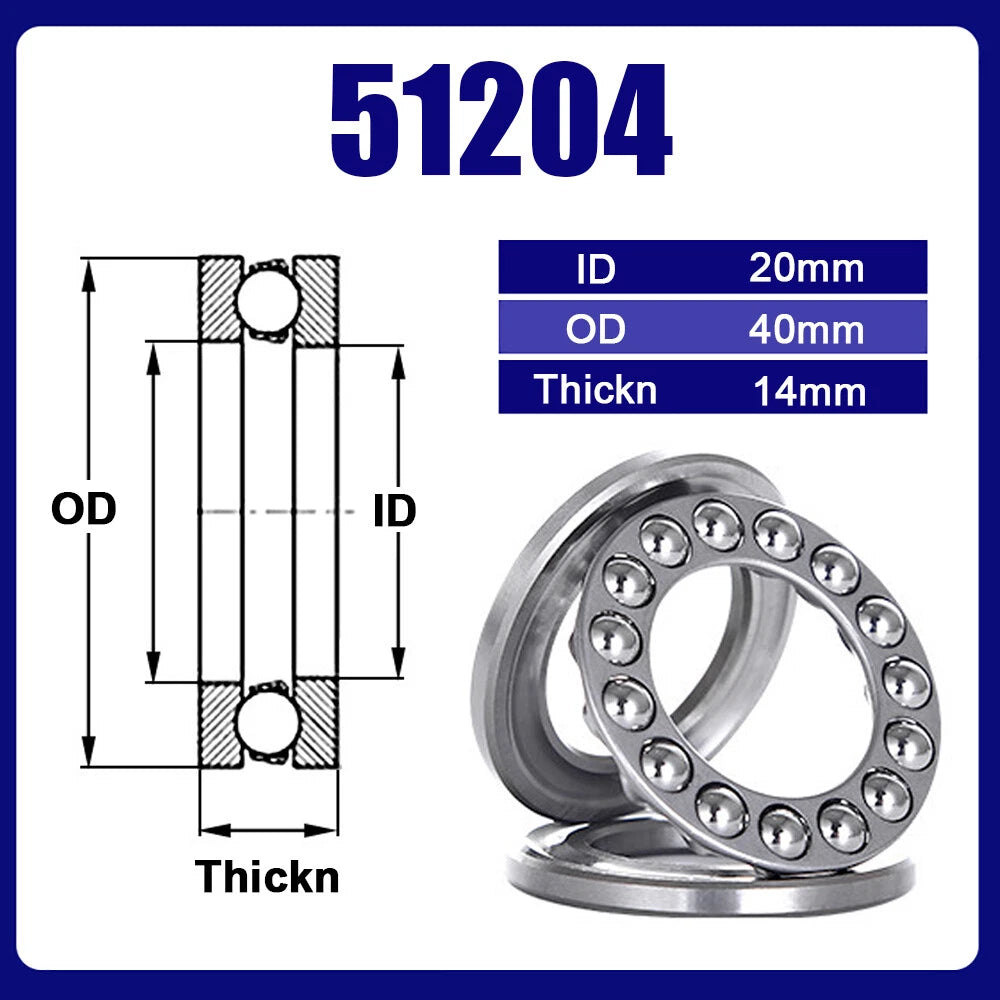
Match the bore diameter (ID) to your shaft size. For example, if your shaft is 20 mm, models 51104 (511xx series, 20×35×10 mm), 51204 (512xx series, 20×40×14 mm), or 51304 (513xx series, 20×47×18 mm) are all candidates. Choose the sub-series based on the axial load magnitude and the available housing envelope — the 513xx series offers the largest OD and highest load capacity for a given bore.
All three are single direction thrust ball bearings with the same bore diameter for a given model suffix. The 512xx series has a larger OD and greater height than the 511xx, providing higher axial load capacity. The 513xx series is larger still, intended for heavy-duty applications where maximum load capacity within a given bore size is required. Select based on your calculated axial load and the space available in your housing.
No. Axial thrust ball bearings are designed exclusively for axial (thrust) loads. They cannot support radial loads and will fail prematurely if subjected to them. If your application involves combined radial and axial loads, use a deep groove ball bearing or angular contact bearing instead, and use a separate thrust bearing only for the axial component.
Standard versions use bearing steel raceways without a corrosion-resistant coating. They are suitable for dry or lightly oiled environments. For wet, humid, or chemically aggressive environments, apply a compatible grease or oil with corrosion inhibitors, and consider re-lubrication intervals appropriate to the exposure level. Stainless steel variants are not included in this listing — contact us to confirm availability if corrosion resistance is a primary requirement.
These bearings are typically supplied without pre-applied grease (dry). Apply a lithium-based or polyurea grease rated for the operating temperature range of your application before installation. Fill approximately 30–50% of the free space in the bearing cavity. Re-lubrication intervals depend on speed, load, and temperature — for low-speed, moderate-load applications, annual re-lubrication is a reasonable starting point. Consult your equipment OEM guidelines for specific intervals.
Thrust bearings typically use a loose fit on both the shaft and housing to allow for thermal expansion and to avoid constraining the bearing. ISO 286 recommends a shaft tolerance of js6 or h6 for the shaft washer bore, and a housing tolerance of H7 or H8 for the housing washer seat. Verify the exact bore and OD dimensions from the variant option name (format: ID×OD×Height in mm) before ordering. If you need confirmation of specific tolerances for your model, contact us.
Yes — vertical shaft applications are one of the primary use cases for single direction thrust ball bearings. They are commonly used in screw jacks, hydraulic cylinders, and vertical gearboxes to support the weight of the rotating shaft and any applied axial force. Ensure the bearing is properly seated and that the shaft washer rotates with the shaft while the housing washer remains stationary against the fixed housing.