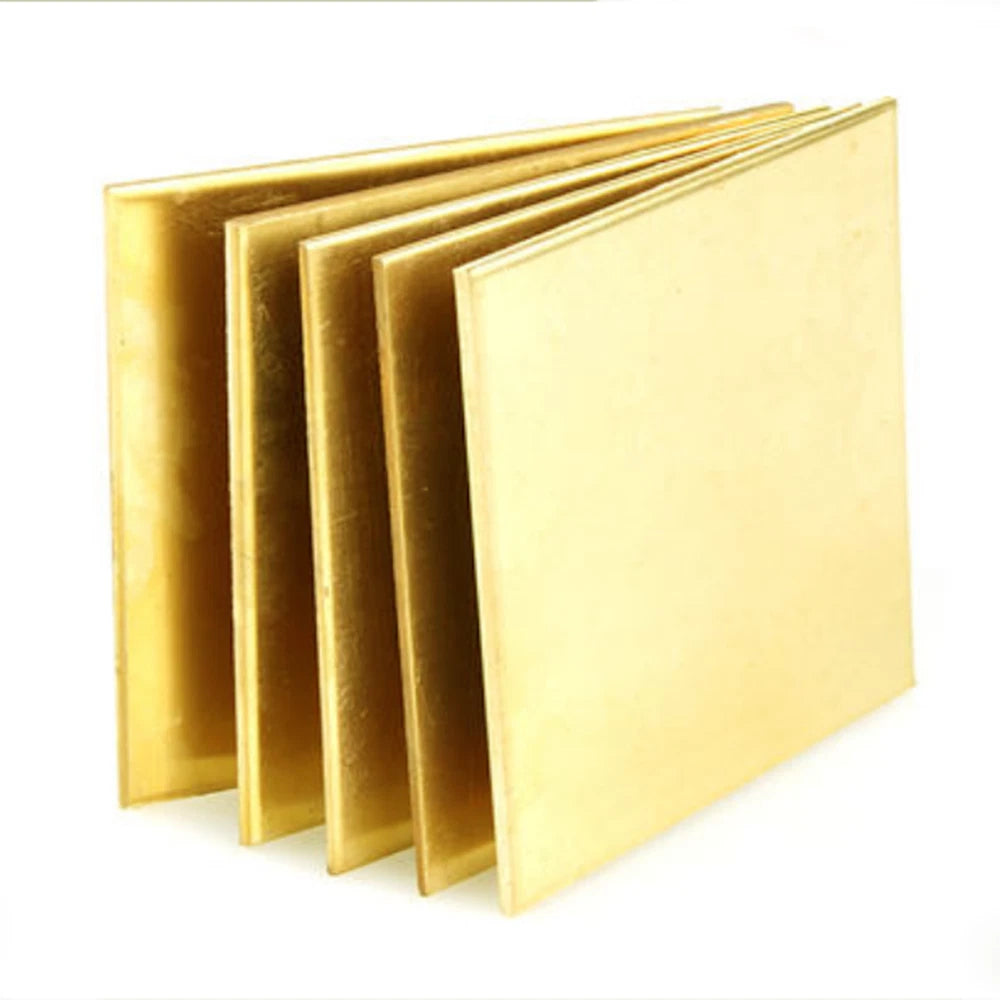
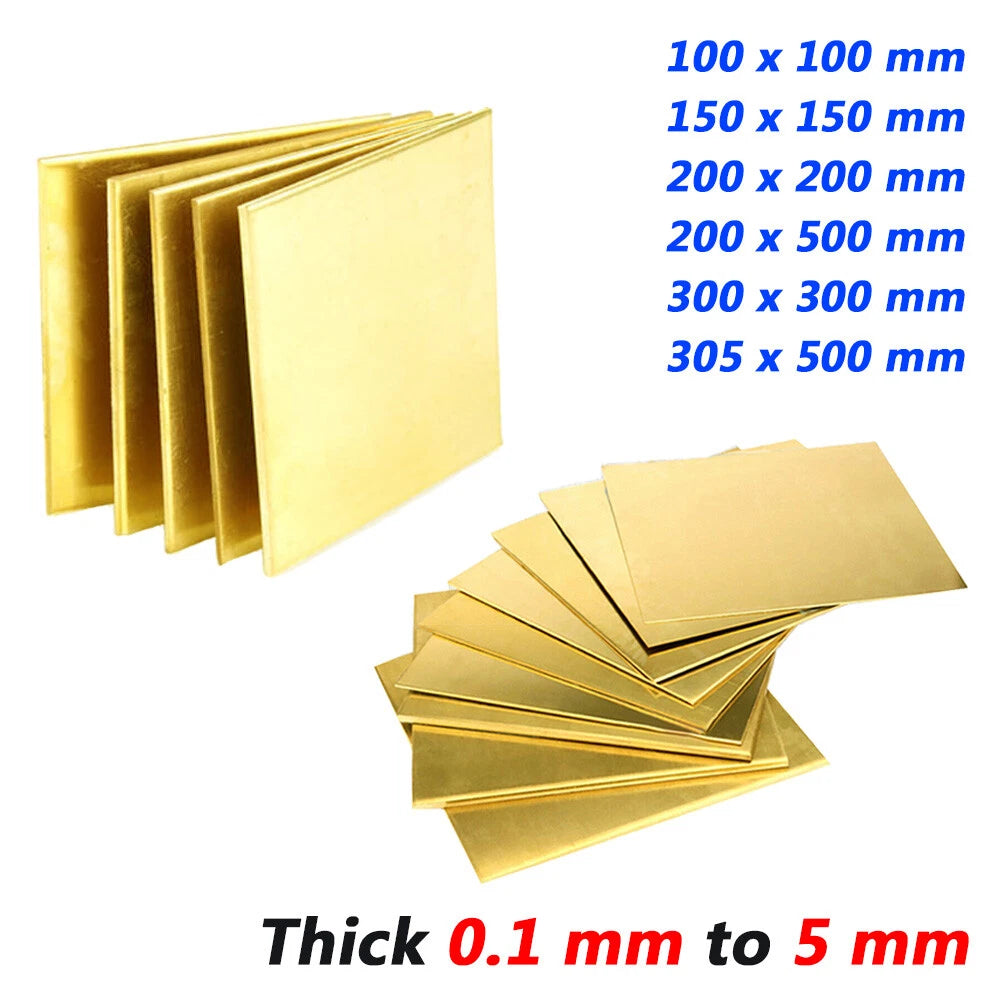
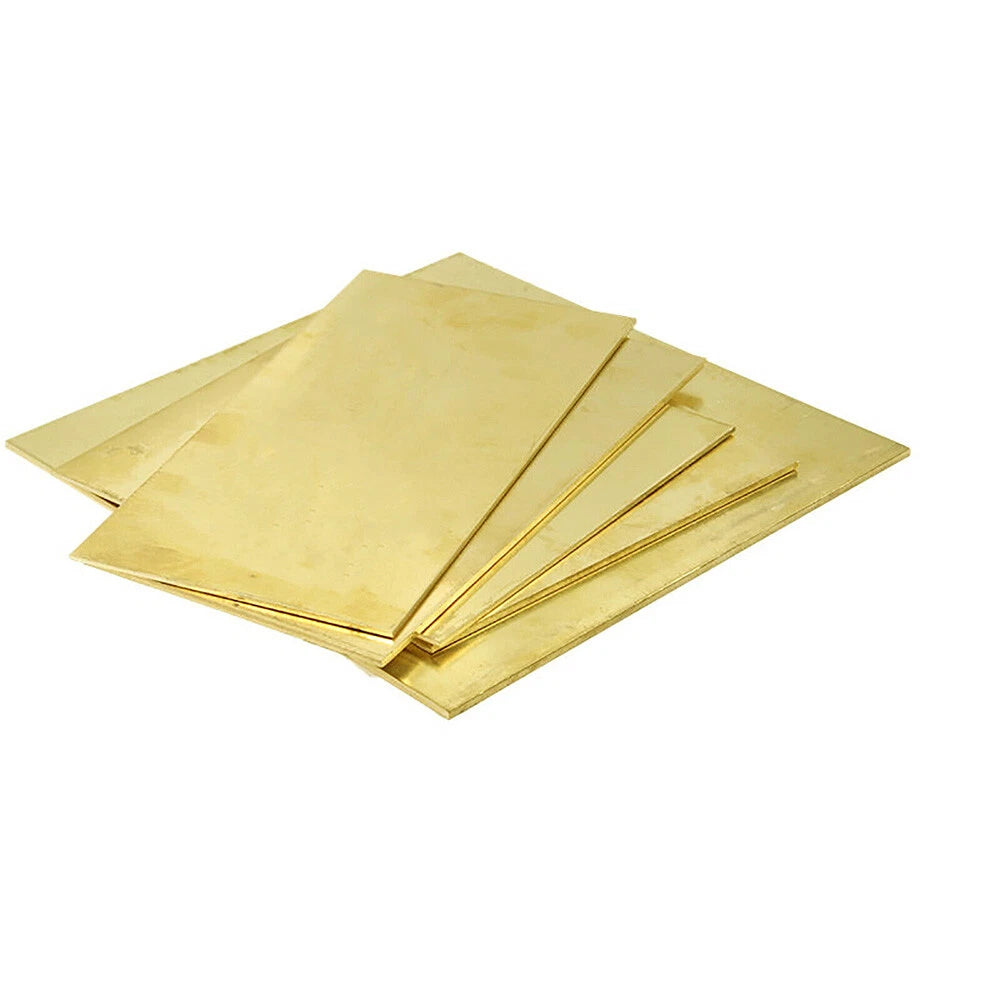
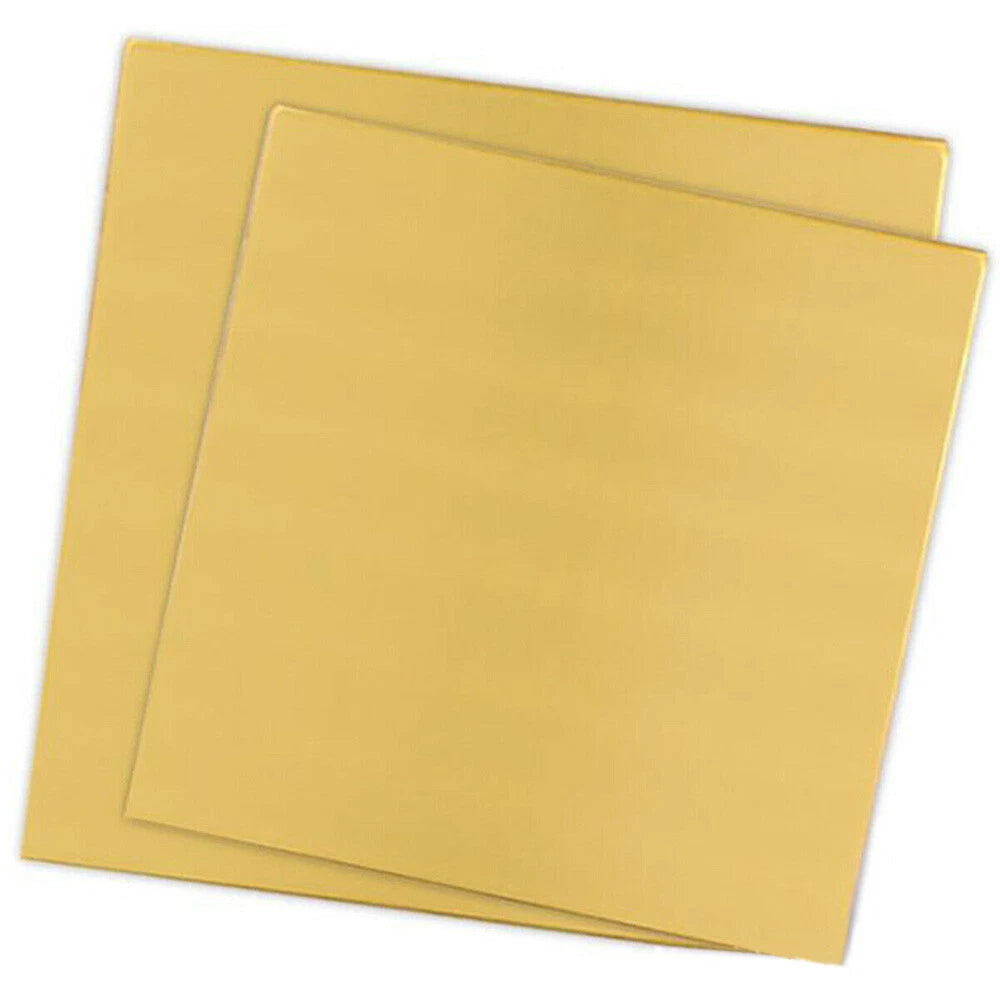
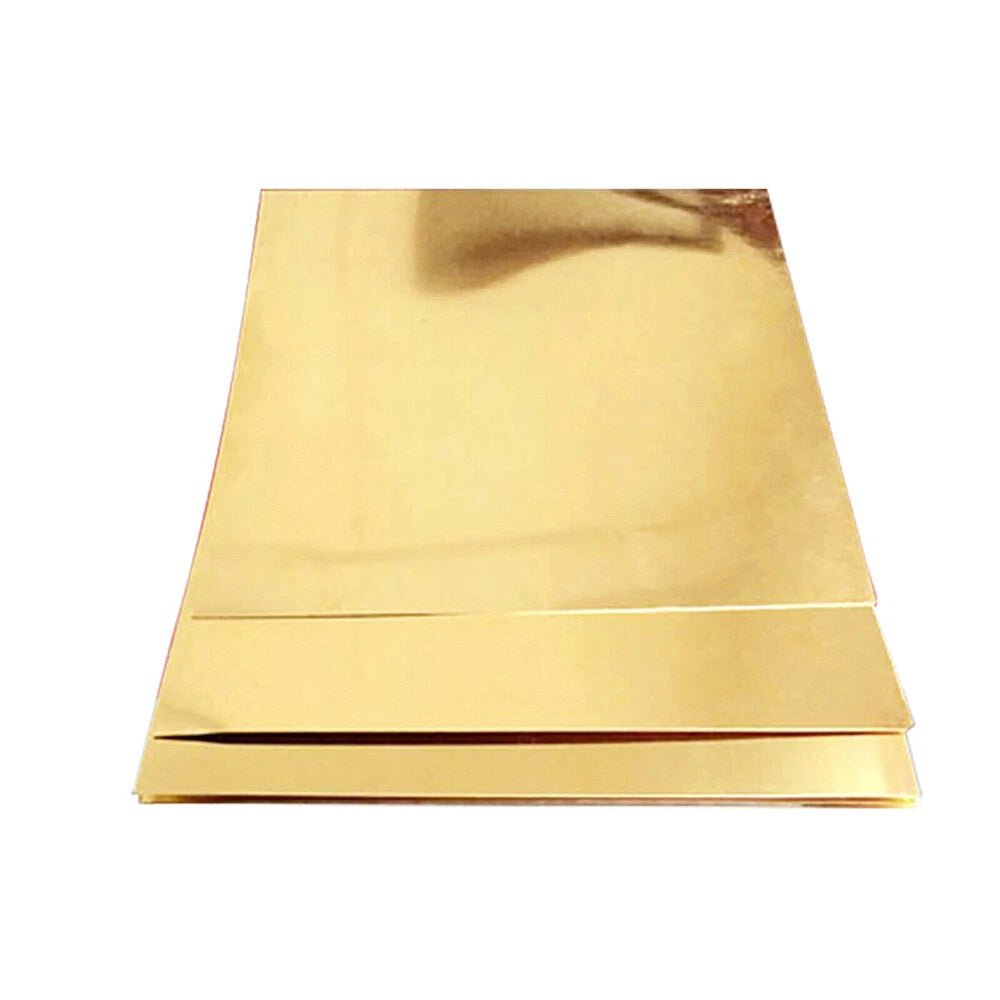
Solid Brass Sheets Plate Thick 0.1mm to 5mm 100x100, 150x150, 200x200, 300x300mm

No reviews

Width x Length: 100 x 100 mm
Thickness: 1 mm
Qty: 1 Pcs
Price:
Sale price$11.90 USD
Stock:
In stock (500 units), ready to be shipped

Payment & Security

Ach Direct Debit Amazon American Express Apple Pay Bancontact BLIK Diners Club Discover EPS Google Pay iDEAL Wero JCB Maestro Mastercard Multibanco MobilePay PayPal Przelewy24 Shop Pay Twint Union Pay USDC Visa

Your payment information is processed securely. We do not store credit card details nor have access to your credit card information.

Limited Offer — Spend More, Save More
Spend $55+
Save $5
Spend $100+
Save $10
Spend $200+
Save $25
HomeDIYer DIY Expert Support

DIY Expert Support

Get fitment advice & recommendations

Mon–Fri  8:30 AM – 8:00 PM
24-Hour Fast Ship
Arrives in 3–14 Days
Worldwide Shipping
30-Day Returns
1 tree planted with every purchase

Description

Solid Brass Sheet Plate — Precision-Cut for DIY Fabrication & Metalwork

When your project demands a metal that machines cleanly, solders reliably, and holds a polished finish over time, finding the right solid brass sheet plate in the exact thickness you need can be frustrating. Hobbyists, model makers, machinists, and repair technicians all face the same problem: generic stock that forces compromise. These solid brass sheet plates are stocked in a precise thickness range — 0.1 mm to 5 mm — so you can match the spec, not work around it.

Each sheet is cut from C260 cartridge brass alloy (70% copper, 30% zinc), delivering a balance of formability and strength. Sizes span 100×100 mm (3.94"×3.94") up to 305×500 mm (12.0"×19.7"), with thicknesses from 0.1 mm (0.004") through 5 mm (0.197"). Flat-rolled surfaces maintain tight dimensional tolerances suitable for close-tolerance fitting and engraving.

Typical applications include shim stock and bearing spacers in mechanical assemblies, decorative inlay panels and name plates, electrical contact blanks and bus bar segments, and custom gaskets for low-pressure fluid systems. The combination of machinability and corrosion resistance makes these sheets a reliable choice for both workshop prototyping and finished-product fabrication.

🔧 Compatibility Note: These sheets are compatible with standard metalworking tools including tin snips (up to ~1 mm), angle grinders, band saws, and CNC routers. Suitable for soft soldering, brazing, and MIG/TIG welding with brass-compatible filler.

✅ Key Features of These Solid Brass Sheet Plates

📏 Wide Thickness Range

Available from 0.1 mm to 5 mm in defined increments, covering ultra-thin shim applications through structural plate work without needing multiple suppliers.

🔩 C260 Cartridge Brass Alloy

70/30 copper-zinc composition delivers excellent cold-working characteristics, consistent machinability, and resistance to dezincification in mild environments.

📐 Multiple Sheet Sizes

Six size options from 100×100 mm to 305×500 mm let you select the closest blank to your finished part, minimising material waste and cutting time.

Flat-Rolled Finish

Mill-rolled surface provides a consistent, burr-reduced face suitable for engraving, etching, stamping, and direct use as decorative trim without additional surface prep.

⚙️ Solderable & Brazeable

Bonds readily with standard soft solder (60/40 Sn/Pb or lead-free equivalents) and silver brazing alloys, making it straightforward to join to other brass, copper, or steel components.

🛡️ Corrosion-Resistant Surface

Brass naturally forms a protective patina that slows further oxidation in indoor and sheltered outdoor environments, reducing maintenance requirements for decorative and functional parts alike.

📐 Technical Specifications — Solid Brass Sheet Plate

Material Brass (C260 Cartridge Brass, 70% Cu / 30% Zn)
Thickness Range 0.1 mm – 5 mm (0.004" – 0.197")
Available Sizes (W × L) 100×100 mm, 150×150 mm, 200×200 mm, 200×500 mm, 300×300 mm, 305×500 mm
Surface Finish Mill-rolled, flat
Hardness See variant options
Tensile Strength Typically 300–500 MPa (varies by thickness and temper)
Quantity per Order 1 Pcs or 2 Pcs (select variant)
Tolerance See variant options
Applicable Standards Contact us to confirm

❓ Frequently Asked Questions

How do I choose the right thickness for my project?

For shim stock and fine gap-filling, 0.1 mm–0.5 mm sheets are the typical choice. Decorative panels, name plates, and light structural brackets generally use 1 mm–2 mm. For load-bearing spacers, bushings, or parts that will be machined to a finished dimension, 3 mm–5 mm provides enough material for facing cuts and still maintains rigidity. If you are unsure, measure the gap or wall thickness your part needs to fill and add 0.1 mm–0.2 mm for finishing allowance.

Is this brass strong enough for mechanical applications?

C260 cartridge brass has a tensile strength typically in the 300–500 MPa range depending on temper, which is adequate for light-to-medium mechanical duties such as spacers, shims, bearing retainers, and non-structural brackets. It is not recommended for high-stress structural members or applications subject to repeated impact loading, where steel or bronze alloys would be more appropriate.

Will the brass sheet corrode or tarnish over time?

Brass will develop a natural patina (surface oxidation) when exposed to air and moisture, shifting from bright yellow toward a darker amber or brown tone. This patina is largely protective and slows further corrosion. For indoor decorative use, a clear lacquer coat will preserve the original finish. For outdoor or high-humidity environments, consider a periodic wax or sealant treatment. Brass is not recommended for direct contact with ammonia-based compounds, which can cause stress corrosion cracking.

Can I cut these sheets with standard workshop tools?

Yes. Sheets up to approximately 1 mm can be cut cleanly with aviation tin snips or a guillotine shear. Thicker sheets (2 mm–5 mm) are best handled with a band saw, jigsaw with a metal-cutting blade, angle grinder with a thin cutting disc, or CNC router with a carbide end mill. Always clamp the sheet securely and use cutting fluid or lubricant to extend tool life and improve edge quality.

Which size should I order if I need a custom shape cut from the sheet?

Select the smallest sheet size that fully contains your finished part outline, plus at least 5 mm clearance on each edge for clamping and cutting kerf. For example, a 90×90 mm finished part fits within the 100×100 mm sheet with minimal waste. For elongated parts, the 200×500 mm or 305×500 mm options provide a larger blank area. Ordering 2 Pcs gives you a backup blank in case of a cutting error.

Is this material compatible with soldering and brazing?

Yes. C260 brass solders readily with standard 60/40 tin-lead or lead-free (Sn-Cu, Sn-Ag-Cu) soft solders using a rosin or no-clean flux. For higher-strength joints, silver brazing alloys (e.g., 45% Ag) with a brass-compatible flux work well. Clean the surface with fine abrasive or flux before soldering to remove any oxide layer. Avoid acid-based fluxes unless thoroughly rinsed after joining, as residual acid accelerates corrosion.

🛒 Select your Width × Length, Thickness, and Qty above, then add to cart.


You may also like

Recently viewed