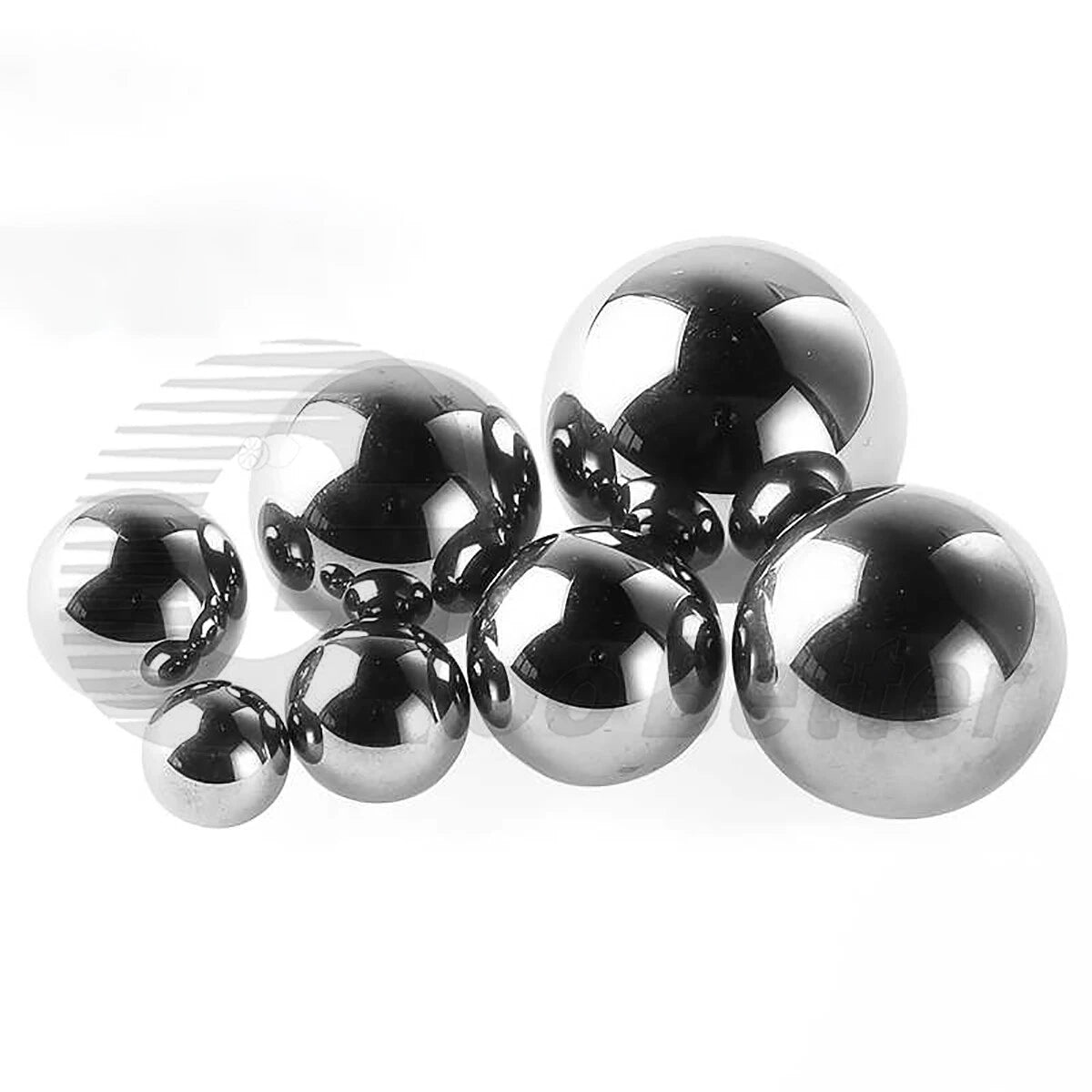
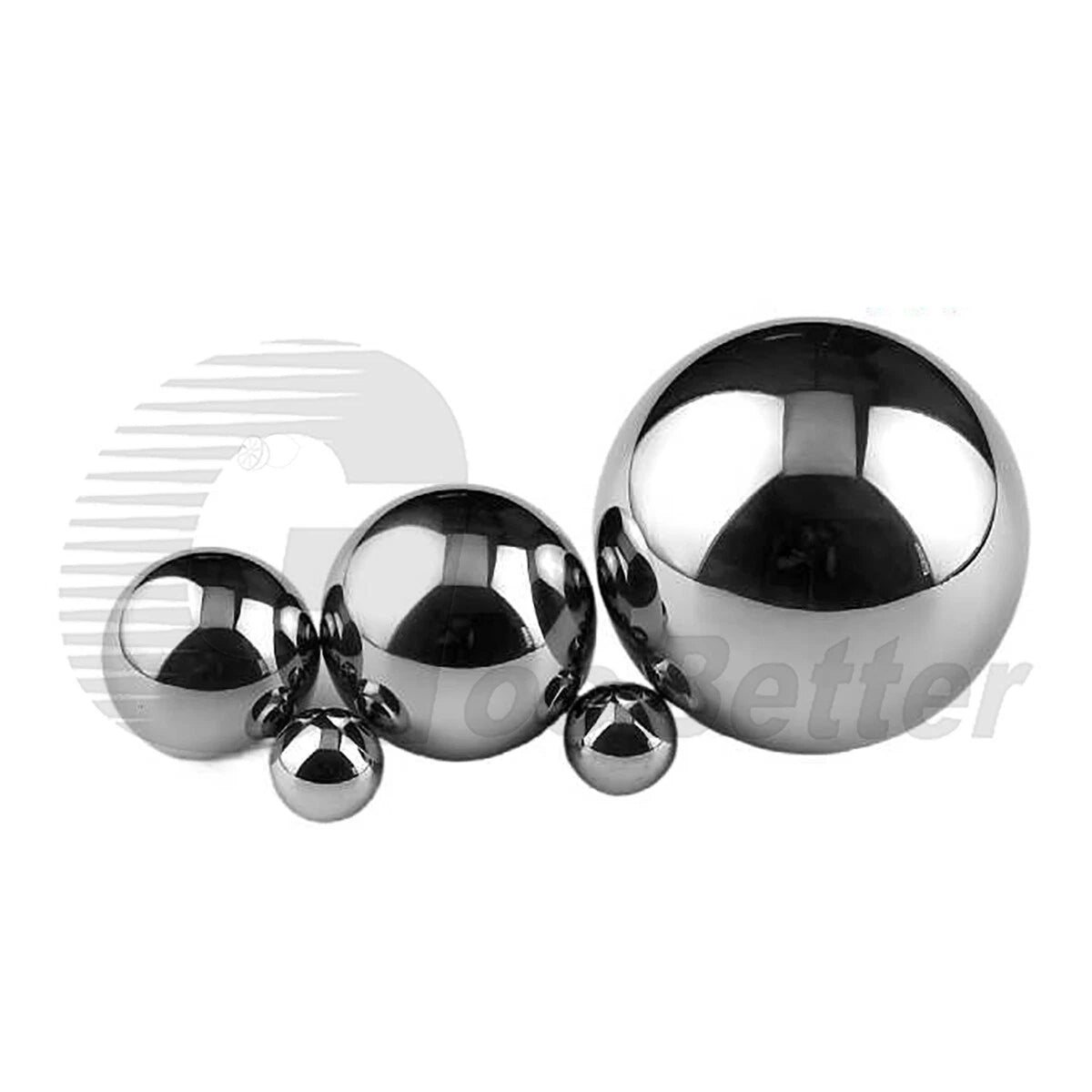
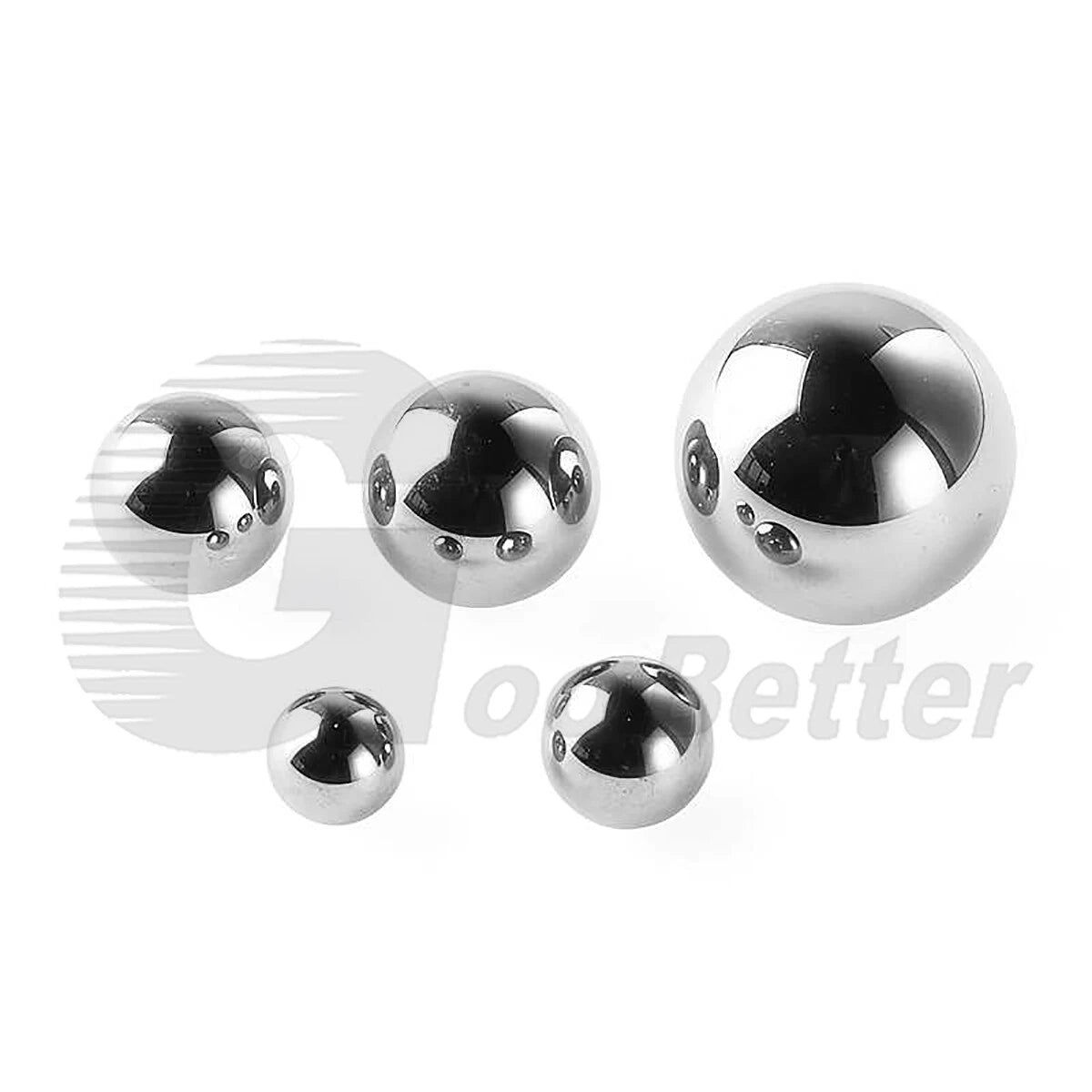
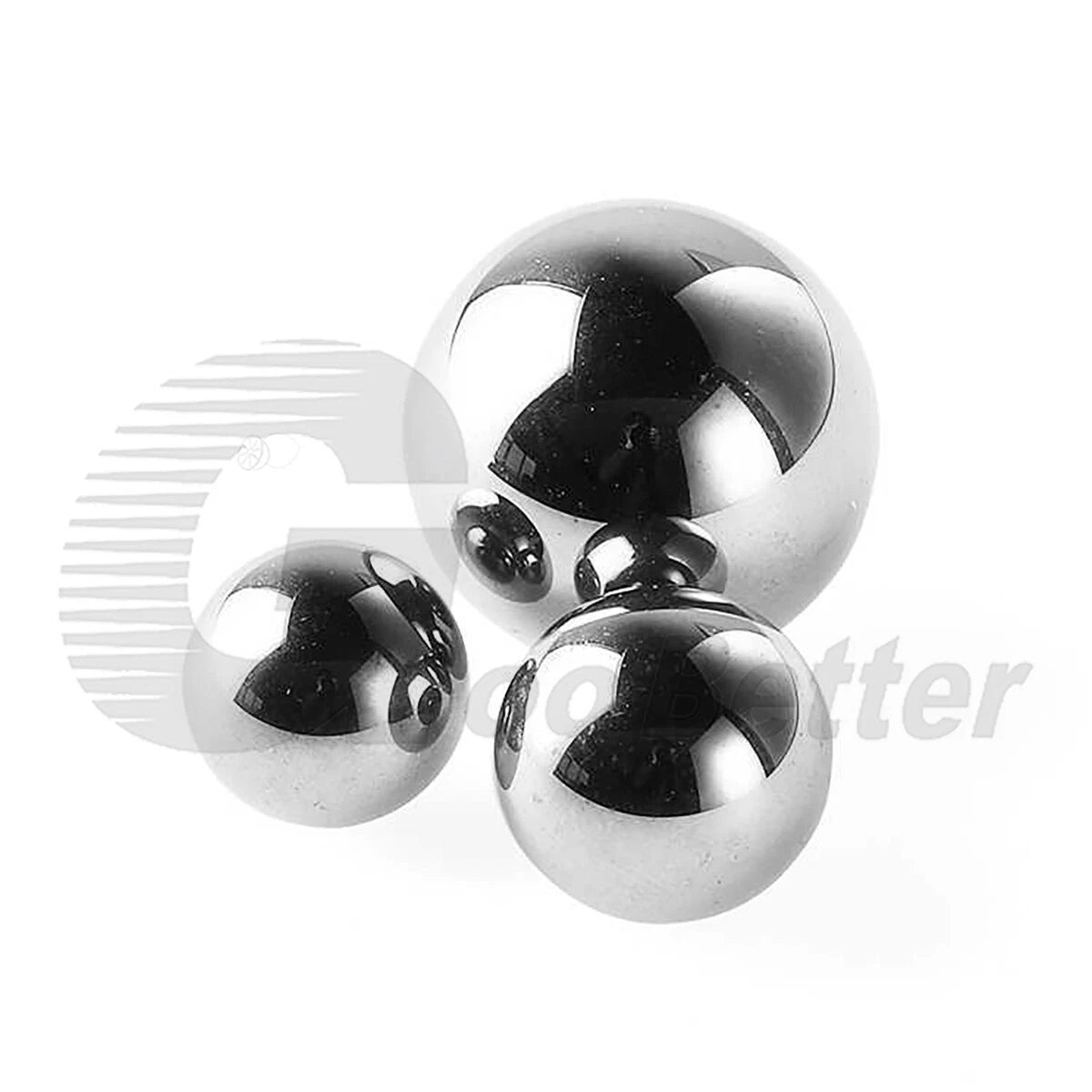
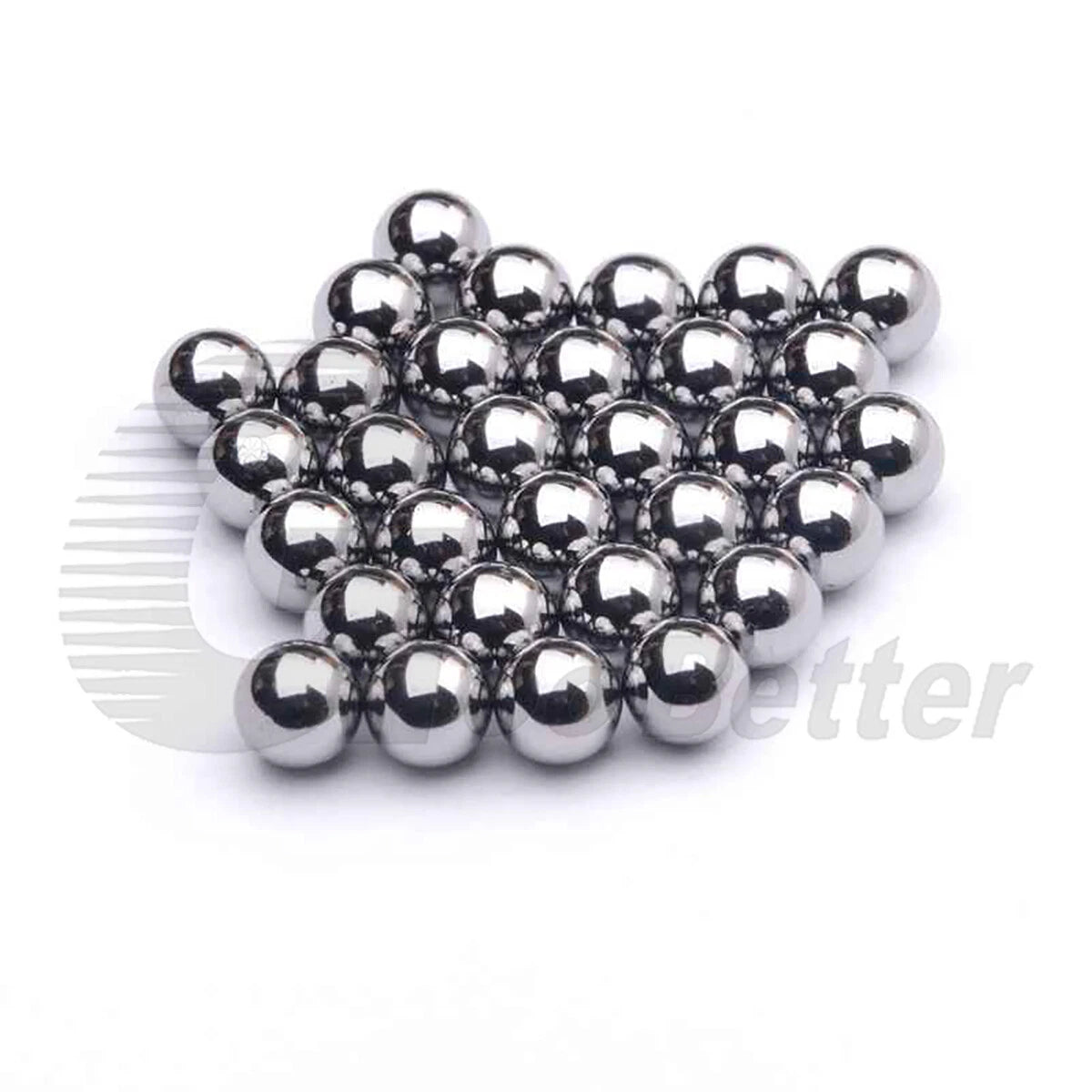
Solid Carbide Ball Bearings Steel Ball Beads Dia 11/12/13/14/15/16/18/19/20mm

No reviews

Price:
Sale price$21.75 USD
Stock:
In stock (500 units), ready to be shipped

Payment & Security

Ach Direct Debit Amazon American Express Apple Pay Bancontact BLIK Diners Club Discover EPS Google Pay iDEAL Wero JCB Maestro Mastercard Multibanco MobilePay PayPal Przelewy24 Shop Pay Twint Union Pay USDC Visa

Your payment information is processed securely. We do not store credit card details nor have access to your credit card information.

Limited Offer — Spend More, Save More
Spend $55+
Save $5
Spend $100+
Save $10
Spend $200+
Save $25
HomeDIYer DIY Expert Support

DIY Expert Support

Get fitment advice & recommendations

Mon–Fri  8:30 AM – 8:00 PM
24-Hour Fast Ship
Arrives in 3–14 Days
Worldwide Shipping
30-Day Returns
1 tree planted with every purchase

Description

Solid Carbide Ball Bearings — Precision-Ground Steel Ball Beads for Demanding Mechanical Applications

When a worn or undersized ball causes valve leakage, spindle chatter, or inconsistent load distribution, the fix starts with selecting the right diameter to within fractions of a millimeter. Machinists, toolmakers, maintenance engineers, and precision assembly technicians rely on dimensionally accurate rolling elements to restore or build mechanisms that perform to spec — not just close enough.

These solid carbide ball bearings are manufactured from tungsten carbide, delivering a Vickers hardness typically in the HV 1400–1600 range and a density of approximately 14.9 g/cm³. The diameter range spans 11 mm (0.433") to 20 mm (0.787"), with 28 discrete sizes available — including fractional-inch equivalents such as 11.1125 mm (7/16"), 12.7 mm (1/2"), 15.875 mm (5/8"), 19.05 mm (3/4"), and 17.4625 mm (11/16"). Each ball is ground to a spherical tolerance consistent with Grade G25–G100 depending on the selected size.

Typical use cases include check-valve seating in hydraulic and pneumatic circuits, precision jig and fixture locating elements, ball-end mill grinding references, and wear-resistant contact points in metering and dosing equipment. The carbide composition also makes these solid carbide ball bearings suitable as grinding media in laboratory mills where steel contamination must be avoided.

⚙️ Compatibility note: Verify bore or seat diameter before ordering. Carbide balls are not compressible — dimensional fit must be confirmed against your application drawing or measured seat. Select your diameter from the variant options above.

✅ Key Features of These Solid Carbide Ball Bearings

🔩 Tungsten Carbide Construction

Solid WC-Co composition provides hardness in the HV 1400–1600 range — significantly harder than tool steel — resisting deformation under high point loads and abrasive contact.

📏 28 Discrete Diameters: 11–20 mm

Covers both metric and fractional-inch standards (7/16", 1/2", 5/8", 3/4") in a single product listing, reducing sourcing complexity for mixed-standard assemblies.

🎯 Precision-Ground Spherical Surface

Ground to spherical tolerances consistent with Grade G25–G100, ensuring repeatable seating, uniform load distribution, and minimal runout in rotating or reciprocating applications.

🛡️ Corrosion and Wear Resistance

Carbide's inherent chemical stability resists oxidation and mild acid exposure, making these balls suitable for hydraulic fluids, light chemical media, and high-humidity environments.

📦 Flexible Pack Quantities: 1, 2, or 5 PCS

Order a single replacement ball for a repair job, a pair for matched-seat applications, or a 5-piece set for production runs and stocking — all from the same variant selector.

⚗️ Low Magnetic Permeability

Carbide's non-ferromagnetic character makes these balls suitable for applications where steel balls would interfere with magnetic sensors, encoders, or MRI-adjacent equipment.

📐 Technical Specifications — Solid Carbide Ball Bearings

Material Tungsten Carbide (WC-Co)
Diameter Range 11 mm – 20 mm (0.433" – 0.787")
Available Diameters 11, 11.1125, 11.5, 11.509, 12, 12.303, 12.5, 12.7, 13, 13.5, 14, 14.288, 14.5, 15, 15.081, 15.5, 15.875, 16, 16.5, 17, 17.4625, 17.5, 18, 18.5, 19, 19.05, 19.5, 20 mm
Hardness (typical) HV 1400–1600 (HRA 88–92)
Density (typical) ~14.9 g/cm³
Sphericity Grade (typical) G25–G100 (varies by diameter)
Surface Finish Precision ground
Magnetic Properties Non-ferromagnetic
Pack Quantities 1 PCS / 2 PCS / 5 PCS
Binder Cobalt (Co)
Operating Temperature See variant options
Certifications / Standards Contact us to confirm

❓ Frequently Asked Questions

How do I choose the correct diameter for my application?

Measure the seat, bore, or mating surface with a calibrated micrometer or bore gauge before ordering. Carbide balls are rigid and non-compressible, so the fit must match your drawing tolerance exactly. If you are replacing an existing ball, measure the worn ball's diameter and select the next standard size up if the seat has also worn. For valve applications, consult the OEM seat specification.

What is the difference between solid carbide balls and chrome steel balls?

Solid carbide (WC-Co) balls are approximately 3–4× harder than chrome steel (52100) balls, with hardness in the HV 1400–1600 range versus HV 400–700 for steel. Carbide balls resist abrasive wear, deformation under high point loads, and mild chemical attack far better than steel. The trade-off is that carbide is more brittle under impact loading — it is not recommended for applications with severe shock loads where steel's toughness is required.

Can these balls be used in corrosive or wet environments?

Yes, within limits. Tungsten carbide with a cobalt binder resists oxidation and mild acids well, making it suitable for hydraulic fluids, water, and light chemical media. However, strong acids (particularly hydrochloric and sulfuric acid) can attack the cobalt binder over time. For highly aggressive chemical environments, contact us to confirm suitability before ordering.

Are fractional-inch sizes available, and how do they correspond to metric?

Yes. Several variants are listed in their exact fractional-inch decimal equivalents: 11.1125 mm = 7/16", 12.7 mm = 1/2", 15.875 mm = 5/8", 17.4625 mm = 11/16", and 19.05 mm = 3/4". These are the same physical sizes as their inch counterparts — select the diameter that matches your measured seat or drawing callout.

What pack quantity should I order?

Select 1 PCS for a single replacement or prototype evaluation. Choose 2 PCS for matched-pair applications such as dual-seat valves or bilateral locating fixtures. The 5 PCS pack offers a lower per-unit cost and is suited for production runs, maintenance kits, or stocking a range of sizes. All pack quantities ship as individual balls of the same selected diameter.

Can carbide balls be used as grinding media in laboratory mills?

Yes. Solid carbide balls are commonly used as grinding media in planetary ball mills and attritors where steel contamination of the sample must be avoided. Their high density (~14.9 g/cm³) provides effective milling energy, and their hardness minimizes media wear and sample contamination. Confirm that your mill jar material is compatible with carbide before use.

What is the surface finish and sphericity tolerance of these balls?

These balls are precision ground to spherical tolerances consistent with Grade G25–G100 depending on the diameter selected. The surface is finished to a smooth ground condition suitable for seating, rolling contact, and reference applications. For applications requiring a specific certified grade (e.g., G10 or G16), contact us to confirm availability before ordering.

🛒 Select your Diameter and Packing QTY above, then add to cart.


You may also like

Recently viewed