
The chain is fine...but I ordered the wrong size. Nine links of the chain I ordered equals six of the size I wanted. My error...
How can I straighten out the springs? I can't use them coil uo as is.
Your payment information is processed securely. We do not store credit card details nor have access to your credit card information.
Get fitment advice & recommendations
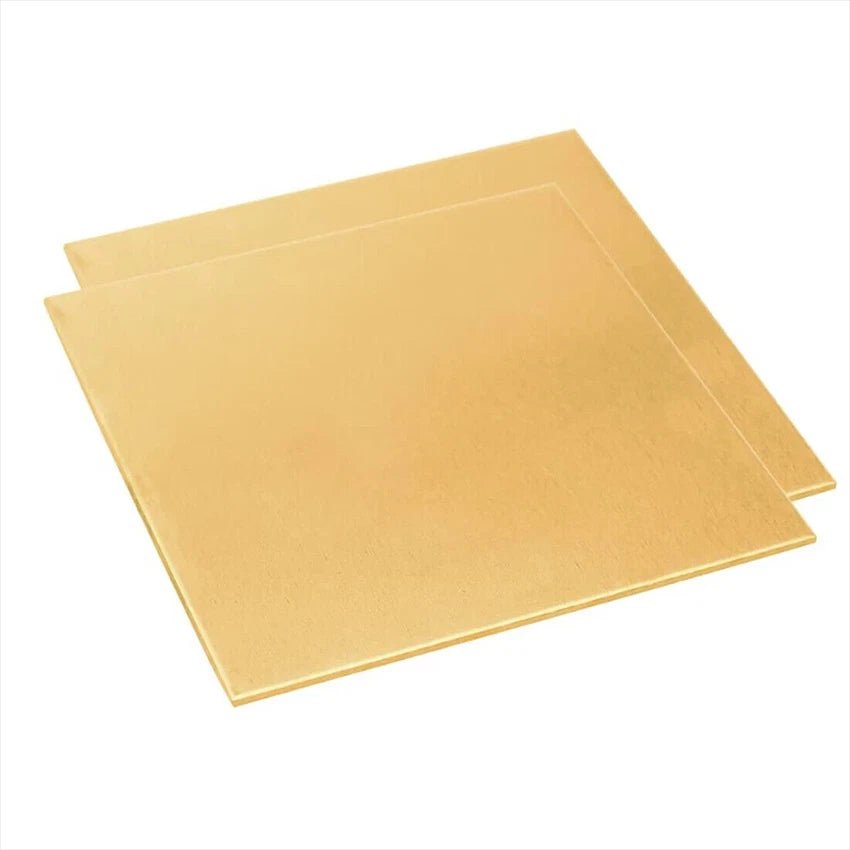
When your project demands a material that holds tight tolerances, machines cleanly, and looks sharp right out of the package, thin sheet stock is often the bottleneck. Hobbyists, makers, and small-shop fabricators who work with engraving blanks, shim stock, decorative inlays, or custom brackets know how hard it is to find flat, burr-free brass sheet in the exact size they need without ordering a full industrial roll.
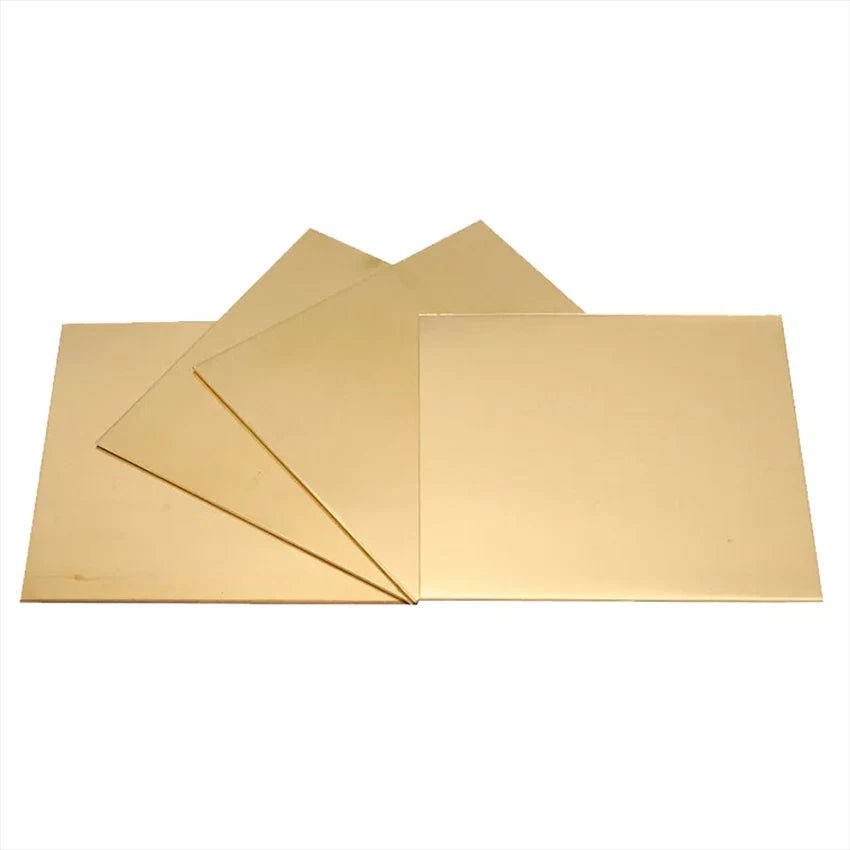
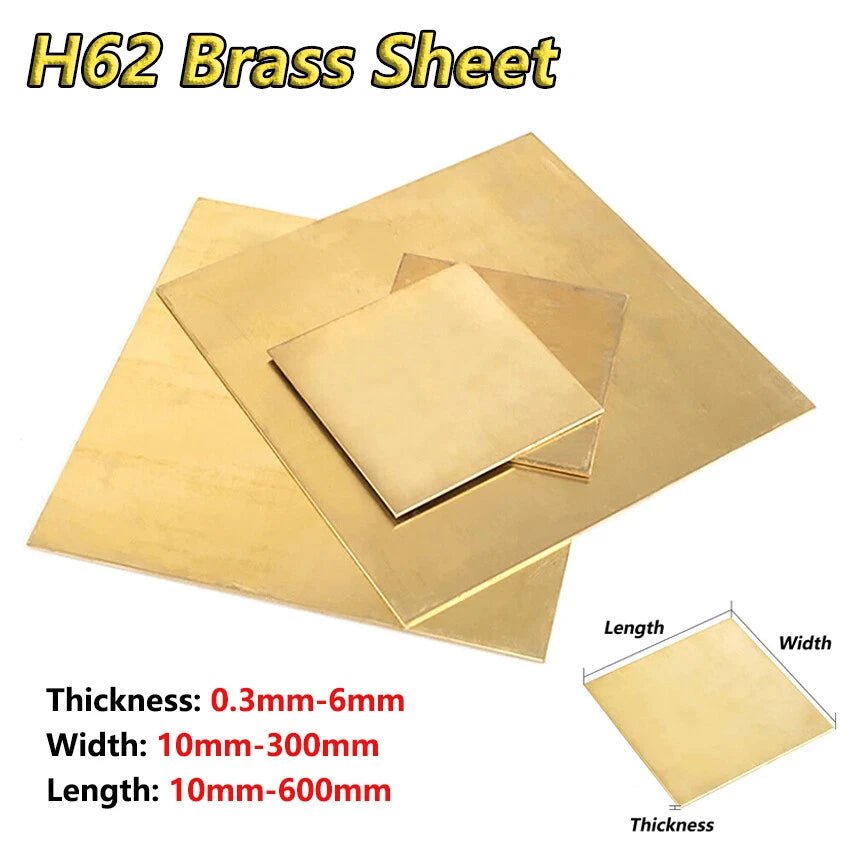
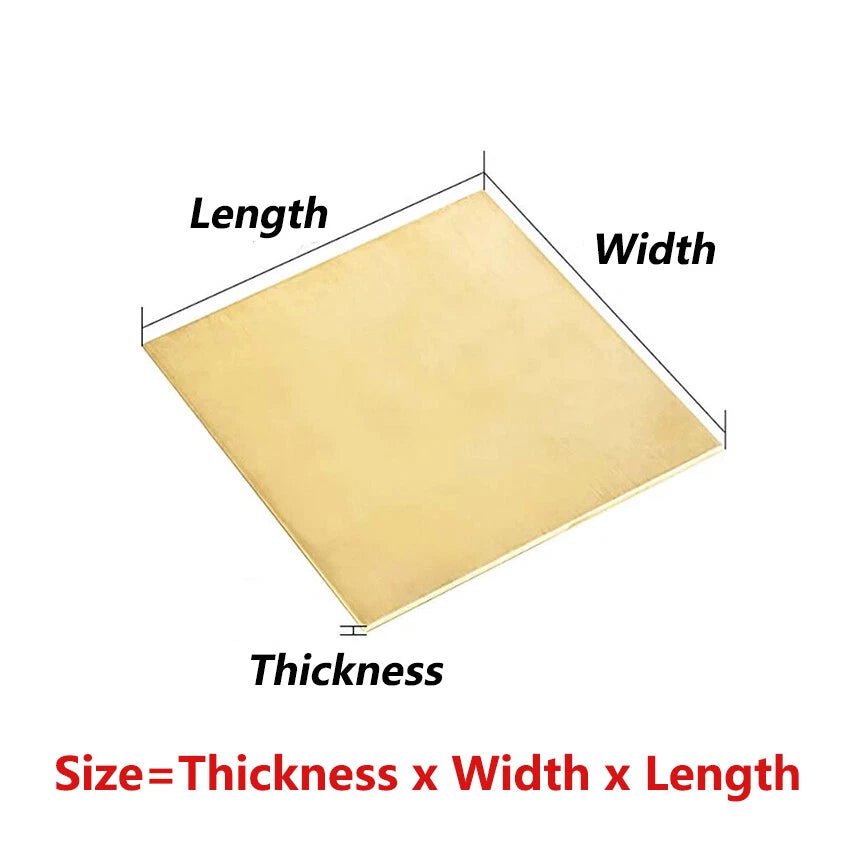
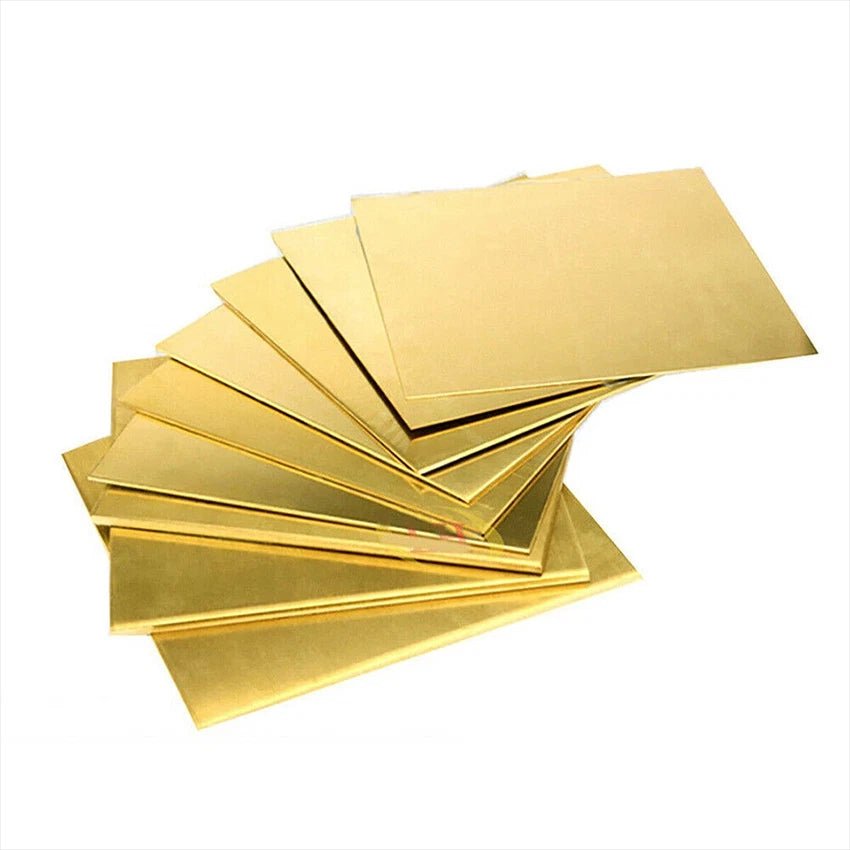
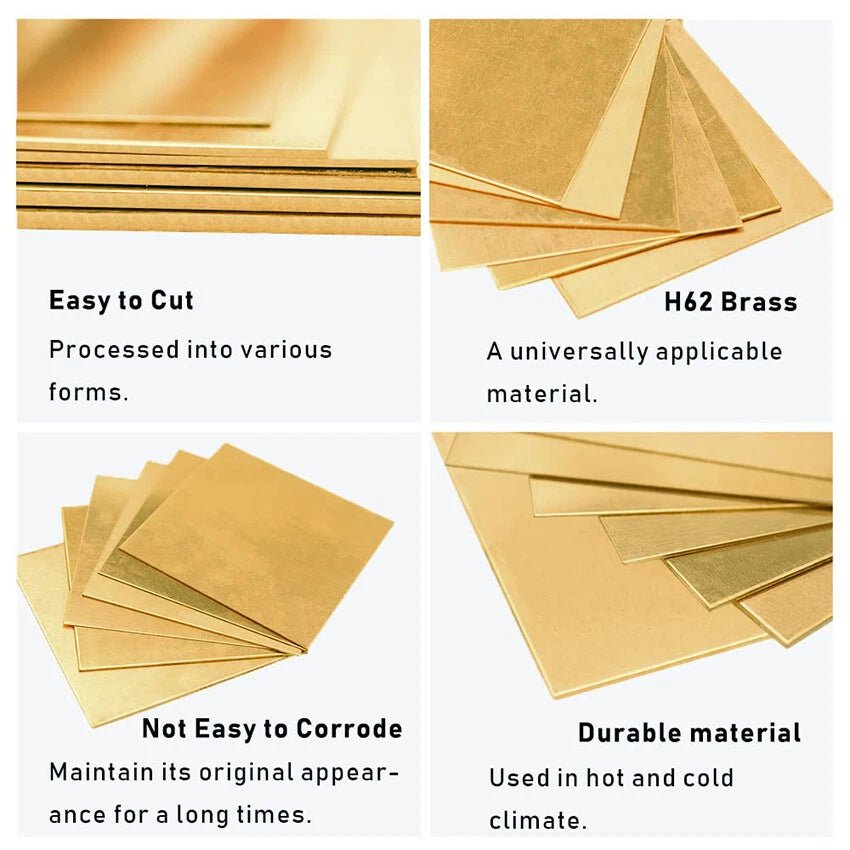
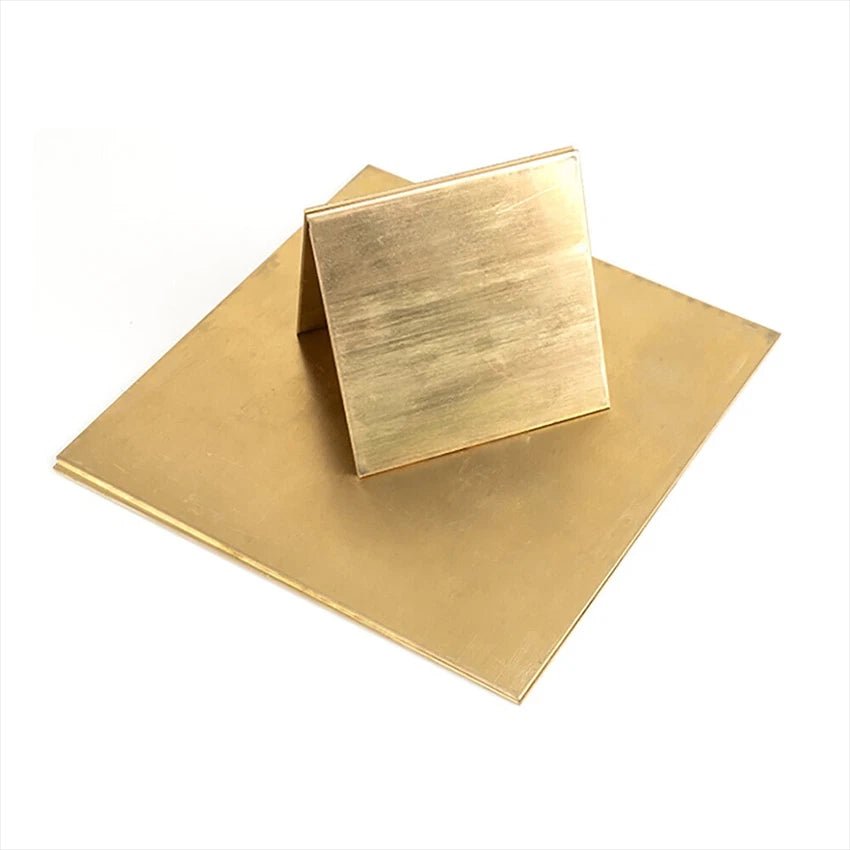
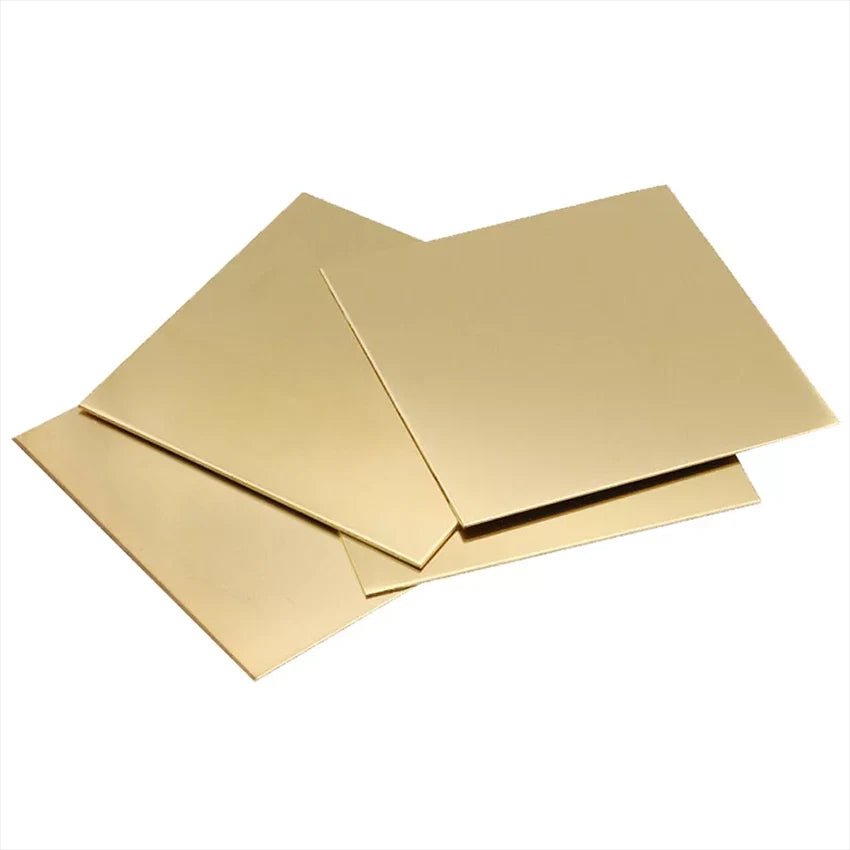
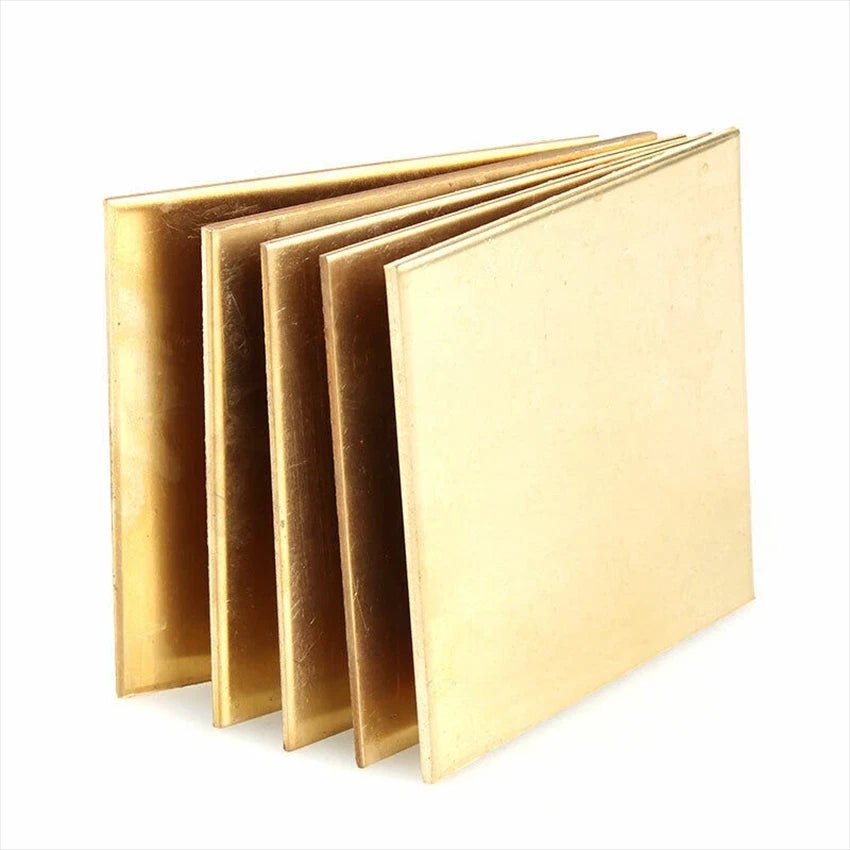
These H62 brass sheet metal plates are cut from solid H62 (CuZn38) alloy — a copper-zinc composition that balances machinability, solderability, and a warm golden appearance. Each piece is available in thickness options from 0.3 mm (approximately 0.012 in) up to 6 mm (approximately 0.236 in), with widths and lengths ranging from 10 mm × 10 mm (0.39 in × 0.39 in) up to 300 mm × 300 mm (11.8 in × 11.8 in), and select long-strip sizes up to 100 mm × 600 mm (3.94 in × 23.6 in).
Typical applications include laser engraving blanks for personalized gifts, precision shim stock for machinery alignment, decorative inlay panels for woodworking and furniture, electrical contact strips and bus bar prototypes, and custom bracket or gasket blanks for small-batch fabrication. Whether you are searching for thin brass sheet for engraving, H62 brass shim stock, or flat brass plate for DIY metalwork, these plates ship flat and ready to cut, drill, or form.
| Material | H62 Brass (CuZn38 copper-zinc alloy) |
|---|---|
| Thickness Range | 0.3 mm – 6 mm (0.012 in – 0.236 in) |
| Width × Length Range | 10 mm × 10 mm up to 300 mm × 300 mm; select sizes up to 100 mm × 600 mm or 200 mm × 600 mm |
| Surface Condition | Mill finish, flat |
| Colour / Appearance | Golden yellow (natural brass) |
| Machinability | Excellent — compatible with HSS and carbide tooling |
| Solderability | Excellent — suitable for soft solder and silver brazing |
| Corrosion Resistance | Moderate — performs well in dry indoor environments; apply lacquer or wax for humid or outdoor use |
| Pack Quantity | See variant options (1 Pcs / 2 Pcs / 4 Pcs depending on size) |
| Applicable Standards | GB/T 2040 (Chinese national standard for copper alloy sheet) |
For engraving blanks, nameplates, and decorative inlays, 0.3 mm – 0.8 mm is typically sufficient and easy to cut with shears or a laser. For shim stock and gaskets, 0.5 mm – 1.5 mm covers most machinery alignment needs. For structural brackets, contact strips, or parts that will be tapped and threaded, choose 2 mm – 6 mm. Select your thickness from the variant dropdown above.
H62 brass has a tensile strength of approximately 340–440 MPa in the annealed-to-half-hard condition, which is adequate for light-duty brackets, spacers, and mounting plates. It is not recommended for high-stress structural applications where steel or aluminium alloy would be more appropriate. For decorative brackets and light mechanical parts, thicknesses of 3 mm and above provide good rigidity.
H62 brass performs well in dry indoor environments and resists mild atmospheric corrosion. In humid, marine, or outdoor conditions it can develop a patina (verdigris) over time. To preserve the golden finish, apply a clear lacquer, paste wax, or Renaissance Wax after cleaning. Avoid prolonged contact with ammonia-based cleaners, which can cause stress corrosion cracking in brass.
CO₂ lasers (common in hobby engravers) reflect most of their energy off bare brass and are generally not effective for cutting. However, fibre lasers and diode lasers with appropriate power settings can engrave and cut thin brass (0.3 mm – 1 mm). For thicker gauges, a CNC router with a carbide end mill, a bench shear, or a band saw is recommended. Always test on a scrap piece first.
Yes. H62 brass solders readily with a standard 60 W or higher soldering iron using rosin-core or no-clean flux solder. For larger pieces (100 mm × 100 mm and above), a soldering gun or torch is recommended to bring the workpiece up to temperature efficiently. Silver brazing with a propane or MAPP torch is also straightforward for thicker gauges.
Order the smallest standard size that fully contains your finished part dimensions, leaving at least 5–10 mm of margin on each edge for clamping and cutting allowance. For example, if your finished part is 85 mm × 85 mm, the 100 mm × 100 mm option is the most economical choice. Use the Thickness × Width × Length variant selector above to find the best fit.
Plates are supplied flat from the mill. Very thin gauges (0.3 mm – 0.5 mm) may develop minor curl during transit; if this occurs, place the sheet between two flat surfaces with light weight on top for 24 hours to restore flatness. Thicker gauges (1 mm and above) are inherently rigid and arrive flat.