The chain is fine...but I ordered the wrong size. Nine links of the chain I ordered equals six of the size I wanted. My error...
How can I straighten out the springs? I can't use them coil uo as is.
Your payment information is processed securely. We do not store credit card details nor have access to your credit card information.
Get fitment advice & recommendations
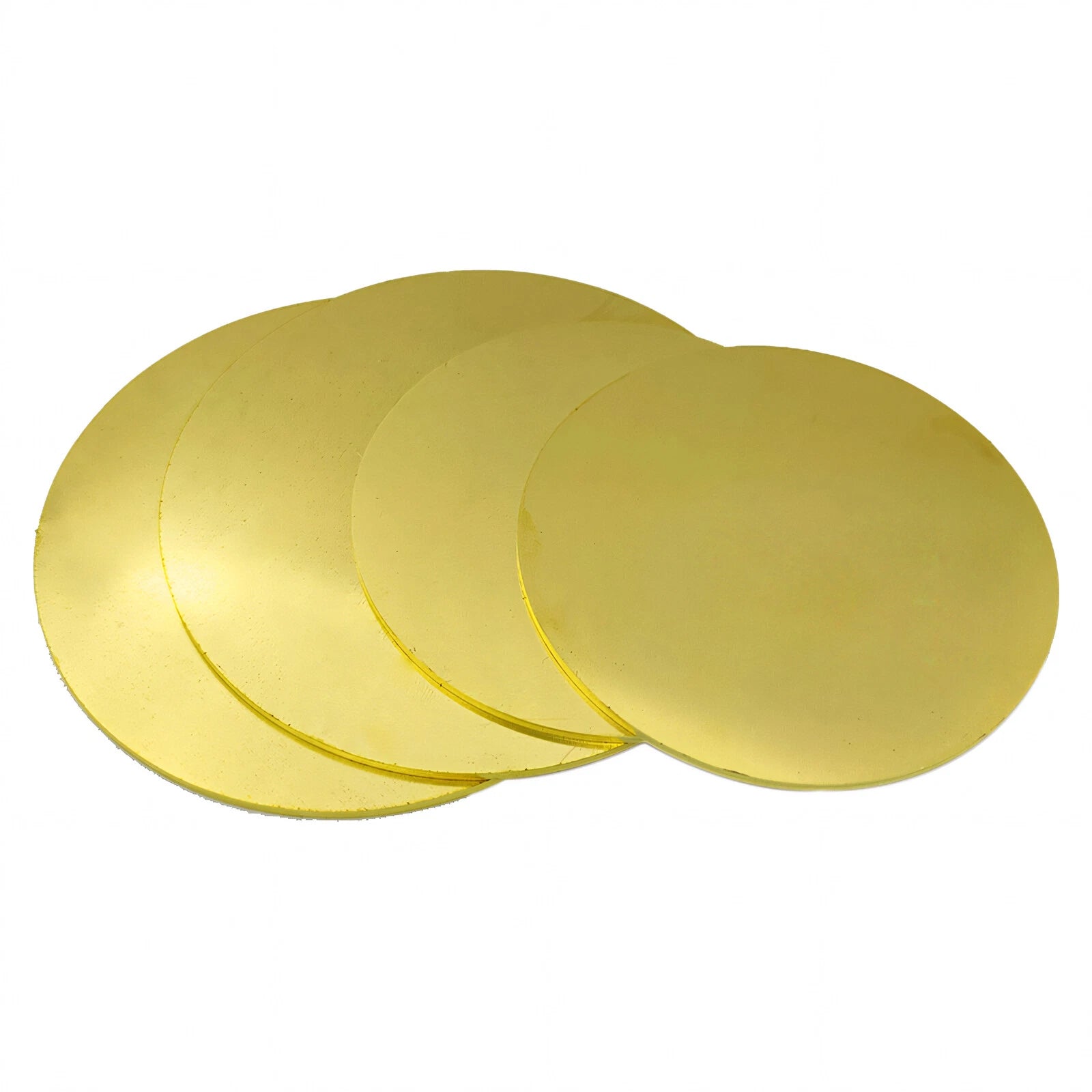
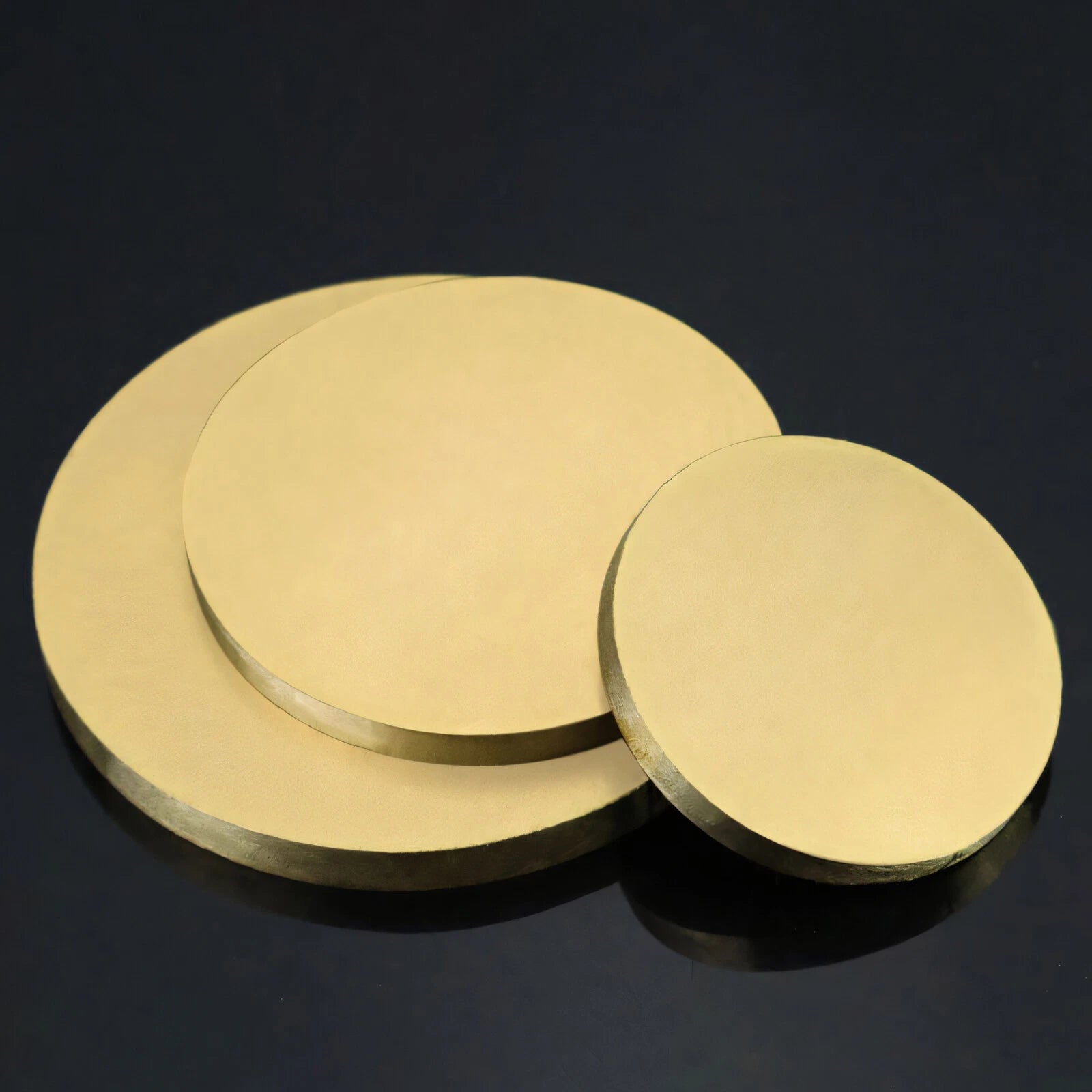
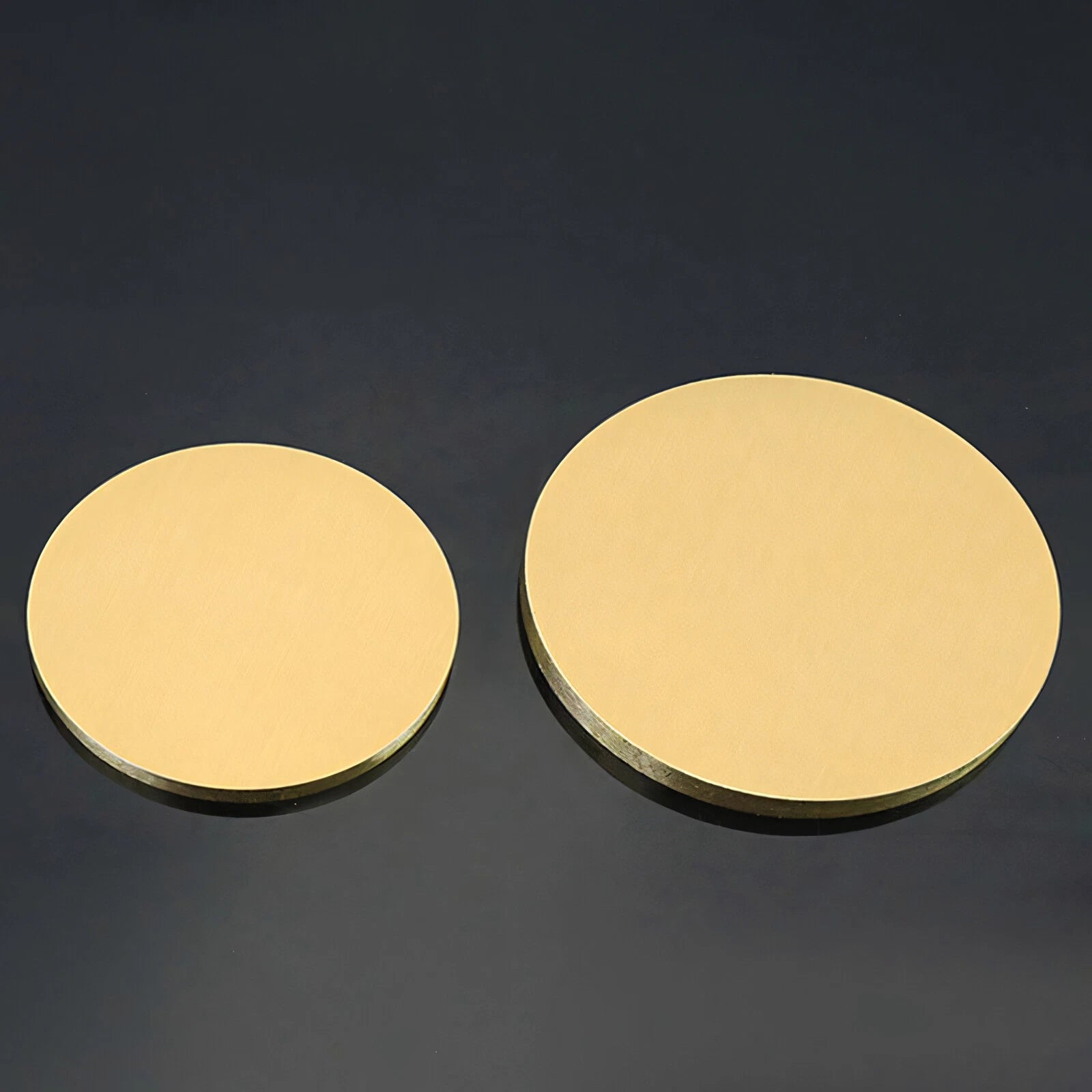
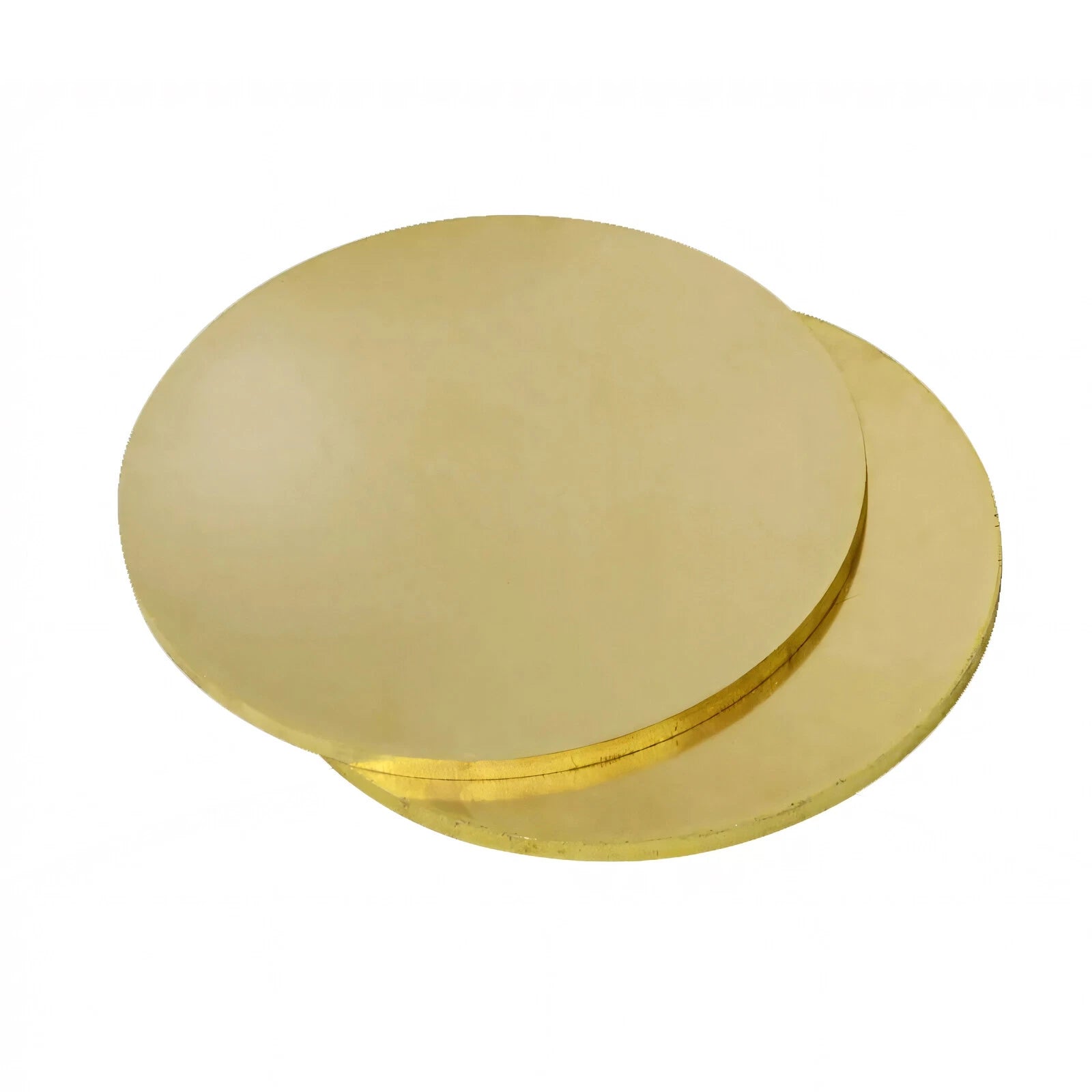
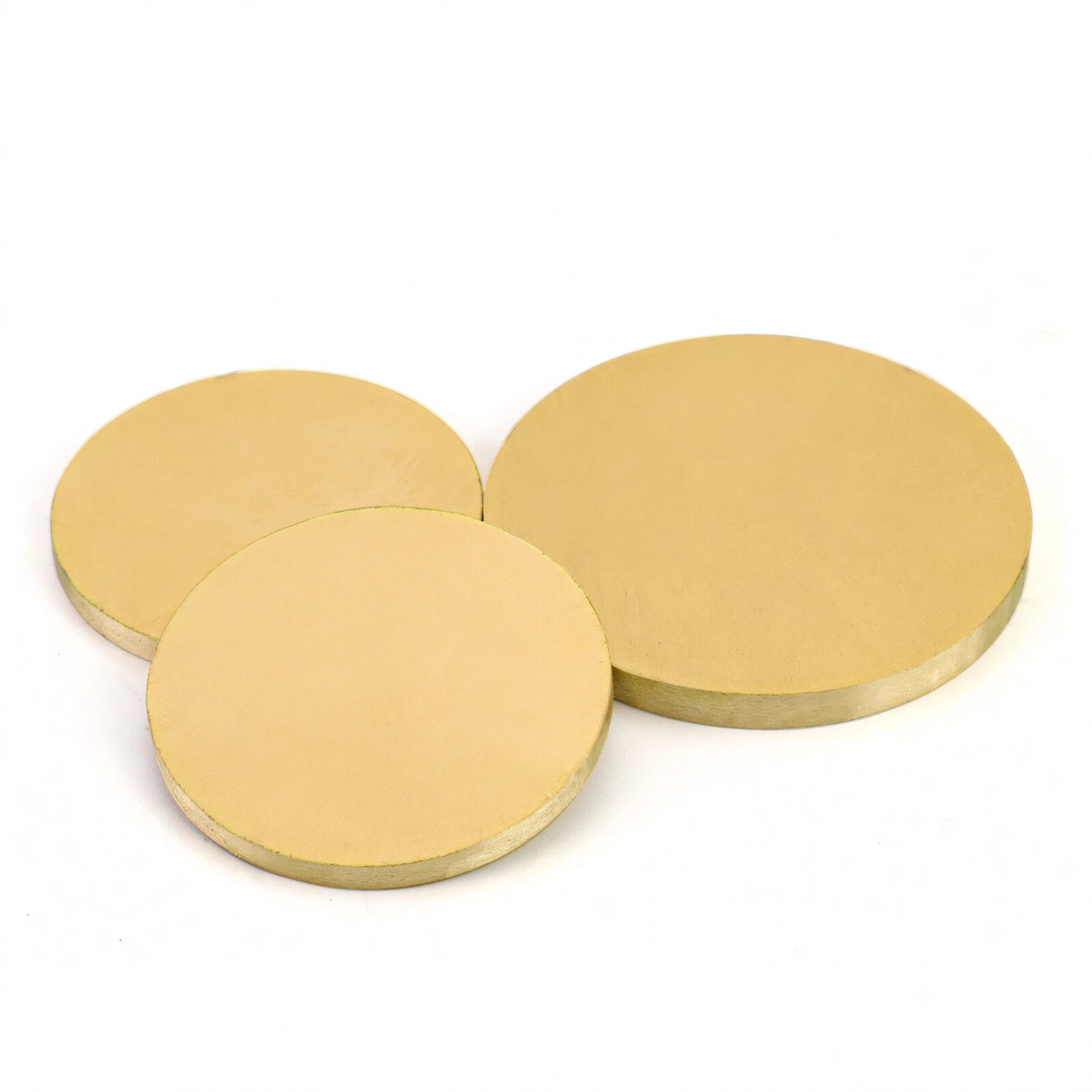
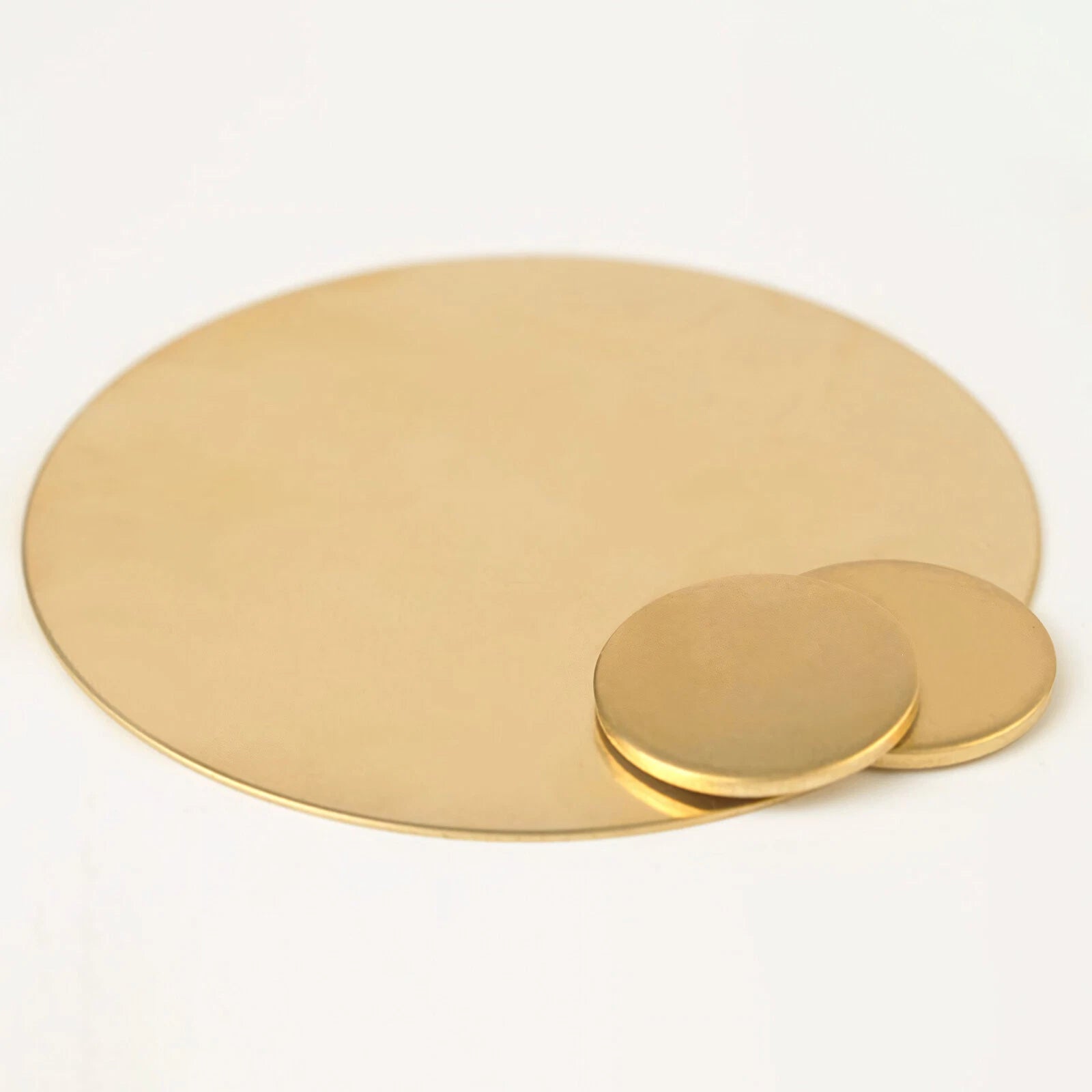
When your project demands a flat, true-round metal blank that machines cleanly and holds its shape, thin sheet stock cut from a roll simply won't do. Makers, jewellers, engineers, and hobbyists who need a reliable starting point for engraving, stamping, etching, or turning rely on purpose-made disc blanks — and that's exactly what these solid round brass discs deliver.
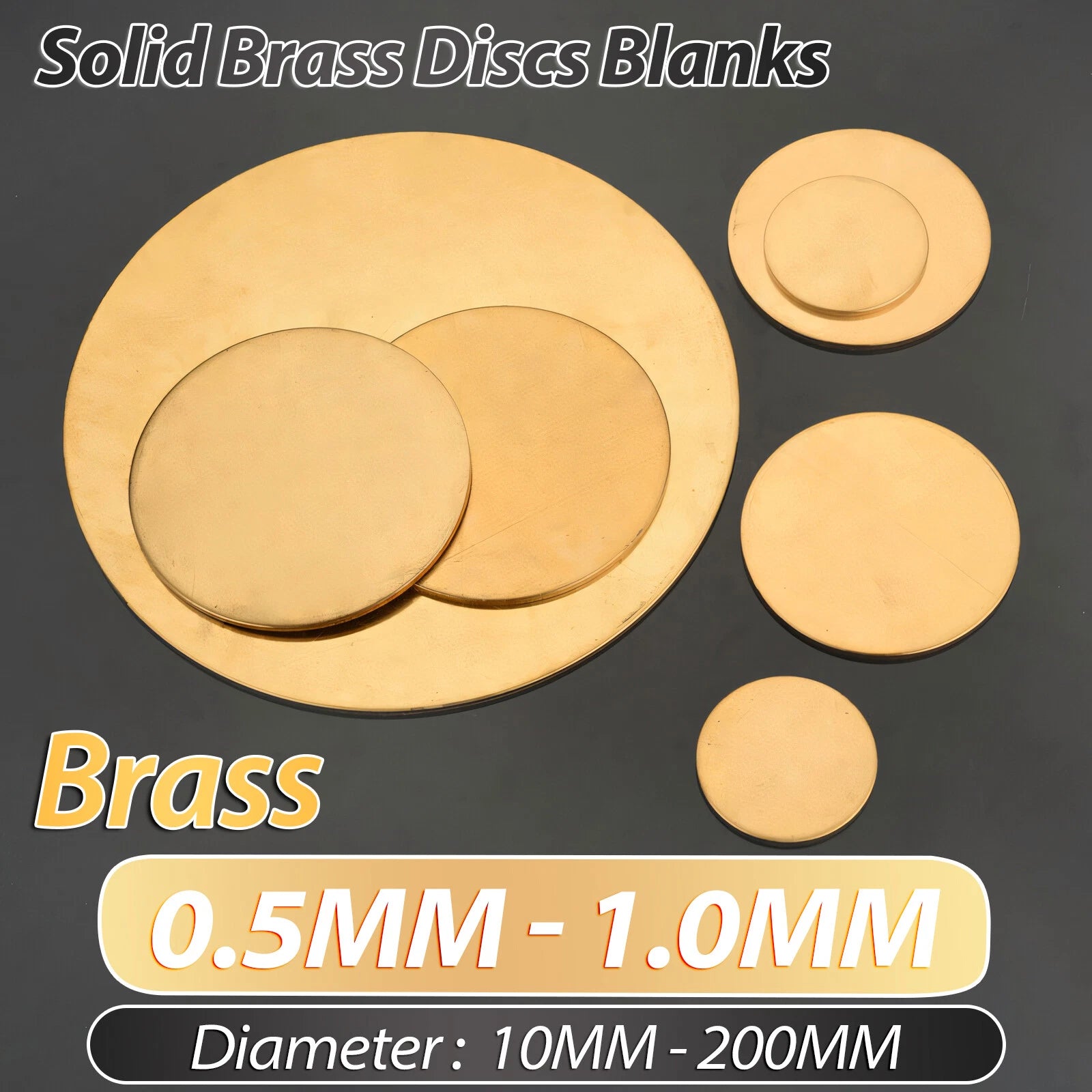
Each disc is cut from solid brass plate (CuZn alloy, typically CuZn37 / C26000 equivalent) and supplied in three thickness options — 0.5 mm (~0.020 in), 0.8 mm (~0.031 in), and 1 mm (~0.039 in) — with diameters ranging from 10 mm (0.39 in) to 200 mm (7.87 in). Edges are machine-cut and may require light deburring. Surfaces are mill-finish brass with natural golden colour.
Typical applications include: custom jewellery pendants and charms (10–30 mm), name tags and trophy blanks (40–80 mm), clock faces and dial plates (80–160 mm), gasket prototypes and shim stock (any diameter), and decorative inlay or mosaic work in woodworking and leathercraft.
| Material | Solid brass (CuZn alloy, mill finish) |
|---|---|
| Thickness Options | 0.5 mm / 0.8 mm / 1 mm |
| Diameter Range | 10 mm – 200 mm (0.39 in – 7.87 in) |
| Edge Condition | Machine-cut; light deburring recommended |
| Surface Finish | Mill finish, natural brass colour |
| Hardness | See variant options |
| Tensile Strength | See variant options |
| Pack Quantity | 1 / 2 / 4 / 5 / 8 / 10 / 20 Pcs (select above) |
| Weight per Piece | See variant options |
Measure the finished size you need and add 1–3 mm of allowance for edge cleanup. For jewellery pendants, 15–30 mm diameters are most common. For clock faces or dial plates, 80–160 mm is typical. For decorative inlays, match the diameter to your router template or hole saw size.
0.5 mm is ideal for lightweight pendants, shims, and decorative overlays where flexibility is acceptable. 0.8 mm offers a balance of rigidity and formability — good for stamping and doming. 1 mm is the stiffest option, suited to structural blanks, name tags, and applications where the disc must hold its flat shape under load.
Yes. Brass in these gauges (0.5–1 mm) is well within the working range for hand and bench-press stamping. The alloy is ductile enough to accept letter stamps, number stamps, and texture hammers without cracking. For deep doming, anneal the disc first by heating to dull red and quenching in water.
Brass naturally develops a golden-to-amber patina when exposed to air and humidity. This is a normal characteristic of the alloy and does not indicate corrosion. To maintain a bright finish, apply a thin coat of clear lacquer or metal wax after polishing. For outdoor use, a UV-stable lacquer is recommended.
Yes. Brass is compatible with fibre laser engravers and CO₂ lasers with a metal-marking coating (e.g. Cermark). For CNC routing, use carbide end mills at appropriate feeds and speeds for brass. Secure the disc firmly — double-sided tape or a vacuum fixture works well for thin discs. Always wear appropriate PPE when machining metal.
Yes. Brass is one of the most free-machining metals available. Standard HSS drill bits work well; use a centre punch to prevent wandering. For threading, use a standard tap and die set with a drop of cutting oil. Pilot holes should be sized per standard tap drill charts for the thread you intend to cut.
For one-off or prototype work, the 1 or 2-piece packs let you test fit and finish before committing. For small batch production (e.g. 10–20 finished pieces), the 10 or 20-piece packs offer better per-unit value. For ongoing production, contact us to discuss bulk pricing on larger quantities.