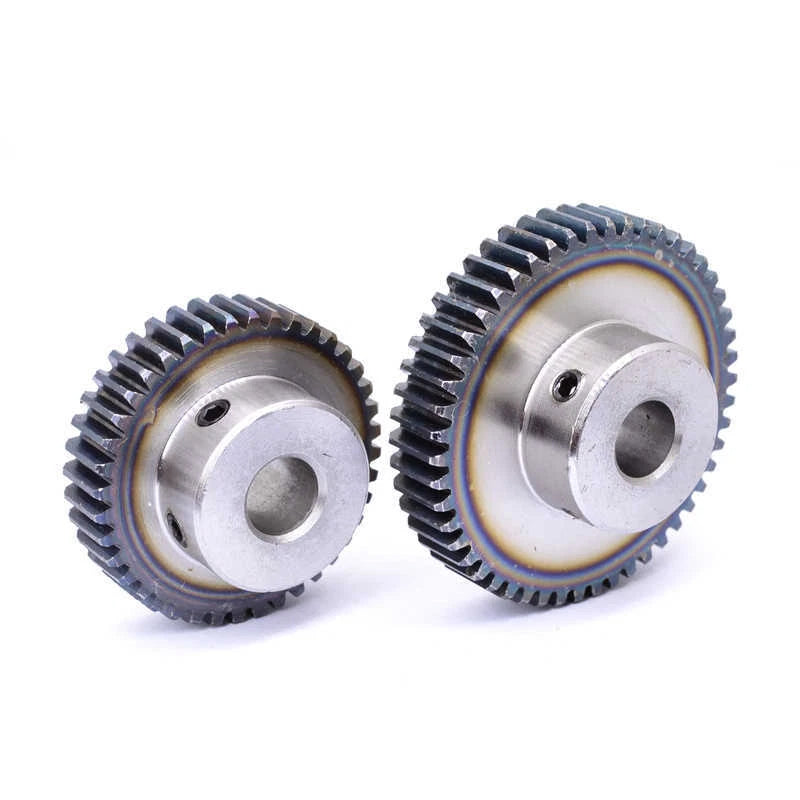
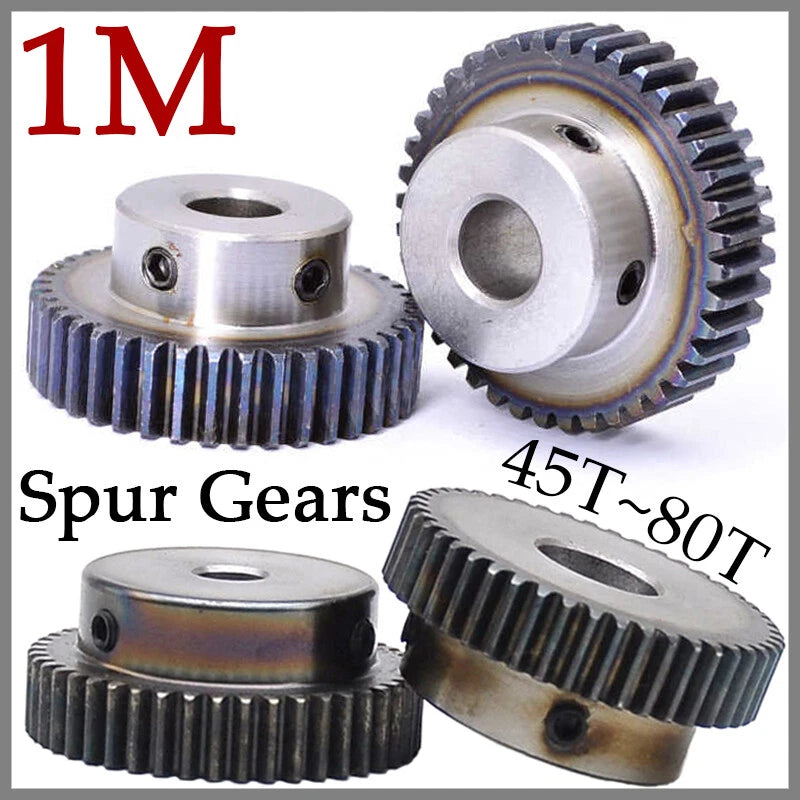
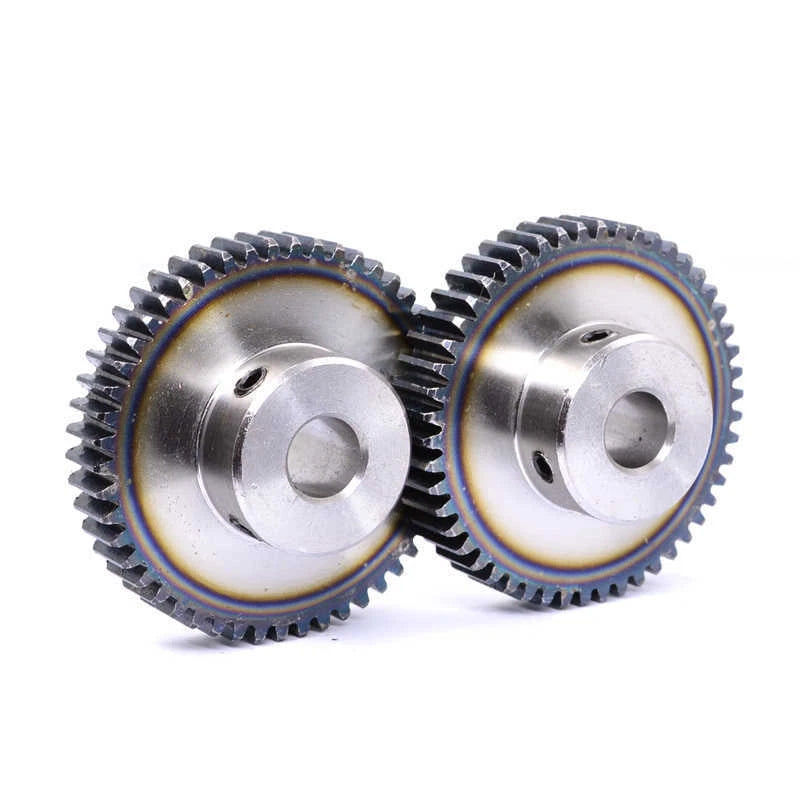
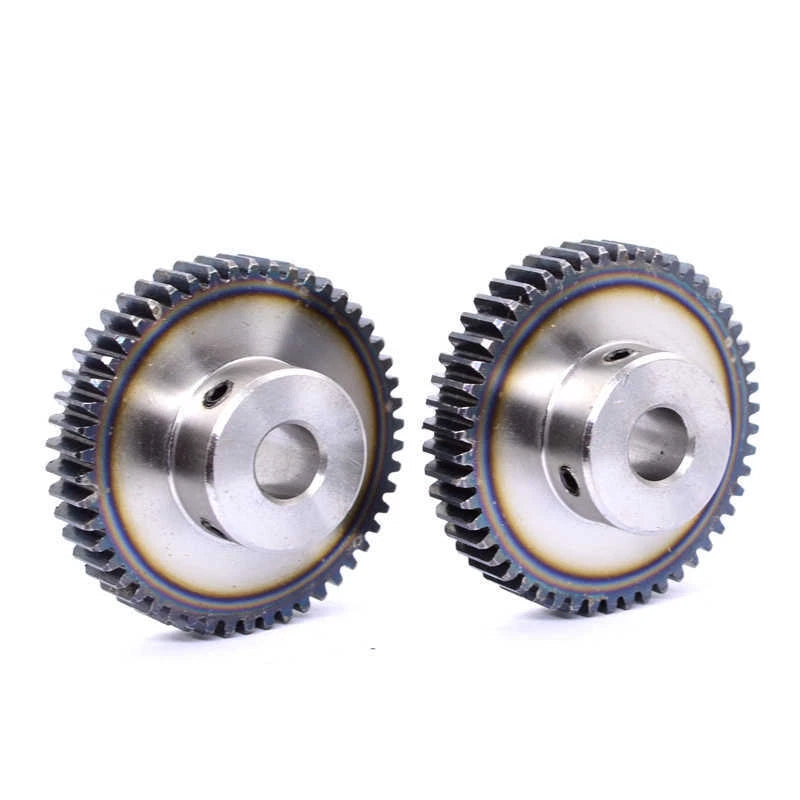
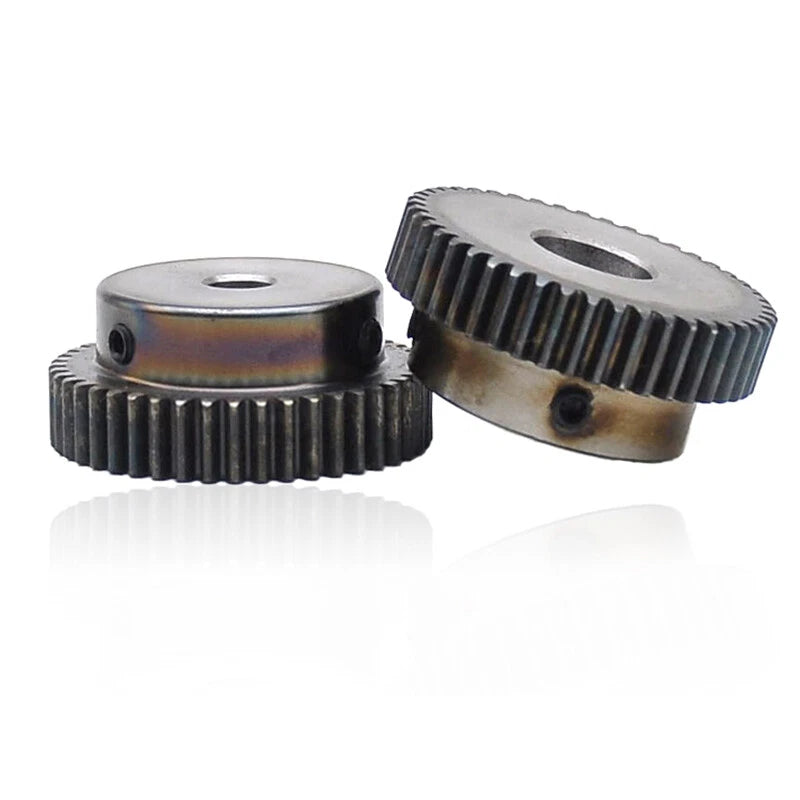
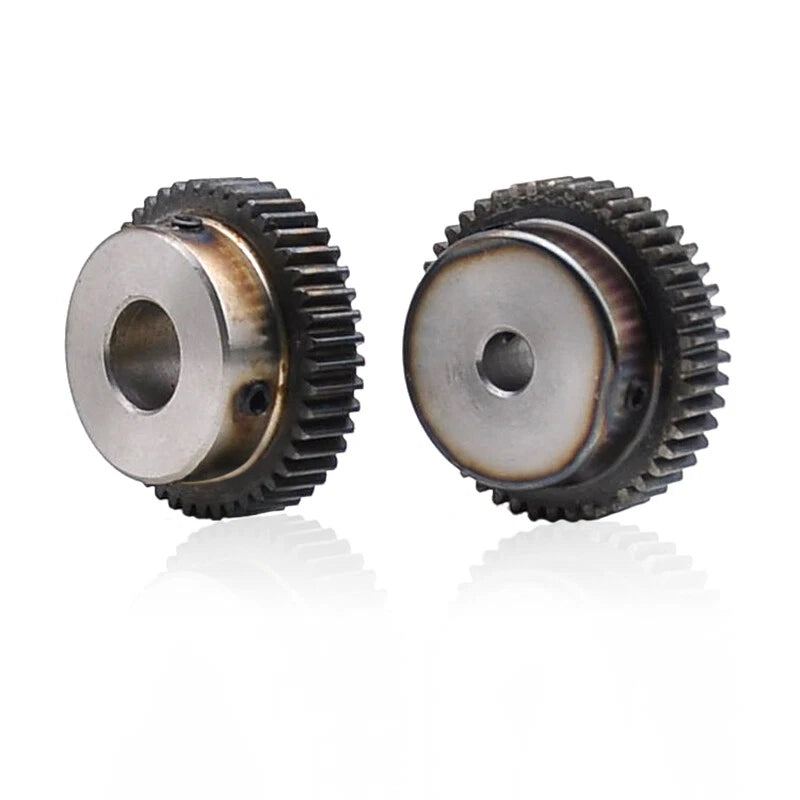
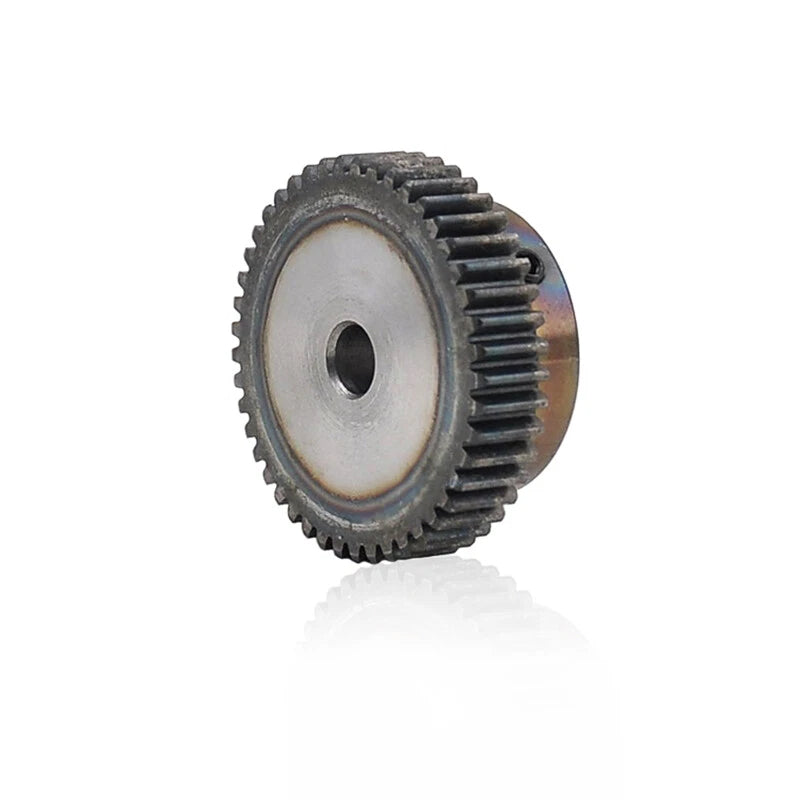
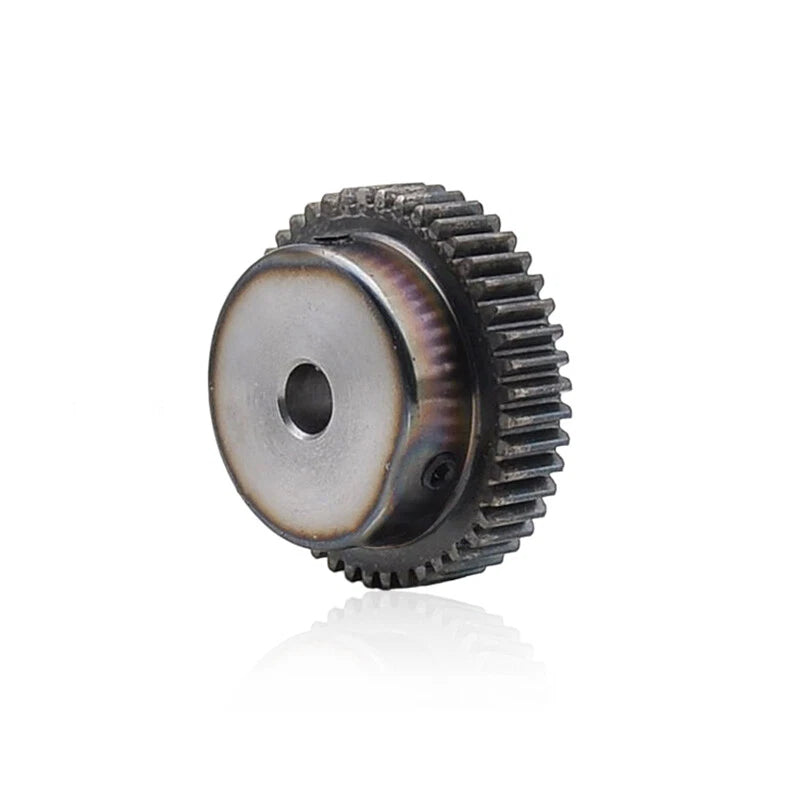
Spur Gears 1 Mod Transmission Gear With Step 45# Steel Pinion Motor Gear 45T~80T

No reviews

Price:
Sale price$25.54 USD
Stock:
In stock (500 units), ready to be shipped

Payment & Security

Ach Direct Debit Amazon American Express Apple Pay Bancontact BLIK Diners Club Discover EPS Google Pay iDEAL Wero JCB Maestro Mastercard Multibanco MobilePay PayPal Przelewy24 Shop Pay Twint Union Pay USDC Visa

Your payment information is processed securely. We do not store credit card details nor have access to your credit card information.

Limited Offer — Spend More, Save More
Spend $55+
Save $5
Spend $100+
Save $10
Spend $200+
Save $25
HomeDIYer DIY Expert Support

DIY Expert Support

Get fitment advice & recommendations

Mon–Fri  8:30 AM – 8:00 PM
24-Hour Fast Ship
Arrives in 3–14 Days
Worldwide Shipping
30-Day Returns
1 tree planted with every purchase

Description

1 Mod Spur Gears 45T–80T — Precision 45# Steel Pinion Gears for DIY Automation

When your motor shaft needs a reliable gear mate and slop or backlash is not an option, finding the right module-1 spur gear in the exact bore size can be a real bottleneck for makers, robotics builders, and small-workshop machinists. These 1 Mod transmission spur gears are engineered for builders who need a broad tooth-count range — from compact 45T pinions up to heavy 80T gears — all in a single consistent product family.

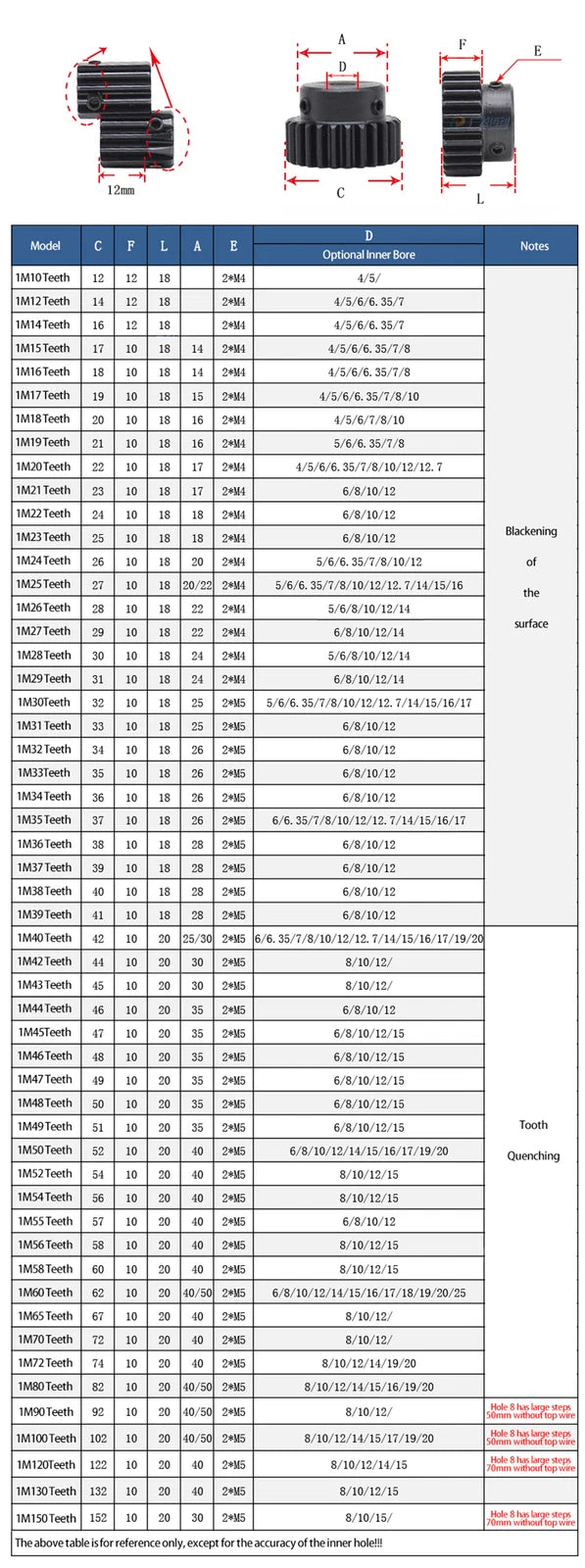
Each gear is machined from 45# medium-carbon steel, offering a good balance of strength and machinability. The module is 1M (1 mm per tooth), with tooth counts spanning 45T to 80T. Bore diameters range from 6 mm (≈0.24 in) to 30 mm (≈1.18 in), and many variants include a precision keyway slot (e.g., 3×1.4 mm, 4×1.8 mm, 5×2.3 mm, or 6×2.8 mm, or 8×3.3 mm) to lock the gear firmly onto a keyed shaft. Step-bore variants (e.g., Step 40 mm or Step 50 mm) are also available for specific 80T configurations.

Typical use cases include DIY CNC router axis drives, 3D-printer extruder gear trains, small conveyor reduction stages, robotics joint actuators, and educational automation lab rigs where a standard 1M pitch is specified. Long-tail search terms this product covers: 1 module steel spur gear with keyway, 45 tooth pinion gear 1M bore 14mm, 80T spur gear 25mm bore keyed, medium-carbon steel transmission gear DIY.

⚙️ Compatibility: Designed for 1M (Module 1) gear systems. Meshes with any standard 1M rack, pinion, or mating spur gear. Verify bore diameter and keyway dimensions match your shaft before ordering.

✅ Key Features of These 1 Mod Spur Gears

🔩
45# Medium-Carbon Steel Construction

Machined from 45# steel for solid load-bearing capacity and resistance to deformation under moderate torque loads in automation and drive applications.

📐
Wide Tooth-Count Range: 45T to 80T

A single product family covers 45T, 46T, 47T, 48T, 49T, 50T, 52T, 54T, 55T, 56T, 58T, 60T, 62T, 65T, 70T, 72T, and 80T — reducing the need to source from multiple suppliers.

🕳️
Multiple Bore Sizes: 6 mm to 30 mm

Plain bore and keyed bore options span 6 mm through 30 mm (≈0.24–1.18 in), covering the most common motor and shaft diameters used in DIY and light-industrial builds.

🔑
Precision Keyway Options

Available with DIN-standard keyway slots (3×1.4 mm, 4×1.8 mm, 5×2.3 mm, 6×2.8 mm, 8×3.3 mm) for positive torque transmission without set-screw slippage.

📏
Step-Bore Variants for Shaft Alignment

Select 48T and 80T variants include a machined step bore (Step 40 mm or Step 50 mm) to simplify axial positioning on stepped shafts without additional spacers.

🔄
Standard 1M Pitch — Universal Mesh Compatibility

Module 1 is one of the most widely used metric gear standards, ensuring these gears mesh directly with any 1M rack, worm wheel, or mating spur gear in your drivetrain.

📐 Technical Specifications — 1 Mod Spur Gears

Module 1M (1 mm/tooth)
Tooth Count Range 45T – 80T (see variant options)
Material 45# Medium-Carbon Steel
Bore Diameter Range 6 mm – 30 mm (≈0.24 – 1.18 in)
Keyway Options Plain bore / 3×1.4 mm / 4×1.8 mm / 5×2.3 mm / 6×2.8 mm / 8×3.3 mm
Step Bore Step 40 mm or Step 50 mm (select 48T & 80T variants)
Pressure Angle See variant options
Face Width See variant options
Surface Finish See variant options
Weight See variant options

❓ Frequently Asked Questions

How do I choose the right tooth count for my application?

The gear ratio between two meshing gears equals the ratio of their tooth counts. For example, pairing a 45T gear with a 90T gear gives a 2:1 reduction. Choose a tooth count that achieves your target speed or torque ratio when combined with your motor pinion or mating gear. A higher tooth count on the driven gear means more torque and lower output speed.

What bore size should I order for my motor shaft?

Measure your motor or gearbox output shaft diameter with a caliper. Select the bore size that matches — for example, a 14 mm shaft needs the "Bore 14mm" variant. If your shaft has a keyway, also match the keyway dimensions (e.g., 5×2.3 mm) to ensure a secure, slip-free fit.

What is the difference between a plain bore and a keyed bore variant?

A plain bore is a smooth cylindrical hole — typically secured with a set screw or press fit. A keyed bore includes a precision-cut slot that accepts a standard key (e.g., 4×1.8 mm), locking the gear rotationally to the shaft for positive torque transmission. Keyed variants are recommended for higher-torque or reversing-load applications where set-screw retention alone may slip.

Are these gears compatible with standard 1M racks and pinions?

Yes. All gears in this listing are Module 1 (1M), which is a globally standardized metric pitch. They will mesh correctly with any other 1M spur gear, rack, or compatible component regardless of brand, as long as the pressure angle also matches (typically 20° for standard 1M gears — confirm with your system specs).

How strong are 45# steel gears for my torque requirements?

45# medium-carbon steel has a tensile strength typically in the range of 600–800 MPa in the normalized condition, making it suitable for moderate-duty automation, robotics, and light-industrial drives. For very high-cycle or shock-load applications, consider whether a heat-treated or alloy-steel gear would be more appropriate. Exact load ratings depend on tooth count, face width, and operating conditions.

What does the "Step" bore designation mean (e.g., Step 40mm or Step 50mm)?

A step bore means the gear hub has a two-diameter bore: a smaller inner bore for the shaft and a larger counterbore (the "step") that provides a shoulder for axial positioning. The step dimension (40 mm or 50 mm) refers to the depth or outer diameter of this counterbore. This design simplifies assembly on stepped shafts and eliminates the need for separate spacers or collars.

Can I use these gears outdoors or in wet environments?

45# carbon steel is not inherently corrosion-resistant. For outdoor or humid environments, apply a suitable lubricant or protective coating (e.g., grease, oil, or anti-rust spray) and consider periodic maintenance. For consistently wet or corrosive conditions, a stainless-steel or plastic gear may be a better long-term choice.

🛒 Select your tooth count and bore size above, then add to cart.

You may also like

Recently viewed