Stainless Steel Wire Rope Metal Cable Rigging PVC Plastic COATED 0.8,1,2,3,4,6mm

No reviews

Price:
Sale price$2.43 USD
Stock:
In stock (500 units), ready to be shipped

Payment & Security

Ach Direct Debit Amazon American Express Apple Pay Bancontact Diners Club Discover Google Pay iDEAL Wero Mastercard PayPal Shop Pay USDC Visa

Your payment information is processed securely. We do not store credit card details nor have access to your credit card information.

Quantity Discount Promotion
🎯 BULK DISCOUNT: Buy More, Save More!
Buy 2 Items
5% OFF
Buy 4 Items
10% OFF
Buy 6 Items
15% OFF
Expert

DIY Expert Support

Get fitment advice & recommendations

Mon-Fri, 8:30AM-8PM
24-Hour Fast Ship
🚚
Arrives in 3-14 days
🌍
Global Reach
↩️
30-Day Returns
🌱 1 tree planted with every purchase

Description

PVC Coated Stainless Steel Wire Rope — Corrosion-Resistant Cable for Decking, Balustrades & Rigging

When exposed cable corrodes, frays, or snaps under load, the consequences range from a ruined deck railing to a genuine safety hazard. Homeowners, contractors, and marine enthusiasts who need a cable that holds up in wet, salty, or high-UV environments reach for PVC coated stainless steel wire rope — a combination that delivers the tensile strength of steel with a protective polymer skin that resists abrasion, moisture, and UV degradation.

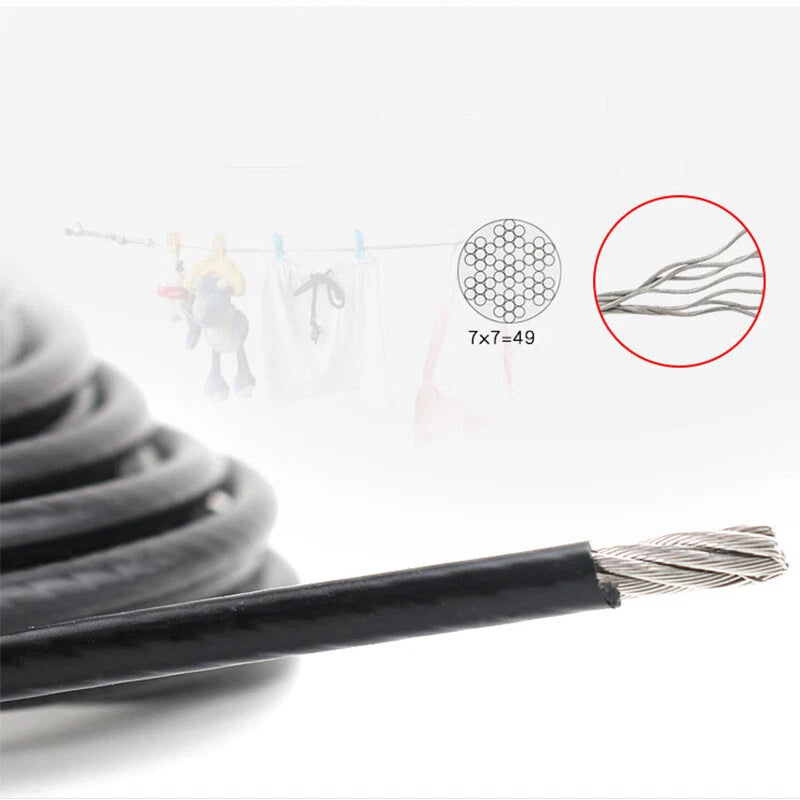
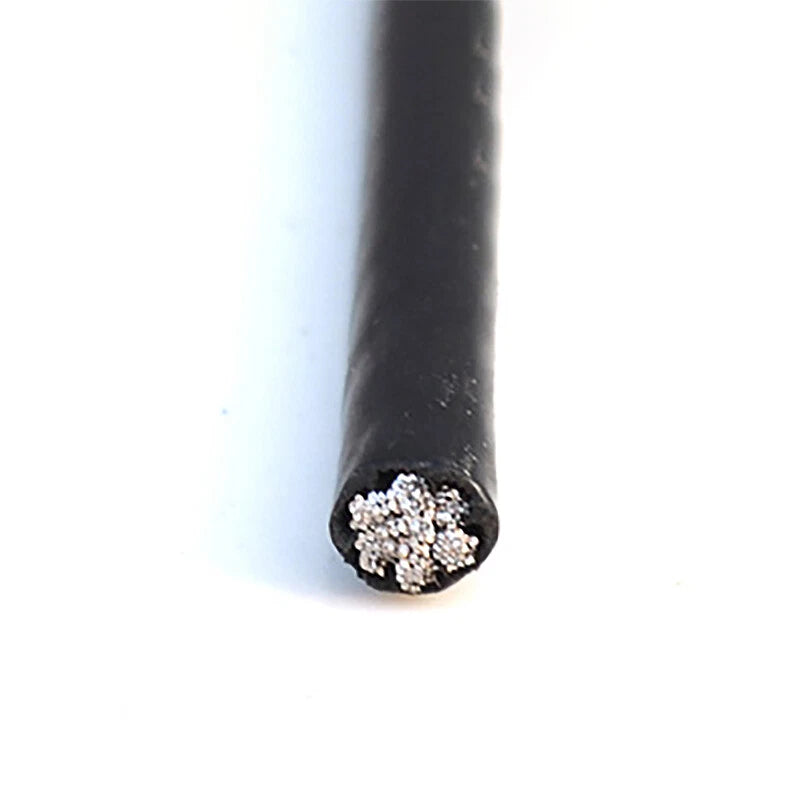
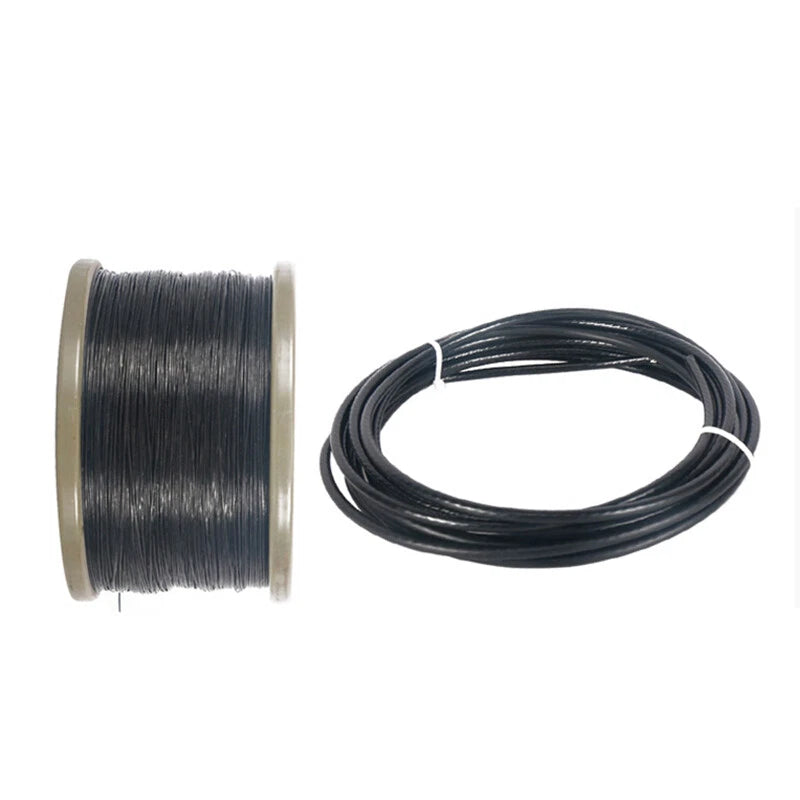
Each reel is constructed from A2 304 stainless steel strands twisted into either a 7×7 or 7×19 configuration and then sheathed in a clear or metallic-finish PVC jacket. Available diameters run from 1 mm (0.04 in) up to 6 mm (0.24 in), with cut lengths from 1 m to 100 m, so you can order exactly what the job requires without waste. The PVC coating adds typically 0.3–0.5 mm to the overall diameter depending on the variant selected.

Typical applications include stainless steel wire rope for deck balustrade infill panels, tensioned cable railing systems on staircases, garden trellis and plant support wires, marine rigging and mooring lines, and overhead catenary runs for outdoor lighting or signage. The 7×19 strand construction on the 6 mm size provides extra flexibility for sheave-based rigging, while the 7×7 sizes suit straight tensioned runs where rigidity is an advantage.

⚙️ Compatibility: Fits standard swage terminals, jaw-and-jaw turnbuckles, wire rope grips, and ferrule sleeves sized to match the selected cable diameter. Always verify terminal bore diameter against your chosen variant before ordering.

✅ Key Features of These PVC Coated Stainless Steel Wire Ropes

  • 🔩 A2 304 Stainless Steel Core — Marine-grade alloy resists rust and pitting in coastal, poolside, and outdoor environments without surface treatment.
  • 🛡️ PVC Protective Sheath — The polymer coating guards against abrasion, UV exposure, and moisture ingress, extending service life compared to bare wire rope.
  • 📐 Multiple Strand Constructions — 7×7 configuration for straight tensioned runs (1–5 mm); 7×19 for the 6 mm size where flexibility around pulleys or sheaves is needed.
  • 📏 Wide Diameter & Length Range — Eight diameter options from 1 mm to 6 mm and cut lengths from 1 m to 100 m let you match the cable precisely to load requirements and span.
  • 🎨 Metallic Finish Appearance — The clear-tinted PVC jacket preserves the silver-metallic look of the steel core, keeping balustrades and railings visually clean.
  • ✂️ Cut-to-Length Convenience — Order the exact meter count you need; no minimum reel purchase, reducing offcut waste on smaller DIY or renovation projects.

📐 Technical Specifications — PVC Coated Wire Rope

Material A2 304 Stainless Steel with PVC coating
Strand Construction 7×7 (1–5 mm diameters); 7×19 (6 mm diameter)
Available Diameters 1 mm, 1.2 mm, 1.5 mm, 2 mm, 3 mm, 4 mm, 5 mm, 6 mm
Available Lengths 1 m – 100 m (see variant options)
Finish / Colour Metallic silver (PVC-jacketed)
Coating Feature Insulated / UV-resistant PVC sheath
Minimum Breaking Load See variant options
Working Load Limit See variant options
Condition New

❓ Frequently Asked Questions

Which diameter should I choose for a deck cable railing system?

For residential deck balustrades with post spans up to 1.8 m (6 ft), 3 mm or 4 mm wire rope is the most common choice. It provides sufficient tensile strength to meet typical code deflection limits while remaining easy to tension with standard jaw-and-jaw turnbuckles. For longer spans or commercial applications, step up to 5 mm or 6 mm and verify the working load limit against your engineer's specification.

What is the difference between 7×7 and 7×19 strand construction?

A 7×7 rope has 7 bundles of 7 individual wires (49 wires total). It is stiffer and better suited to straight tensioned runs such as balustrade infill or trellis wires. A 7×19 rope has 7 bundles of 19 wires (133 wires total), making it significantly more flexible — ideal for applications that involve bending around sheaves, pulleys, or tight radius terminations. The 6 mm variant in this listing uses 7×19 construction for that reason.

Is A2 304 stainless steel suitable for marine or coastal environments?

A2 304 stainless steel performs well in most outdoor and light marine environments. It resists general atmospheric corrosion and occasional salt spray. For continuous immersion in seawater or highly aggressive coastal conditions (within ~500 m of breaking surf), A4 316 stainless steel is the preferred grade. If your project is in a moderate coastal zone, 304 with the PVC coating provides a practical and cost-effective solution.

Can I cut the wire rope myself, and what tool should I use?

Yes. Wire rope up to 3 mm can be cut cleanly with quality diagonal cutting pliers or cable cutters. For 4 mm and above, use dedicated wire rope cutters or an angle grinder with a cutting disc. To prevent the cut end from fraying, apply a small amount of heat-shrink tubing or a ferrule sleeve immediately after cutting. Avoid standard bolt cutters, which tend to crush and deform the strands rather than shearing cleanly.

What termination hardware is compatible with this wire rope?

This wire rope is compatible with swage terminals (requiring a swaging tool or press), ferrule-and-stop sleeves (crimped with a hand tool), wire rope grips (bulldog clips), and threaded jaw-and-jaw or eye-and-jaw turnbuckles. Always match the hardware bore or jaw opening to the exact cable diameter you select. For example, a 3 mm cable requires 3 mm-rated ferrules and terminals — do not mix sizes.

How do I calculate how much wire rope I need for my project?

Measure the total run length between anchor points, then add approximately 150–200 mm (6–8 in) per end for termination tails. Multiply by the number of cable runs (e.g., a balustrade with 10 horizontal cables needs 10× the single-run length). Add 5–10% as a cutting allowance. Round up to the next available length option in the variant selector to avoid being short. For complex layouts with angles or curves, sketch the run and measure each segment individually.

Does the PVC coating affect the tensile strength of the wire rope?

The PVC sheath is a protective outer layer only and does not contribute to — or meaningfully reduce — the tensile strength of the steel core. Breaking load and working load limit figures are determined by the steel strand construction and diameter. The coating's role is to protect the steel from abrasion, moisture, and UV, which preserves the rope's rated strength over its service life rather than diminishing it.

🛒 Select your Diameter and Length above, then add to cart.

You may also like

Recently viewed