The chain is fine...but I ordered the wrong size. Nine links of the chain I ordered equals six of the size I wanted. My error...
How can I straighten out the springs? I can't use them coil uo as is.
Your payment information is processed securely. We do not store credit card details nor have access to your credit card information.
Get fitment advice & recommendations
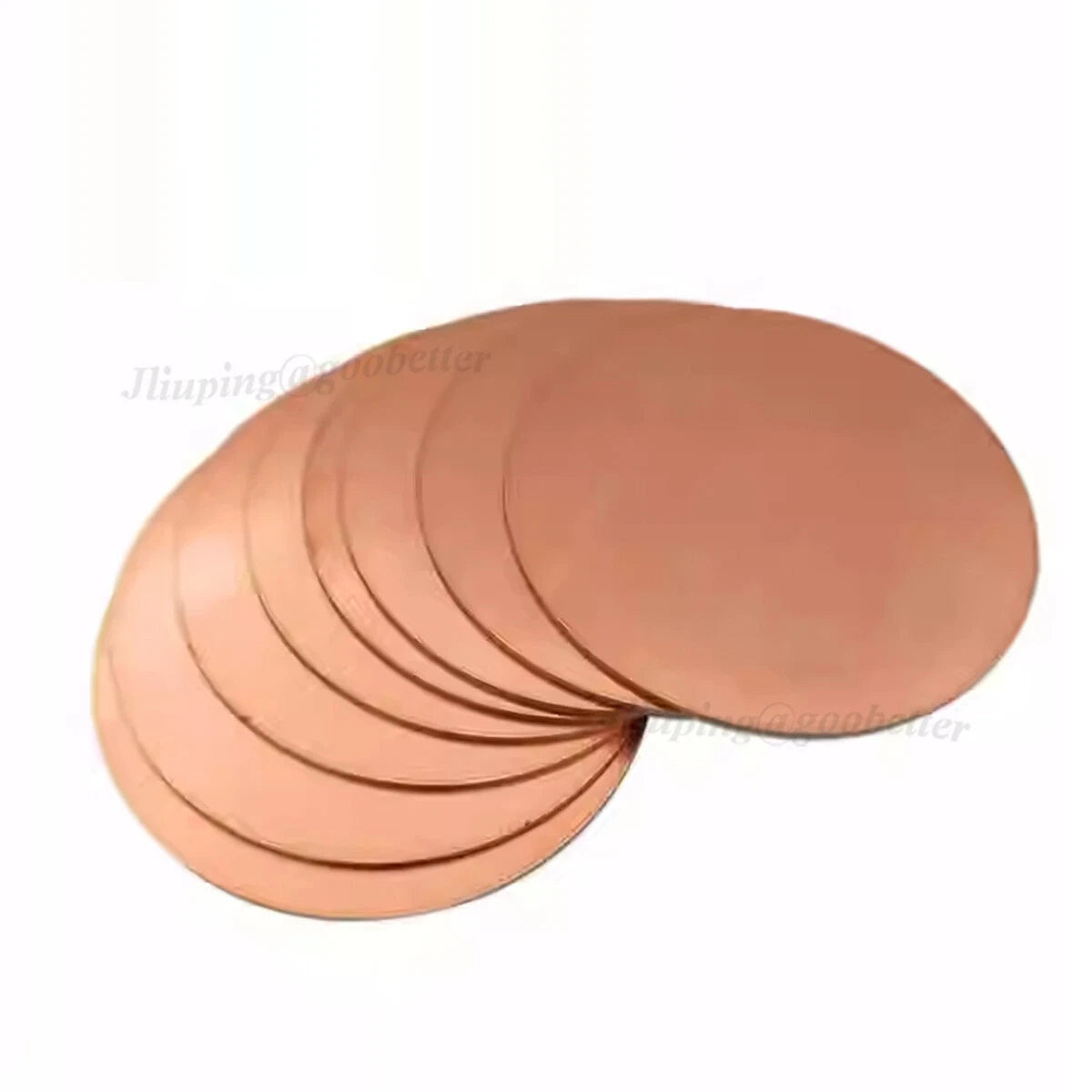
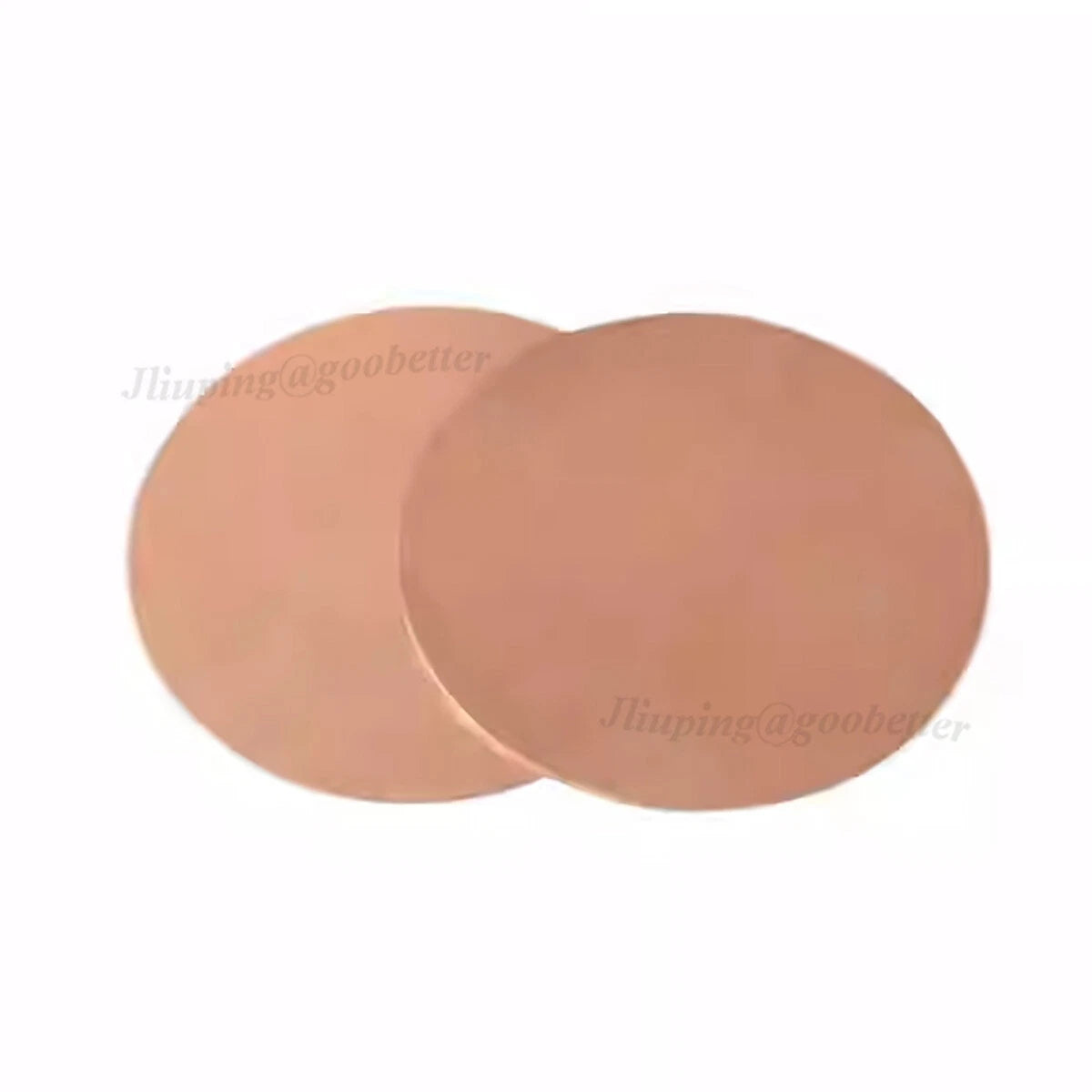
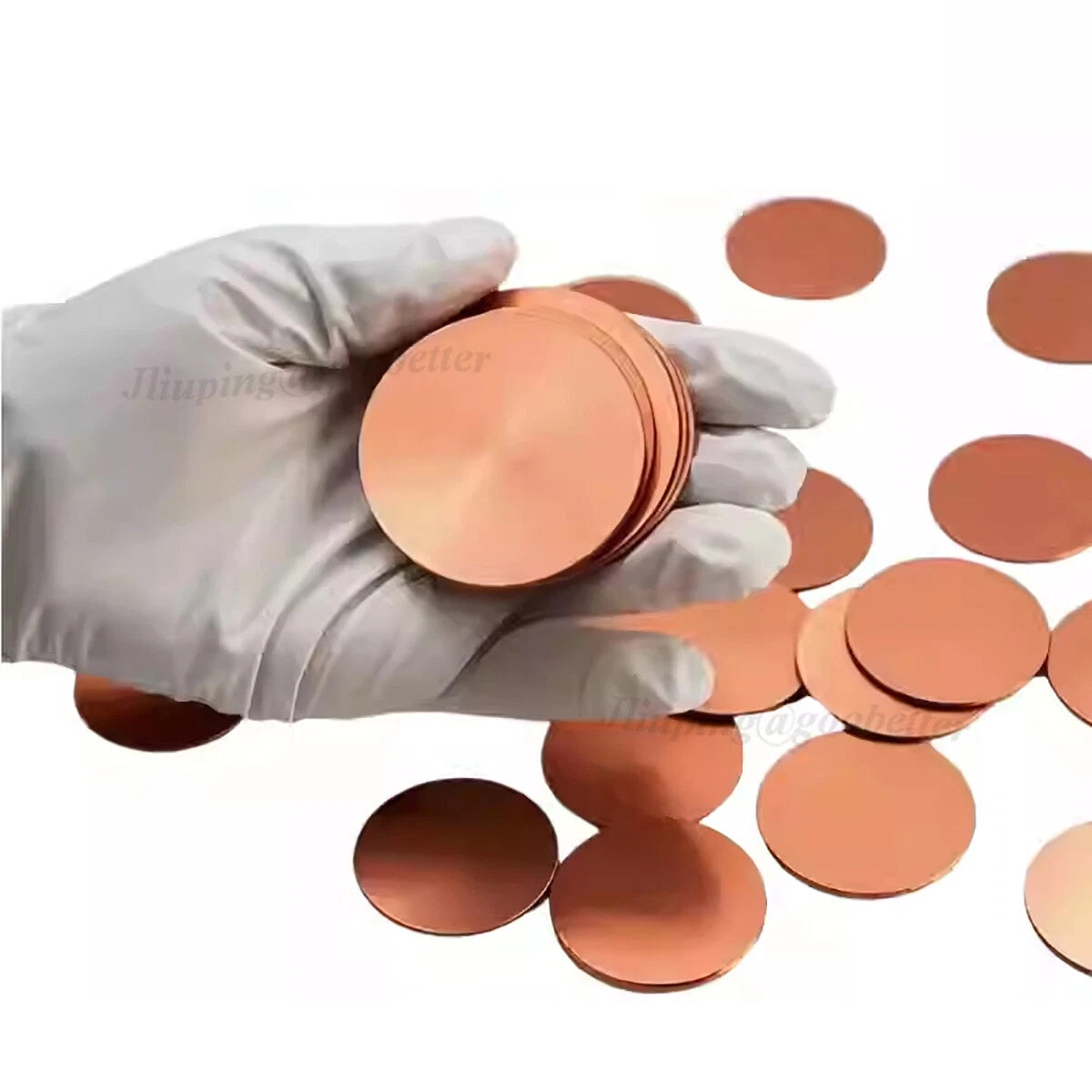
When your project demands a reliable, conductive metal blank and you cannot afford dimensional inconsistency, a poorly cut disc wastes both time and material. Makers, electricians, jewelers, and workshop hobbyists who need repeatable round copper stock will find these T2 copper discs a dependable starting point for a wide range of fabrication tasks.
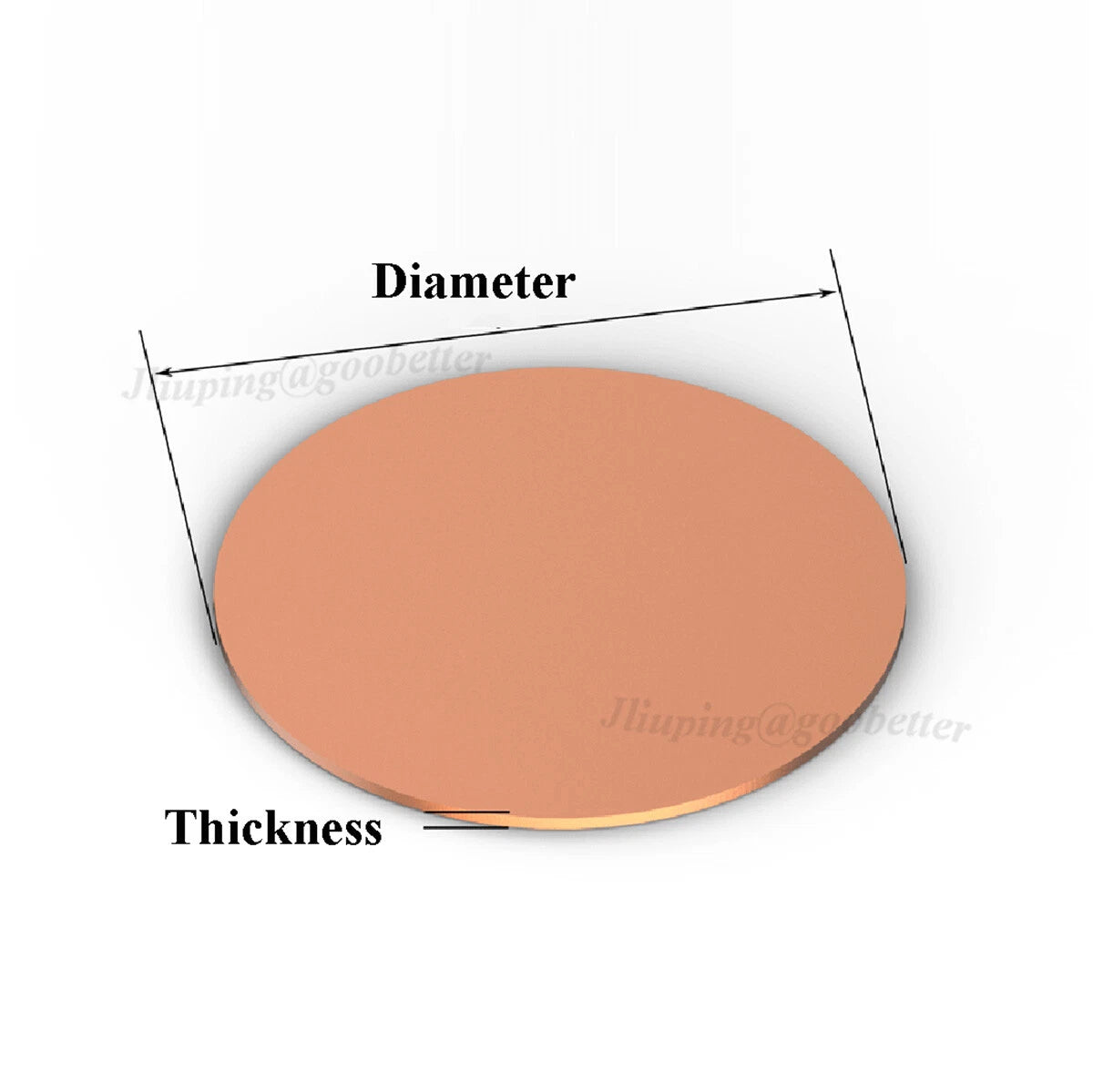
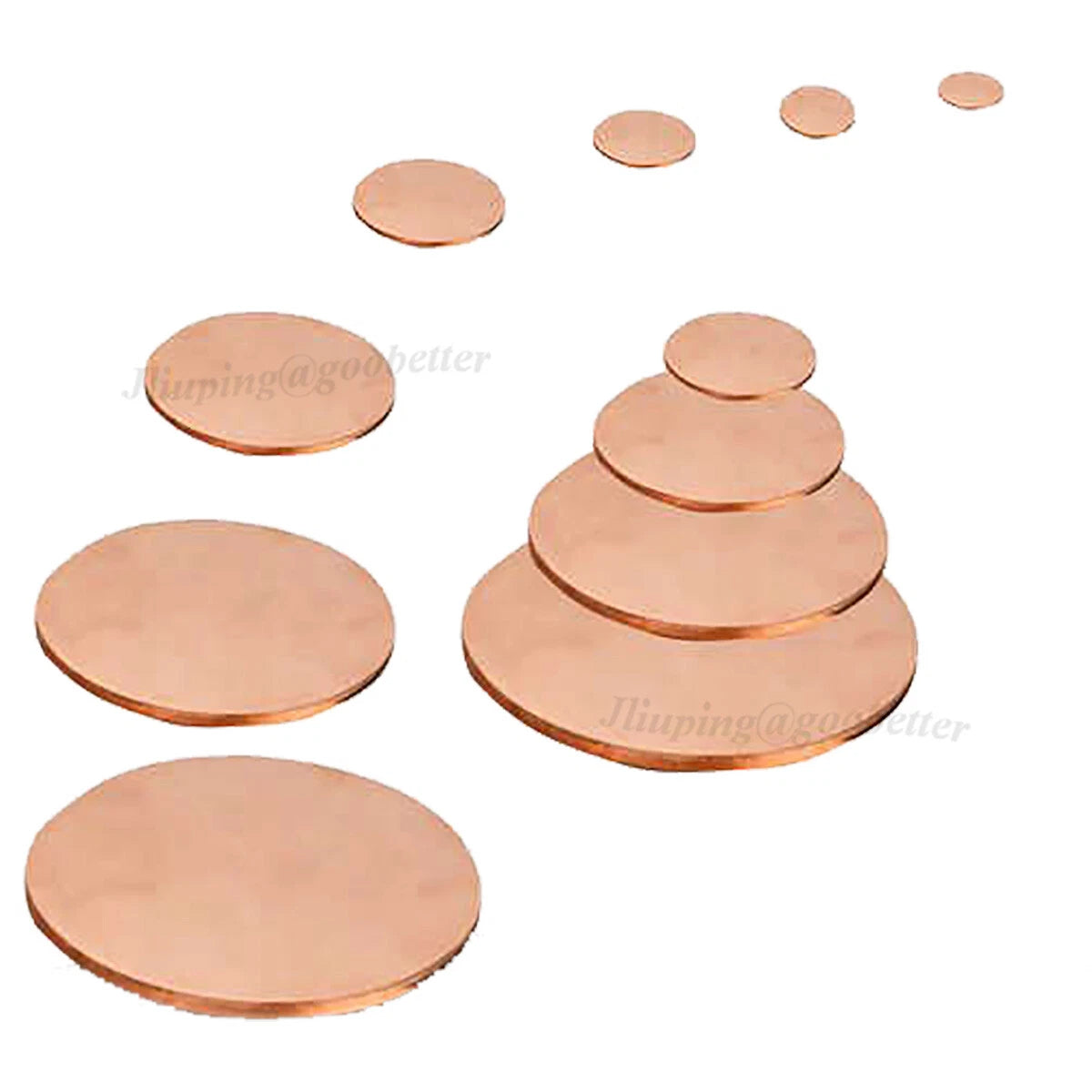
Each disc is cut from T2 (C11000-equivalent) pure copper sheet, offering electrical conductivity typically above 99.9% IACS. Diameter options span 10 mm (approx. 0.39 in) to 100 mm (approx. 3.94 in), and thickness choices run from 0.3 mm (approx. 0.012 in) up to 6 mm (approx. 0.236 in), covering both thin shim-stock applications and heavier structural blanks. Edges are sheared or punched to a consistent round profile ready for further finishing.
Typical use cases include copper electrode blanks for EDM and spot-welding fixtures, decorative disc pendants and stamping blanks for jewelry making, heat-spreader shims in electronics cooling assemblies, and custom gasket or washer blanks for plumbing and HVAC repair work.
| Material | T2 Pure Copper (≥99.9% Cu) |
|---|---|
| Shape | Round disc / circular blank |
| Diameter Range | 10 mm – 100 mm (0.39 in – 3.94 in) |
| Thickness Range | 0.3 mm – 6 mm (0.012 in – 0.236 in) |
| Surface Finish | See variant options |
| Temper / Hardness | See variant options |
| Electrical Conductivity | Typically ≥99.9% IACS |
| Thermal Conductivity | Typically ~385 W/(m·K) |
| Packing Quantity | 1 PCS / 2 PCS / 4 PCS (see variant options) |
| Weight per Piece | See variant options (varies by diameter and thickness) |
Select the diameter that matches or slightly exceeds your finished part size so you have material to trim or machine to final dimension. For thickness, thin discs (0.3–0.5 mm) suit shims and decorative stamping; mid-range (0.8–2 mm) work well for gaskets and electrodes; thicker options (3–6 mm) are suited to structural blanks, heat spreaders, and turned parts. When in doubt, order one size up — copper is easy to reduce but cannot be added back.
T2 copper is a designation for high-purity electrolytic copper with a copper content of ≥99.9%. It is broadly equivalent to C11000 (ETP copper) in international standards. Compared to brass or bronze alloys, T2 copper offers significantly higher electrical and thermal conductivity, making it the preferred choice for electrical contacts, heat spreaders, and conductive components. It is softer and more ductile than alloy coppers, which makes it easier to form, stamp, and solder.
Pure copper naturally develops a surface oxide layer (patina) when exposed to air and moisture. This patina is typically a thin brownish or greenish layer that does not significantly affect bulk conductivity in most applications. For applications requiring a bright surface finish, you can clean the disc with a mild acid solution (such as diluted citric acid) or a copper-specific polish before use. For long-term corrosion resistance in harsh environments, consider applying a protective coating or lacquer after fabrication.
Yes. T2 copper is highly solderable and brazeable using standard copper-compatible fluxes and filler materials. Soft soldering with rosin-core or water-soluble flux works well for electronics and plumbing applications. Silver brazing is suitable for higher-temperature joints. Fusion welding of pure copper requires careful heat management due to its high thermal conductivity, so TIG welding with appropriate shielding gas is recommended for structural welds.
T2 copper machines well on CNC lathes and mills using sharp carbide tooling and appropriate cutting speeds — copper's ductility means it can gum up dull tools, so sharp edges and adequate lubrication are important. Laser cutting pure copper is more challenging than cutting steel or aluminum due to copper's high reflectivity at common laser wavelengths; fiber lasers with sufficient power can cut thinner gauges, but thicker discs may require mechanical cutting or waterjet methods. For drilling, standard HSS or cobalt drill bits work effectively with cutting fluid.
The pack quantity options let you match your order to your actual need. Choose 1 PCS if you are prototyping or need a single replacement blank. Select 2 PCS for small-batch projects where you want a spare in case of machining errors. The 4 PCS pack offers the best per-piece value for repetitive tasks such as stamping multiples of the same part or stocking a workshop supply. Note that not all diameter and thickness combinations are available in every pack size — check the variant selector for available options.
These copper discs are supplied as raw blanks ready for further processing. Common secondary operations include: center-drilling and turning on a lathe to create custom washers or bushings; stamping or embossing decorative patterns for jewelry and craft work; chemical etching for PCB prototyping or artistic effects; annealing (heating and quenching) to soften work-hardened material before forming; and surface finishing such as polishing, brushing, or plating to achieve the desired appearance or functional coating.