
The chain is fine...but I ordered the wrong size. Nine links of the chain I ordered equals six of the size I wanted. My error...
How can I straighten out the springs? I can't use them coil uo as is.
Your payment information is processed securely. We do not store credit card details nor have access to your credit card information.
Get fitment advice & recommendations
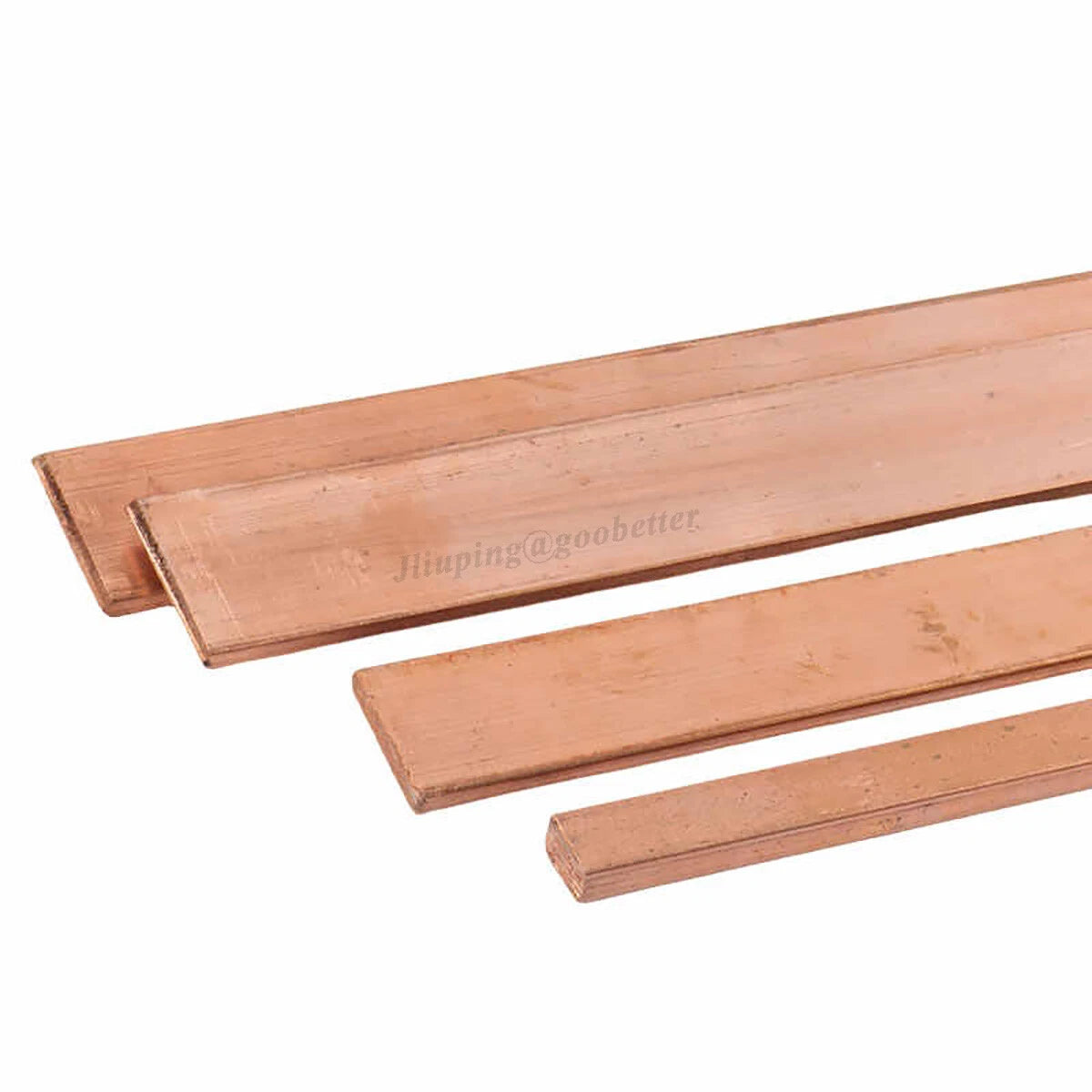
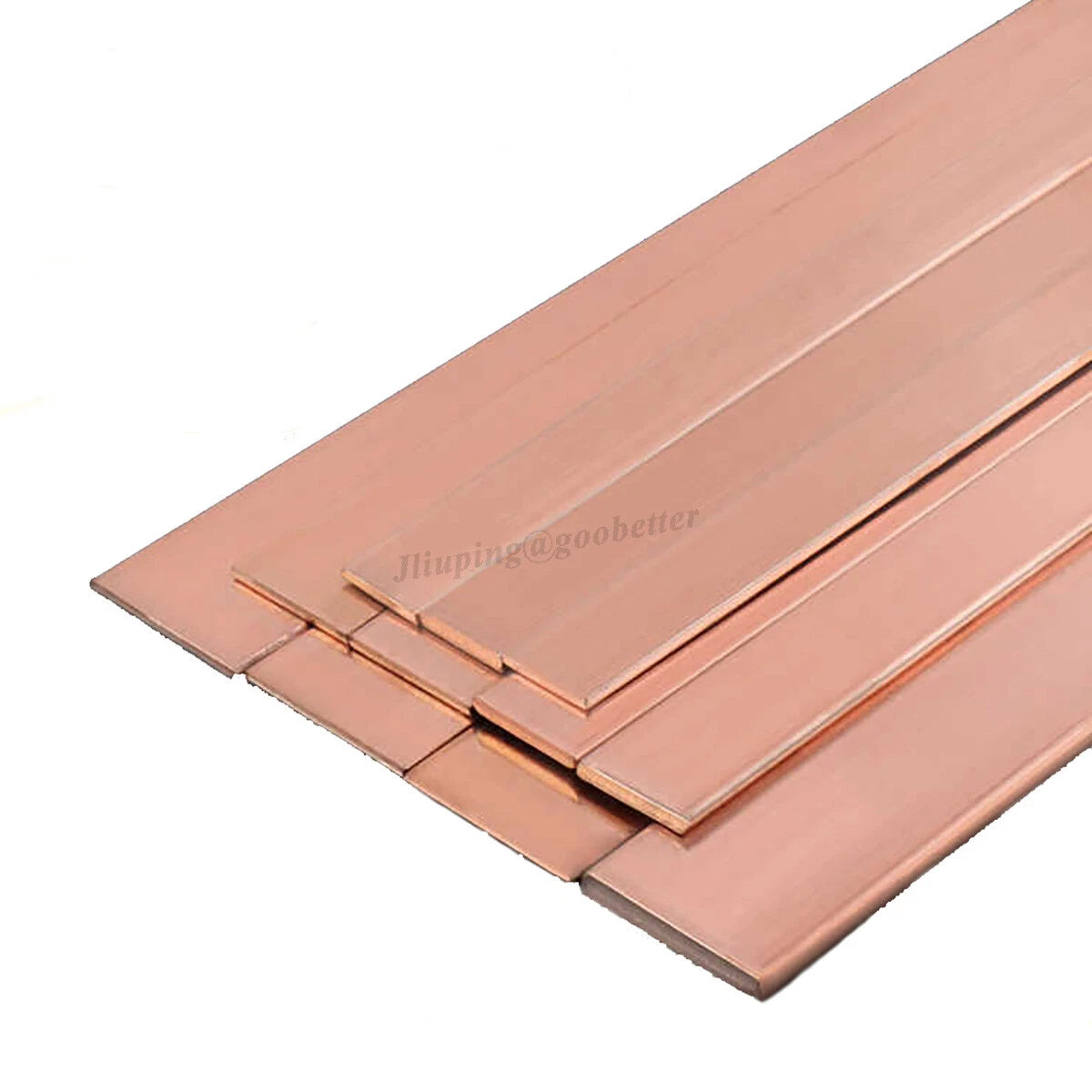
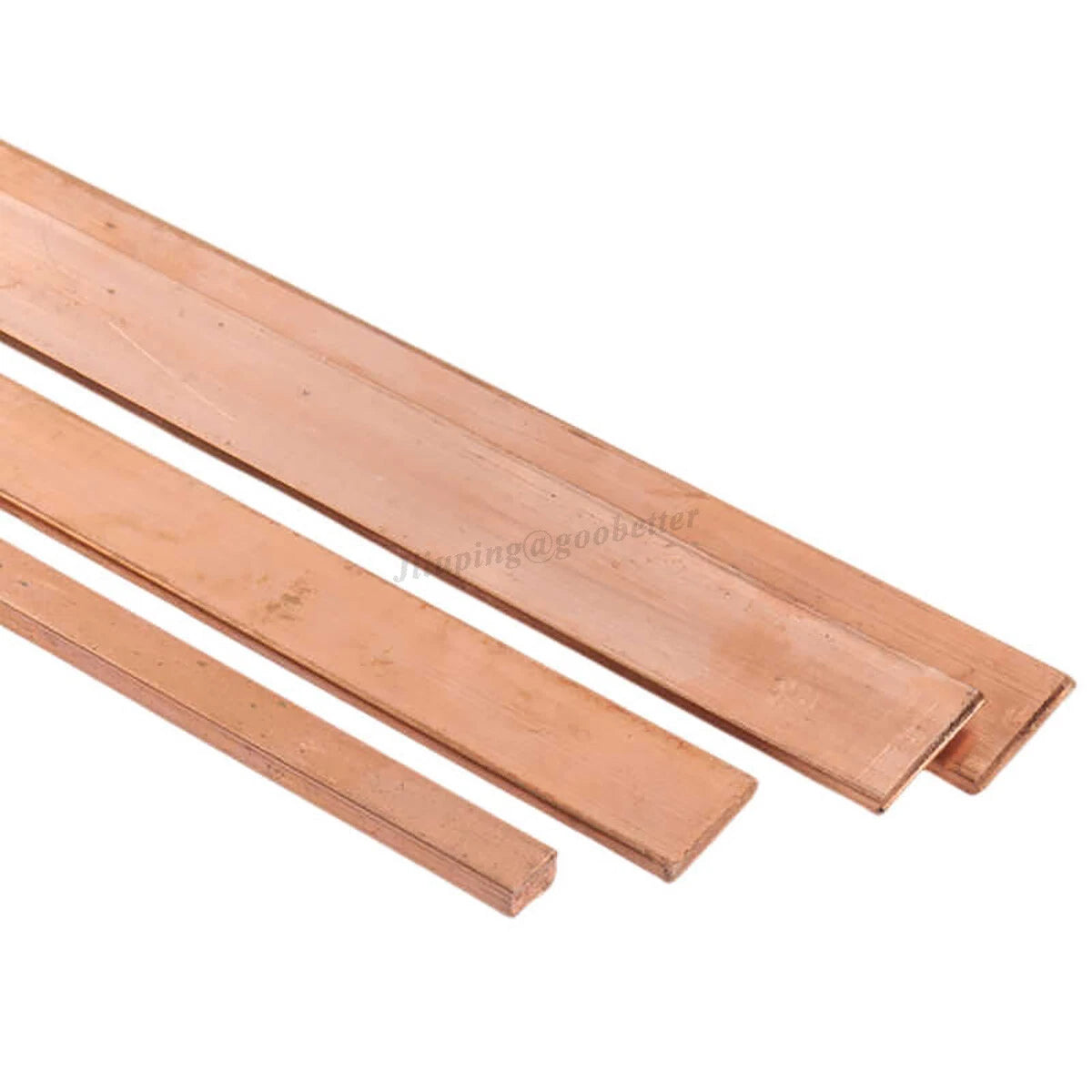
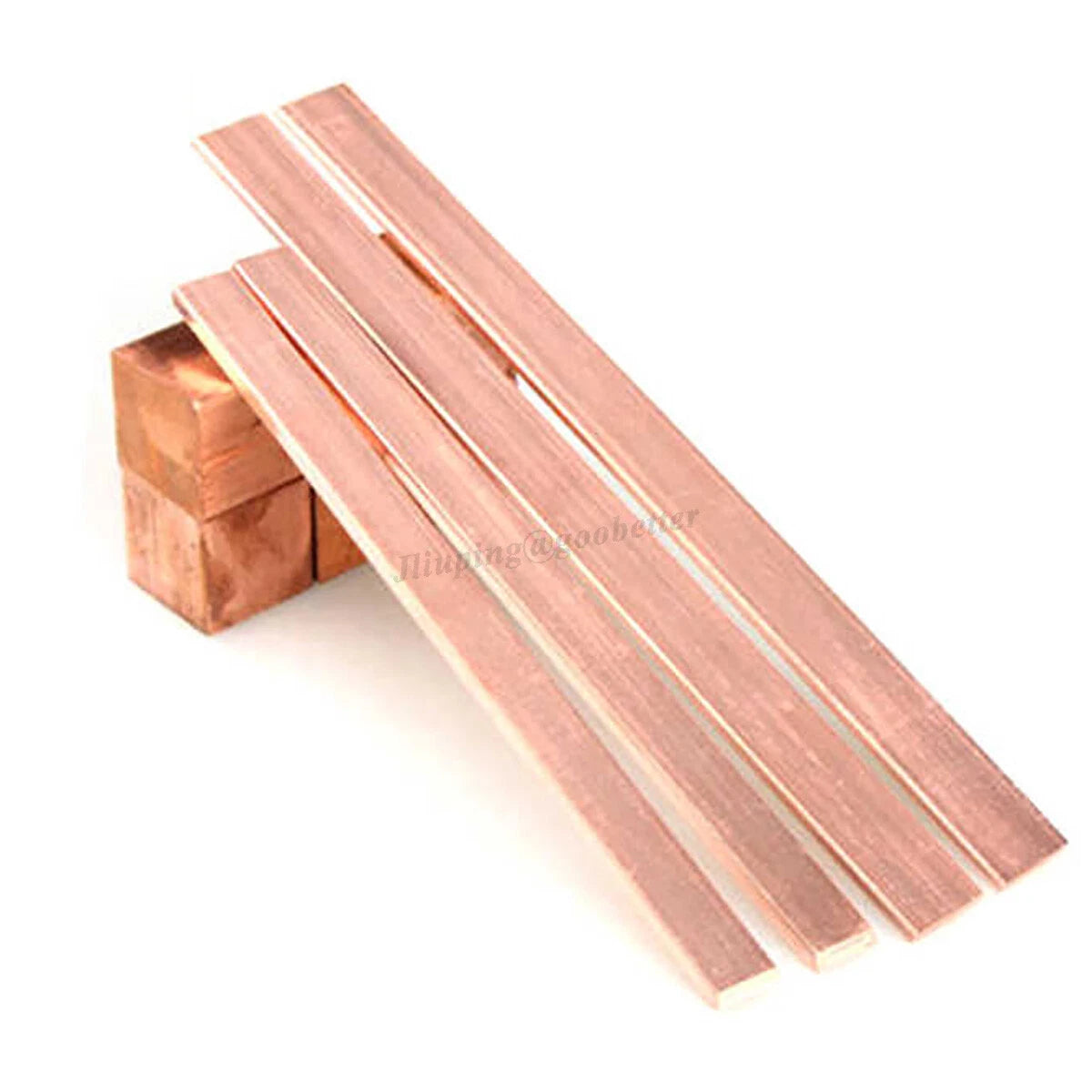
When your project demands a conductor that won't compromise on current capacity or heat transfer, a generic metal bar simply won't do. Makers, electricians, and fabricators who need a reliable, dimensionally consistent copper flat bar turn to T2-grade solid strip — where purity translates directly into performance.
Each piece is machined from T2 copper (≥99.9% Cu), supplied in a fixed 200mm length (approx. 7.87 in). Width options span 10mm to 150mm (approx. 0.39–5.91 in) and thickness options range from 10mm to 35mm (approx. 0.39–1.38 in), giving you a solid, square cross-section strip that can be cut, drilled, bent, or soldered to fit your exact requirement.
Typical use cases include custom busbar fabrication for electrical panels, heat-sink shims and thermal interface blocks in electronics cooling, grounding straps for RF shielding enclosures, and precision blanks for jewelry or craft metalwork where a copper flat bar with tight dimensional tolerances is essential.
| Material Grade | T2 Copper (≥99.9% Cu) |
|---|---|
| Form | Flat Bar / Square Solid Strip / Sheet Plate |
| Fixed Length | 200mm (approx. 7.87 in) |
| Width Options | 10mm, 15mm, 20mm, 25mm, 30mm, 35mm, 40mm, 50mm, 60mm, 80mm, 100mm, 120mm, 150mm |
| Thickness Options | 10mm, 12mm, 15mm, 20mm, 25mm, 30mm, 35mm |
| Cross-Section | Solid (no hollow core) |
| Electrical Conductivity | Approx. 58 MS/m (IACS ~100%) |
| Thermal Conductivity | Approx. 390 W/(m·K) |
| Surface Finish | See variant options |
| Temper | Soft / Annealed (typical for T2 grade) |
| Packing Unit | 1 PCS per order unit |
| Weight per Piece | See variant options (varies by width × thickness) |
For busbars, the cross-sectional area (width × thickness in mm²) determines current-carrying capacity. A common rule of thumb for T2 copper is approximately 1–2 A per mm² for continuous indoor use with adequate ventilation. For example, a 30mm × 10mm bar (300 mm²) can typically handle 300–600 A depending on installation conditions. Always consult your local electrical code and derate for enclosure temperature.
T2 copper is a commercially pure copper grade with a minimum purity of 99.9% Cu. It offers near-maximum electrical and thermal conductivity among copper alloys. Unlike brass (which contains zinc) or bronze (which contains tin), T2 copper contains no significant alloying elements, making it the preferred choice when conductivity — not strength — is the primary requirement.
T2 copper naturally oxidizes when exposed to air and moisture, forming a brownish or greenish patina (cupric oxide / verdigris). In dry indoor environments such as electrical panels or enclosures, oxidation is slow and the oxide layer itself provides some protection. For outdoor or high-humidity applications, consider applying a thin coat of electrical-grade anti-oxidant compound or tin-plating the contact surfaces.
Yes. T2 copper is fully compatible with standard tin-lead and lead-free solders, silver solder, and brazing alloys. Use an appropriate flux (rosin-based for electronics, phosphoric acid flux for plumbing-style brazing) and ensure the surface is clean and free of heavy oxidation before joining. The soft temper of T2 copper also makes it easy to form before soldering.
Yes. T2 copper flat bar is widely used for grounding busbars, earthing straps, and equipotential bonding conductors in electrical installations. Its high conductivity ensures low impedance ground paths. Verify that the cross-sectional area meets the minimum requirements specified by your local wiring regulations (e.g., NEC, IEC 60364) for the fault current level of your system.
Yes. T2 copper in soft/annealed temper machines readily with standard HSS drill bits, hacksaw blades, angle grinders, and milling cutters. Use cutting fluid or light oil to extend tool life and achieve a cleaner finish. For drilling, use a center punch to prevent bit wandering on the smooth copper surface. Deburr cut edges with a file or deburring tool before installation.
The weight of each piece can be estimated using the formula: Weight (kg) = Length (m) × Width (m) × Thickness (m) × 8,960 (density of copper in kg/m³). For example, a 200mm × 30mm × 10mm bar = 0.2 × 0.03 × 0.01 × 8,960 ≈ 0.538 kg. Use this formula to estimate shipping weight when ordering multiple pieces.





