The chain is fine...but I ordered the wrong size. Nine links of the chain I ordered equals six of the size I wanted. My error...
How can I straighten out the springs? I can't use them coil uo as is.
Your payment information is processed securely. We do not store credit card details nor have access to your credit card information.
Get fitment advice & recommendations
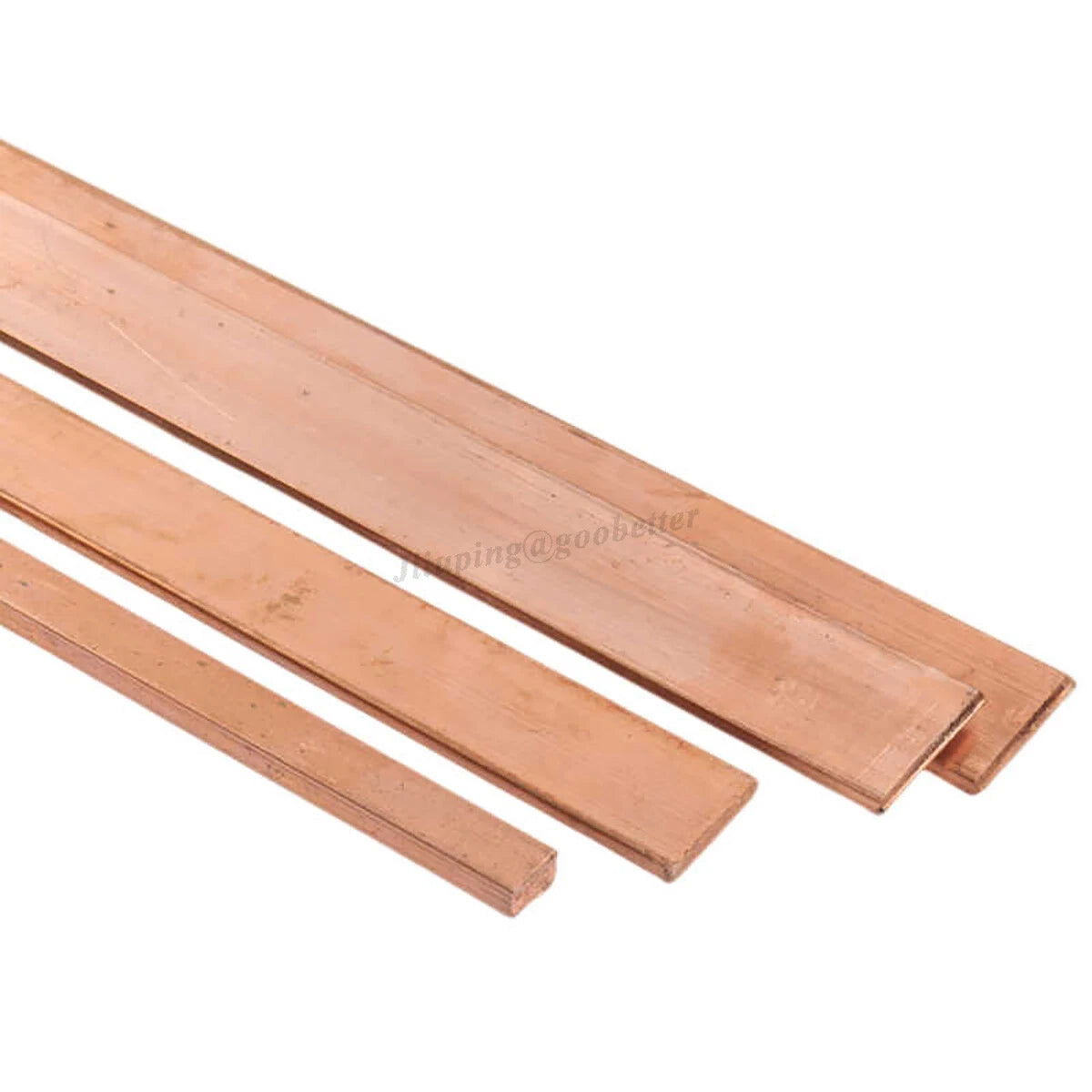
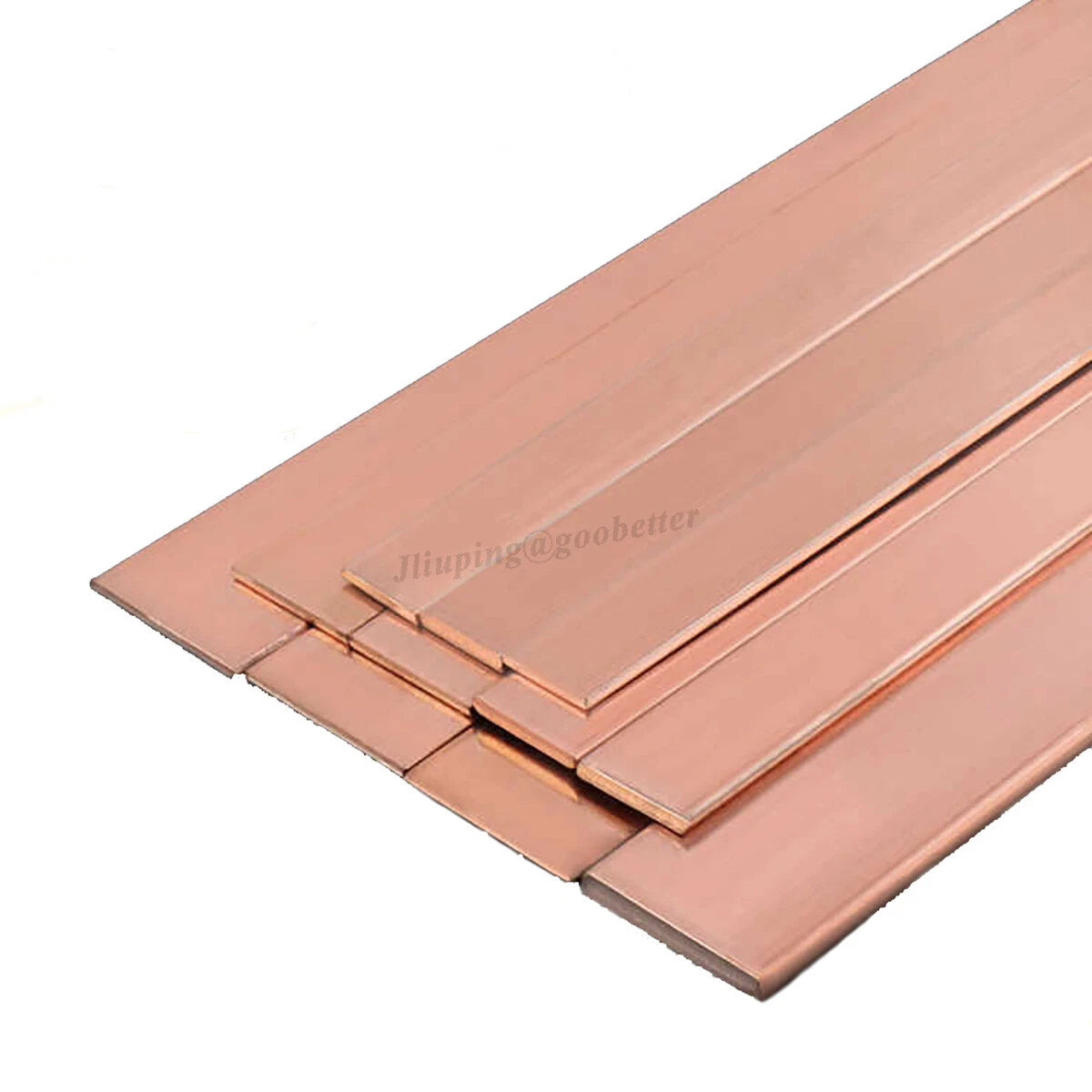
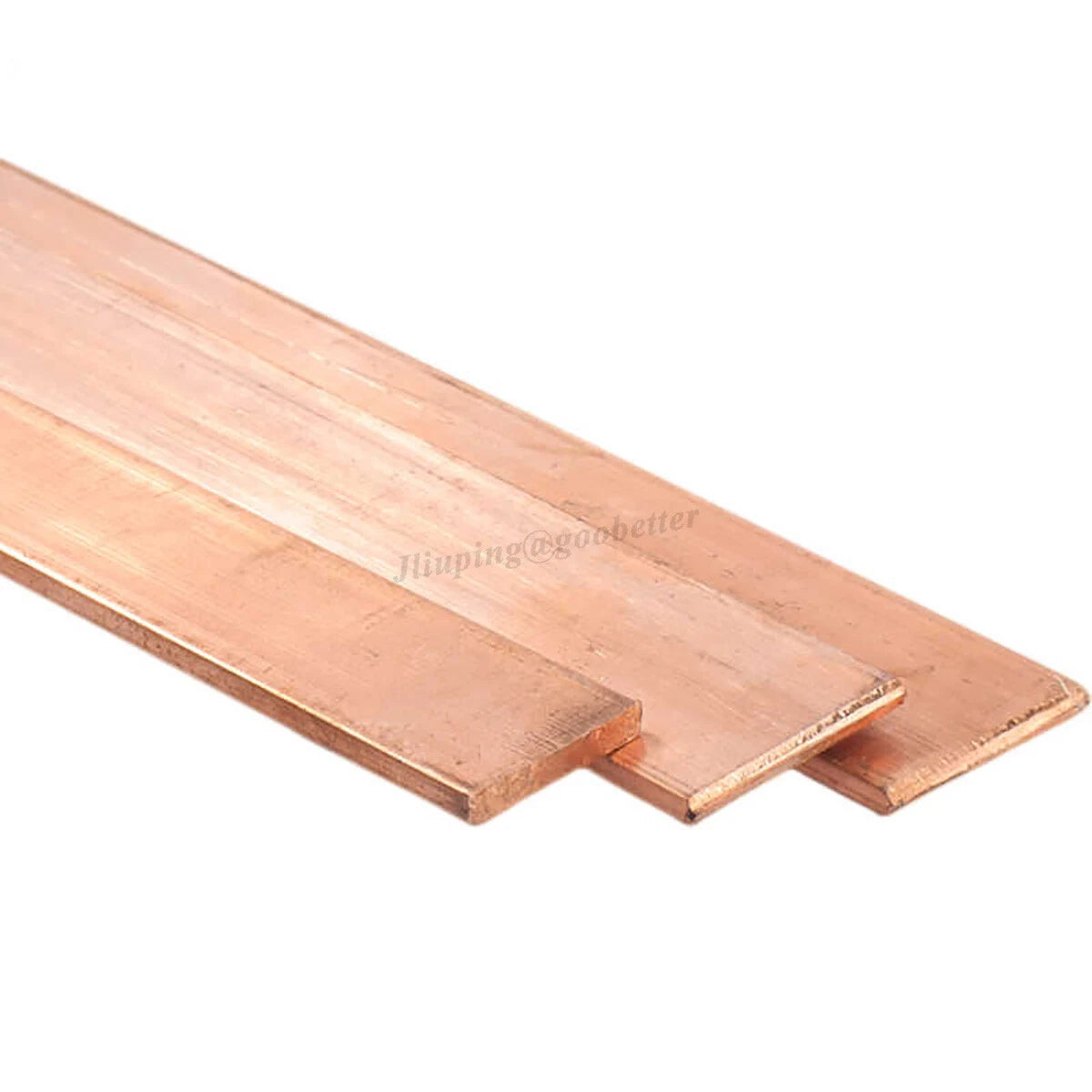
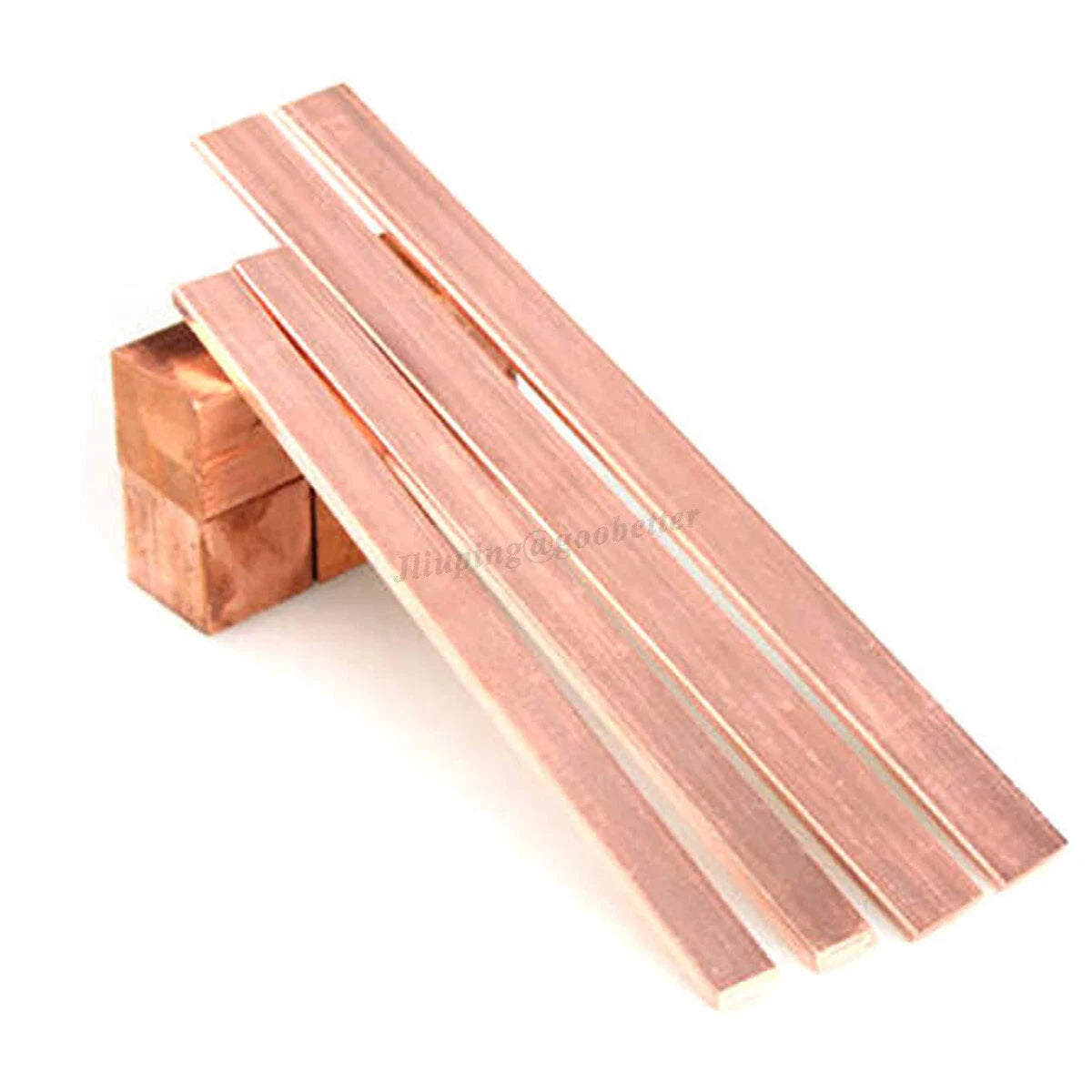
When a project calls for a short, thick copper section with a near-square cross-section, sourcing the right blank is rarely straightforward. Electrical engineers, CNC machinists, and thermal management specialists who need a T2 copper flat bar in a compact 100mm length with substantial width and thickness turn to this solid strip — where the geometry does the work before you even pick up a tool.
Each piece is cut from T2 copper (≥99.9% Cu) to a fixed 100mm length (approx. 3.94 in). Width options run from 40mm to 60mm (approx. 1.57–2.36 in) and thickness options from 35mm to 60mm (approx. 1.38–2.36 in), producing a dense, fully solid cross-section with no voids or seams. The near-square profile makes these pieces equally suited to use as flat bar stock or as compact copper block blanks.
Typical applications include short busbar segments and connection blocks in switchgear panels, copper heat spreader blanks for high-wattage electronics cooling, grounding lug stock for heavy-duty earthing systems, and precision-machined contact pads or electrode blanks where a T2 copper flat bar with a thick, square cross-section is the starting point.
| Material Grade | T2 Copper (≥99.9% Cu) |
|---|---|
| Form | Flat Bar / Square Solid Strip / Sheet Plate Block |
| Fixed Length | 100mm (approx. 3.94 in) |
| Width Options | 40mm, 45mm, 50mm, 55mm, 60mm |
| Thickness Options | 35mm, 40mm, 45mm, 50mm, 55mm, 60mm |
| Cross-Section Profile | Solid rectangular / near-square (no hollow core) |
| Electrical Conductivity | Approx. 58 MS/m (IACS ~100%) |
| Thermal Conductivity | Approx. 390 W/(m·K) |
| Temper | Soft / Annealed (typical for T2 grade) |
| Surface Finish | See variant options |
| Packing Unit | 1 PCS per order unit |
| Weight per Piece | See variant options (varies by width × thickness; density of copper ≈ 8,960 kg/m³) |
The right combination depends on your application's current or thermal load and the physical space available. For busbar use, calculate the required cross-sectional area (width × thickness in mm²) based on your target current rating — a conservative guideline for T2 copper in enclosed installations is 1–2 A per mm². For machined blanks, choose the smallest cross-section that still gives you enough material to achieve your finished dimensions after cutting.
This listing covers pieces cut to a fixed 100mm length, which suits applications where a compact, near-square copper block is needed — such as short busbar connectors, heat spreader blanks, or machined contact pads. The 200mm-long version provides a longer flat bar profile better suited to extended busbar runs or strip applications. Both are made from the same T2 copper grade.
Yes. T2 copper's thermal conductivity of approximately 390 W/(m·K) makes it one of the most effective commercially available materials for heat spreading. The thick cross-sections available in this listing (35–60mm) provide substantial thermal mass, which is useful for buffering transient heat loads in power electronics, laser diode mounts, and high-wattage LED assemblies. Machine the mating surfaces flat to minimise thermal contact resistance.
T2 copper oxidizes in air, forming a thin cupric oxide (Cu₂O / CuO) layer. In dry indoor environments, this layer is stable and grows slowly. For electrical contact surfaces, oxidation can increase contact resistance over time. To maintain low-resistance connections, clean contact areas with fine abrasive or apply an electrical-grade anti-oxidant compound before assembly. Tin-plating is an option for long-term protection in humid environments.
Yes. T2 copper can be silver-brazed using standard silver-copper-phosphorus or silver-copper-zinc alloys with appropriate flux. TIG welding is also possible using deoxidized copper filler rod (e.g., ERCu), though copper's high thermal conductivity requires significant preheat (typically 300–500°C for thick sections) to achieve proper fusion. Soldering with tin-lead or lead-free solders is straightforward for lighter-duty joints.
Use the formula: Weight (kg) = Length (m) × Width (m) × Thickness (m) × 8,960. For example, a 100mm × 50mm × 50mm piece = 0.1 × 0.05 × 0.05 × 8,960 ≈ 2.24 kg. For a 100mm × 40mm × 35mm piece = 0.1 × 0.04 × 0.035 × 8,960 ≈ 1.25 kg. Use these estimates to plan handling and shipping requirements when ordering multiple pieces.
Yes. T2 copper in soft/annealed temper drills and taps readily with standard HSS tooling. Use a center punch before drilling to prevent bit wandering on the smooth surface. For tapping, use a spiral-flute tap with cutting oil to clear chips effectively — copper's ductility can cause chips to pack in straight-flute taps. Thread engagement of 1.5× the bolt diameter is recommended for reliable pull-out strength in copper.