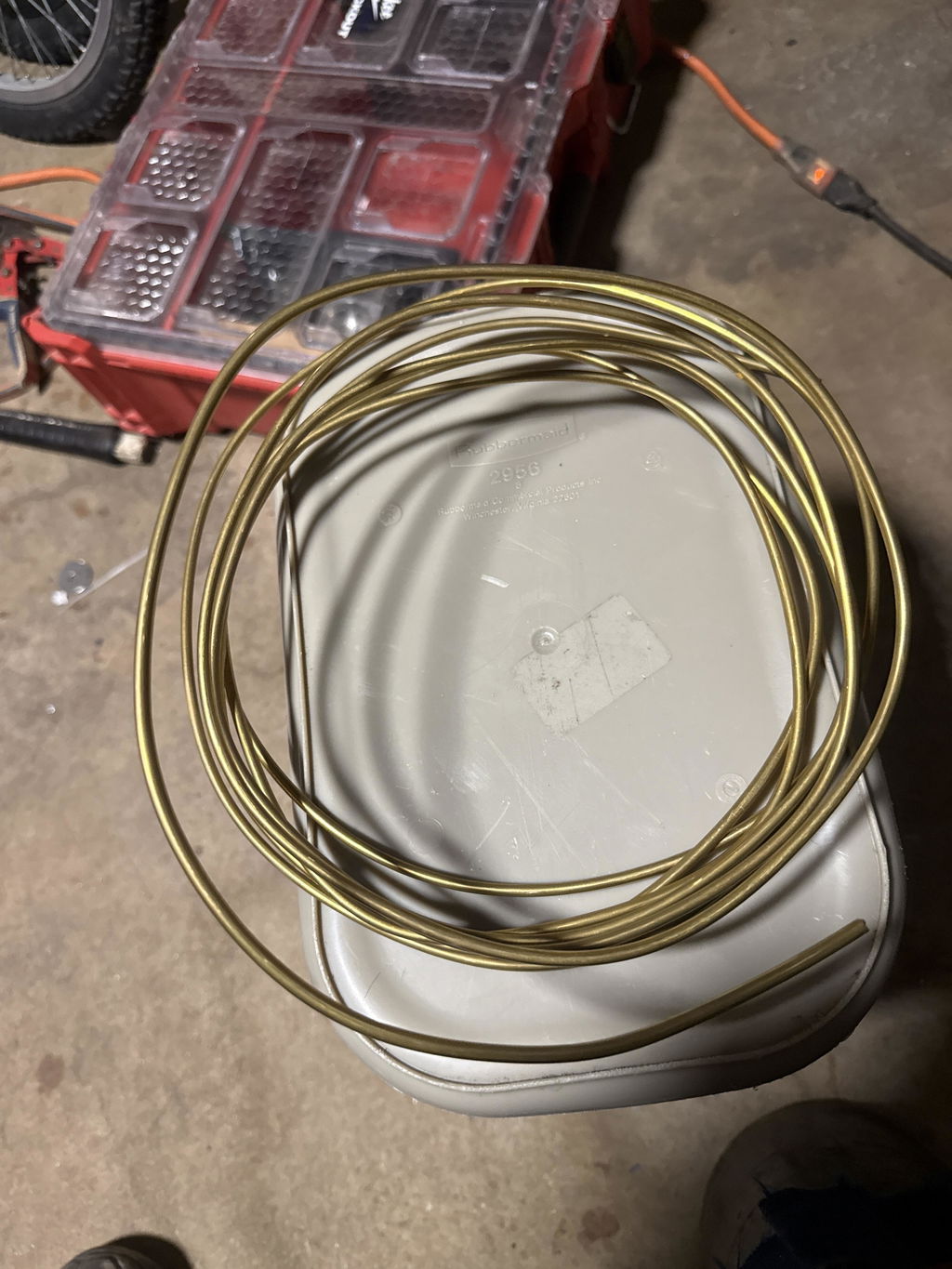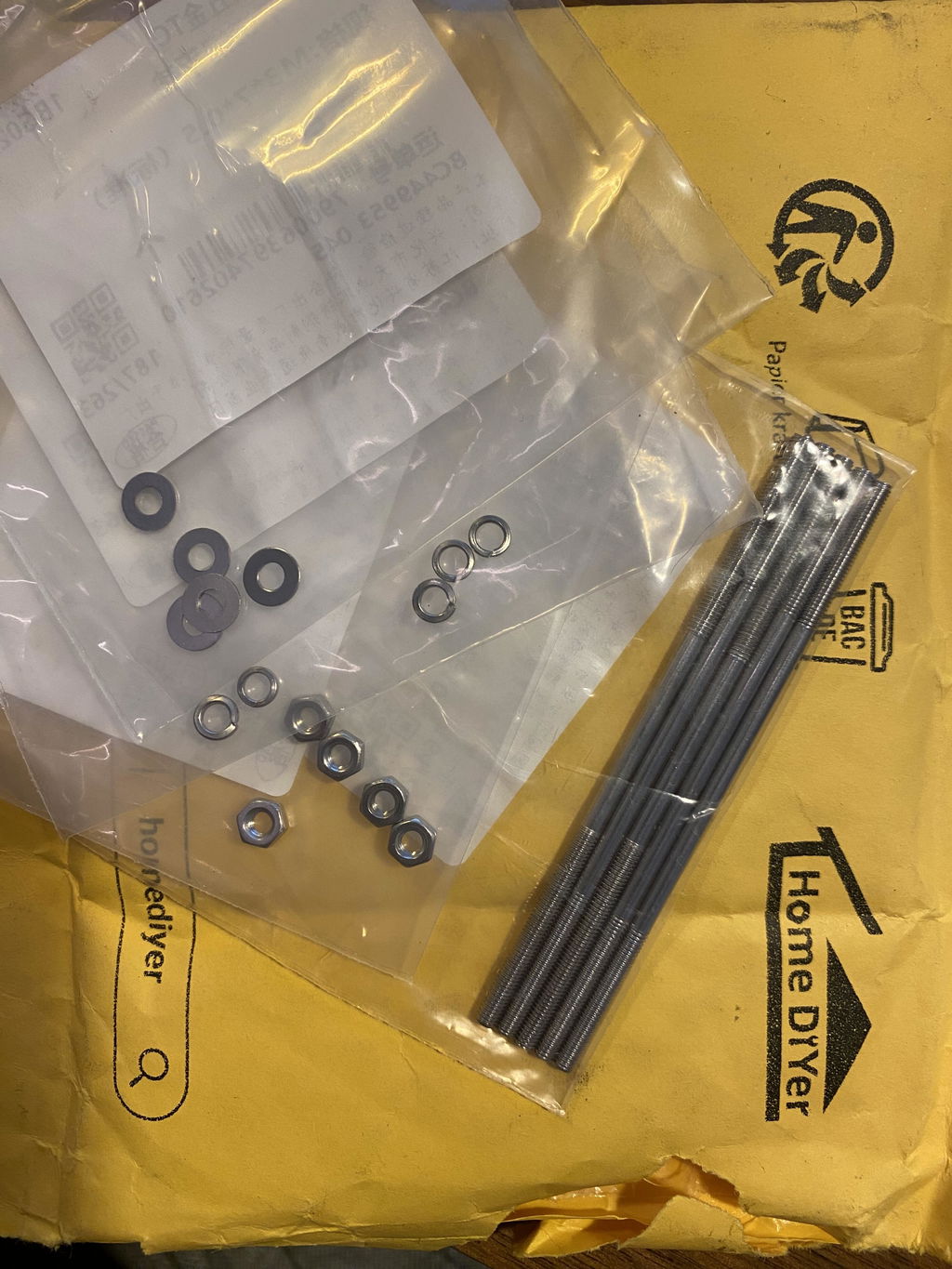
The chain is fine...but I ordered the wrong size. Nine links of the chain I ordered equals six of the size I wanted. My error...
How can I straighten out the springs? I can't use them coil uo as is.
Your payment information is processed securely. We do not store credit card details nor have access to your credit card information.
Get fitment advice & recommendations
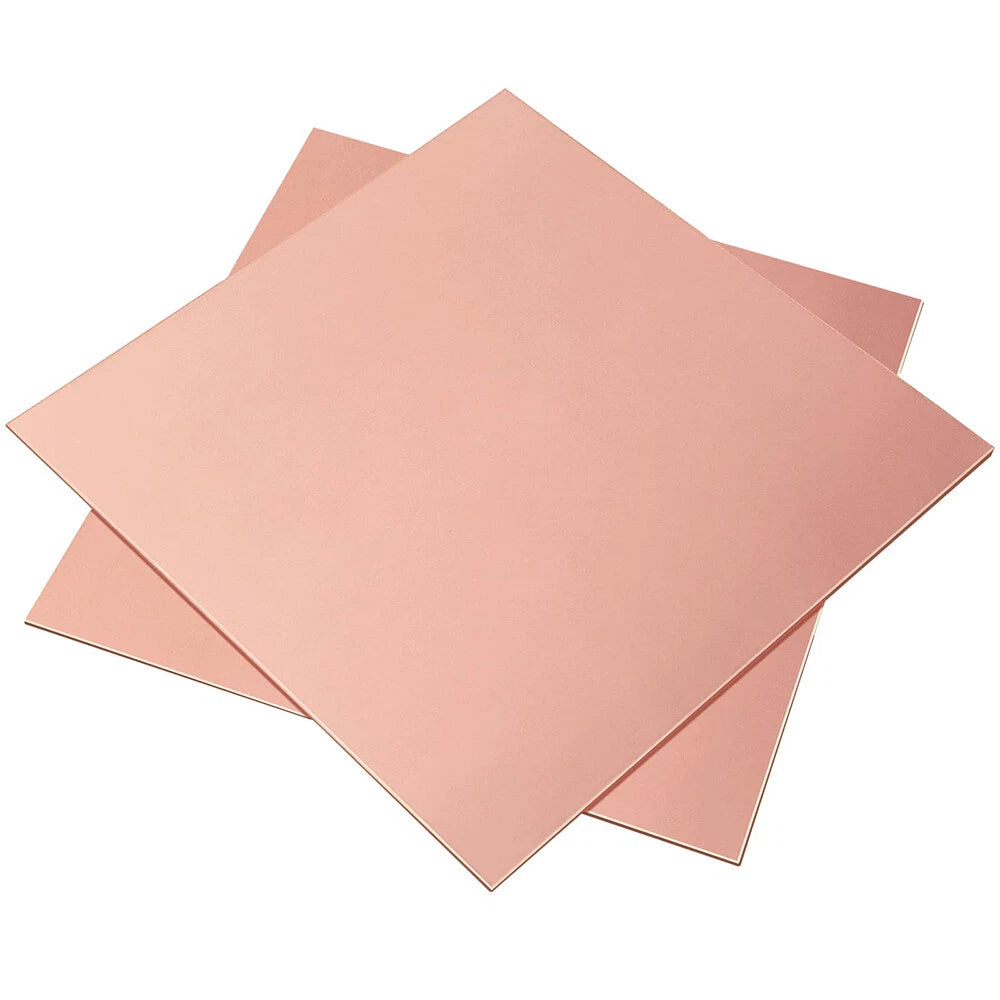
When your project demands a reliable, conductive, and workable metal, finding copper sheet stock cut to a usable size without ordering a full roll can be a real challenge. Whether you're a jeweller shaping bezels and findings, an electronics hobbyist fabricating bus bars, or a maker building decorative metalwork, this T2 copper sheet delivers the exact thickness and dimensions you need — ready to use straight from the pack.
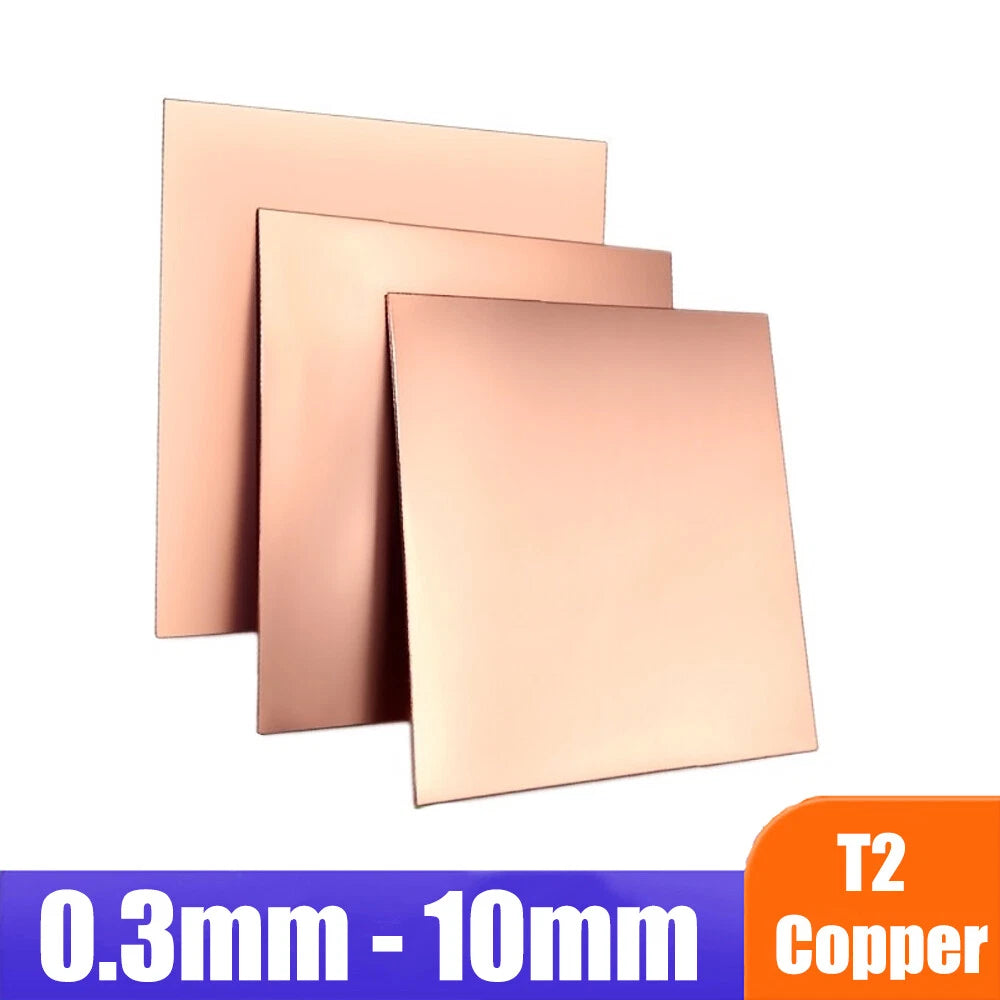
This listing covers T2-grade pure copper flat sheet, guillotine-cut to clean, straight edges. Thickness options span 0.3 mm (approx. 0.012 in) through to 10 mm (approx. 0.394 in), with sheet sizes ranging from 50 × 50 mm (approx. 2 × 2 in) up to 300 × 300 mm (approx. 11.8 × 11.8 in). T2 copper carries a minimum copper purity of 99.9%, giving it excellent electrical conductivity, thermal conductivity, and cold-working characteristics.
Typical applications include hand-fabricated jewellery and silversmithing (bezels, sheet metal forming, etching blanks), DIY electrical bus bars and grounding straps, roofing flashing repairs and architectural detail work, and craft projects such as copper repousse, enamelling substrates, and decorative inlays. The guillotine-cut edges are straight and square, reducing prep time for makers who need to cut, file, solder, or form the sheet immediately.
| Material | T2 Pure Copper |
|---|---|
| Copper Purity | ≥ 99.9% |
| Thickness Range | 0.3 mm – 10 mm (0.012 in – 0.394 in) |
| Sheet Size Range | 50×50 mm – 300×300 mm |
| Cut Method | Guillotine (shear cut) |
| Edge Condition | Straight, square-cut; minor burr possible on thicker gauges |
| Surface Finish | Mill finish (natural copper colour; may show light oxidation) |
| Electrical Conductivity | ≥ 97% IACS |
| Thermal Conductivity | Approx. 390 W/(m·K) |
| Density | Approx. 8.9 g/cm³ |
| Packing Quantity | See variant options (1 pcs / 2 pcs / 4 pcs) |
| Weight per Piece | See variant options |
For jewellery sheet work such as bezels, pendants, and findings, 0.3 mm–0.8 mm is typically used. For formed components like cuffs or bowls, 0.8 mm–1.5 mm offers more rigidity. For electrical bus bars and grounding straps, 1 mm–3 mm is common. For structural or decorative plate applications, 3 mm–10 mm provides solid, rigid stock. If you are unsure, select your variant options above or contact us to confirm suitability.
T2 is the Chinese national standard designation for electrolytic tough-pitch (ETP) copper, which is broadly equivalent to C11000 (UNS) and Cu-ETP (EN). All share a minimum purity of 99.9% copper and similar conductivity and workability characteristics, making T2 copper directly comparable to C110 for most jewellery, electrical, and fabrication uses.
Yes. T2 copper solders and brazes readily. For jewellery work, use silver solder (easy, medium, or hard grade) with an appropriate flux such as borax paste. For plumbing or electrical joints, standard lead-free solder or brazing rod with flux works well. Anneal thicker gauges (1 mm+) before forming to restore ductility after work-hardening.
Copper naturally oxidises when exposed to air, so sheets may show light surface tarnish or a dull finish upon arrival — this is normal and does not affect the material's properties. To restore a bright finish, clean with a mild acid pickle (such as citric acid solution) or a commercial copper cleaner before use. Thinner sheets are more susceptible to surface oxidation during storage.
Thin sheets (0.3 mm–1 mm) can be cut with jeweller's shears, aviation snips, or a scribe and snap method. Mid-range gauges (1 mm–3 mm) work well with a bench shear, angle grinder with a cutting disc, or a jigsaw with a metal blade. Thicker plate (3 mm+) typically requires a bandsaw, angle grinder, or milling machine. Always deburr cut edges with a file or deburring tool before handling.
Yes. T2 copper's ≥97% IACS conductivity makes it well-suited for low-voltage bus bars, grounding straps, battery interconnects, and heat-sink shims. For high-current applications, select a thickness that provides adequate cross-sectional area for your current rating. Always consult relevant electrical codes and standards for your specific installation.
Store copper sheet in a dry environment away from humidity, acids, and ammonia-containing compounds (which accelerate tarnishing). Wrapping sheets in acid-free tissue paper or placing them in sealed plastic bags with a silica gel desiccant will significantly slow oxidation. Avoid storing copper in direct contact with ferrous metals to prevent galvanic staining.