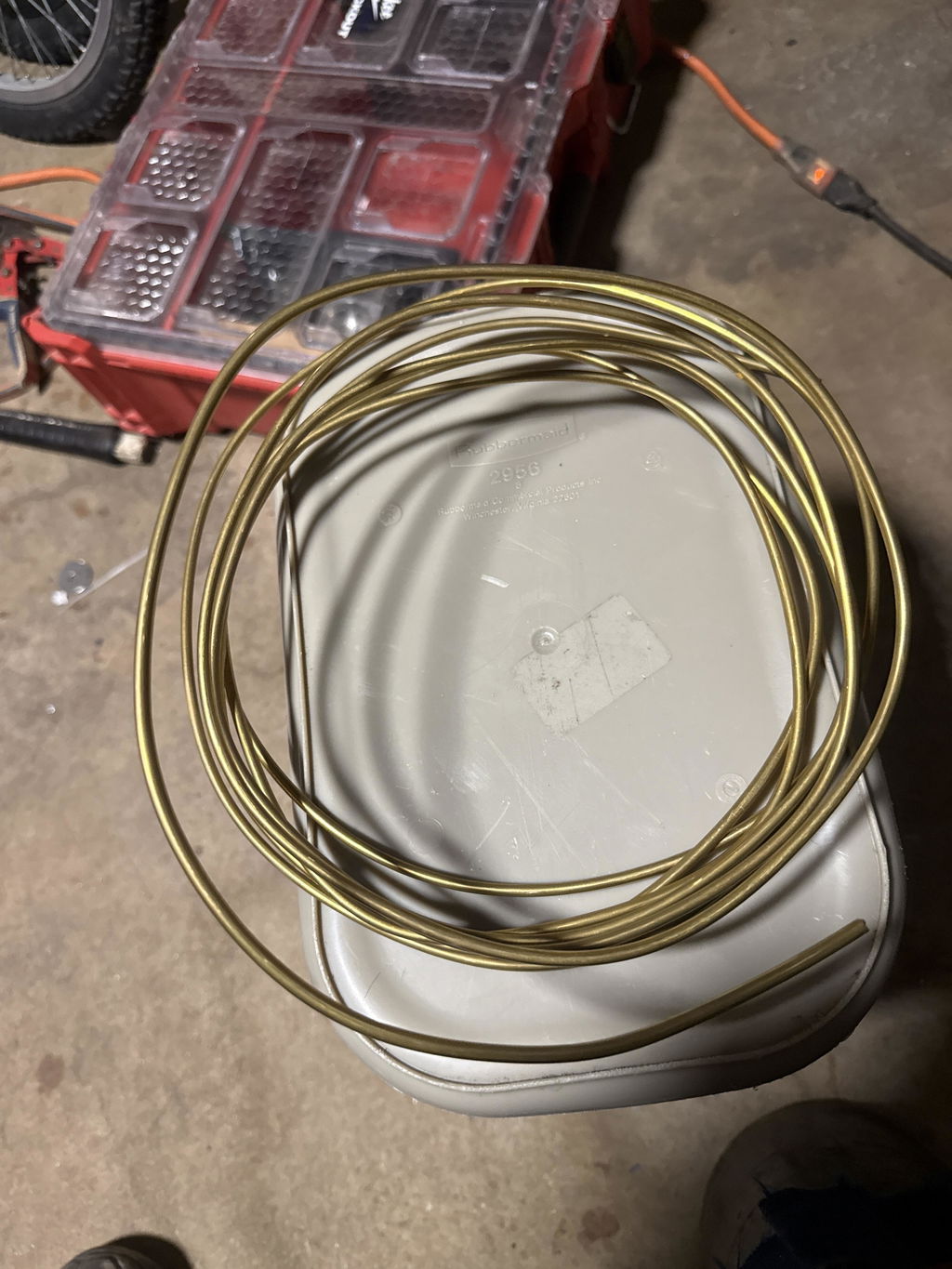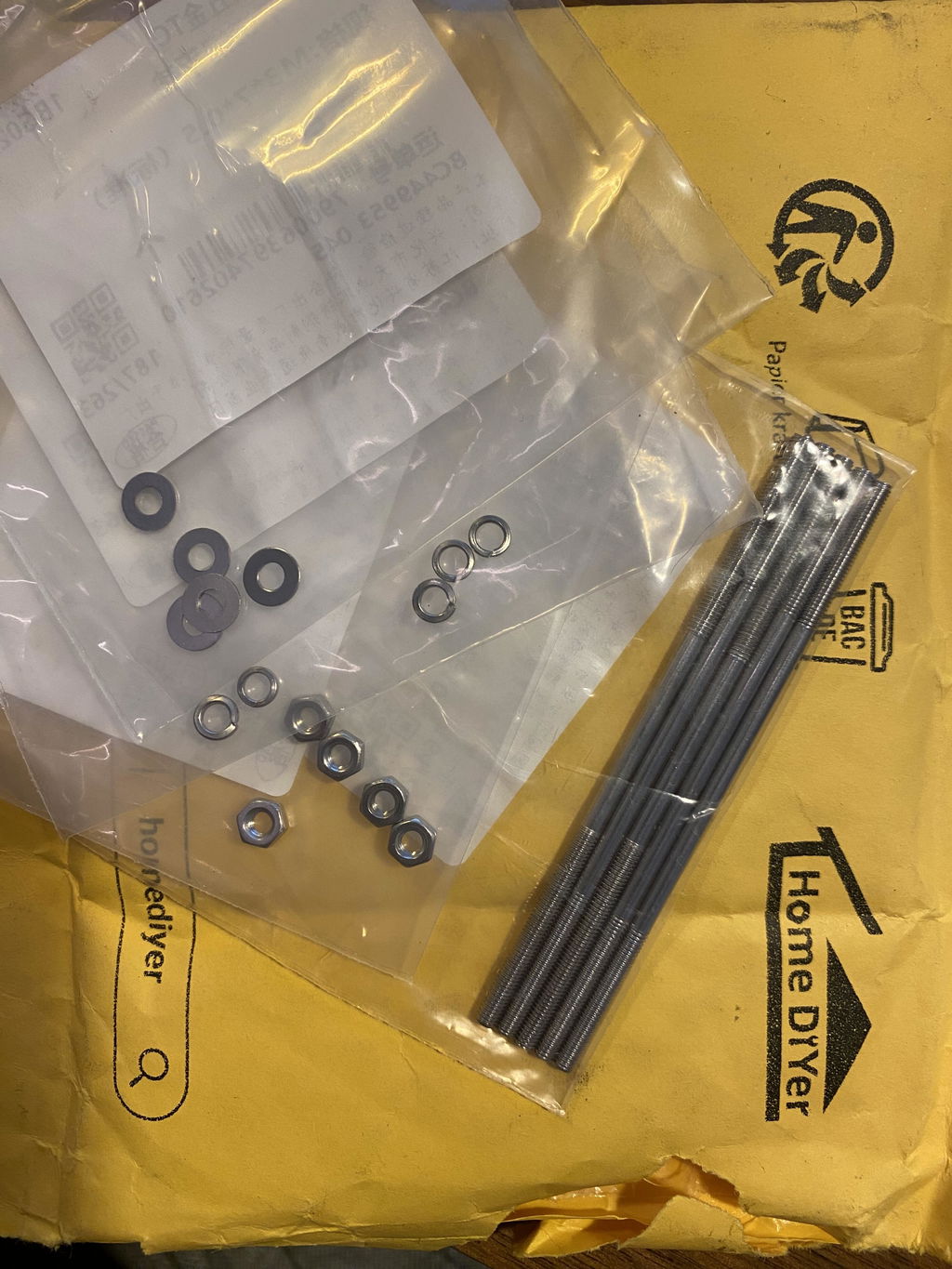
The chain is fine...but I ordered the wrong size. Nine links of the chain I ordered equals six of the size I wanted. My error...
How can I straighten out the springs? I can't use them coil uo as is.
Your payment information is processed securely. We do not store credit card details nor have access to your credit card information.
Get fitment advice & recommendations
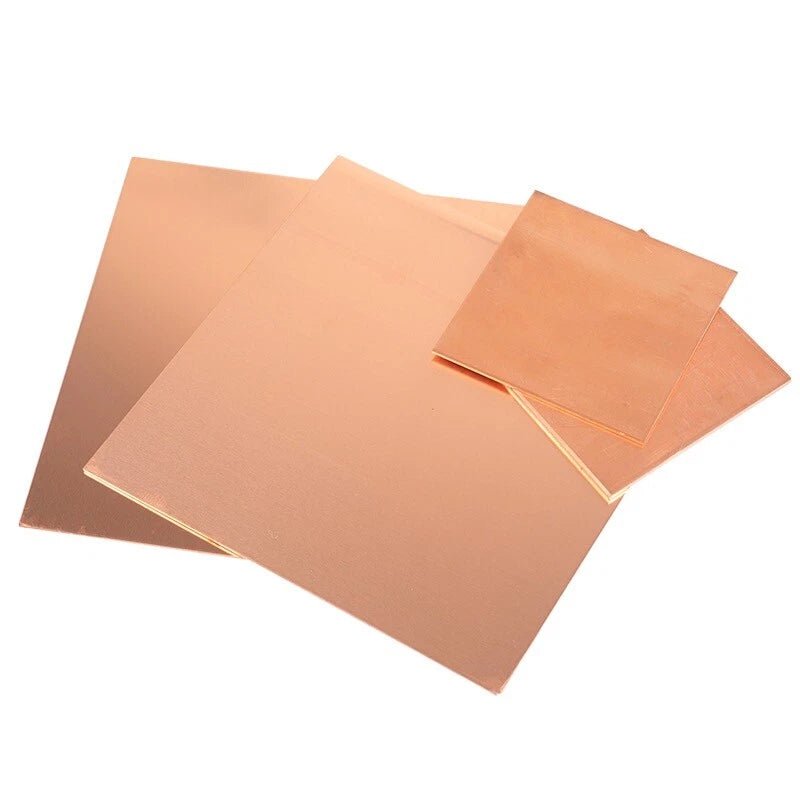
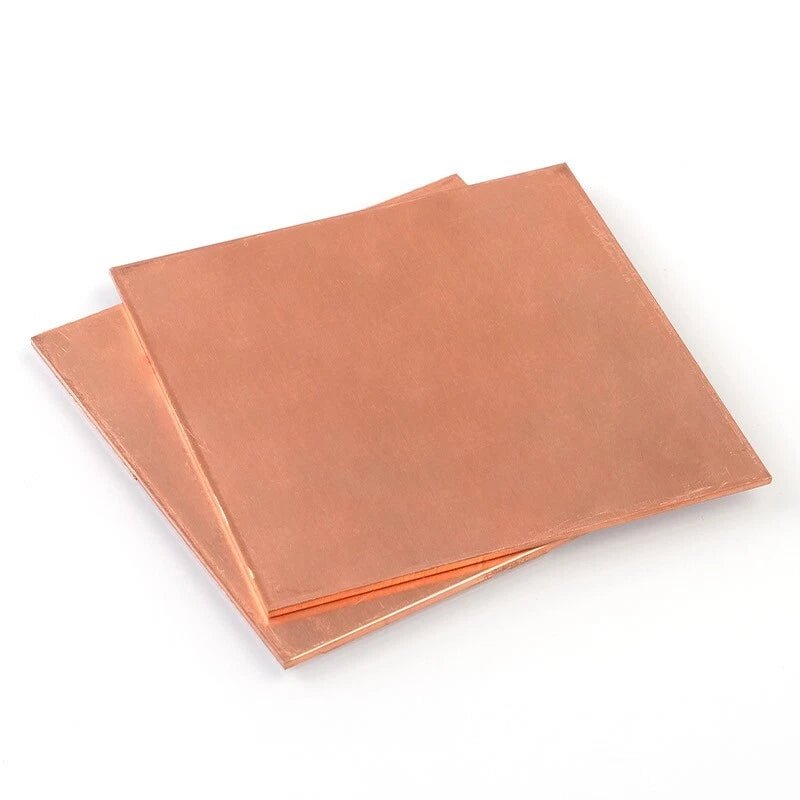
When your project demands reliable conductivity and clean, workable flat stock, generic sheet metal simply won't cut it. Whether you're a hobbyist fabricating custom bus bars, a maker building RF shielding, or a craftsperson cutting decorative inlays, you need a copper sheet that holds tight tolerances and machines without surprises. This T2 pure copper sheet is stocked in a wide range of thicknesses and sheet sizes so you can order exactly what your build calls for — no oversized offcuts, no wasted material.
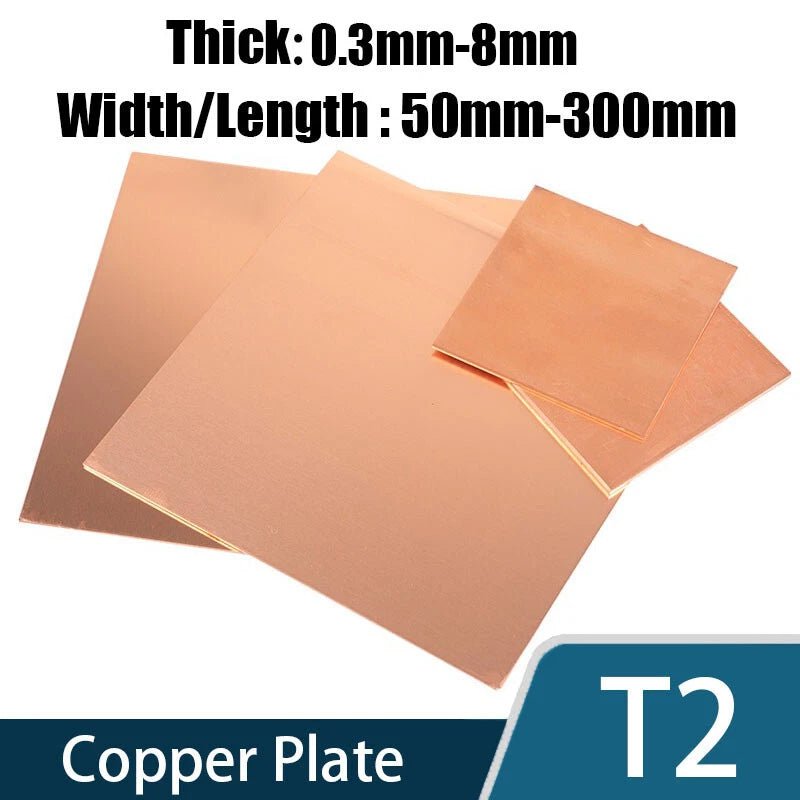
Each sheet is T2-grade electrolytic copper (≥99.9% Cu), available in thicknesses from 0.3 mm (approx. 0.012 in) up to 8 mm (approx. 0.315 in), and in flat dimensions ranging from 50×50 mm (approx. 2"×2") to 300×300 mm (approx. 11.8"×11.8"). Smaller sizes are offered in multi-packs of 2 or 4 pieces for convenience. Surfaces are mill-finished with a smooth, bright copper appearance.
Typical applications include DIY electrical bus bars and grounding straps, heat spreader plates for electronics cooling, copper inlay work in woodworking and resin casting, RF/EMI shielding panels for enclosures, and custom gaskets or shims in mechanical assemblies requiring a soft, conformable metal.
| Material | T2 Electrolytic Pure Copper (≥99.9% Cu) |
|---|---|
| Temper | Soft annealed (O temper) |
| Thickness Range | 0.3 mm – 8 mm (0.012" – 0.315") |
| Sheet Dimensions | 50×50 mm to 300×300 mm (2"×2" to 11.8"×11.8") |
| Surface Finish | Mill bright, smooth |
| Electrical Conductivity | ≥57 MS/m (typical for T2 grade) |
| Thermal Conductivity | Approx. 390 W/(m·K) |
| Density | Approx. 8.9 g/cm³ |
| Pack Size Options | 1 Pc / 2 Pcs / 4 Pcs (varies by sheet size) |
| Weight (per piece) | See variant options |
| Tolerance (thickness) | See variant options |
For electrical bus bars and grounding straps, 1–3 mm is the most common range. For heat spreaders in electronics, 0.5–2 mm works well. For decorative inlays and resin casting, 0.3–0.8 mm is easiest to cut and shape. For structural shims or gaskets, 1–6 mm provides the rigidity needed. If you're unsure, start with 1 mm — it's the most versatile thickness for general DIY metalwork.
T2 copper in soft annealed temper has a tensile strength of approximately 200–250 MPa. It is suitable for light structural applications such as shims, spacers, and gaskets. For high-load structural parts, thicker sheets (4–8 mm) provide greater rigidity. Copper is not a substitute for steel in high-stress structural roles, but it excels where conductivity, corrosion resistance, and machinability are priorities.
Copper naturally oxidizes when exposed to air and moisture, developing a patina that ranges from golden-brown to dark brown over time. This patina is a stable oxide layer that actually protects the underlying metal from further corrosion. For electrical connections, clean the contact surfaces before soldering or crimping. If you need to maintain a bright appearance, apply a clear lacquer or store sheets in sealed packaging away from humidity.
Yes. T2 copper is one of the most solderable metals available. It accepts standard rosin-core solder, water-soluble flux solder, silver solder, and brazing alloys without any special pre-treatment. For best results, clean the surface with isopropyl alcohol or fine abrasive before soldering to remove any surface oxidation. Copper's high thermal conductivity means you may need a higher-wattage iron (60W+) for thicker sheets (2 mm and above).
Thin sheets (0.3–1 mm) can be cut cleanly with aviation tin snips, a jeweler's saw, or a sharp utility knife and straightedge. Medium sheets (1–3 mm) are best cut with a jigsaw fitted with a metal-cutting blade, or a bandsaw. Thicker sheets (4–8 mm) require a circular saw with a carbide-tipped blade, an angle grinder with a cutting disc, or a CNC router. Always deburr cut edges with a file or deburring tool for safe handling.
Choose a sheet size that is equal to or slightly larger than your finished part dimensions to allow for cutting margins. If you need multiple identical pieces (e.g., four heat spreaders of the same size), the 4-piece packs for smaller sheet sizes offer better value. For one-off prototypes or large single pieces, the 1-piece options in larger dimensions (200×200 mm to 300×300 mm) are the most practical choice. Use the Thickness×Diameter dropdown to select your exact combination.
Copper can be used in contact with stainless steel with minimal galvanic corrosion risk in dry indoor environments. However, direct contact between copper and aluminum in the presence of moisture can cause accelerated galvanic corrosion of the aluminum. If your assembly involves both metals in a wet or outdoor environment, use an isolating gasket or anti-oxidant compound between the two metals. For indoor electrical panels and dry enclosures, copper-to-aluminum contact is generally acceptable with proper termination hardware.