The chain is fine...but I ordered the wrong size. Nine links of the chain I ordered equals six of the size I wanted. My error...
How can I straighten out the springs? I can't use them coil uo as is.
Your payment information is processed securely. We do not store credit card details nor have access to your credit card information.
Get fitment advice & recommendations
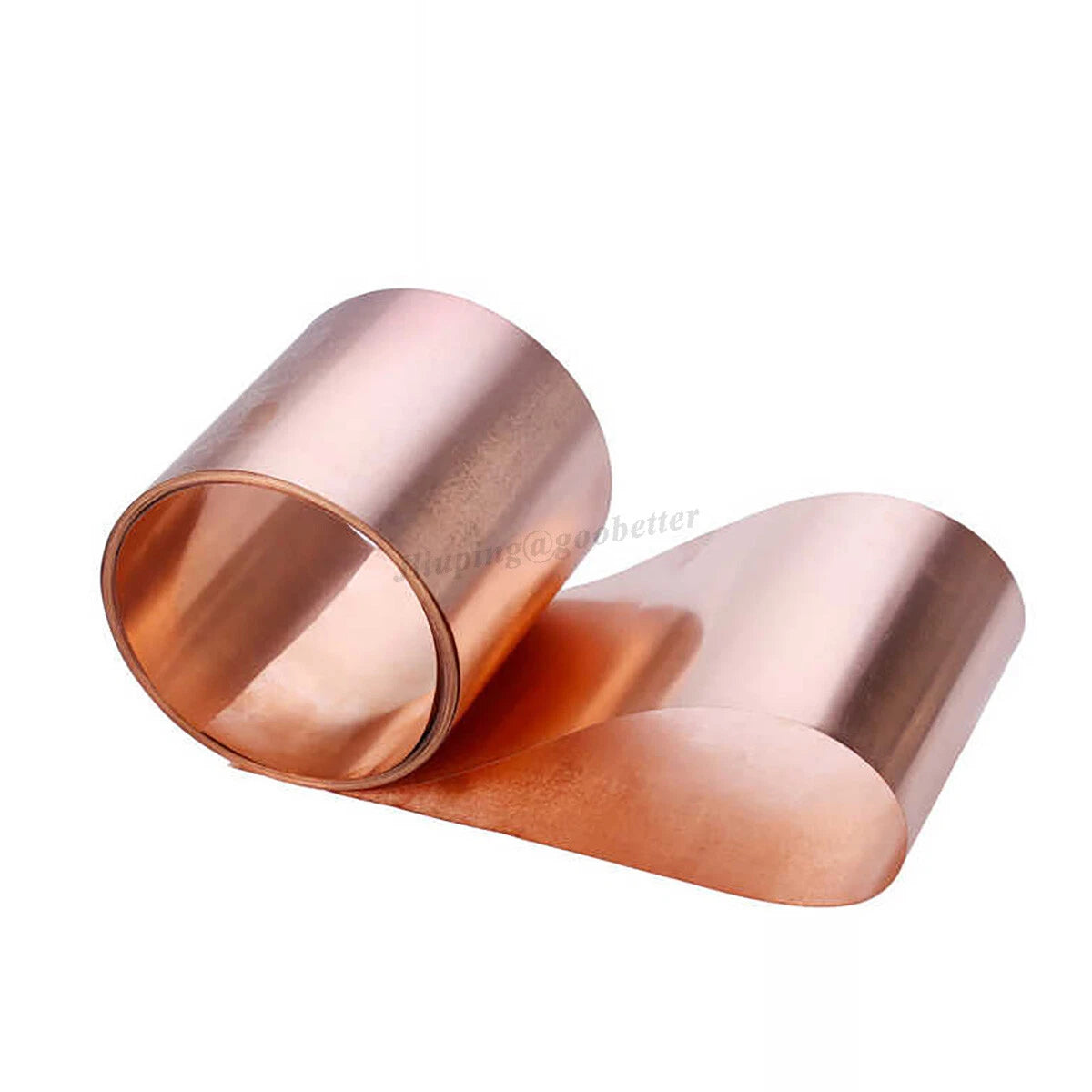
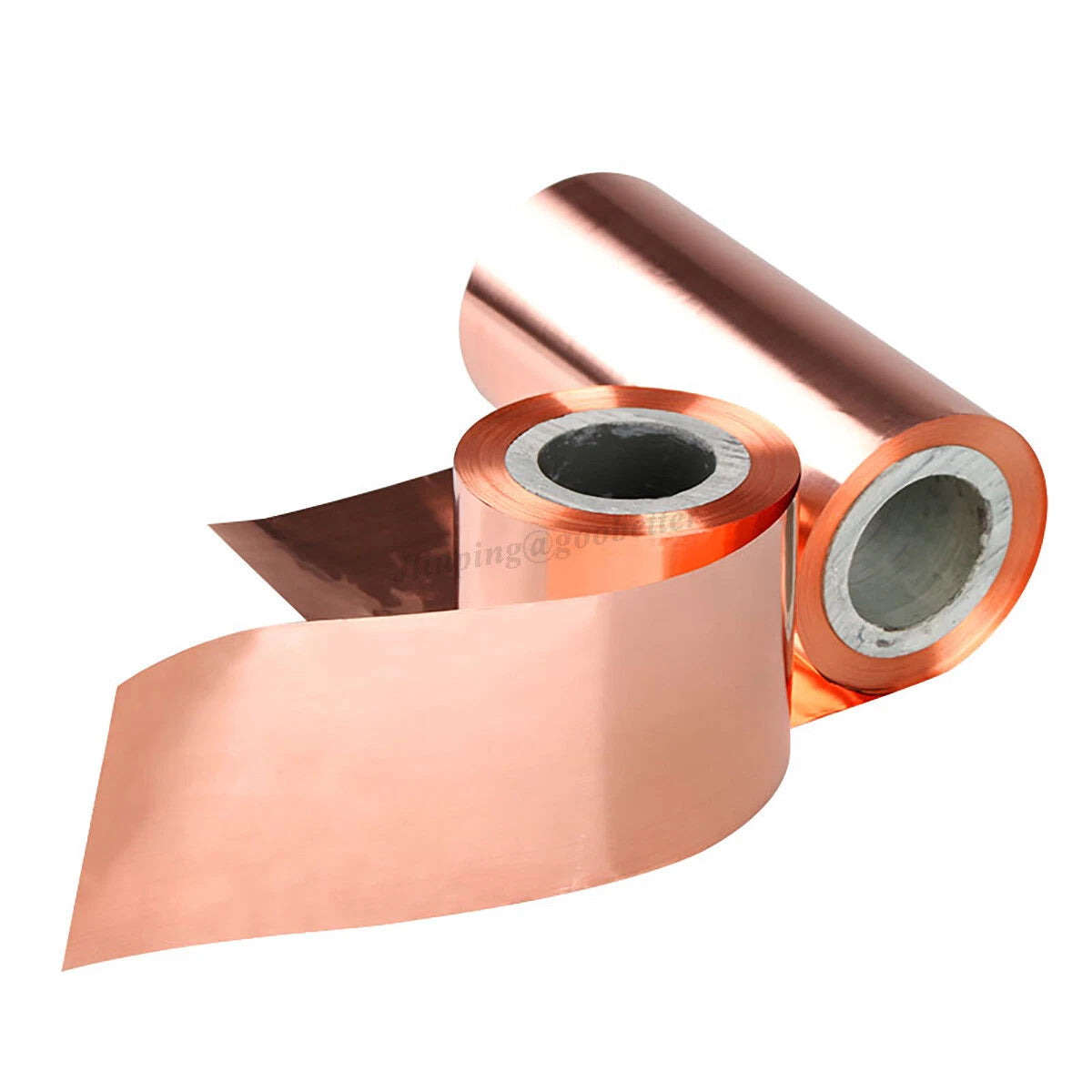
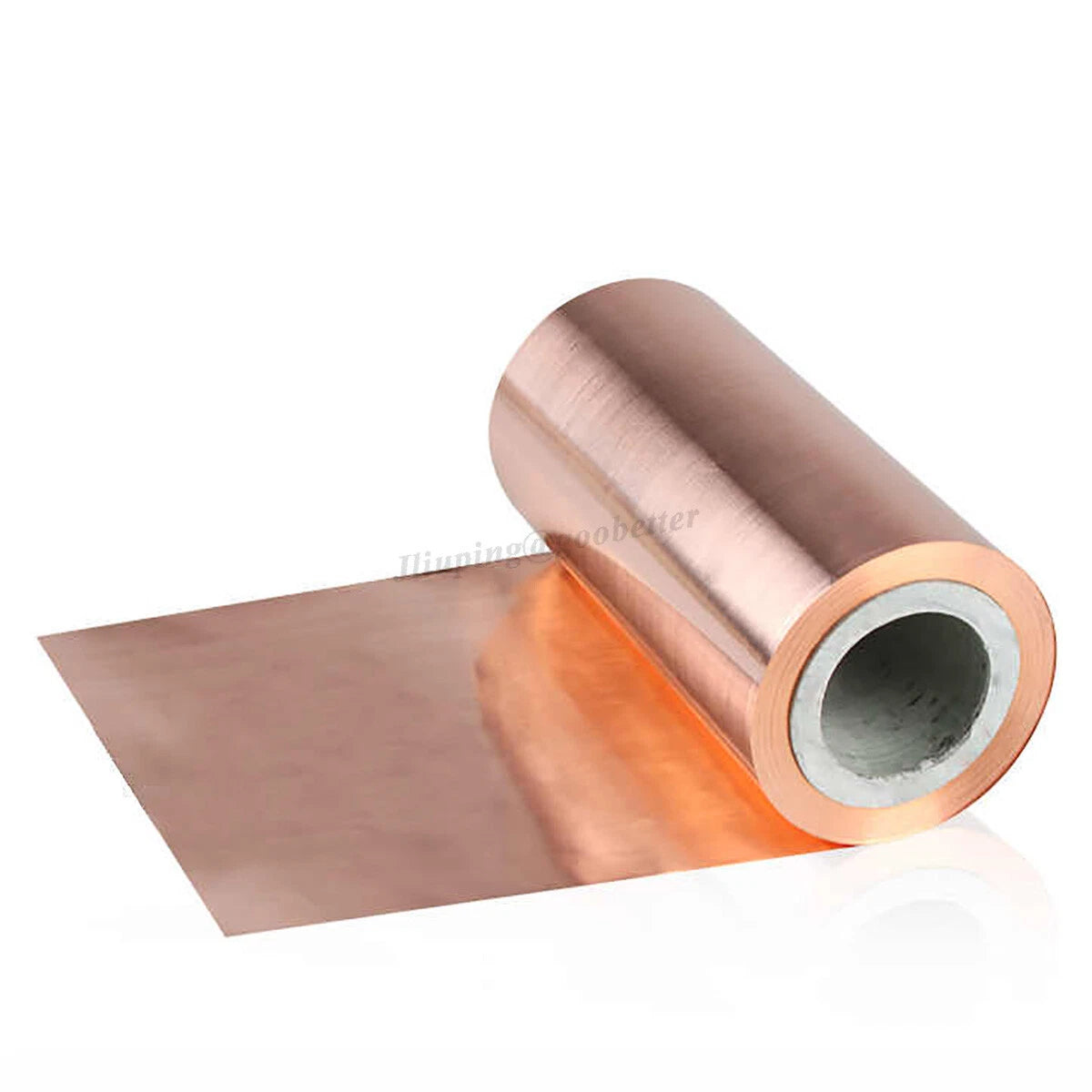
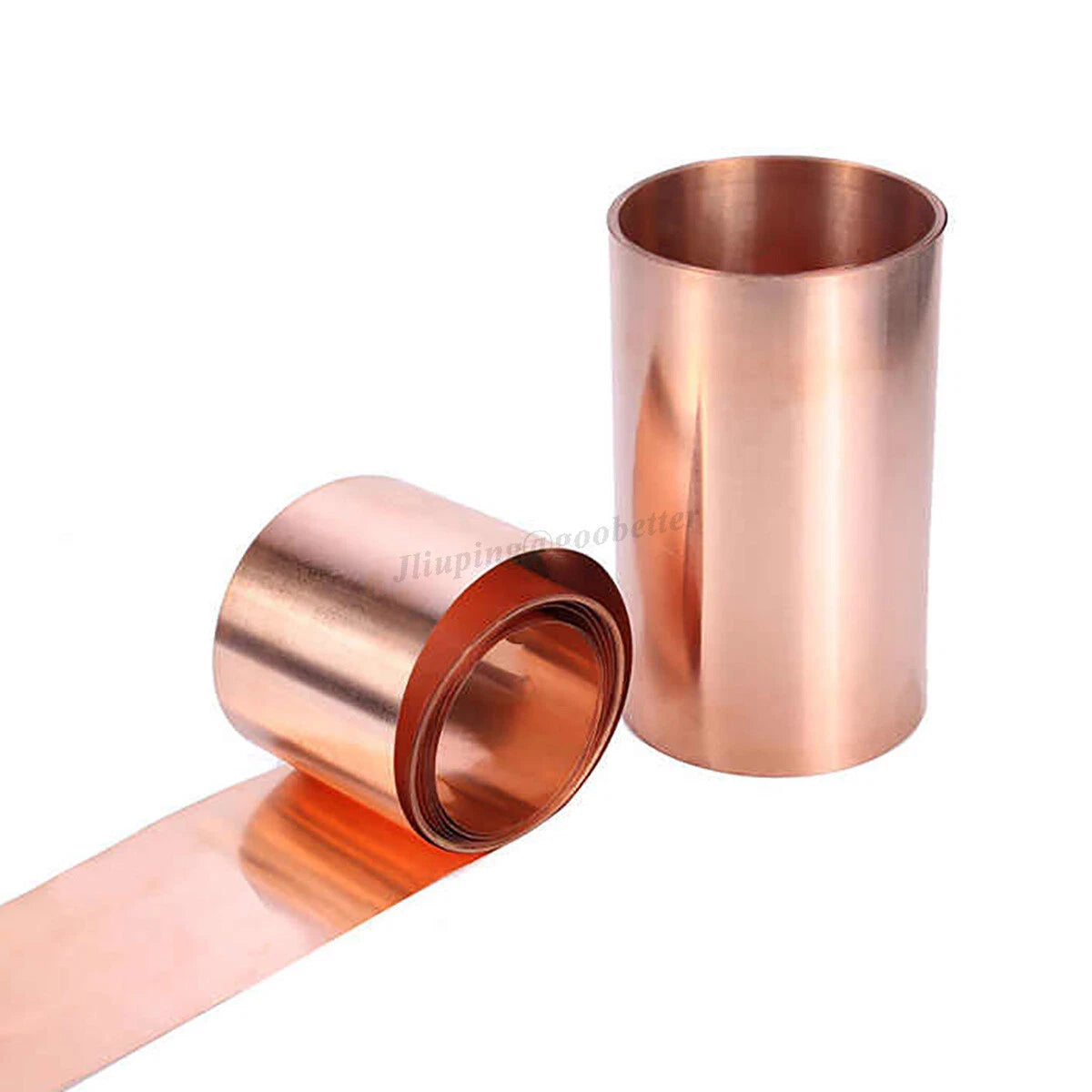
When a project demands exact thickness and consistent conductivity, generic metal tape simply won't cut it. Makers, electronics technicians, and hobbyists who need a reliable copper foil sheet roll turn to T2-grade copper for its predictable electrical and thermal performance across a wide range of applications.
Each roll is made from T2 pure copper (≥99.9% Cu), available in four ultra-thin thicknesses — 0.02 mm, 0.03 mm, 0.04 mm, and 0.05 mm (approximately 0.0008"–0.002") — and widths from 10 mm to 90 mm (~0.39"–3.54"). Length per roll is 1000 mm (~39.4"). The soft-annealed temper allows the foil to be cut, bent, and formed without cracking.
Typical use cases include EMI/RF shielding in enclosures and PCB work, decorative inlay and metalsmithing, heat-spreading pads in DIY electronics, and gasket or shimming applications where a thin copper foil plate is required for precise gap control.
| Material | T2 Pure Copper (≥99.9% Cu) |
|---|---|
| Temper | Soft-annealed |
| Thickness Options | 0.02 mm / 0.03 mm / 0.04 mm / 0.05 mm |
| Width Options | 10 / 15 / 20 / 25 / 30 / 35 / 40 / 45 / 50 / 55 / 60 / 70 / 75 / 80 / 90 mm |
| Roll Length | 1000 mm (~39.4 in) |
| Surface Finish | Bright / mill finish (uncoated) |
| Electrical Conductivity | ≥57 MS/m (typical for T2 copper) |
| Thermal Conductivity | ~385 W/(m·K) (typical for T2 copper) |
| Density | ~8.9 g/cm³ |
| Tensile Strength (annealed) | Typically 200–250 MPa |
| Product Form | Roll / strip |
| Weight per Roll | See variant options |
For EMI/RF shielding, 0.02–0.03 mm is typically sufficient because skin depth at most frequencies is well under 0.02 mm. For structural shimming or heat-spreading pads where mechanical rigidity matters, 0.04–0.05 mm provides more handling strength. If you need to solder the foil, thicker options (0.04–0.05 mm) are easier to work with and less prone to burn-through.
Yes. T2 pure copper solders readily with standard rosin-core or no-clean flux solder. Thinner gauges (0.02–0.03 mm) require a lower-wattage iron and quick contact to avoid warping. Pre-tinning the foil surface before joining to a PCB pad or wire is recommended for a clean, reliable joint.
Yes. T2 copper's high conductivity (≥57 MS/m) makes it effective for attenuating electromagnetic interference. Even the 0.02 mm foil exceeds the skin depth for frequencies up to several GHz. For best results, ensure overlapping seams are soldered or clamped to maintain electrical continuity around the enclosure.
Bare copper will develop a natural oxide patina (darkening) when exposed to air and humidity. This surface oxidation does not significantly affect bulk conductivity but can increase contact resistance at connection points. For applications where appearance or low contact resistance must be maintained long-term, consider applying a clear lacquer, tin plating, or storing unused rolls in a sealed bag.
Yes. The soft-annealed temper means the foil cuts cleanly with sharp scissors, a craft knife against a steel ruler, or a rotary cutter. For very narrow strips from a wider roll, score-and-snap is not recommended — use a sharp blade to avoid edge deformation. Each roll is 1000 mm long; if you need a shorter piece, simply cut from the roll.
For PCB trace shielding strips, widths of 10–25 mm are most common and allow precise placement over individual traces or component groups. For decorative metalsmithing inlay or stained-glass leading, wider options (30–90 mm) give you more material to shape and form. Measure your channel or recess width first and select the next size up to allow for trimming.
No. This is bare, uncoated copper foil with no adhesive layer. It offers a thinner overall profile and is suitable for soldering, mechanical clamping, and lamination with your own adhesive. If you need a self-adhesive version for quick application without soldering, that is a separate product type. Bare foil is preferred when conductivity on both faces is required or when the adhesive layer would interfere with the application.