The chain is fine...but I ordered the wrong size. Nine links of the chain I ordered equals six of the size I wanted. My error...
How can I straighten out the springs? I can't use them coil uo as is.
Your payment information is processed securely. We do not store credit card details nor have access to your credit card information.
Get fitment advice & recommendations
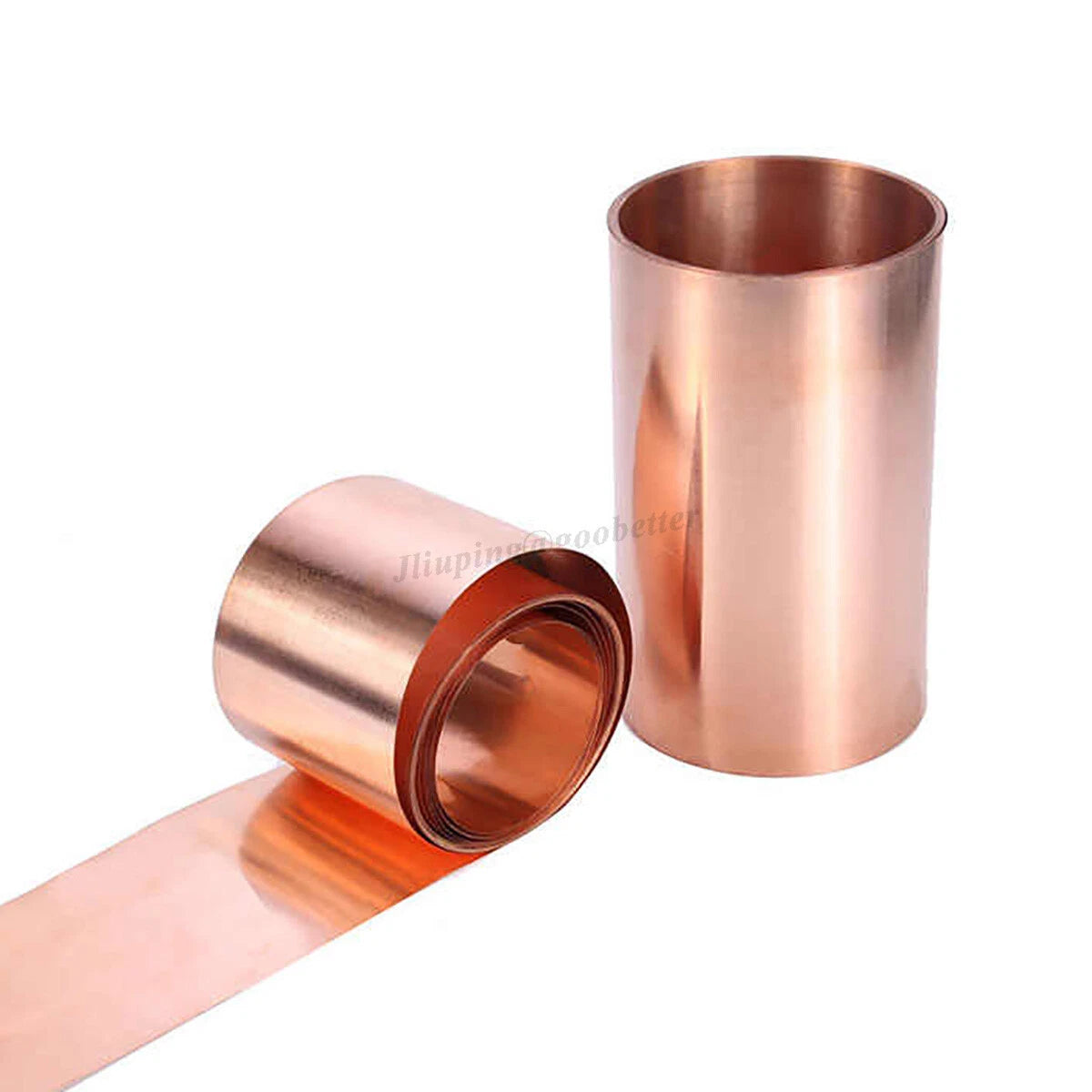
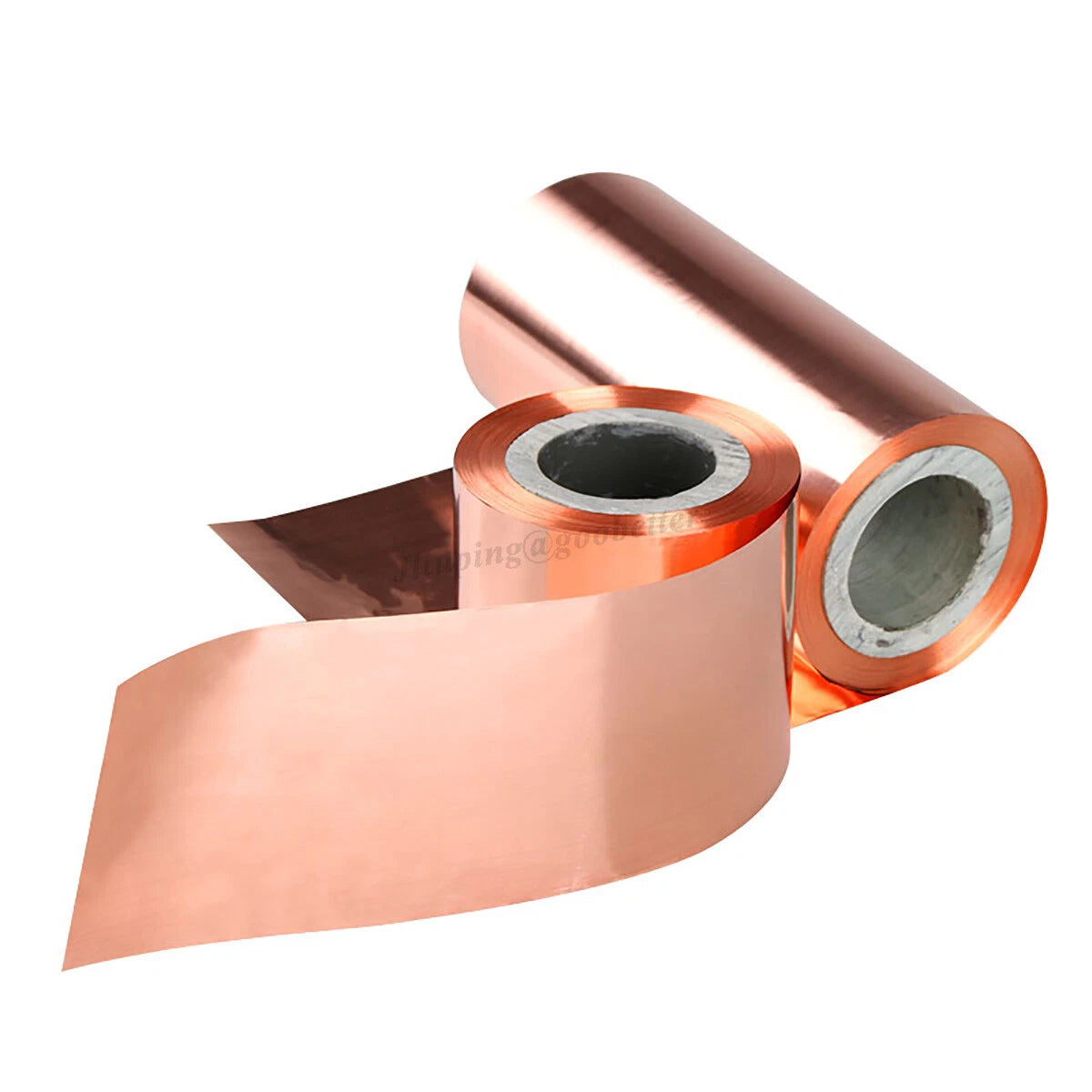
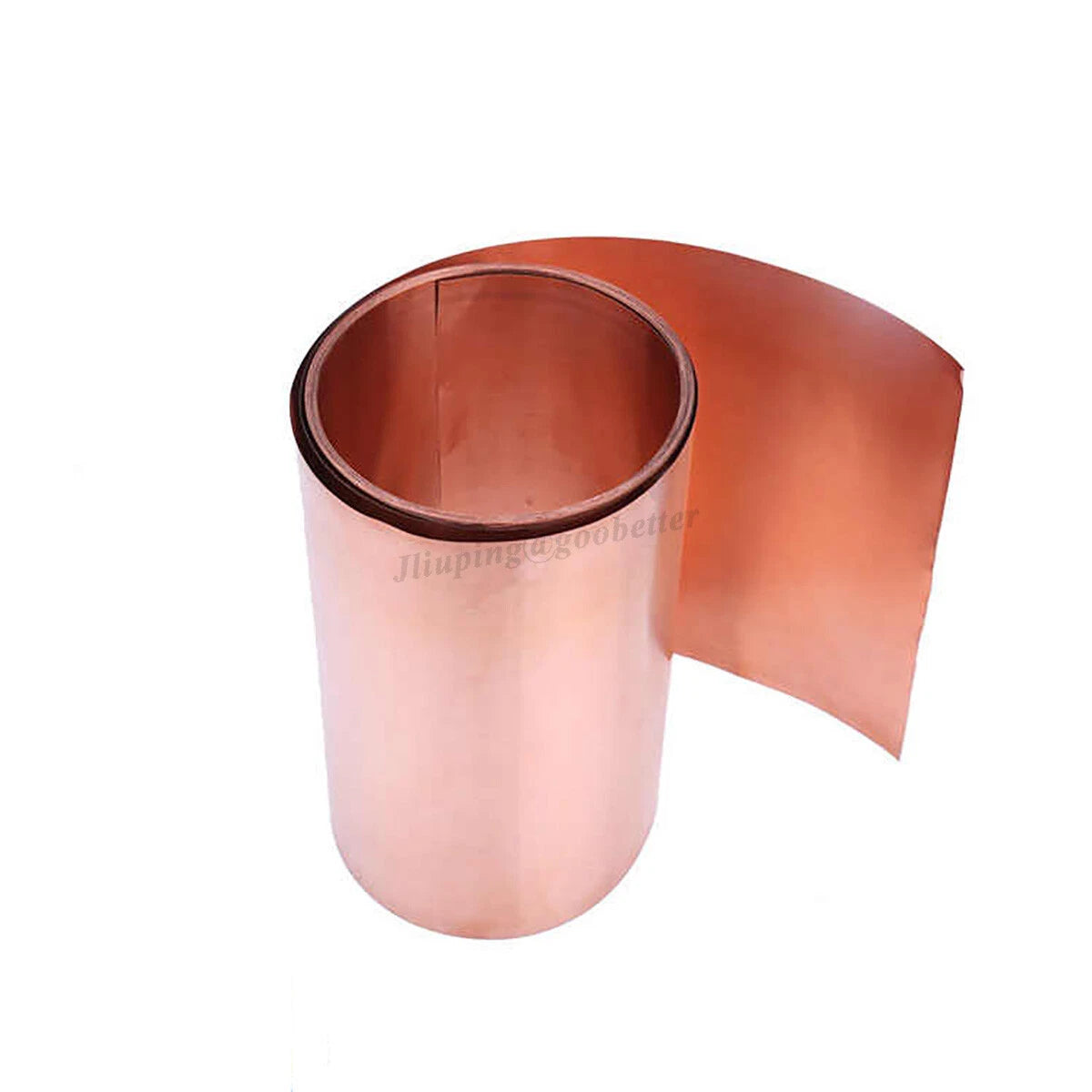
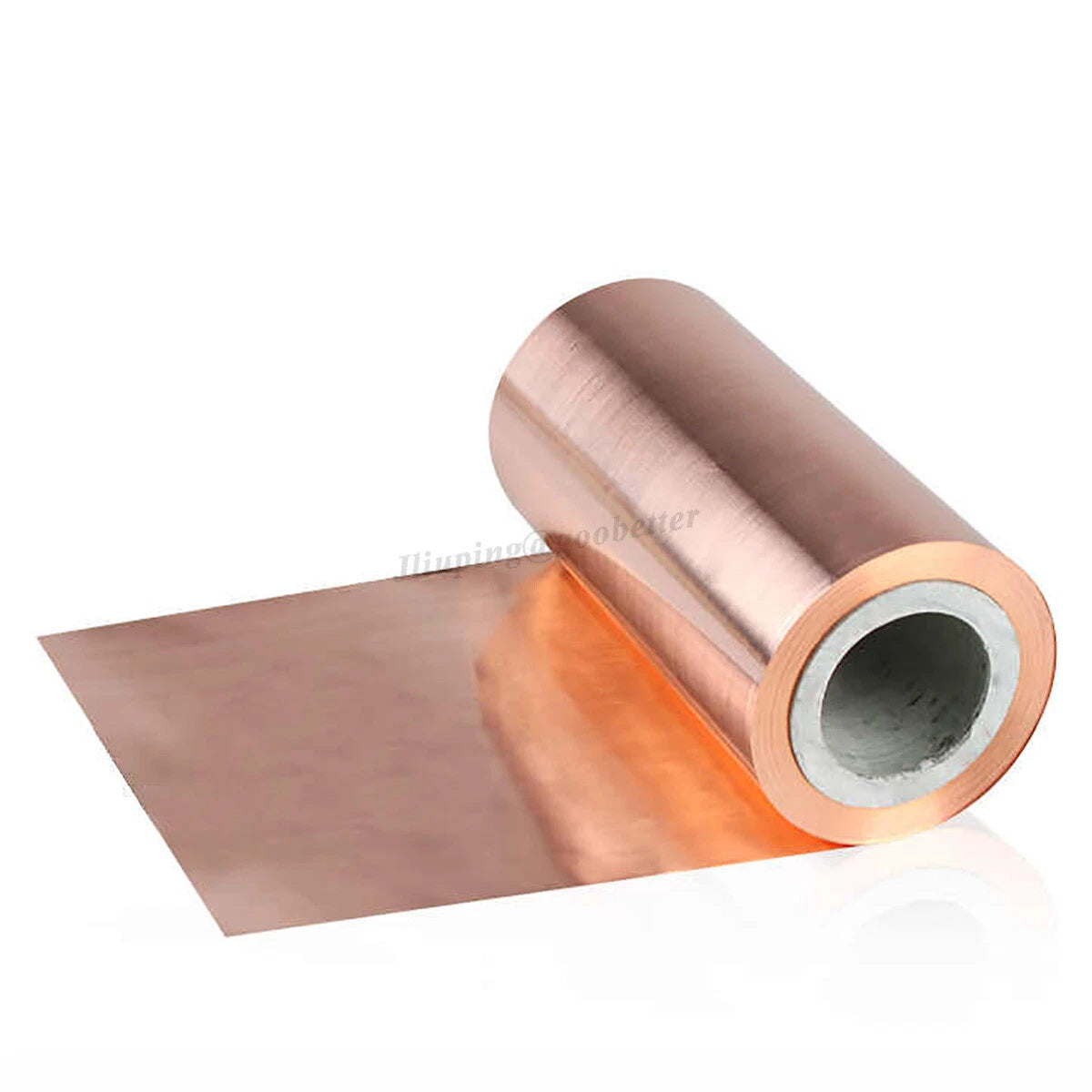
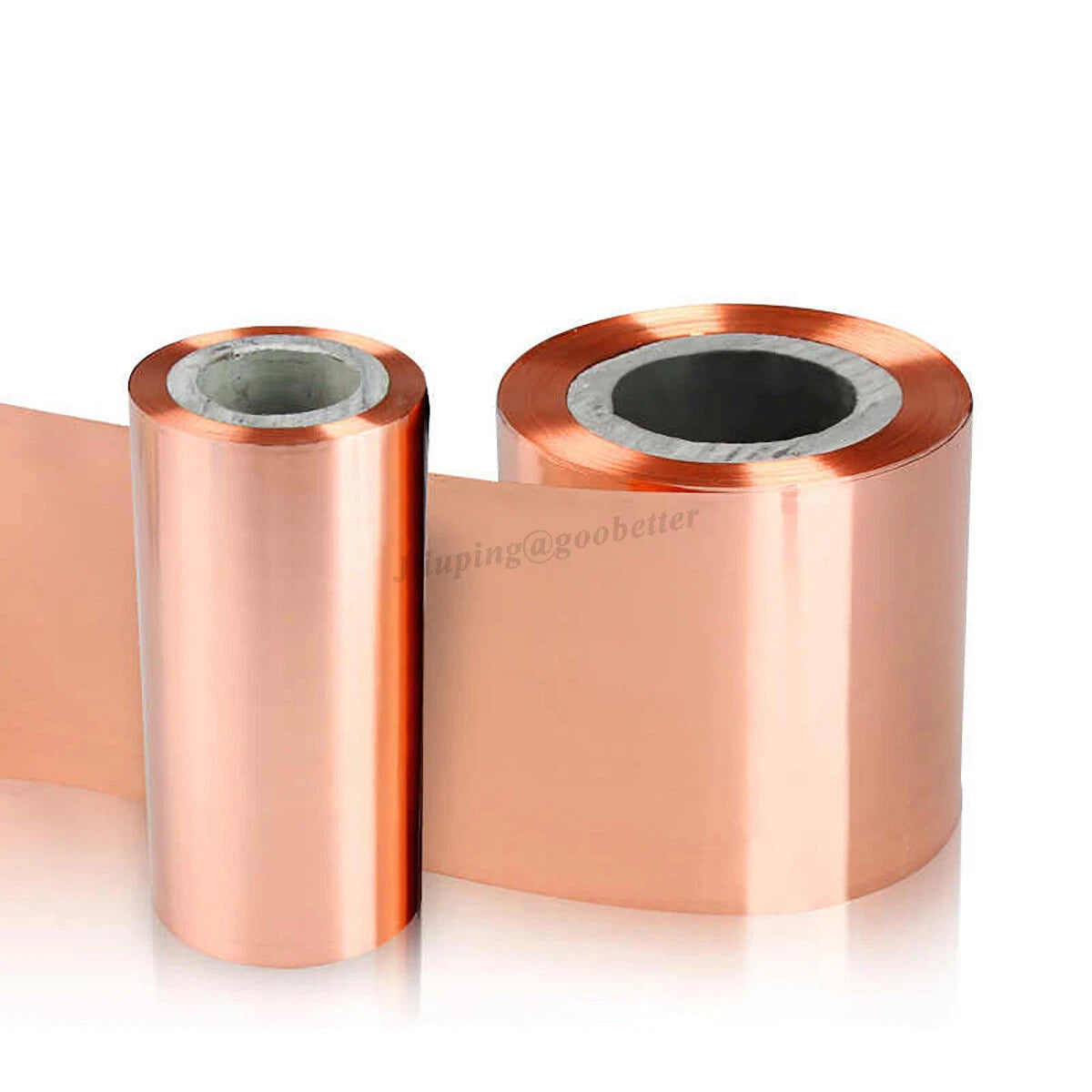
When your project demands a conductor that won't let you down — whether you're shielding a PCB, lining a heat sink, or crafting fine metalwork — finding a copper strip cut to the exact width you need is half the battle. This T2 copper sheet roll is stocked specifically for makers, engineers, and tradespeople who need dimensional accuracy without ordering custom blanks.
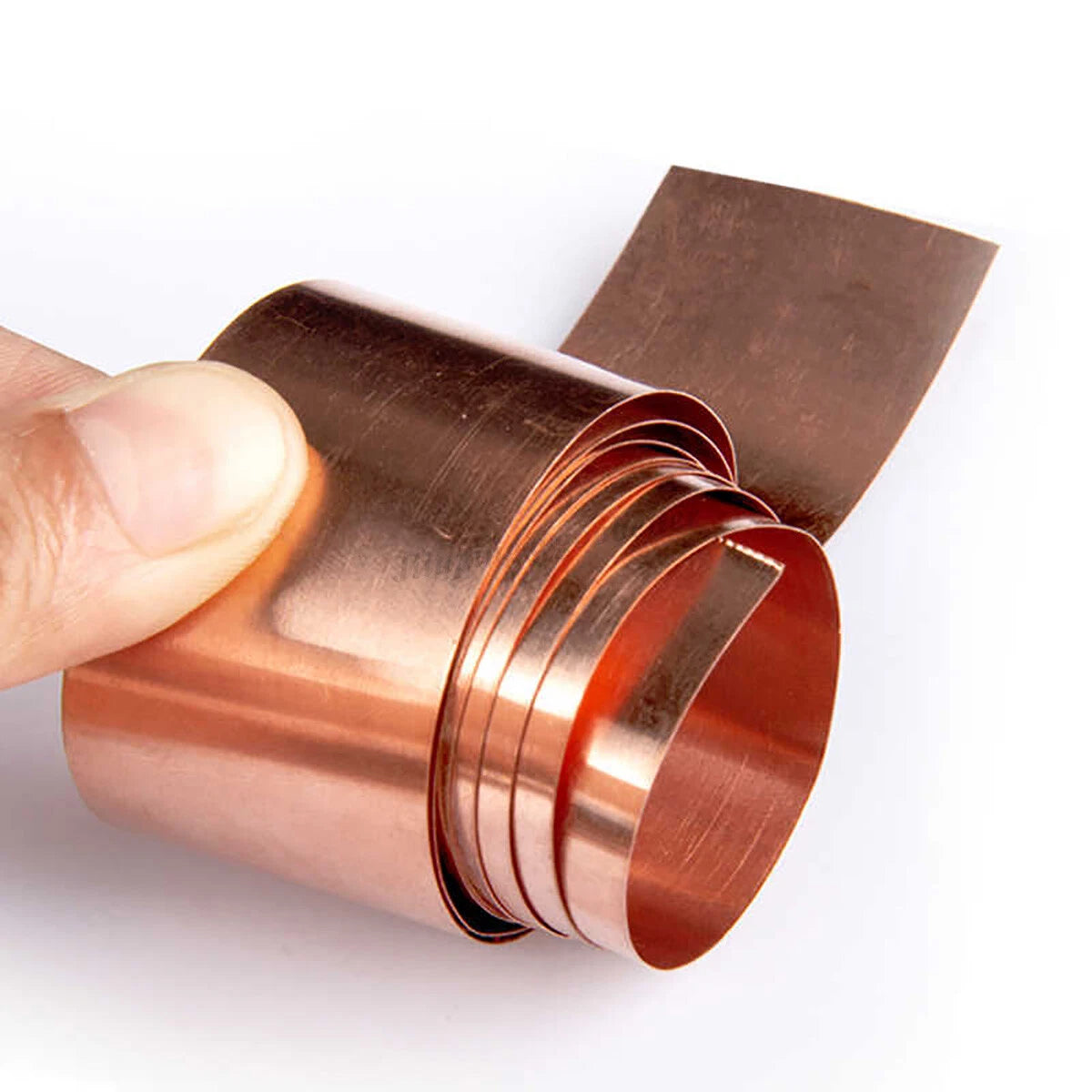
Each roll is made from T2-grade pure copper (≥99.9% Cu), supplied as a flat foil strip 1000mm (39.4 in) long. Thickness options run from 0.4mm to 1mm (0.016–0.039 in), and widths span 5mm to 90mm (0.20–3.54 in), giving you a matrix of sizes to match your exact cross-section requirement.
Typical applications include copper tape for EMI/RFI shielding in electronics enclosures, thin shim stock for mechanical gap-filling and alignment, grounding straps in electrical panels, heat spreader strips in LED assemblies, and decorative inlay work in woodworking or jewelry. The consistent rolled surface finish ensures reliable solderability and low-resistance contact across the full length.
| Material Grade | T2 Pure Copper (≥99.9% Cu) |
|---|---|
| Thickness Options | 0.4mm / 0.5mm / 0.6mm / 0.8mm / 1mm |
| Width Options | 5mm – 90mm (see variant options) |
| Length | 1000mm (≈39.4 in) per piece |
| Surface Finish | Mill-rolled, bright copper |
| Electrical Resistivity | ≈1.72 µΩ·cm (at 20°C) |
| Thermal Conductivity | ≈385 W/m·K |
| Tensile Strength | Typically 200–280 MPa (soft/annealed condition) |
| Elongation | Typically ≥30% (soft condition) |
| Solderability | Compatible with Sn-Pb and lead-free solder |
| Form Factor | Flat strip / foil roll |
| Quantity per Order | 1 piece (1000mm strip) |
For EMI/RFI shielding tape and light grounding straps, 0.4–0.5mm is typically sufficient and easy to bend around corners. For structural shims, heat spreaders, or applications requiring mechanical rigidity, 0.8–1mm provides better dimensional stability. If you need to solder the strip into a tight channel, thinner gauges (0.4–0.6mm) are easier to work with.
T2 is the Chinese national standard designation for electrolytic tough-pitch copper, which is functionally equivalent to C11000 (ASTM) and Cu-ETP (EN). All three specify ≥99.9% copper content with similar electrical and mechanical properties, so T2 strip is a direct substitute in most electrical and thermal applications.
Yes. The mill-rolled surface is clean enough for standard soft soldering with rosin-core or no-clean flux. For best results, lightly abrade the joint area with fine sandpaper (400-grit) to remove any surface oxide before applying flux and solder. Lead-free (SAC305) and traditional Sn63/Pb37 solders both work well.
Copper naturally oxidizes in air, forming a thin patina layer. In most indoor electrical and electronic applications this does not affect conductivity significantly. For outdoor or high-humidity environments, consider applying a clear lacquer or conformal coating after installation. The patina can be removed with a mild acid solution (e.g., diluted citric acid) if a bright finish is required.
Standard widths available are 5, 6, 8, 10, 12, 15, 17, 18, 20, 25, 30, 35, 40, 45, 50, 55, 60, 65, 70, 75, 80, and 90mm — all at 1000mm length. If you need a width outside this range or a different length, please contact us to confirm availability for custom cuts.
Yes, T2 copper strip is widely used for grounding and bonding applications. For panel grounding straps, a width of 20–50mm at 0.8–1mm thickness provides adequate cross-sectional area for most low-voltage panel applications. Always verify the required cross-section against your local electrical code and the fault current rating of the circuit.
Thin gauges (0.4–0.6mm) can be scored and snapped cleanly with a metal ruler and utility knife, or cut with heavy-duty scissors or tin snips. For 0.8–1mm thickness, tin snips or an angle grinder with a thin cutting disc give the cleanest edge. Deburr cut edges with a fine file or sandpaper before handling to avoid sharp burrs.