The chain is fine...but I ordered the wrong size. Nine links of the chain I ordered equals six of the size I wanted. My error...
How can I straighten out the springs? I can't use them coil uo as is.
Your payment information is processed securely. We do not store credit card details nor have access to your credit card information.
Get fitment advice & recommendations
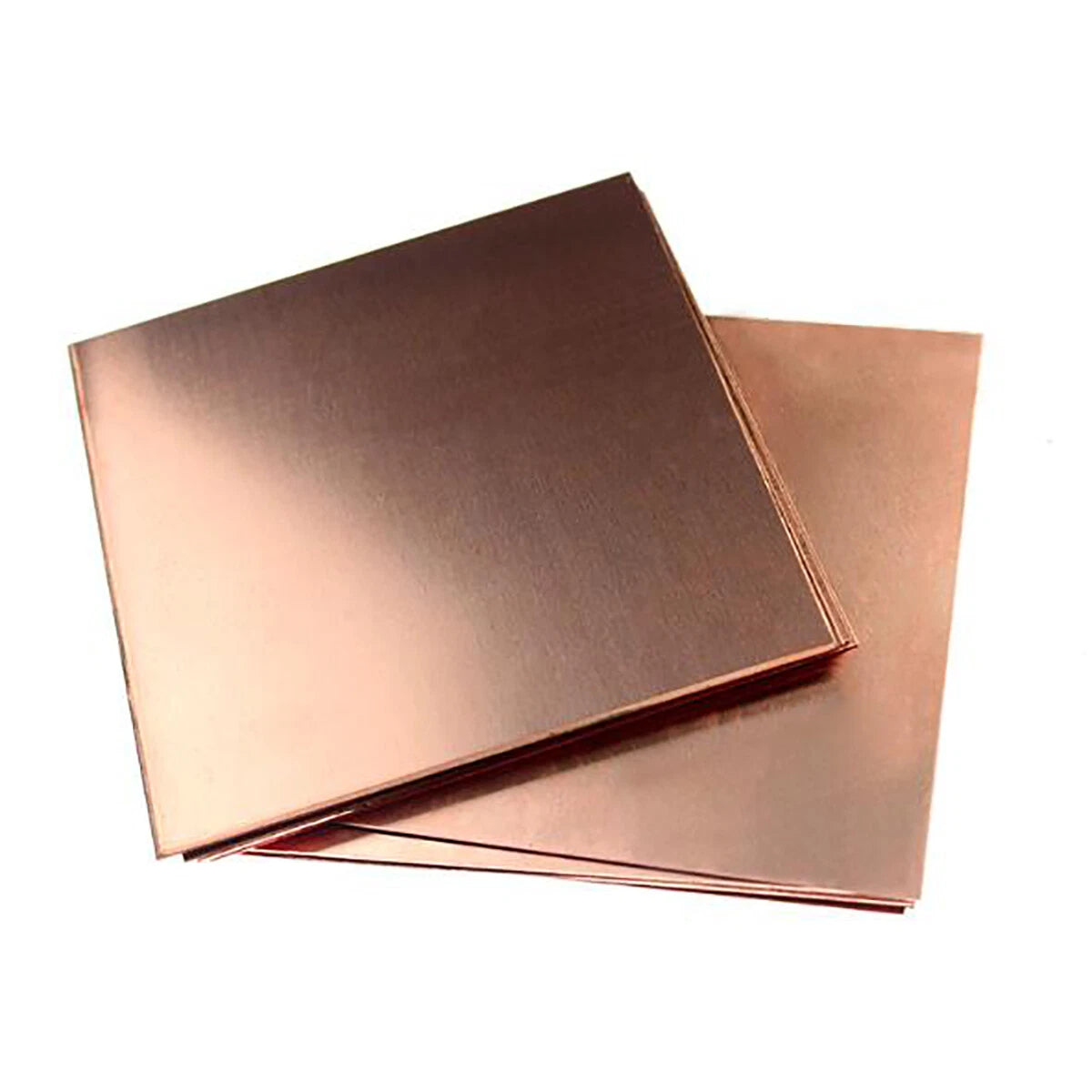
When your project demands reliable electrical conductivity and clean, workable metal stock, standard sheet materials fall short. Makers, electricians, jewelers, and small-workshop fabricators who need a dependable copper sheet plate turn to T2-grade copper for its consistent purity and predictable performance across a wide range of thicknesses.
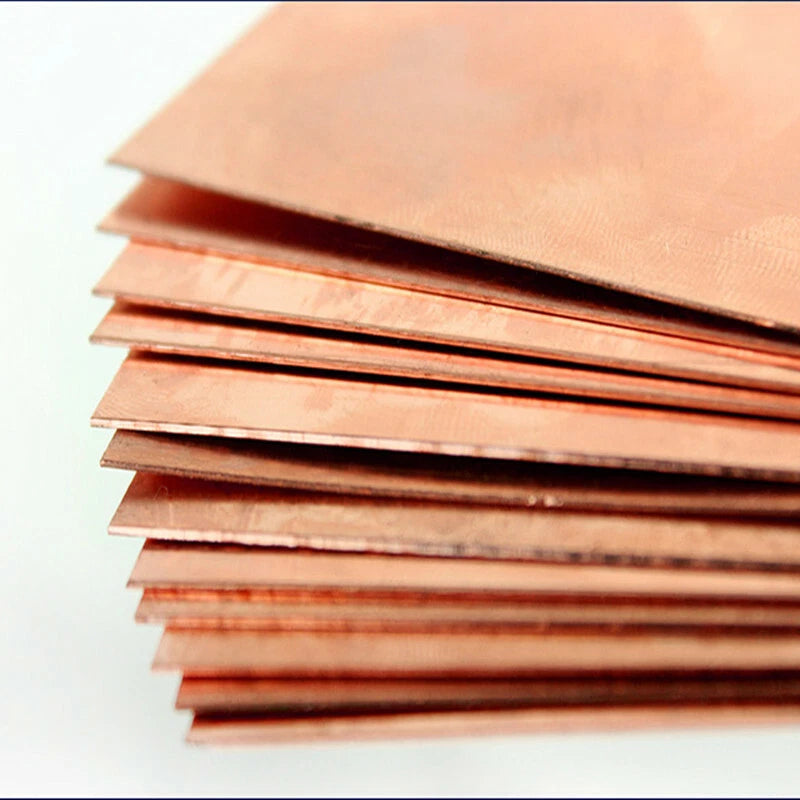
Each sheet is cut from T2 pure copper — one of the most widely used commercial copper grades, known for its high conductivity and excellent formability. Sheets are available in thicknesses from 0.5 mm (approx. 0.020 in) up to 5 mm (approx. 0.197 in), and in planar dimensions ranging from 35×50 mm (approx. 1.4×2.0 in) up to 250×300 mm (approx. 9.8×11.8 in). Edges are laser-cut for dimensional accuracy and clean, burr-reduced profiles.
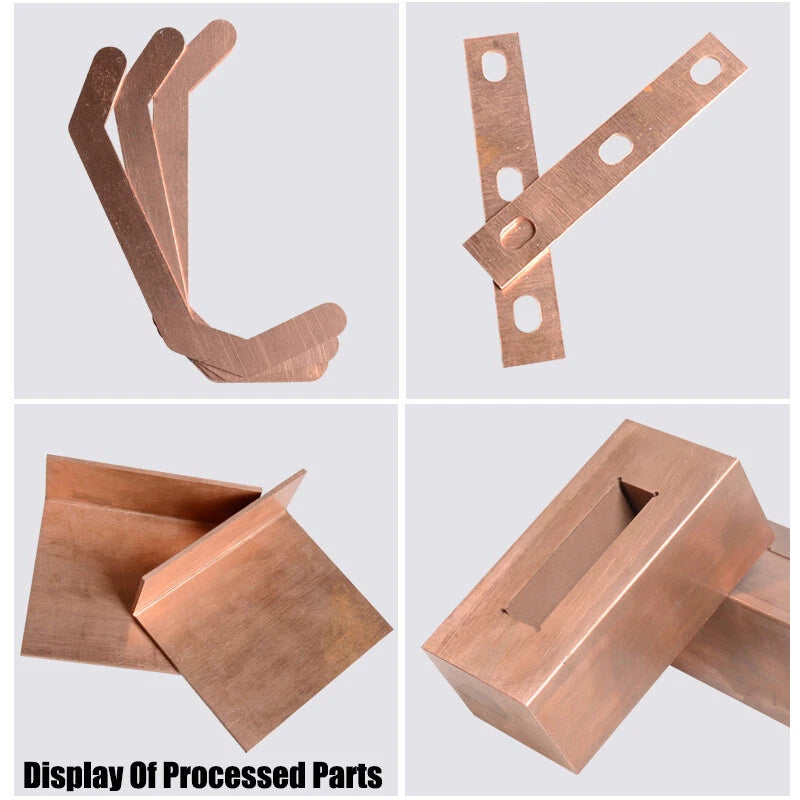
Typical applications include custom bus bars and grounding straps for electrical panels, heat-sink shims and thermal interface pads in electronics builds, decorative inlays and metalwork accents for woodworking and jewelry, and RF shielding blanks for DIY radio and audio projects. Whether you need a thin 0.8 mm shim or a solid 5 mm block-style plate, this copper sheet plate selection covers the full range.
T2 designation indicates a commercially pure copper with high electrical conductivity (typically ≥99.9% Cu), making it suitable for both conductive and decorative applications.
Available from 0.5 mm to 5 mm thick, covering thin shim stock through solid plate — select the exact thickness your project requires.
Edges are laser-cut for dimensional accuracy and reduced burrs, saving prep time compared to sheared or sawn stock.
Choose from 12 planar dimensions — from compact 35×50 mm pieces up to large 250×300 mm sheets — to minimize waste for your specific cut plan.
T2 copper bends, stamps, and machines cleanly. Thinner gauges (0.5–1.5 mm) are hand-bendable; thicker plates (3–5 mm) suit machining and milling operations.
Copper develops a protective patina over time, offering inherent resistance to atmospheric corrosion without additional coatings in most indoor and sheltered outdoor environments.
| Material | T2 Pure Copper (≥99.9% Cu) |
|---|---|
| Thickness Range | 0.5 mm – 5 mm (0.020 in – 0.197 in) |
| Sheet Size Range | 35×50 mm up to 250×300 mm |
| Edge Finish | Laser-cut, burr-reduced |
| Surface Finish | Mill finish (bare copper) |
| Electrical Conductivity | See variant options |
| Tensile Strength | Typically 200–250 MPa (annealed condition) |
| Hardness | See variant options (varies by thickness and temper) |
| Packing Quantity | 1–10 pcs per pack (see variant options) |
| Product Type | Copper Sheet / Copper Plate |
For shims, gaskets, and thin decorative inlays, choose 0.5–1.5 mm. For structural brackets, bus bars, and heat-sink plates, 2–3 mm offers a good balance of rigidity and workability. For heavy-duty machined parts or solid block-style stock, select 4–5 mm. If you are unsure, start with a thinner gauge — it is easier to stack or laminate thin sheets than to machine down thick plate.
Measure your finished part dimensions and add at least 5–10 mm on each side for clamping and cutting allowance. Choose the smallest available sheet size that accommodates your layout. For multiple small parts, consider ordering a larger sheet (e.g., 200×300 mm) and cutting it down, which is often more economical than ordering several small pieces.
Yes. T2 copper is a commercially pure grade with high electrical conductivity, making it well-suited for grounding straps, bus bars, and conductive shims in electrical panels and DIY electronics. Ensure all contact surfaces are clean and free of oxidation before making connections, and use appropriate copper-rated lugs or fasteners.
Bare copper naturally oxidizes and develops a patina (darkening or greenish verdigris) when exposed to air and moisture. This patina is a protective layer and does not compromise structural integrity. For applications requiring a bright finish, apply a clear lacquer or wax after cleaning. For electrical contacts, keep surfaces clean and use anti-oxidant compound where needed.
Yes. T2 copper solders and brazes readily with standard copper-compatible flux and solder (e.g., 60/40 tin-lead or lead-free alternatives). For brazing, use a silver-bearing brazing alloy and appropriate flux. Clean the surface with fine abrasive or flux before joining to ensure a strong bond.
Thinner sheets (0.5–2 mm) can be cut with aviation snips, a guillotine shear, or a jigsaw fitted with a metal-cutting blade. Thicker plates (3–5 mm) are best cut with a bandsaw, angle grinder with a metal disc, or CNC router using a carbide end mill. Copper is a soft, ductile metal — use sharp tooling and moderate feed rates to avoid work-hardening and galling.
Packing quantity refers to the number of individual sheets included in one order unit for a given size and thickness combination. For example, "35×50 mm / 0.8 mm / 10 Pcs" means you receive 10 sheets of that size and thickness. Larger sheets are typically sold in smaller quantities (1–2 pcs) due to their size and weight. Select the quantity that matches your project needs to avoid over-ordering.