The chain is fine...but I ordered the wrong size. Nine links of the chain I ordered equals six of the size I wanted. My error...
How can I straighten out the springs? I can't use them coil uo as is.
Your payment information is processed securely. We do not store credit card details nor have access to your credit card information.
Get fitment advice & recommendations
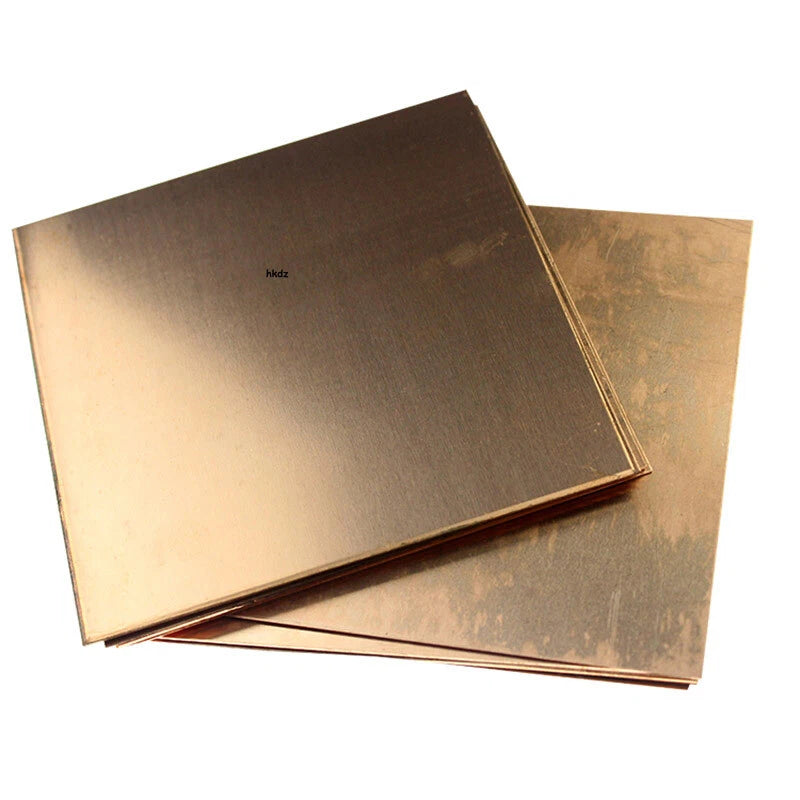
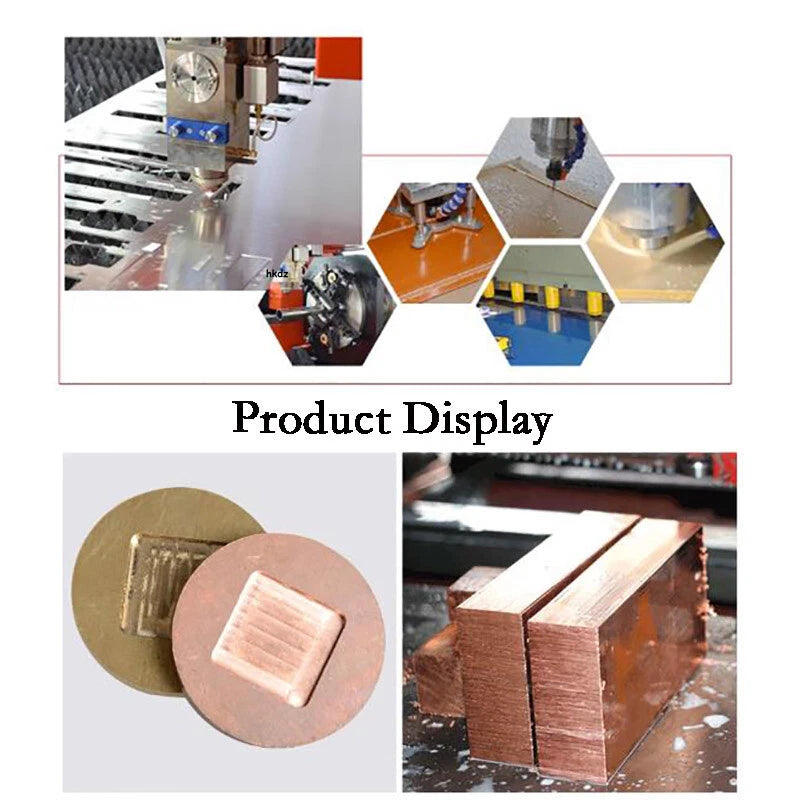
When your project demands a conductor that won't let you down, finding a copper sheet with consistent thickness and clean edges can be a real challenge. Whether you're a hobbyist winding custom coils, an electrician fabricating bus bars, or a maker building heat sinks, dimensional inconsistency and rough shearing marks waste time and material. These T2 pure copper sheet metal plates are laser-cut to exact dimensions, giving makers, engineers, and small-shop fabricators a reliable starting point every time.
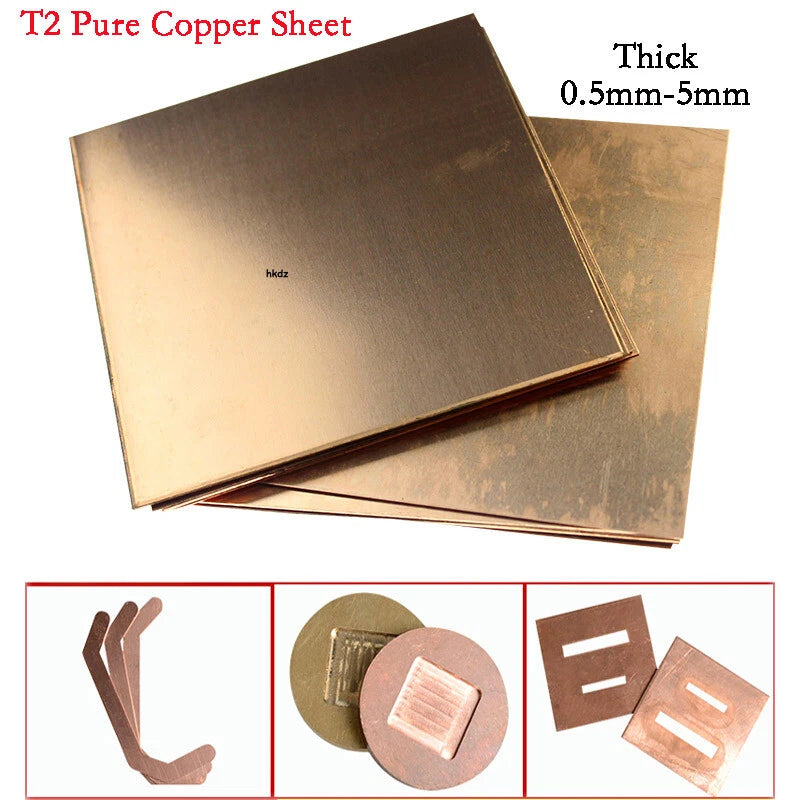
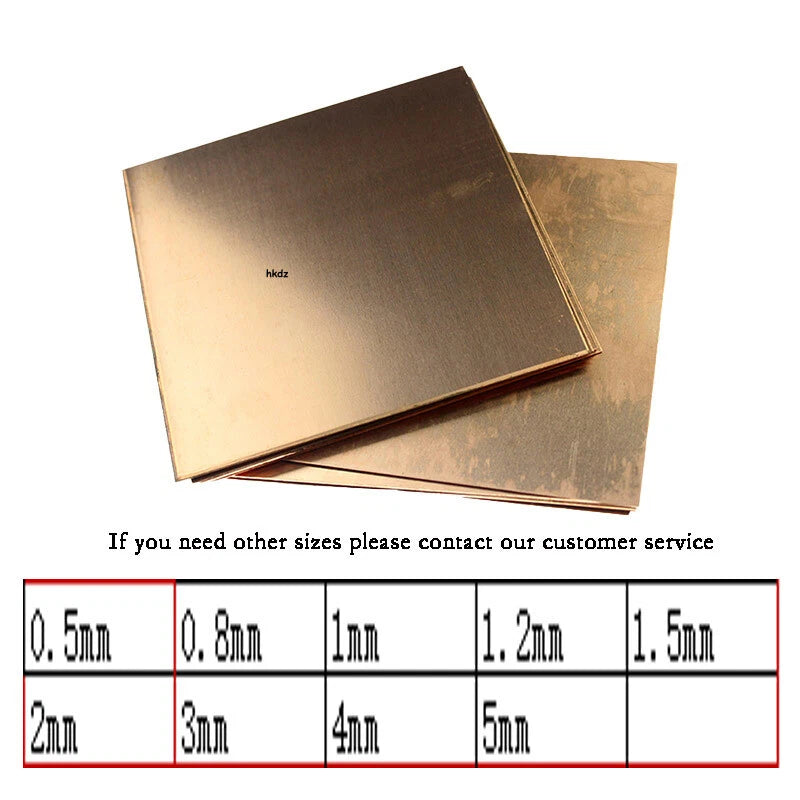
Each plate is made from T2-grade (C11000-equivalent) electrolytic tough pitch copper, offering electrical conductivity of approximately 100% IACS. Thickness options span 0.5 mm (0.020 in) to 5 mm (0.197 in), and sheet sizes range from 35×50 mm (1.38×1.97 in) up to 150×150 mm (5.91×5.91 in) and 100×200 mm (3.94×7.87 in). Edges are laser-cut for straightness and minimal burr, reducing secondary finishing work.
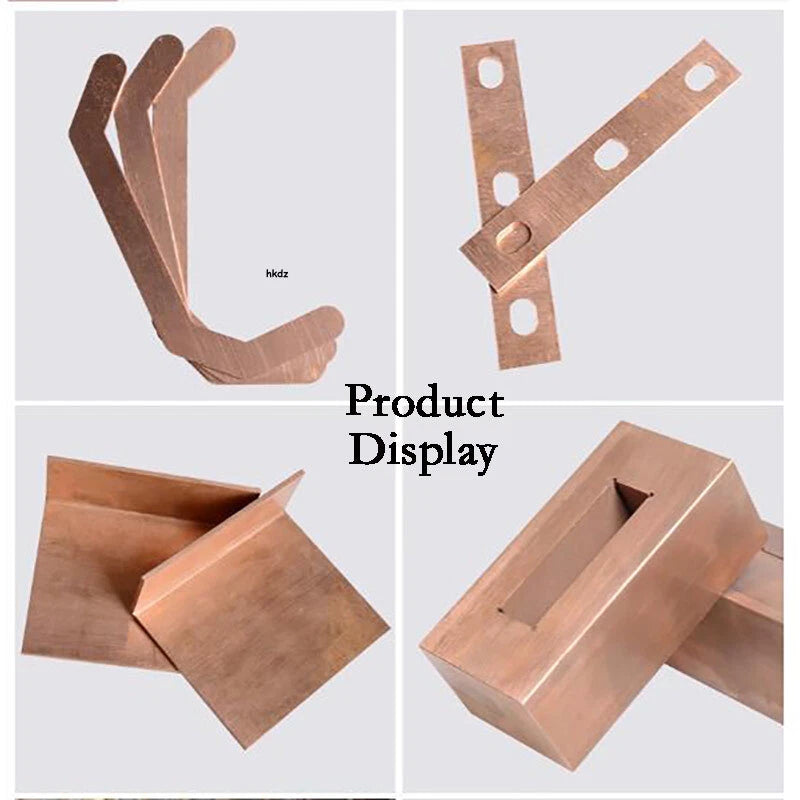
Typical applications include DIY copper bus bar fabrication for battery packs and solar systems, custom RF shielding and EMI gasket blanks, jewelry and metalsmithing blanks for copper-smithing projects, and heat spreader plates for electronics cooling builds. The multi-size, multi-thickness variant matrix lets you order exactly the stock you need without cutting waste from oversized sheets.
| Material Grade | T2 Electrolytic Tough Pitch Copper (C11000-equivalent) |
|---|---|
| Copper Content | ≥99.9% Cu |
| Electrical Conductivity | ~100% IACS |
| Thickness Range | 0.5 mm / 0.8 mm / 1 mm / 1.2 mm / 1.5 mm / 2 mm / 3 mm / 4 mm / 5 mm |
| Sheet Size Options | 35×50 mm, 55×100 mm, 70×100 mm, 100×100 mm, 150×150 mm, 100×200 mm |
| Cutting Method | Laser cut |
| Surface Finish | Mill finish (natural copper, may show light oxidation patina) |
| Quantity per Order | See variant options |
| Hardness | See variant options (varies by thickness; typically annealed or half-hard) |
| Thermal Conductivity | ~385 W/(m·K) |
| Density | ~8.9 g/cm³ |
For flexible shielding, gaskets, or craft blanks, 0.5–1 mm is typically sufficient. For bus bars, grounding straps, or structural brackets carrying moderate current, 1.5–3 mm offers a good balance of conductivity and rigidity. For heavy-duty bus bars or heat spreaders requiring mechanical strength, 4–5 mm is recommended. When in doubt, calculate the required cross-sectional area based on your target current load and select the thickness and width combination that meets it.
Yes, T2 is the Chinese national standard designation for electrolytic tough pitch (ETP) copper, which is functionally equivalent to ASTM C11000. Both specify ≥99.9% copper content and are the standard grade used for electrical conductors, bus bars, and heat exchangers. If your specification calls for C110 or ETP copper, T2 meets those requirements.
Copper naturally oxidizes when exposed to air and moisture, forming a darkened patina or, over longer periods, a green verdigris layer. This surface oxidation does not significantly affect bulk electrical or thermal conductivity. For applications where surface conductivity matters (e.g., RF contacts), clean the surface with a mild acid solution or fine abrasive before use. For decorative applications, a clear lacquer coat can preserve the bright copper appearance.
Yes. T2 copper solders readily with standard rosin-core or water-soluble flux and common tin-lead or lead-free solders. For brazing, use a copper-phosphorus or silver-bearing brazing alloy with appropriate flux. Clean the surface of any oxidation before soldering or brazing to ensure a strong, low-resistance joint. Avoid overheating thin gauges (0.5–1 mm) to prevent warping.
Laser-cut edges are generally cleaner and straighter than shear-cut edges, with minimal burr. However, as with any metal sheet, edges can be sharp, especially on thicker gauges (3–5 mm). We recommend wearing cut-resistant gloves when handling, and lightly filing or sanding edges if the application involves frequent contact or if you are working with thin gauges that may have a slight laser-cut kerf edge.
For small lithium battery packs (e.g., 18650 or LiFePO4 cells up to ~50A continuous), a 2–3 mm thick plate in the 55×100 mm or 100×100 mm size is a common starting point. You can then cut or drill to your specific cell layout. For higher-current applications, increase thickness or width to reduce resistance. Always verify the cross-sectional area against your system's maximum continuous current rating with an appropriate safety margin.
Yes. Sheets up to 1.5 mm thick can typically be cut with aviation snips or a metal-cutting jigsaw blade. Thicker plates (2–5 mm) are best cut with a hacksaw, angle grinder with a metal-cutting disc, or a bandsaw fitted with a bi-metal blade. Drilling is straightforward with standard HSS drill bits; use cutting oil to extend bit life and improve hole quality. Always clamp the workpiece securely before cutting or drilling.