The chain is fine...but I ordered the wrong size. Nine links of the chain I ordered equals six of the size I wanted. My error...
How can I straighten out the springs? I can't use them coil uo as is.
Your payment information is processed securely. We do not store credit card details nor have access to your credit card information.
Get fitment advice & recommendations
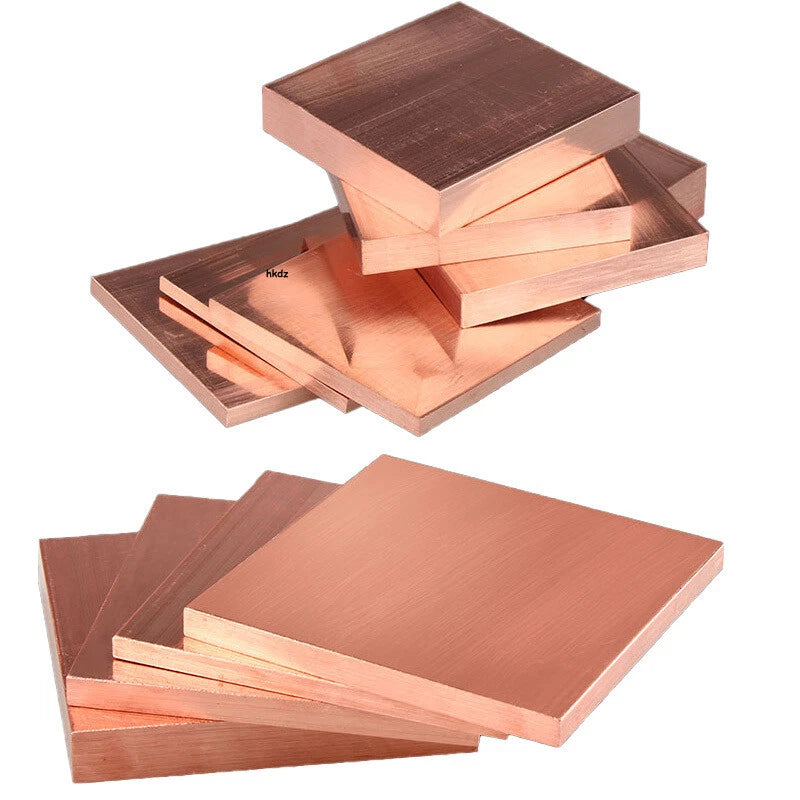
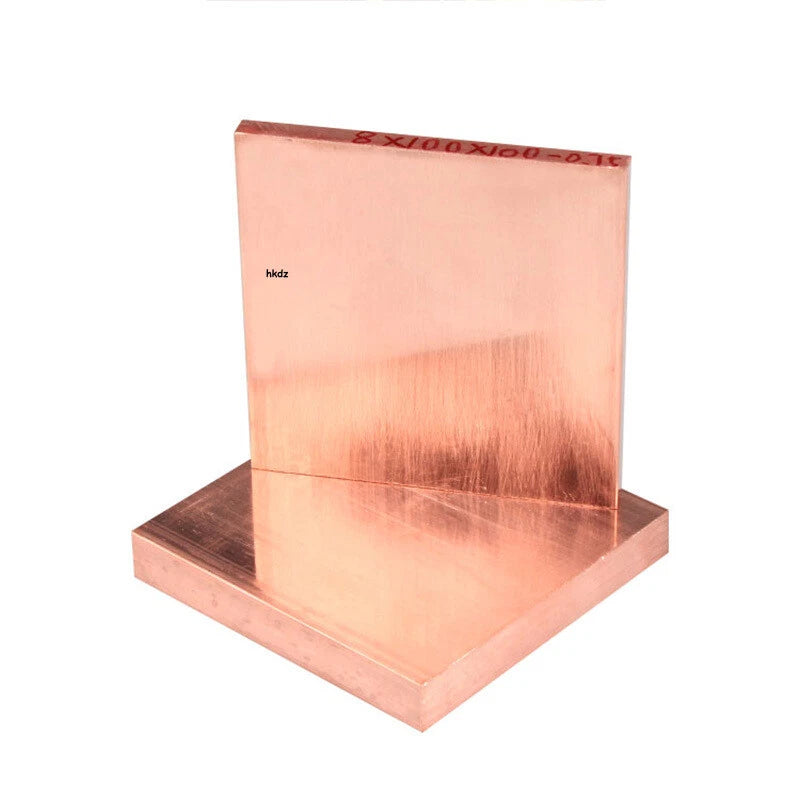
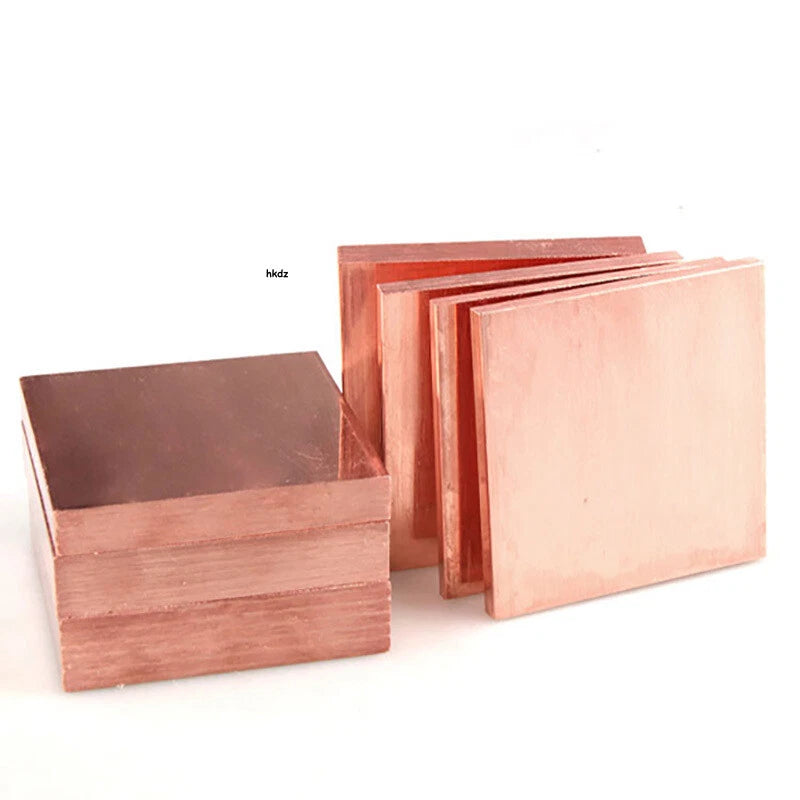
When your project demands reliable electrical conductivity and clean, precise dimensions, generic sheet metal simply won't do. Whether you're a maker building custom bus bars, an electronics hobbyist fabricating heat sinks, or a craftsperson working on decorative metalwork, sourcing flat copper stock that's both dimensionally accurate and consistently pure is a constant challenge. These T2 pure copper plates are cut to exact specifications so you can focus on building, not on trimming and fitting.
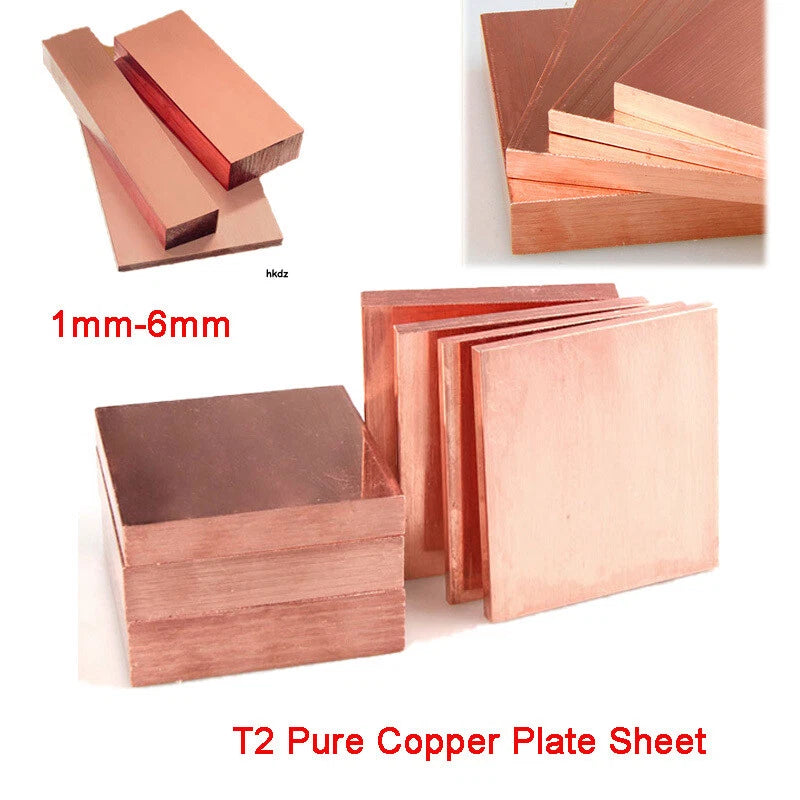
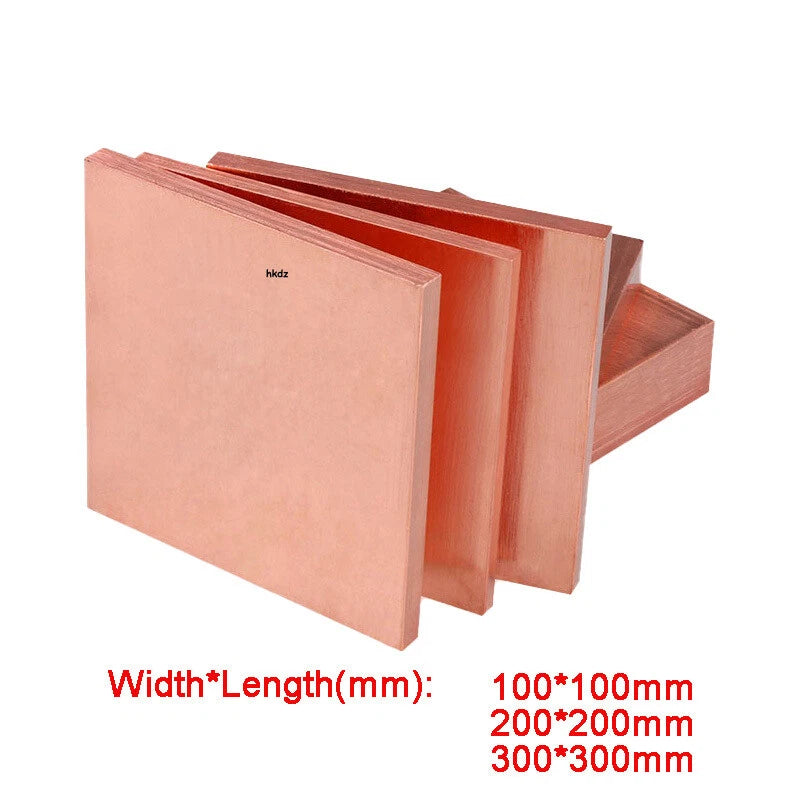
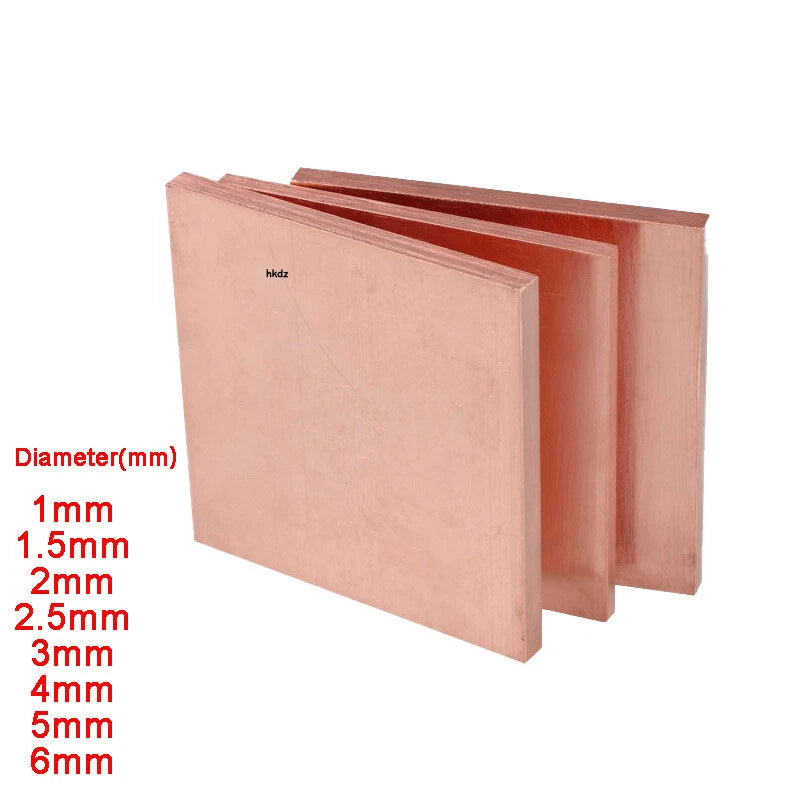
Each plate is made from T2-grade copper (≥99.9% Cu), a commercially pure alloy known for its outstanding electrical and thermal conductivity. Available in thicknesses from 1mm to 6mm (0.039" to 0.236") and square formats of 100×100mm (3.94"×3.94"), 200×200mm (7.87"×7.87"), and 300×300mm (11.81"×11.81"), these sheets are laser cut for straight, burr-minimized edges. Surface finish is mill-bright with a natural copper tone.
Typical use cases include DIY copper bus bar fabrication for battery packs and electrical panels, custom RF shielding plates for electronics enclosures, decorative inlay and etching projects for woodworking and jewelry making, and thermal interface shims in heat management assemblies. Long-tail applications such as "copper sheet for lithium battery tab welding" and "flat copper stock for grounding straps" are well served by this range of thicknesses and sizes.
| Material | T2 Pure Copper (≥99.9% Cu) |
|---|---|
| Item Type | Metal Sheet / Flat Stock |
| Thickness Range | 1mm, 1.5mm, 2mm, 2.5mm, 3mm, 4mm, 5mm, 6mm (0.039"–0.236") |
| Width × Length Options | 100×100mm (3.94"×3.94"), 200×200mm (7.87"×7.87"), 300×300mm (11.81"×11.81") |
| Cut Method | Laser Cut |
| Surface Finish | Mill-bright, natural copper tone |
| Electrical Conductivity | ≥97% IACS |
| Thermal Conductivity | ~385 W/m·K |
| Quantity per Pack | See variant options (1, 2, 3, 5, or 8 PCS) |
| Condition | Brand New |
For flexible applications like RF shielding foil, decorative inlay, or thin heat spreaders, 1–1.5mm is typically sufficient. For bus bars, grounding straps, or structural brackets that need rigidity, 2–3mm is a common choice. For heavy-duty electrical contacts or machined components, 4–6mm provides the mass and mechanical strength required. When in doubt, match the thickness to the current-carrying capacity or mechanical load spec of your design.
T2 copper is a commercially pure copper grade with a minimum purity of 99.9% Cu. It is equivalent to C11000 (ETP copper) in the ASTM system and is the most widely used grade for electrical applications. Compared to brass or bronze alloys, T2 copper offers significantly higher electrical and thermal conductivity. Compared to oxygen-free copper (OFC/C10100), T2 is more cost-effective while still delivering excellent conductivity for the vast majority of DIY and industrial applications.
Yes. T2 copper solders and brazes readily with standard rosin-core or acid-core flux and common solders (Sn60/Pb40, lead-free SAC305, etc.). For silver brazing, use a silver-bearing brazing alloy with an appropriate flux. Clean the surface with fine abrasive or flux before joining to remove any oxide layer for best results.
Copper naturally oxidizes when exposed to air and moisture, developing a darkened patina (cuprite) and eventually a green verdigris in humid or outdoor environments. This patina is stable and actually slows further corrosion. For applications where appearance matters or where the surface must remain conductive (e.g., electrical contacts), apply a clear lacquer, tin plating, or keep the surface clean and dry. For most structural and thermal applications, the natural patina does not affect performance.
Yes. T2 copper machines well with standard carbide tooling — use sharp tools, adequate lubrication, and moderate feed rates to avoid work-hardening. For laser engraving, copper's high reflectivity means fiber lasers are strongly preferred over CO₂ lasers; CO₂ lasers may struggle to mark copper effectively. Thinner plates (1–2mm) are also suitable for waterjet cutting if you need custom shapes beyond the standard square formats.
Use the variant selectors above to choose your Thickness (mm), Width×Length (mm), and Quantity (pcs). The 100×100mm size suits small components and prototypes; 200×200mm covers medium panels and bus bar blanks; 300×300mm is ideal for larger shielding panels or when you need to cut multiple smaller pieces from a single sheet. Order multi-packs (2, 3, 5, or 8 PCS) for batch projects to reduce per-unit cost.
Thin variants (1–1.5mm) can be bent with standard sheet metal hand tools such as a bench vise and mallet or a small hand brake. At 2–2.5mm, a bench-mounted sheet metal brake is recommended for clean, consistent bends. Plates 3mm and thicker typically require a press brake or hydraulic bender for accurate forming without cracking. Always bend across the grain direction where possible and anneal (heat to dull red, then quench or air cool) if the copper has work-hardened.