
The chain is fine...but I ordered the wrong size. Nine links of the chain I ordered equals six of the size I wanted. My error...
How can I straighten out the springs? I can't use them coil uo as is.
Your payment information is processed securely. We do not store credit card details nor have access to your credit card information.
Get fitment advice & recommendations
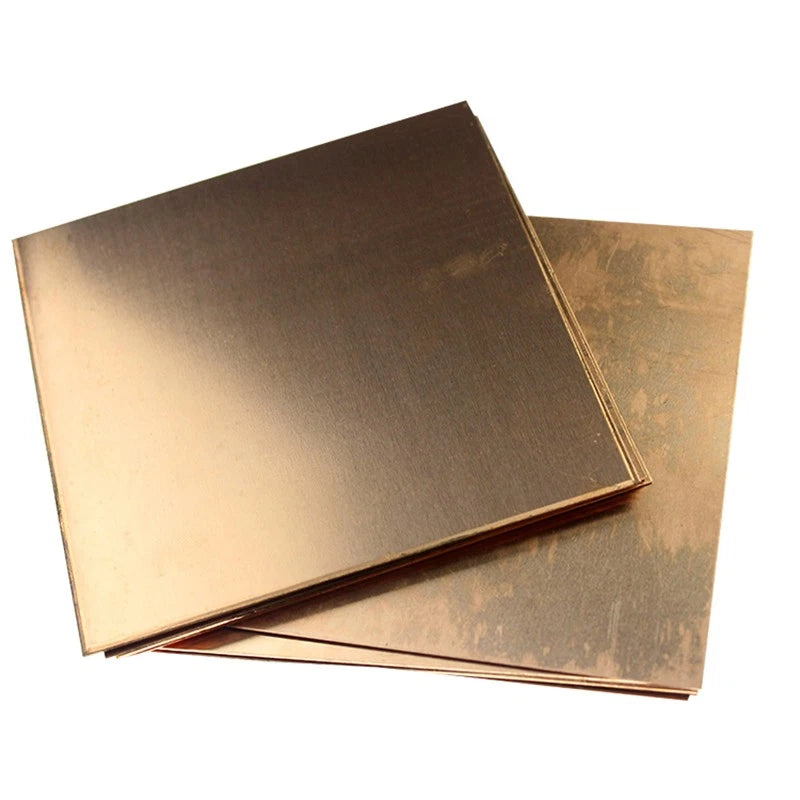
When your project demands reliable electrical conductivity, thermal transfer, or a clean copper finish, finding a flat plate that holds tight tolerances without warping is a real challenge. Whether you are a hobbyist fabricator, an electronics maker, or a small-shop metalworker, this T2 copper sheet metal delivers the dimensional accuracy and surface consistency you need to get the job done right.
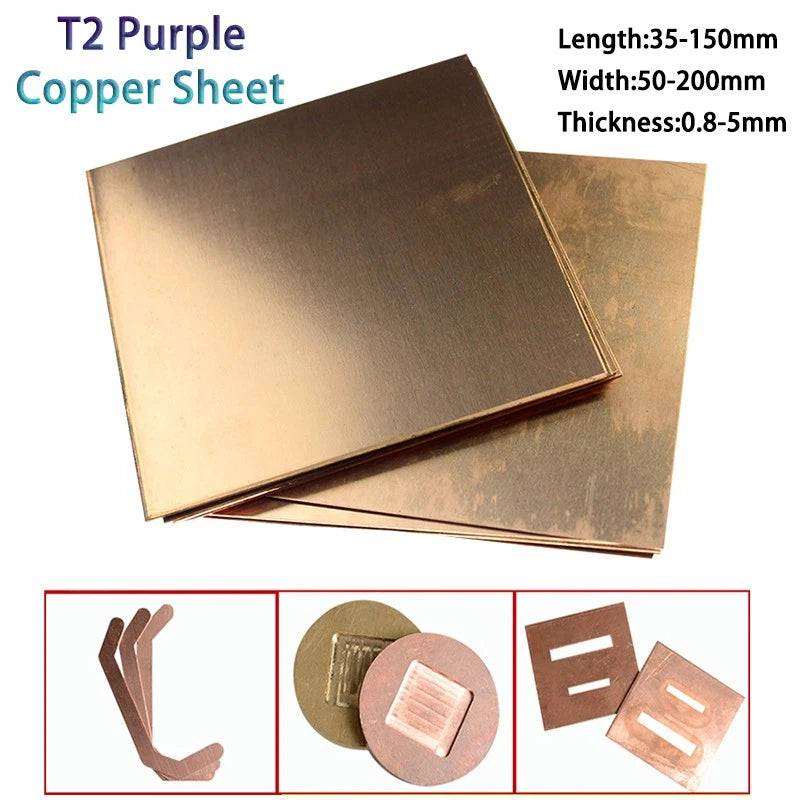
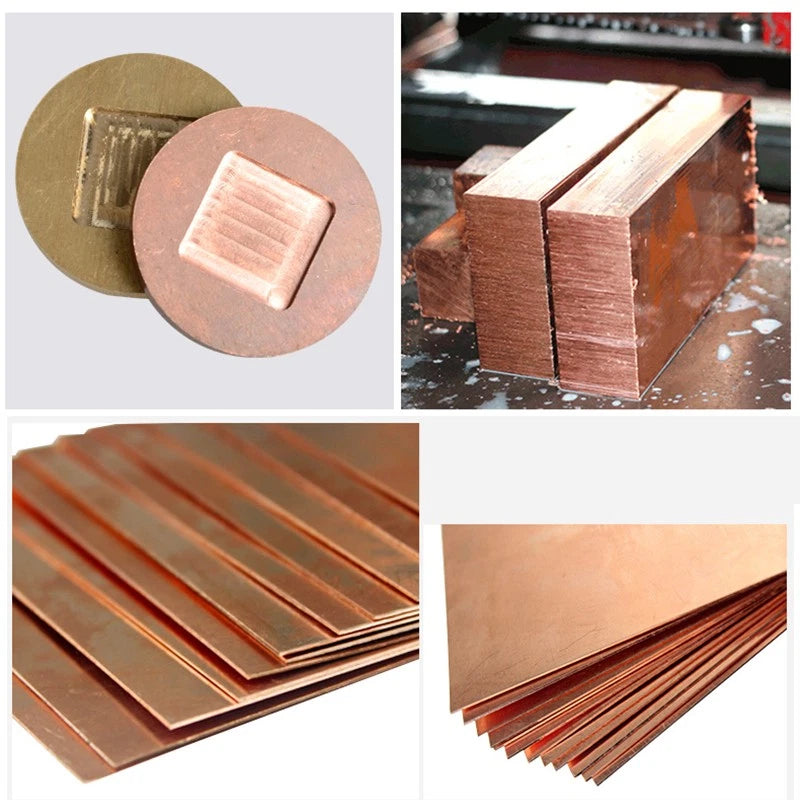
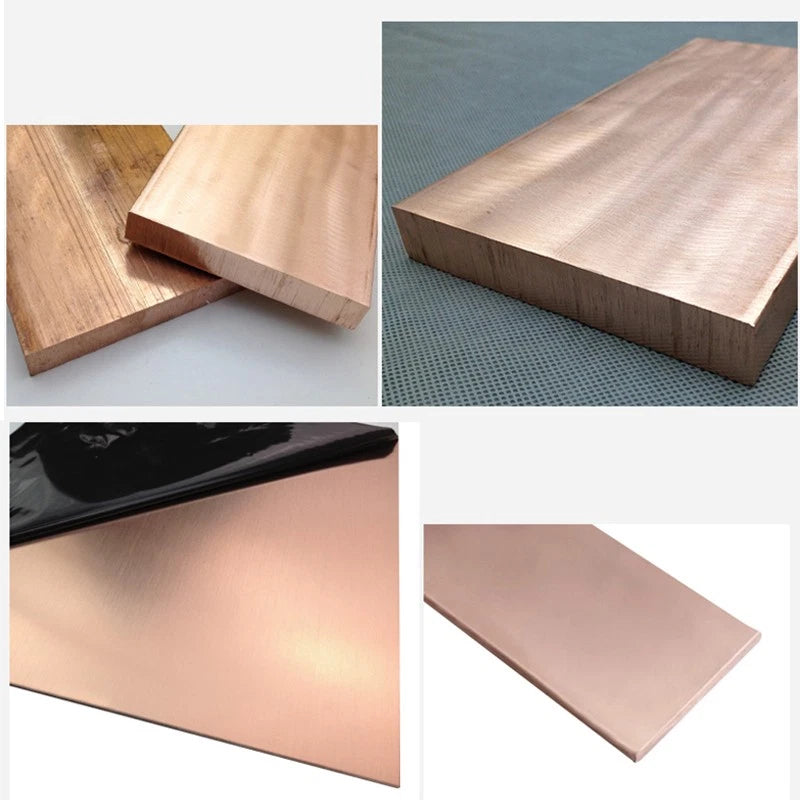
Each piece is cut from T2 (C11000) pure copper, a commercially pure grade with copper content ≥99.9%. Sheets are available in a range of flat-plate dimensions — from compact 35×50 mm (approx. 1.38"×1.97") up to 150×150 mm (approx. 5.91"×5.91") and 100×200 mm (approx. 3.94"×7.87") — with thickness options spanning 0.5 mm to 5 mm (approx. 0.020" to 0.197"). The copper foil variants (0.5–0.8 mm) offer flexibility for wrapping and shielding, while the thicker plates (3–5 mm) provide structural rigidity for machining and forming.
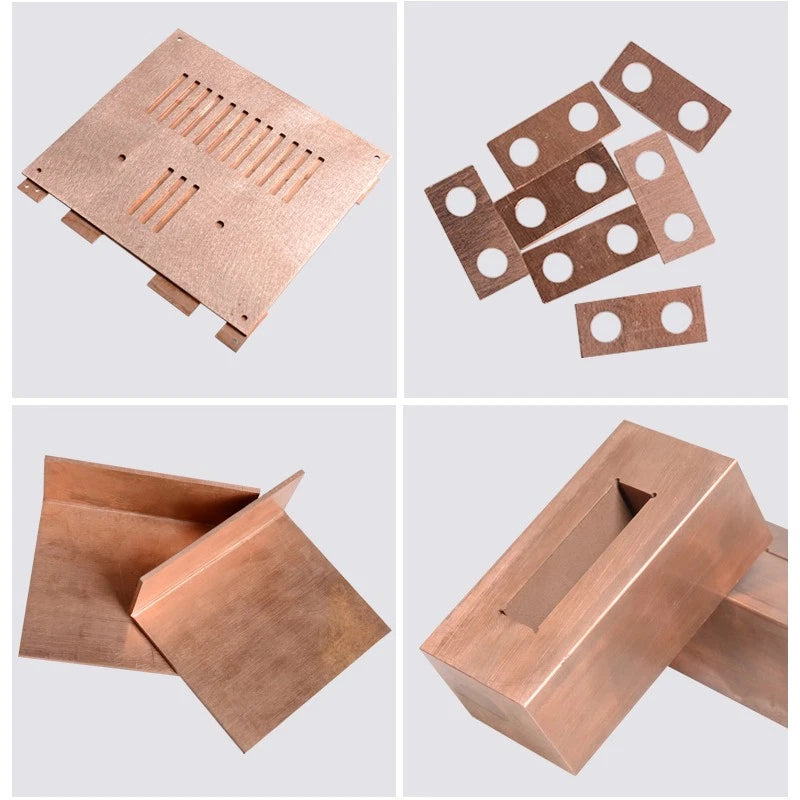
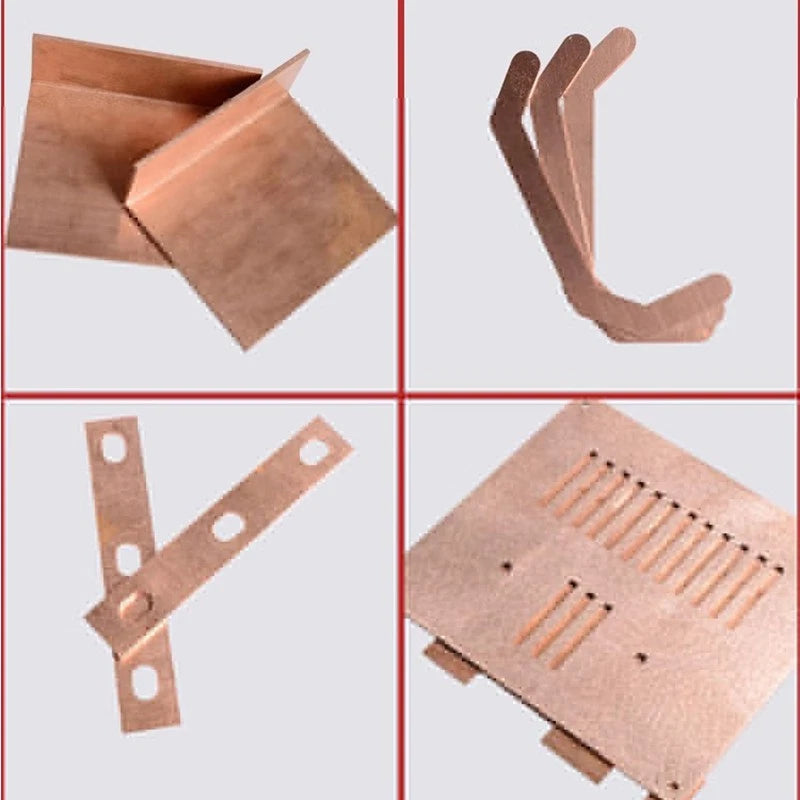
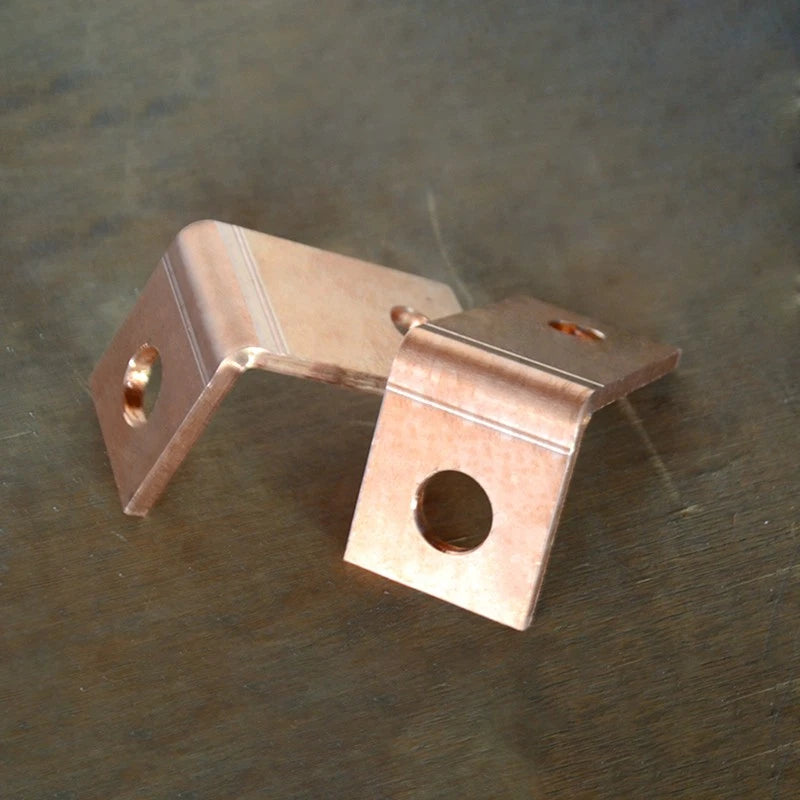
Typical use cases include RF and EMI shielding panels for electronics enclosures, heat-spreader shims between components and heatsinks, custom gaskets and washers for plumbing or HVAC repairs, decorative inlay work in woodworking and jewelry making, and bus-bar blanks for low-voltage electrical distribution boards.
| Material Grade | T2 (C11000) Commercially Pure Copper, ≥99.9% Cu |
|---|---|
| Electrical Conductivity | ≥100% IACS |
| Thermal Conductivity | ~390 W/m·K |
| Length × Width Range | 35×50 mm to 150×150 mm; also 70×100 mm and 100×200 mm |
| Thickness Range | 0.5 mm – 5 mm (0.020" – 0.197") |
| Surface Finish | Mill finish (natural copper color, may show minor tooling marks) |
| Hardness | See variant options (varies by thickness; typically annealed soft to half-hard) |
| Pack Quantity | 1 / 2 / 3 / 4 / 6 / 8 / 12 Pcs (select variant) |
| Product Type | Flat Plate / Sheet / Foil |
| Alloy Standard | ASTM B152 / GB/T 2040 equivalent |
For EMI/RF shielding and flexible wrapping, choose 0.5–0.8 mm foil variants. For heat-spreader shims and gaskets, 1–2 mm plates offer a good balance of formability and rigidity. For structural parts, bus bars, or machined components, select 3–5 mm plates. If you are unsure, 1–2 mm is the most versatile range for general DIY metalworking.
Yes. T2 is the Chinese GB standard designation for commercially pure copper equivalent to C11000 (UNS) and ETP (Electrolytic Tough Pitch) copper used in ASTM standards. All refer to ≥99.9% copper content with excellent conductivity and formability.
Yes. T2 copper solders and brazes readily. For soft soldering (electronics), use a rosin-core or water-soluble flux with standard 60/40 or lead-free solder. For brazing, use a copper-phosphorus or silver-bearing brazing alloy with appropriate flux. Lightly sand or clean the surface with isopropyl alcohol before joining for best results.
Copper does not rust (rust is iron oxide). Instead, it forms a patina — first darkening to brown, then developing a green verdigris layer over years of outdoor exposure. This patina is protective and slows further corrosion. For indoor use, the surface remains bright longer. If you need to maintain a shiny appearance, apply a clear lacquer or wax coating.
Yes. Thinner variants (0.5–1 mm) can be cut with heavy-duty scissors, aviation snips, or a utility knife and straightedge. Thicker plates (2–5 mm) are best cut with a jigsaw fitted with a metal-cutting blade, a band saw, or a CNC router with a carbide end mill. Always wear gloves — cut copper edges can be sharp.
If you are prototyping or need a single shim or gasket, the 1-piece option keeps cost low. For production runs, repairs where you expect multiple attempts, or projects requiring matched pieces (e.g., symmetric heat spreaders), the 2–12 piece packs offer a lower per-piece cost. Check the price-per-piece across pack sizes before ordering.
Yes for CNC milling — use carbide tooling, high RPM, and cutting fluid to prevent work-hardening and tool wear. For laser cutting, copper is highly reflective and requires a fiber laser (not CO₂) with sufficient power (typically ≥500W for thicknesses above 1 mm). Plasma cutting is also viable for thicker plates. Always verify your machine's copper-cutting capability before processing.





