The chain is fine...but I ordered the wrong size. Nine links of the chain I ordered equals six of the size I wanted. My error...
How can I straighten out the springs? I can't use them coil uo as is.
Your payment information is processed securely. We do not store credit card details nor have access to your credit card information.
Get fitment advice & recommendations
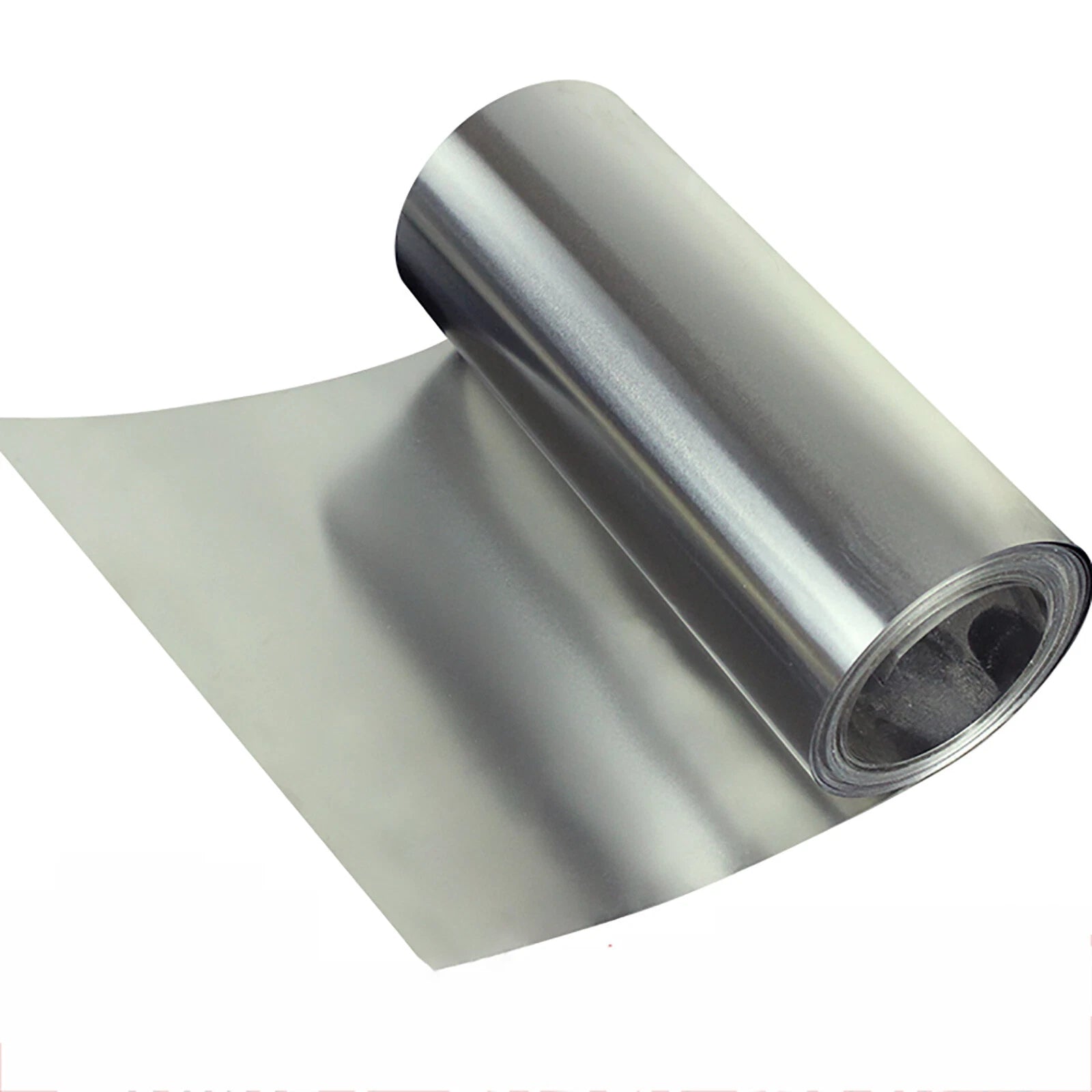
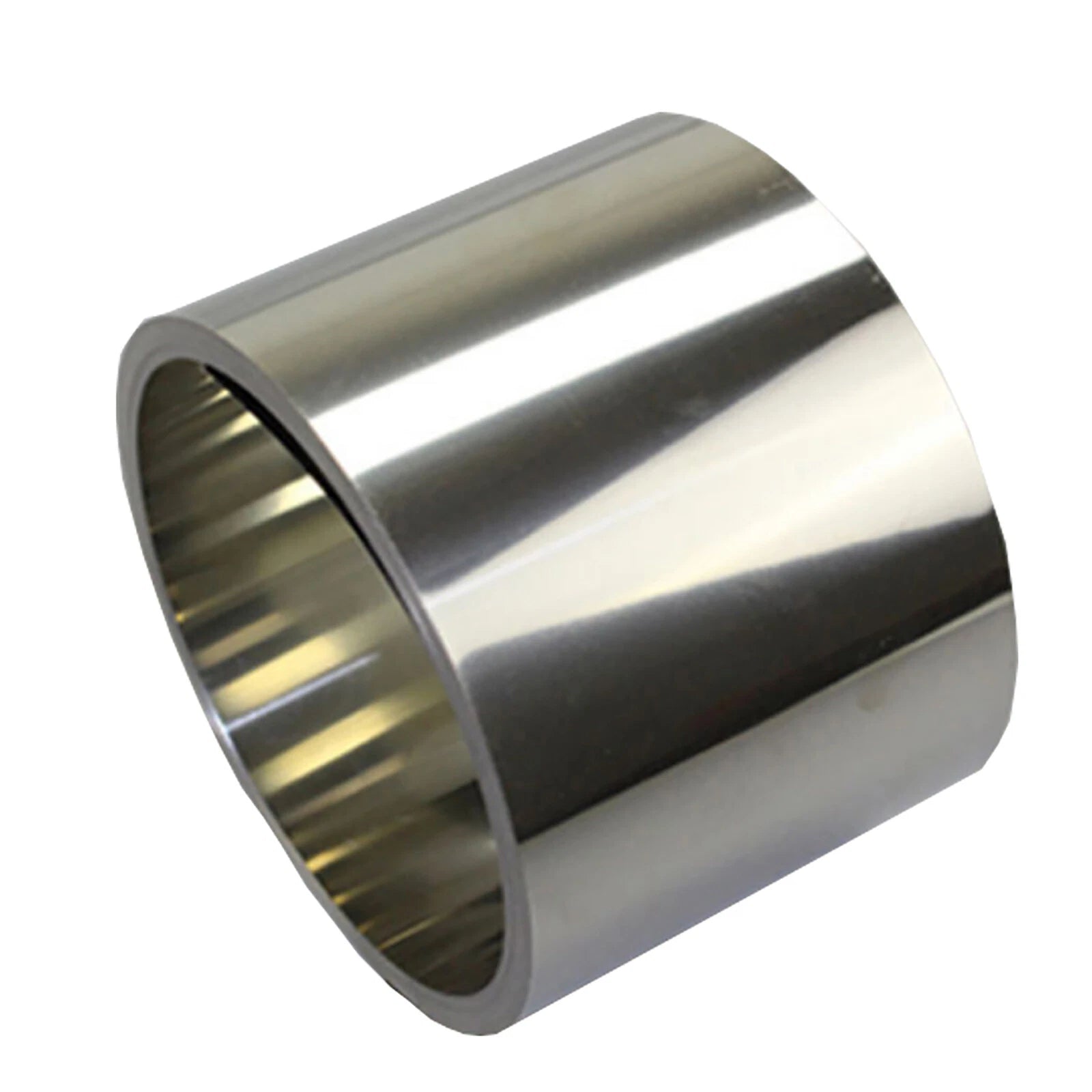
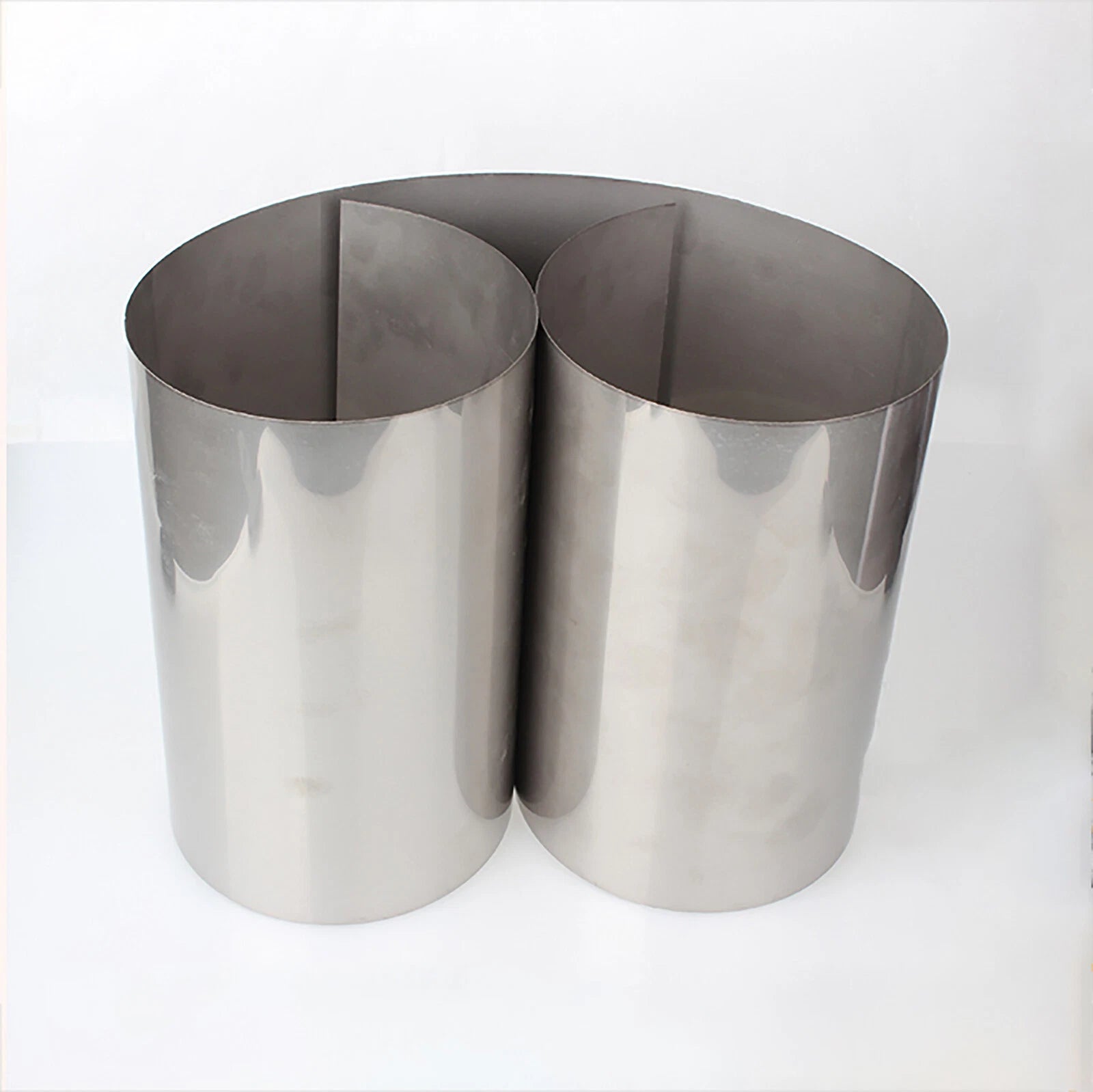
When standard sheet metal falls short — corroding in salt spray, adding unnecessary weight, or failing under repeated thermal cycling — engineers, hobbyists, and fabricators turn to TA2 titanium foil sheet. This product is designed for anyone who needs a thin, flat titanium substrate that can be cut, formed, or welded without compromising structural integrity.
Each sheet is made from TA2 commercially pure titanium (equivalent to ASTM Grade 2), available in thicknesses of 0.1, 0.2, 0.3, 0.4, and 0.5 mm, with a fixed width of 200 mm (approx. 7.87 in) and selectable lengths of 300, 400, 500, 600, or 800 mm (approx. 11.8–31.5 in). The foil surface is mill-finished with a consistent, low-oxide appearance suitable for further processing.
Typical use cases include electrochemical cell separators and anode substrates, heat shield liners in aerospace and motorsport assemblies, corrosion-resistant shim stock for marine hardware, and thin-wall enclosures for medical or laboratory instruments. The combination of low density (~4.51 g/cm³) and high specific strength makes TA2 titanium foil sheet a practical choice wherever weight budgets are tight and service environments are aggressive.
| Material Grade | TA2 (Commercially Pure Titanium, ASTM Grade 2 equivalent) |
|---|---|
| Thickness Range | 0.1 mm / 0.2 mm / 0.3 mm / 0.4 mm / 0.5 mm (see variant options) |
| Width | 200 mm (7.87 in) |
| Length Options | 300 mm / 400 mm / 500 mm / 600 mm / 800 mm (see variant options) |
| Surface Finish | Mill finish (low-oxide, as-rolled) |
| Density | ~4.51 g/cm³ |
| Tensile Strength (typical) | 345–485 MPa |
| Yield Strength (typical) | 275–410 MPa |
| Elongation (typical) | ≥20% |
| Max Continuous Service Temp. | ~300 °C (572 °F) |
| Corrosion Resistance | Seawater, dilute acids, oxidizing chlorides |
| Weldability | TIG / laser (inert atmosphere required) |
| Packing Quantity | 1 pc per order unit |
Thinner foils (0.1–0.2 mm) are best for flexible shielding, electrochemical substrates, and applications where forming or rolling is required. Mid-range thicknesses (0.3 mm) balance rigidity and formability for shim stock and heat shields. Thicker options (0.4–0.5 mm) are suited to structural liners, enclosures, and parts that must hold dimensional tolerances under load. If you are unsure, contact us with your load and deflection requirements.
TA2 (Grade 2) is commercially pure titanium with slightly higher allowable impurity levels than TA1 (Grade 1), giving it marginally higher strength while retaining excellent ductility and corrosion resistance. TC4 (Ti-6Al-4V, Grade 5) is an alloy with significantly higher strength but lower corrosion resistance in certain media and reduced weldability. For thin foil applications requiring cold forming or welding, TA2 is generally the preferred choice.
Yes. Thin titanium foil (0.1–0.3 mm) can be cut with sharp carbide-tipped shears or a guillotine cutter. Thicker foils (0.4–0.5 mm) are best cut with a waterjet, laser, or EDM wire to maintain edge quality and avoid work-hardening at the cut line. Avoid high-speed steel blades without lubrication, as titanium's low thermal conductivity can cause localized heat buildup and tool wear.
Yes. TA2 titanium forms a stable TiO₂ passive layer that resists seawater corrosion, including crevice corrosion in stagnant salt water — a common failure mode for stainless steel. It is widely used in marine heat exchangers, desalination components, and underwater hardware. For environments involving hot concentrated chlorides above 80 °C, consult a materials engineer before specifying.
TIG (GTAW) welding with TA2 or TA1 filler wire is the most common method. Laser welding is also suitable for thin foils where heat input must be minimized. Both processes require an inert gas shield (argon or helium) on both the weld face and root to prevent oxygen and nitrogen contamination, which would embrittle the weld zone. Spot welding is feasible for lap joints in the thinner gauges.
Compared to 304 stainless steel foil, TA2 titanium is approximately 43% lighter at the same thickness, with superior corrosion resistance in chloride and acidic environments, though at a higher material cost. Compared to 3003 aluminum foil, titanium offers roughly 2× the tensile strength, far better corrosion resistance, and a much higher service temperature ceiling — making it the right choice when aluminum's softness or corrosion susceptibility is a limiting factor.
The listed variants cover the standard stocked sizes. If your project requires a width other than 200 mm, a length outside the 300–800 mm range, or a thickness not listed, please use the contact form to describe your requirements. Custom cuts and quantities are handled on a case-by-case basis.