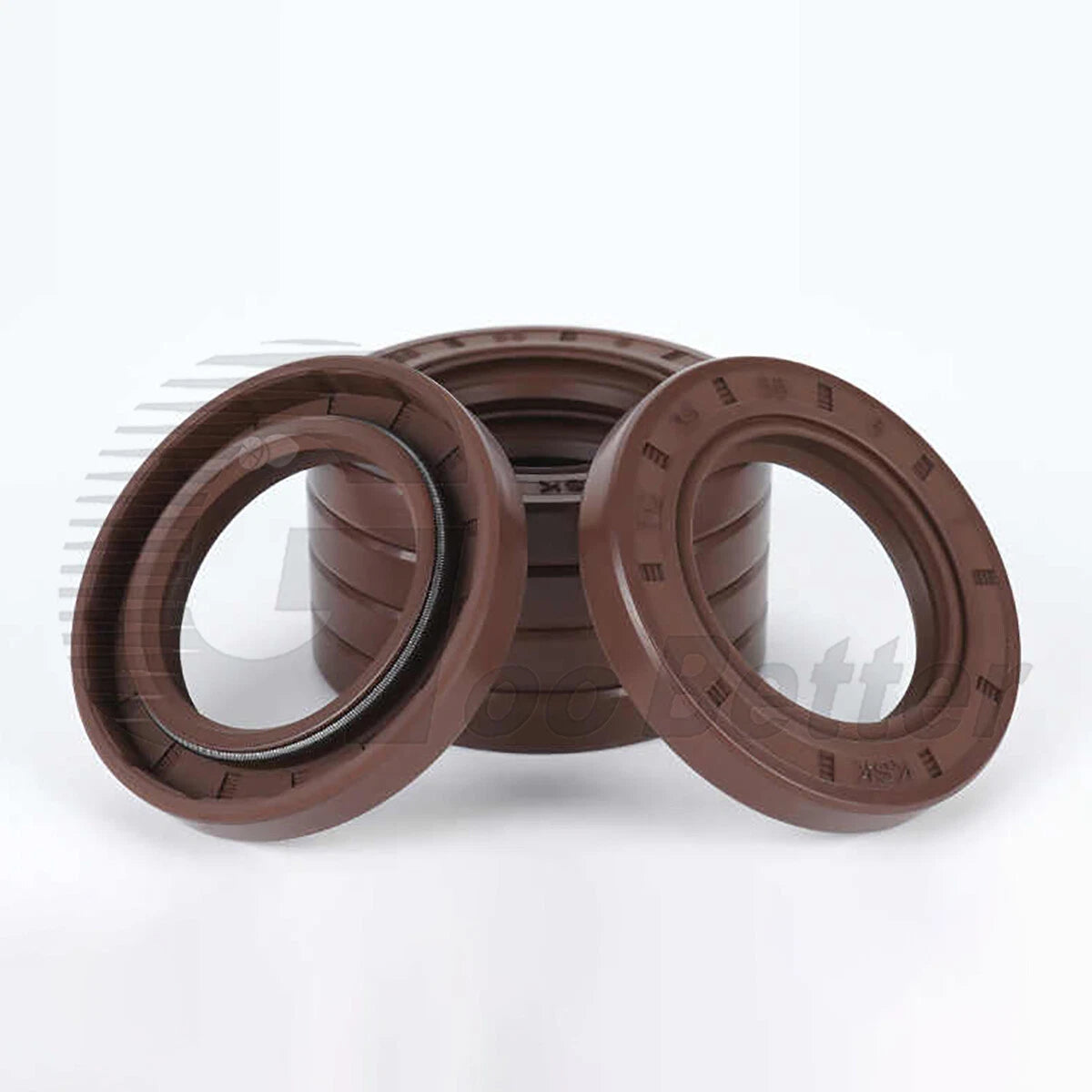
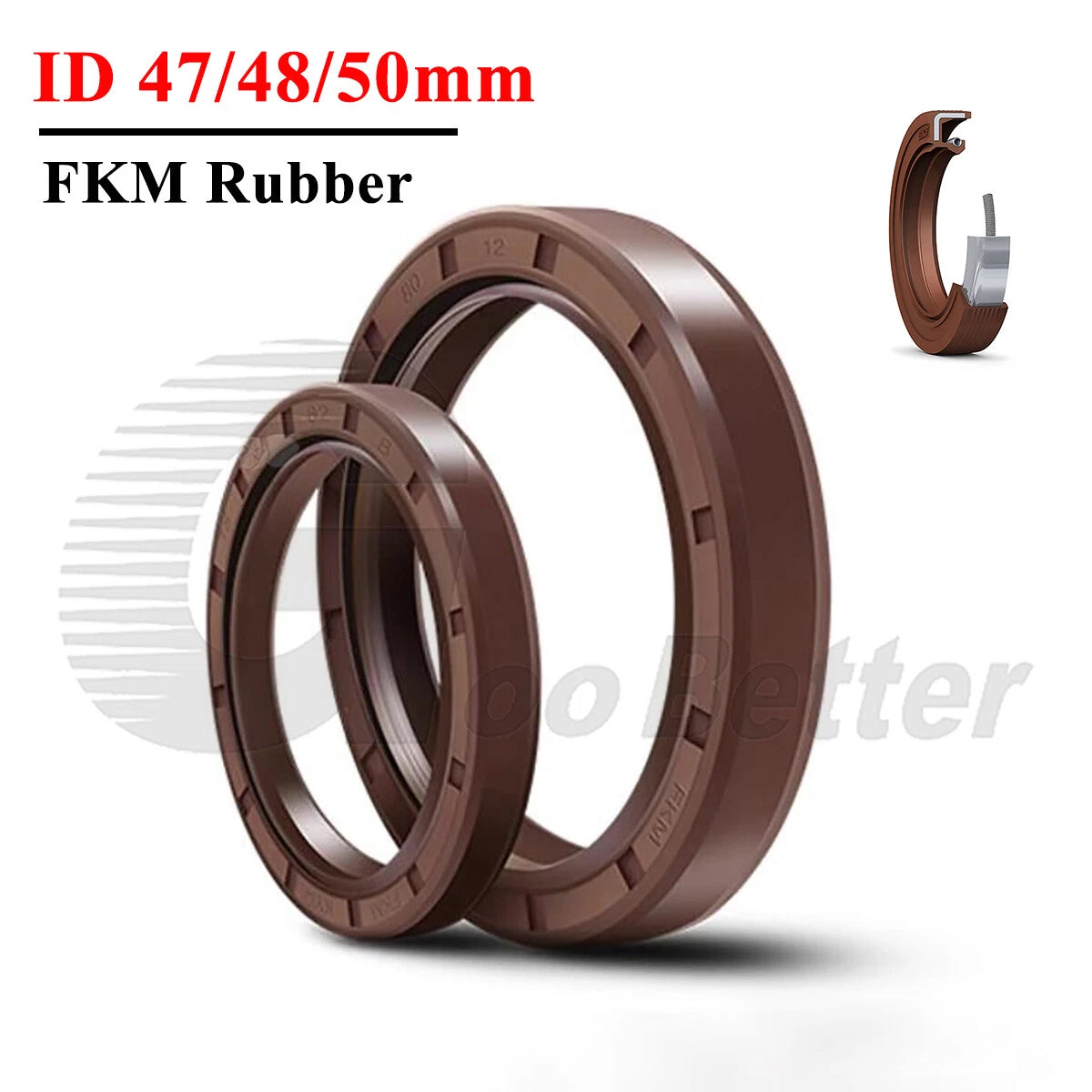
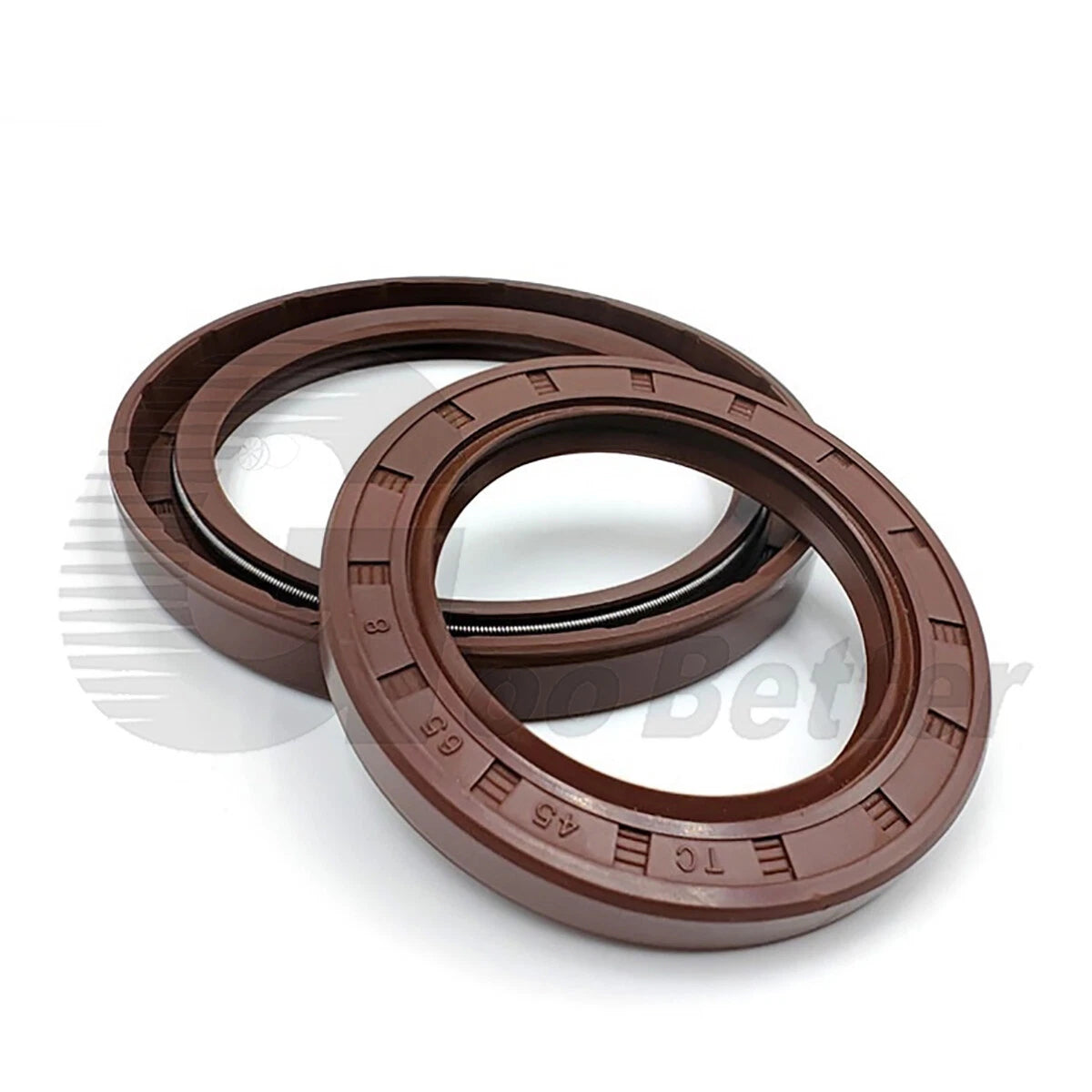
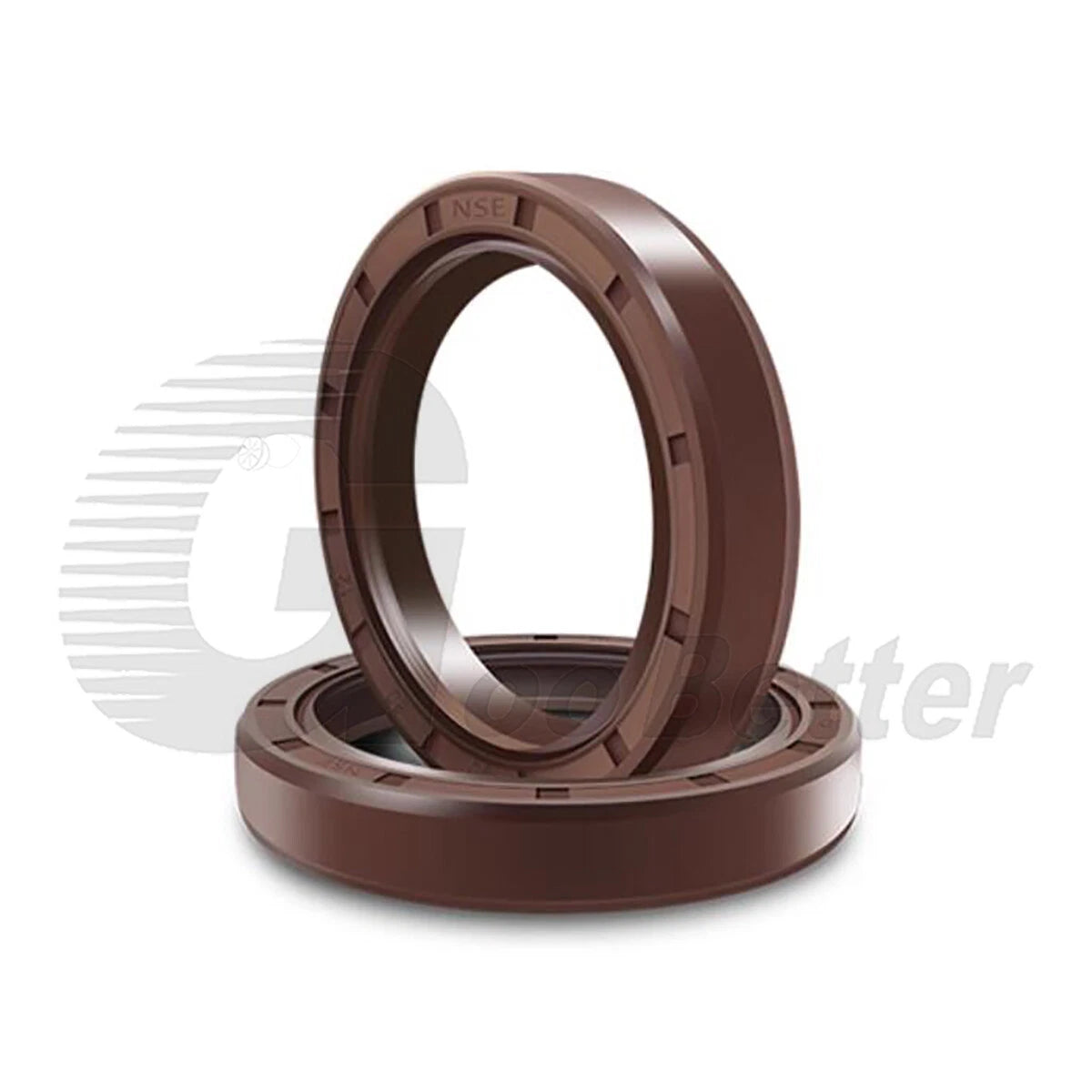
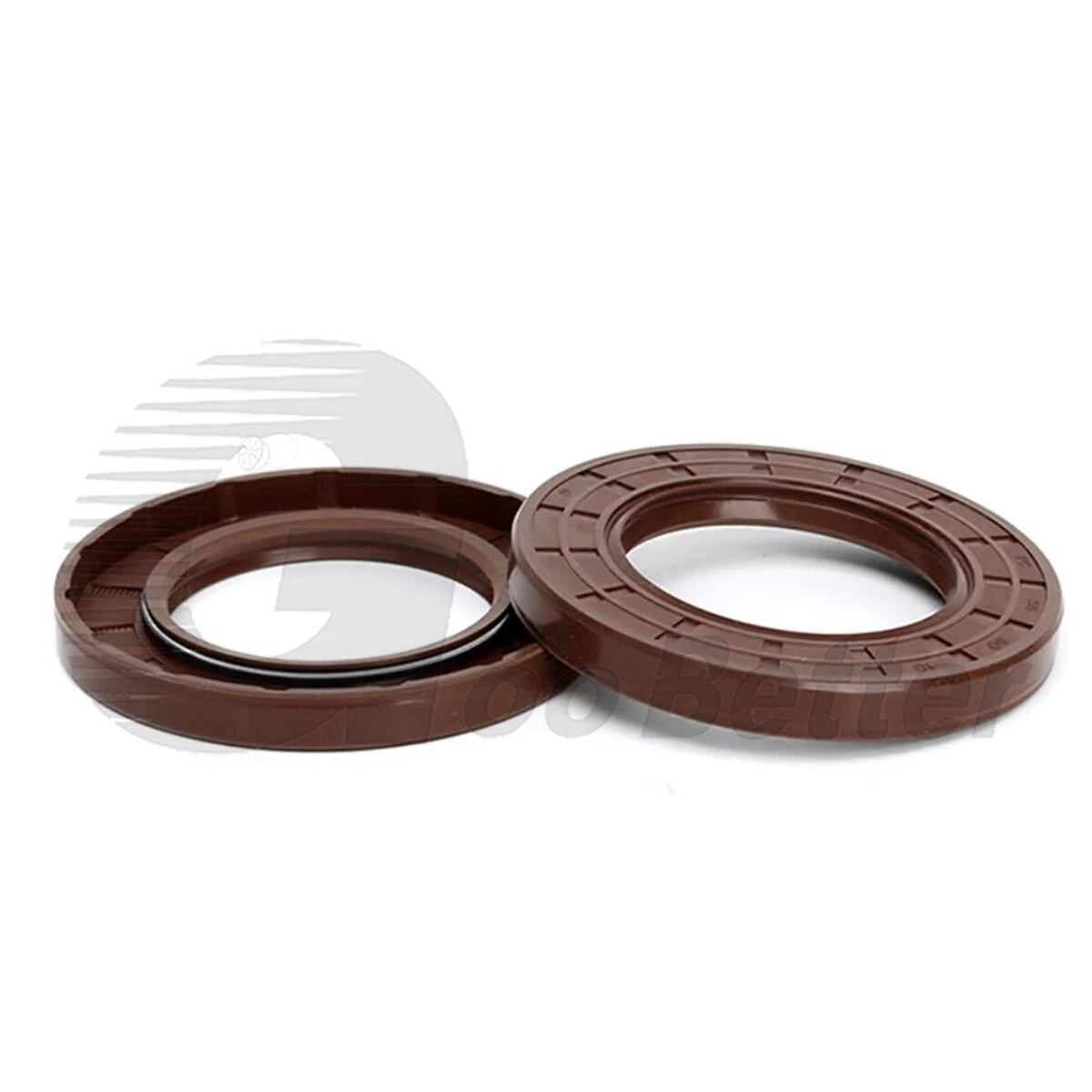
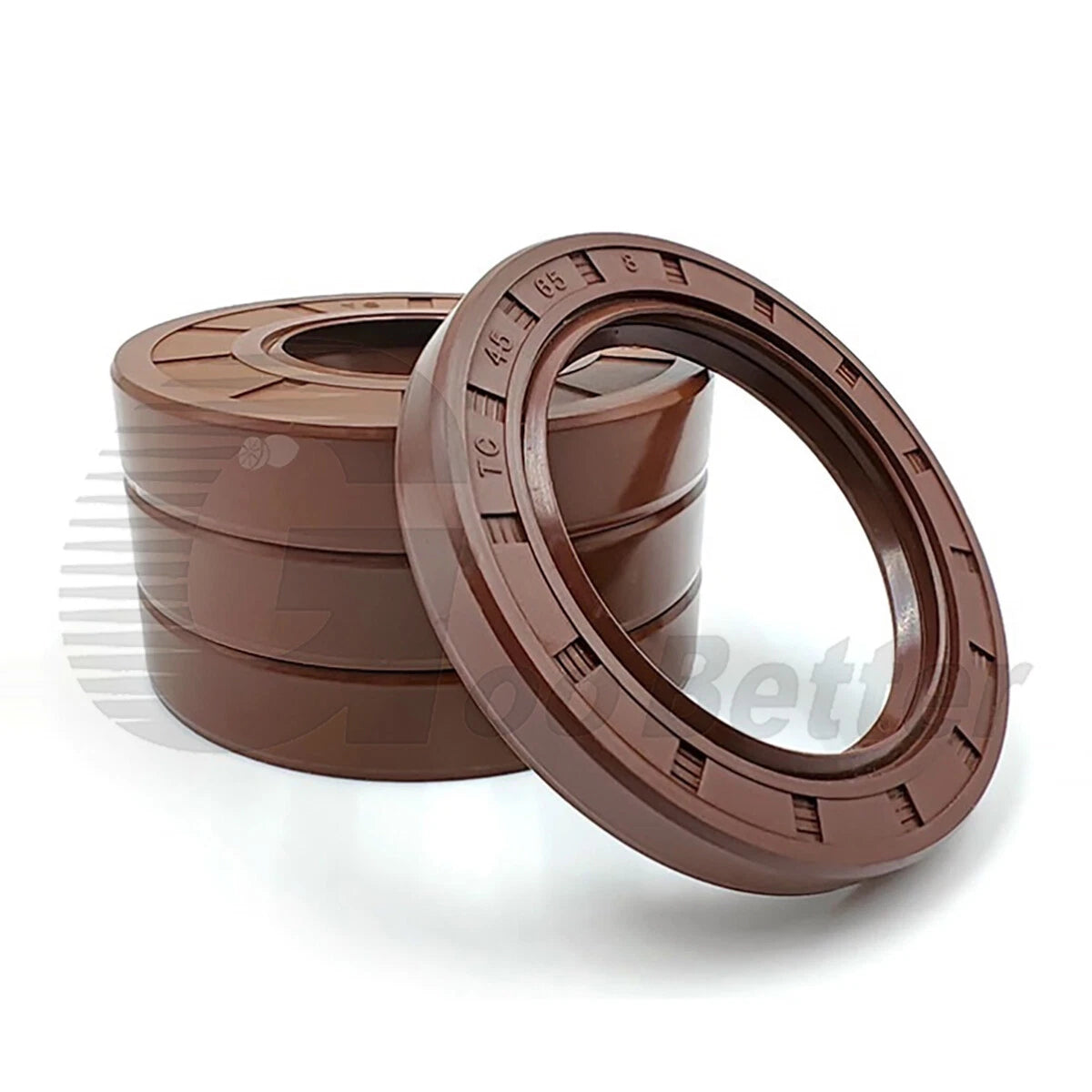
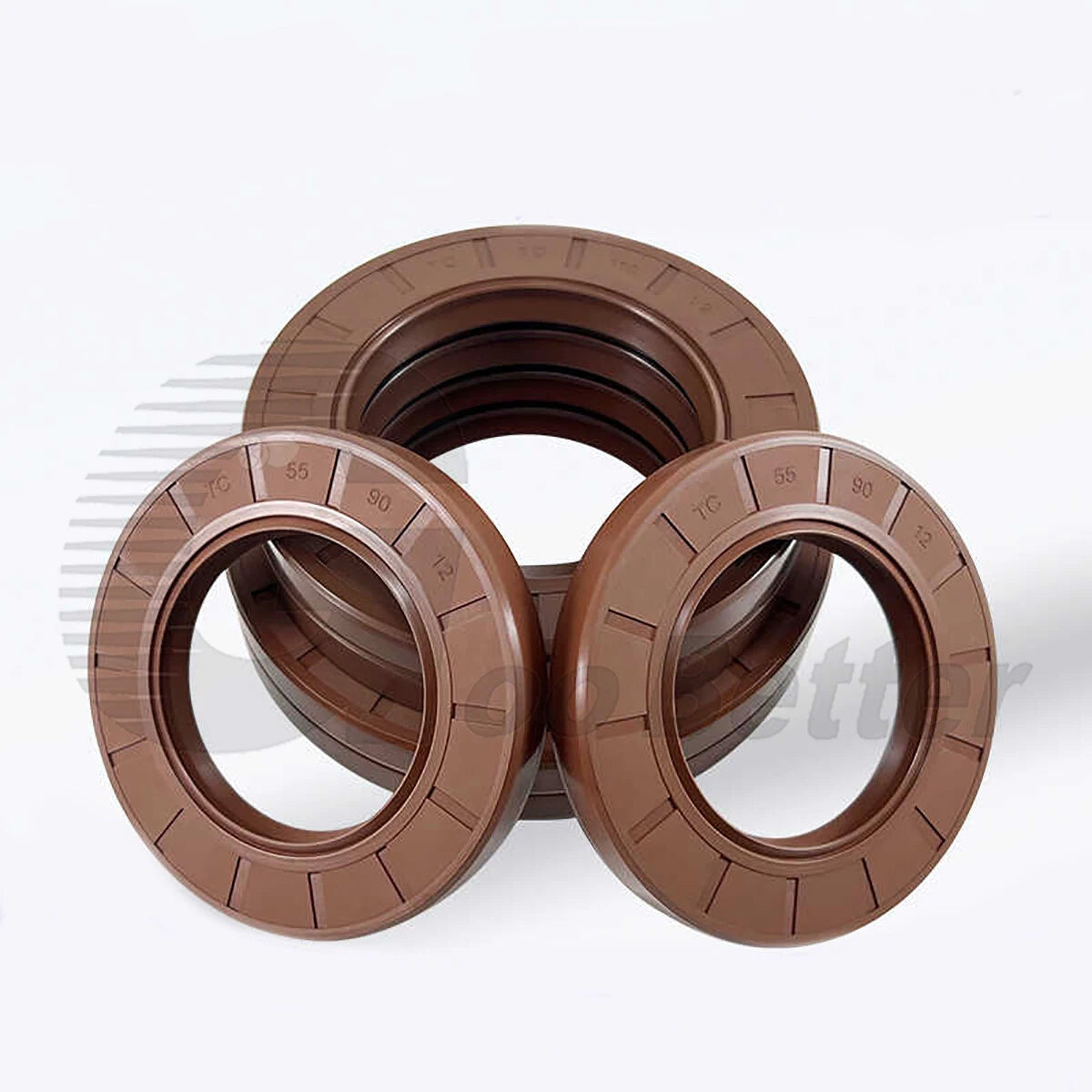
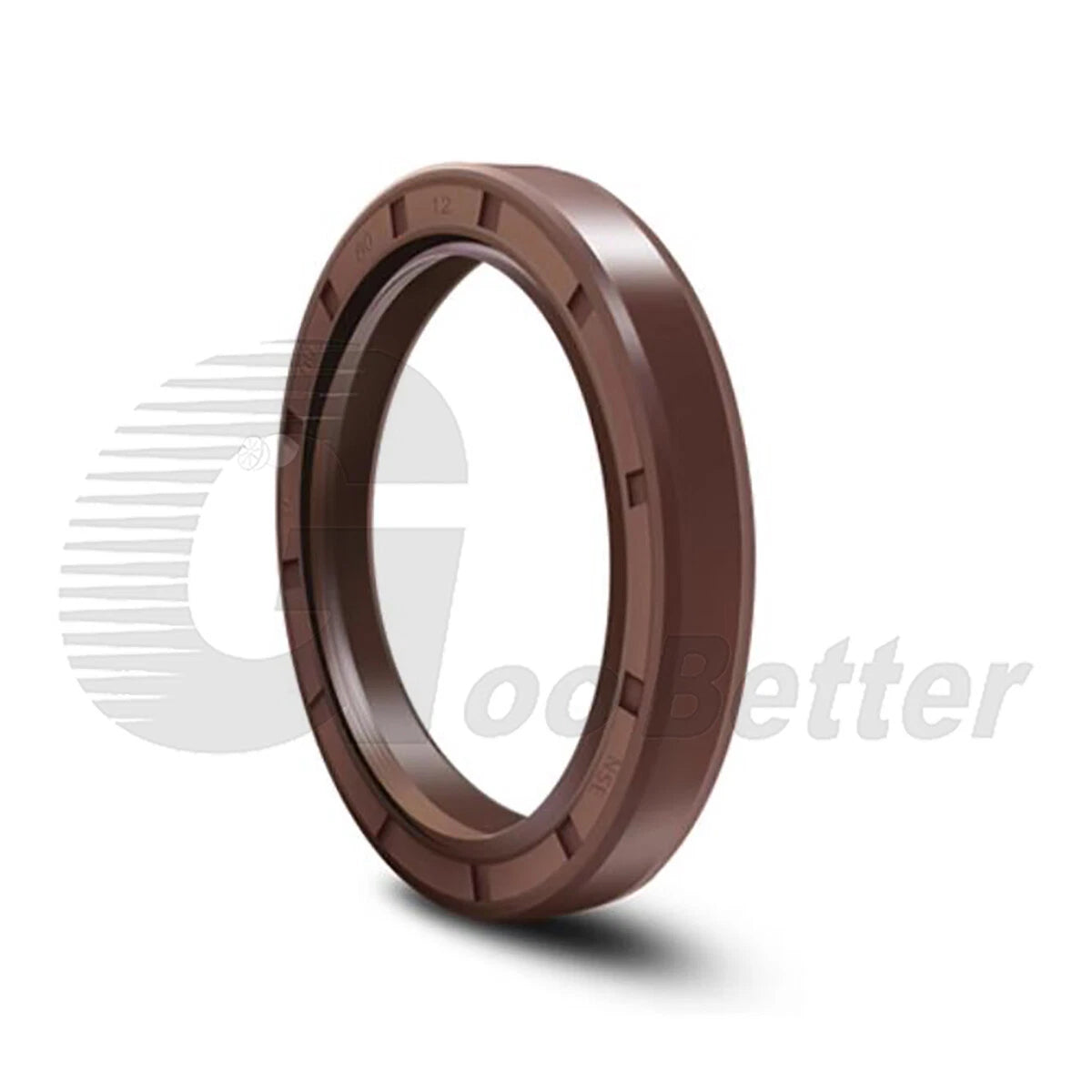
TC Oil Seal 47 48 50mm ID — FKM Rubber Dual Lip Rotary Shaft Seal Ring

No reviews

Price:
Sale price$4.41 USD
Stock:
In stock (500 units), ready to be shipped

Payment & Security

Ach Direct Debit Amazon American Express Apple Pay Bancontact Diners Club Discover Google Pay iDEAL Wero Mastercard PayPal Shop Pay USDC Visa

Your payment information is processed securely. We do not store credit card details nor have access to your credit card information.

Quantity Discount Promotion
🎯 BULK DISCOUNT: Buy More, Save More!
Buy 2 Items
5% OFF
Buy 4 Items
10% OFF
Buy 6 Items
15% OFF
Expert

DIY Expert Support

Get fitment advice & recommendations

Mon-Fri, 8:30AM-8PM
24-Hour Fast Ship
🚚
Arrives in 3-14 days
🌍
Global Reach
↩️
30-Day Returns
🌱 1 tree planted with every purchase

Description

TC Skeleton Oil Seals (47–50mm ID) — Stop Leaks on Rotary Shafts Before They Start

A weeping gearbox, a leaking pump shaft, or a contaminated bearing housing can sideline equipment for hours and rack up costly fluid losses. Maintenance technicians, equipment rebuilders, and DIY mechanics working on metric machinery need a reliable rotary shaft oil seal that fits precisely and holds up under heat and chemical exposure — not a generic rubber ring that hardens and cracks within a season.

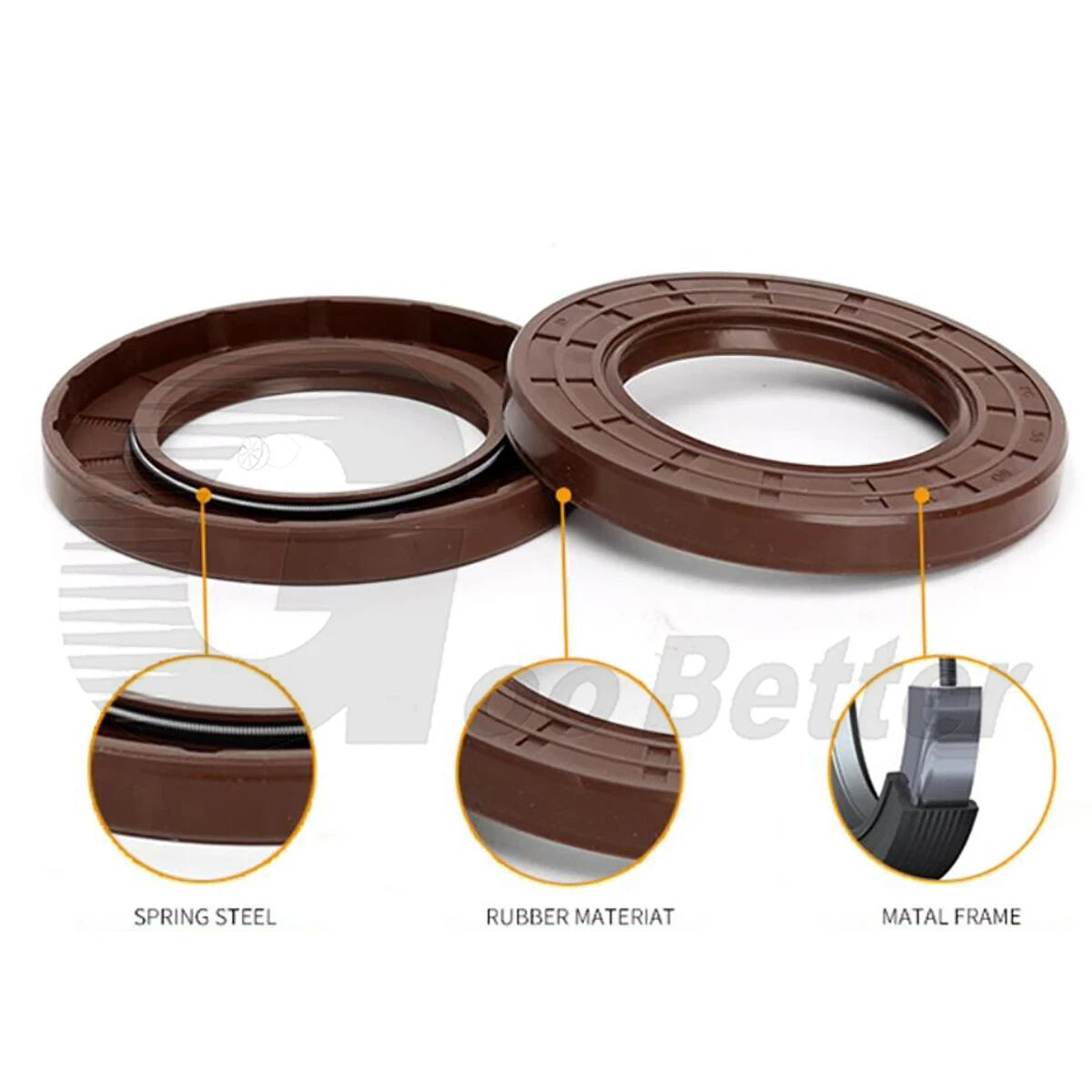
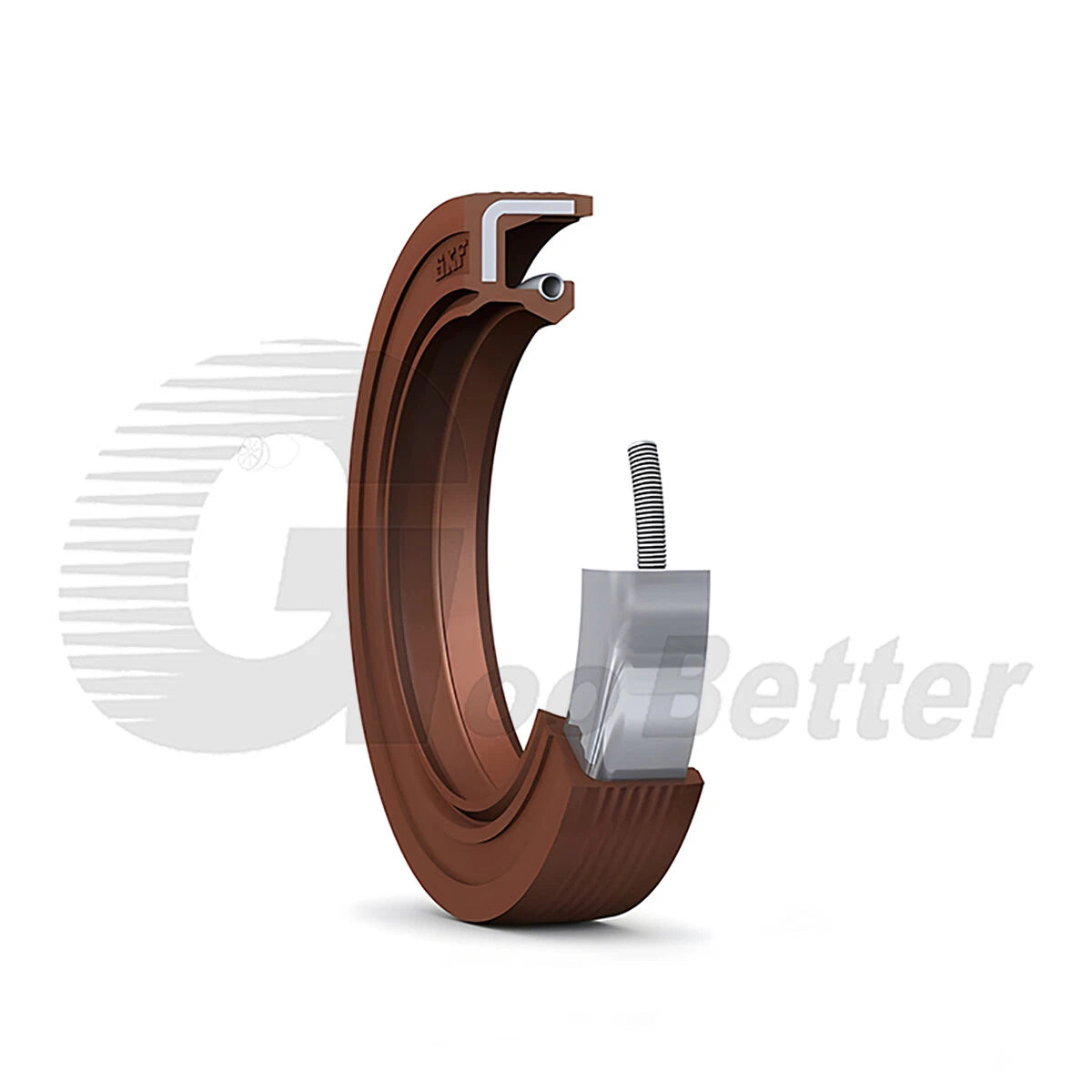
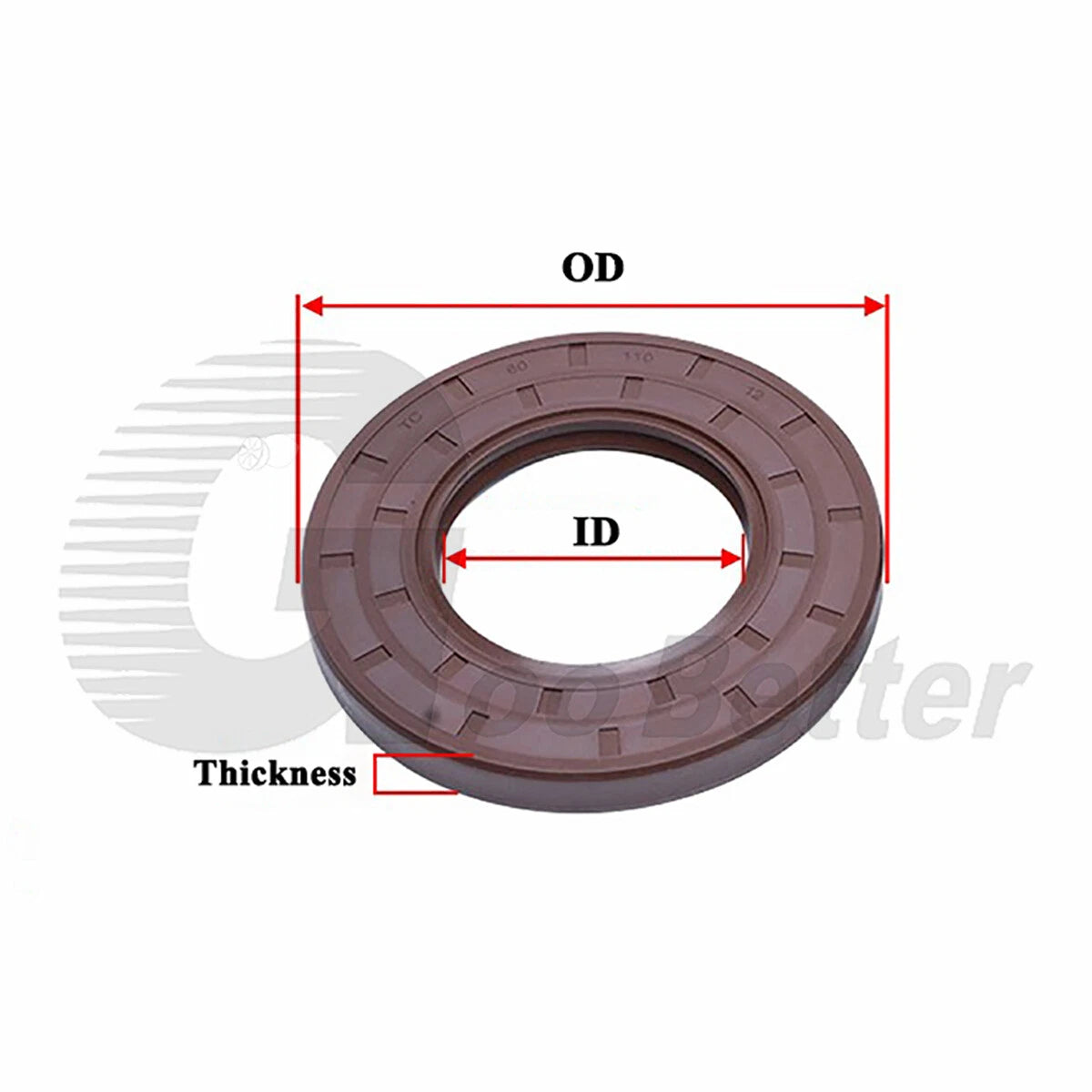
Each seal in this listing is a TC-type skeleton oil seal with an inner diameter (ID) of 47mm, 48mm, or 50mm, available in a wide range of outer diameters (OD) from 60mm (≈2.36") to 110mm (≈4.33") and thicknesses from 5mm (≈0.20") to 12mm (≈0.47"). The body is constructed with a steel skeleton insert for dimensional stability, encapsulated in FKM (fluoroelastomer/Viton) rubber. The dual-lip design features a primary sealing lip to retain lubricant and a secondary dust lip to exclude contaminants. Available in 1 PCS, 2 PCS, and 5 PCS packs to match your project or stock requirements.

These TC oil seals are well suited for gearbox output shaft sealing, hydraulic pump shaft replacement, electric motor bearing housings, agricultural machinery drives, and industrial conveyor shaft assemblies — anywhere a metric rotary shaft seal with FKM chemical resistance is required.

🔵 Compatibility Note: These seals follow standard metric dimensions (ID × OD × Thickness). They are generally interchangeable with seals conforming to ISO 6194 / DIN 3760. Always verify your shaft ID, housing bore OD, and groove depth before ordering. Select your exact size from the variant dropdown above.
⚠️ Installation Tip: If your shaft diameter, housing bore, or groove depth is not listed, please contact us to confirm availability. Seal lip orientation matters — install with the primary lip facing the fluid side.

✅ Key Features of These TC FKM Rubber Dual Lip Oil Seals

  • 🧪FKM Fluoroelastomer Construction — Resists petroleum oils, synthetic lubricants, fuels, and many aggressive chemicals; typically rated for continuous service up to ~200°C (392°F), outperforming standard NBR rubber seals in high-temperature rotary shaft applications.
  • 🔩Steel Skeleton Insert — An internal metal reinforcement ring maintains the seal's circular shape during press-fit installation and prevents distortion under housing bore pressure, ensuring a consistent interference fit.
  • 💧Dual-Lip Sealing Design — The primary lip retains lubricant inside the housing while the secondary dust exclusion lip blocks dirt, water, and debris from entering — a critical feature for agricultural equipment and outdoor machinery exposed to contaminated environments.
  • 📐Wide Size Matrix (47–50mm ID) — Covers inner diameters of 47mm, 48mm, and 50mm with OD options from 60mm to 110mm and thicknesses from 5mm to 12mm, making it straightforward to find the exact metric rotary shaft seal size for gearboxes, pumps, and motors.
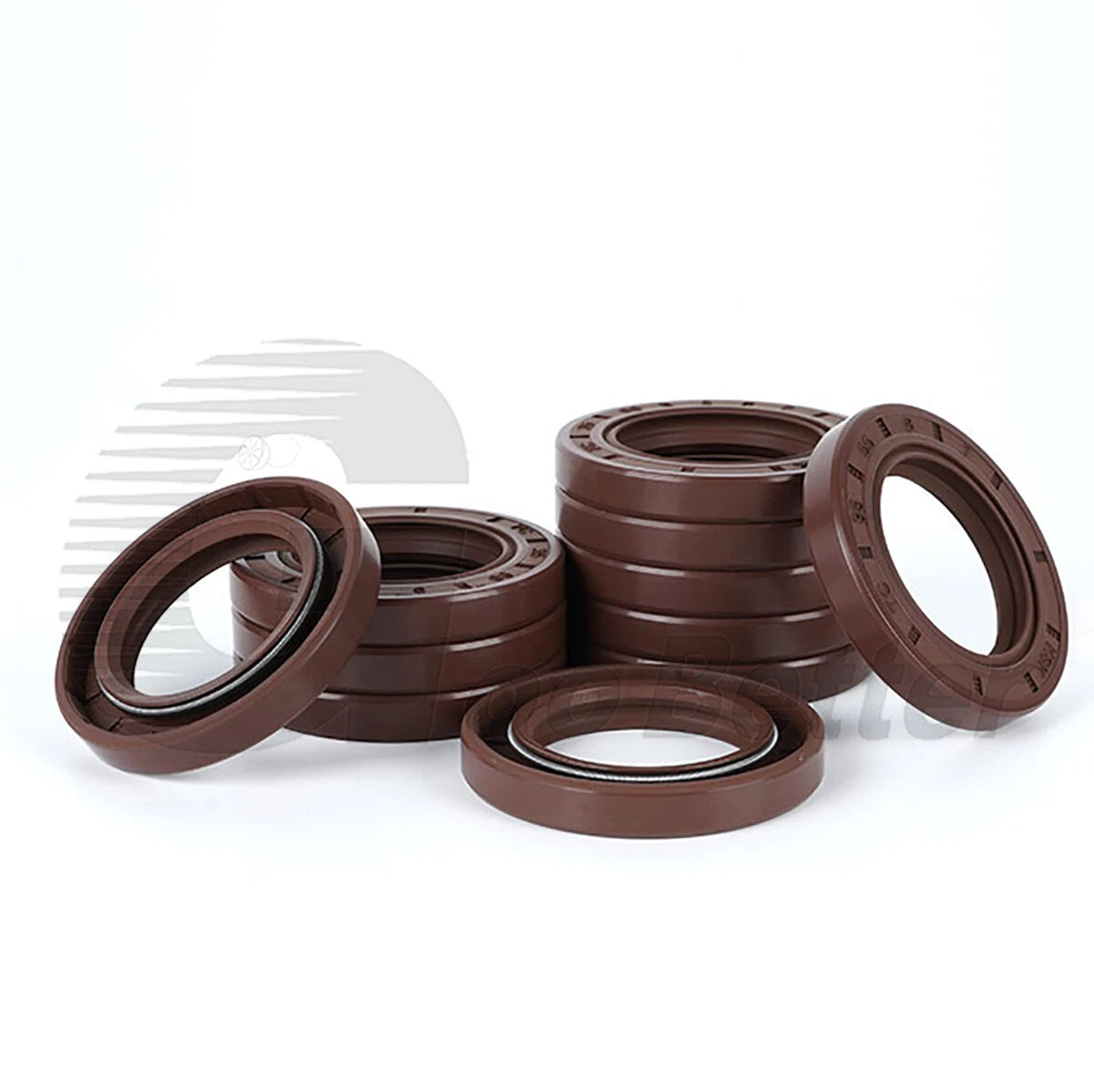
  • 📦Flexible Pack Quantities — Choose 1 PCS for a single repair, 2 PCS to seal both ends of a shaft simultaneously, or 5 PCS for maintenance stock — all at a lower per-unit cost as quantity increases.
  • 🏭TC-Type Standard Profile — Conforms to the widely adopted TC skeleton seal profile (ISO 6194 / DIN 3760 compatible), allowing direct substitution in most metric machinery without housing modification.

📐 Technical Specifications — TC Skeleton Rotary Shaft Oil Seal

Seal Type TC Skeleton (double lip with dust exclusion lip)
Inner Diameter (ID) 47mm (≈1.85"), 48mm (≈1.89"), 50mm (≈1.97") — see variant options
Outer Diameter (OD) 60mm–110mm (≈2.36"–4.33") — see variant options
Thickness 5mm–12mm (≈0.20"–0.47") — see variant options
Lip Material FKM (Fluoroelastomer / Viton)
Body / Skeleton Steel insert encapsulated in FKM rubber
Number of Lips 2 (primary sealing lip + secondary dust exclusion lip)
Temperature Range Typically –20°C to +200°C (–4°F to +392°F)
Compatible Standards Generally ISO 6194 / DIN 3760 metric profile
Suitable Fluids Petroleum oils, synthetic gear oils, hydraulic fluids, fuels (contact us to confirm for specific chemicals)
Pack Options 1 PCS / 2 PCS / 5 PCS
Spring See variant options / Contact us to confirm

❓ Frequently Asked Questions

How do I measure and choose the correct TC oil seal size?

Measure three dimensions on your application: (1) the shaft outer diameter — this is the seal's ID; (2) the housing bore inner diameter — this is the seal's OD; (3) the housing groove depth — this is the seal's thickness. Match all three to the variant listed as ID × OD × Thickness in mm. For example, 50*70*8mm fits a 50mm shaft (≈1.97"), a 70mm bore (≈2.76"), in an 8mm deep groove (≈0.31"). If you are working in inches, multiply by 25.4 to convert to mm.

What makes FKM rubber better than standard NBR for rotary shaft seals?

FKM (fluoroelastomer, commercially known as Viton) generally offers significantly better resistance to high temperatures, petroleum-based and synthetic oils, fuels, and aggressive chemicals compared to standard NBR (nitrile) rubber. FKM seals typically remain flexible and effective up to around 200°C (392°F), whereas NBR seals may harden and crack at temperatures above 100–120°C. For gearboxes, hydraulic systems, or any application with elevated operating temperatures, FKM is generally the preferred choice.

Can these seals be used outdoors or in wet, muddy conditions?

Yes, in most cases. FKM rubber generally provides good resistance to moisture, UV exposure, and weathering. The dual-lip design adds a secondary dust exclusion lip that helps block water, mud, and particulate contamination from reaching the primary sealing lip and the bearing housing. These characteristics make TC FKM seals a common choice for agricultural machinery, outdoor power equipment, and construction equipment shaft sealing.

What shaft speed and pressure are these seals rated for?

TC-type rotary shaft oil seals are typically designed for low-to-moderate shaft surface speeds — generally up to approximately 4–8 m/s depending on the specific size and lubrication conditions — and low positive pressure differentials (typically under 0.05 MPa / 7 psi). For high-speed spindles or pressurized housings, please contact us to confirm suitability before ordering.

Are these seals compatible with ISO or DIN standard metric housings?

Yes. These TC skeleton oil seals follow standard metric dimensions and are generally interchangeable with seals conforming to ISO 6194 and DIN 3760 standards. This means they can typically be used as direct replacements in most European and Asian metric machinery without housing modification. Always verify the exact ID, OD, and thickness against your application before installation.

Should I buy 1 PCS, 2 PCS, or 5 PCS?

All pack options contain identical seals — the choice depends on your needs. 1 PCS is ideal for a single repair. 2 PCS is recommended when sealing both ends of a shaft (e.g., both sides of a gearbox output shaft) or when keeping one spare on hand. 5 PCS offers the best per-unit value and is suited for fleet maintenance, workshop stock, or recurring replacement schedules. The 2 PCS and 5 PCS packs are priced at a discount relative to buying multiple 1 PCS units.

How do I install a TC oil seal without damaging the lip?

Follow these steps for a clean installation: (1) Clean the housing bore and shaft journal thoroughly. (2) Lightly lubricate the seal lip with clean grease or the fluid being sealed. (3) If the shaft has a keyway, thread, or sharp edge, use a chamfer sleeve or wrap the shaft with thin tape to protect the lip during installation. (4) Press the seal squarely into the bore using a seal driver or a flat block of the correct diameter — never strike the seal face directly with a hammer. (5) Confirm the primary lip faces the fluid/lubricant side. (6) Press until the seal face is flush with or slightly below the housing face.

🛒 Select your size and quantity above, then add to cart — ships from our US warehouse.

You may also like

Recently viewed