
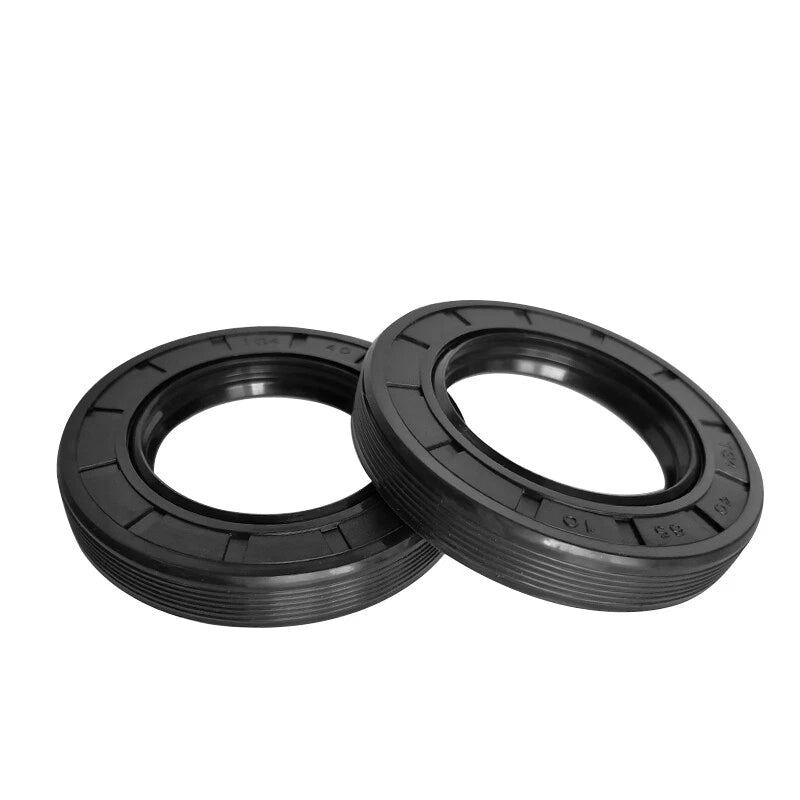
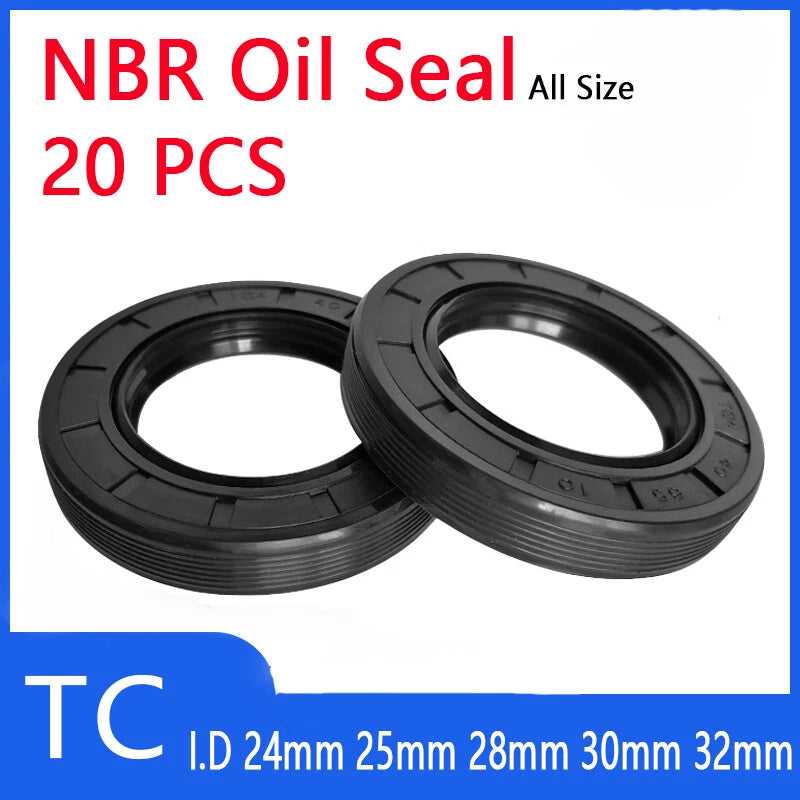
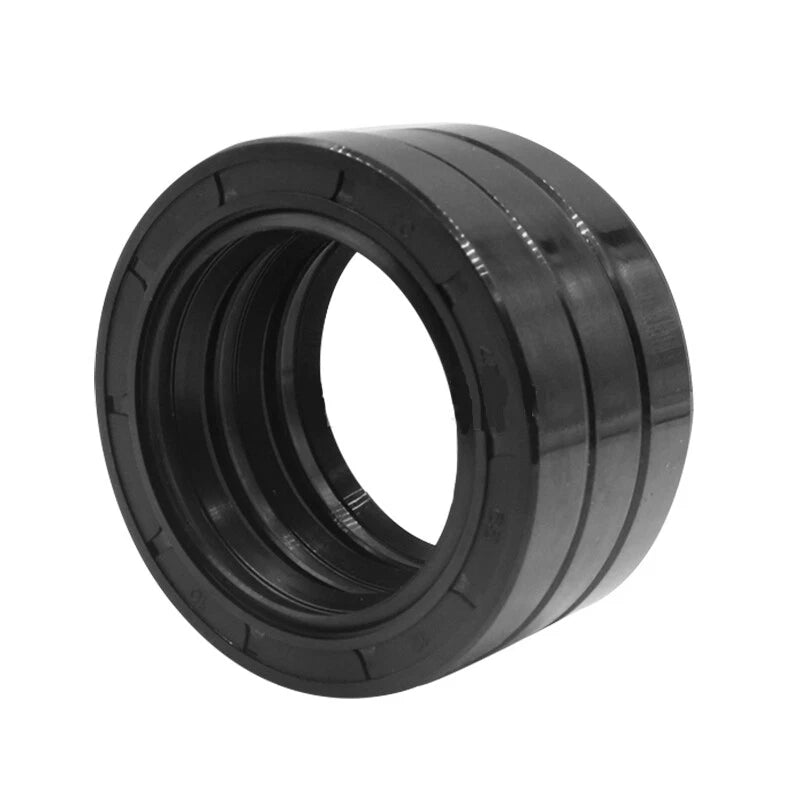
TC Oil Seal Nitrile Rotary Shaft Seal Double Lipped I.D 24mm 25mm 28mm 30mm 32mm

No reviews

Price:
Sale price$18.39 USD
Stock:
In stock (500 units), ready to be shipped

Payment & Security

Ach Direct Debit Amazon American Express Apple Pay Bancontact Diners Club Discover Google Pay iDEAL Wero Mastercard PayPal Shop Pay USDC Visa

Your payment information is processed securely. We do not store credit card details nor have access to your credit card information.

Quantity Discount Promotion
🎯 BULK DISCOUNT: Buy More, Save More!
Buy 2 Items
5% OFF
Buy 4 Items
10% OFF
Buy 6 Items
15% OFF
Expert

DIY Expert Support

Get fitment advice & recommendations

Mon-Fri, 8:30AM-8PM
24-Hour Fast Ship
🚚
Arrives in 3-14 days
🌍
Global Reach
↩️
30-Day Returns
🌱 1 tree planted with every purchase

Description

TC Oil Seal Nitrile Double Lip Rotary Shaft Seal — Reliable Leakage Control for ID 24–32mm Shafts

When a worn or undersized shaft seal lets oil creep past the bearing housing, the result is contaminated grease, accelerated wear, and a repair bill that grows every mile or hour of operation. Mechanics, machine operators, and serious DIYers who need a dependable drop-in replacement turn to TC-type nitrile rotary shaft oil seals to restore a leak-free barrier quickly and affordably.

These TC oil seals are manufactured from nitrile rubber (NBR) bonded to a steel case, combining a flexible sealing lip with a rigid outer shell. The double-lip (TC) design adds a secondary dust-exclusion lip that keeps abrasive particles away from the primary sealing edge. Available inner diameters span 24 mm, 25 mm, 28 mm, 30 mm, and 32 mm (~0.945"–1.260"), with outer diameters and thicknesses ranging across the variant options to suit a wide range of housing bores and shaft shoulders.

Typical applications include automotive gearbox output shafts, differential pinion seals, agricultural PTO shafts, hydraulic pump shafts, and general industrial rotating equipment where oil retention and dust exclusion are both required. Whether you are rebuilding a rear axle, servicing a compact tractor, or maintaining a conveyor drive, these TC shaft seals deliver a straightforward, cost-effective solution.

⚙️ Compatibility Note: Always verify the shaft inner diameter (ID), housing outer diameter (OD), and seal thickness against your application before ordering. Refer to your equipment service manual or measure the existing seal directly.

✅ Key Features of These TC Oil Seals

🔵 Nitrile Rubber (NBR) Sealing Lip

NBR compound resists petroleum-based oils, greases, and common hydraulic fluids across a typical service temperature range of −40 °C to +120 °C (−40 °F to +248 °F), making it suitable for most automotive and light industrial lubrication environments.

🔵 Double-Lip TC Design

The primary lip retains lubricant; the secondary dust lip faces outward to block dirt, water, and debris from reaching the bearing. This two-barrier arrangement extends bearing service life in contaminated or outdoor environments.

🔵 Steel-Reinforced Case

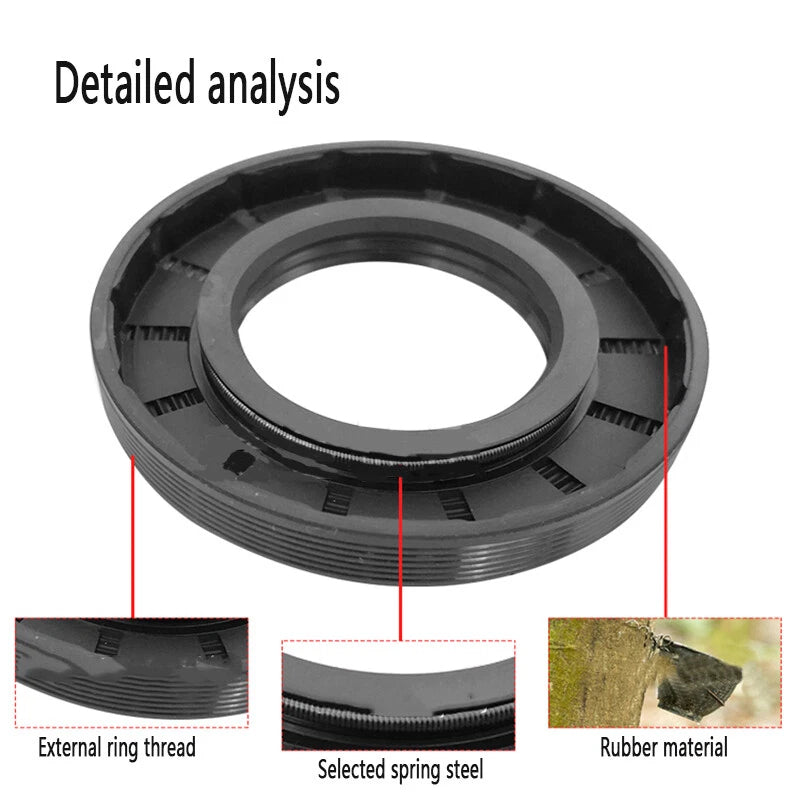
A stamped steel outer shell maintains dimensional stability during press-fit installation and resists distortion under housing clamping loads, ensuring the seal stays seated and concentric with the shaft.

🔵 Wide Size Selection

Inner diameters of 24 mm, 25 mm, 28 mm, 30 mm, and 32 mm are offered across dozens of OD and thickness combinations, covering a broad range of shaft and housing configurations without the need for custom machining.

🔵 Garter Spring-Loaded Lip

An internal garter spring maintains consistent radial lip pressure against the shaft as the rubber ages and wears, preserving sealing performance over extended service intervals.

🔵 Straightforward Press-Fit Installation

The steel outer case is sized for a firm interference fit into a standard machined housing bore. No adhesive or special tooling is required beyond a flat driver or seal installation tool of the appropriate diameter.

📐 Technical Specifications — TC Nitrile Rotary Shaft Oil Seal

Seal Type TC (Double Lip)
Material Nitrile Rubber (NBR) with steel case
Inner Diameter (ID) 24 mm, 25 mm, 28 mm, 30 mm, 32 mm — see variant options
Outer Diameter (OD) See variant options
Thickness See variant options
Operating Temperature Typically −40 °C to +120 °C (−40 °F to +248 °F)
Compatible Fluids Petroleum-based oils, greases, common hydraulic fluids
Spring Type Garter spring (internal)
Installation Method Press-fit into housing bore
Packing Quantity 1 PCS per order (see variant options)

❓ Frequently Asked Questions

How do I choose the correct TC oil seal size?

Measure three dimensions on your existing seal or shaft housing: the shaft inner diameter (ID), the housing bore outer diameter (OD), and the seal width (thickness). All three must match the replacement seal. If the old seal is damaged, measure the shaft journal diameter directly and the housing bore with calipers. Cross-reference those measurements with the variant options listed on this page.

What does "TC" mean in TC oil seal?

"TC" is a standard designation for a double-lip rotary shaft seal with a metal case. The primary lip faces inward to retain lubricant, while the secondary lip faces outward to exclude dust and moisture. This distinguishes it from single-lip "SC" seals, which only retain oil without a dedicated dust barrier.

Is nitrile (NBR) the right material for my application?

NBR is compatible with petroleum-based engine oils, gear oils, ATF, and most hydraulic fluids. It performs reliably from −40 °C to approximately +120 °C. If your application involves synthetic esters, phosphate-ester hydraulic fluids, or sustained temperatures above 120 °C, a Viton (FKM) seal would be more appropriate. For standard automotive and agricultural equipment using conventional lubricants, NBR is the standard choice.

How do I install a TC oil seal without damaging it?

Clean the housing bore and lightly lubricate the outer case with clean oil or assembly grease. Use a flat-faced driver or a socket slightly smaller than the OD to press the seal in squarely — never hammer directly on the rubber lip. Press until the seal face is flush with or just below the housing surface. Lightly coat the sealing lip with the lubricant it will be retaining before fitting over the shaft.

Can these seals handle outdoor or wet environments?

Yes. The secondary dust lip on a TC seal is specifically designed to exclude water splash, mud, and airborne particles. NBR also has adequate resistance to water and mild weather exposure. For fully submerged or high-pressure wash-down environments, verify the specific application requirements, as TC seals are designed for dynamic shaft rotation rather than static pressure containment.

What causes a TC oil seal to fail prematurely?

Common causes include: incorrect size (ID too large causes lip under-tension; OD too small causes the seal to spin in the bore), shaft surface roughness or scoring that cuts the lip, misalignment between shaft and housing centerlines, excessive shaft runout, operating temperatures outside the NBR range, and incompatible fluid chemistry. Always inspect and polish the shaft journal before fitting a new seal.

Are these seals suitable for high-speed shaft applications?

TC nitrile seals are rated for typical rotary shaft speeds found in automotive drivetrains, agricultural equipment, and general industrial machinery — generally up to approximately 4–8 m/s shaft surface speed depending on shaft diameter and lubrication. For very high-speed spindles or precision machine tool applications, consult the equipment manufacturer's seal specification for the required lip material and surface speed rating.

🛒 Select your Size (ID x OD x Thickness) above, then add to cart.

You may also like

Recently viewed





