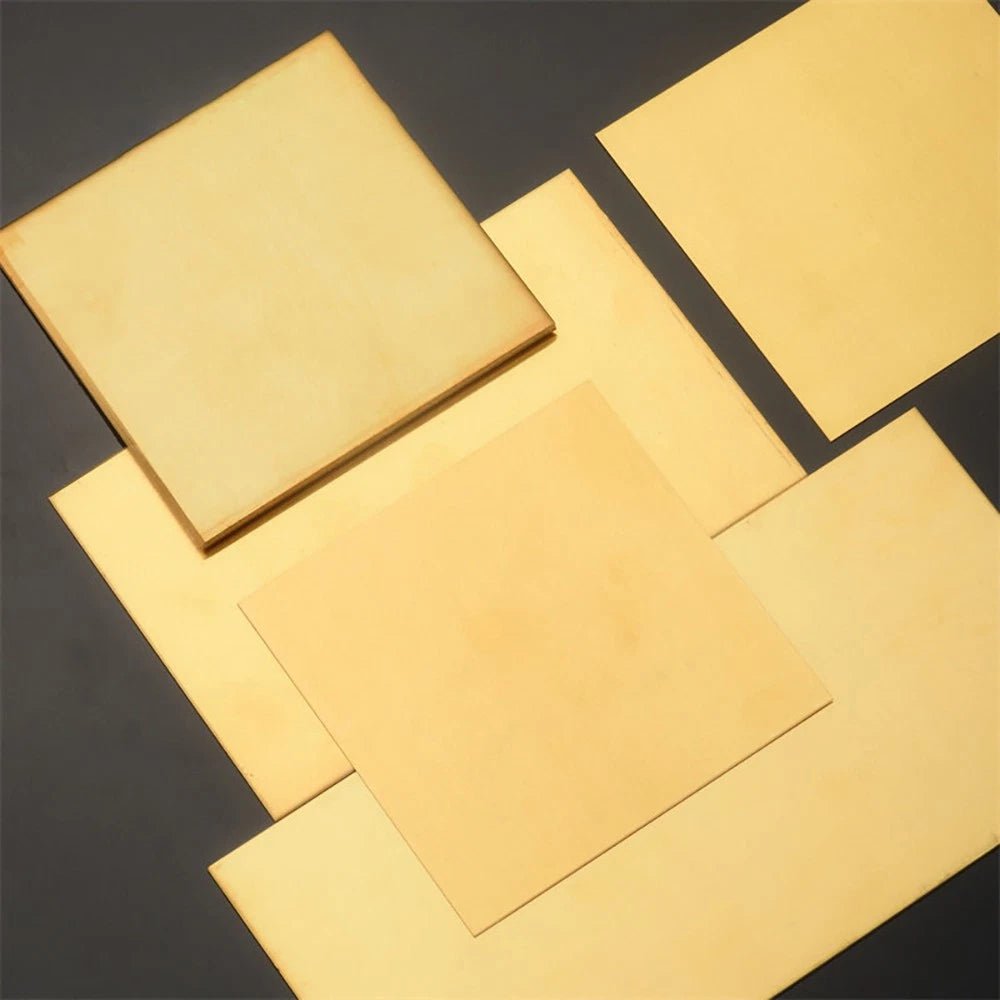
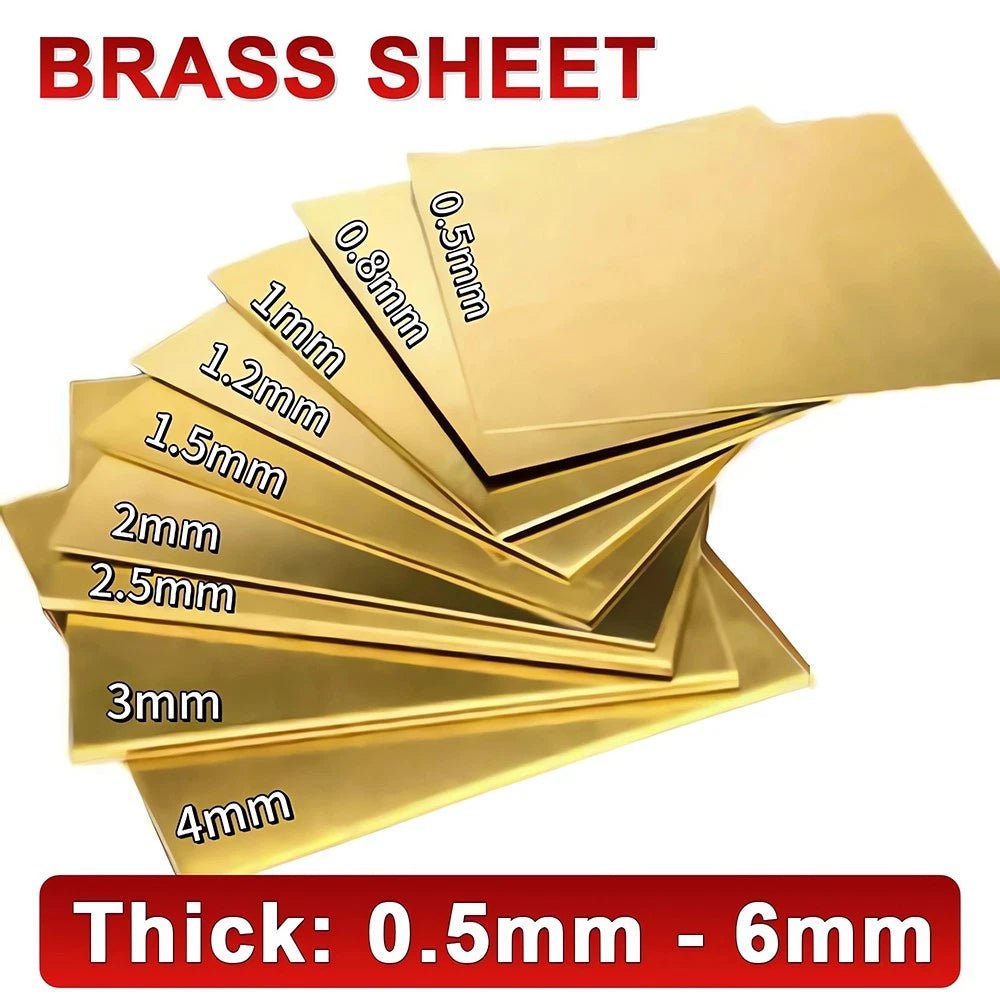
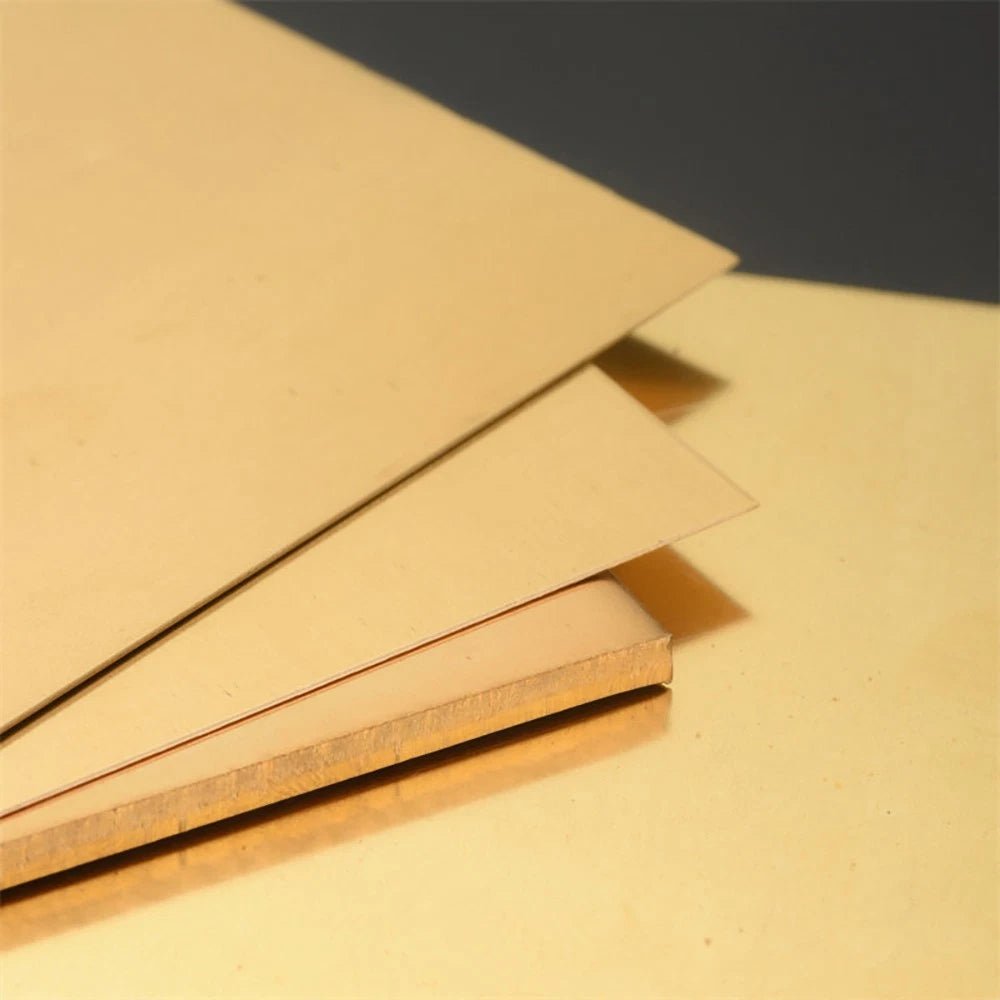
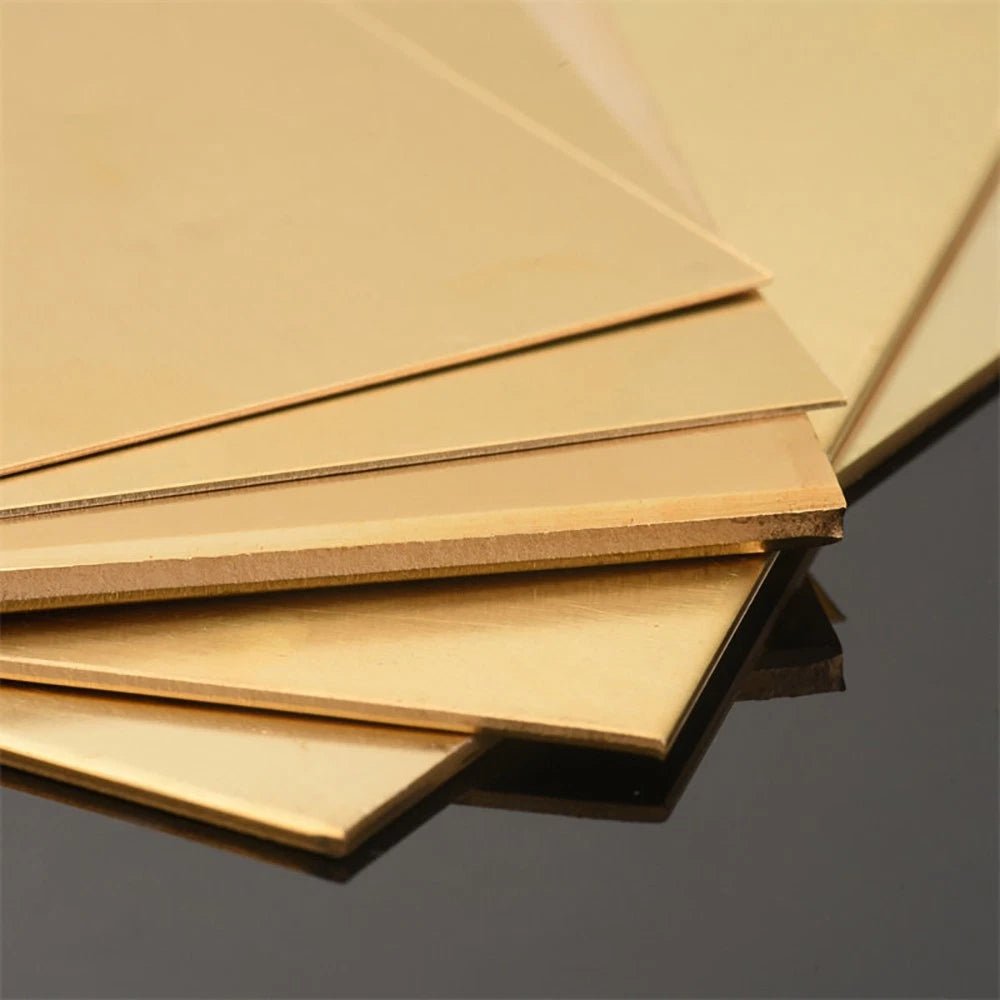
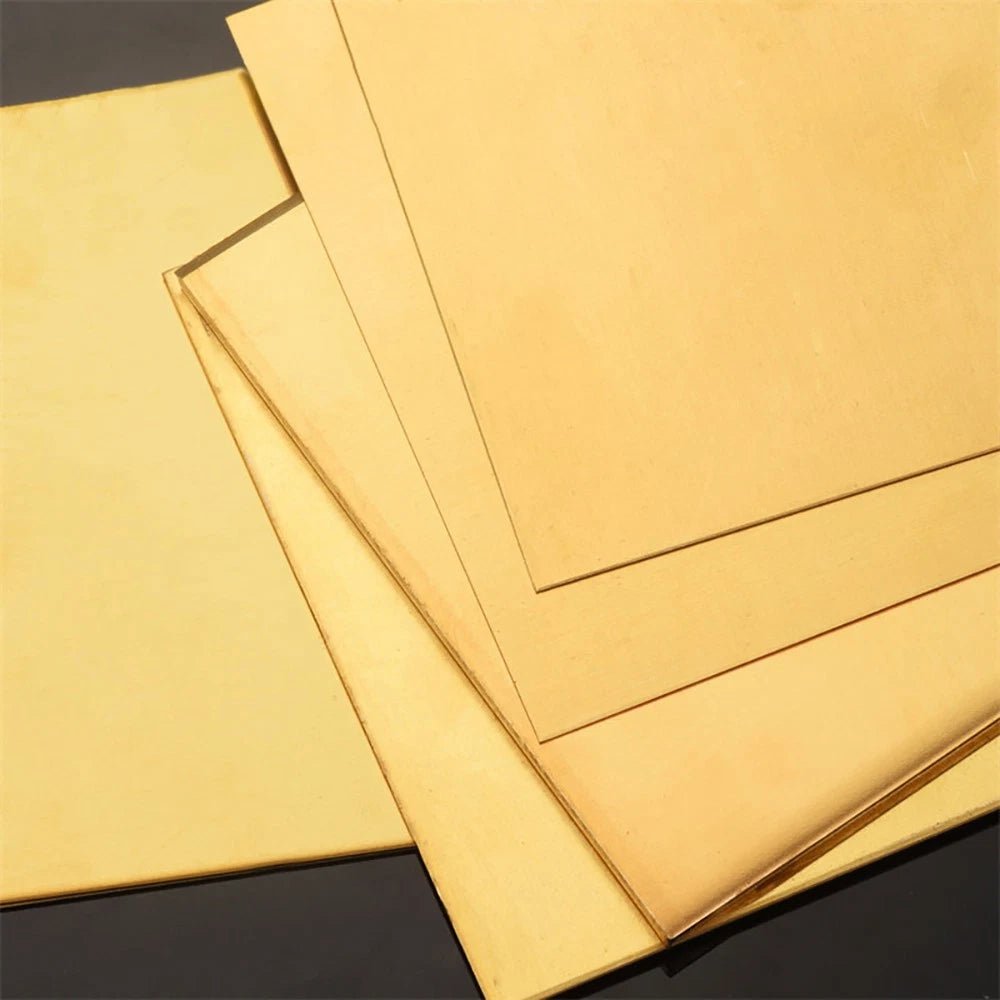

Thin Brass Sheet Metal Plate Thick 0.5/0.8/1/1.2/1.5/2mm-6mm Jewellery Making

No reviews

Price:
Sale price$2.30 USD
Stock:
In stock (500 units), ready to be shipped

Payment & Security

Ach Direct Debit Amazon American Express Apple Pay Bancontact BLIK Diners Club Discover EPS Google Pay iDEAL Wero JCB Maestro Mastercard Multibanco MobilePay PayPal Przelewy24 Shop Pay Twint Union Pay USDC Visa

Your payment information is processed securely. We do not store credit card details nor have access to your credit card information.

Quantity Discount Promotion
🎯 BULK DISCOUNT: Buy More, Save More!
Buy 2 Items
5% OFF
Buy 4 Items
10% OFF
Buy 6 Items
15% OFF
Expert

DIY Expert Support

Get fitment advice & recommendations

Mon-Fri, 8:30AM-8PM
24-Hour Fast Ship
🚚
Arrives in 3-14 days
🌍
Global Reach
↩️
30-Day Returns
🌱 1 tree planted with every purchase

Description

Thin Brass Sheet Metal Plate — Precision-Cut Stock for Jewellery Making & DIY Metalwork

When your project demands a material that holds crisp edges, solders cleanly, and develops a warm golden patina over time, finding the right brass sheet in the exact thickness you need can be frustrating. Whether you are a jeweller shaping bezels and findings, a maker building decorative inlays, or a hobbyist tackling small-scale fabrication, having a reliable source of flat, true-gauge brass stock is the foundation of clean work.

These brass sheet metal plates are composed of copper-zinc alloy (commonly C260 cartridge brass), supplied in a flat, mill-finish condition. Thickness options span 0.5 mm (0.020 in) through 6 mm (0.236 in), and sheet dimensions range from 50 × 50 mm (approx. 2 × 2 in) up to 300 × 300 mm (approx. 11.8 × 11.8 in). Each piece is cut to the selected size and packed in quantities of 1, 2, or 5 pieces per order.

Typical applications include jewellery components such as pendants, clasps, and sheet bezels; decorative metalwork and etching blanks; model-making and scale fabrication; electrical shielding and grounding tabs; and craft projects requiring thin brass sheet metal that can be cut, drilled, stamped, or formed by hand.

🔧 Compatibility: Suitable for hand tools, jeweller's saws, tin snips, laser cutters, and CNC routers. Compatible with standard soft solders, silver solder, and most brass-compatible adhesives.

✅ Key Features of These Thin Brass Sheet Metal Plates

📐 Wide Thickness Range

Available from 0.5 mm to 6 mm, covering ultra-thin foil-weight stock for jewellery findings up to structural-grade plate for heavier fabrication tasks.

✂️ Multiple Sheet Sizes

Choose from 50 × 50 mm up to 300 × 300 mm — minimising waste by letting you order only the footprint your project actually requires.

🪙 Copper-Zinc Brass Alloy

Copper-zinc composition delivers good ductility for bending and forming, consistent colour, and reliable solderability — key properties for jewellery making and decorative work.

📦 Flexible Pack Quantities

Order 1, 2, or 5 pieces per size. Multi-piece packs offer a per-unit saving and ensure you have spares for prototyping or batch production.

🔩 Flat Mill Finish

Supplied flat with a consistent mill finish that accepts patination, polishing, etching, and plating without additional surface preparation steps.

⚙️ Machinable & Formable

Brass machines cleanly with standard tooling, bends without cracking at thinner gauges, and can be drilled, stamped, or laser-cut to shape for a wide range of DIY metalwork applications.

📐 Technical Specifications — Brass Sheet Metal Plate

Material Brass (Copper-Zinc Alloy)
Finish Mill finish (unpolished)
Thickness Range 0.5 mm – 6 mm (0.020 in – 0.236 in)
Sheet Width Options 50 mm, 100 mm, 200 mm, 300 mm
Sheet Length Options 50 mm, 100 mm, 150 mm, 200 mm, 300 mm
Pack Quantity 1 Pcs / 2 Pcs / 5 Pcs
Machinability Good — suitable for cutting, drilling, stamping, bending
Solderability Good — compatible with soft solder and silver solder
Colour Golden yellow (brass tone)
Weight per Piece See variant options

❓ Frequently Asked Questions

How do I choose the right thickness for jewellery making?

For delicate findings, bezels, and sheet pendants, 0.5 mm–1 mm is typically used as it can be cut with jeweller's shears and formed by hand. For structural components such as clasps or frames that need to hold shape under wear, 1.2 mm–2 mm offers more rigidity. Thicker gauges (3 mm–6 mm) are better suited to engraving blanks, heavier decorative pieces, or non-jewellery fabrication tasks.

Can I cut these sheets with standard hand tools?

Yes. Thinner gauges (0.5 mm–1.5 mm) can be cut cleanly with tin snips, jeweller's saws, or heavy-duty scissors. Thicker sheets (2 mm and above) are best cut with a hacksaw, angle grinder, or CNC router. Laser cutting works well across all thicknesses listed.

Is brass corrosion-resistant enough for wearable jewellery?

Brass has moderate corrosion resistance. It will develop a natural patina over time when exposed to air and moisture, which many makers find desirable. For wearable pieces that contact skin regularly, applying a clear lacquer or jewellery-grade sealant will help maintain the finish and reduce tarnishing. Brass is not recommended for prolonged submersion in water without a protective coating.

What is the difference between the sheet sizes — which should I order?

Select the sheet size closest to your finished part dimensions to minimise waste. For small findings and components, 50 × 50 mm or 50 × 100 mm sheets are economical. For larger pendants, decorative panels, or multiple smaller parts cut from one sheet, 100 × 200 mm or 200 × 300 mm options give you more working area. The 300 × 300 mm sheet is ideal for batch cutting or larger decorative applications.

Can these brass sheets be soldered or welded?

Yes. Brass solders well with standard soft solder (tin-lead or lead-free) and silver solder, making it a popular choice for jewellery fabrication. Brazing is also possible. Welding brass requires MIG or TIG equipment with appropriate filler wire; for most jewellery and craft applications, soldering is the preferred joining method.

Will the sheets arrive flat, or do I need to flatten them?

Sheets are supplied in a flat, mill-finish condition. Thinner gauges (0.5 mm–1 mm) may develop minor handling marks during transit; if flatness is critical, a light pass with a rubber mallet on a flat surface or a brief run through a rolling mill will restore them. Thicker sheets (2 mm and above) are inherently more rigid and arrive flat.

Is the 5-piece pack a better value than ordering single pieces?

Yes — the 5-piece pack offers a lower per-unit cost compared to ordering individual pieces, making it a practical choice for batch projects, prototyping multiple iterations, or stocking up on a frequently used size. The 2-piece pack sits in between and is useful when you need a spare without committing to a full set of five.

🛒 Select your size (thickness × width × length) and pack quantity above, then add to cart.

You may also like

Recently viewed