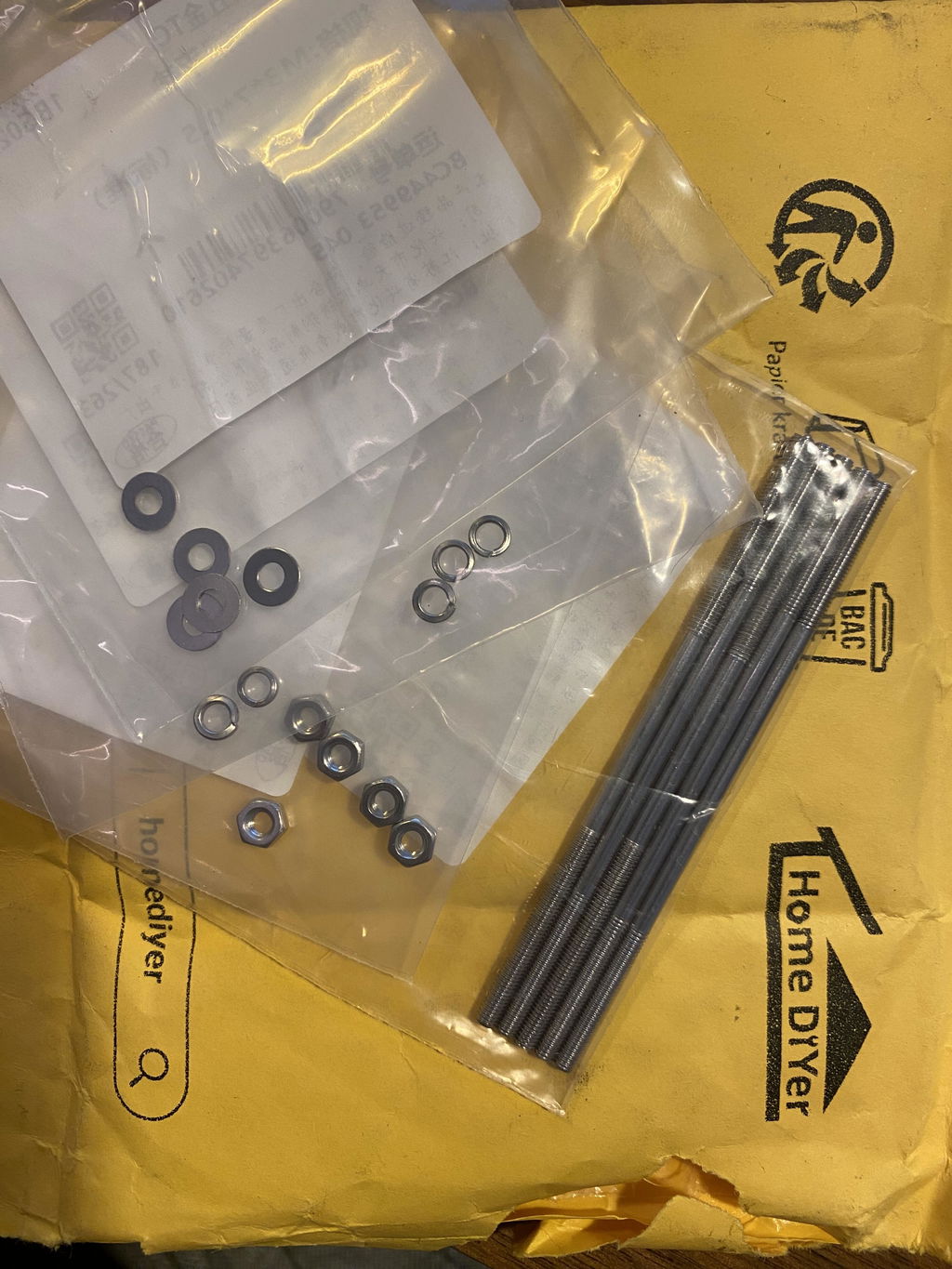
The chain is fine...but I ordered the wrong size. Nine links of the chain I ordered equals six of the size I wanted. My error...
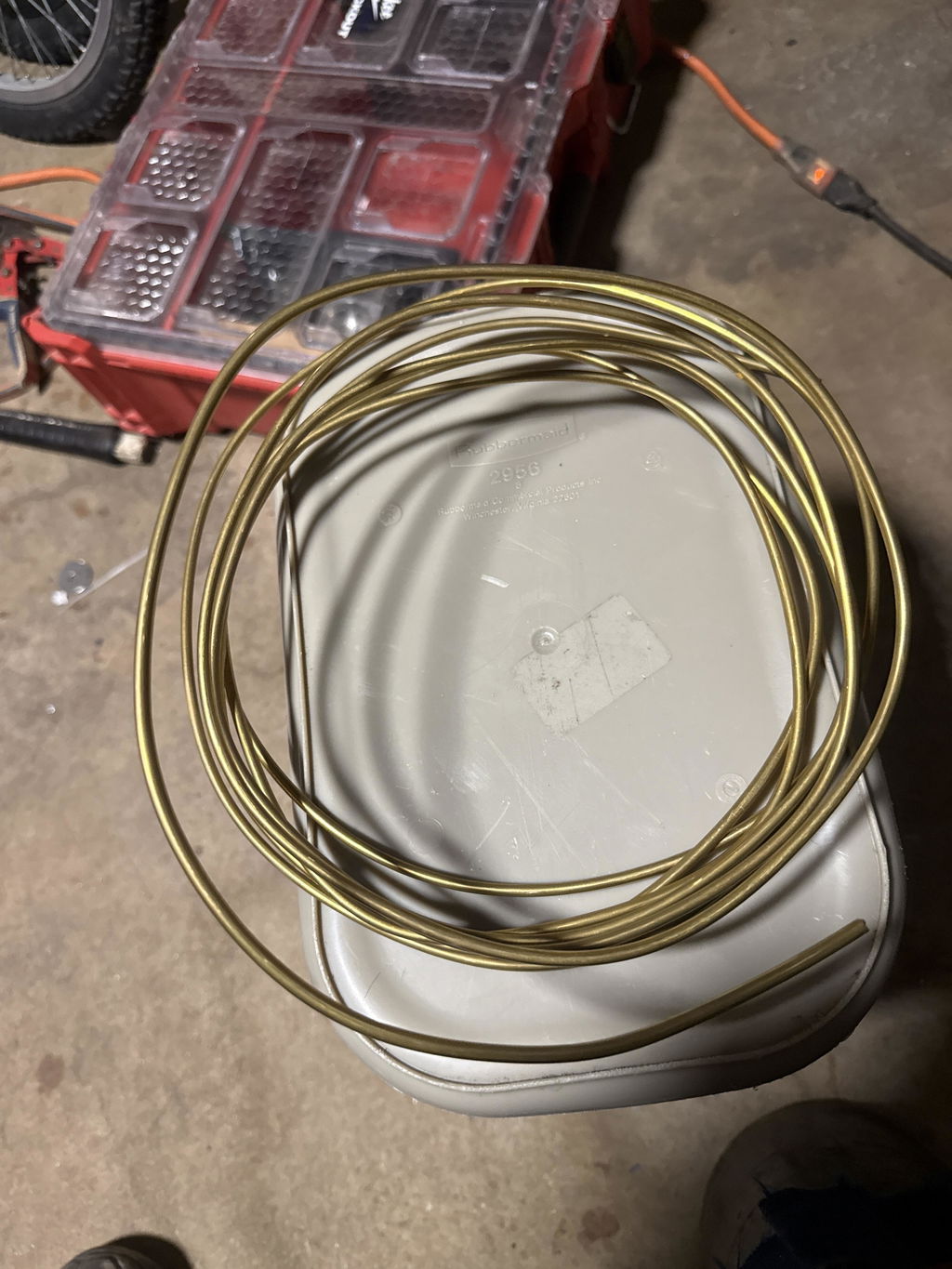
How can I straighten out the springs? I can't use them coil uo as is.
Your payment information is processed securely. We do not store credit card details nor have access to your credit card information.
Get fitment advice & recommendations
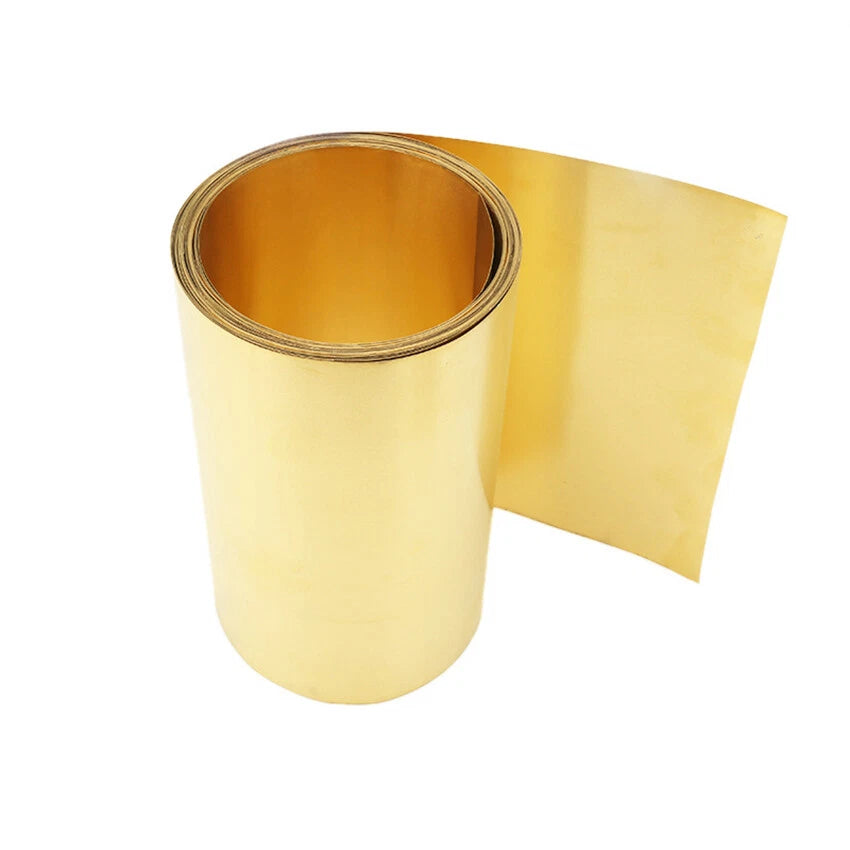
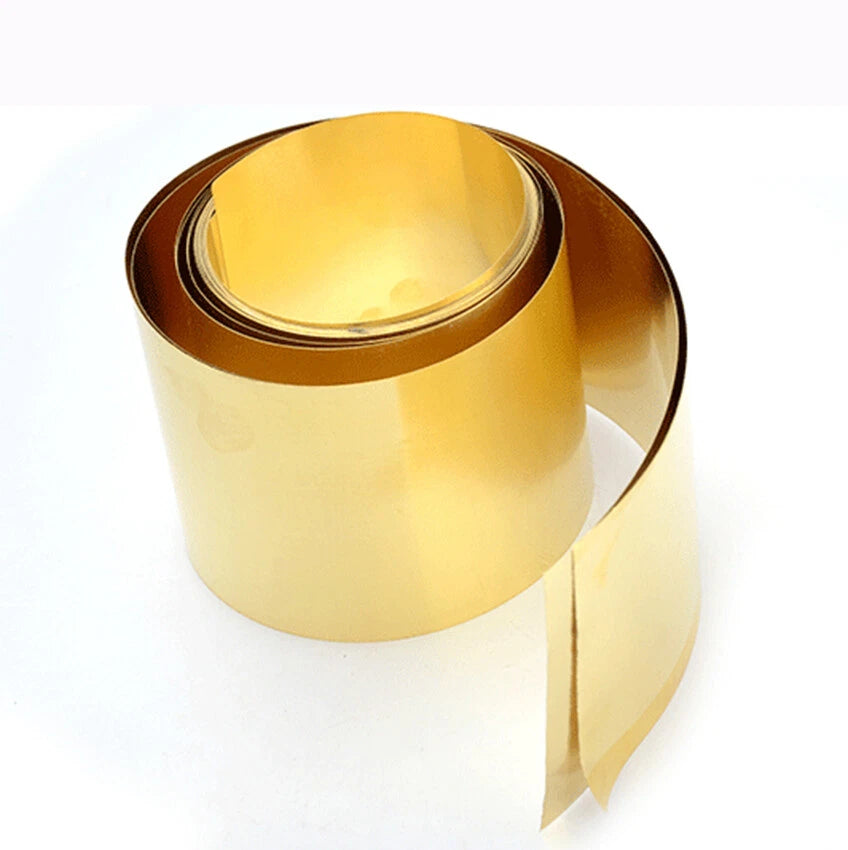
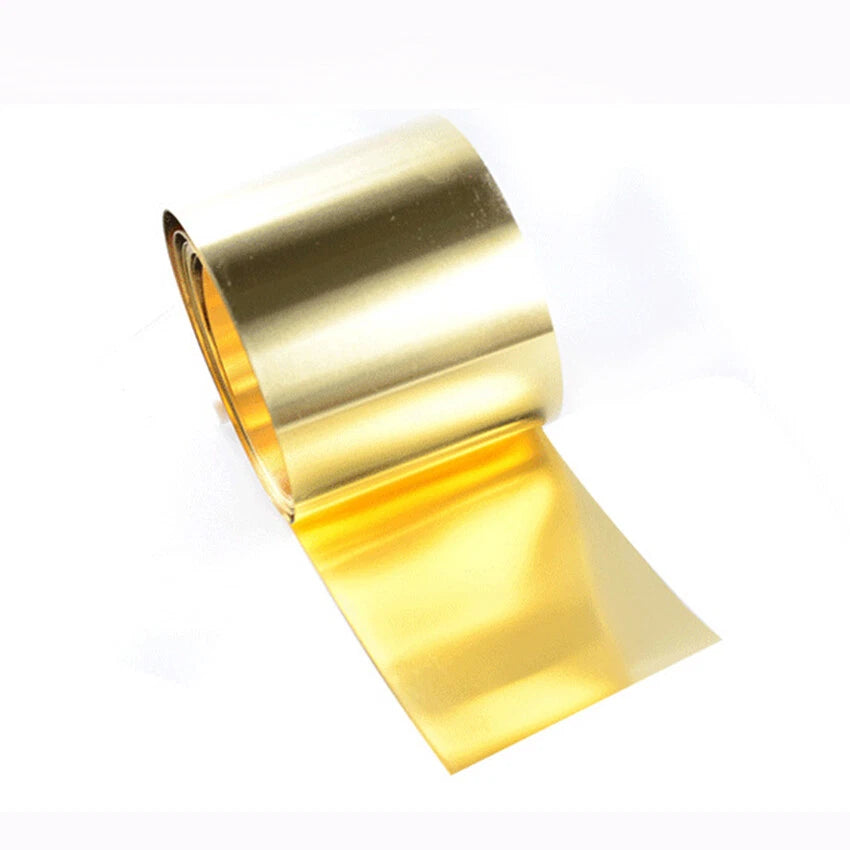
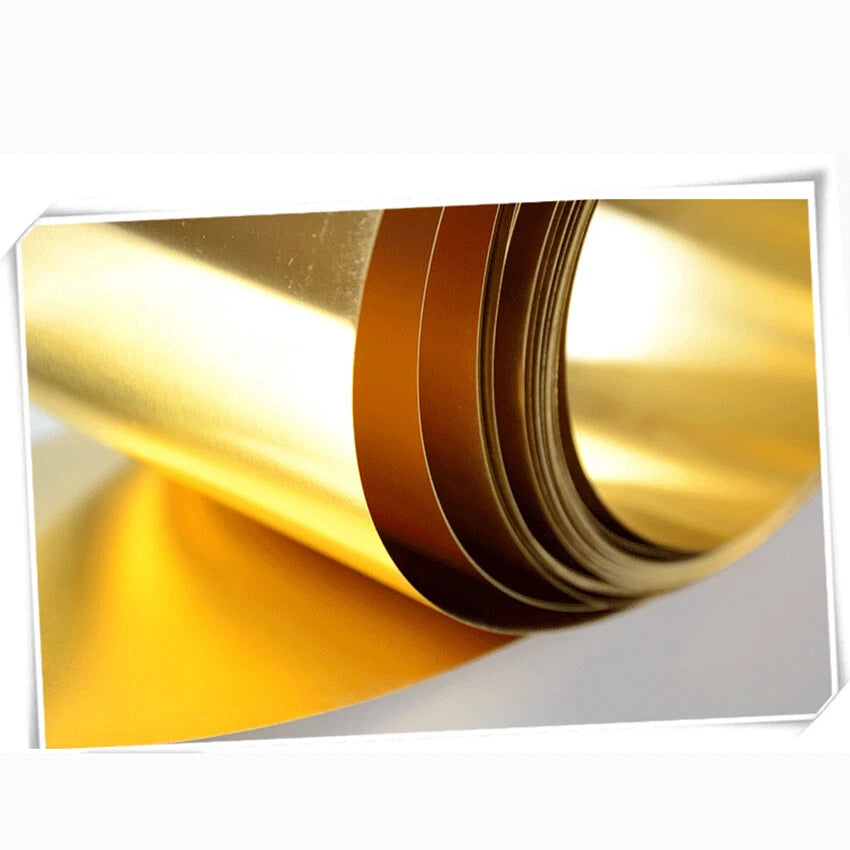
Finding a thin brass sheet roll that ships in the exact thickness and width you need — without ordering a full industrial coil — is a frustrating search for hobbyists, makers, and repair technicians alike. Whether you're shimming a mechanical assembly, lining a jewelry mold, or fabricating a custom electrical shield, this thin brass sheet roll delivers the dimensional precision and material consistency your project demands.
Each piece is a pure brass foil strip, available in thicknesses from 0.01 mm to 1 mm (approximately 0.0004 in to 0.039 in) and widths of 100 mm, 200 mm, 300 mm, or 305 mm (roughly 3.9 in to 12 in). Length options are 1 m, 2 m, or 3 m per piece. The material is a standard yellow brass alloy (typically CuZn30–CuZn37 range), offering a balance of flexibility, formability, and moderate corrosion resistance.
Typical applications include RF and EMI shielding tape for electronics enclosures, thin shim stock for machinery gap adjustment, decorative inlay strips for woodworking and furniture restoration, and flexible gasket material for low-pressure plumbing or HVAC joints. The wide size matrix makes it equally suited for small-batch prototyping and repetitive craft production runs.
Available from ultra-thin 0.01 mm foil up to a sturdy 1 mm strip, covering shielding, shimming, and structural inlay applications in a single product line.
Choose 100 mm, 200 mm, 300 mm, or 305 mm widths to match your project footprint without wasteful trimming or costly custom orders.
Select 1 m, 2 m, or 3 m lengths so you receive exactly what your job requires — no excess roll to store or discard.
Brass alloy provides useful conductivity for grounding straps, EMI shielding strips, and low-resistance electrical bridging in enclosures and panels.
Thinner gauges (0.01–0.1 mm) cut cleanly with scissors or a craft knife; thicker gauges (0.2–1 mm) respond well to tin snips or bench shears, with no special tooling required.
Brass naturally resists oxidation in dry and mildly humid indoor environments, making it suitable for long-term decorative inlays, shim applications, and enclosed electronic assemblies.
| Material | Brass alloy (yellow brass, CuZn series) |
|---|---|
| Thickness Range | 0.01 mm – 1 mm (0.0004 in – 0.039 in) |
| Width Options | 100 mm / 200 mm / 300 mm / 305 mm |
| Length Options | 1 m / 2 m / 3 m |
| Surface Finish | Mill finish (smooth, uncoated) |
| Temper / Hardness | See variant options |
| Tensile Strength | See variant options |
| Electrical Conductivity | Approx. 26–28% IACS (typical for CuZn30–CuZn37) |
| Corrosion Resistance | Moderate; suitable for dry and mildly humid indoor use |
| Solderability | Yes, with standard copper-alloy flux |
| Product Type | Copper Sheet / Brass Foil Strip |
For EMI/RF shielding tape and decorative foil inlays, 0.01–0.05 mm is typically sufficient and cuts easily with scissors. For shimming mechanical gaps or gasket applications, 0.1–0.3 mm offers better rigidity. For structural inlays, edge banding, or load-bearing shims, 0.5–1 mm provides the stiffness needed. If you are unsure, start with a thinner gauge — it is easier to layer thin foil than to thin down a thick strip.
This is a solid brass alloy strip throughout its cross-section — not a plated or coated product. The yellow brass composition (CuZn series) runs uniformly from surface to surface, so cut edges retain the same material properties as the face.
Brass offers moderate corrosion resistance in dry and mildly humid indoor environments. It will develop a natural patina over time when exposed to air, which some users find desirable for decorative applications. For outdoor or high-humidity use, a clear lacquer coating is recommended. Brass is not suitable for prolonged contact with ammonia-based cleaners or salt-spray environments without protective coating.
Yes. Brass solders and brazes readily using standard copper-alloy flux and lead-free or leaded solder. For brazing, use a silver-bearing brazing alloy with an appropriate flux. Clean the surface with isopropyl alcohol or a mild acid flux before soldering to remove any surface oxidation for a reliable joint.
Gauges from 0.01 mm to 0.1 mm cut cleanly with household scissors, a craft knife and steel ruler, or a rotary cutter on a cutting mat. Gauges from 0.2 mm to 0.5 mm are best handled with aviation tin snips or bench shears for straight cuts. For the 1 mm thickness, a bench shear or angle grinder with a thin cut-off disc gives the cleanest edge. Deburr cut edges with fine sandpaper (400–600 grit) for safe handling.
Yes. Thin brass foil strips (0.1–0.3 mm) are widely used for decorative inlay channels routed into wood surfaces. The material bonds well with epoxy adhesives and CA (cyanoacrylate) glue. After setting, the surface can be sanded flush and finished with oil, wax, or lacquer. The 100 mm and 200 mm widths are particularly popular for tabletop and cabinet inlay work.
The 305 mm width corresponds to approximately 12 inches, which aligns with standard imperial sheet sizes used in North American fabrication and some electronics enclosure formats. The 300 mm width is the metric equivalent and suits metric-dimensioned projects. Both are available only in the 0.3 mm and 0.5 mm thicknesses. For all other thicknesses, 100 mm, 200 mm, and 300 mm widths are available.