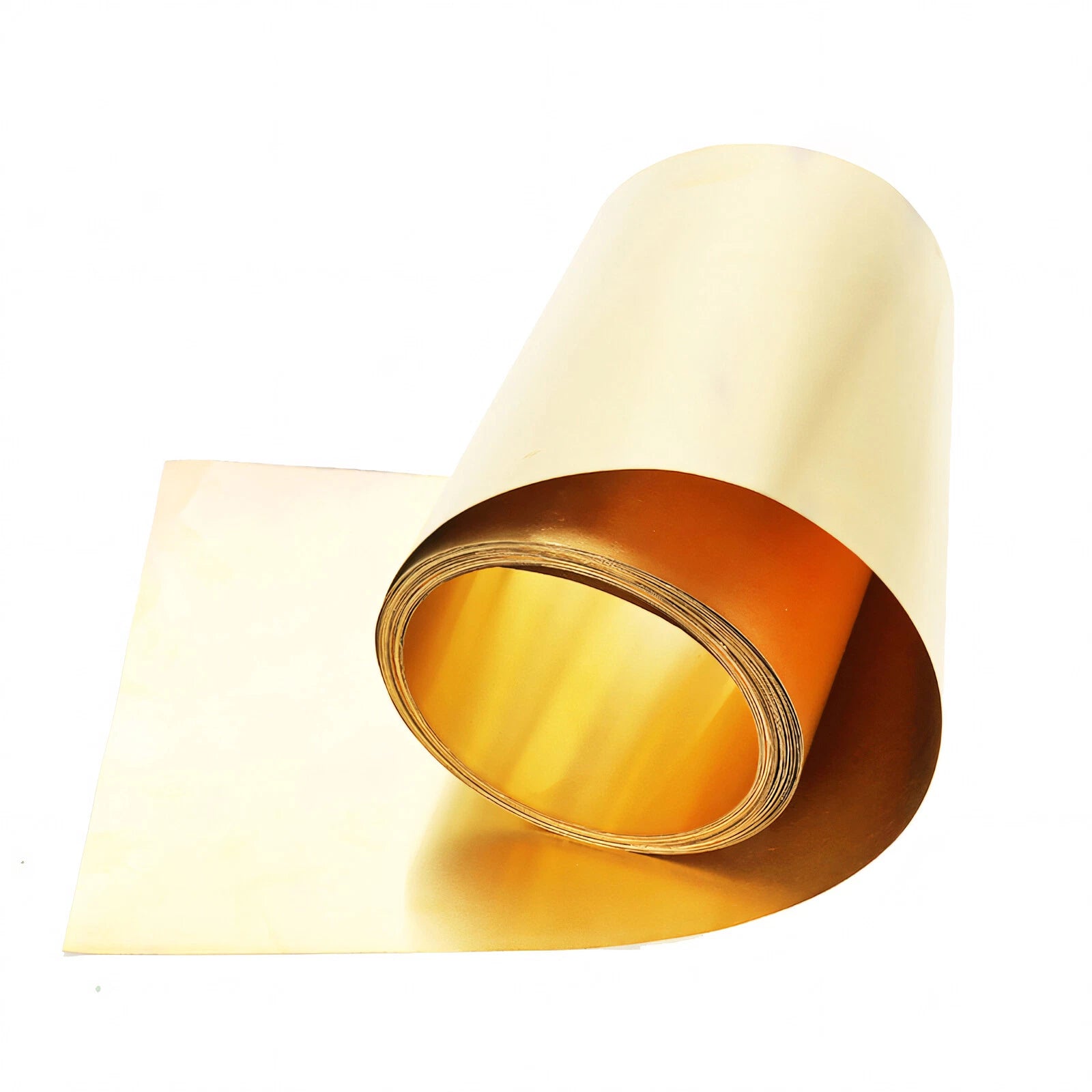
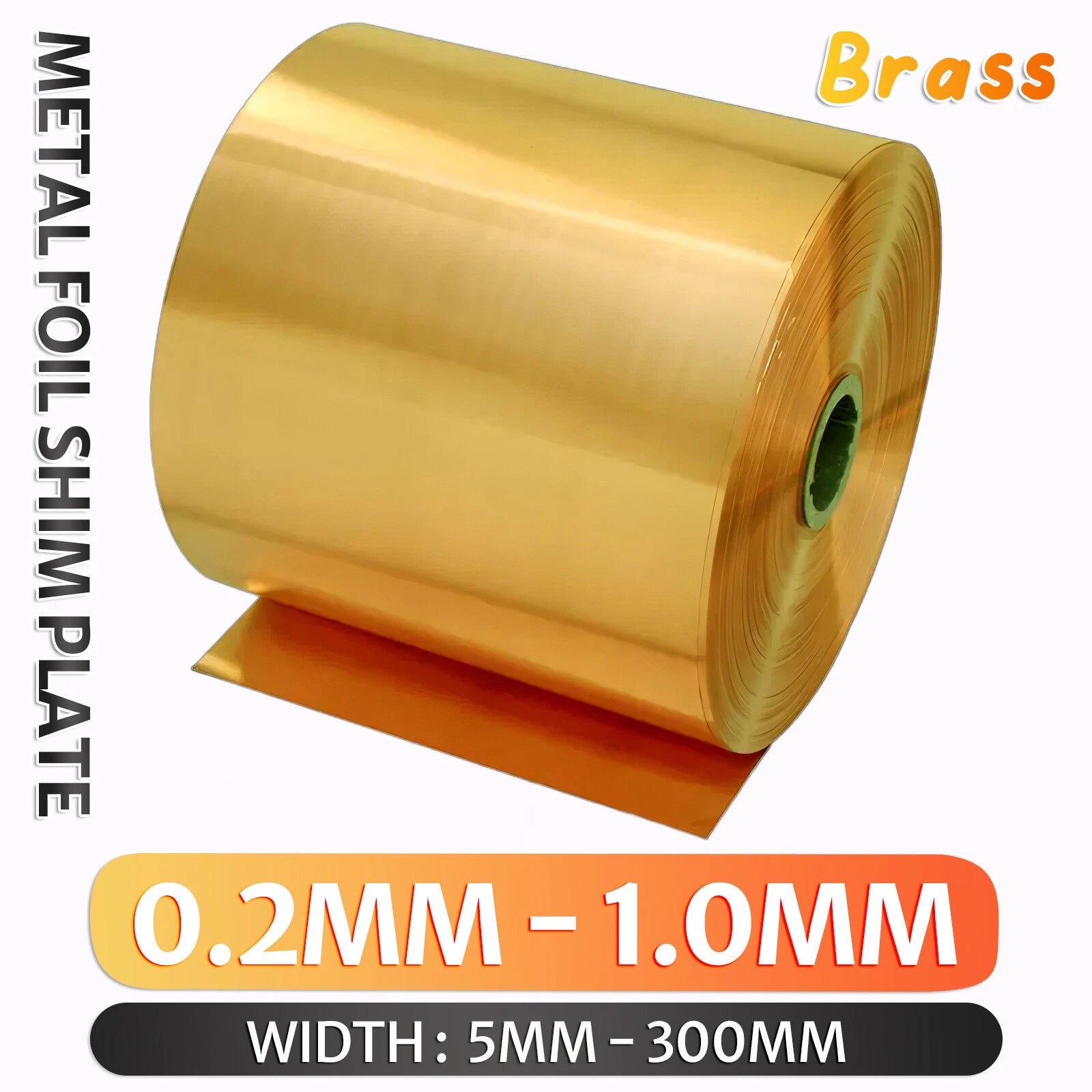
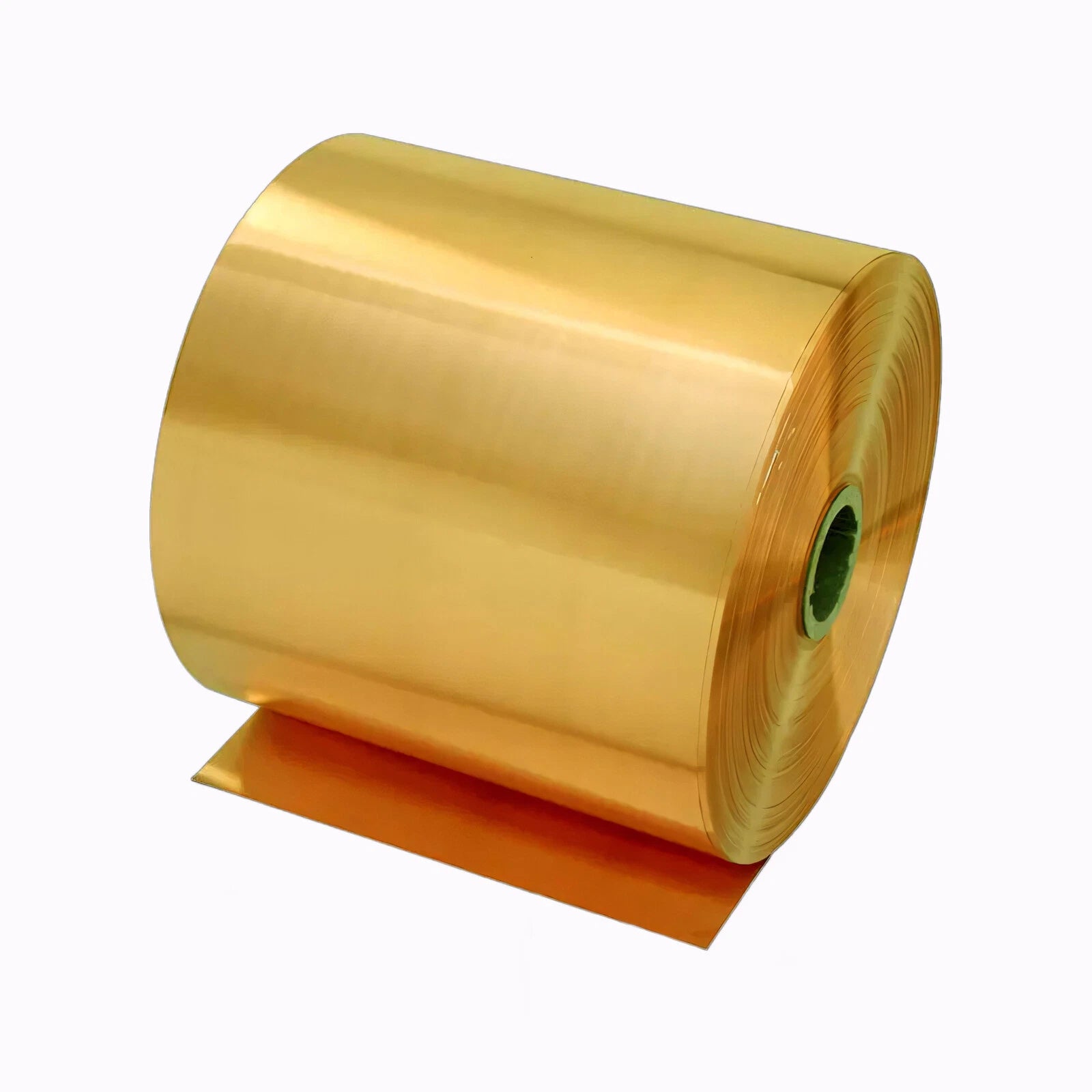
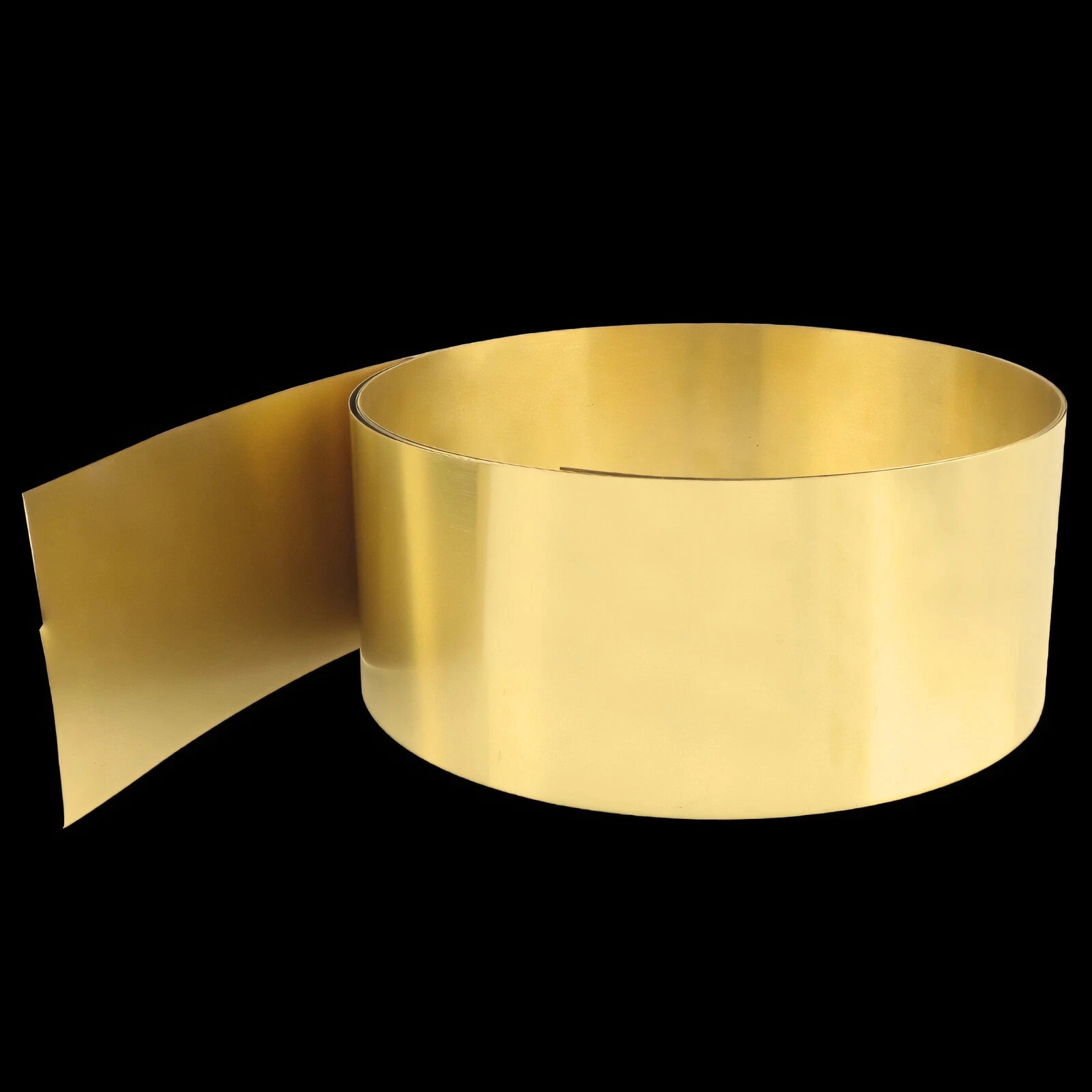
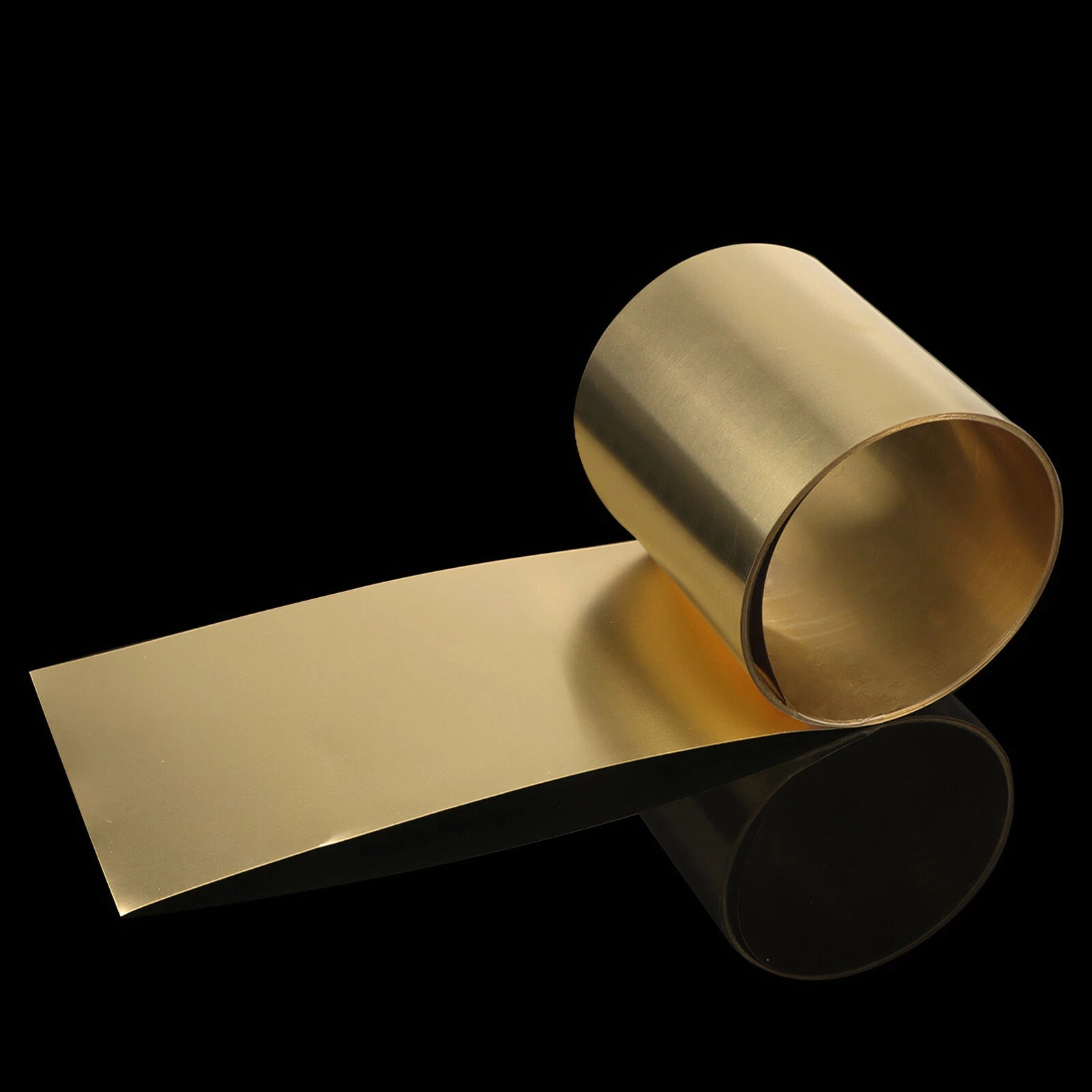
Thin Brass Sheet Roll Metal Foil Shim Plate Thick 0.2mm-1.0mm Model Making

No reviews

Price:
Sale price$5.51 USD
Stock:
In stock (500 units), ready to be shipped

Payment & Security

Ach Direct Debit Amazon American Express Apple Pay Bancontact BLIK Diners Club Discover EPS Google Pay iDEAL Wero JCB Maestro Mastercard Multibanco MobilePay PayPal Przelewy24 Shop Pay Twint Union Pay USDC Visa

Your payment information is processed securely. We do not store credit card details nor have access to your credit card information.

Limited Offer — Spend More, Save More
Spend $55+
Save $5
Spend $100+
Save $10
Spend $200+
Save $25
HomeDIYer DIY Expert Support

DIY Expert Support

Get fitment advice & recommendations

Mon–Fri  8:30 AM – 8:00 PM
24-Hour Fast Ship
Arrives in 3–14 Days
Worldwide Shipping
30-Day Returns
1 tree planted with every purchase

Description

Thin Brass Sheet Roll — Precision Metal Foil Shim for Model Making & DIY Projects

When your project demands exact tolerances and a material that holds its shape under pressure, finding the right shim stock can be frustrating. Whether you're a scale modeler filling tiny gaps, a machinist shimming a bearing housing, or a maker crafting decorative metalwork, inconsistent thickness or flimsy foil wastes time and ruins results. These thin brass sheet rolls are cut to your exact specification so you get the right size, every time.

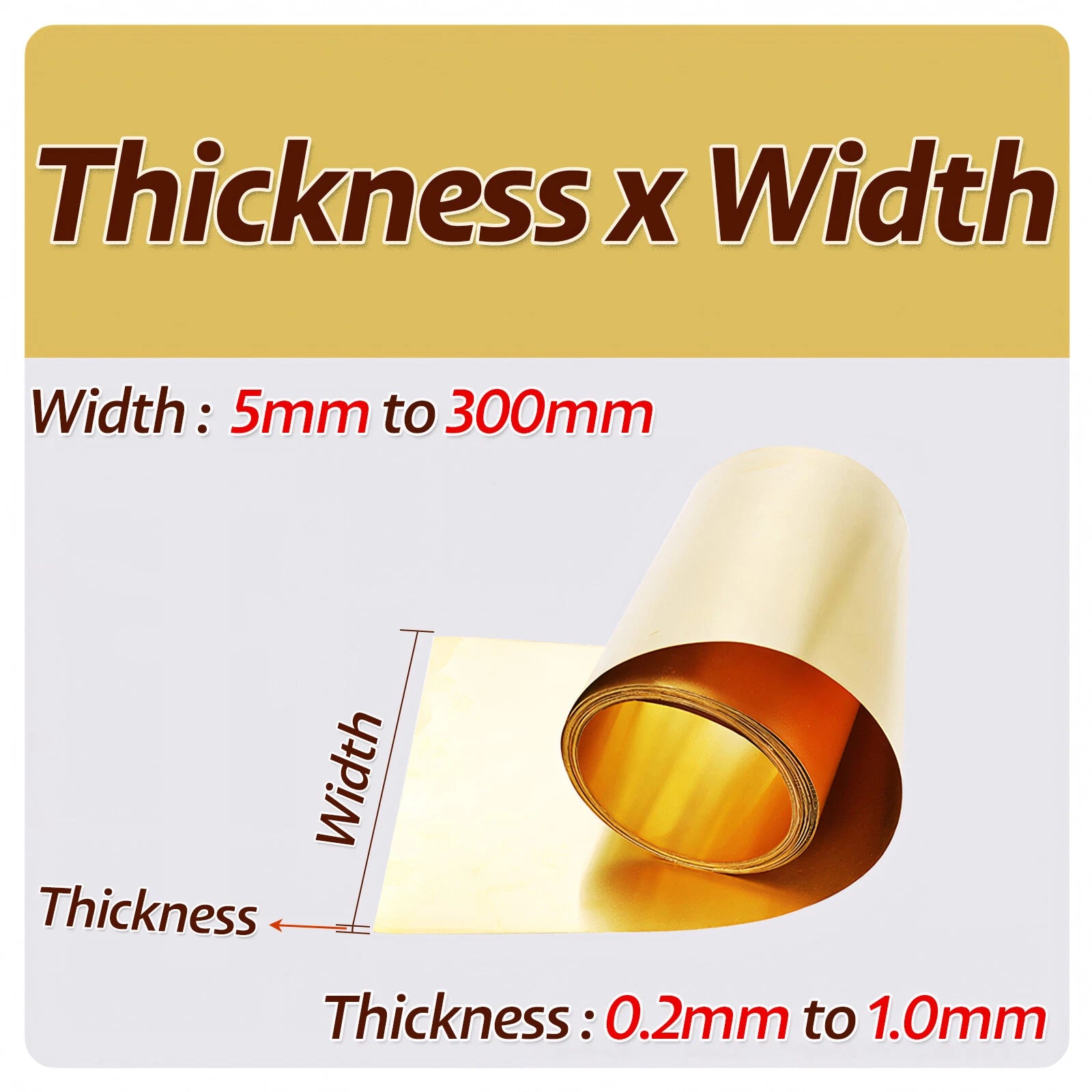
Each roll is made from brass alloy (CuZn), a copper-zinc alloy known for its workability and corrosion resistance. Thickness ranges from 0.2 mm to 1.0 mm (approximately 0.008" to 0.039"), and width options span 5 mm to 300 mm (approximately 0.2" to 11.8"). Length is available in 1 Meter, 2 Meter, and 5 Meter rolls to suit both small-batch and larger-scale needs.

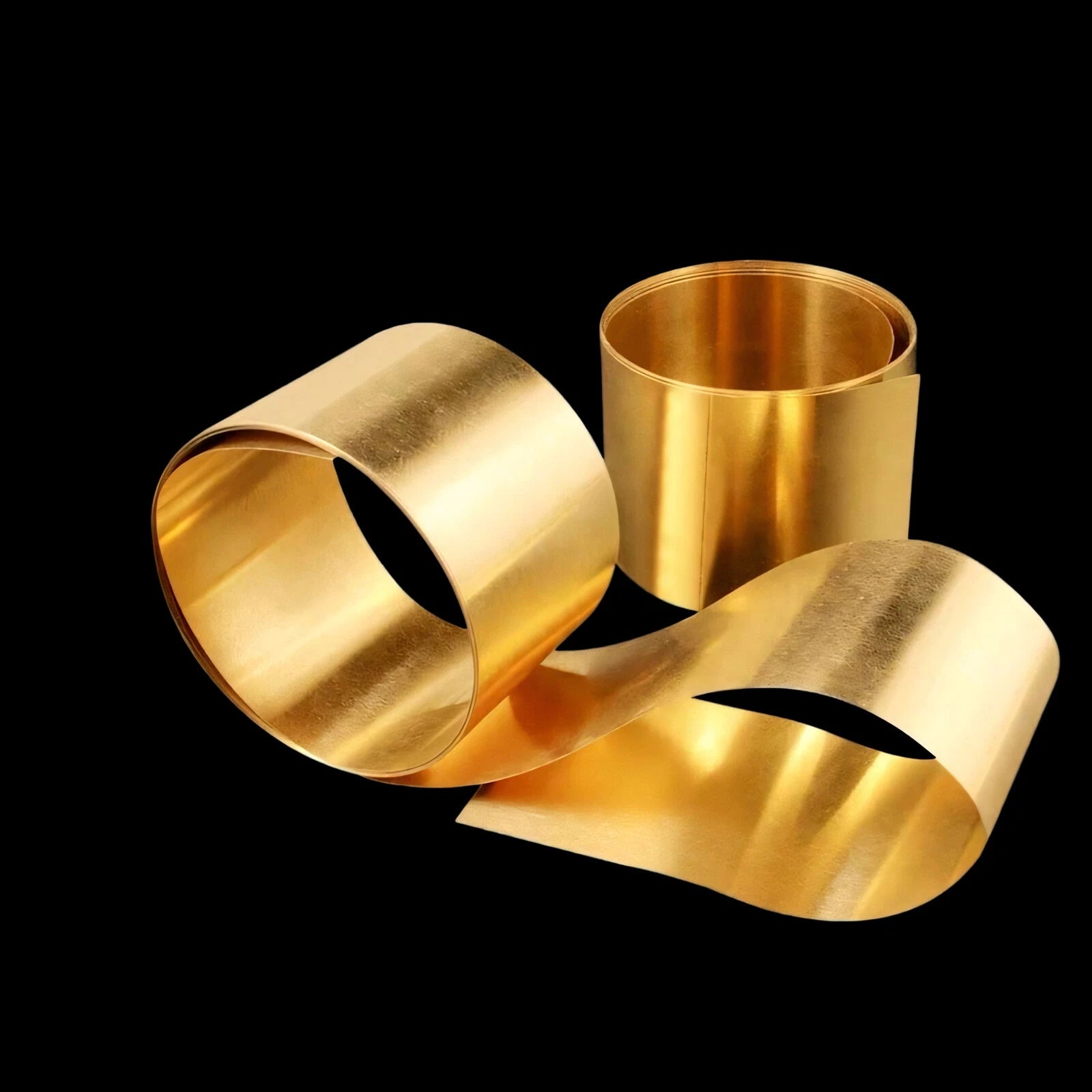
Typical applications include precision shimming between mechanical components, thin brass sheet for model railway and RC vehicle detailing, gasket blanks for low-pressure fluid systems, decorative inlay strips for woodworking and furniture making, and heat-shield liners in small engine or electronics enclosures.

🔧 Compatibility: Suitable for hand-cutting with scissors or tin snips, scoring and snapping, laser cutting, and CNC routing. Compatible with standard brass soldering, brazing, and epoxy bonding processes.

✅ Key Features of These Thin Brass Sheet Rolls

  • 📐Wide Size Matrix — Thickness 0.2–1.0 mm, width 5–300 mm, length 1–5 m; select the exact combination you need from the variant dropdowns.
  • ⚙️Consistent Rolled Thickness — Cold-rolled brass foil maintains uniform gauge across the full length, critical for shimming and gasket applications where tolerance matters.
  • 🛡️Corrosion-Resistant Brass Alloy — Copper-zinc composition resists oxidation in typical indoor and light outdoor environments, keeping surfaces clean and workable.
  • ✂️Easy to Cut and Form — Thin gauges (0.2–0.5 mm) cut cleanly with household scissors; thicker gauges (0.6–1.0 mm) respond well to tin snips or a sharp utility knife and straightedge.
  • 🔩Solderable & Bondable — Accepts standard brass solder, silver solder, and most structural adhesives, making it straightforward to join to other metal or non-metal substrates.
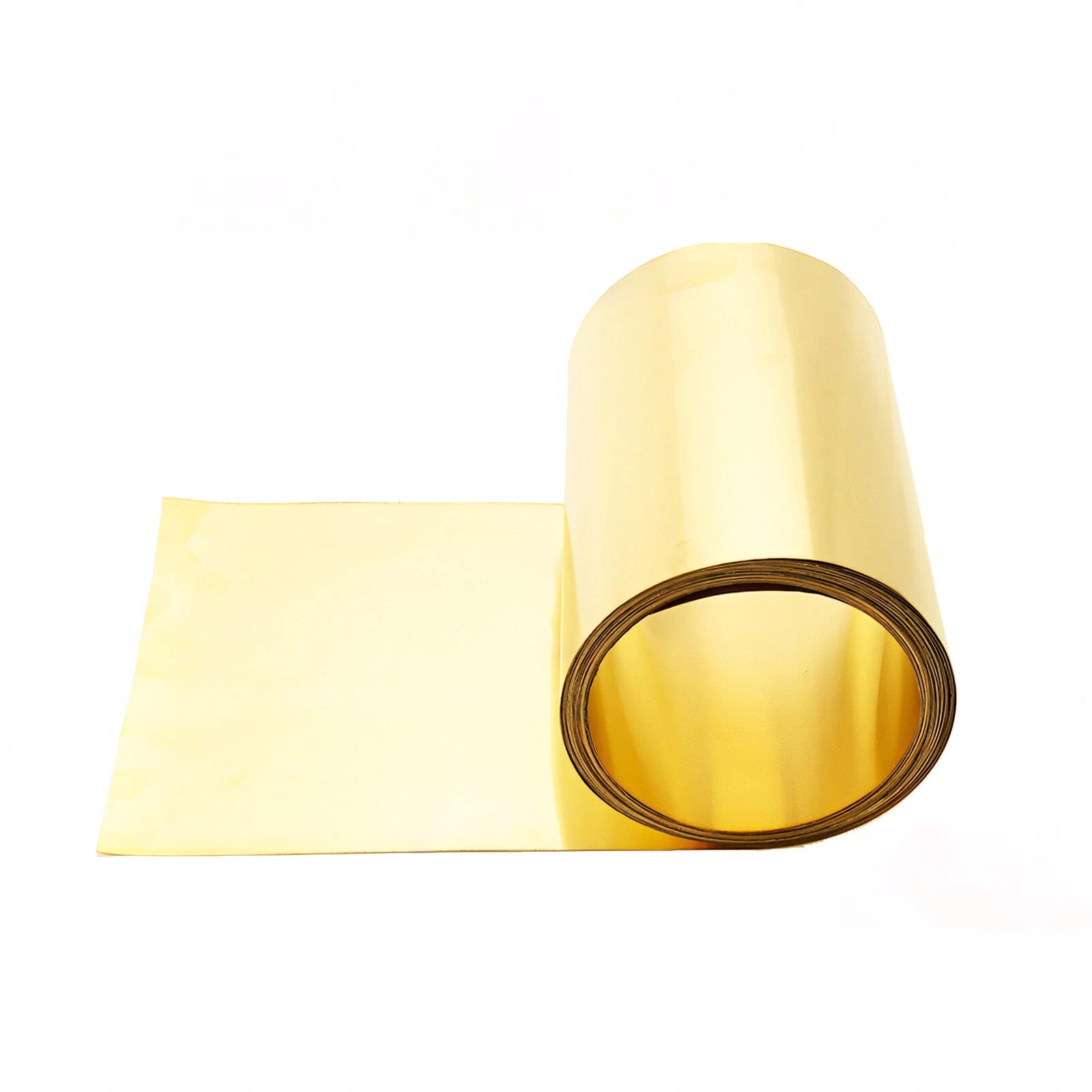
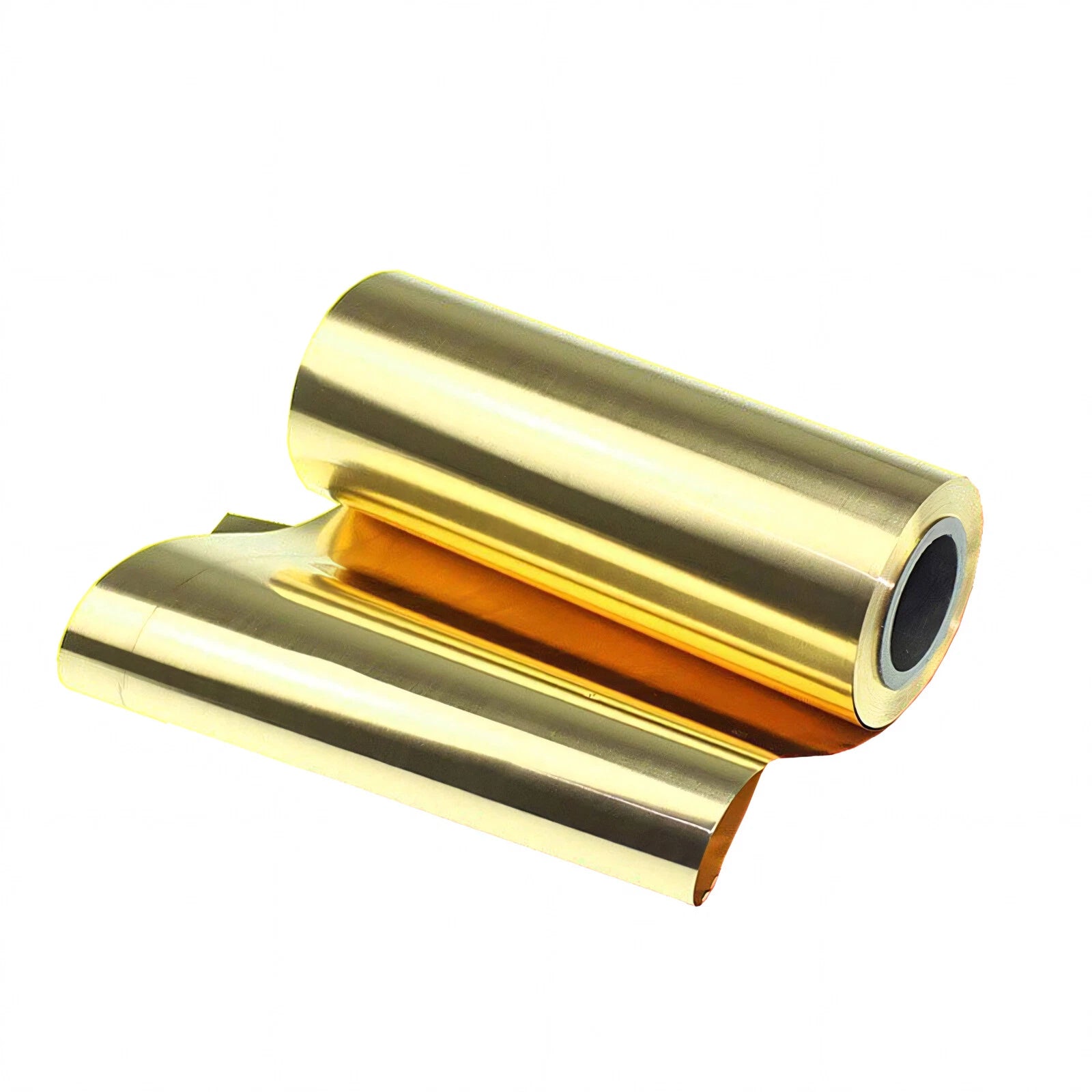
  • 📦Roll Format for Clean Storage — Supplied as a flat-wound roll to minimize kinks and creases during transit and storage; unrolls flat for immediate use.

📐 Technical Specifications — Brass Shim Sheet Roll

Material Brass alloy (CuZn — copper-zinc)
Thickness Range 0.2 mm, 0.3 mm, 0.4 mm, 0.5 mm, 0.6 mm, 0.7 mm, 0.8 mm, 1.0 mm
Width Range 5 mm – 300 mm (approx. 0.2" – 11.8")
Length Options 1 Meter / 2 Meter / 5 Meter
Surface Finish Cold-rolled, mill finish
Temper See variant options
Tensile Strength (typical) See variant options
Form Flat-wound roll
Color Golden yellow (natural brass)
Workability Hand-cuttable (thin gauges); tin snips / CNC for thicker gauges
Joining Methods Soldering, brazing, epoxy adhesive

❓ Frequently Asked Questions

How do I choose the right thickness for my project?

For shimming gaps between mechanical parts (bearings, housings, flanges), match the shim thickness to the measured gap — 0.2–0.3 mm is common for fine adjustments, while 0.5–1.0 mm suits larger clearances. For model making and decorative work, 0.2–0.4 mm is easiest to cut and bend by hand. For gaskets or heat shields, 0.5 mm and above provides better durability.

What width should I order if I need to cut custom shapes?

Order a width equal to or slightly larger than the widest dimension of your finished piece. For example, if your gasket is 45 mm wide, select the 50 mm width option. This minimizes waste while ensuring you have enough material to mark and cut accurately. For irregular shapes, consider the bounding-box width of your pattern.

How strong is this brass sheet — can it handle mechanical load?

Brass (CuZn alloy) is a moderately strong, ductile metal. In shim applications it is loaded in compression, where it performs well. It is not intended for structural tension or high-impact applications. For precision shimming of machine components, bearing housings, or alignment tasks, brass shim stock is an industry-standard choice. Thicker gauges (0.8–1.0 mm) offer greater rigidity for heavier-duty shimming.

Will this brass sheet rust or corrode?

Brass does not rust (rust is specific to iron/steel). It can develop a natural patina (darkening or greenish tarnish) over time when exposed to moisture and air, but this does not compromise structural integrity. For indoor mechanical and model-making applications, bare brass performs well without any coating. If a bright finish is required long-term, a clear lacquer spray can be applied after cutting and forming.

Can I cut this with regular scissors or do I need special tools?

Gauges of 0.2–0.4 mm can be cut cleanly with sharp household scissors or craft scissors. For 0.5–0.6 mm, aviation tin snips or heavy-duty scissors work well. Gauges of 0.7–1.0 mm are best cut with tin snips, a metal shear, or scored and snapped along a straightedge. Laser cutting and CNC routing are also compatible with all gauges listed.

Is this compatible with soldering and brazing?

Yes. Brass is one of the most solderable metals. It accepts standard 60/40 tin-lead solder, lead-free solder, and silver solder with appropriate flux. Brazing with brass or silver-alloy rod is also straightforward. Clean the surface with fine abrasive or flux before soldering for best adhesion. Epoxy structural adhesives also bond well to brass when the surface is lightly abraded and degreased.

How do I decide between 1 Meter, 2 Meter, and 5 Meter lengths?

Choose 1 Meter for single-piece or prototype work where you need just enough to complete one job. The 2 Meter option suits small batch runs or projects requiring multiple pieces from the same strip. The 5 Meter roll offers the best value per meter for ongoing workshop use, production runs, or when you anticipate repeat cuts from the same size. All lengths are supplied as a continuous roll.

🛒 Select your Thickness, Width, and Length above, then add to cart.


You may also like

Recently viewed