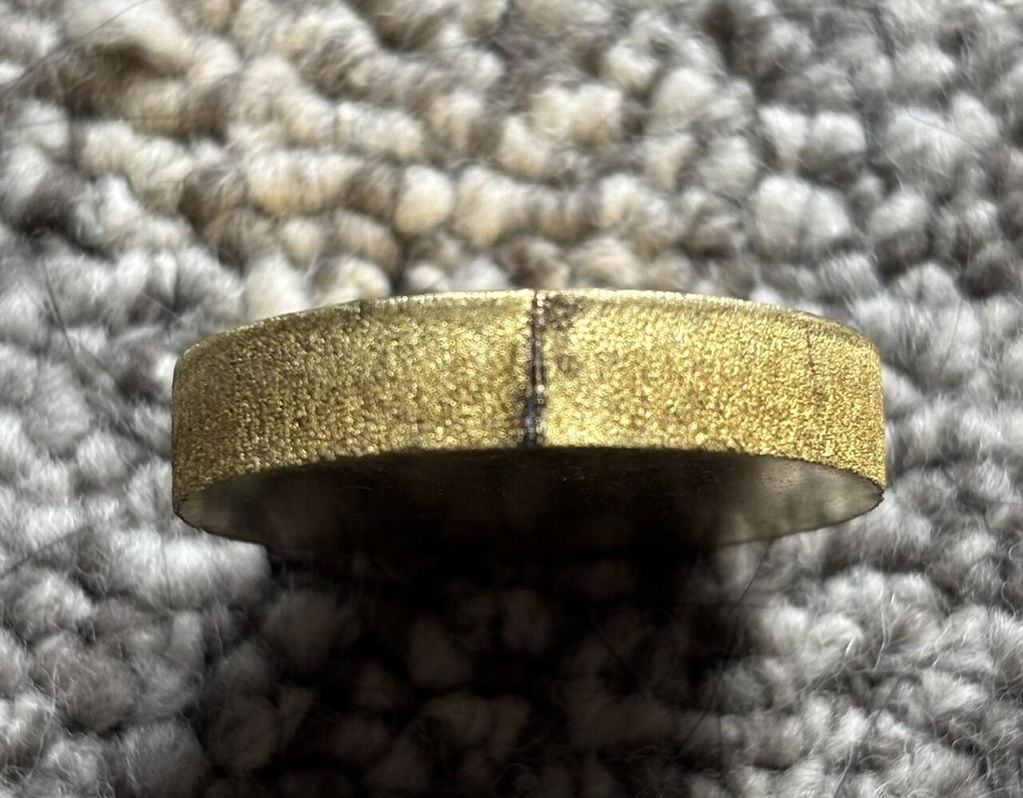
The chain is fine...but I ordered the wrong size. Nine links of the chain I ordered equals six of the size I wanted. My error...
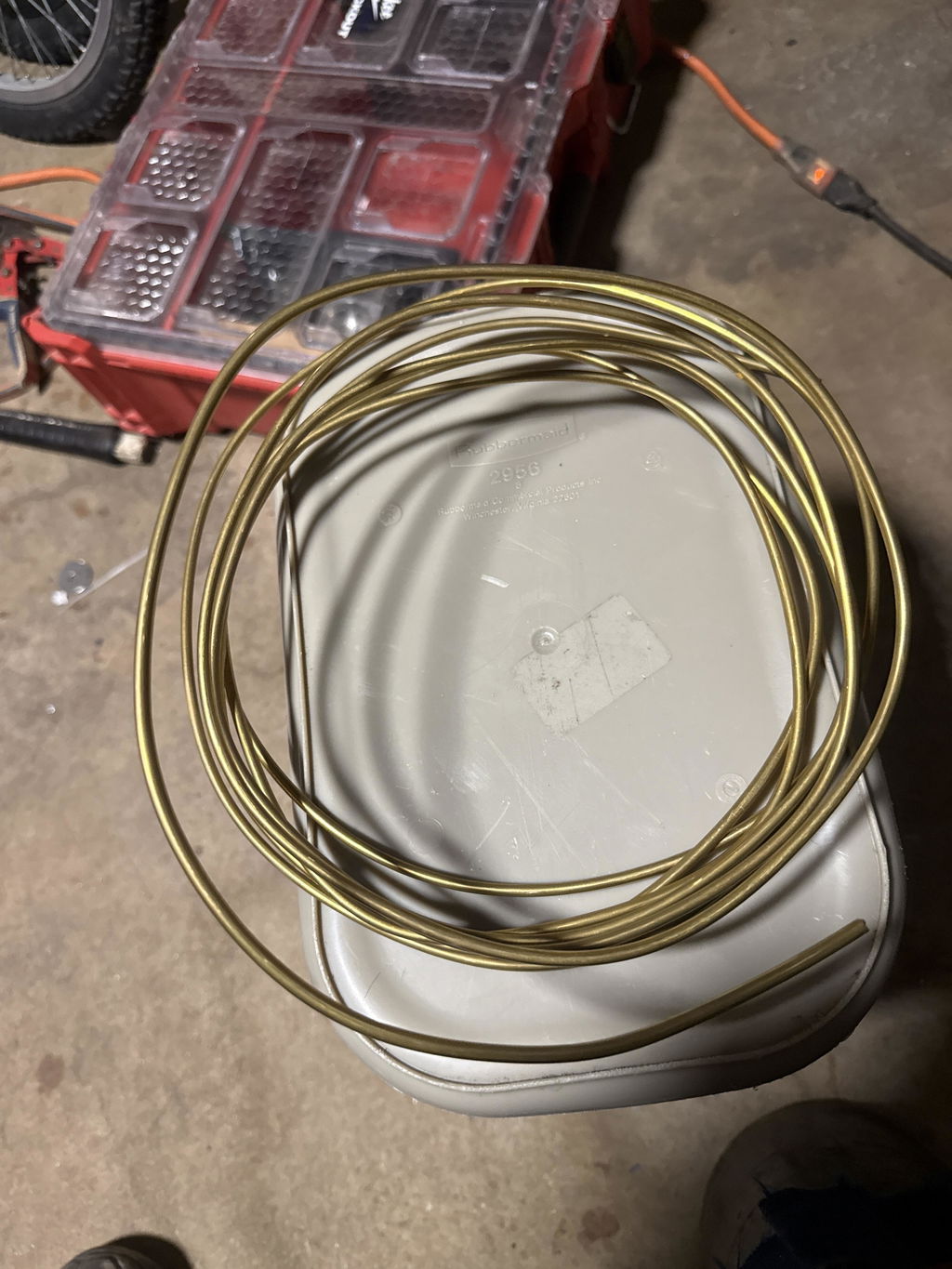
How can I straighten out the springs? I can't use them coil uo as is.
Your payment information is processed securely. We do not store credit card details nor have access to your credit card information.
Get fitment advice & recommendations
When a rotating shaft needs to resist axial (thrust) forces without binding or overheating, a standard radial bearing simply won't hold up. Engineers, machinists, and serious DIYers working on motors, gearboxes, rotary tables, and vertical shaft assemblies need a bearing built specifically for that job. These thrust ball bearings deliver controlled axial load capacity in a compact, interchangeable form factor that fits standard housings.
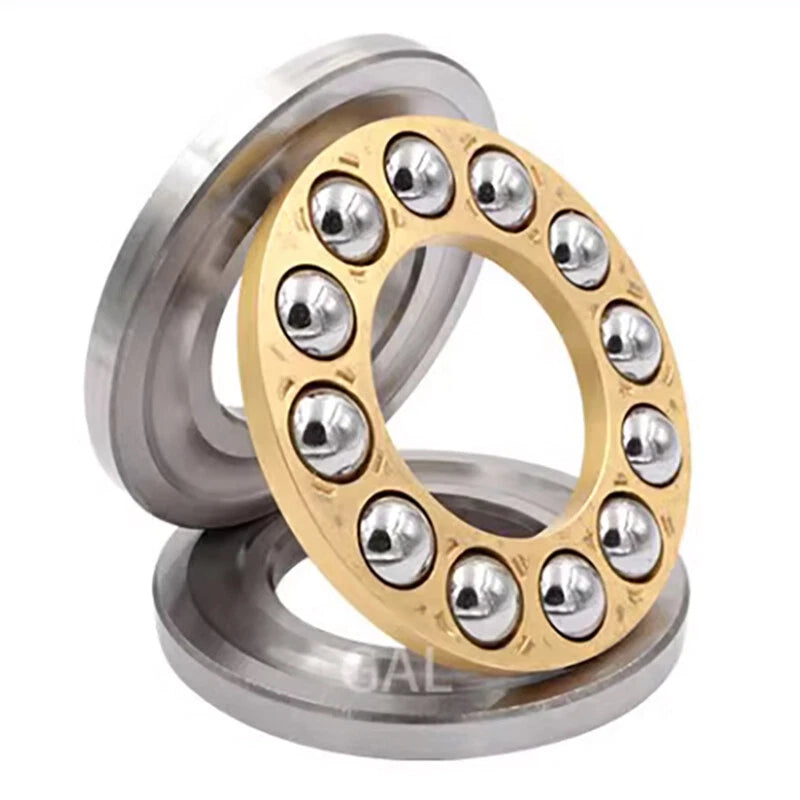
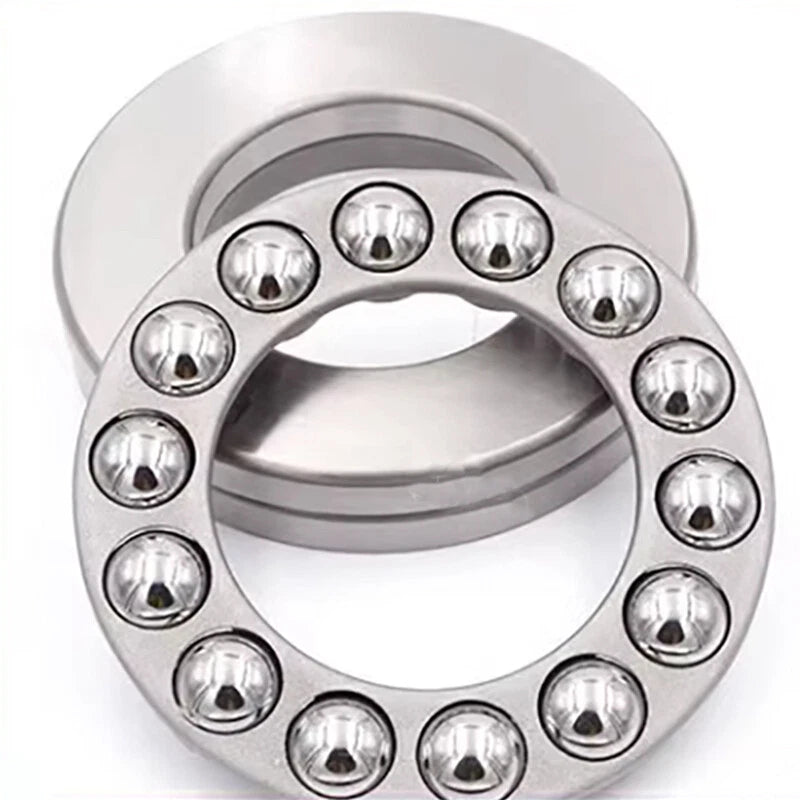
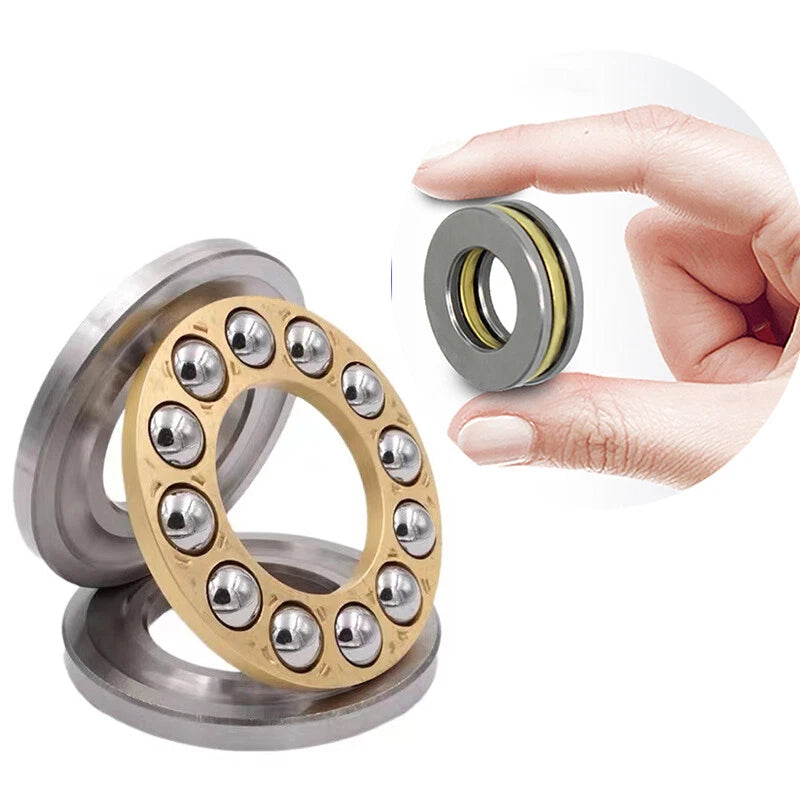
Each thrust ball bearing consists of three separate components: a shaft washer (tight-fit ring), a housing washer (loose-fit ring), and a steel ball-and-cage assembly seated between them. All parts are manufactured from steel with a smooth raceway finish. Available sizes span ID 10–70 mm (approx. 0.39–2.76 in), OD 24–110 mm (approx. 0.94–4.33 in), and thickness 9–36 mm (approx. 0.35–1.42 in), covering a wide range of shaft diameters and load requirements.
Typical applications include vertical shaft support in drill press columns and lathe tailstocks, axial positioning in rotary indexing tables and turntables, thrust load management in screw jacks and lead-screw assemblies, and preload control in spindle and motor end-cap configurations. The standardized 3-part construction makes replacement straightforward without special tooling.
| Bearing Type | Thrust Ball Bearing (Single Direction) |
|---|---|
| Construction | 3-Part: shaft washer + housing washer + ball & cage assembly |
| Material | Steel |
| Inner Diameter (ID) | 10–70 mm (0.39–2.76 in) — See variant options |
| Outer Diameter (OD) | 24–110 mm (0.94–4.33 in) — See variant options |
| Thickness | 9–36 mm (0.35–1.42 in) — See variant options |
| Load Direction | Axial (unidirectional thrust) |
| Lubrication | Contact us to confirm |
| Operating Temperature | See variant options |
| Quantity per Order | See variant options (1 / 2 / 3 / 5 pcs) |
Match the bearing's Inner Diameter (ID) to your shaft diameter. The shaft should be a snug sliding fit through the shaft washer — typically an h6 or js6 tolerance shaft. Then confirm the Outer Diameter (OD) fits within your housing bore with a loose clearance fit for the housing washer. Finally, verify the overall thickness fits your axial space envelope. Use the variant selector above to find the ID × OD × Thickness combination that matches your assembly.
No. Thrust ball bearings are designed exclusively for axial (thrust) loads acting parallel to the shaft axis. They cannot support significant radial loads. If your application involves both radial and axial forces, you will need a separate radial bearing (such as a deep groove ball bearing) to handle the radial component, with the thrust bearing managing only the axial load.
These are single-direction thrust ball bearings. They are designed to carry axial load in one direction only. If your application requires axial load support in both directions (e.g., a reversing screw or bidirectional rotary table), you would need to use two single-direction bearings arranged back-to-back, or select a double-direction thrust bearing instead.
Thrust ball bearings typically require grease lubrication applied to the ball-and-cage assembly before installation. A lithium-based general-purpose bearing grease is suitable for most light-to-medium duty applications. For high-speed or high-temperature environments, consult the specific grease manufacturer's recommendations. Re-lubricate at regular service intervals based on operating conditions. Contact us to confirm lubrication specifications for your selected size.
First, identify the shaft washer (smaller bore, tight fit) and the housing washer (larger bore, loose fit) — they are not interchangeable. Slide the shaft washer onto the shaft with the flat face against the shaft shoulder. Place the ball-and-cage assembly on top of the shaft washer. Then seat the housing washer in the housing bore with its flat face against the housing shoulder. Ensure both washers are seated flat and parallel; misalignment will cause uneven load distribution and accelerated wear.
In a 3-part thrust ball bearing, the shaft washer has a bore that matches the shaft diameter closely (tight fit) and rotates with the shaft. The housing washer has a larger bore and sits stationary in the housing (loose fit). Mixing them up during reassembly will result in incorrect fits, potential seizure, and premature failure. Most bearings have the shaft washer and housing washer marked or distinguishable by bore size — always verify before installation.
Choose the quantity that matches your project requirement. Single pieces (1 pc) are suitable for one-off repairs or prototype builds. Multi-piece quantities (2, 3, or 5 pcs) offer a per-unit cost advantage and are practical when replacing bearings in paired or multi-shaft assemblies, or when keeping spares on hand for maintenance schedules. All pieces within a quantity option are the same size as selected in the Types dimension option.