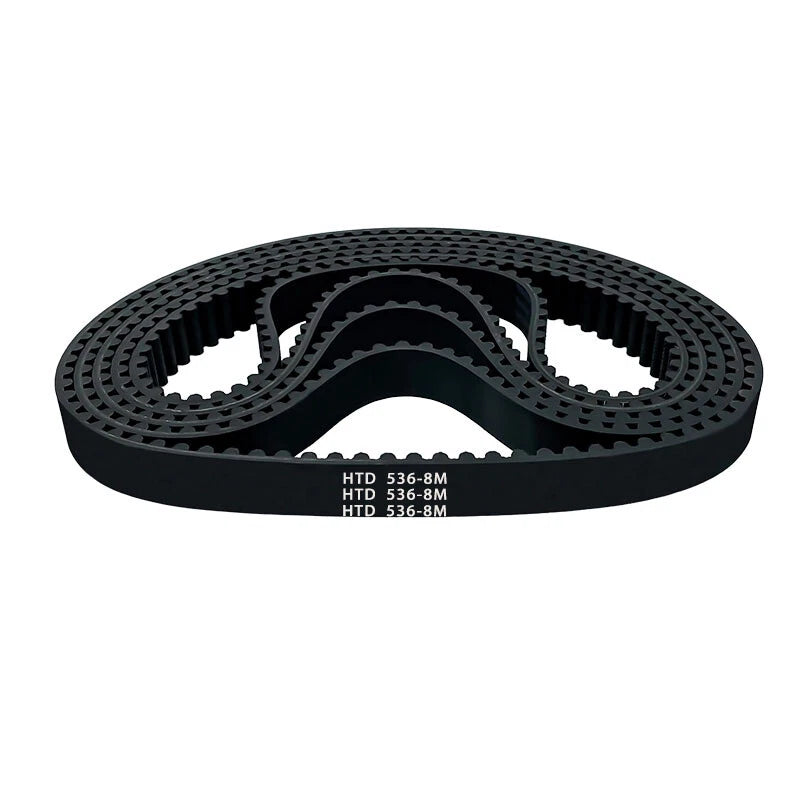
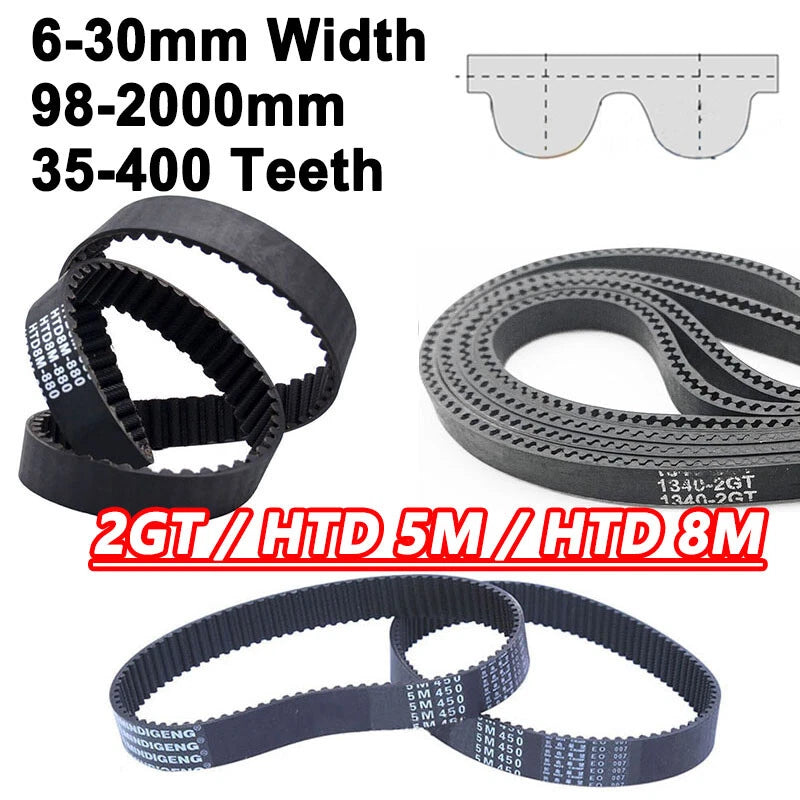
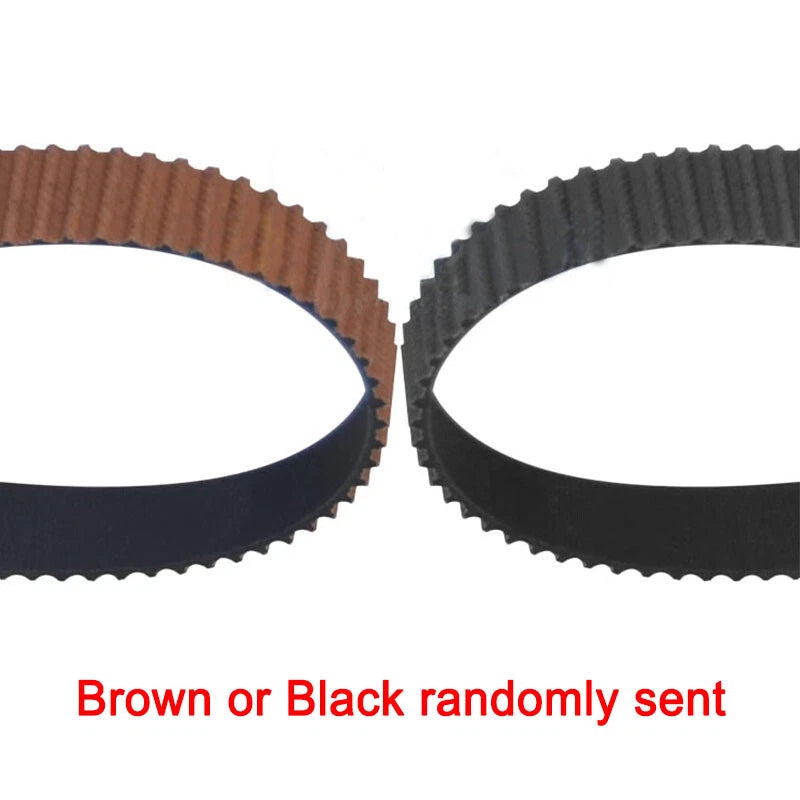
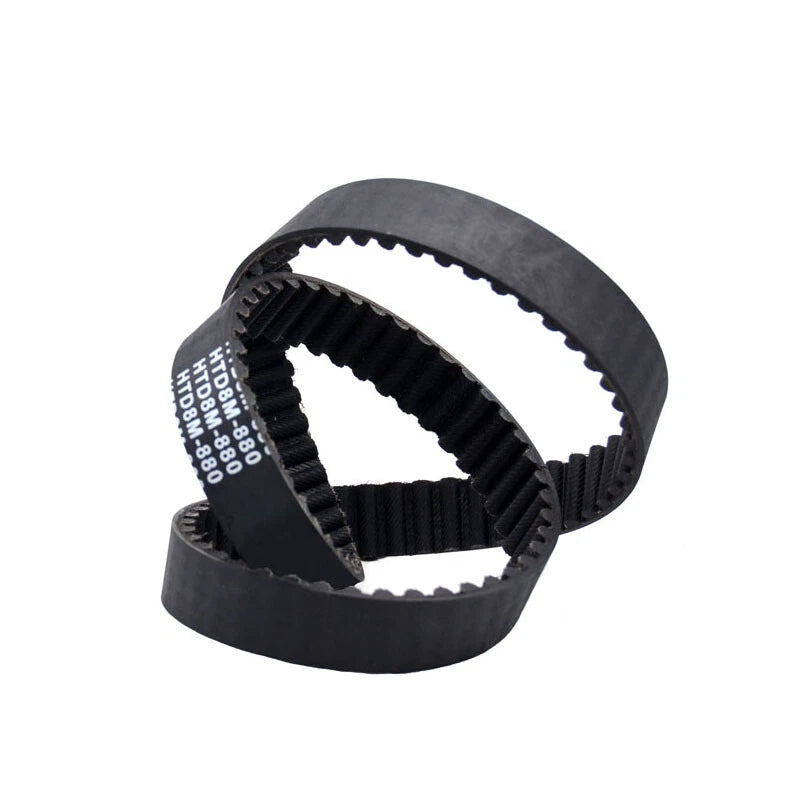
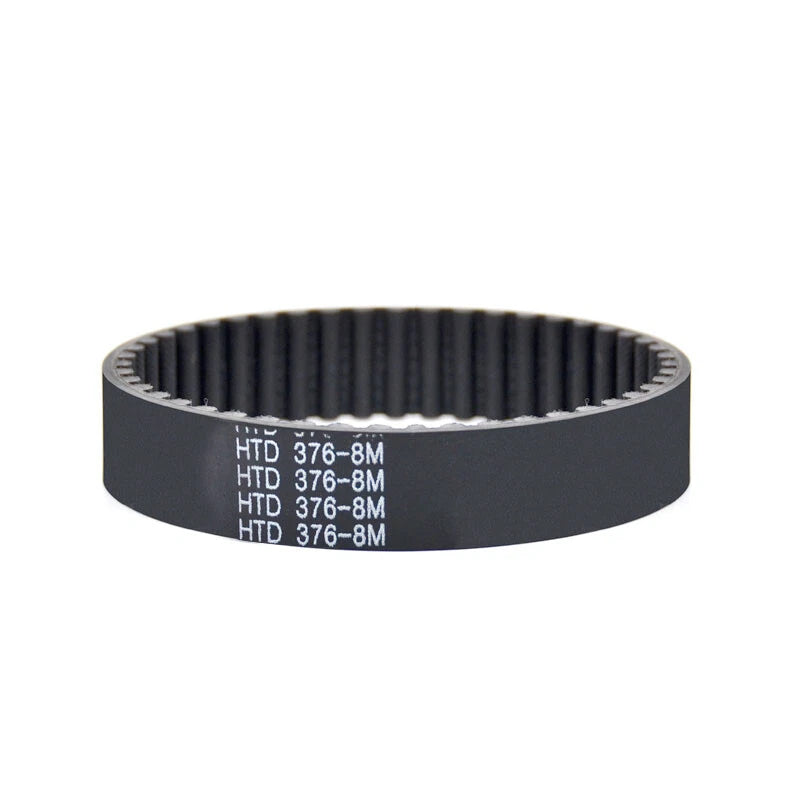
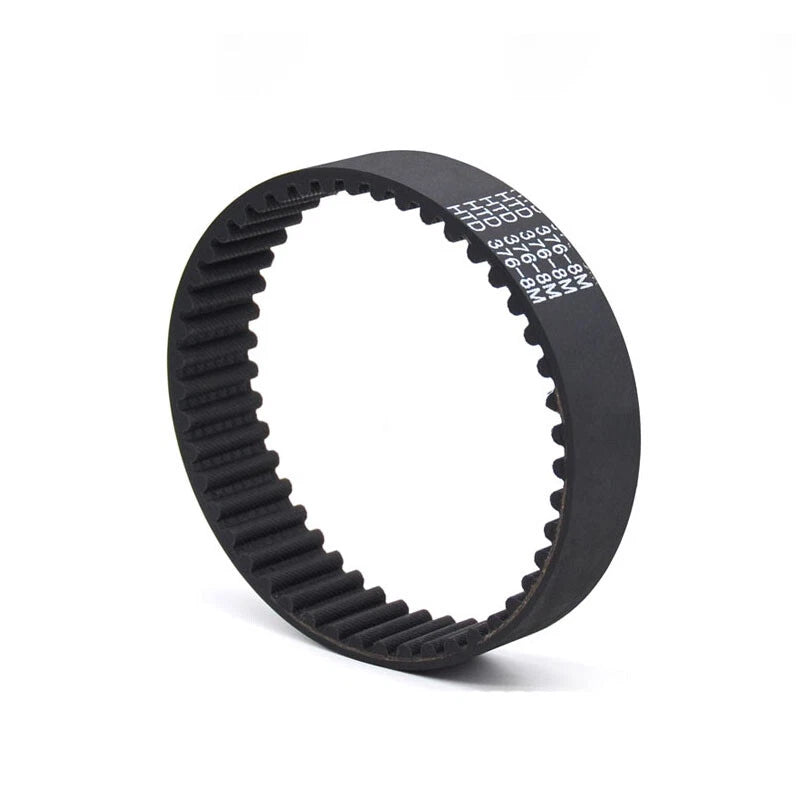
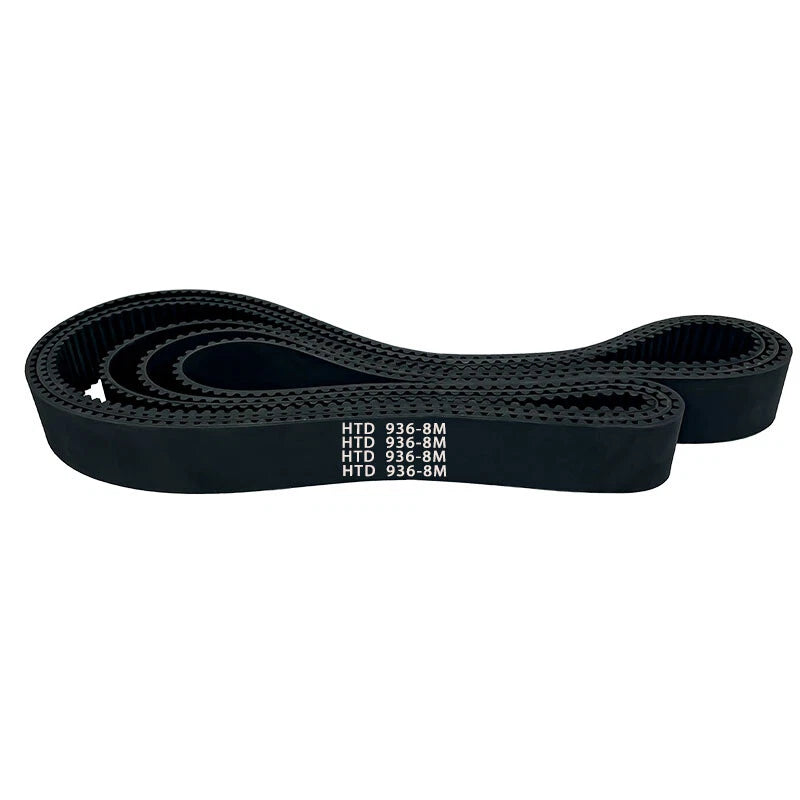
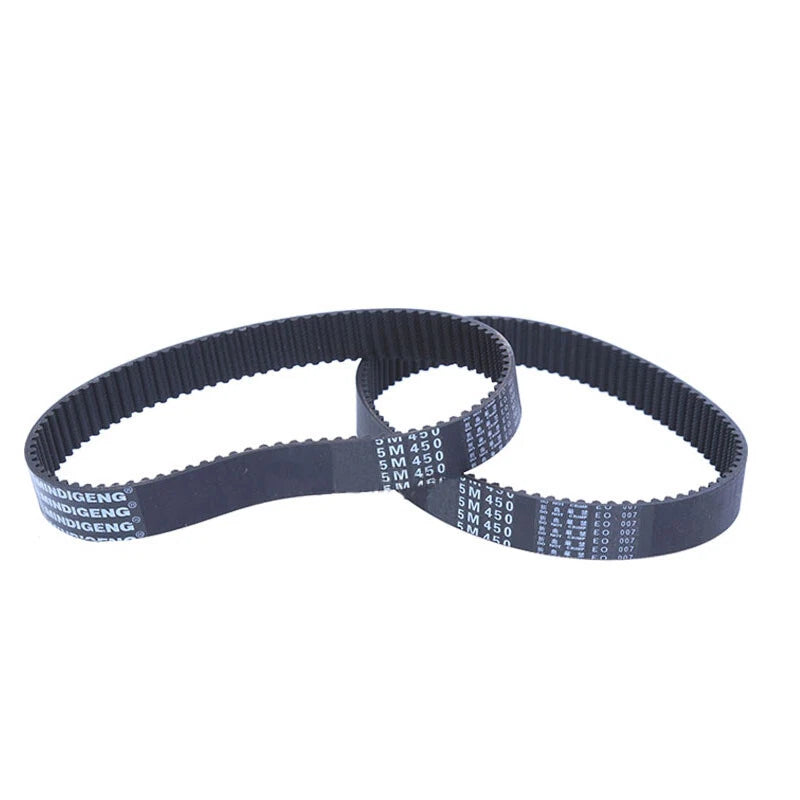
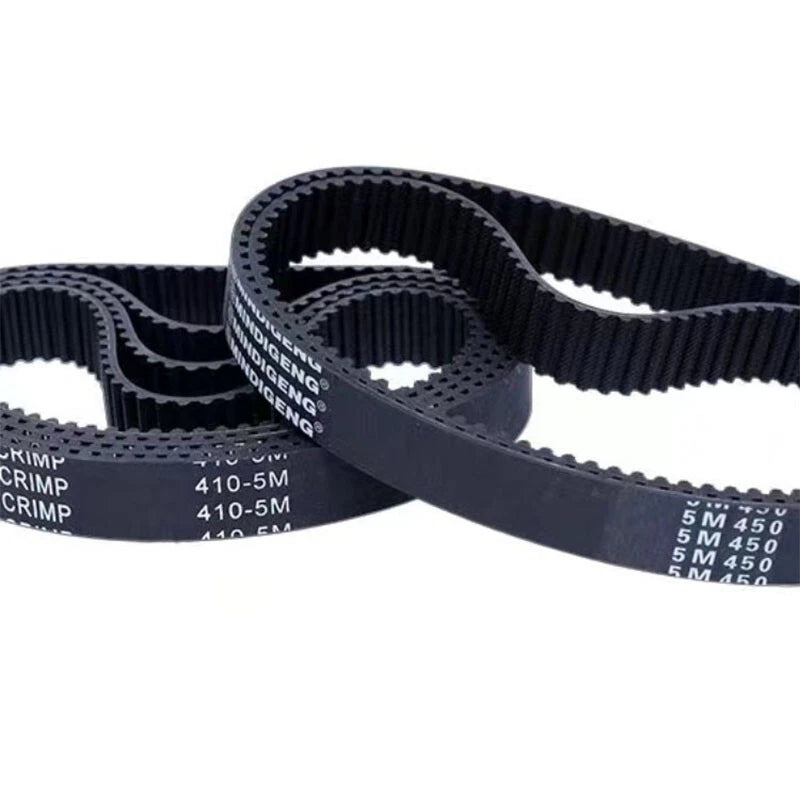
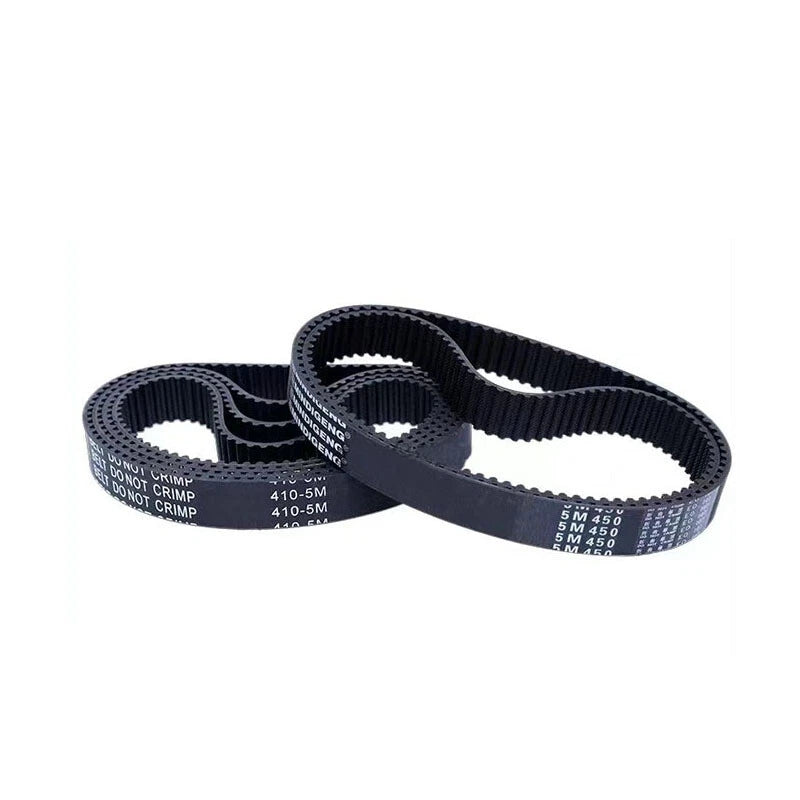
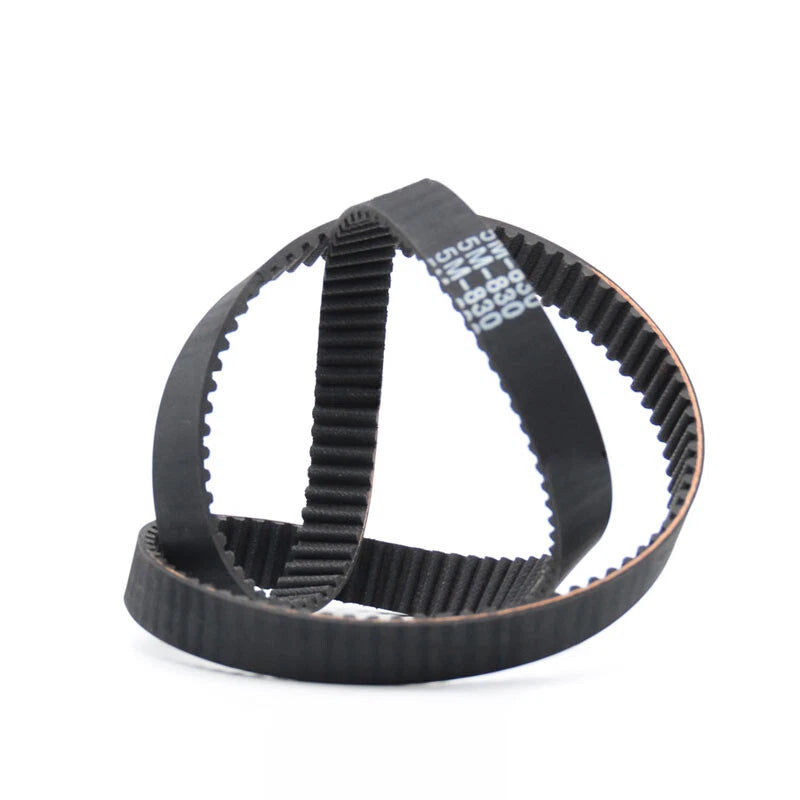
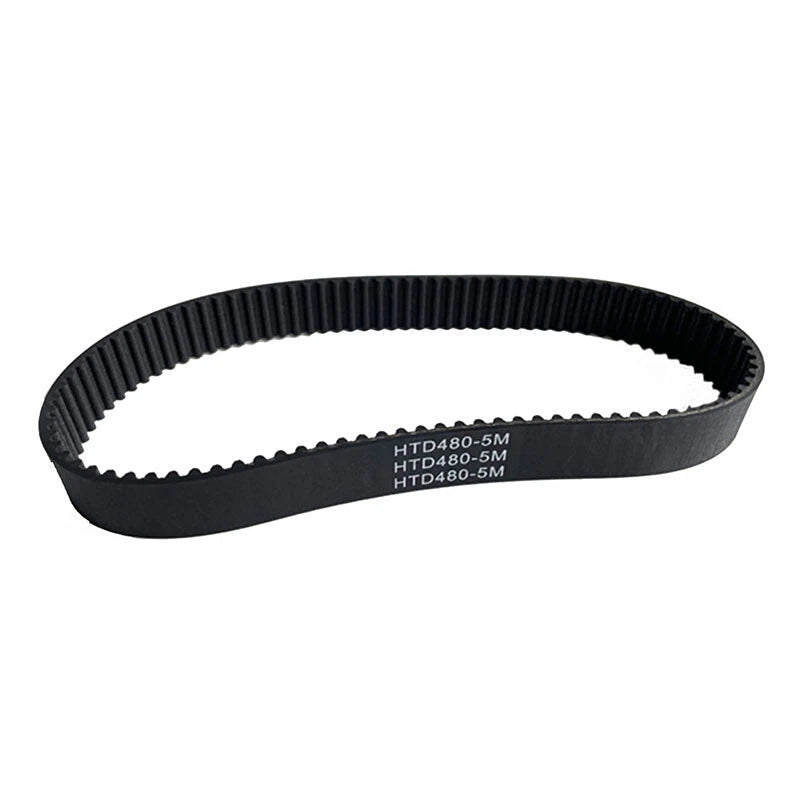
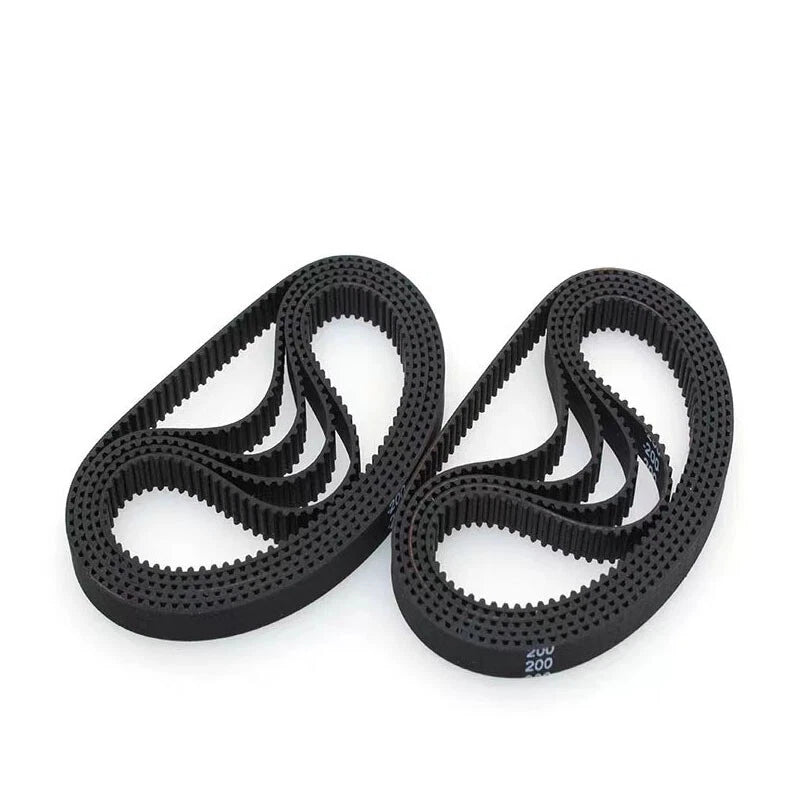
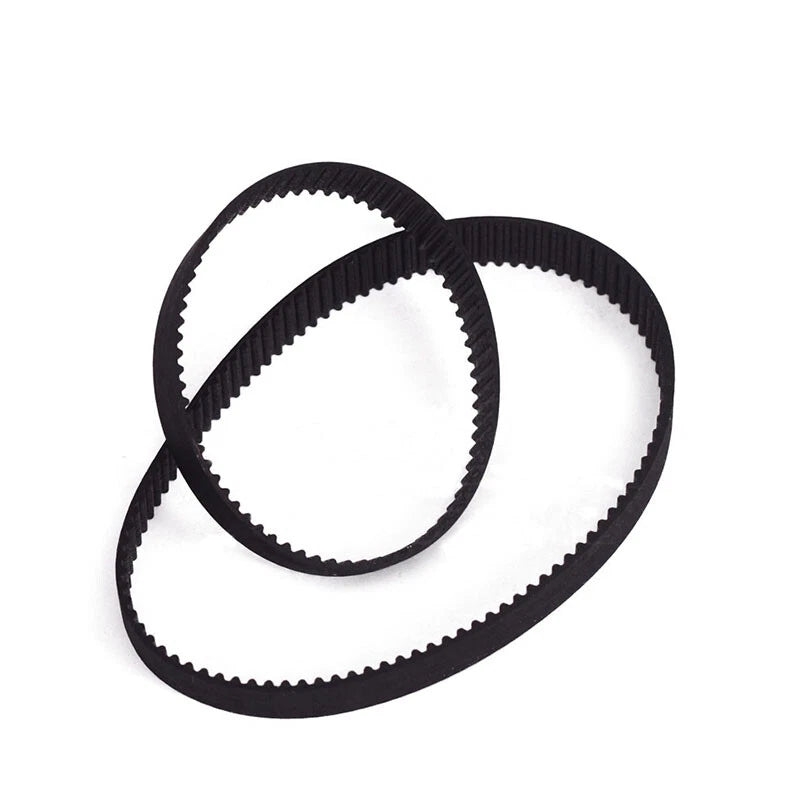
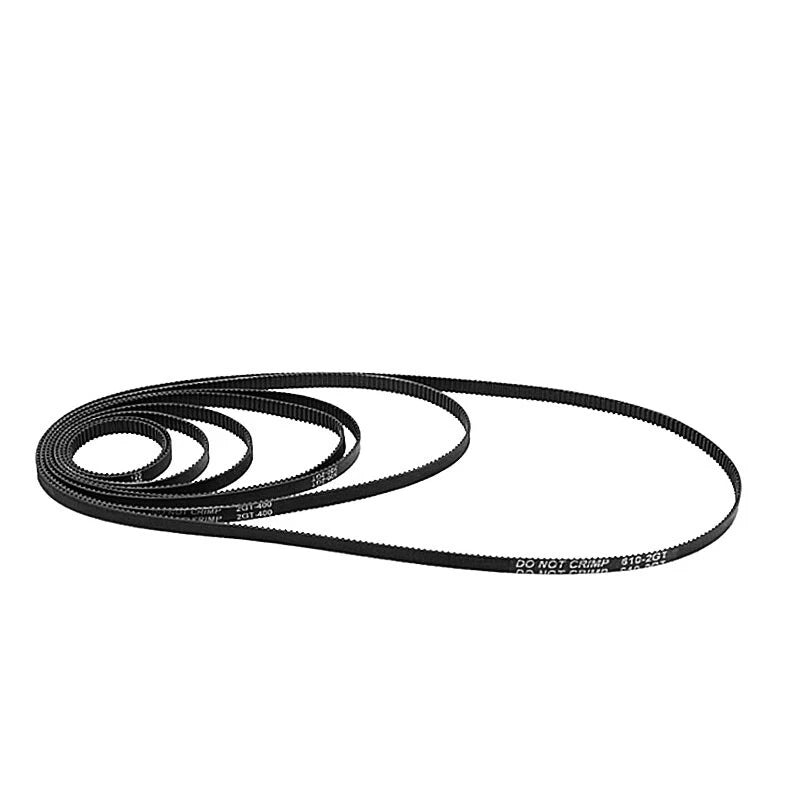
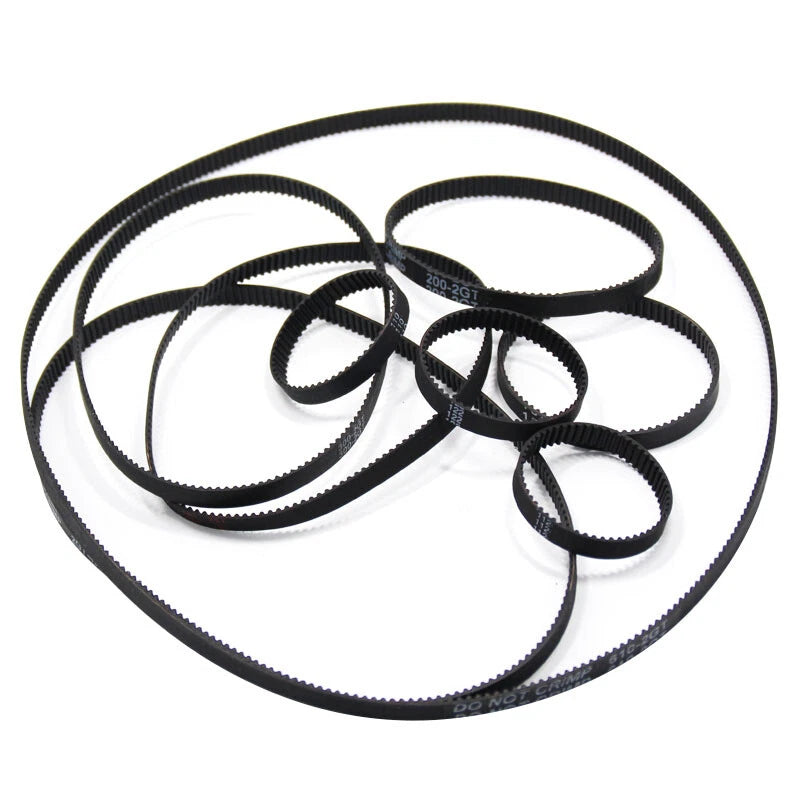
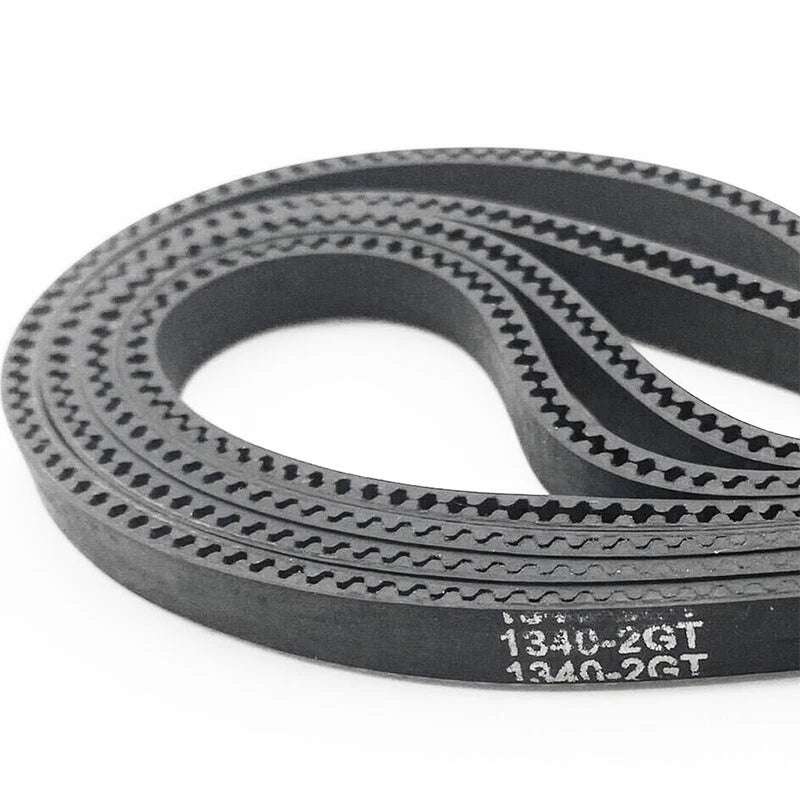
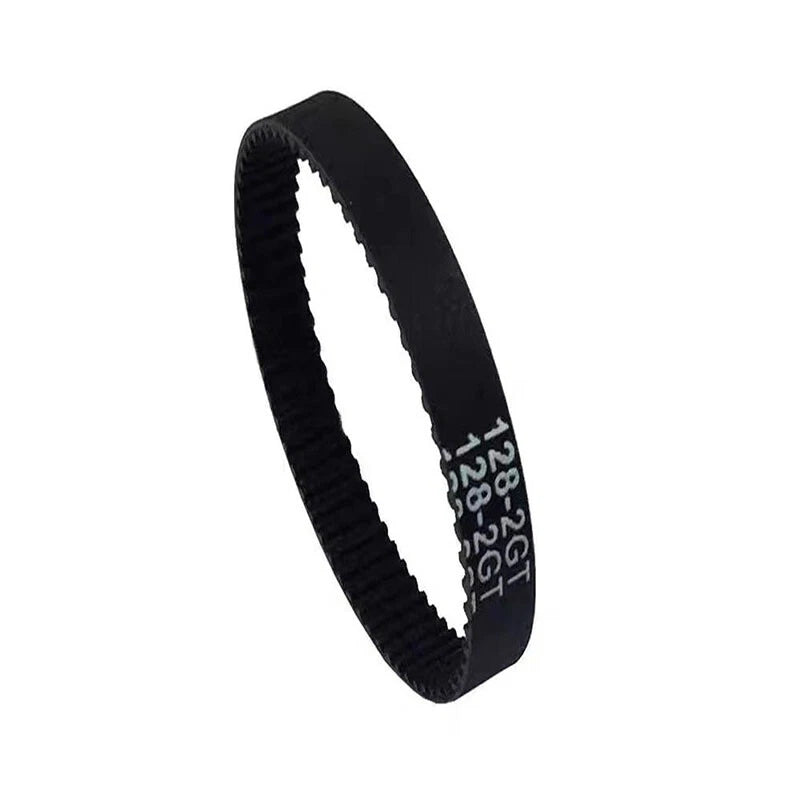
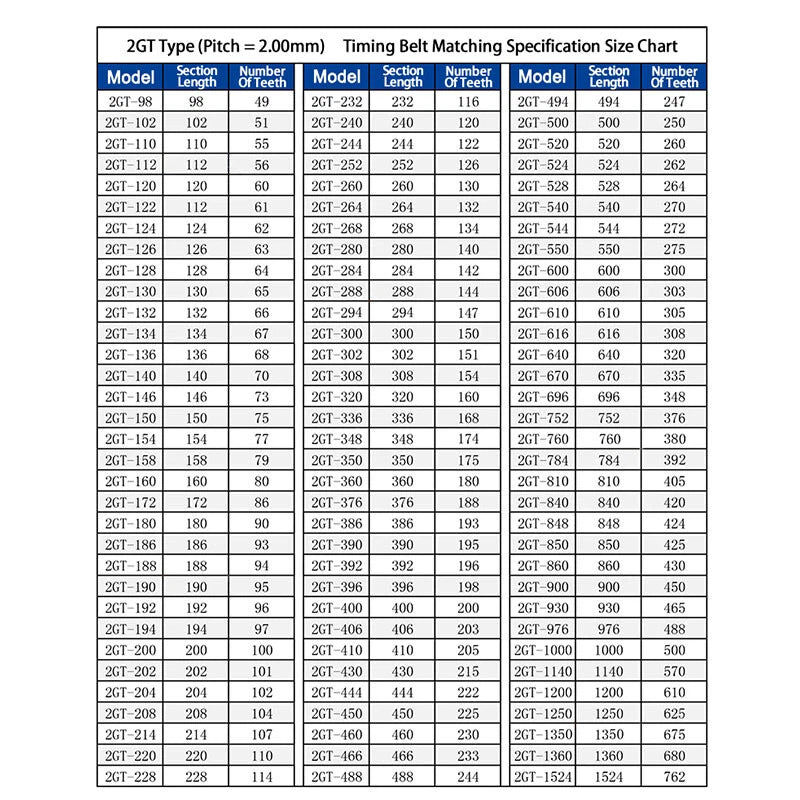
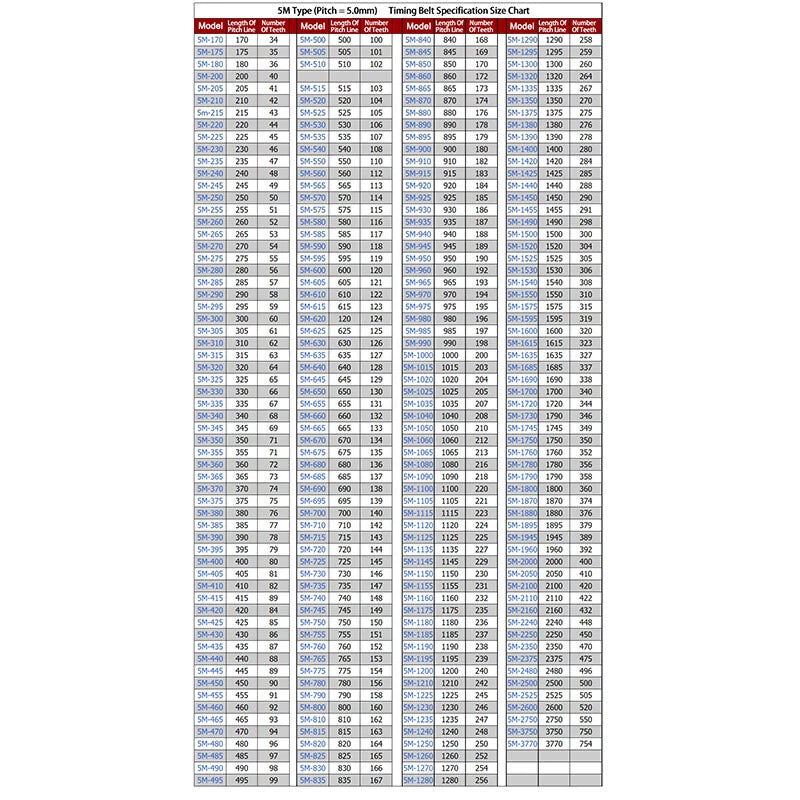
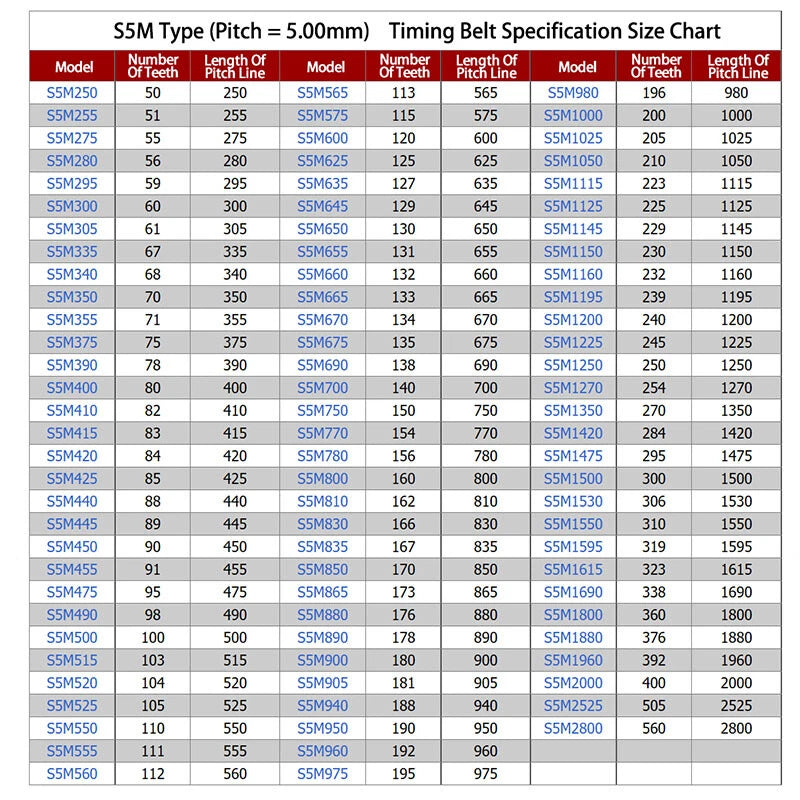
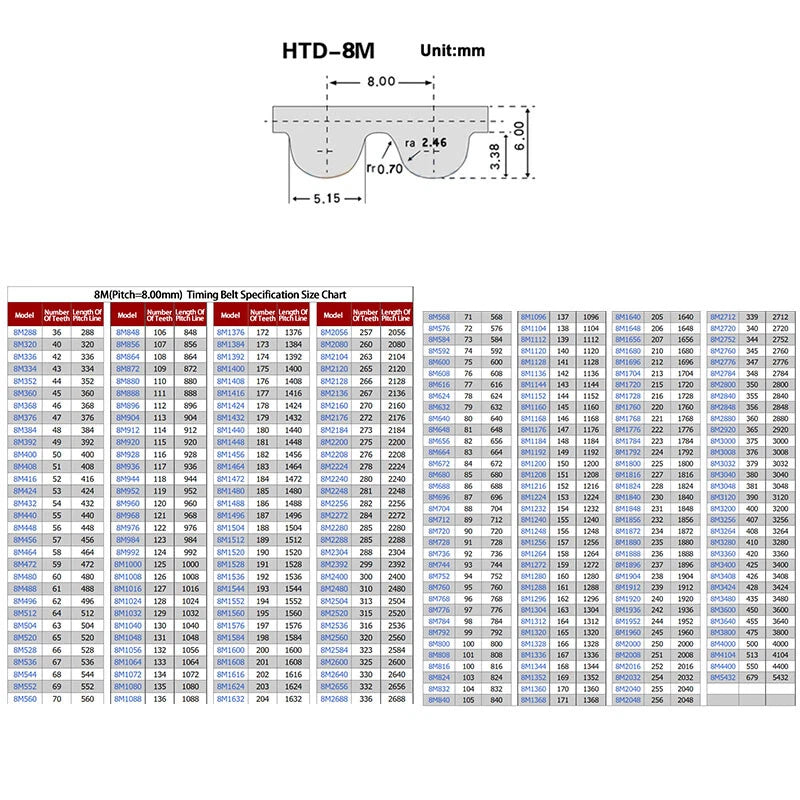
Timing Belt GT2 / HTD 5M / S5M / HTD 8M — Closed Loop Drive Belt, Width 6–30mm

No reviews

Price:
Sale price$4.91 USD
Stock:
In stock (500 units), ready to be shipped

Payment & Security

Ach Direct Debit Amazon American Express Apple Pay Bancontact Diners Club Discover Google Pay iDEAL Wero Mastercard PayPal Shop Pay USDC Visa

Your payment information is processed securely. We do not store credit card details nor have access to your credit card information.

Quantity Discount Promotion
🎯 BULK DISCOUNT: Buy More, Save More!
Buy 2 Items
5% OFF
Buy 4 Items
10% OFF
Buy 6 Items
15% OFF
Expert

DIY Expert Support

Get fitment advice & recommendations

Mon-Fri, 8:30AM-8PM
24-Hour Fast Ship
🚚
Arrives in 3-14 days
🌍
Global Reach
↩️
30-Day Returns
🌱 1 tree planted with every purchase

Description


GT2 / HTD 5M / S5M / HTD 8M Timing Belts — Precision Closed Loop Drive Belts for 3D Printers, CNC & Robotics

When a slipping V-belt or worn drive chain causes positioning errors, missed steps, or unexpected downtime, the fix starts with the right closed loop timing belt. Engineers, makers, and machine builders who demand repeatable, slip-free power transmission rely on synchronous drive belts — and this listing covers four of the most widely used profiles: GT2, HTD 5M, S5M, and HTD 8M.

Each belt in this listing is a closed loop (endless) timing belt made from neoprene rubber with fiberglass or steel cord tensile members. Available in belt widths of 6mm, 10mm, 15mm, 20mm, 25mm, and 30mm, with perimeters ranging from 98mm (≈3.86") up to 2000mm (≈78.7") depending on model. Select your model, perimeter, and belt width from the variant options above.

These closed loop drive belts are used across a wide range of applications: FDM 3D printer axis drives (GT2 6mm is the industry standard), CNC router and laser cutter gantry systems (HTD 5M and S5M 15–25mm), and industrial conveyor and robotics joint drives (HTD 8M 20–30mm). Whether you are replacing a worn belt or designing a new motion system, this selection covers the most common synchronous belt sizes used in North American workshops and production floors.

ℹ️ Compatibility Note: GT2 belts require GT2-profile pulleys (2mm pitch). HTD 5M requires HTD 5M pulleys. S5M requires S5M pulleys (not interchangeable with HTD 5M despite the same 5mm pitch). HTD 8M requires HTD 8M pulleys (8mm pitch). Always match profile, pitch, and width to your existing pulleys before ordering.

✅ Key Features of These Closed Loop Timing Belts

  • 🔁Four Profiles in One Listing — GT2 (2mm pitch), HTD 5M (5mm pitch), S5M (5mm modified pitch), and HTD 8M (8mm pitch) cover the most common synchronous belt standards used in 3D printers, CNC machines, and industrial drives.
  • 📏Wide Size Range — Belt widths from 6mm to 30mm and perimeters from 98mm to 2000mm let you find an exact match for your application without custom cutting or splicing.
  • ⚙️Curvilinear & Trapezoidal Tooth Profiles — GT2 uses a curvilinear tooth for low backlash in precision positioning; HTD profiles use rounded teeth for higher torque capacity in power transmission drives.
  • 🧱Neoprene Body with Cord Reinforcement — The rubber compound resists moderate heat, moisture, and flex fatigue, while the tensile cord (fiberglass or steel, depending on size) maintains consistent pitch under load.
  • 🔇Quiet, Slip-Free Operation — Synchronous tooth engagement eliminates the slip and speed variation of friction drives, reducing noise and maintaining accurate speed ratios — critical for closed-loop motion control in CNC routing and 3D printing.
  • 🔄Drop-In Replacement Compatibility — Dimensioned to standard pitch specifications, these belts are generally compatible with OEM pulleys from major 3D printer brands, CNC kit manufacturers, and industrial drive suppliers. Confirm perimeter, width, and profile before ordering.

📐 Technical Specifications — Closed Loop Synchronous Timing Belts

Belt Type Closed Loop (Endless) Synchronous Timing Belt
Available Models GT2, HTD 5M, S5M, HTD 8M
Pitch GT2: 2mm | HTD 5M & S5M: 5mm | HTD 8M: 8mm
Belt Width Options 6mm, 10mm, 15mm, 20mm, 25mm, 30mm (see variant options)
Perimeter Range GT2: 98mm–160mm (≈3.86"–6.30") | HTD 5M: 175mm–500mm (≈6.89"–19.7") | S5M: 250mm–2000mm (≈9.84"–78.7") | HTD 8M: 288mm–656mm (≈11.3"–25.8")
Tooth Profile GT2: Curvilinear (low backlash) | HTD 5M / HTD 8M: Rounded (high torque) | S5M: Modified curvilinear
Body Material Neoprene rubber (CR)
Tensile Member Fiberglass cord (smaller sizes) / Steel cord (larger sizes) — See variant options to confirm
Tooth Facing Nylon fabric (typically)
Operating Temperature Typically –30°C to +80°C (–22°F to +176°F)
Teeth Count See variant options (e.g., 49 Teeth & 6mm = 2GT-98-6)
Compatible Pulley Standards GT2 pulleys / HTD 5M pulleys / S5M pulleys / HTD 8M pulleys (must match profile)
Typical Applications 3D printers, CNC routers, laser cutters, robotics, conveyor drives, automation equipment
Country of Origin See variant options or contact us to confirm
⚠️ Sizing Tip: The "Teeth Number & Belt Width" variant option encodes both the tooth count and width (e.g., "49 Teeth & 6mm" = a GT2 belt with 49 teeth and 6mm width, perimeter = 49 × 2mm = 98mm). Use this to cross-reference your existing belt's tooth count directly.

❓ Frequently Asked Questions

How do I choose the right perimeter (belt length) for my application?

Measure the center-to-center distance between your two pulleys, then use the standard belt length formula: Perimeter ≈ 2 × C + π × (D1 + D2) / 2, where D1 and D2 are the pulley pitch diameters. For example, a 2GT belt with 49 teeth has a perimeter of 98mm (≈3.86"). You can also simply count the teeth on your existing belt — the perimeter equals tooth count × pitch (e.g., 49 teeth × 2mm = 98mm for GT2). Always verify against your pulley tooth count before ordering.

What is the difference between GT2, HTD 5M, S5M, and HTD 8M profiles?

GT2 has a 2mm pitch with a curvilinear tooth profile optimized for low backlash — the standard choice for 3D printer axis drives. HTD 5M uses a 5mm pitch with a rounded tooth designed for higher torque capacity in power transmission. S5M also uses a 5mm pitch but with a modified curvilinear profile for reduced backlash compared to HTD 5M — the two are not interchangeable despite the same pitch. HTD 8M has an 8mm pitch for heavy-duty industrial and robotics drives. Always match the profile to your existing pulleys.

How much torque can these timing belts handle?

Torque capacity depends on belt width, pitch, speed, and number of teeth in mesh. Generally, GT2 6mm belts are suited for light positioning loads (typically up to ~10 Nm), while HTD 8M 30mm belts can handle significantly higher torques (typically 50–150 Nm depending on speed and pulley size). For critical applications, apply a service factor of 1.5–2× to your calculated design load. Contact us if you need help sizing for a specific torque requirement.

Are these belts suitable for outdoor or high-humidity environments?

These belts are generally made from neoprene rubber, which provides good resistance to moisture and moderate temperature ranges (typically –30°C to +80°C / –22°F to +176°F). They are not recommended for prolonged immersion in water or direct exposure to oils, fuels, or aggressive solvents without confirming chemical compatibility. For outdoor applications, protect the belt from direct UV exposure where possible. Contact us to confirm suitability for your specific environment.

Are GT2 and HTD 5M pulleys interchangeable with S5M belts?

No. While HTD 5M and S5M both use a 5mm pitch, their tooth profiles differ — HTD 5M uses a rounded (trapezoidal-derived) tooth, while S5M uses a modified curvilinear profile. Running an S5M belt on an HTD 5M pulley (or vice versa) will generally result in poor mesh, increased wear, and potential belt failure. GT2 pulleys (2mm pitch) are not compatible with any 5mm or 8mm belt. Always match belt profile and pitch to your pulley exactly.

How do I select the correct belt width for my drive system?

Belt width should match your pulley flange width. Wider belts carry more load but require wider pulleys and more lateral clearance. As a general guide: 6mm is standard for GT2 in 3D printers; 10–15mm is common for light CNC and laser cutter gantries; 20–30mm is used for heavier industrial drives with HTD 5M, S5M, or HTD 8M profiles. If replacing an existing belt, measure the original belt width and match it exactly.

Can I use these as replacement belts for my 3D printer or CNC machine?

In most cases, yes — as long as you match the belt profile, pitch, perimeter, and width exactly to your machine's specification. For 3D printers (Ender, Prusa, Voron, etc.), GT2 6mm is typically the correct choice; check your machine's documentation for the exact perimeter. For CNC routers and laser cutters, confirm the belt profile and perimeter from your machine's BOM or by measuring the existing belt. If you are unsure, contact us with your machine model and we will help confirm compatibility.

🛒 Select your model, perimeter, and belt width above, then add to cart — ships from our US warehouse.

You may also like

Recently viewed