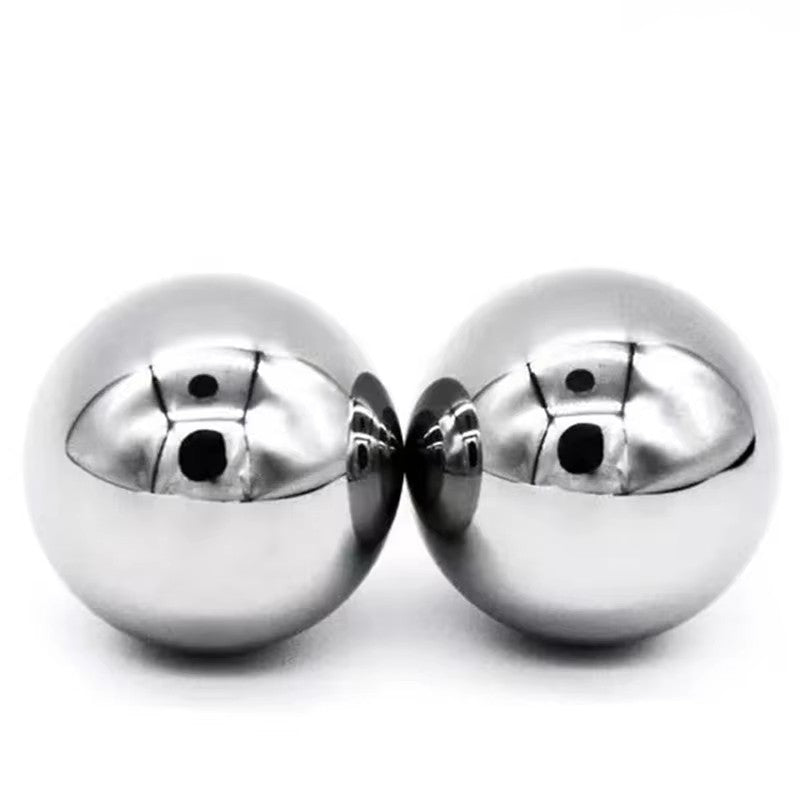
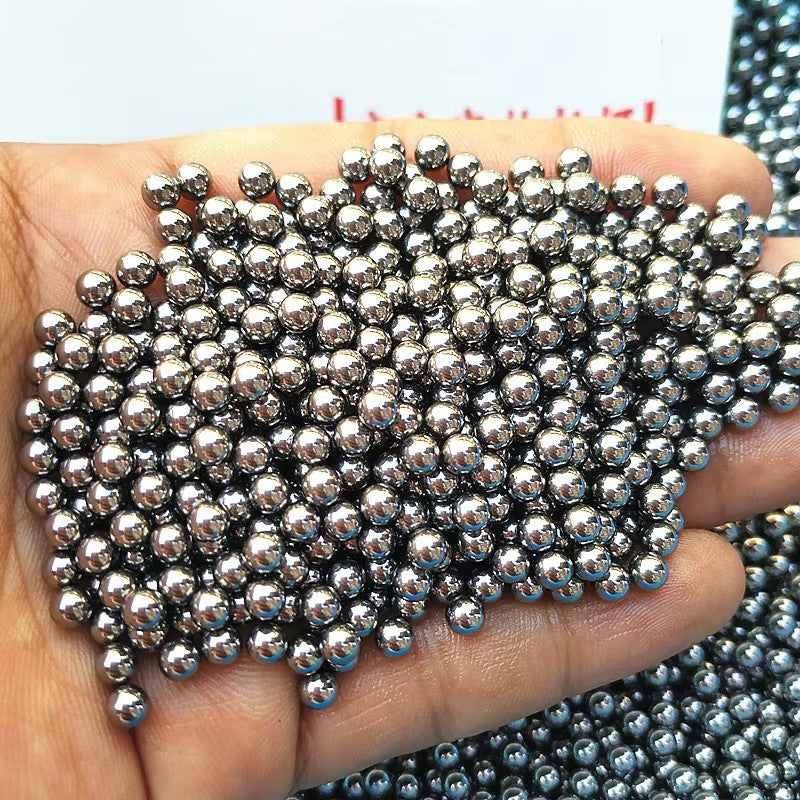
Tungsten Carbide Ball Bearings — Precision-Ground Carbide Balls for Demanding Applications
When standard steel balls wear out too fast or corrode under harsh conditions, engineers, machinists, and RC hobbyists turn to tungsten carbide ball bearings for a dependable solution. These carbide balls are designed for applications where hardness, dimensional accuracy, and corrosion resistance are non-negotiable — from industrial valve seats and pump components to RC differential assemblies and precision measuring instruments.
Each ball is manufactured from solid tungsten carbide (WC-Co grade), offering a Vickers hardness typically in the range of 1400–1600 HV. Diameters span from 1 mm (0.039 in) to 50 mm (1.969 in), with intermediate sizes including fractional-inch equivalents such as 1/16", 3/32", 1/8", and 3/8". Available in quantities from 1 piece up to 200 pieces per order to suit both prototyping and production runs.
Typical use cases include RC car and truck differential balls (carbide diff balls), hydraulic and pneumatic valve check balls, flow control seats, precision jig and fixture components, and wear-resistant bearing inserts in low-speed high-load machinery. The consistent sphericity and surface finish of these tungsten carbide ball bearings make them a reliable drop-in upgrade wherever hardened steel balls fall short.
⚙️ Compatible with standard ball-seat valve bodies, RC differential housings, and precision bore fixtures accepting balls from 1 mm to 50 mm diameter.
✅ Key Features of These Tungsten Carbide Ball Bearings
🔩Solid Tungsten Carbide Construction
Made from WC-Co sintered carbide — significantly harder than tool steel — resisting deformation under sustained load and abrasive wear in demanding environments.
📏Wide Diameter Range: 1 mm to 50 mm
Covers both metric and fractional-inch sizes (e.g., 1.588 mm = 1/16", 3.175 mm = 1/8", 9.525 mm = 3/8") for broad cross-application compatibility.
🛡️Corrosion and Chemical Resistance
Tungsten carbide withstands exposure to oils, mild acids, and hydraulic fluids far better than carbon steel, extending service life in wet or chemically active environments.
🎯Precision Sphericity for Consistent Performance
Ground to tight sphericity tolerances, these balls seat evenly in valve bodies and diff housings, reducing bypass leakage and uneven wear patterns.
📦Flexible Quantity Options
Order from 1 piece for a single repair up to 200 pieces for production or bulk stocking — quantity pricing scales accordingly to reduce per-unit cost.
⚡Direct Replacement for RC Diff Balls
Carbide diff balls outlast standard steel diff balls in high-RPM RC drivetrains, maintaining differential action longer and reducing rebuild frequency.
📐 Technical Specifications — Tungsten Carbide Ball Bearings
| Material |
Tungsten Carbide (WC-Co sintered grade) |
| Hardness |
Typically 1400–1600 HV (Vickers) |
| Diameter Range |
1 mm – 50 mm (0.039 in – 1.969 in) |
| Available Sizes |
See variant options |
| Quantity per Order |
1, 2, 4, 5, 10, 20, 25, 40, 50, 100, 200 pcs |
| Surface Finish |
Precision ground, smooth spherical surface |
| Density |
Typically 14.5–15.0 g/cm³ |
| Corrosion Resistance |
Resistant to oils, mild acids, and hydraulic fluids |
| Application |
Valves, RC differentials, pumps, precision fixtures |
| Weight |
See variant options |
❓ Frequently Asked Questions
What diameter should I choose for my RC differential?
RC differential ball size varies by manufacturer and model. Common sizes include 3/32" (2.381 mm), 1/8" (3.175 mm), and 5/32" (3.969 mm). Check your diff housing specification or measure the existing balls with a micrometer before ordering. When in doubt, order one piece first to confirm fit.
How hard are tungsten carbide balls compared to steel?
Tungsten carbide typically measures 1400–1600 HV on the Vickers scale, compared to approximately 700–900 HV for hardened bearing steel (52100 grade). This makes carbide balls roughly twice as hard, which translates to significantly longer wear life in abrasive or high-load contact applications.
Are these balls corrosion-resistant for use in wet or chemical environments?
Yes. Tungsten carbide (WC-Co) offers substantially better corrosion resistance than carbon or alloy steel in the presence of oils, hydraulic fluids, and mild acids. For highly aggressive chemical environments (strong acids or bases), contact us to confirm suitability before ordering.
Can I use these as check balls in hydraulic or pneumatic valves?
Yes, tungsten carbide balls are widely used as check balls and valve seats in hydraulic and pneumatic systems. Their hardness resists the repeated impact of valve cycling, and their sphericity ensures consistent sealing. Confirm the seat bore diameter matches your selected ball size for proper seating.
How do I select the right quantity for my application?
For single repairs or prototype testing, order 1–2 pieces. For RC differential rebuilds, most diffs require 12–16 balls, so a pack of 20 is a practical choice. For production runs or bulk stocking, packs of 50, 100, or 200 pieces offer a lower per-unit cost. Select your diameter and quantity from the variant dropdowns above.
What is the difference between metric and fractional-inch sizes listed?
Some sizes listed in millimeters correspond directly to fractional-inch standards: 1.588 mm = 1/16", 2.381 mm = 3/32", 3.175 mm = 1/8", 4.763 mm = 3/16", 6.35 mm = 1/4", 7.938 mm = 5/16", 9.525 mm = 3/8", 11.1125 mm = 7/16", 12.7 mm = 1/2", 14.288 mm = 9/16", 15.875 mm = 5/8". If your application specifies a fractional-inch size, match it to the corresponding mm value in the variant list.
🛒 Select your Diameter (mm) and Quantity above, then add to cart.