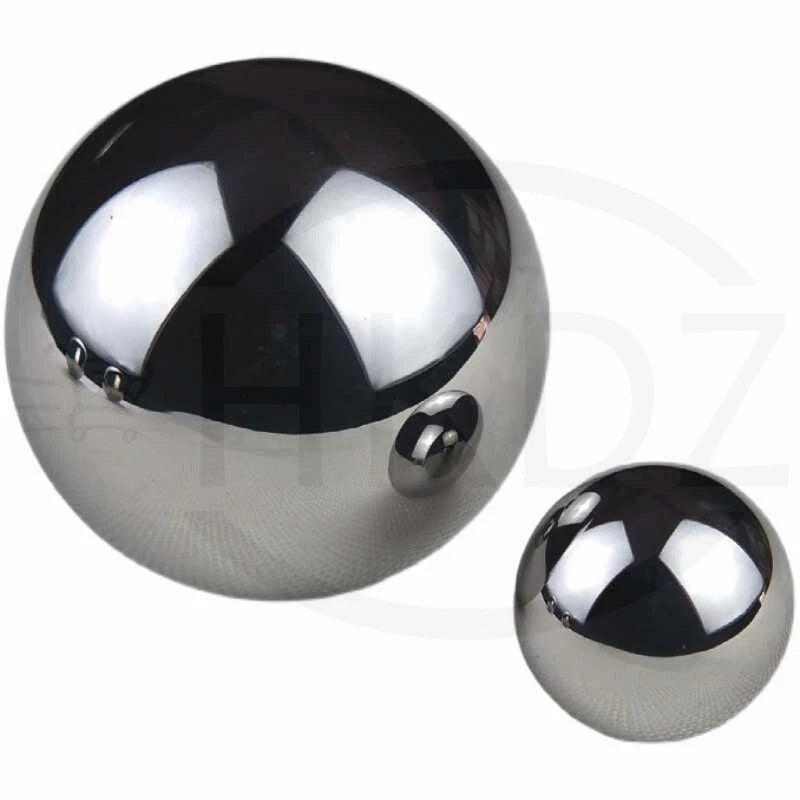
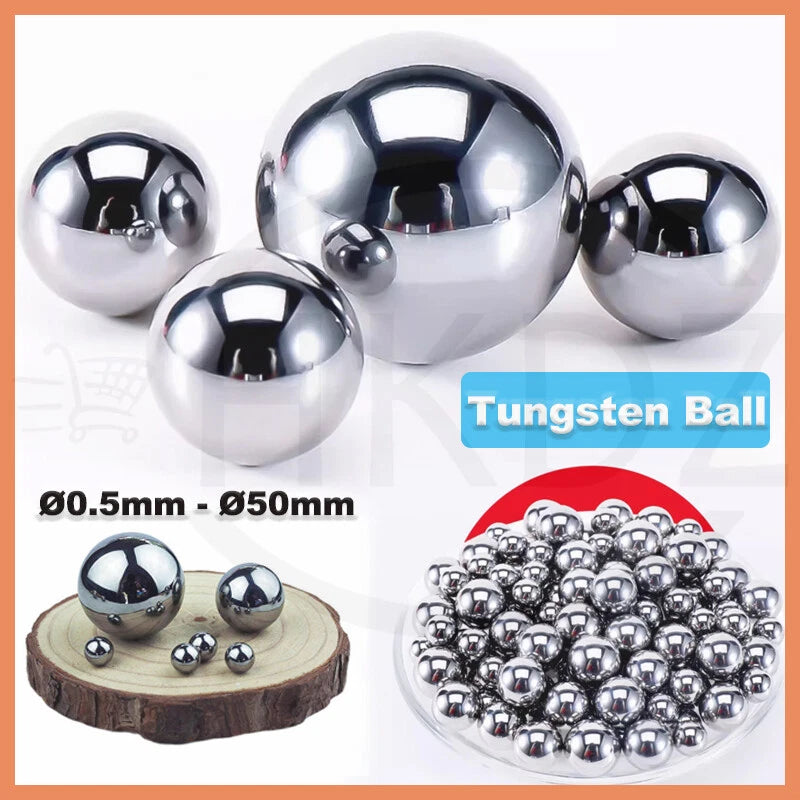
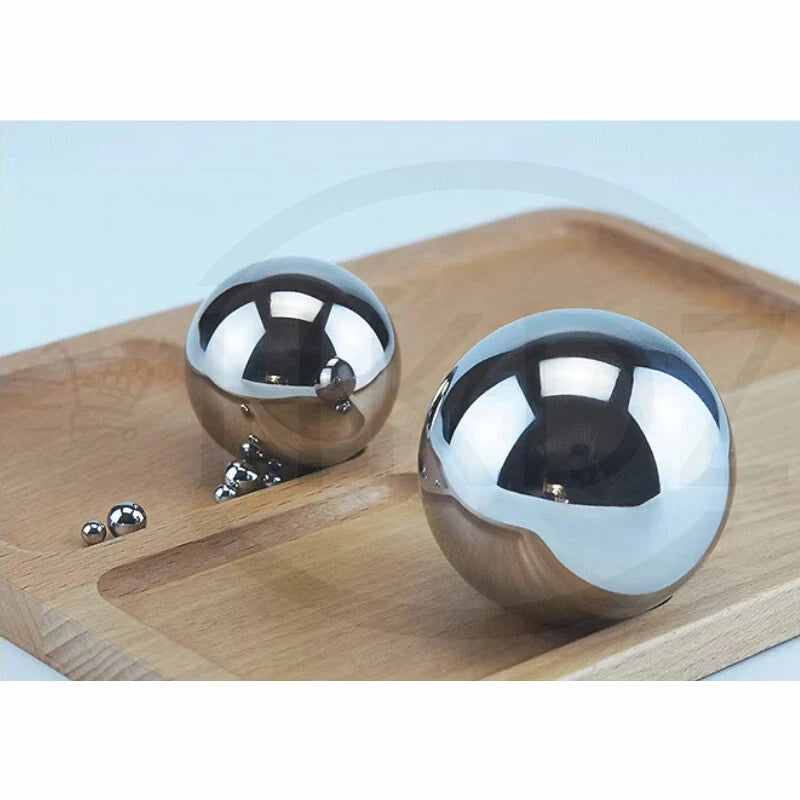
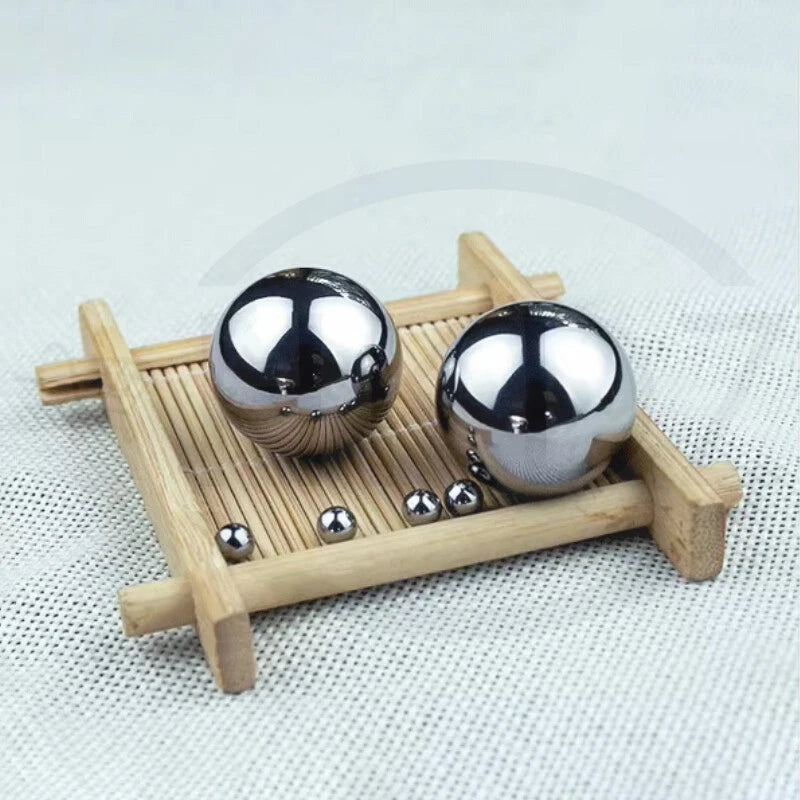
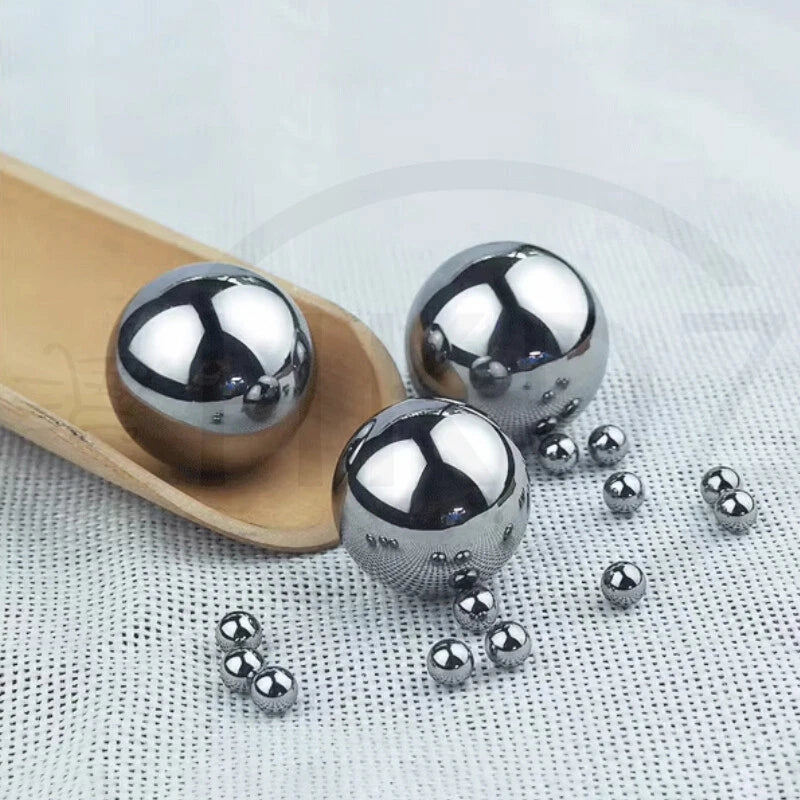
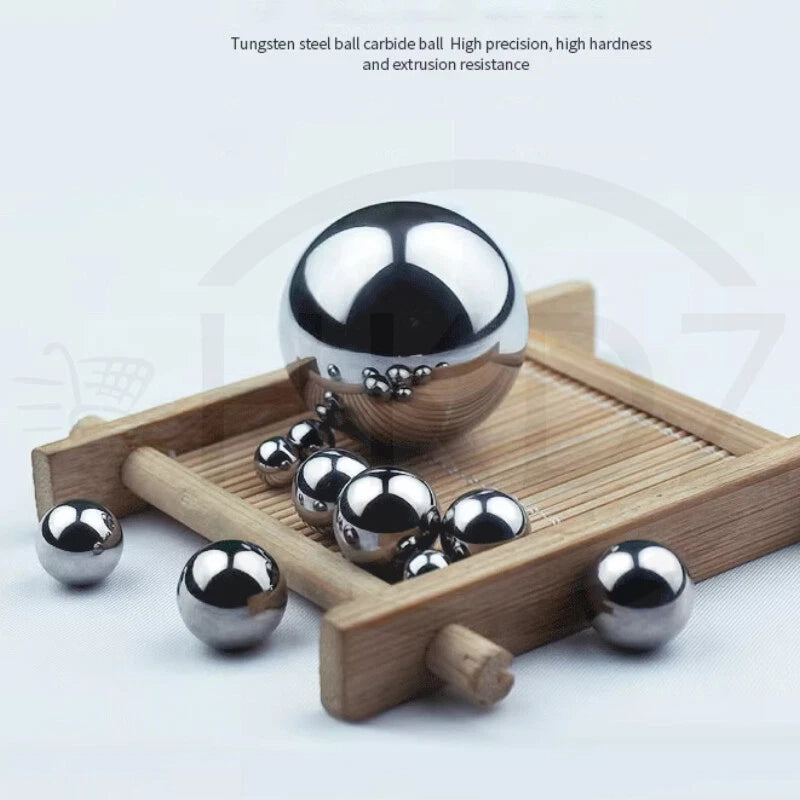
Tungsten Carbide Ball Steel Ball Bearings Carbide Diff Balls Diameter 0.5mm-50mm

No reviews

Price:
Sale price$14.40 USD
Stock:
In stock (500 units), ready to be shipped

Payment & Security

Ach Direct Debit Amazon American Express Apple Pay Bancontact BLIK Diners Club Discover EPS Google Pay iDEAL Wero JCB Maestro Mastercard Multibanco MobilePay PayPal Przelewy24 Shop Pay Twint Union Pay USDC Visa

Your payment information is processed securely. We do not store credit card details nor have access to your credit card information.

Limited Offer — Spend More, Save More
Spend $55+
Save $5
Spend $100+
Save $10
Spend $200+
Save $25
HomeDIYer DIY Expert Support

DIY Expert Support

Get fitment advice & recommendations

Mon–Fri  8:30 AM – 8:00 PM
24-Hour Fast Ship
Arrives in 3–14 Days
Worldwide Shipping
30-Day Returns
1 tree planted with every purchase

Description

Tungsten Carbide Ball Bearings — Precision-Ground Balls from Ø0.5mm to Ø50mm

When a loose or undersized ball causes your RC differential to slip, your precision instrument to drift, or your industrial assembly to fail prematurely, the root cause is almost always inconsistent ball geometry or inadequate hardness. Machinists, RC hobbyists, engineers, and toolmakers who demand repeatable, tight-tolerance performance need tungsten carbide ball bearings they can trust across every application.

These carbide and steel ball bearings are available in a wide diameter range — from Ø0.5mm (approximately 0.020 in) up to Ø50mm (approximately 1.969 in) — covering both metric and imperial-equivalent sizes. The balls are precision-ground to maintain consistent sphericity and surface finish. Tungsten carbide grades offer exceptional hardness (typically HRA 89–92), while steel variants provide a cost-effective option for standard load applications. Quantity options range from 1 pc to 100 pcs per order to suit prototyping, repair, and bulk production needs.

Typical use cases include RC car and truck differential ball replacement (carbide diff balls), precision bearing assemblies in measuring instruments and gauges, valve seats and check valves in fluid systems, and tooling fixtures requiring hardened locating balls. Long-tail applications include tungsten carbide ball for ball mill grinding media, carbide ball for stylus tips, and steel ball bearings for drawer slides and linear guides.

⚙️ Compatibility: Suitable for RC differentials, precision instruments, valve assemblies, bearing housings, and industrial tooling. Verify your required diameter and tolerance class before ordering.

✅ Key Features of These Tungsten Carbide Ball Bearings

  • 🔩Wide Diameter Range — Ø0.5mm to Ø50mm in metric and imperial-equivalent sizes, covering RC diff balls, instrument balls, and industrial bearing applications in a single product line.
  • 💎Tungsten Carbide Hardness — Carbide grades offer hardness typically in the HRA 89–92 range, resisting wear, deformation, and surface fatigue far beyond standard steel in abrasive or high-load environments.
  • 📐Precision-Ground Sphericity — Balls are ground to maintain consistent roundness and surface finish, reducing vibration and ensuring smooth, repeatable motion in precision assemblies.
  • 🛡️Corrosion-Resistant Options — Tungsten carbide composition provides inherent resistance to many corrosive media, making these balls suitable for fluid handling, chemical equipment, and outdoor RC use.
  • 📦Flexible Quantity Options — Order 1, 2, 5, 10, or 100 pieces per SKU to match prototyping, repair, or production volume requirements without overstocking.
  • 🔄Multi-Application Versatility — Equally at home in RC car differentials, precision gauges, check valves, ball mill grinding media, and tooling fixtures — one ball type, many solutions.

📐 Technical Specifications — Tungsten Carbide Ball Bearings

Material Tungsten Carbide (WC-Co) / Steel (grade varies by variant)
Diameter Range Ø0.5mm – Ø50mm (approx. 0.020 in – 1.969 in)
Hardness (Carbide) Typically HRA 89–92
Surface Finish Precision-ground
Sphericity / Tolerance See variant options
Quantity per Pack 1 / 2 / 5 / 10 / 100 pcs (select above)
Application RC differentials, precision instruments, valve seats, tooling, grinding media
Weight See variant options

❓ Frequently Asked Questions

How do I choose the right diameter for my RC differential?

Measure the existing balls in your differential using a micrometer or digital caliper. RC differentials commonly use balls in the Ø1.5mm–Ø5mm range. Match the measured diameter exactly — even a 0.1mm difference can cause binding or excessive play. If you are unsure, consult your vehicle's manual or the differential manufacturer's parts list for the specified ball size.

What is the difference between tungsten carbide balls and steel balls?

Tungsten carbide balls are significantly harder (HRA 89–92) than standard steel balls, making them far more resistant to wear, deformation, and surface fatigue under high loads or abrasive conditions. Steel balls are a cost-effective choice for lighter-duty applications where extreme hardness is not required. For RC differentials under aggressive use, carbide balls are the preferred upgrade over stock steel balls.

Are these balls corrosion-resistant?

Tungsten carbide (WC-Co) offers good resistance to many corrosive media including mild acids, alkalis, and water, making it suitable for fluid handling, outdoor RC use, and damp environments. Steel variants have lower inherent corrosion resistance and may require lubrication or protective coatings in wet conditions. If corrosion resistance is critical, select the carbide variant and confirm compatibility with your specific media.

Can I use these balls as grinding media in a ball mill?

Yes. Tungsten carbide balls are widely used as grinding media in laboratory and small-scale ball mills due to their extreme hardness and wear resistance. They are particularly suitable for grinding hard materials where contamination from softer media would be unacceptable. Select a diameter appropriate for your mill jar size and the particle size you are targeting — smaller balls produce finer grinds.

What quantity should I order for a repair vs. a production run?

For a single RC differential repair or instrument calibration, 1–10 pcs is typically sufficient. For production assembly or stocking a workshop, the 100 pcs option offers the best per-unit value. The 2, 5, and 10 pcs options are ideal for small batch prototyping or keeping a spare set on hand. Select the quantity that matches your immediate need to avoid unnecessary inventory.

How do I verify the ball fits my bearing housing or valve seat?

Measure the housing bore or seat diameter with a calibrated bore gauge or micrometer. The ball diameter should match the specified seat diameter in your engineering drawing or OEM specification. For valve seats, the ball is typically 10–20% larger than the seat orifice to ensure a positive seal. If you need a specific tolerance class (e.g., G10, G16, G25), contact us to confirm availability before ordering.

Are imperial-equivalent sizes available in this range?

Yes. Several sizes in this listing correspond to common imperial fractions — for example, Ø1.5875mm (1/16 in), Ø3.175mm (1/8 in), Ø6.35mm (1/4 in), Ø9.525mm (3/8 in), Ø12.7mm (1/2 in), Ø19.05mm (3/4 in), and Ø25.4mm (1 in). Select the diameter that matches your imperial specification from the variant dropdown above.

🛒 Select your Diameter and Qty(pcs) above, then add to cart.


You may also like

Recently viewed